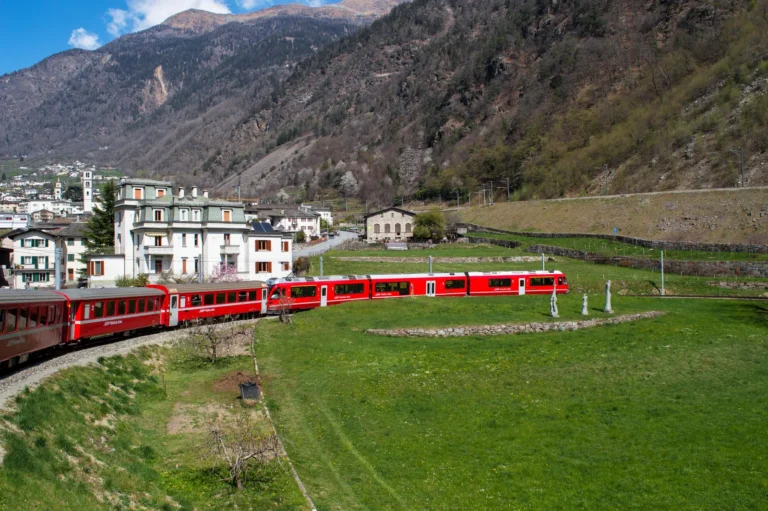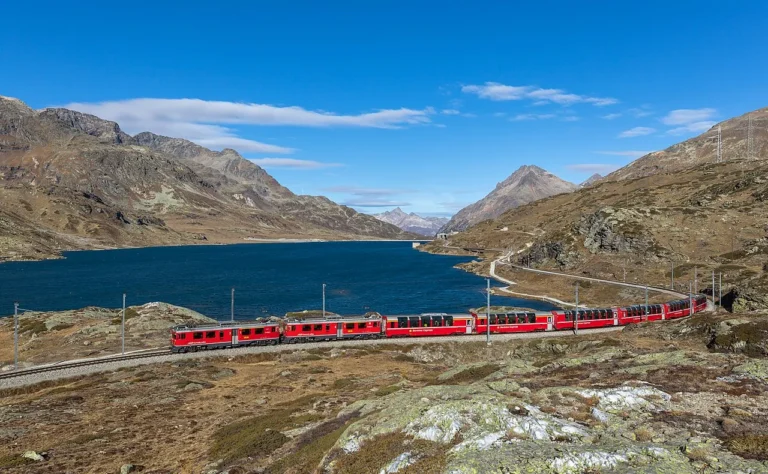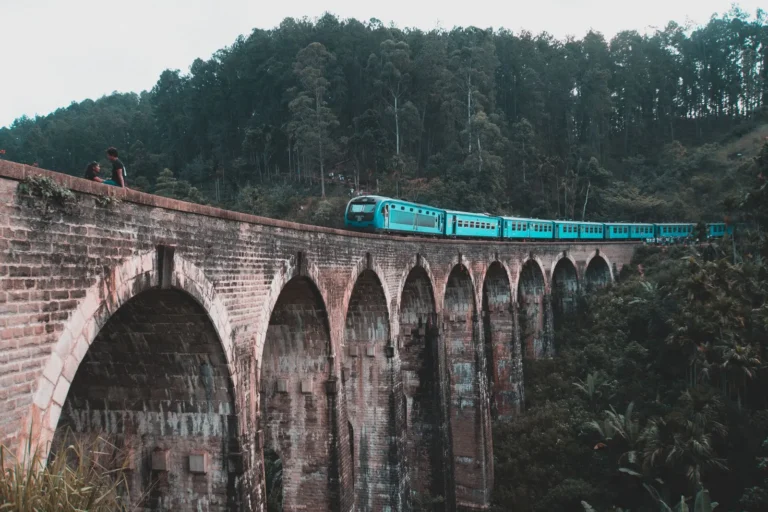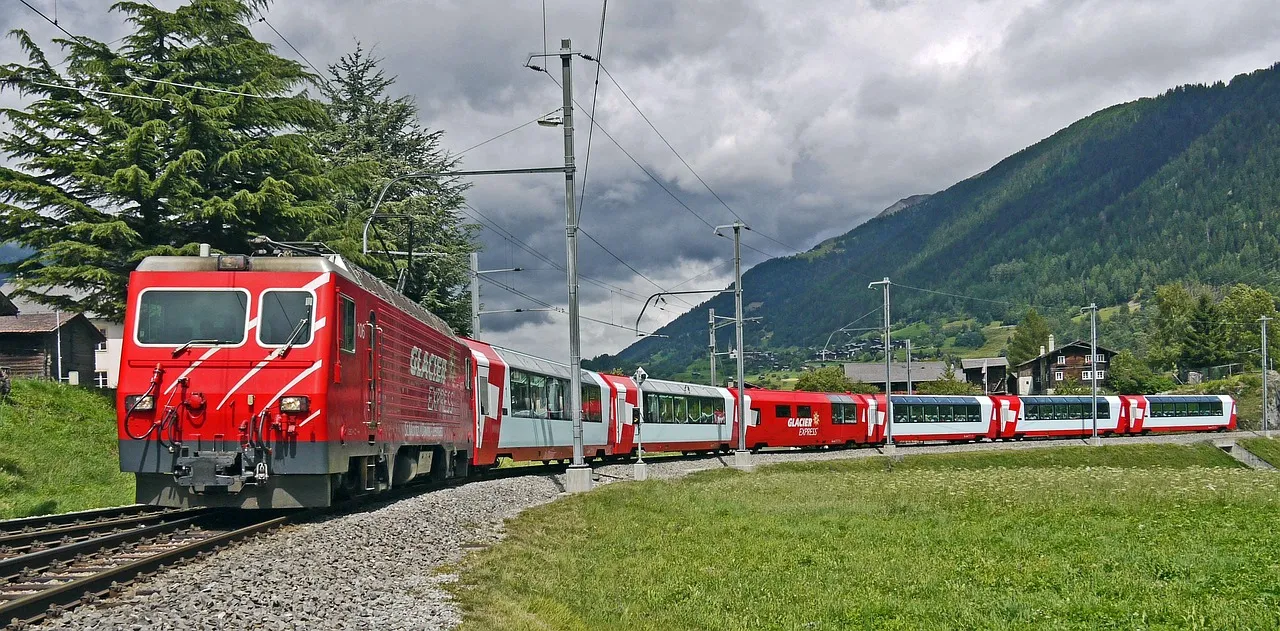
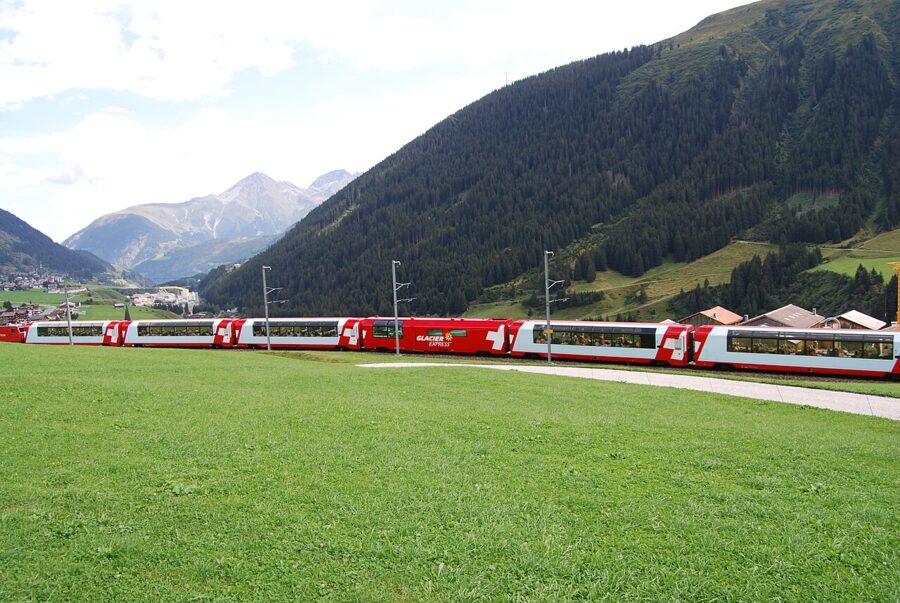
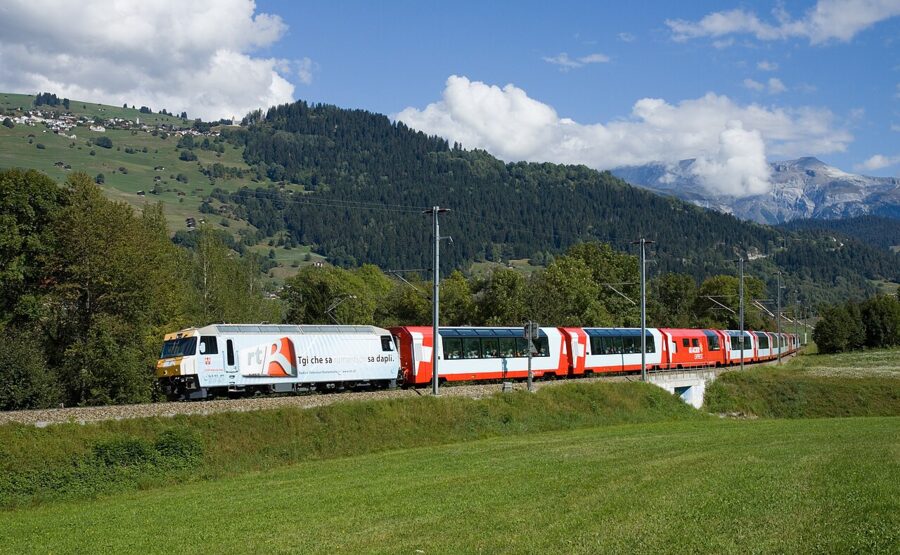
Train 902 leaves Zermatt at 8:50 a.m., and by the time it stops in St. Moritz at 4:36 p.m. it has climbed to 6,670 feet at the Oberalp Pass, followed the young Rhine through its gorge, turned around at Chur and crawled up the Albula line over the Landwasser Viaduct. That is 181 miles (291 km) in just under eight hours, about 23 mph on average, over 291 bridges and through 91 tunnels. Its operator sells it, fairly, as the slowest express train in the world.
The Glacier Express is a day of sitting still, and the choices that shape that day are all made before you board: which of three classes, which direction, which side, whether to ride it in one go, and whether to pay CHF 590 for the Excellence Class seat that comes with a five-course lunch. The one thing nobody escapes is the reservation. Every seat carries a compulsory CHF 54 (about US$65) reservation on top of the ticket as of 2026, rail pass or not.
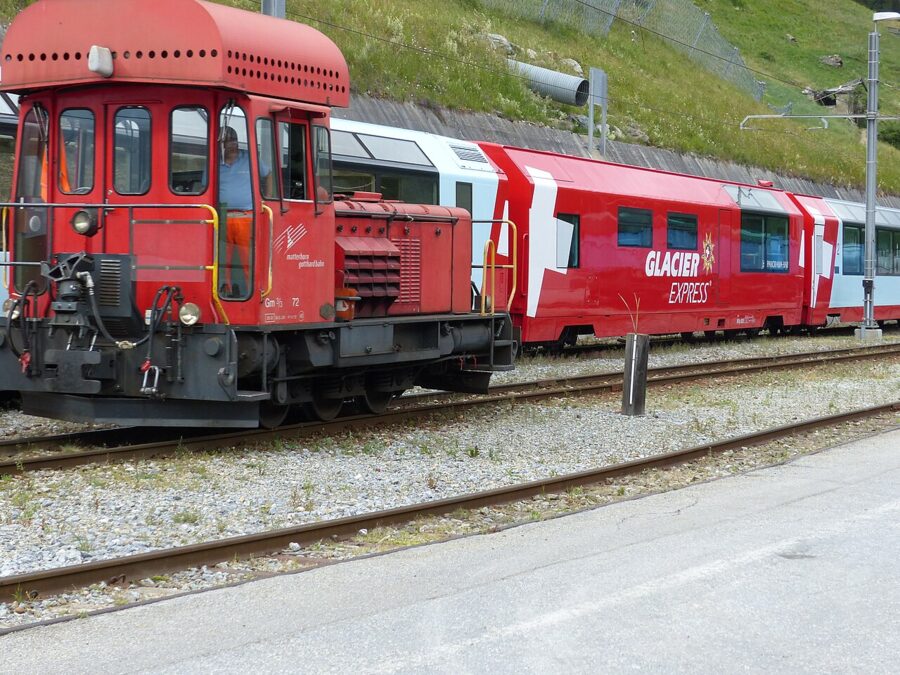
The train belongs to Glacier Express AG, a company the Matterhorn Gotthard Bahn and the Rhaetian Railway own together, and it runs on their meter-gauge track the whole way. My default for a first ride is Second Class, eastbound on train 902, in June or September, with lunch pre-ordered and the money saved spent on a night at the far end.
Stops in this article9
- 01The route, in order
- 02Second, First or Excellence Class
- 03Tickets, the reservation and what you actually pay
- 04Meals at your seat
- 05Luggage, Wi-Fi and the small print
- 06The 2027 timetable and the autumn shutdown
- 07Which direction, and which side
- 08One day, or broken in two
- 09The same mountains without the Glacier Express
The route, in order
I follow train 902 eastbound; on 903 the same places come in reverse. The times hold for 902 all year. The operator’s route page has an interactive map of every stop.
Zermatt and the Matter valley
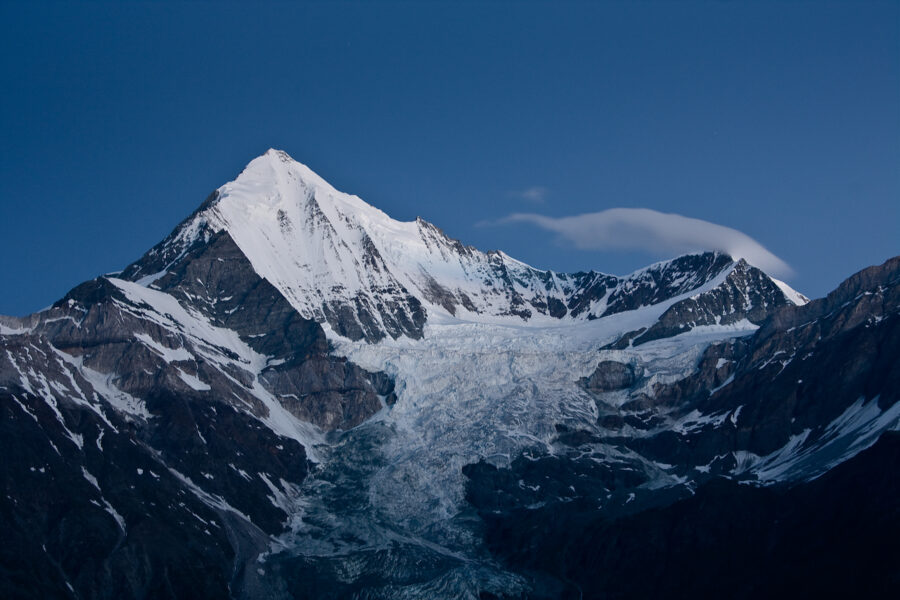
The first hour is a descent. The line drops north down the Matter valley toward Visp, with the river Vispa below it and sections of rack where the grade is too steep for wheels alone. About ten minutes out of Zermatt, look up to the left above Randa for the Bis Glacier, hanging off the Weisshorn massif.
Below Stalden the train squeezes through the Kipfen gorge, where track and river run side by side with no room to spare, and crosses the Neubrück bridge of 1922. At Visp the valley opens into the broad Rhône valley, and at 10:04 a.m. the train pulls into Brig for a ten-minute stop.
Brig, the Goms and the Furka Base Tunnel
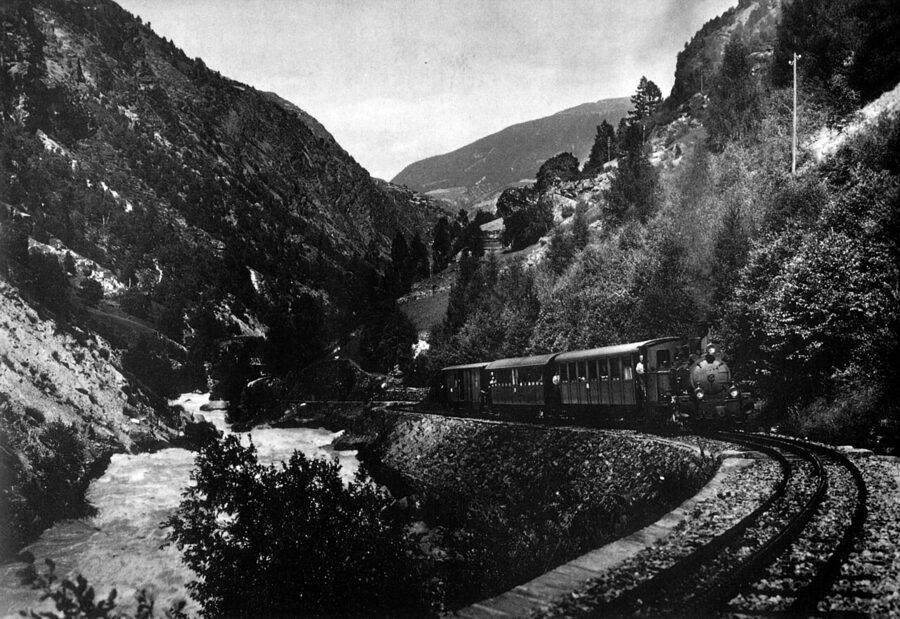
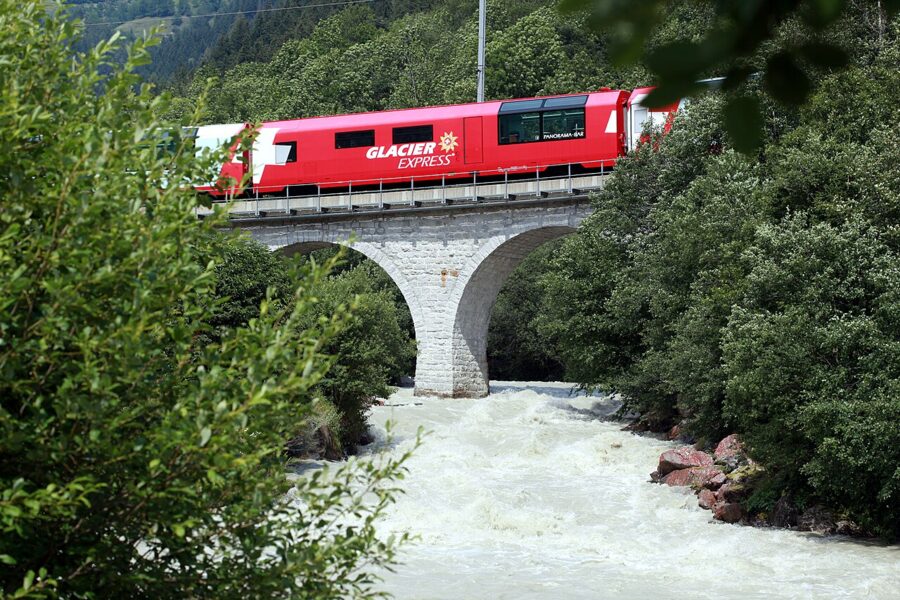
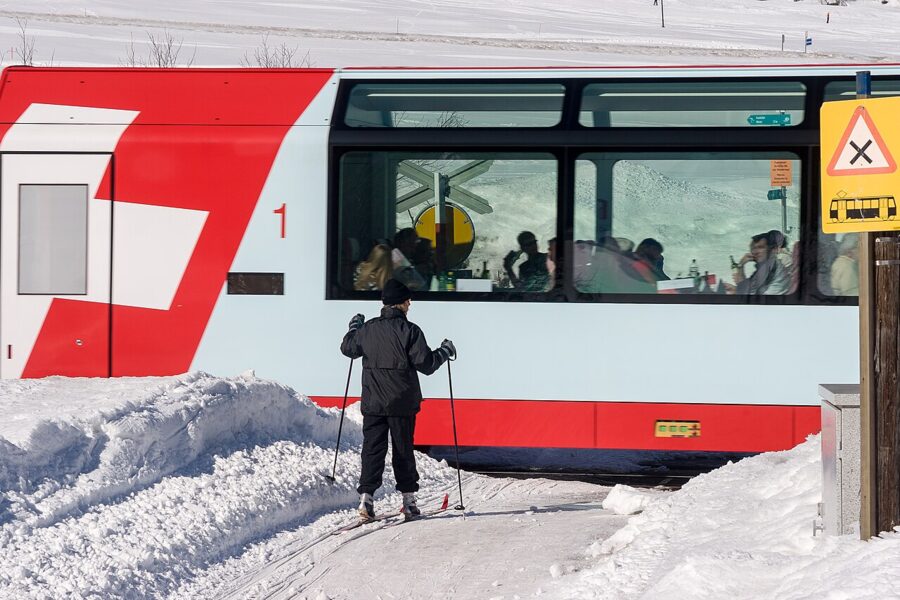
East of Brig the train climbs the upper Rhône valley, the Goms, a string of dark-timbered villages where, in winter, a cross-country ski trail crosses the track. Near Fiesch the line crosses the Weisswasser on a stone arch. The Aletsch Glacier, a UNESCO World Heritage Site since 2001, lies in the mountains to the left, out of sight behind the valley wall.
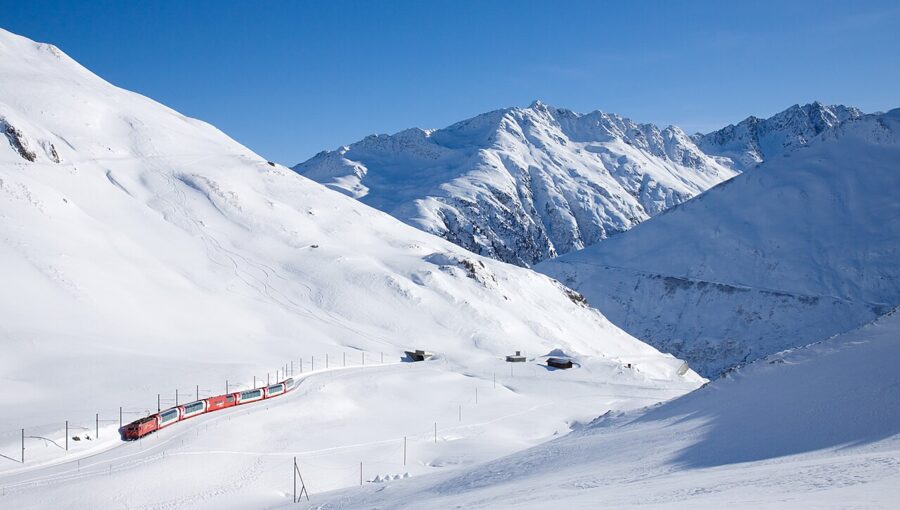
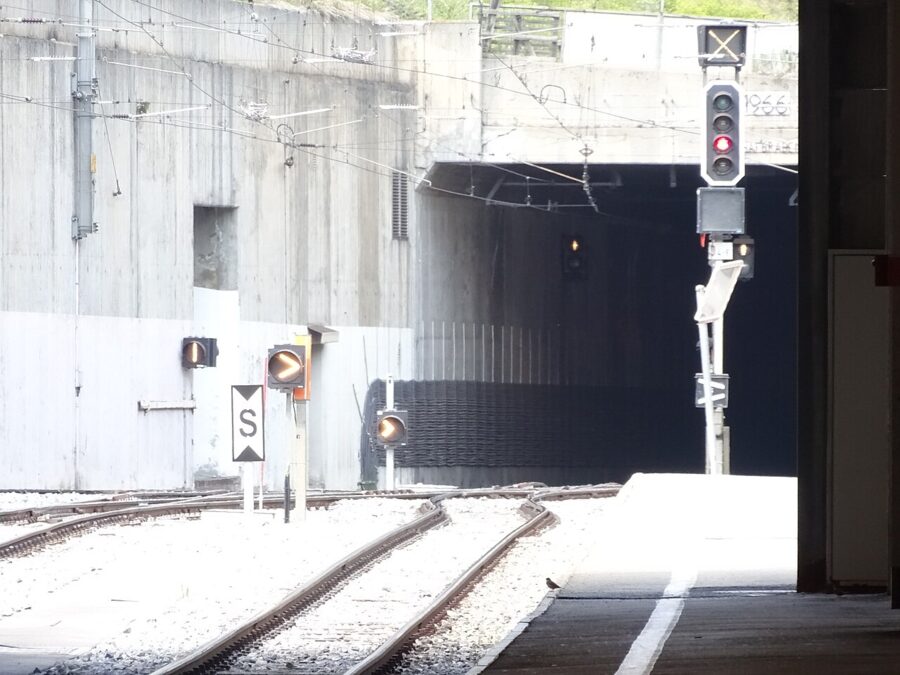
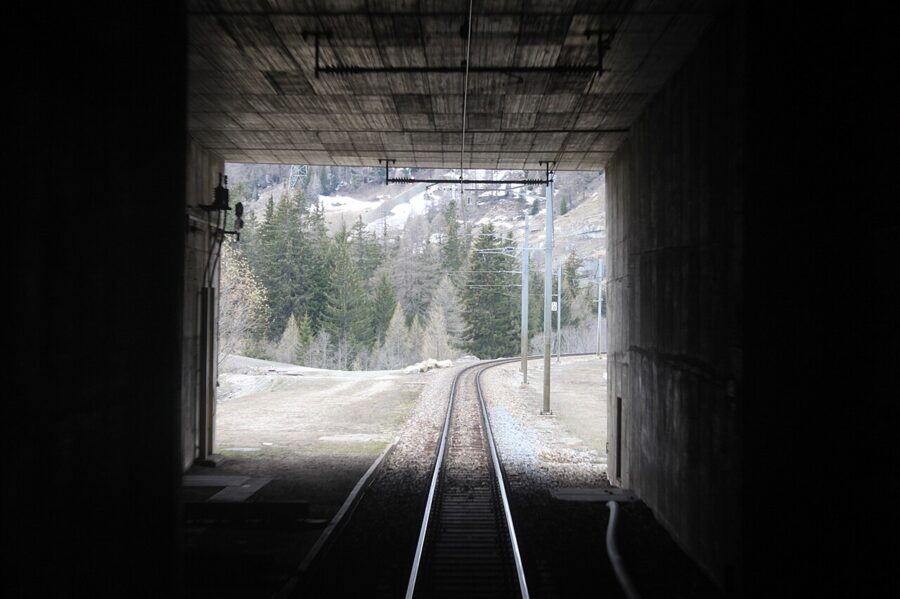
At Oberwald the train dives into the Furka Base Tunnel, 9.6 miles (15.4 km) long, and comes out at Realp barely 20 minutes later. Until the tunnel opened on June 26, 1982, the Glacier Express could only run in summer, because the old line over the Furka Pass was buried in snow and threatened by avalanches every winter. A heritage railway now runs over the old pass line in summer.
Andermatt and the Oberalp Pass
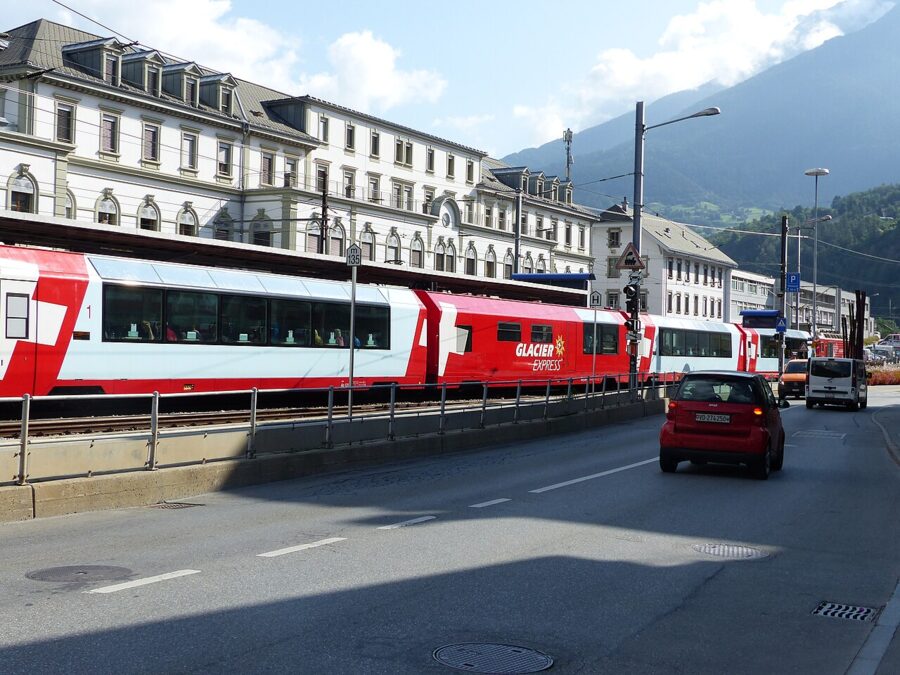
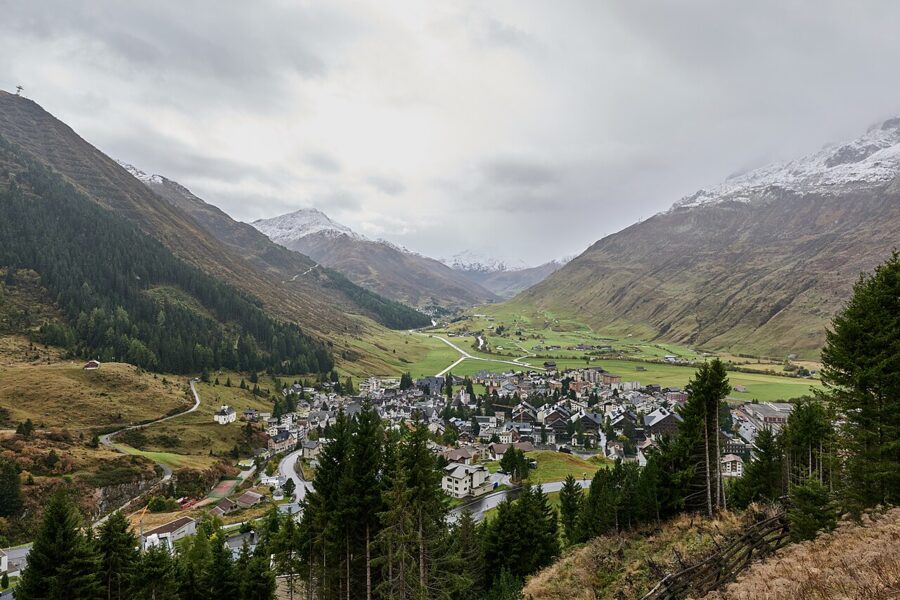
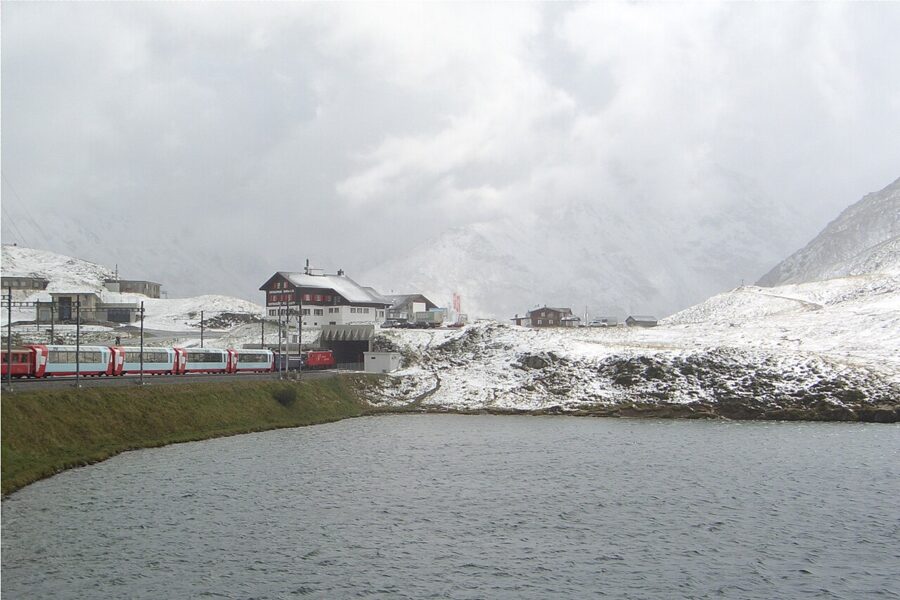
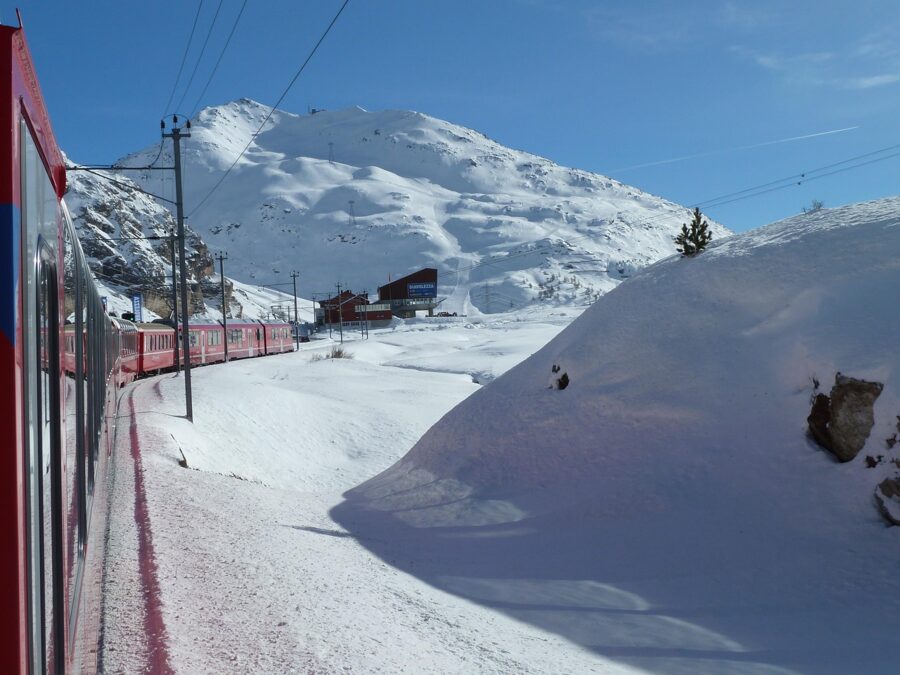
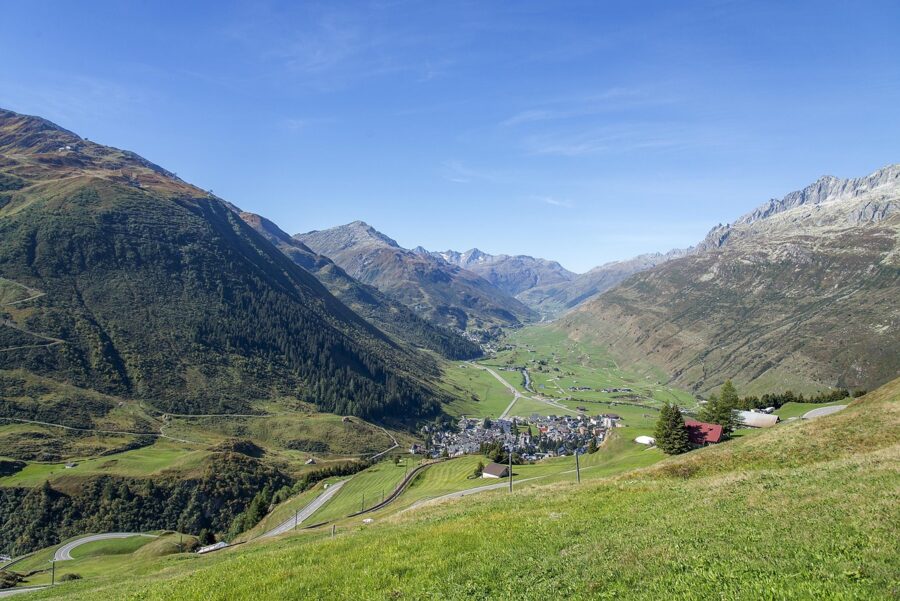
Andermatt comes at 11:46 a.m., with a 14-minute stop, and then the best stretch of the morning. The train switches to rack and climbs the valley wall above the village in long loops, so Andermatt keeps reappearing below, smaller each time. The top is the Oberalp Pass at 6,670 feet (2,033 m), the highest point of the trip, where the line runs along the shore of the Oberalpsee.
On the far side you are in Graubünden, and the stream beside the track is on its way to becoming the Rhine. In winter the line runs through snow galleries, and the view can shrink to a white wall.
Disentis and the Rhine Gorge
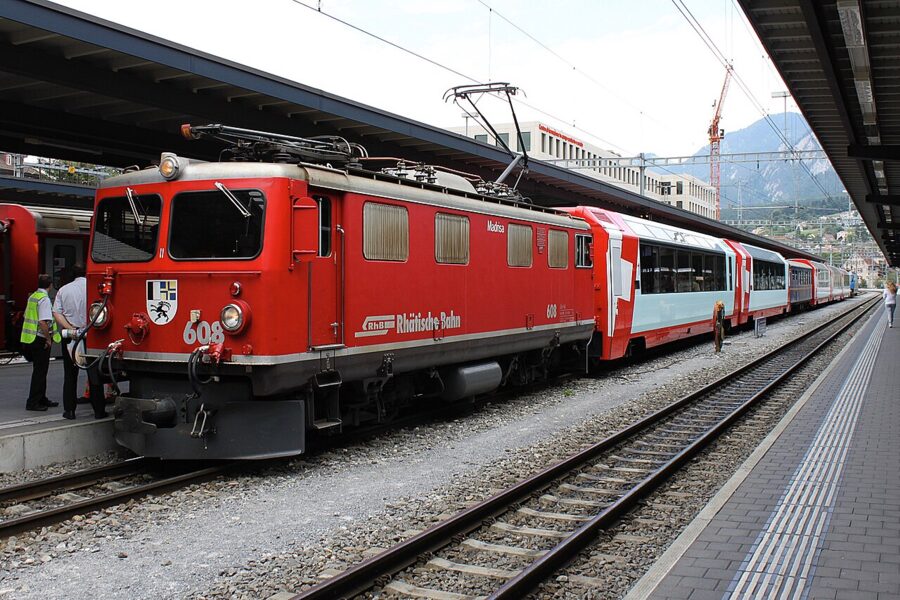
At Disentis/Mustér, reached at 1:02 p.m., the Matterhorn Gotthard track ends and the Rhaetian Railway’s begins. From here the train follows the Vorderrhein down the Surselva valley.
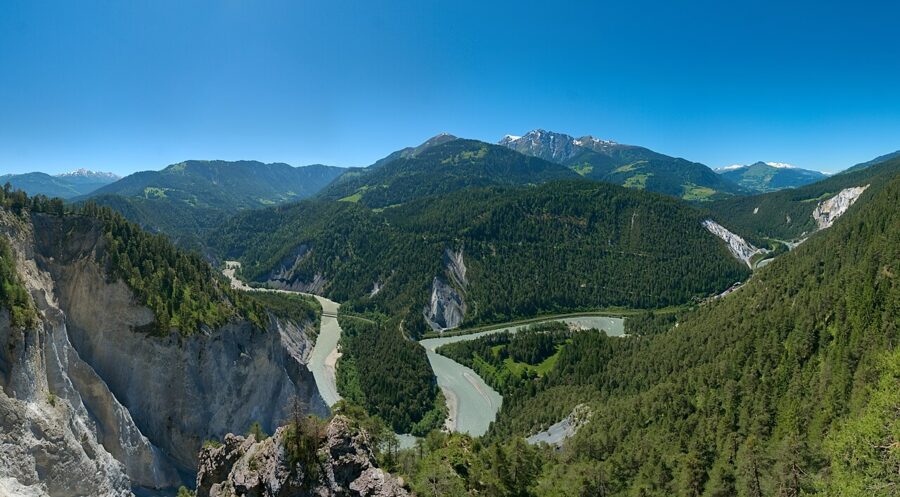
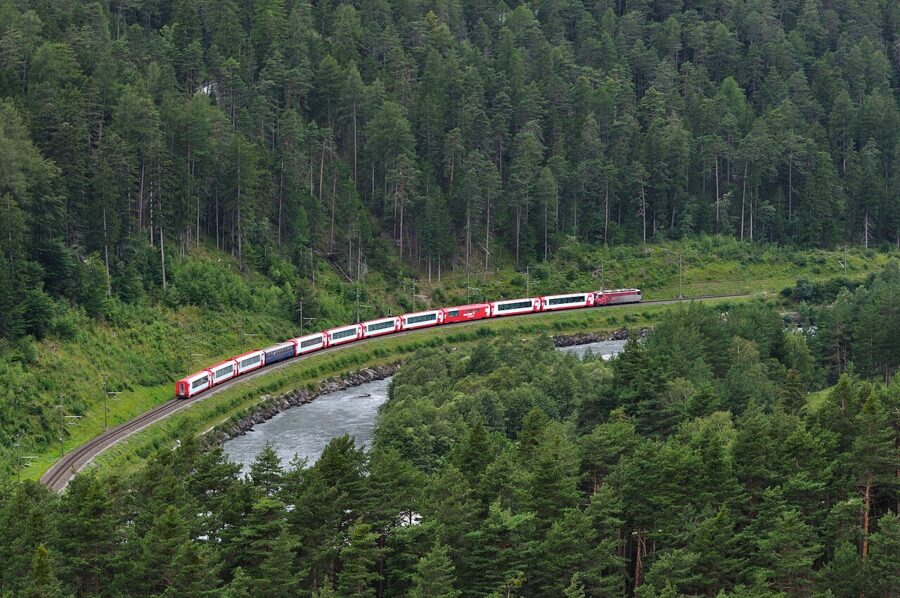
Between Ilanz and Reichenau comes the Rhine Gorge, the Ruinaulta, which the operator calls the Swiss Grand Canyon. It formed about 10,000 years ago when a vast landslide blocked the valley and the river cut its way back through the debris, leaving pale cliffs and pinnacles hundreds of feet high. The track follows the river along the bottom, so you look up at the walls rather than down into the gorge.
One date matters for spring 2027. The line through the gorge is closed for construction at Versam from April 17 to May 2, 2027, and buses replace the train between Disentis and Chur. If the gorge is a reason you are going, avoid those two weeks.
Chur, where the train turns around
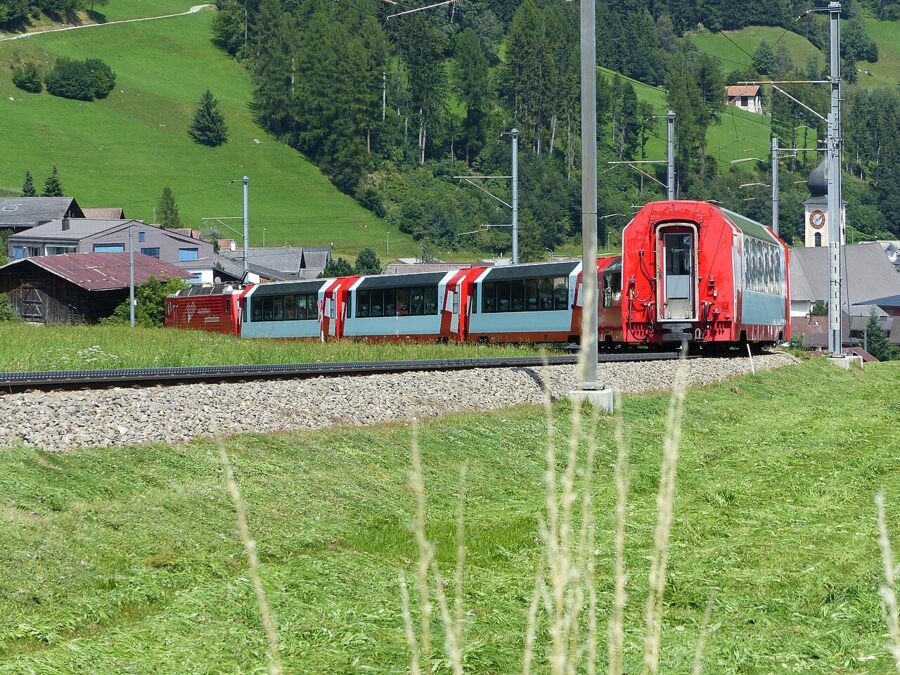
Chur, at 1,919 feet (585 m) the lowest point of the trip, comes at 2:25 p.m. The train waits ten minutes and then leaves the way it came in, running back to Reichenau before turning south up the Domleschg valley toward Thusis. Everyone who was facing forward is now facing backward, and the left side of the train has become the right.
The Albula line and the Landwasser Viaduct
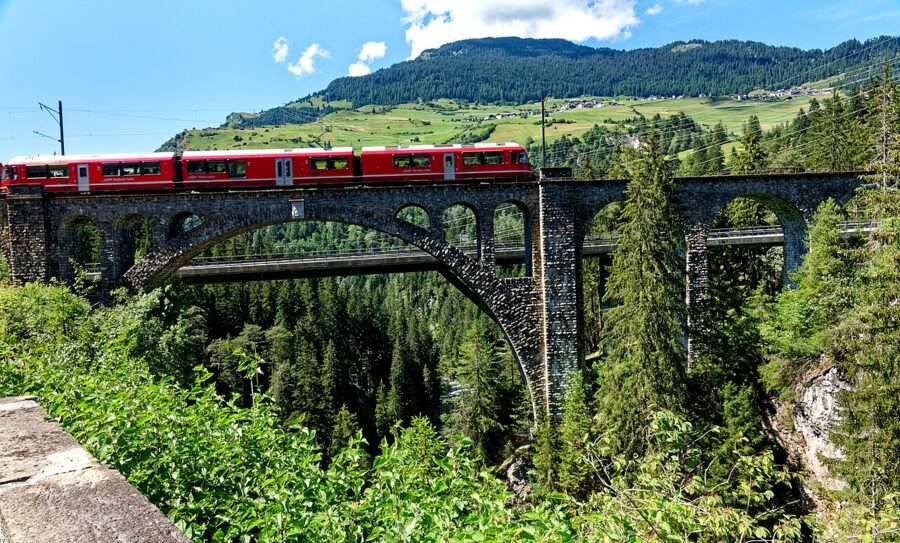
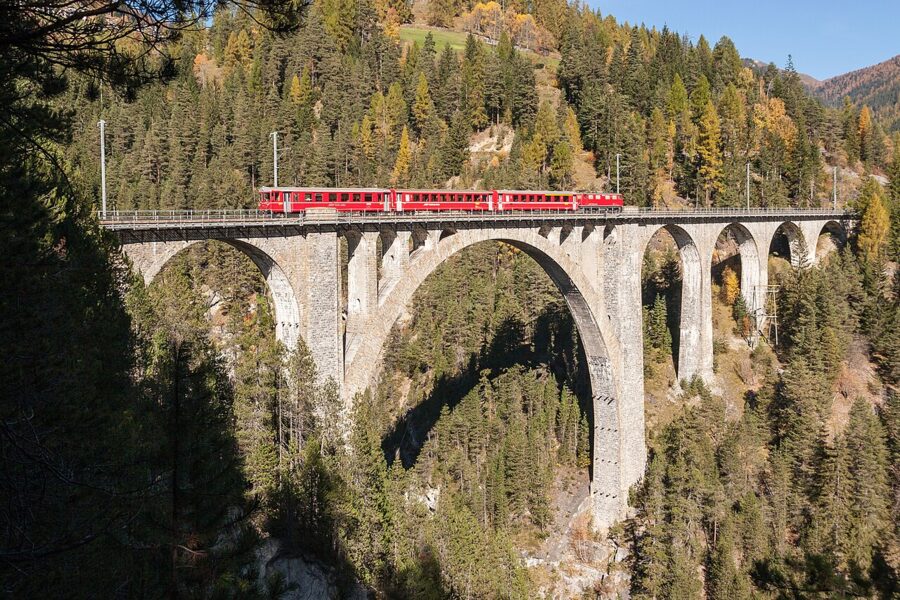
From Thusis the train enters the stretch that made the Rhaetian Railway famous. The Albula line, with the Bernina line beyond St. Moritz, has been a UNESCO World Heritage Site since 2008. First comes the Solis Viaduct, 292 feet (89 m) above the Albula river, then Tiefencastel, then the Landwasser Viaduct.
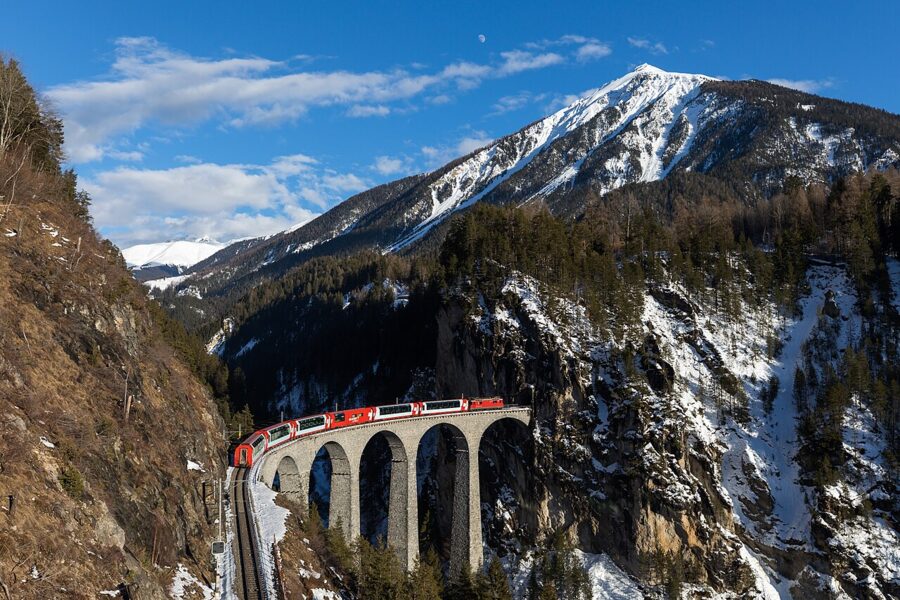
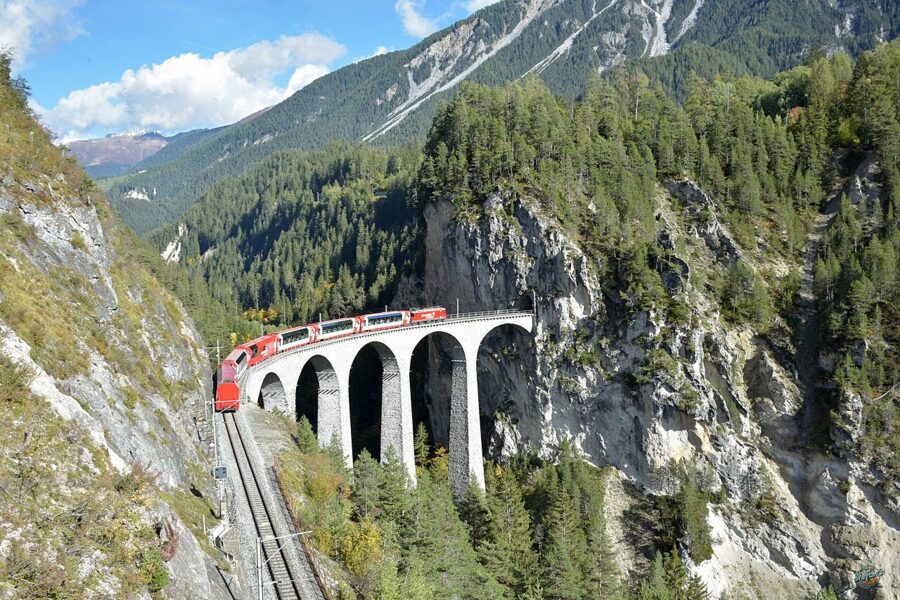
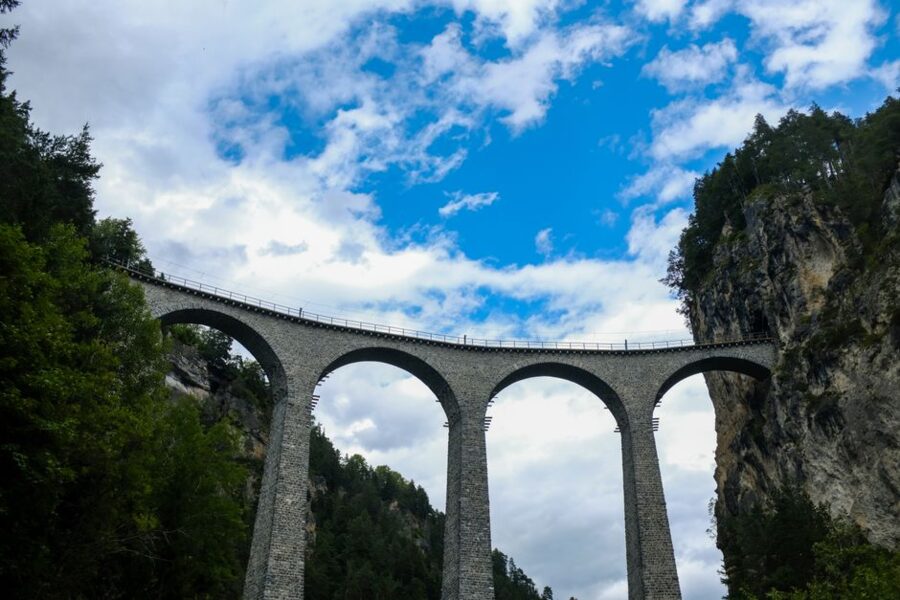
The Landwasser is the picture on every poster: six stone arches, 213 feet (65 m) high, on a tight curve that ends straight in a tunnel cut into the cliff. Train 902 crosses it shortly before its 3:41 p.m. stop at Filisur. From inside the train you see the curve ahead and the drop below, but never the whole viaduct, which is a sight for the ground.
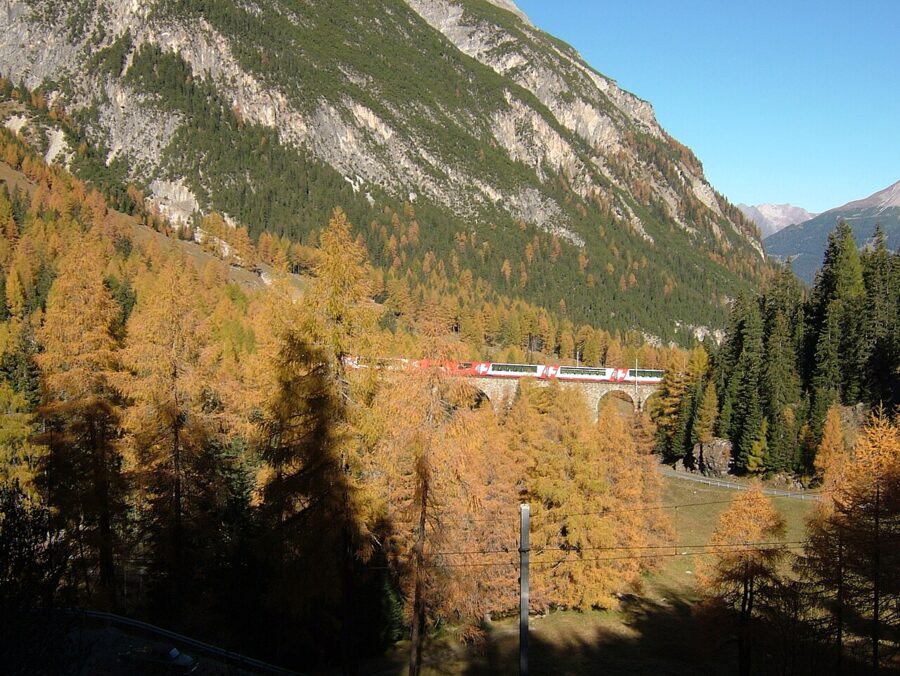
Past Filisur and Bergün the line has to gain more than 1,300 feet (400 m) to Preda in a short valley, and does it with six high viaducts, three spiral tunnels and two helical tunnels. Watch the road and the river below: you pass over and beside them several times on the way up. Then the train runs under the Albula Pass into the Engadine, stops at Samedan at 4:28 p.m. and ends at St. Moritz, 5,906 feet (1,800 m) up, at 4:36 p.m.
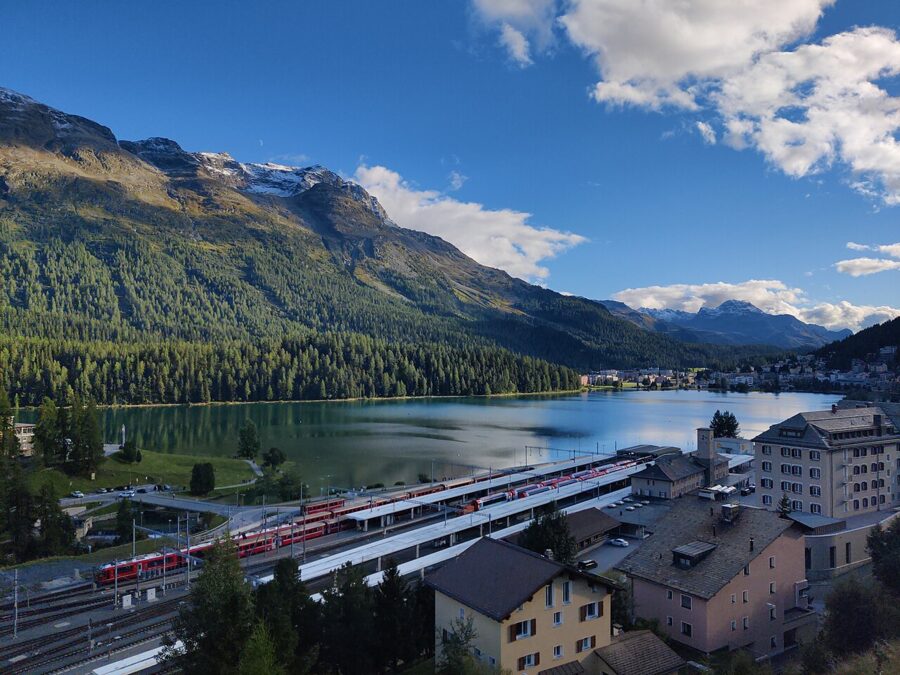
Davos instead of St. Moritz
The through cars to Davos stopped running in 2013, but Davos is still an easy end point. Get off at Filisur, change to a regional Rhaetian Railway train, and you are in Davos Platz in about half an hour, crossing the Wiesen Viaduct on the way. Only the Glacier Express trains that call at Filisur make this connection: 902 and 903 in both seasons, plus 901 and 906 in summer. Book the Glacier Express to Filisur, CHF 150 (about US$180) in Second Class from Zermatt as of 2026, and buy the short regional leg separately; a Swiss Travel Pass covers both.
Second, First or Excellence Class
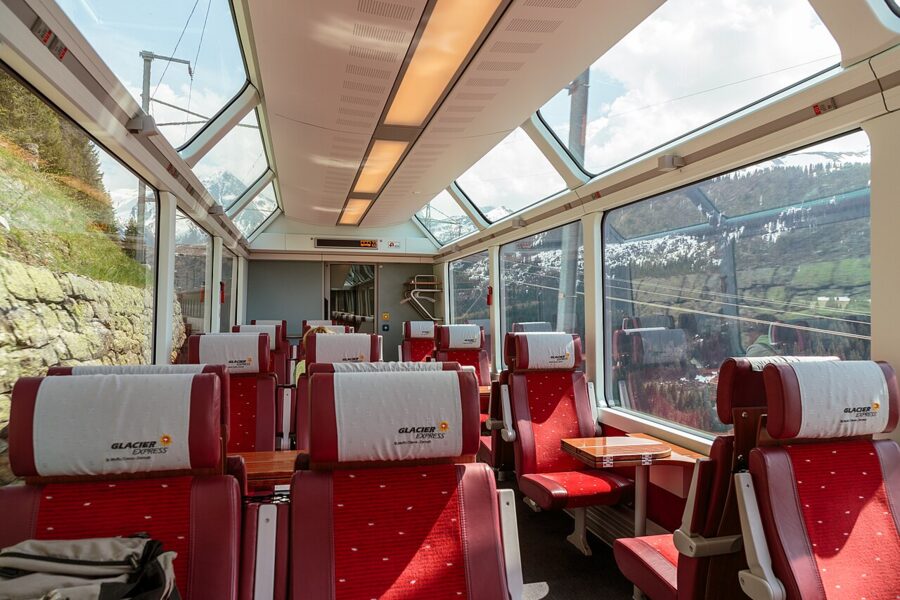
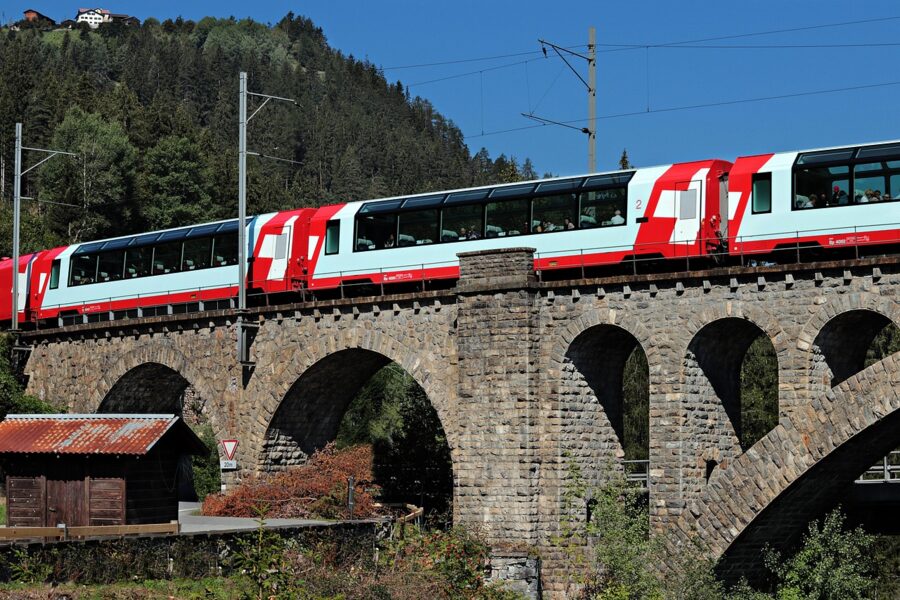
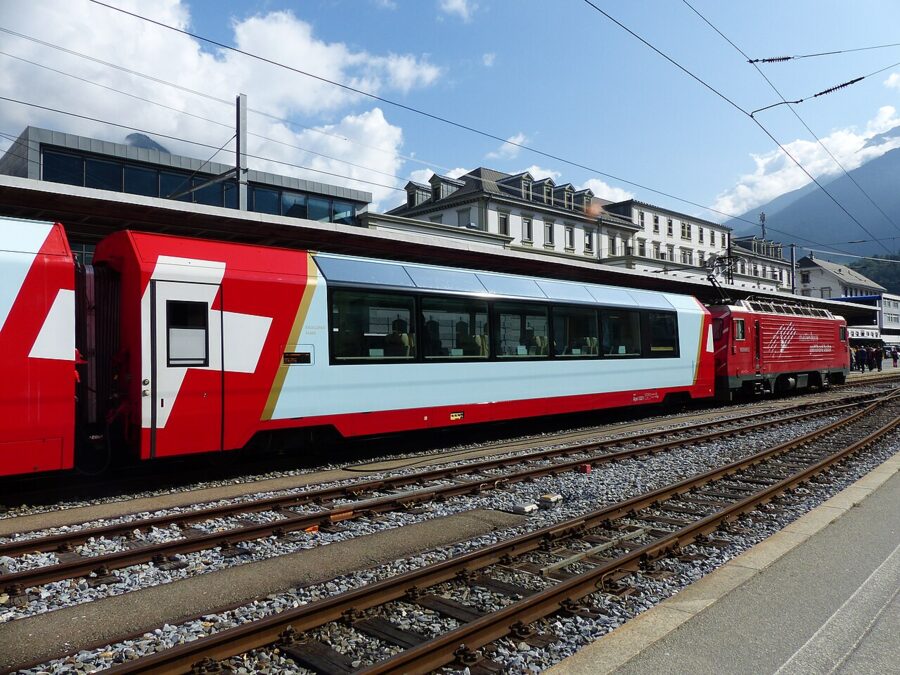
All three classes ride in panoramic cars with the same windows. What changes with the price is the space around you and whether lunch is included.
| Class | Seating | Food and drink | Zermatt to St. Moritz, full fare plus reservation (as of 2026) |
|---|---|---|---|
| Second | Four-seat bays around tables | Served at your seat, paid for | CHF 166 + CHF 54 = CHF 220 (about US$265) |
| First | Two- and four-seat bays, more room | Served at your seat, paid for | CHF 284 + CHF 54 = CHF 338 (about US$405) |
| Excellence | 20 seats per car, every one at a window | Champagne, five-course menu with wine, drinks and bar included | CHF 284 + CHF 590 = CHF 874 (about US$1,050) |
Second Class
Second Class seats four around each table, two facing two, and on a full summer train you will share with strangers for eight hours. The meals are the same ones First Class orders. If the fare matters at all, take this class; the glass is identical.
First Class
First Class adds CHF 118 (about US$140) at full fare and buys elbow room: bays of two and four seats rather than four, so a couple can have a table to themselves. On an eight-hour day that privacy is worth more than it sounds. If you hold a First Class Swiss Travel Pass, the reservation is the same CHF 54, which makes First the obvious choice.
Excellence Class
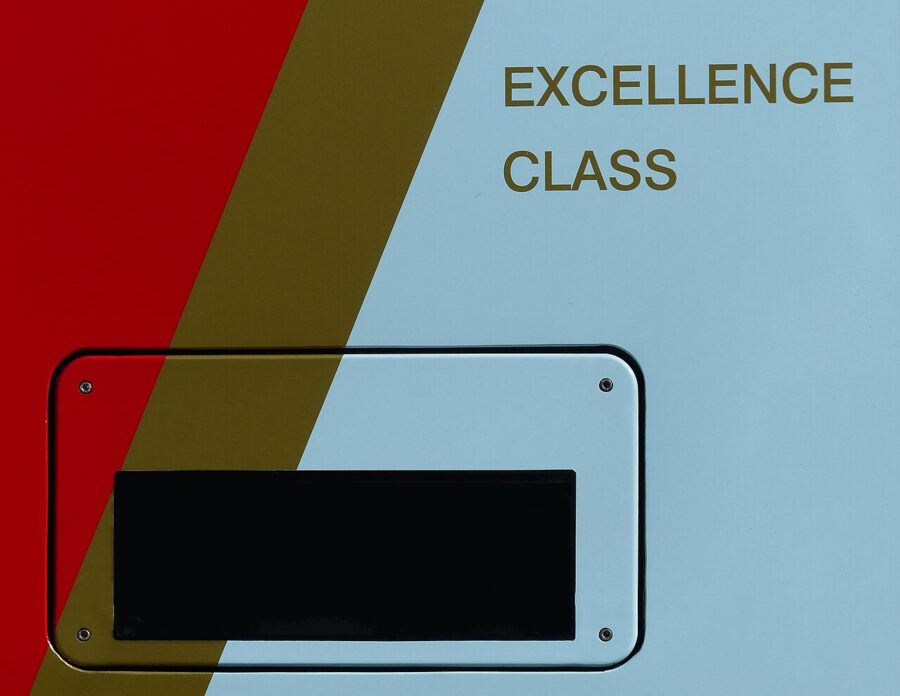
Excellence Class, launched in winter 2019, is one car of 20 lounge seats, two at each table, each one beside a window and reclining. The CHF 590 reservation buys champagne and an aperitif platter, a seasonal five-course menu with matched wines, soft drinks and coffee without limit, the Glacier Bar for cocktails, a concierge, a check-in desk on the platform, luggage carried to and from the train, and a tablet with its own commentary. You also need a First Class ticket or pass.
It runs only on trains 902 and 903, only over the whole route, and not on 903 from April 16 to May 2, 2027 or on 902 from April 17 to May 3, 2027. It can be booked for the entire timetable period, months ahead of the other classes. At CHF 874 per person on full fare it is a celebration, not an upgrade; if you want the view, Second Class has it.
Tickets, the reservation and what you actually pay
Riding the Glacier Express takes two things: a ticket for the route and class, and a seat reservation. The reservation is compulsory on every train, is never covered by a pass, and cannot be changed or cancelled once booked online. The operator’s fares and reservation page lists the full fares below as of 2026.
| Section | Second Class | First Class |
|---|---|---|
| Zermatt – St. Moritz | CHF 166 | CHF 284 |
| Zermatt – Filisur (for Davos) | CHF 150 | CHF 257 |
| Zermatt – Chur | CHF 129 | CHF 221 |
| Zermatt – Andermatt | CHF 80 | CHF 137 |
| Andermatt – St. Moritz | CHF 92 | CHF 157.20 |
| Chur – St. Moritz | CHF 46 | CHF 79 |
| Seat reservation, per person per train | CHF 54 | CHF 54 (Excellence CHF 590) |
Passes
The Swiss Travel Pass, the Eurail Pass, the Interrail Pass and the Swiss GA all cover the fare in full, so holders pay only the CHF 54 reservation. The Half Fare Card halves the fare, and the Saver Day Pass sold by SBB covers it too, though that one is non-refundable. For First or Excellence Class the pass has to be First Class.
A three-day Swiss Travel Pass in Second Class costs CHF 254 (about US$305) on SBB’s price list valid through December 31, 2026, more than the CHF 166 Glacier Express fare on its own. The pass pays when the Glacier Express is one of three travel days, with Zermatt’s trains, the Bernina line or a lake boat on the others.
Children
Under-6s travel free but get no seat of their own unless you reserve one, which I would do on any summer train. Children from 6 to 16 pay half the fare but the full reservation. With the Swiss Junior Travelcard, under-16s ride free with a parent. In Excellence Class, under-6s need a ticket too.
When and where to book
Tickets go on sale six months before travel. Reservations for First and Second Class open 93 days ahead; for summer dates, book the day the window opens. Excellence Class can be booked for the whole timetable period. Reservations for December dates open by mid-October.
Book on the Glacier Express website, at staffed Swiss stations or through SBB; you pick a seat on a map, can add a meal, and get the tickets by email. The operator’s FAQ covers the odd cases, including how to reserve with a pass you already hold. Upgrades from Second to First can be bought from the train guard if there is room, but not online.
Meals at your seat
The kitchen car cooks most dishes on board, with some prepared fresh in Chur, and staff serve them at your table. Pre-ordering is not required but is the safe choice: you can order when you book or up to 48 hours before departure, and the galley’s limited storage means a dish can run out before it reaches your car.
On the 2027 menu, the dish of the month is CHF 36 (about US$43). With soup it is CHF 45, with soup and dessert CHF 54, and with a sorbet added CHF 58. The December 2026 menu is pumpkin and chestnut soup, then chicken fricassee in a morel cream sauce with butter spaetzli; ask the staff for the vegetarian version. A bowl of Graubünden barley soup with air-dried beef is CHF 14, and an Engadine nut tart CHF 10 (about US$12).
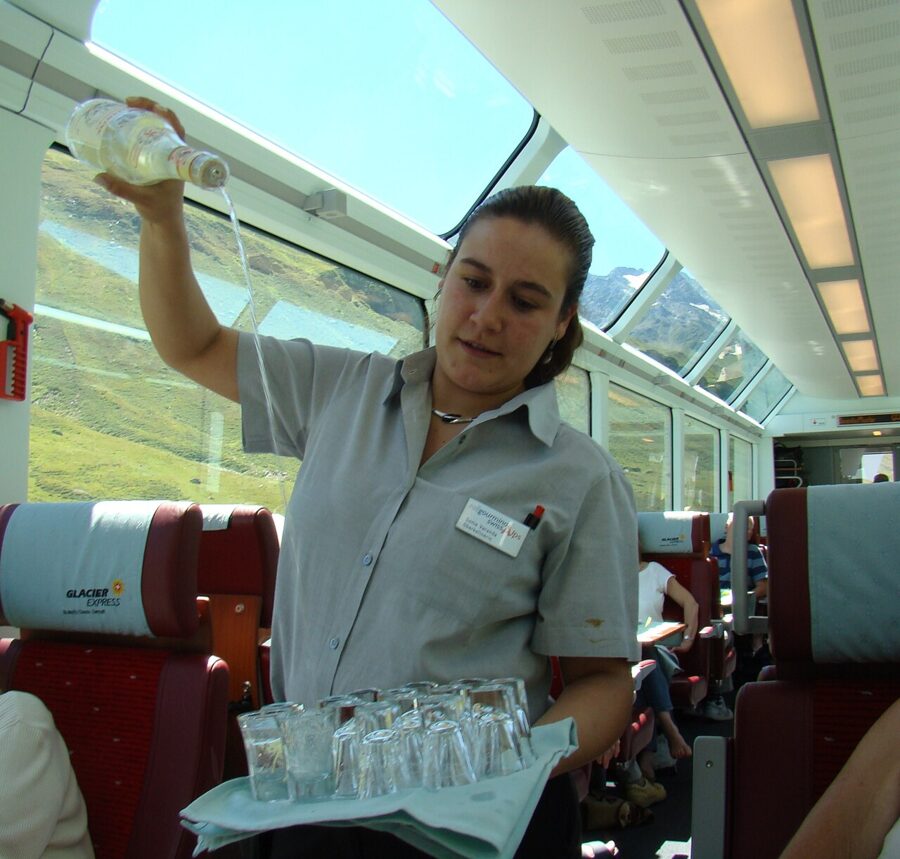
After lunch the head waiter comes through with grappa or Williams pear brandy and pours it into your glass from about two feet up while the train is moving. A 2 cl measure of grappa is CHF 9. The train takes cards and Twint only, no cash, and spirits are not sold to anyone under 18. Wines come mostly from Graubünden and the Valais, in the tilted glasses that keep them level on the gradients.
Luggage, Wi-Fi and the small print
Suitcases go on racks at each end of the car, small bags under or between the seats. Bring one piece beyond your hand luggage at most; skis, golf bags, bicycles, e-scooters and oversized bags are not carried. For anything more, the operator recommends sending it ahead with Jaisli Mobility Service, which guarantees delivery by 6 p.m. on the travel day if you book by 5 p.m. the day before.
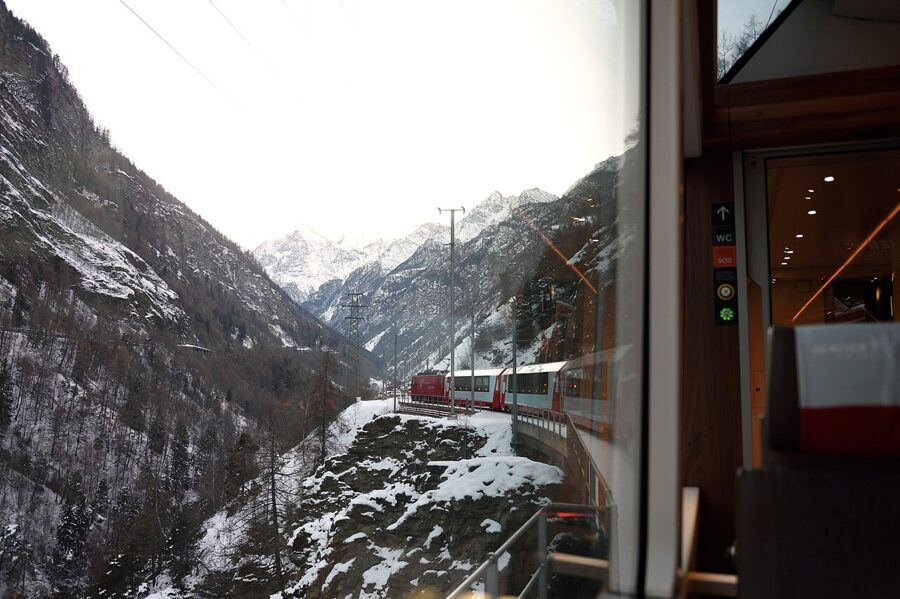
Dogs are not allowed, apart from recognized assistance dogs. Every seat has a power outlet and headphones for the commentary, which comes in six languages, and the Wi-Fi shows a live map but fades in the mountains. The windows in the entrance doors can be lowered, the only way to take a photo without reflections. Wheelchair users should contact the operator’s Railservice before booking.
The 2027 timetable and the autumn shutdown
The Glacier Express runs every day except for an annual break for maintenance. In 2026 the last trains ran on October 10 and service restarts on December 5; in 2027 the last day is October 9 and trains return on December 4. The official timetable splits the year into a winter season, December 5, 2026 to May 7, 2027, and a summer season, May 8 to October 9, 2027.
| Train | Runs | Departs | Arrives |
|---|---|---|---|
| 902 | All year | Zermatt 8:50 a.m. | St. Moritz 4:36 p.m. |
| 920 | Winter, Dec 12–Jan 3 and Jan 30–May 7 | Zermatt 7:50 a.m. | St. Moritz 3:36 p.m. |
| 900 | Summer | Zermatt 7:50 a.m. | Chur 1:25 p.m. |
| 904 | Summer | Zermatt 9:50 a.m. | St. Moritz 5:36 p.m. |
| 906 | Summer | Brig 2:14 p.m. | St. Moritz 8:53 p.m. |
| 903 | All year | St. Moritz 8:38 a.m. | Zermatt 5:04 p.m. |
| 905 | Winter (same dates as 920) and summer | St. Moritz 9:38 a.m. | Zermatt 6:04 p.m. |
| 901 | Summer | St. Moritz 7:05 a.m. | Brig 1:40 p.m. |
| 907 | Summer | Chur 2:32 p.m. | Zermatt 8:04 p.m. |
Summer is the easy season: four trains each way, long evenings and the short-section trains that make breaking the trip simple. Winter means snow the whole way, two trains each way at most, and a real chance that the Oberalp is a white blur. I would go in late June or September, outside the July and August peak. Online reservations cannot be changed, so in winter leave a spare day around the ride.
Which direction, and which side
Eastbound or westbound makes less difference than people think: both cross the Oberalp around midday, and the sights simply come in reverse. Pick the direction by where you want to wake up next. End in St. Moritz if the Bernina Express and Italy come next, or in Zermatt if you want the Matterhorn at sunrise.
The operator will not promise a side or a forward-facing seat, because the train changes direction on the way. Heading east, the Bis Glacier and most of the river through the Rhine Gorge are on the left, and the Landwasser curve shows best from the right after Chur. Because the train reverses at Chur, a left-hand seat out of Zermatt is on the right by then, so that is the seat I would pick on the map. Westbound, the mirror image works the same way.
With glass that runs into the roof, the wrong side is less of a loss than on an ordinary train. Excellence Class sidesteps the question with a window seat for everyone.
One day, or broken in two
Eight hours is a long time to sit, even with lunch. A reservation holds a seat on one train only, so breaking the trip costs a second reservation, but the fares barely change: the two Andermatt sections come to CHF 172 in Second Class, against CHF 166 for the whole run.
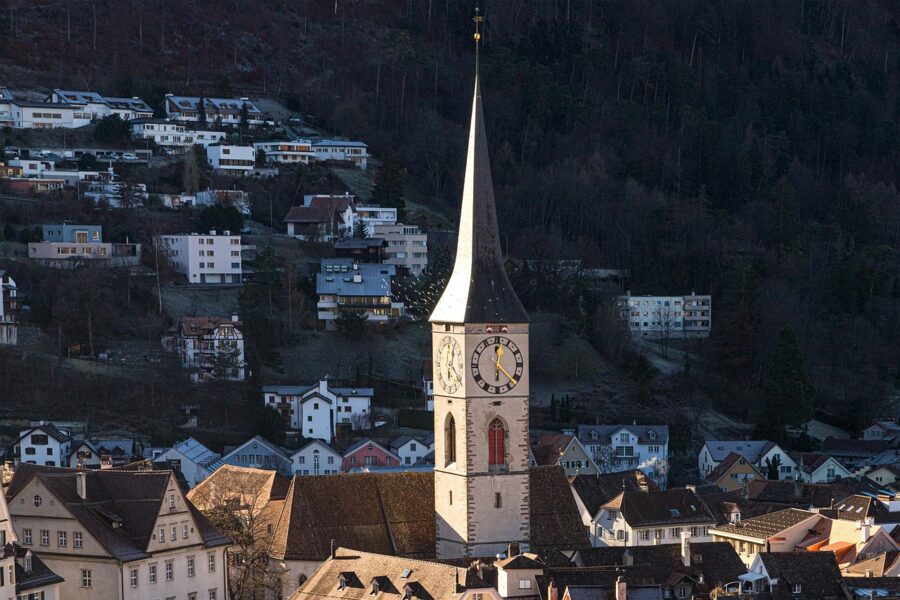
Andermatt is my choice for a break: ride 902 as far as Andermatt, arriving at 11:46 a.m., spend the afternoon and night there, and in summer take 904 on at 1:00 p.m. the next day to reach St. Moritz at 5:36 p.m. In winter, catch the next day’s 902 from Andermatt at noon. Chur works as well, with an old town, hotels by the station and hourly regional trains to St. Moritz that need no reservation.
In summer the operator adds trains built for exactly this. Train 900 runs Zermatt to Chur, 907 runs Chur to Zermatt, 906 runs Brig to St. Moritz and 901 St. Moritz to Brig, and only these trains sell the shortest sections such as Andermatt to Brig. In winter, a section has to meet a minimum distance, so check the booking page before planning a short hop.
The same mountains without the Glacier Express
Every mile of the route is also served by regional trains of the Matterhorn Gotthard Bahn and the Rhaetian Railway, which need no reservation and are covered by the same passes. The catch is four or five changes and ordinary windows instead of panoramic glass. On a pass, they let you get off wherever the light is good.
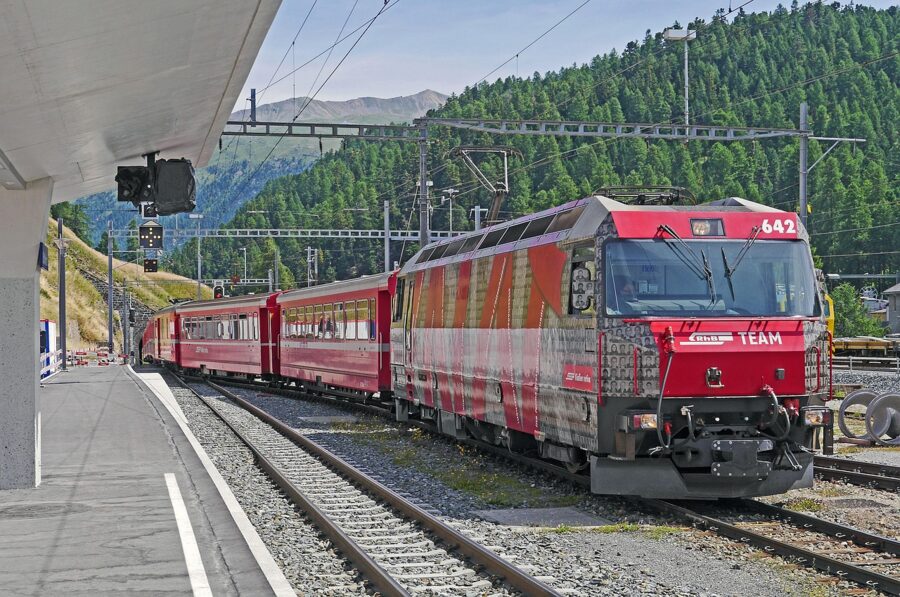
The Glacier Express also fits into a longer Alpine trip. The Bernina Express continues from St. Moritz over the Bernina Pass to Tirano, where Italy by train starts across the station square. The GoldenPass Express covers western Switzerland between Montreux and Interlaken, and the rest of Europe’s scenic train rides are within a day of Zermatt.
Arriving from elsewhere in Europe, night trains into Switzerland save a hotel night and put you on an early connection. Excellence Class invites comparison with the Orient Express, at a fraction of the price.
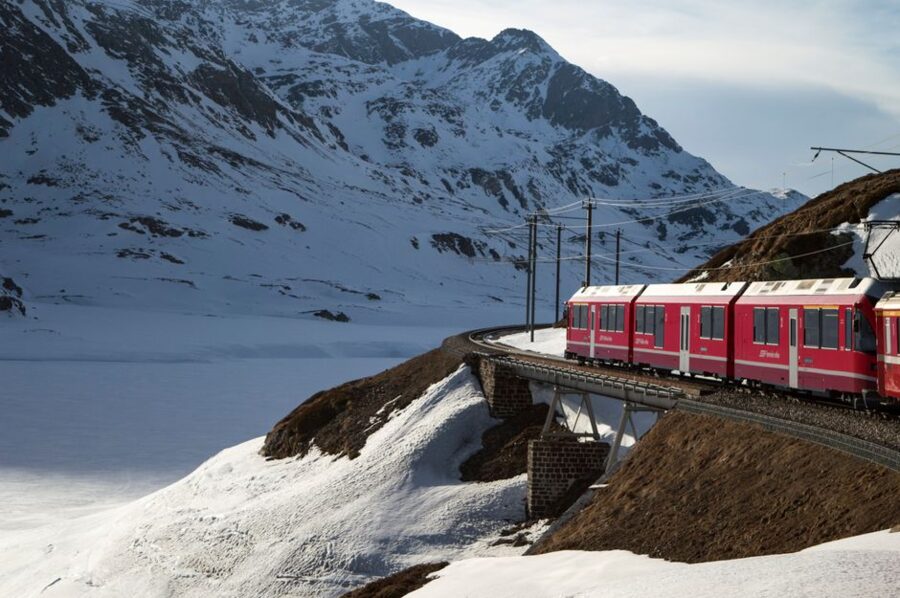
For the ride itself, the plan is short. Book train 902 the day the 93-day window opens, take a left-hand seat out of Zermatt, order the barley soup, and let the train turn you around at Chur in time for the Landwasser.