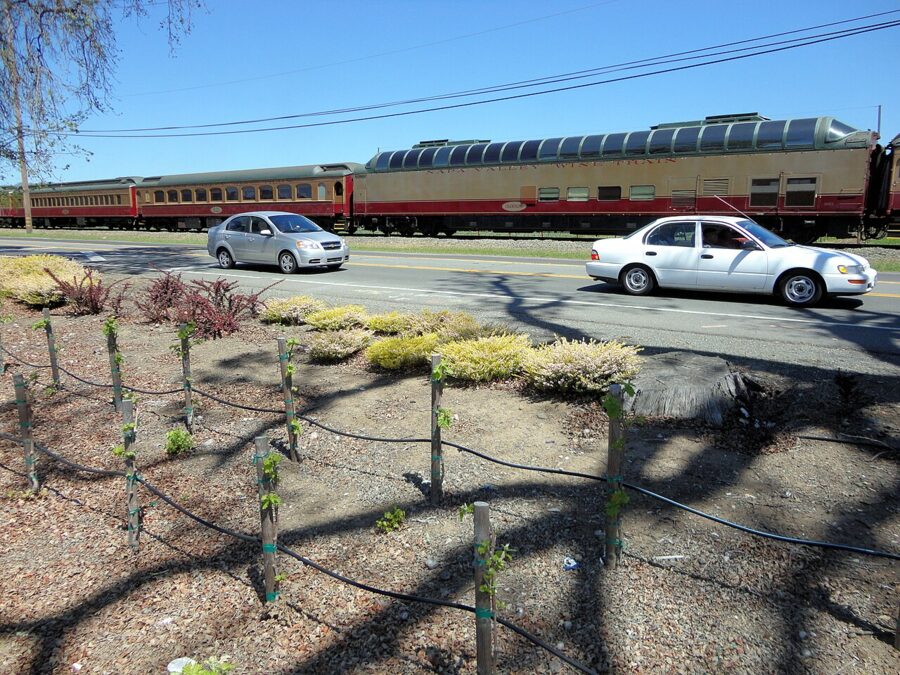
The Gourmet Express pulls out of downtown Napa at 11:30 in the morning, and by the time the main course reaches your table the train is rolling past Oakville with vines on both sides and Highway 29 running alongside. Nobody at your table is driving. That, more than the mahogany or the dome car, is what you are paying for.
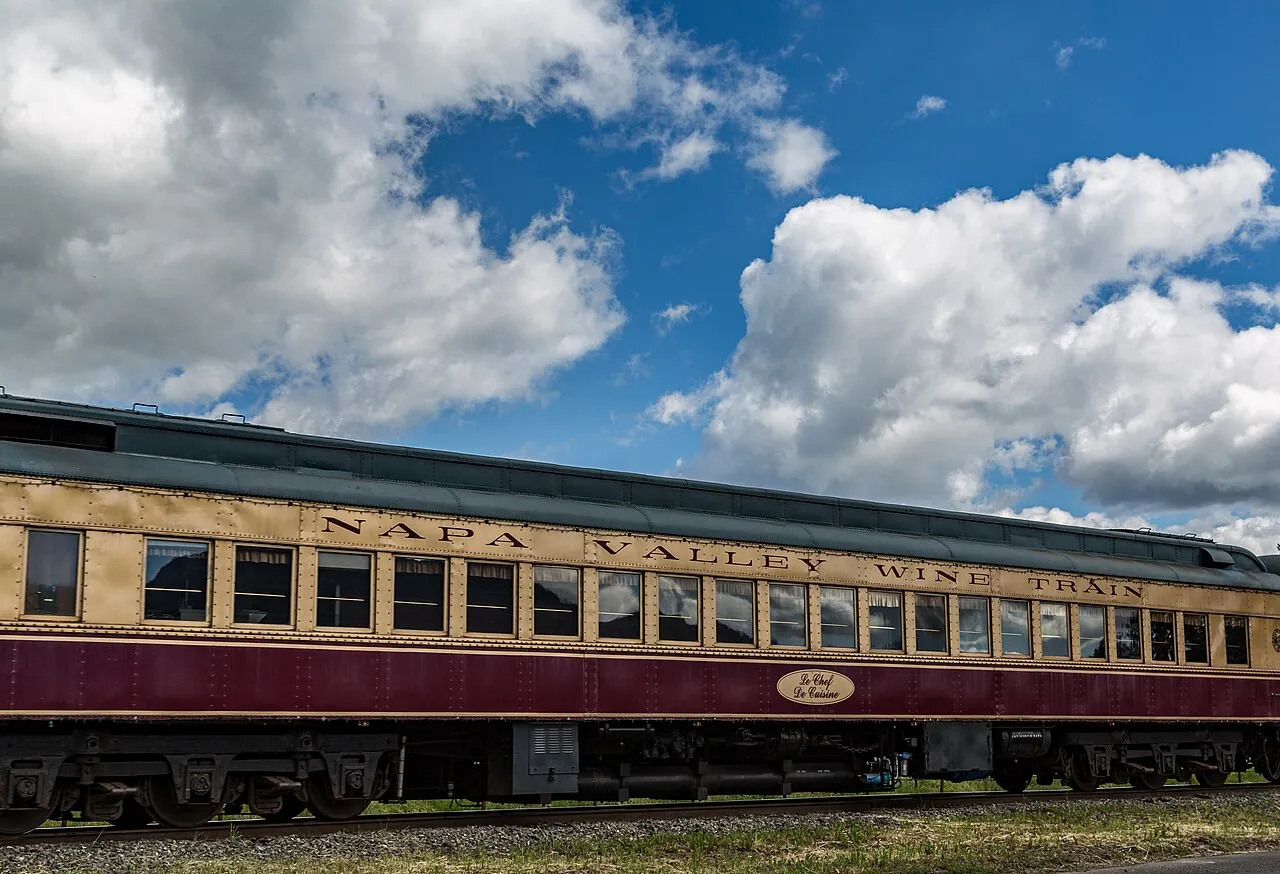
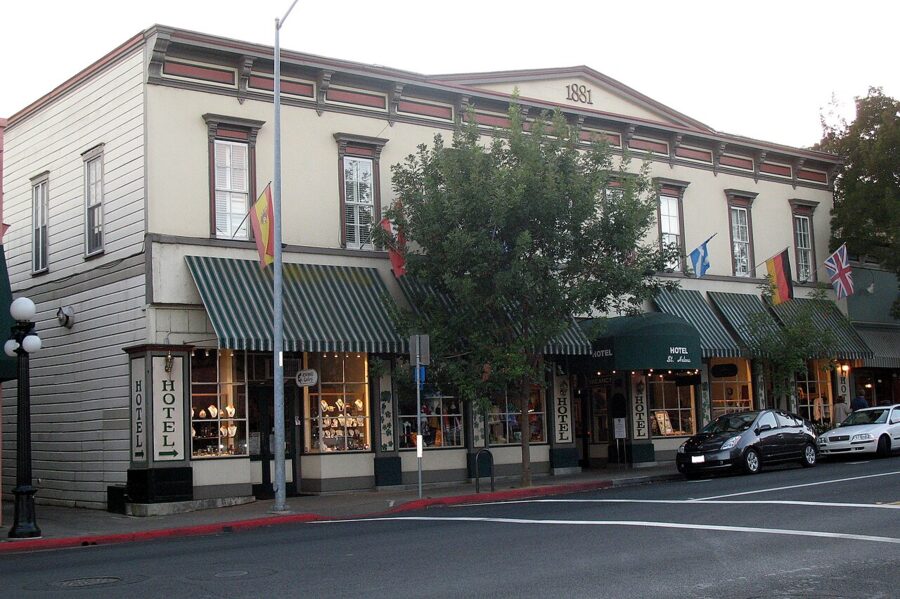
The Napa Valley Wine Train runs a 36-mile round trip from its station on McKinstry Street to St. Helena and back, in Pullman dining cars built between 1915 and 1917 and a glass-roofed dome car from 1952. It goes nowhere you need to go. You get off where you got on, three or six hours later, fed and a glass or two down.
The decision is which of nearly twenty experiences to book, and whether any of them is a better use of a Napa day than driving yourself to wineries. As of late November 2026, the cheapest regular seat on the operator’s booking calendar was a December weeknight dinner at $225.17, and the six-hour Legacy Experience started at $641. The gap between those two is most of what follows.
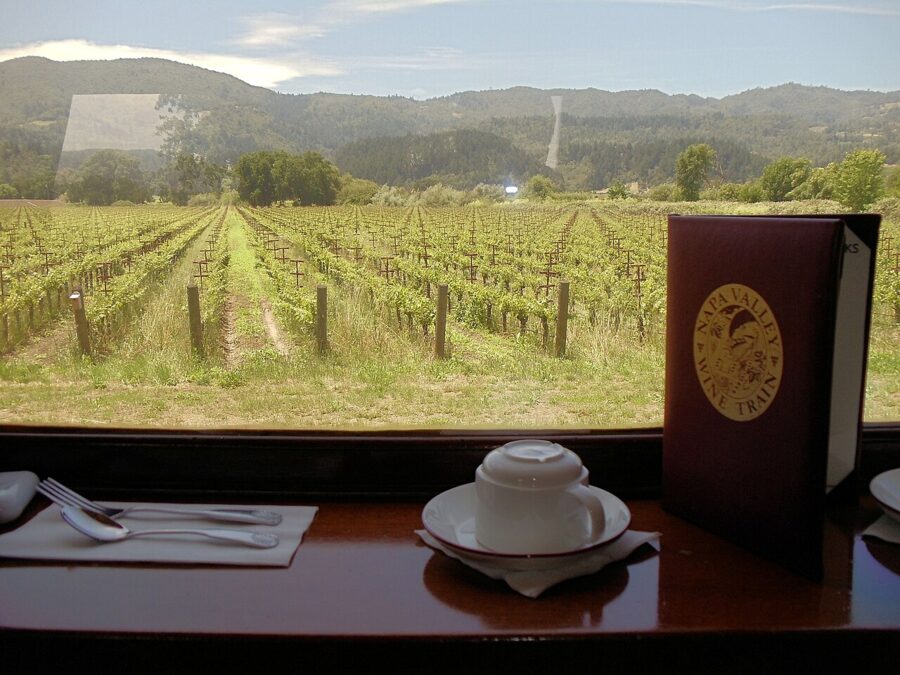
There are really two trains. The main train, usually seven passenger cars with a kitchen car and two power cars, carries the lunch and dinner experiences side by side, each in its own car. The Legacy train is smaller, with two passenger cars and an open-air car, and it stops at wineries.
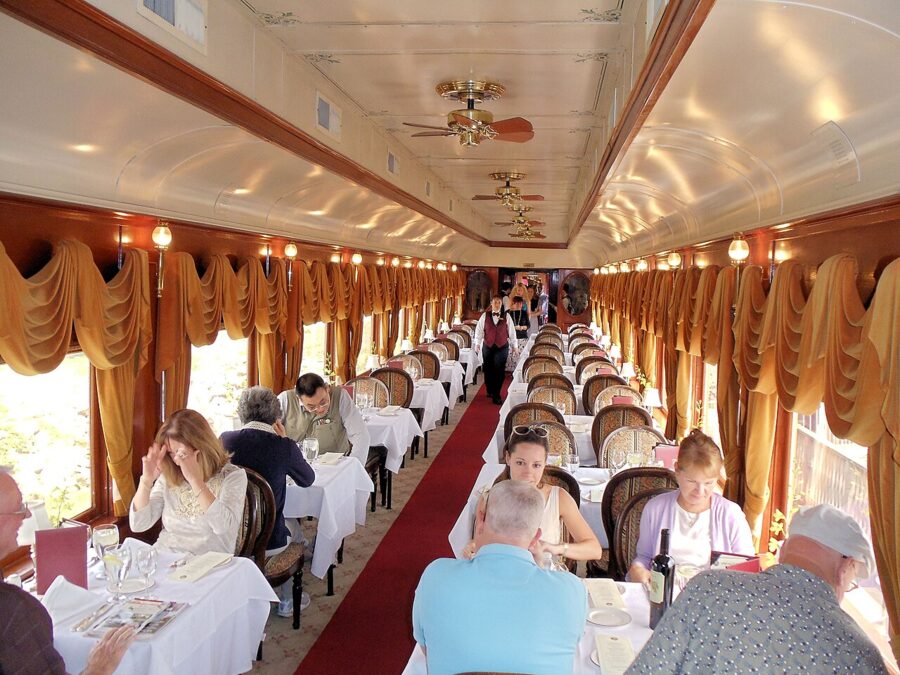
Regular departures are at 10:15 in the morning for the Legacy, 11:30 for the lunch train and 6:20 in the evening for dinner, which runs on select dates rather than every night. The train runs all year.
The experiences compared, as of late 2026
The prices below are the “from” figures on the operator’s experience list on November 26, 2026, per person, for the next available departure. They include the event fee that covers service on every experience except the Legacy. Fares move with demand, so treat them as a guide to the gap between experiences rather than a quote.
| Experience | Train and car | Departs, length | Meal | Wine included | From (Nov 2026) |
|---|---|---|---|---|---|
| Gourmet Express Lunch | Main train, 1915 Pullman dining car | 11:30 a.m., 3 hours | 3 courses | Welcome glass | $420.14 (holiday Friday) |
| Gourmet Express Dinner | Main train, Pullman dining car | 6:20 p.m., 2.5 hours | 3 courses | Welcome glass | $225.17 (December weekday) |
| Vista Dome Lunch | Main train, 1952 dome car, upper level | 11:30 a.m., 3 hours | 4 courses | Welcome glass | $467.41 |
| Vista Dome Dinner | Main train, dome car | 6:20 p.m., 2.5 hours | 4 courses | Welcome glass | $349.24 |
| Tasting on the Rails Lunch | Main train, Pullman refurbished in 2022 | 11:30 a.m., 3 hours | 7 courses | A wine with each course | $447.50 |
| Grgich Hills Estate Tasting | Main train, Pullman dining car | 11:30 a.m., 3 hours | 3 courses | Welcome glass, seated tasting at the winery | $520.58 |
| Legacy Experience | Legacy train with open-air car | 10:15 a.m., 6 hours | 4 courses, from breakfast | About 11 tastings, two wineries | $641.00, before tip |
| Murder Mystery Dinner | Main train | 6:20 p.m., 2.5 hours | 3 courses | Welcome glass | No dates posted |
Two numbers in that table show how far pricing swings. The Gourmet Express Lunch figure is for the Friday after Thanksgiving; a three-course Gourmet Express Dinner on a Tuesday in December came to $225.17. Children 12 and under pay $135.36 on the Gourmet Express Lunch, fees included, and babies on a lap ride free, but some cars have no children’s rate at all.
The operator’s special offers page also listed 10 percent codes for the Legacy and the Vista Dome in late November 2026, with exclusions. If you have read about the Quattro Vino or the Ambassador winery tour, neither appears on the current list. The winery trains now are the Legacy and the Grgich Hills trip.
Gourmet Express: where to start
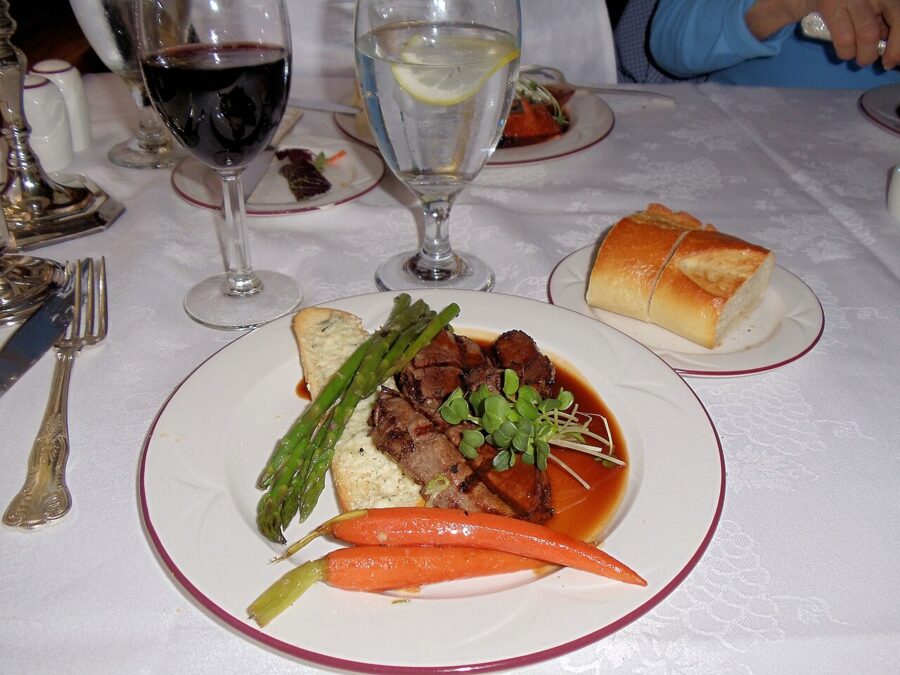
This is the original 1989 ride, and the one I would book first. You check in at 10:30, board around 11:00 and leave at 11:30, with a welcome glass of sparkling wine, a starter, a choice of mains and dessert with coffee on the run back. The menu in late 2026 included a grilled beef tenderloin, red wine braised short ribs, salmon and a ricotta gnocchi.
It is also the easiest to book alone: solo travelers can buy a single seat online for the Gourmet Express Lunch and Dinner and for Afternoon Tea. For the other experiences, the reservations line can sometimes place a single on standby.
Vista Dome: pay for the room
The Vista Dome puts you upstairs in a glass-roofed car with red velvet booths, and adds a course. In a regular Pullman you look sideways at the valley; in the dome the hills on both sides and the sky are part of the room. If you are riding once, for a birthday or an anniversary, this is where the extra money shows.
Tasting on the Rails: wine without leaving the train
Seven small courses, each with its own wine. The late-2026 lunch menu ran from a Chandon sparkling with the amuse-bouche through a Charles Krug sauvignon blanc and a Beaulieu Vineyard Georges de Latour Private Reserve cabernet with the beef, ending on a Trefethen late harvest riesling with cheese. It is the most wine you can drink on the main train without paying by the glass.
Evening trains and the Murder Mystery Dinner
Dinner departs at 6:20 and is back around 8:45 or 8:50. On the operator’s own itineraries the evening trains turn at Rutherford rather than St. Helena, and from late fall into winter much of the ride is in the dark, so you see your own reflection more than the vines. In summer, the evening ride catches the low sun on the vineyards.
The Murder Mystery Dinner, staged by The Murder Mystery Company, ran on Saturdays through 2026, the last on November 14; 2027 dates had not been posted by late November 2026. It is good with a group that likes to play along and awkward with one that came to eat.
The cars and what you get
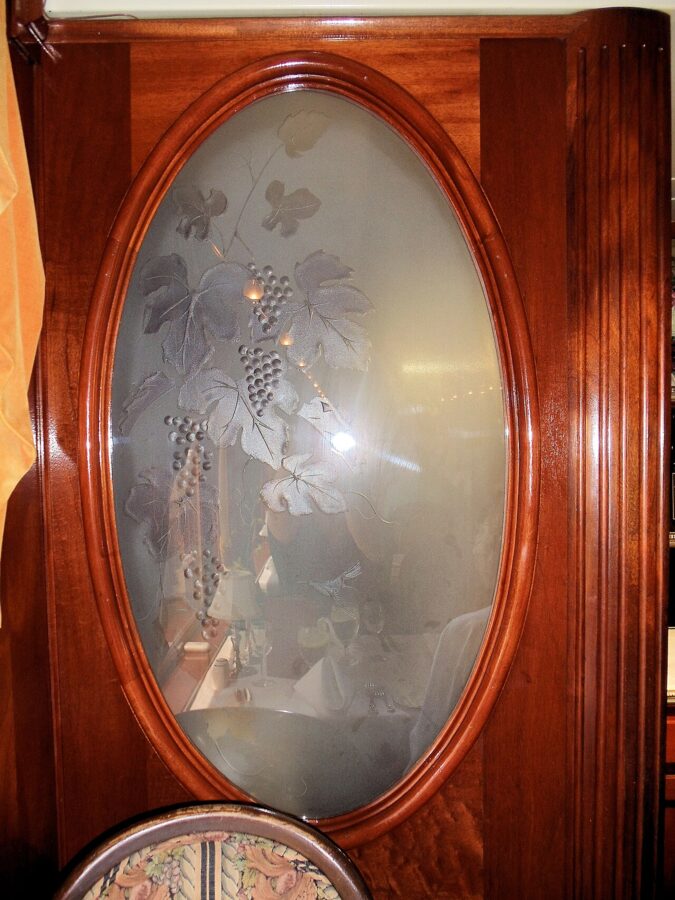
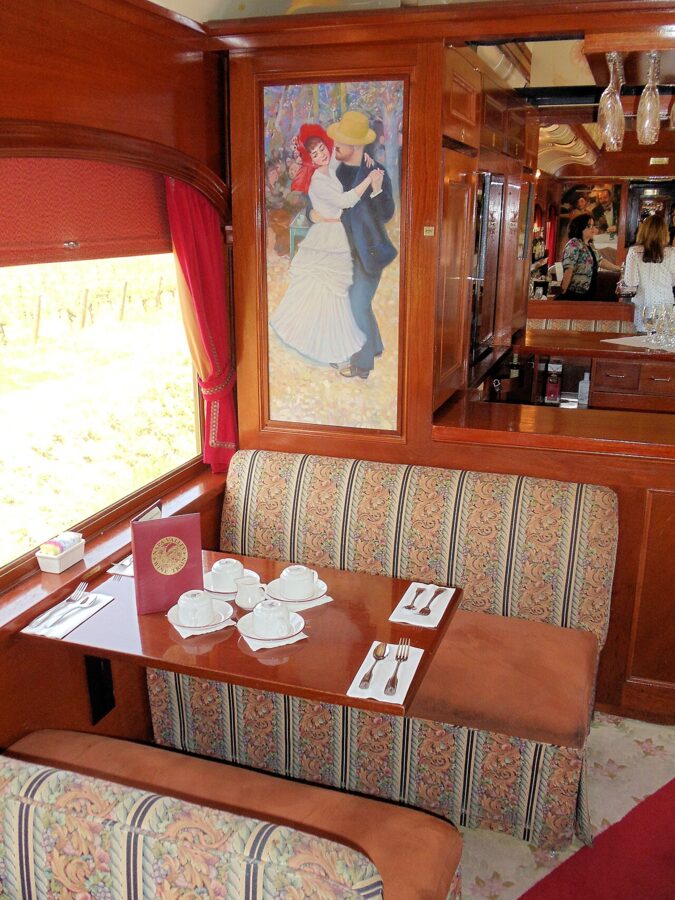
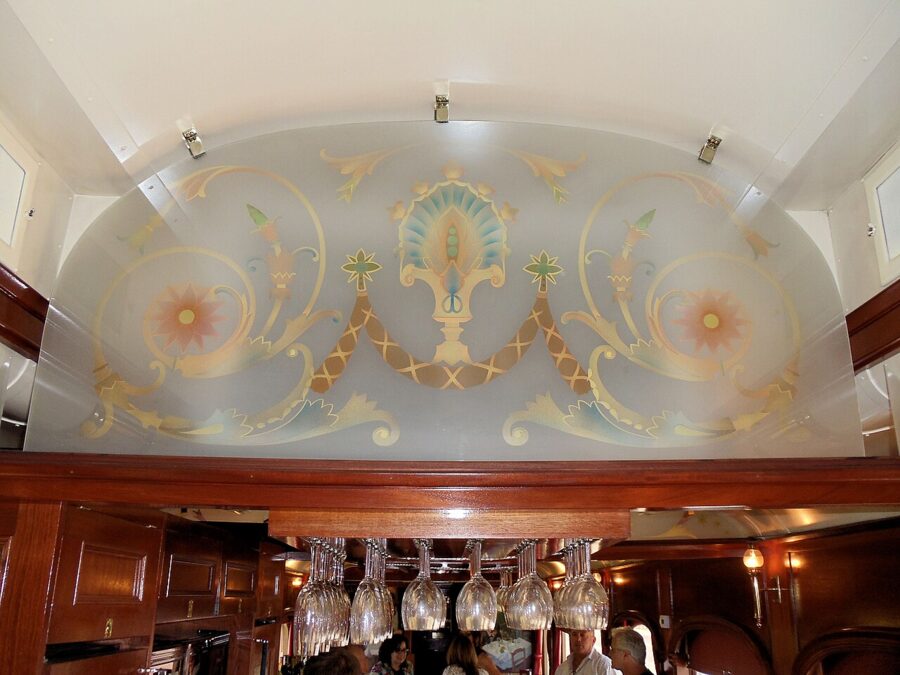
Most of the dining and lounge cars are Pullmans built between 1915 and 1917. Several were built for the Northern Pacific and later spent years on the Denver ski train before the Wine Train bought them and refitted them with Honduran mahogany, brass and etched glass. Each car has a name and a character: the Silverado and the Merlot are dining cars, the 1017 is a lounge car, and the 1054 open-air car rides on the Legacy train.
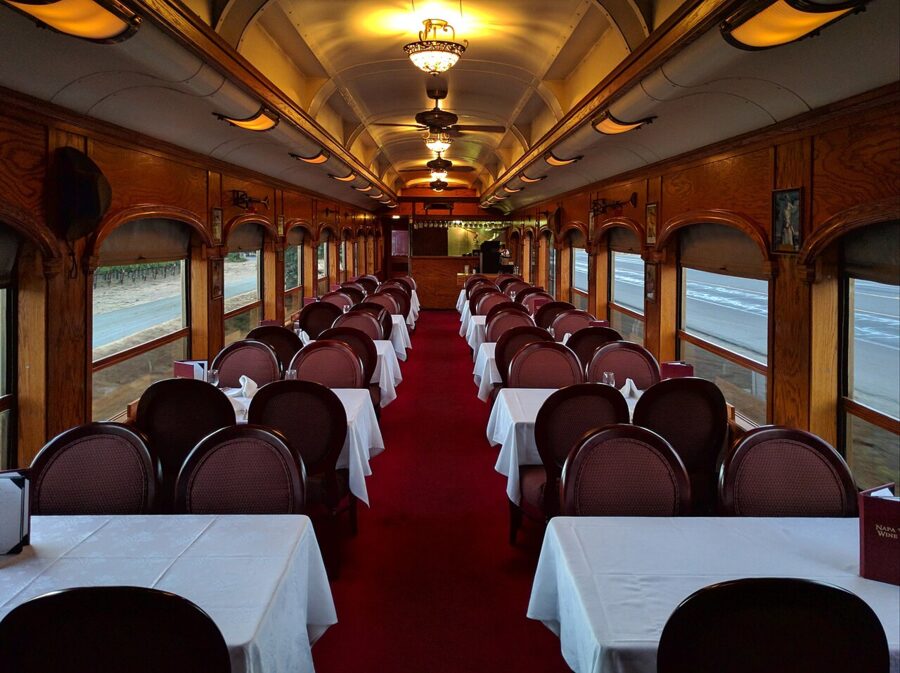
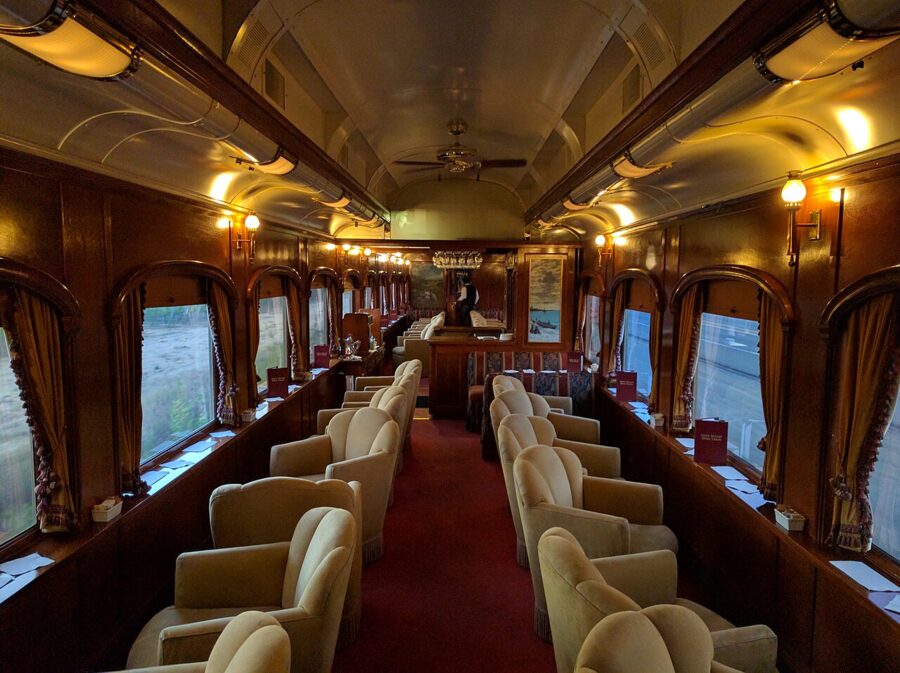
The dome car, number 1085, is a 1952 Pullman-Standard Super Dome, one of only ten built. The upper floor is reached by seven more steps once you are aboard, which matters if stairs are hard for anyone in your party.
Between courses you can walk through the train, and the staff encourage it. The lounge cars have booths and a bar, and on the Vista Dome lunch you can go down and look into the kitchen car, number 1090, where the meals are cooked.
Food, drinks and tipping
Every ticket includes a multi-course meal cooked aboard, a welcome glass of wine, and coffee and tea. Vegetarian, vegan, gluten-free and allergy requests can be noted when you book. You cannot bring outside food, but you can bring your own bottle for a corkage fee; the operator does not publish the amount, so ask when you book.
Everything else to drink is extra: wines by the glass or bottle, wine flights, cocktails, beer and alcohol-free options. The train is cashless. On most experiences the event fee in the ticket goes mostly to the crew, so tipping is customary only on drinks you buy. The Legacy is the exception, with no event fee and a tip left to you.
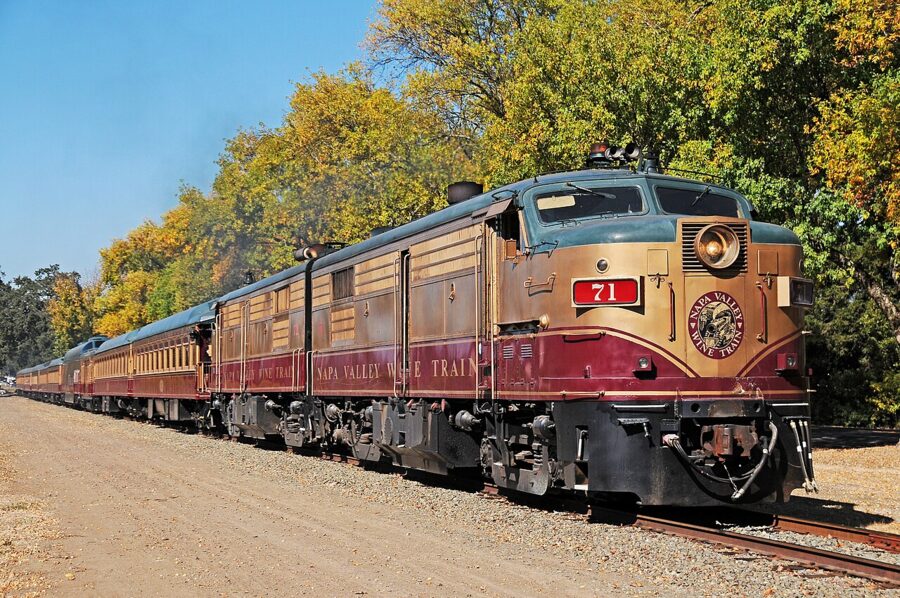
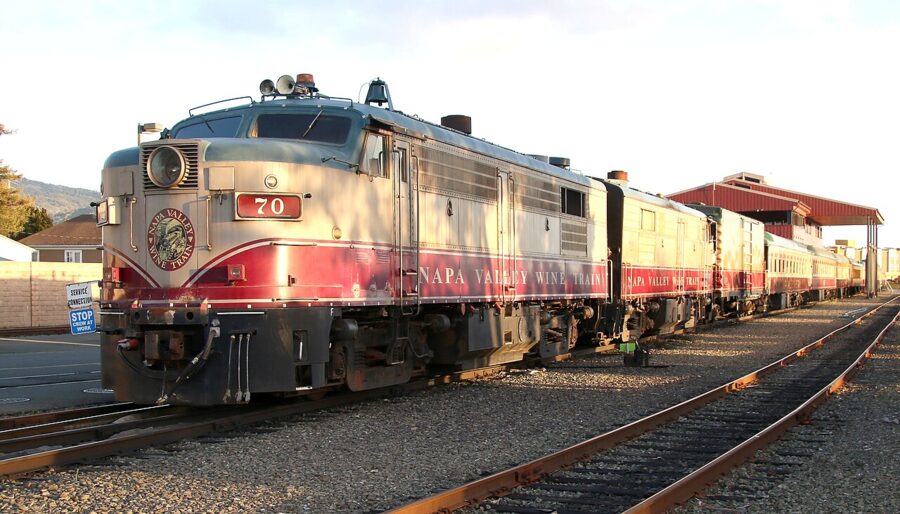
Up front, the train is usually pulled by one or two locomotives. The railroad’s FPA-4s were built in Montreal in 1959 for Canadian National, and since 2023 it has also run No. 1864, a modern Tier 4 diesel named for the year the line opened.
The line from Napa to St. Helena
The railroad was built in 1864 for Samuel Brannan, who wanted visitors brought up the valley to his hot springs resort at Calistoga. The track north of St. Helena is gone.
When Southern Pacific moved to abandon the line in the 1980s, Vincent DeDomenico and a group of local investors bought it, and the first Wine Train ran in September 1989. Noble House Hotels & Resorts has owned it since 2015.
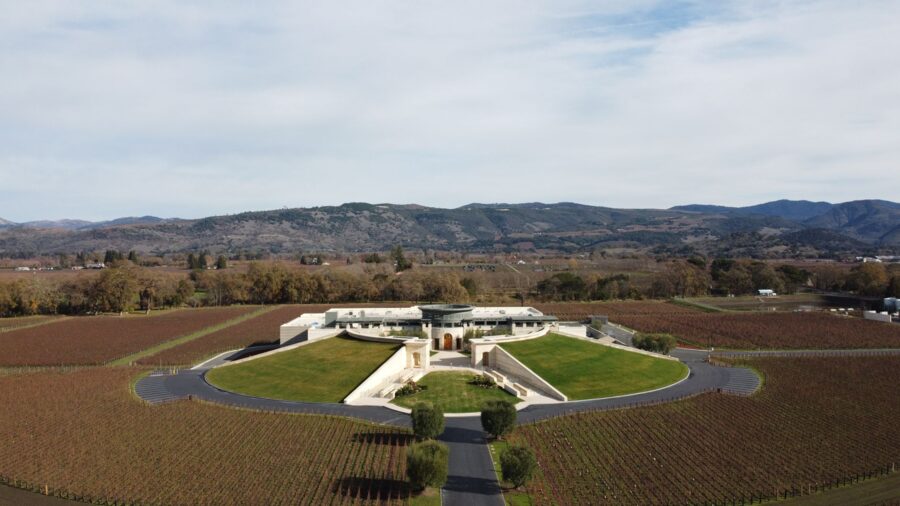
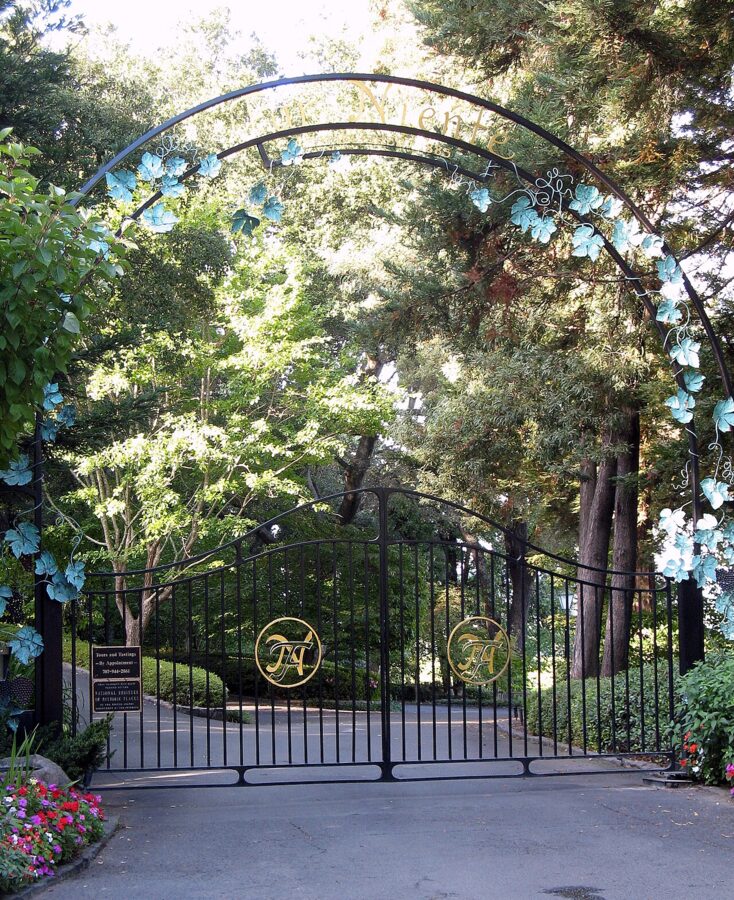
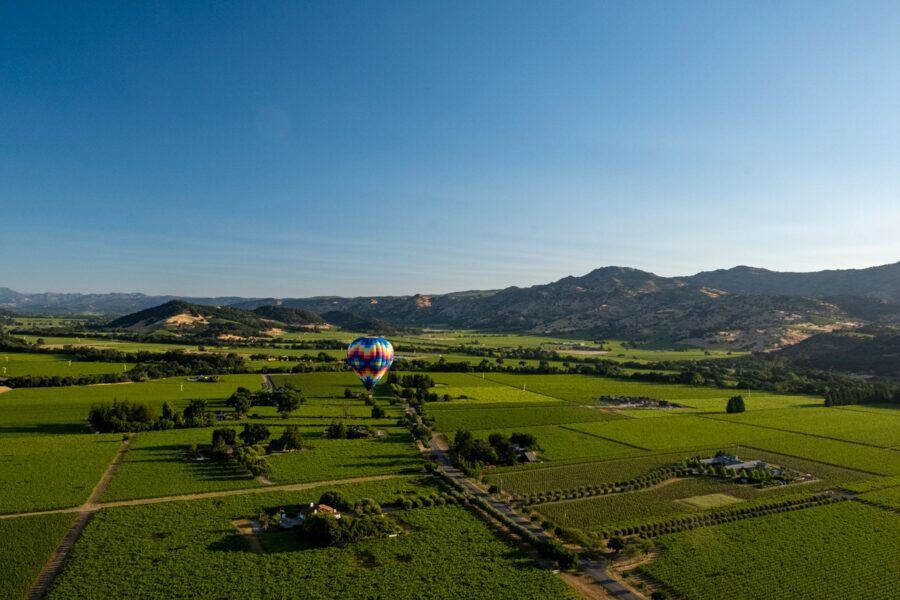
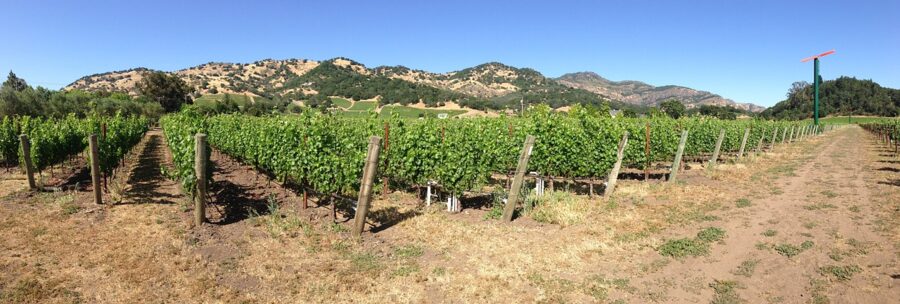
Leaving McKinstry Street, the train passes the murals and sculptures of the Rail Arts District, then heads north through Oak Knoll, Yountville, Oakville and Rutherford. Going north, the Mayacamas Mountains are on your left and the Vaca range on your right. In Oakville you pass Opus One, Far Niente and Nickel & Nickel, and HALL’s giant rabbit sculpture, Bunny Foo Foo, stands in the vines along the route.
At St. Helena the locomotives run around to the other end of the train for the trip back, which is why there is a short pause before you start south. A generator car keeps the power on while that happens. The commentary from the crew comes in short pieces through the ride rather than as a running tour.
The winery-tour trains
The Wine Train is not hop-on, hop-off. Only two regular experiences let you off at a winery, and both run to a fixed schedule with the train waiting for you.
The Legacy Experience
The Legacy Experience runs on its own train with an open-air car, and every passenger does the same day. The train leaves at 10:15 with sparkling wine and a breakfast course of smoked salmon eggs Benedict, and it is back at McKinstry Street around 4:30.
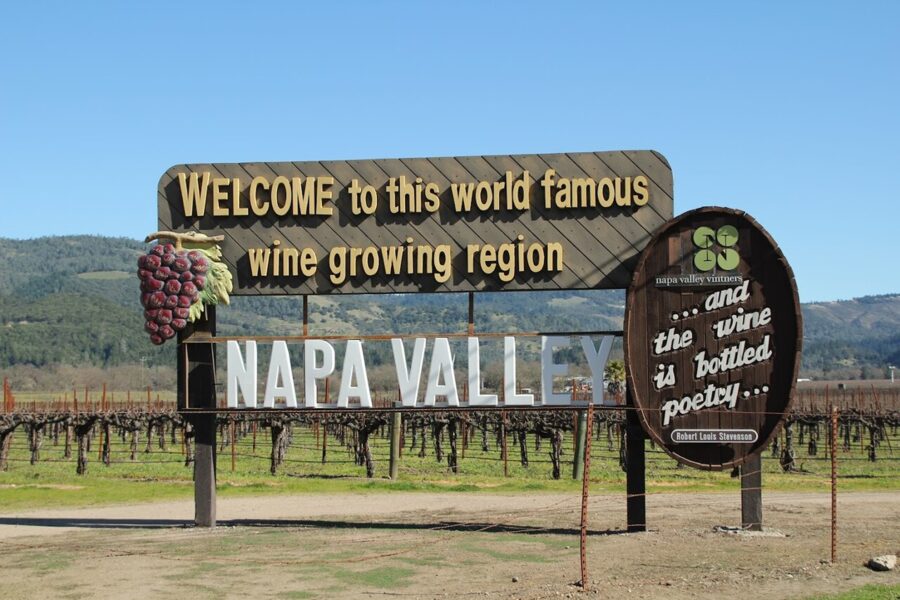
The first stop is the Napa Valley welcome sign in Oakville. You stay on the open-air car while the maître d’ pours three of the train’s own private-label wines, and the stop doubles as the photo everyone wants.
Between about 12:30 and 1:45 you are at Charles Krug in St. Helena, founded in 1861, for a seated tasting in its Redwood Cellar and the story of the Krug and Mondavi families. A cheese course follows on board.
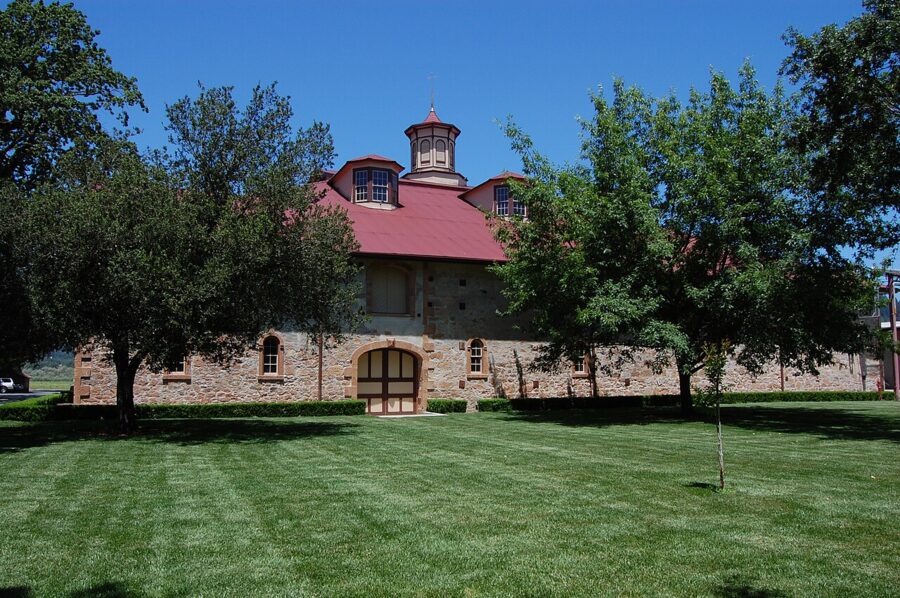
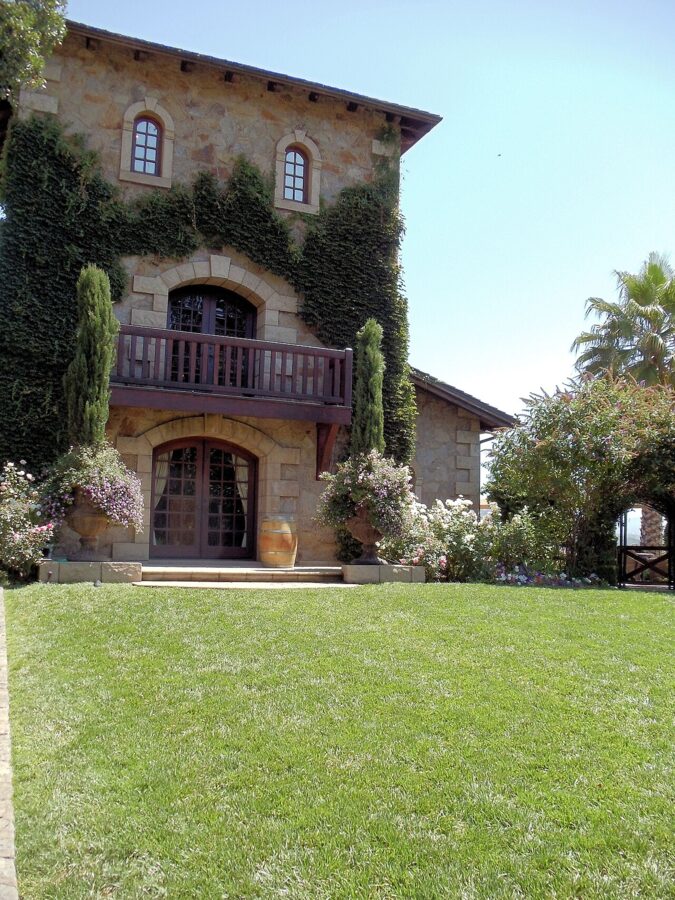
From about 2:00 to 3:20 the train stops at V. Sattui, founded in 1885, for a four-wine tasting that ends on a madeira. Dessert comes on the way back, and the open-air car turns into a dance floor. All told it is about 11 tastings, the main course chosen from a menu, and nothing to drive.
The Legacy involves walking, stairs and standing at both wineries. If anyone in your party finds that hard, the operator itself steers you to the onboard-only dining trains.
The Grgich Hills Estate Tasting
The shorter winery train fits into the three-hour lunch slot. The Grgich Hills Estate Tasting leaves at 11:30 with the main train, serves two courses on the way up and stops in Rutherford at 12:30 for an hour’s seated tasting. Dessert follows on the ride back, and you are in Napa by 2:30.
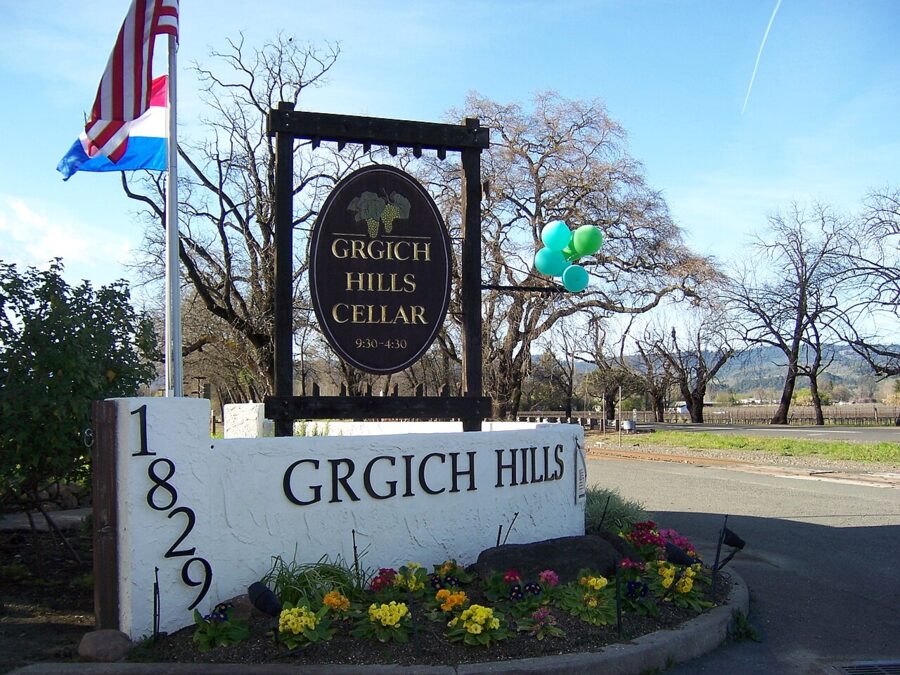
Which one? For a first visit to Napa, with no plans to drive and a whole day to spend, I would book the Legacy. If you want one serious winery and an afternoon free for downtown Napa, take the Grgich trip. During harvest, the Grape Stomp at Grgich Hills adds a stomp to the tasting, for ages 21 and up.
Seasonal trains and the Santa Train
In December the Santa Train runs evening trips from 6:10 to about 8:00, plus afternoon trips on December 21, 22 and 23, with four cars from cocoa and cookies with Santa to a dinner in the dome, and it is one of the West Coast’s better-known Christmas trains. Santa’s Cookie Car started at $143.59 as of late November 2026.
The rest of the year has its own list. Thanksgiving lunch runs in the Gourmet Express and Vista Dome cars. Peppermint Tea, a holiday version of Afternoon Tea, is for ages 10 and up. Midnight in Paris, the New Year’s Eve trip on the Legacy train, stops at Grgich Hills and toasts midnight in Paris at 3:00 in the afternoon, Napa time.
The Love Line runs in February and March in the rose-decked Secret Garden car, with a three-course lunch and wines from The Vice; it takes up to 46 guests. Afternoon Tea, served with a Chandon Garden Spritz, runs on select dates.
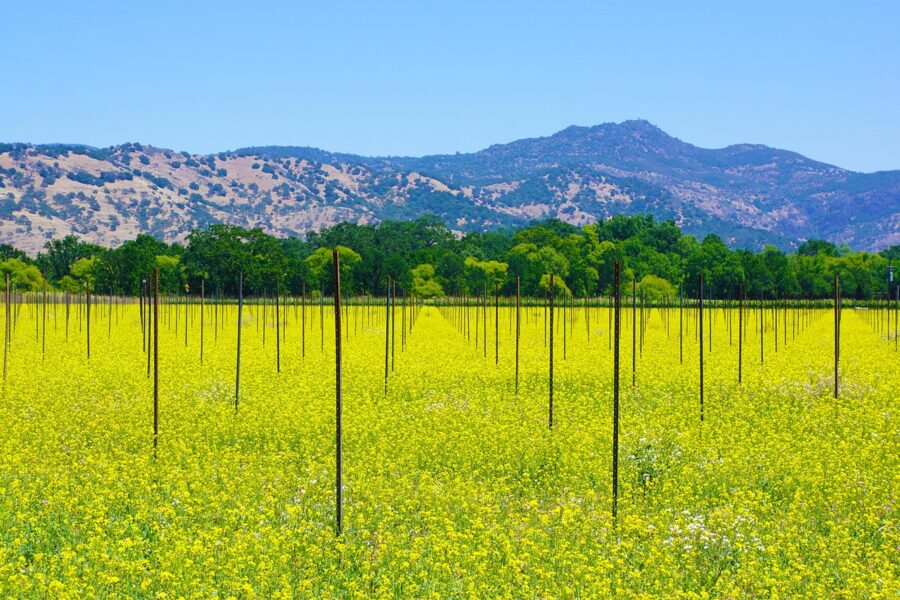
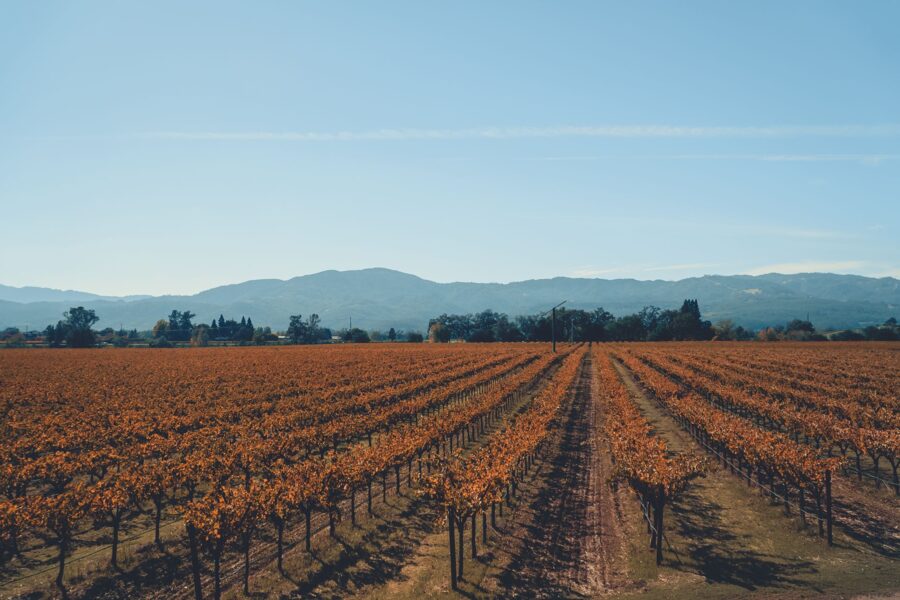
For the view alone, each season gives you something. Mustard blooms between the bare vines from late winter, the canopy is green and full by summer, and from September through November the wineries are at their busiest and the leaves turn. December brings the shortest light, which matters most on the dinner trains.
Getting there, dress and timing
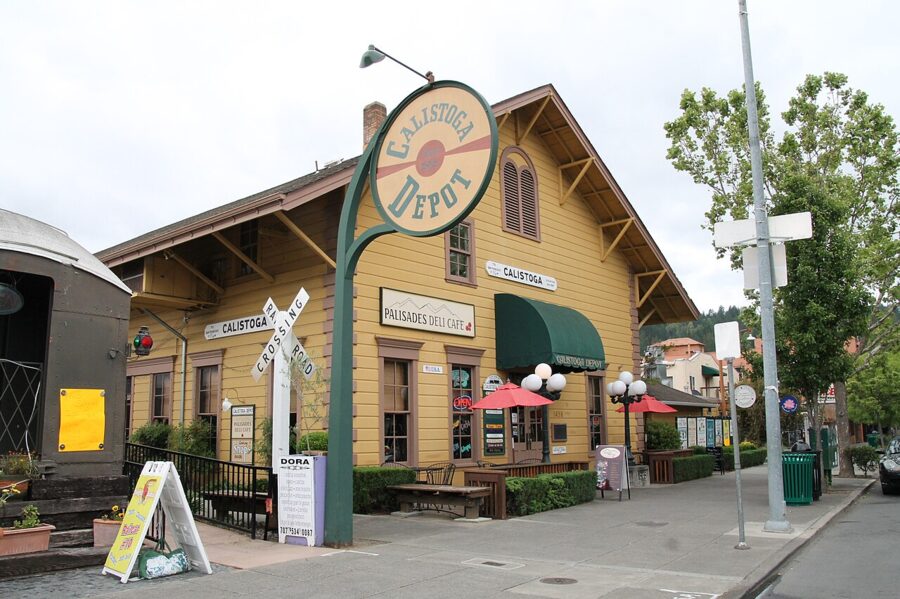
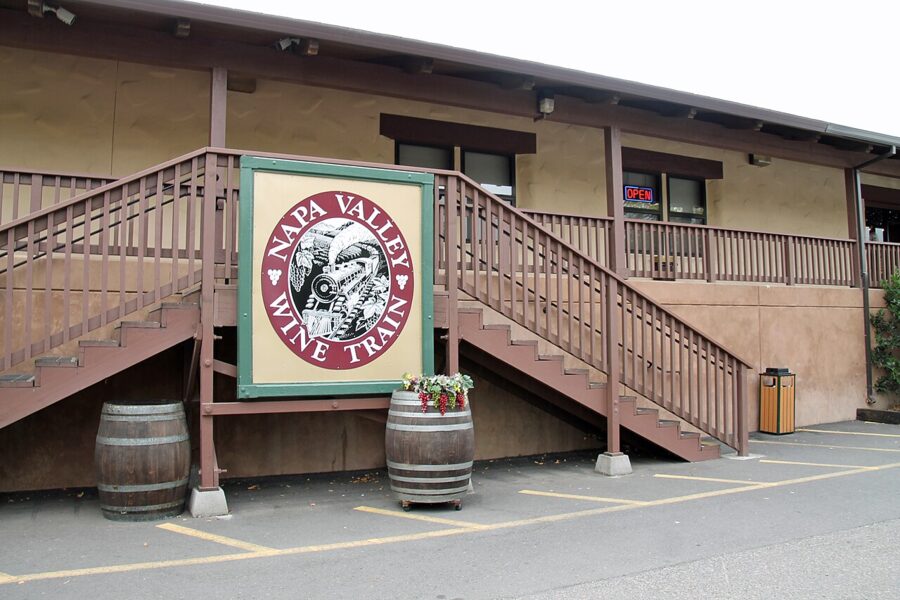
The station is at 1275 McKinstry Street in Napa’s Oxbow District, a short walk from Oxbow Public Market and a few minutes from downtown. Parking at the station is free for the day. Arrive by 9:30 for the Legacy, 10:30 for lunch and 5:30 for dinner.
From San Francisco without a car
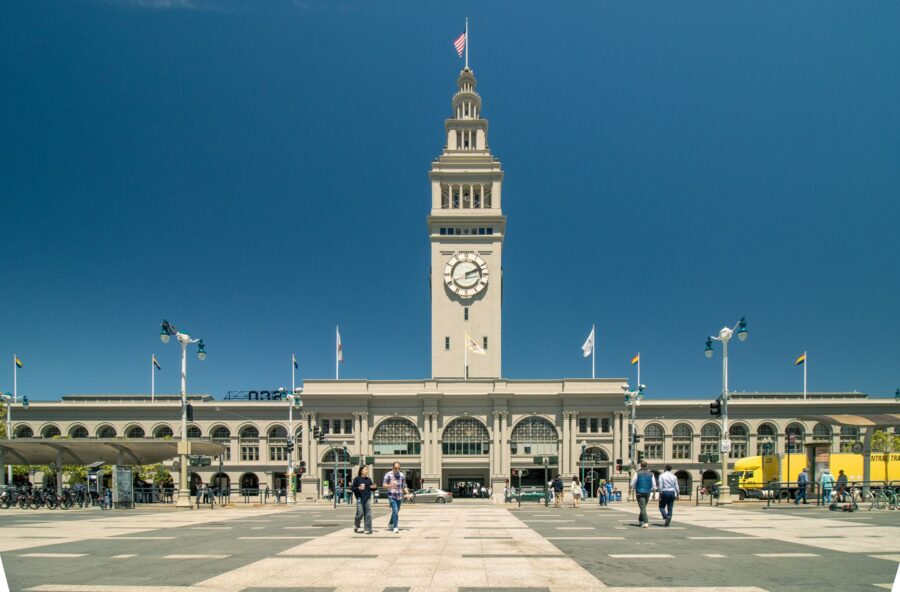
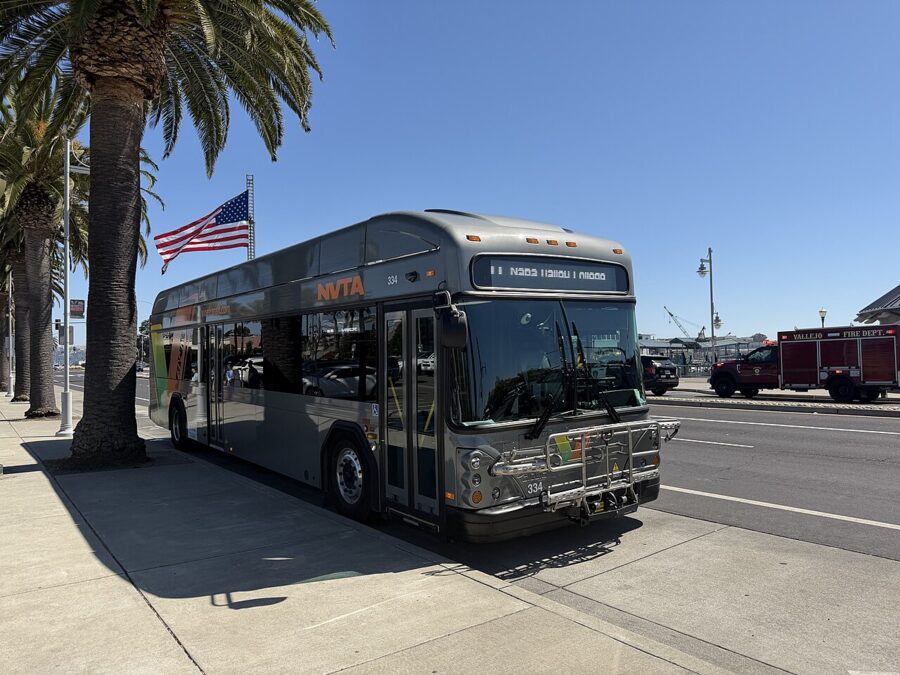
On weekdays the lunch train is reachable by water and bus. Take the 7:05 a.m. San Francisco Bay Ferry from the Downtown San Francisco terminal to Vallejo, arriving at 8:05 (the Vallejo ferry schedule took effect on November 2, 2026). Then catch Vine Transit Route 11 at 8:20, which reaches the Soscol Gateway Transit Center in Napa at 9:37.
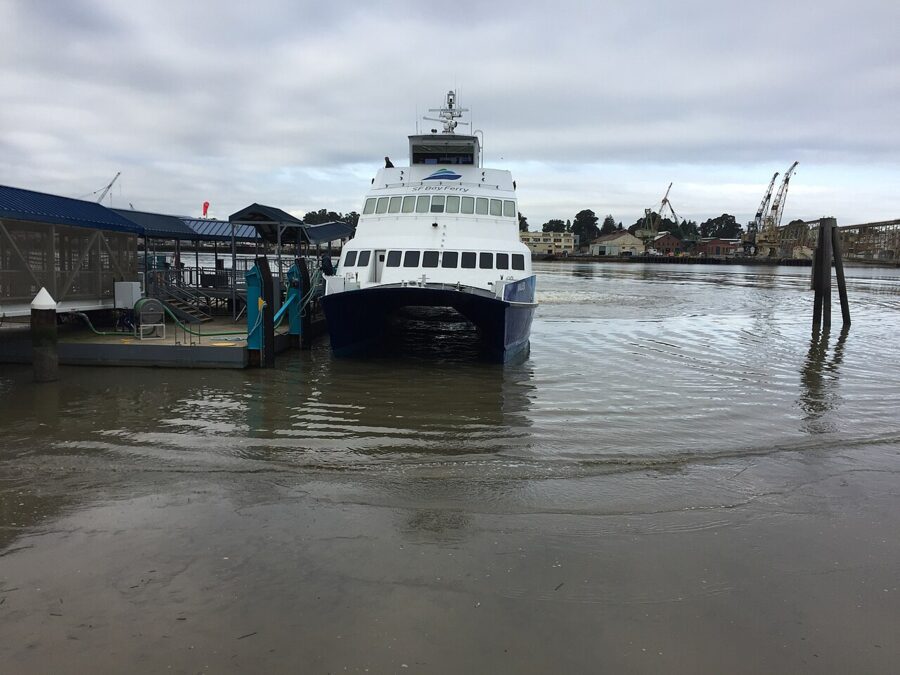
From the transit center the station is a short walk up Soscol Avenue. Going home, the 3:04 p.m. Route 11 from Soscol Gateway reaches the Vallejo ferry terminal at 4:19, in time for the 4:50 ferry, which docks in San Francisco at 5:50. The bus is $2.00 for an adult on the Vine fare table; the ferry is extra.
Weekends are harder. The first weekend ferry from San Francisco reaches Vallejo at 11:25, too late for the lunch train.
On Saturdays you can ride BART to El Cerrito del Norte and take the 9:30 a.m. Vine Route 29 express, $6.00, to the Imola Park and Ride at 10:22, then a short taxi or rideshare to the station. Route 29 runs back from Imola at 3:25.
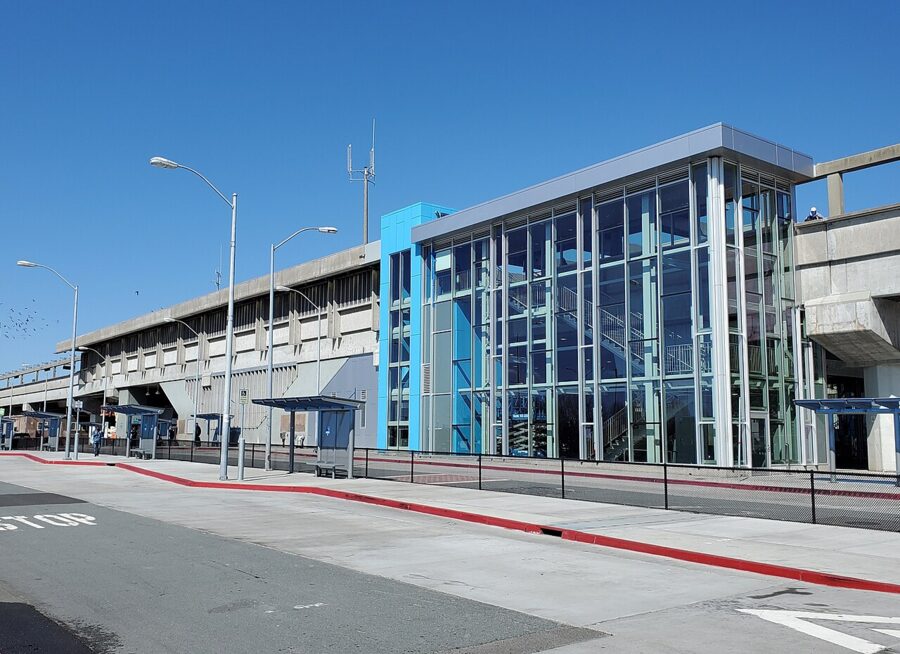
There is no Route 29 on Sundays. After a dinner train, the last weekday ferry has left Vallejo at 7:05 and the last Route 29 bus has left Napa, so there is no easy way back by ferry or Vine. For a Sunday or an evening ride, stay the night in Napa or book a car. Coming from Sacramento, the operator suggests Amtrak’s Capitol Corridor to Suisun-Fairfield and a taxi from there.
What to wear
There is no dress code. Smart casual fits in on the lunch trains, and plenty of people dress up for dinner and the dome. Bring a layer for the open-air car and for cool mornings, sunglasses for the valley, and shoes you can walk in on a winery day.
Booking, children, access and the fine print
Book on the operator’s site, by phone or at the station; same-day and walk-up seats are sold when there is room. Under the cancellation policy, parties of one to nine get a full refund up to two weeks before the ride, parties of ten to 20 up to a month before, and holiday or special experiences need a month’s notice whatever your size.
Strollers and car seats are not allowed on the train, there are no changing tables aboard, and the restrooms are small. Booster seats are available for children from one year old.
Access is limited by the age of the cars. Boarding means steep steps, the tallest about 9.5 inches. The only lift is into the 1100 Gourmet Car, with some wheelchair table spaces there and a transfer chair. The restrooms are not wheelchair accessible, so the accessibility notes ask you to call reservations before booking.
Is it worth a Napa day?
Do the sum the other way. The average tasting fee in Napa was $79 in 2025, according to the latest Silicon Valley Bank survey. Two tastings at that average come to $158 a head before lunch, and someone still has to drive or be paid to. The Legacy’s $641 covers about 11 tastings, four courses and the transport, so for a first-timer the gap is smaller than the price suggests.
If you know your wine, skip the train. Its tastings are fixed, the wineries are large and well known, and you will taste more interesting bottles at small producers by appointment. Drive, or hire a driver, and build your own day.
If you have never been and do not want to drive, the Legacy is the best single day the train sells. If it is the ride you came for, book the Vista Dome lunch. On a budget, a weeknight Gourmet Express Dinner in December or January is the cheapest regular way for an adult to sit down to a meal in a 1915 Pullman. And if you like a long lunch on a slow train more than the wine, the valley has company among the scenic and tourist train rides across the country.
Book the 11:30, take the dome if the budget stretches to it, and let Highway 29 be somebody else’s problem for the afternoon.