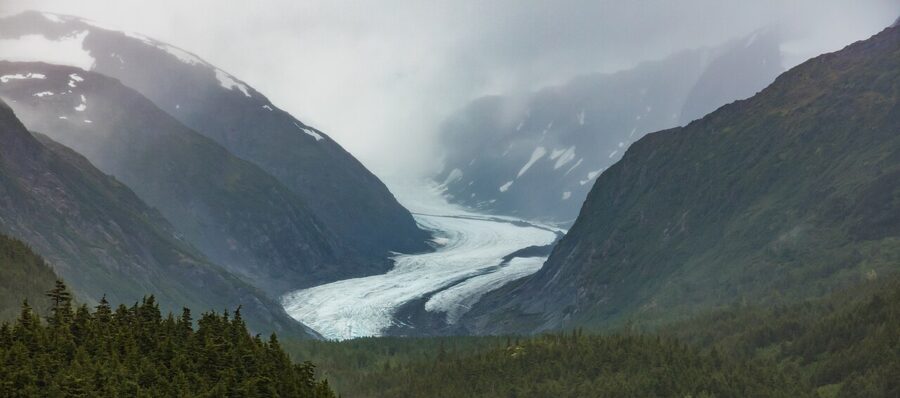
Somewhere past Portage, the southbound Coastal Classic leaves the Seward Highway behind and climbs into a valley no road reaches. If you hold a GoldStar ticket, the place to be is the open-air platform at the back of the upper deck, where there is no glass between you and Spencer Glacier spilling down to its lake. The train slows for it. Downstairs, breakfast is being served, and on this leg it is included in the fare.
That platform is the clearest answer to the question every Alaska Railroad trip starts with: pay roughly double for GoldStar, or ride Adventure Class and spend the difference on a boat into Kenai Fjords. Between Anchorage and Seward in 2027, an adult one-way seat costs $133 in Adventure Class and $289 in GoldStar Service. Between Anchorage and Denali it is $205 or $411.
The railroad itself is simple once you see it whole. One main line runs about 470 miles from Seward on the Gulf of Alaska through Anchorage and Denali National Park to Fairbanks, with a branch through a mountain to Whittier. Five passenger trains use it, three of them only in summer, and no passenger train links it to any other railroad.
The Alaska Railroad and its five trains in 2027
The Alaska Railroad is owned by the State of Alaska and has been since 1985, when it was handed over by the federal government that built it. President Warren G. Harding drove the golden spike at Nenana in 1923. The line also carries freight, and the passenger trains share it, which is one reason the timetable prints the occasional “times may vary”.
Nothing here is fast. The Denali Star takes eleven hours and forty minutes for 356 miles, about 30 mph on average, and it slows further for the views. That is the point of it, and also the reason to plan rest days on either side.
The 2027 summer schedules and fares are already published on the railroad’s schedule page. Here is the whole system on one screen, with adult one-way fares as of November 2026; children 2 to 11 pay about half, and infants under two ride free.
| Train | Route | 2027 dates | Timetable | Adult fare (Adventure / GoldStar) |
|---|---|---|---|---|
| Coastal Classic | Anchorage, Girdwood, Seward | Daily, May 14 to Sept. 12 | Leaves Anchorage 6:45 a.m., Seward 11:20 a.m.; leaves Seward 6:00 p.m., Anchorage 10:15 p.m. | $133 / $289; round trip $226 / $491 |
| Denali Star | Anchorage, Wasilla, Talkeetna, Denali, Fairbanks | Daily, May 12 to Sept. 16 | Leaves Anchorage 8:20 a.m., Denali 3:40 p.m., Fairbanks 8:00 p.m.; leaves Fairbanks 8:20 a.m., Denali 12:30 p.m., Anchorage 8:00 p.m. | Anchorage to Denali $205 / $411; to Fairbanks $294 / $578 |
| Glacier Discovery | Anchorage, Girdwood, Whittier, Portage, Spencer, Grandview | Full route daily, May 29 to Sept. 12 (shorter runs from May 15) | Leaves Anchorage 9:45 a.m., Whittier 12:45 p.m., Spencer 1:45 p.m.; back in Anchorage 9:00 p.m. | Anchorage to Whittier $122; Spencer round trip $158 (Adventure Class only) |
| Hurricane Turn (summer) | Talkeetna to Hurricane, flagstops | Thursday to Monday, May 13 to Sept. 12 | Leaves Talkeetna 1:00 p.m., back about 7:15 p.m. | Round trip $128 (Adventure Class only) |
| Aurora Winter | Anchorage, Wasilla, Talkeetna, Healy, Fairbanks | Weekends, Sept. 19, 2026 to May 9, 2027, plus midweek runs in February and March | Northbound Saturday 8:30 a.m. to 8:00 p.m.; southbound Sunday, same hours | Anchorage to Fairbanks $265 (Adventure Class only) |
Fares come from the railroad’s 2027 fare tables, and they are published for the whole season. In winter the Hurricane Turn also makes a monthly run from Anchorage. None of the five trains is a short excursion of the kind most US tourist train rides offer; even the shortest takes most of a day.
Adventure Class or GoldStar
Both classes ride the same train and see the same country. What changes is height, food and fresh air. GoldStar runs only on the two summer trains, the Coastal Classic and the Denali Star; everything else is Adventure Class.
What Adventure Class gets you
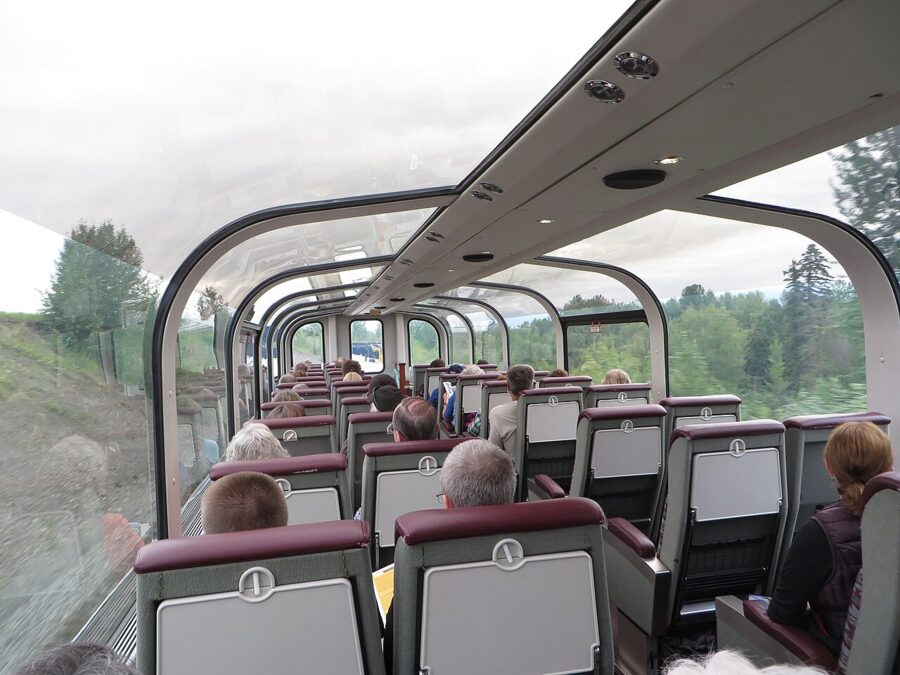
An Adventure Class ticket is a reserved, single-level seat with big picture windows and a luggage rack overhead. In summer you can also walk to a shared Vista Dome car with open seating, except on the Glacier Discovery. On a full train the dome is popular, so expect to take your turn rather than settle in for the day.
Food is bought, not included. The Wilderness Café sells hot and grab-and-go food on the Coastal Classic, Denali Star and Glacier Discovery, and the Coastal Classic also has a sit-down Adventure Dining Room. The trains are cashless, so bring a card, and you can always carry your own lunch on board.
What GoldStar adds
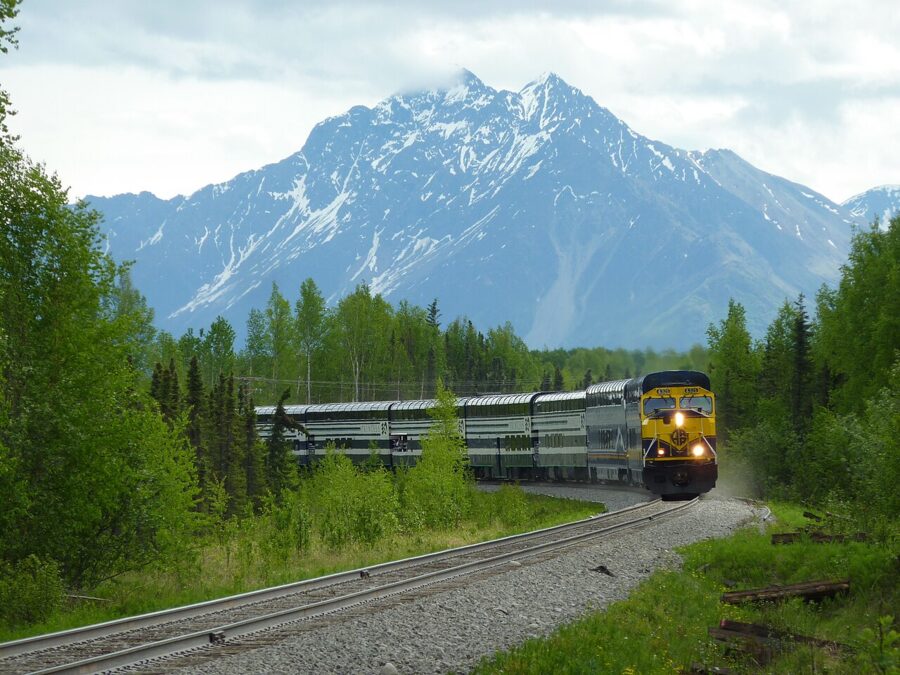
GoldStar Service puts you upstairs in a bilevel dome car with a guide narrating in every car and a private bar. The lower deck is a dining room, and your fare covers the meals that fall in your travel time, all soft drinks and two alcoholic drinks for anyone over 21. Seating at meals is four to a table, so you may share with strangers.
The meals depend on direction. Anchorage to Seward includes breakfast; Seward to Anchorage includes dinner. Anchorage to Denali gets breakfast and lunch, Denali to Anchorage lunch and dinner, and the full Anchorage to Fairbanks run gets all three.
Then there is the platform. Each GoldStar car has an outdoor viewing deck on the upper level, and only GoldStar passengers can use it. The railroad says no other train in the world has one, and on a clear day in the Placer River valley or above Hurricane Gulch it is the best seat in Alaska. The downside is stairs: you climb down to the restroom and the dining room, on a moving train.
Is GoldStar worth it?
On the right legs, yes. I would book GoldStar for the Coastal Classic from Anchorage to Seward, where breakfast is included and the platform is open through the glacier country, and for Anchorage to Denali, where you have seven hours and the best chance of seeing the mountain. The premium there is $156 and $206 per adult one way.
I would ride Adventure Class from Denali to Fairbanks. It is a four-hour leg at $102 in Adventure Class against $229 in GoldStar, and the GoldStar fare on it buys you dinner and not much else. Adventure Class is also the better choice if stairs are a problem, if you have small children who will not sit through narration, or if you are traveling round trip and want to try both: ride GoldStar out and judge whether the return deserves it.
The cruise-line and Wilderness Express cars
Since 1984 the railroad has hauled private bilevel dome cars for the cruise companies, coupled into its own summer trains. Holland America’s McKinley Explorer runs from Anchorage, and directly from the ship at Whittier, to Denali, and Princess has its own dome cars too. Those seats come with a cruise land tour.
The Wilderness Express is the one independent travelers can also buy. It is four privately owned dome cars attached to the Denali Star between Anchorage, Talkeetna, Denali and Fairbanks, usually at the back of the train, and Royal Caribbean and Celebrity land tours use them. Food and drinks are bought on board, and fares are sold through Alaska tour companies rather than the railroad, so compare them with GoldStar before you book either.
What you see, in order, and which side to sit
The domes make the side question matter less than on most trains, because upstairs you see both ways. In Adventure Class your seat is assigned, and two choices are worth making if you can: sit on the right going south from Anchorage to Seward, and on the left going north from Anchorage toward Denali. Coming back, swap.
Coastal Classic: Anchorage to Seward
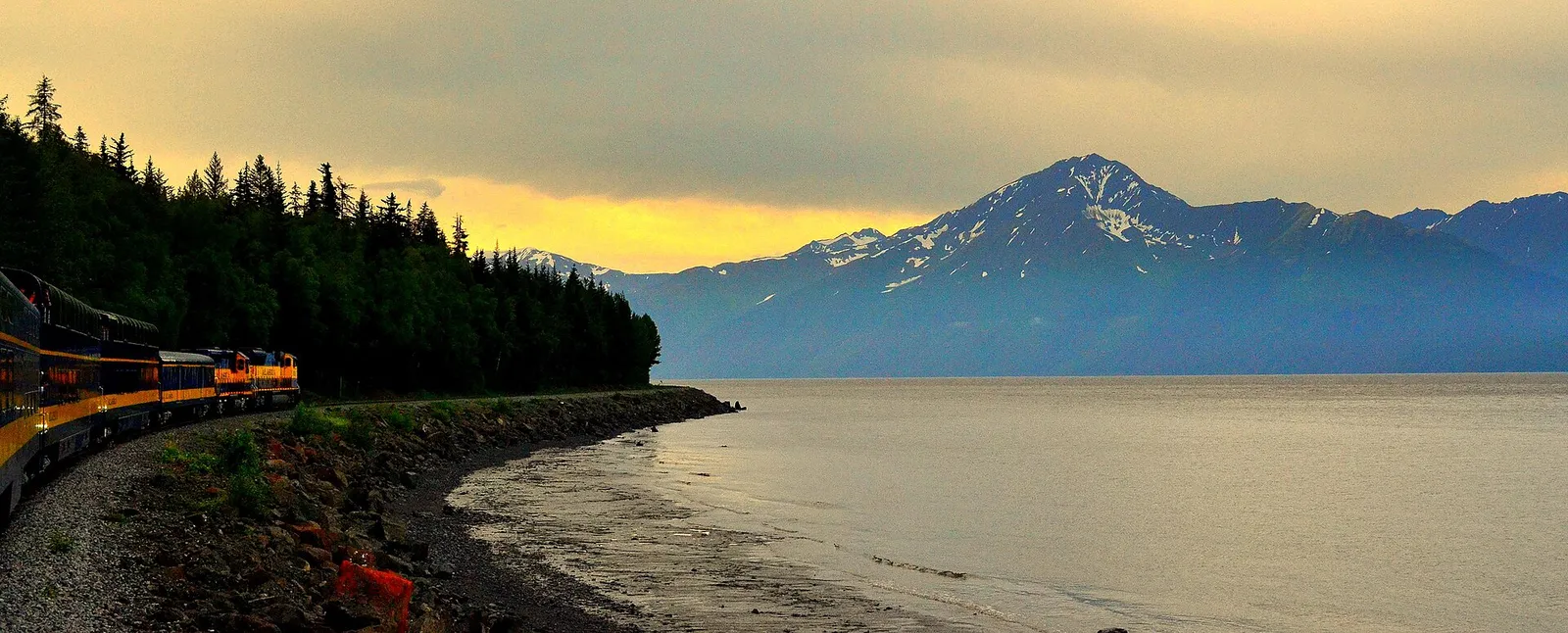
The Coastal Classic leaves Anchorage at 6:45 a.m. and runs for an hour beside Turnagain Arm, with the water on your right and the Kenai Mountains across it. This is the stretch shared with the Seward Highway, and at low tide the arm is a sheet of mudflat.
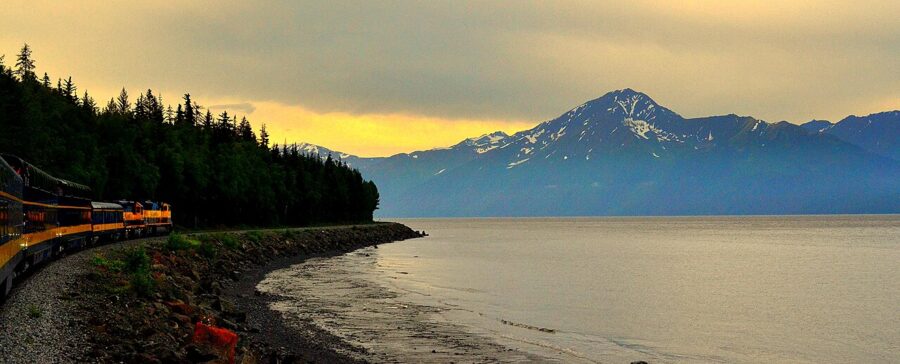
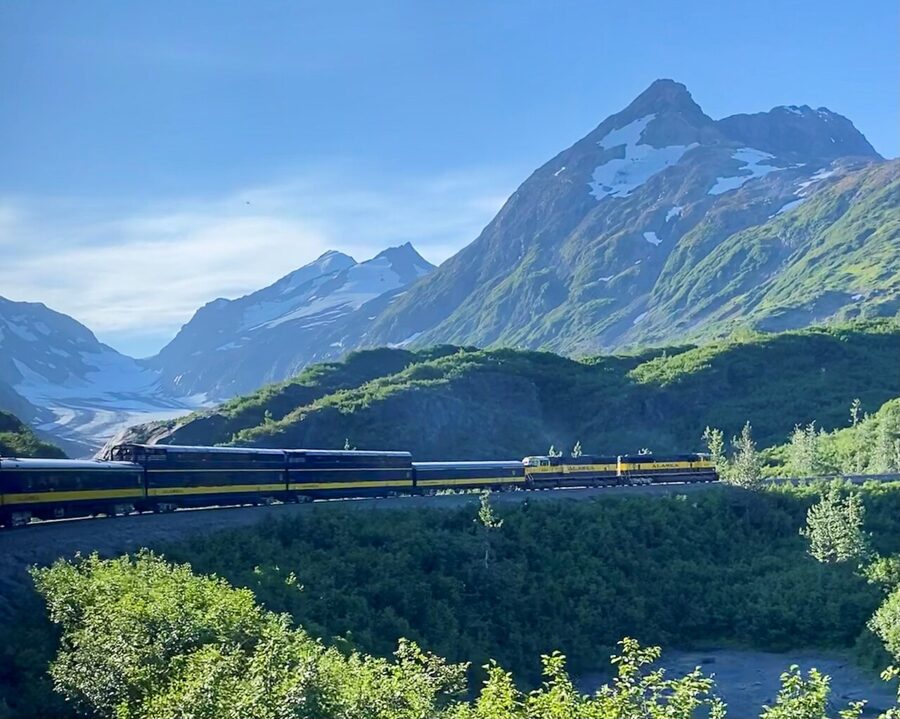
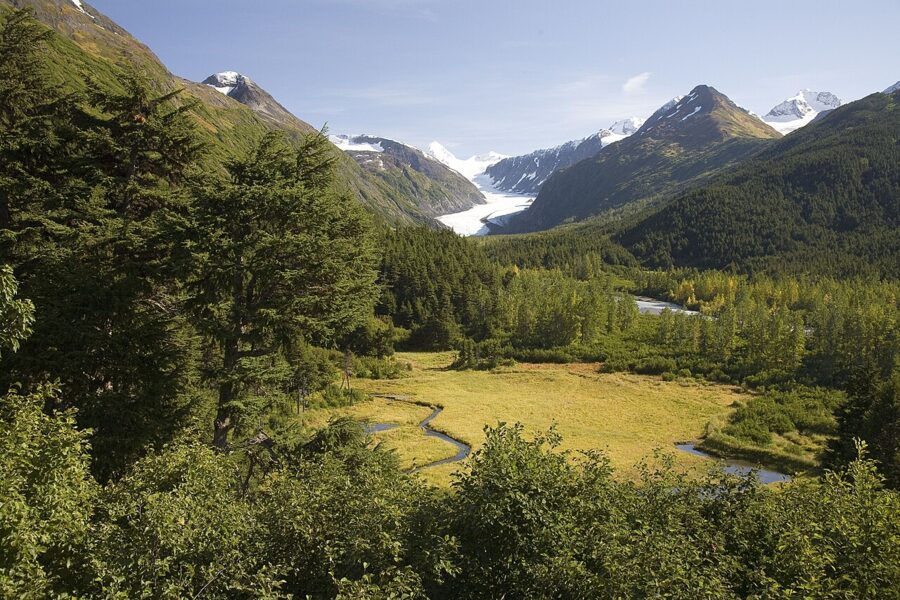
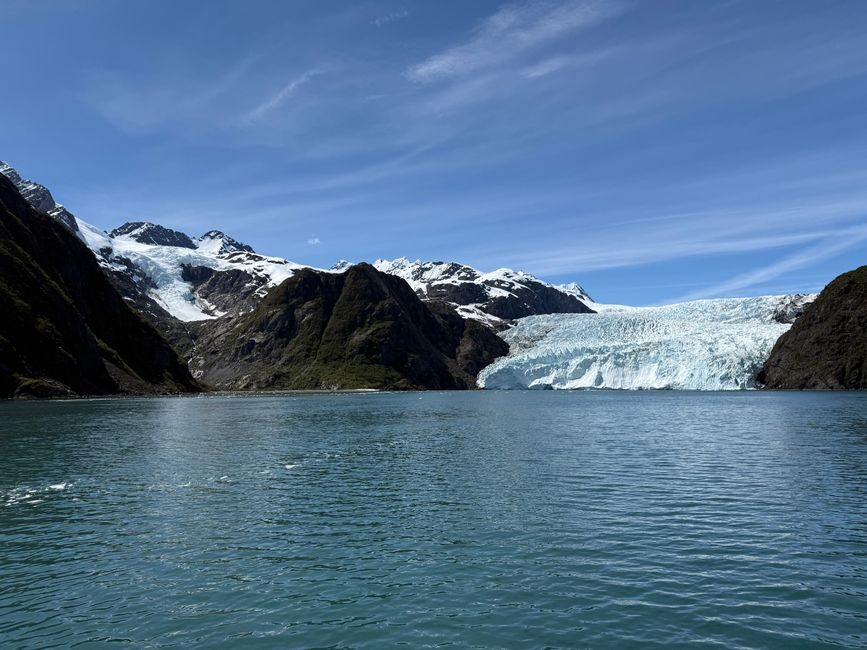
After a short stop at Girdwood the train rounds the end of the arm and turns away from the road. This is the stretch many people consider the most scenic on the whole railroad: the Placer River valley, Spencer Glacier, Bartlett Glacier and the S-curves, then Trail Glacier near Grandview. There are no towns, no road and, for long stretches, no phone signal.
Past Grandview the line drops toward Kenai Lake, milky green with glacial silt, and follows the valley down to Resurrection Bay. The train pulls into Seward at 11:20 a.m. and leaves again at 6:00 p.m., which gives you a working day: a Kenai Fjords or Resurrection Bay boat, the Alaska SeaLife Center, or a run out to Exit Glacier.
Glacier Discovery: Whittier, Spencer and Grandview
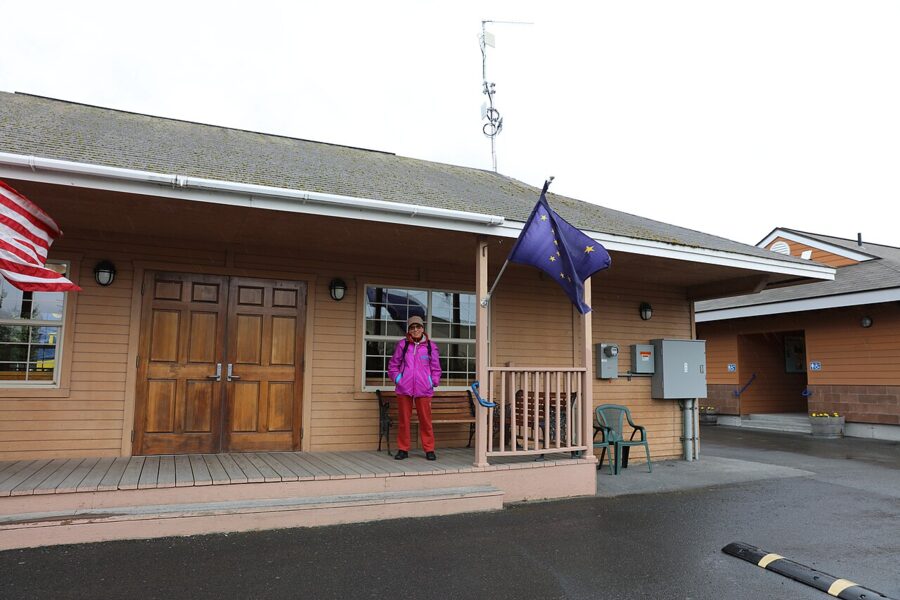
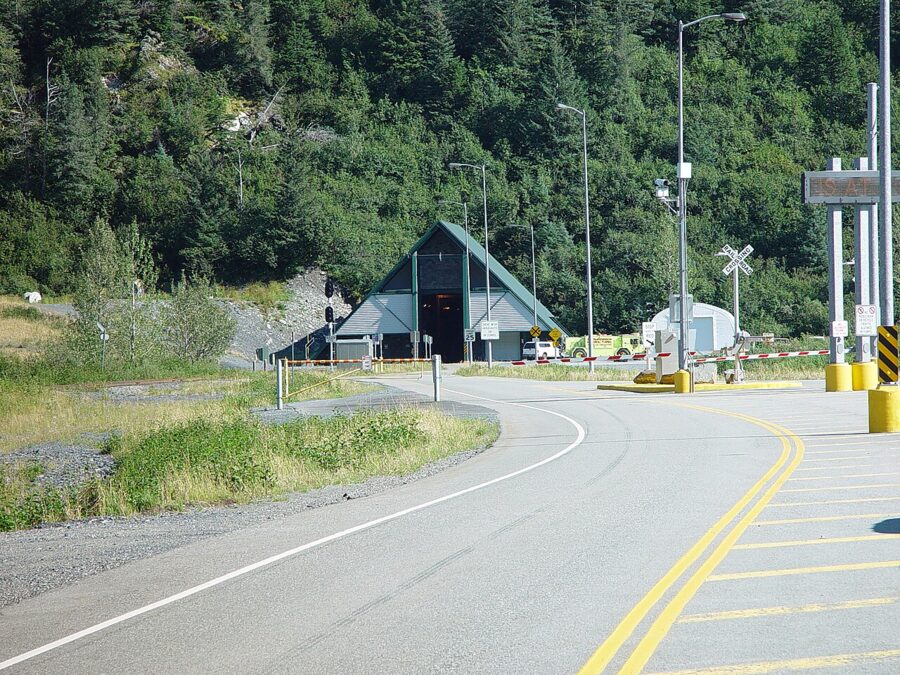
The Glacier Discovery follows the Coastal Classic’s route to Portage, then turns off through the Anton Anderson Memorial Tunnel to Whittier. The tunnel was cut for the railroad in 1943 to reach a wartime port, and since 1999 it has been shared with cars, the only rail and road tunnel of its kind in the United States. The train goes through in the dark for about two and a half miles.
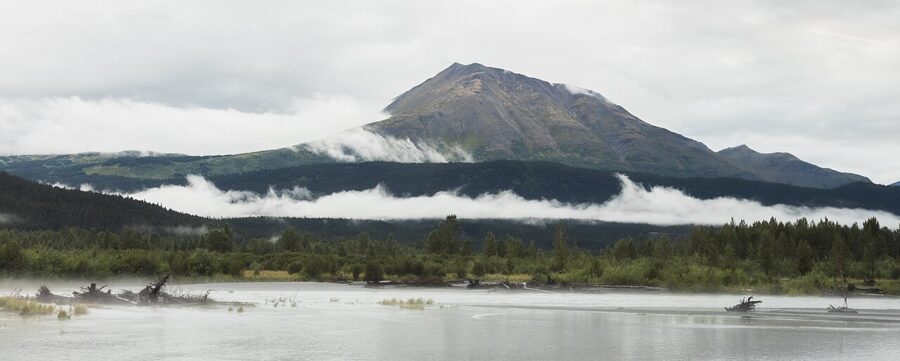
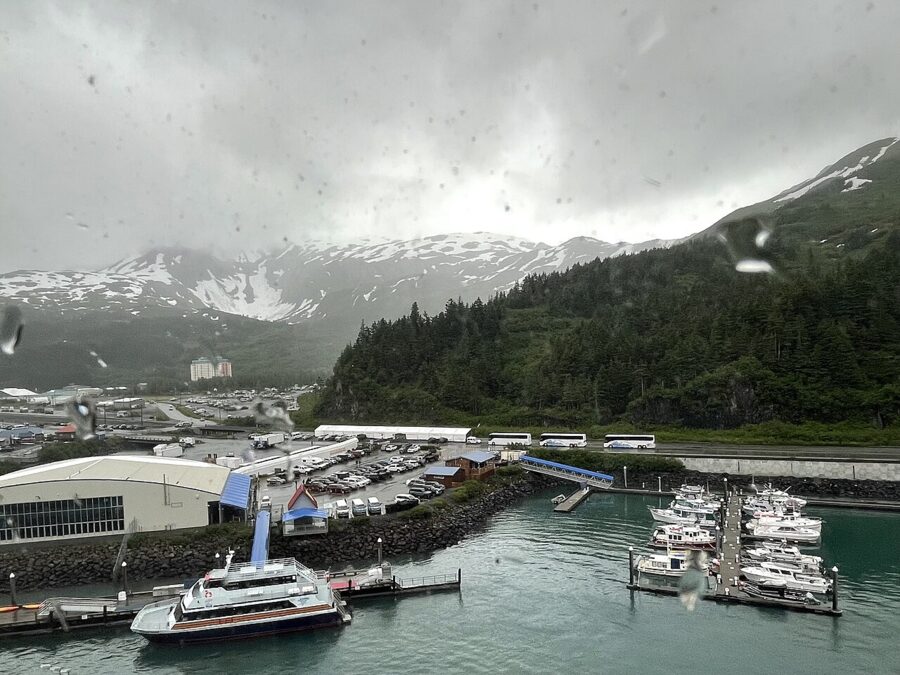
Whittier has no depot. Trains load under a white tent across from the cruise ship terminal and the marina, and day boats into Prince William Sound leave a short walk away. From there the train returns through the tunnel to Portage, where you can get off for the Alaska Wildlife Conservation Center, and then climbs the roadless valley to the Spencer Glacier Whistle Stop.
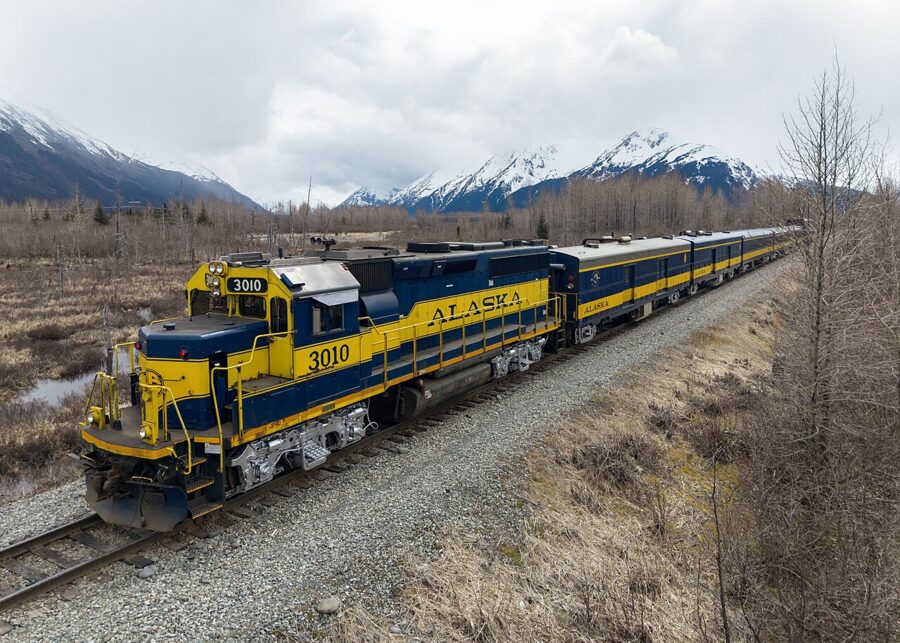
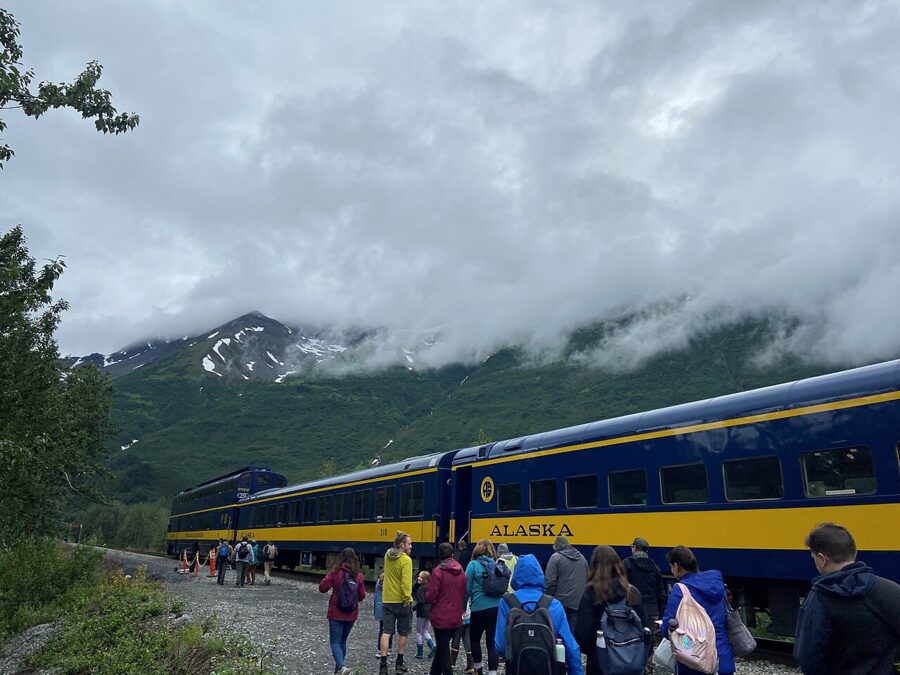
Spencer was built with the US Forest Service in the Chugach National Forest, and it is reachable only by train. A 1.3-mile gravel path runs from the tracks to an overlook on Spencer Lake, facing the glacier across floating ice, and a Forest Service ranger gives an optional talk there. Guided rafting, hiking and kayaking go from the stop, and two campsites and the Spencer Bench cabin, at 1,900 feet, are booked on Recreation.gov.
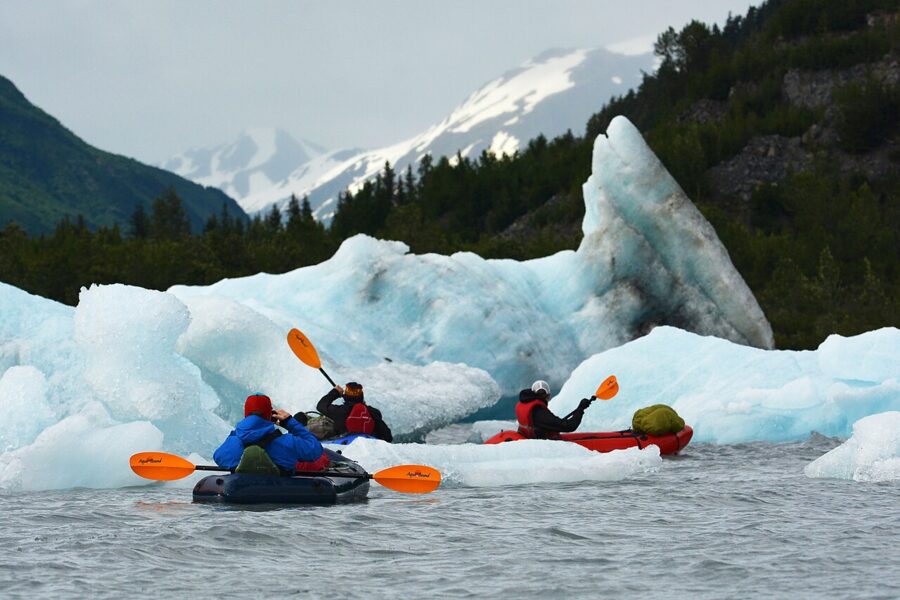
If you stay on, the train runs up to Grandview past Bartlett and Trail glaciers, turns, and comes back, reaching Anchorage at 9:00 p.m. Spencer and Grandview passengers can instead get off at Portage on the way back and take a reserved motorcoach to Girdwood or Anchorage, which the railroad says saves about two and a half hours. Book that bus when you book the train; it cannot be added on the day.
Denali Star: Anchorage to Fairbanks
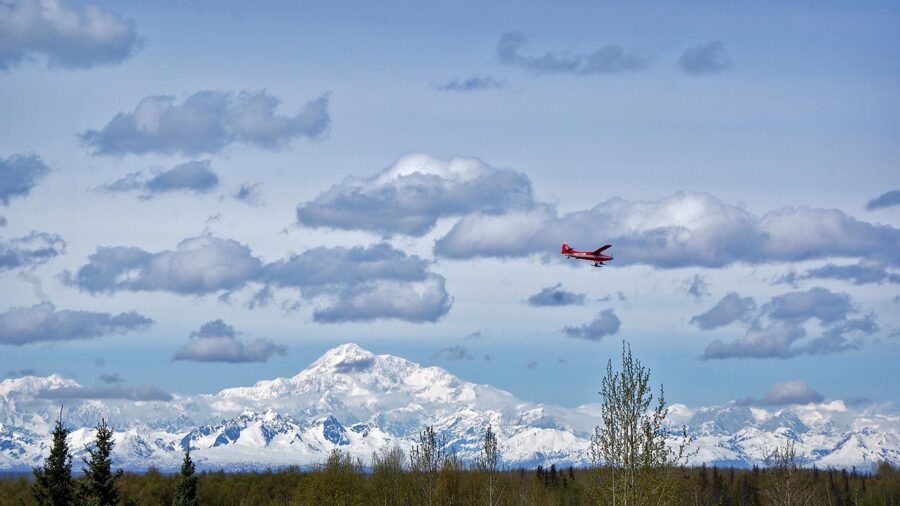
The Denali Star leaves Anchorage at 8:20 a.m. and crosses the Knik River with the Chugach Mountains behind it, then stops at Wasilla, where there is no depot, only a gravel lot beside the tracks. North of Wasilla the land flattens into forest and lakes. Just south of Talkeetna, look left across the Susitna River: on a clear day this is where the mountain appears, filling the northwest sky.
A note on the name. The peak was officially renamed Mount McKinley again in early 2025, ten years after it became Denali, while the national park kept the name Denali National Park and Preserve. The railroad, the train and nearly everyone on board still say Denali.
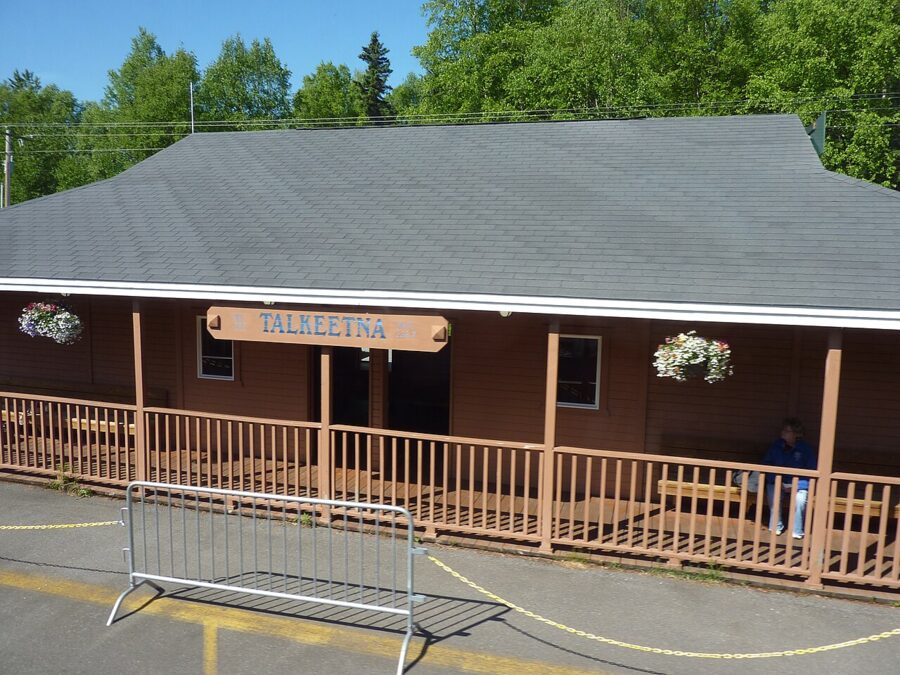
Talkeetna is the stop to break the trip, an old railroad and river town with a main street, flightseeing planes and views of the Alaska Range. North of it the tracks leave the road system for the backcountry of the Indian River valley, the stretch the Hurricane Turn serves.
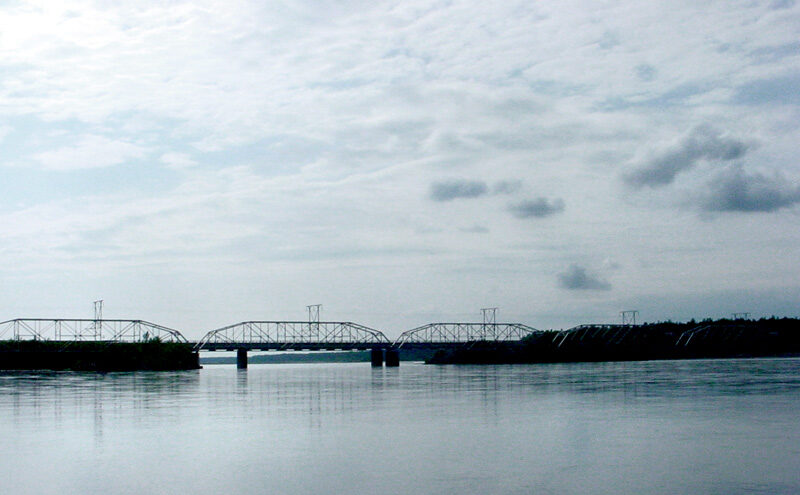
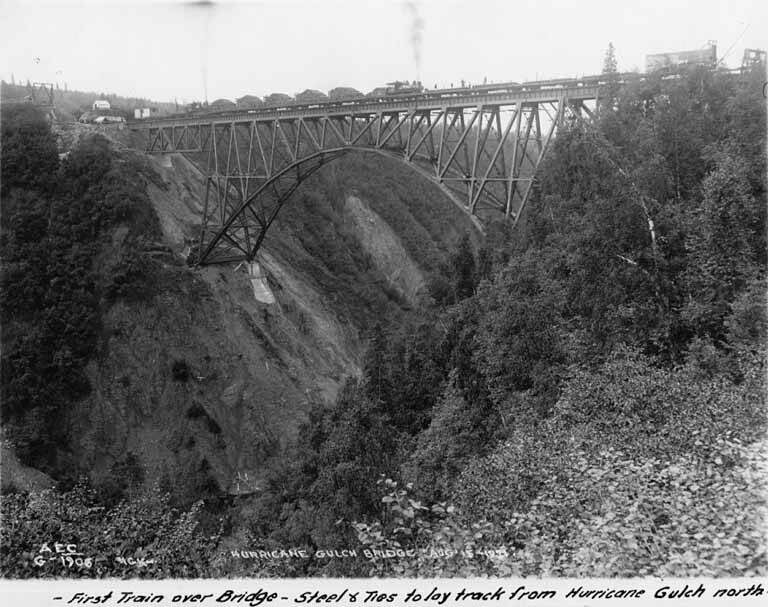
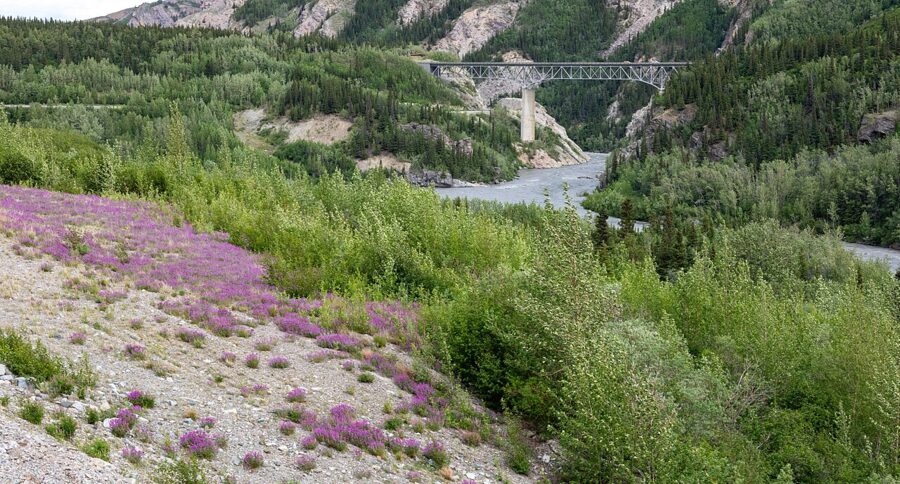
The high point of the day, literally, is Hurricane Gulch. The 296-foot-high bridge at milepost 284 is the longest and tallest on the railroad. Trains cross it at 10 mph, so there is time to step out to the platform and look straight down.
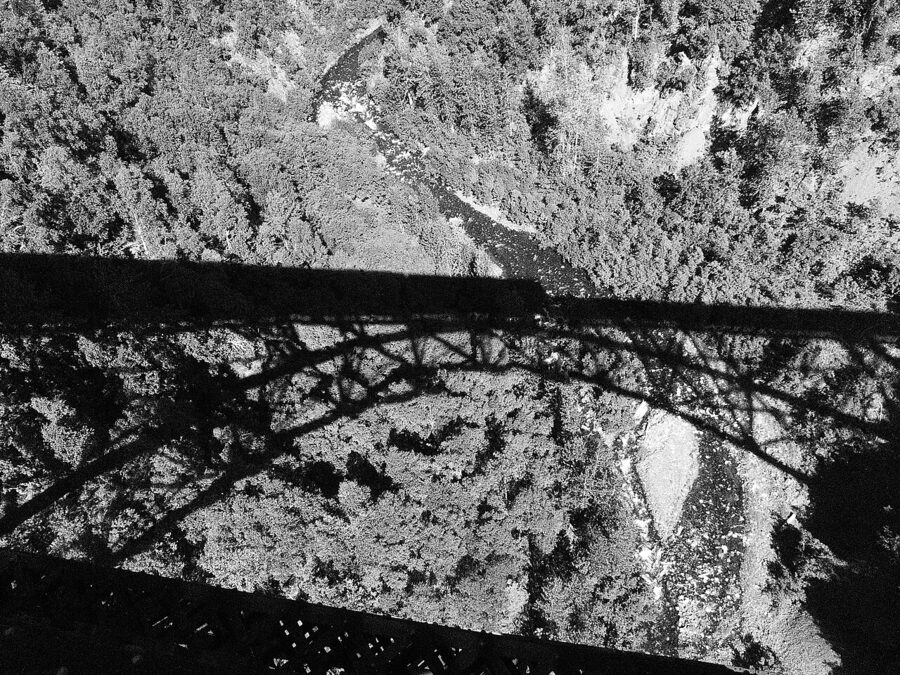
That 10 mph limit is about to change. In August 2026 the Federal Railroad Administration granted $28.8 million toward a $36 million rehabilitation of the bridge, which will let trains cross at up to 25 mph. The railroad says the work will be phased so passenger trains keep running, so expect crews and equipment at the gulch rather than a closure.
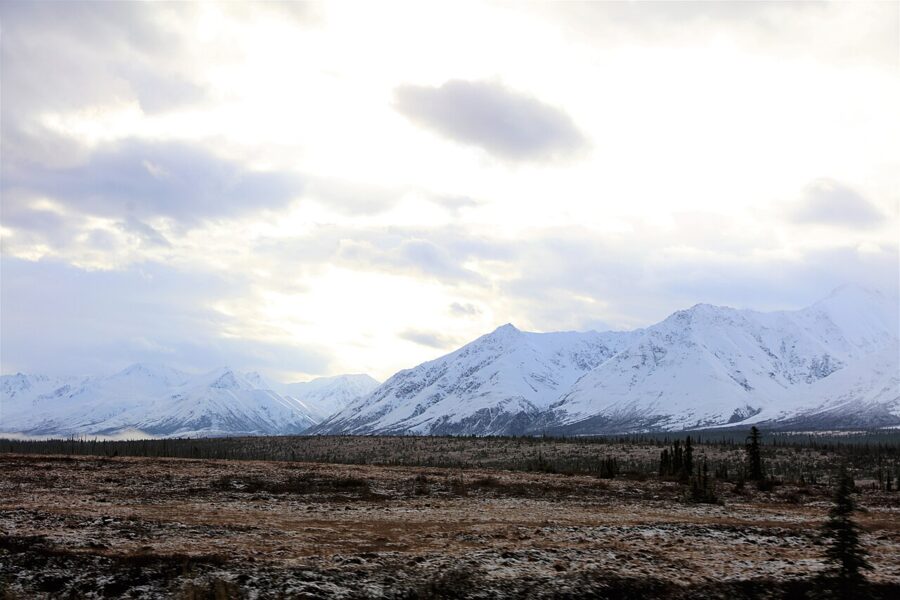
Beyond the gulch the trees thin out into Broad Pass, the low gap where the line crosses the Alaska Range, wide open tundra with mountains on both sides. Then comes Denali Park at 3:40 p.m. North of the park the track follows the Nenana River through its canyon, and the scenery settles into forest and river flats past Healy and Nenana before the 8:00 p.m. arrival in Fairbanks.
Cruises, Denali and the flagstop
Most people on these trains are joining or leaving a ship, heading into Denali National Park, or both. The timetable is built around that, and it pays to read it closely before you book flights.
Seward and Whittier cruise connections
Seward and Whittier are the two cruise ports on the railroad. From Seward, the regular train is the Coastal Classic at 6:00 p.m., into Anchorage at 10:15 p.m., so a morning disembarkation means a day in town first. The railroad sells cruise packages that use that day for a Kenai Fjords boat before the evening train, then continue on the Denali Star.
From Whittier, the Glacier Discovery leaves northbound for Anchorage at 6:45 p.m. on its way back from Grandview, arriving at 9:00 p.m. Cruise lines also run their own rail transfers, including Holland America straight from the ship to Denali, and those are booked through the line. Either way, the railroad recommends at least six hours between a scheduled train arrival and a flight, and it is not responsible for missed connections.
Denali National Park by train and bus
Denali National Park was established in 1917, six years before the railroad was finished, and for many years the train was the only practical way in; the Parks Highway did not open until 1971. Today hotel and activity shuttles meet the trains at the Denali depot, and most of the hotels are lodges along the Nenana River near the park entrance. Plan at least two nights: one day in, one day on the park road, one day out.
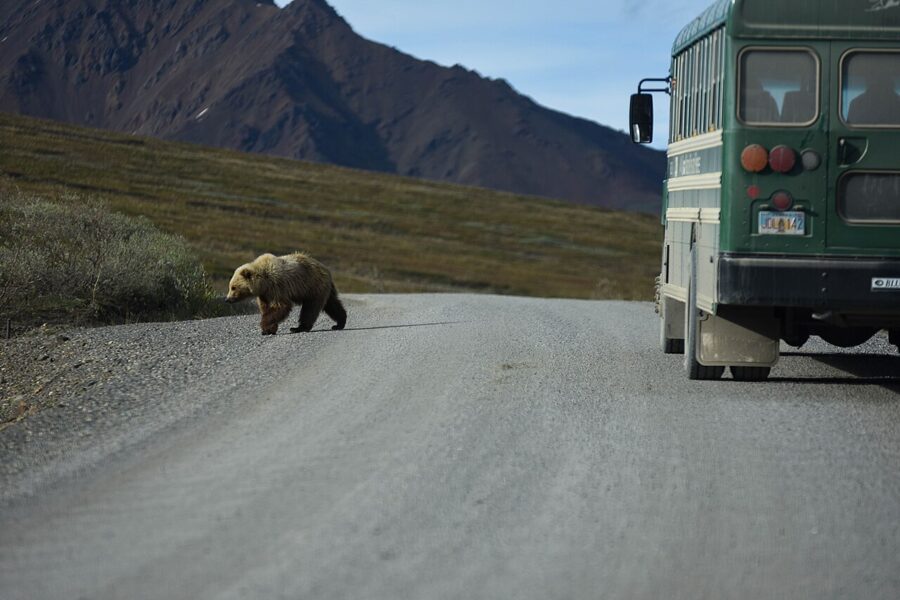
Beyond the first 15 miles, the park road is closed to private traffic and you see the park by bus. 2027 is the year that matters here. A landslide at Pretty Rocks, near mile 45, cut the road in 2021, and for five seasons buses turned back at East Fork, mile 43. The National Park Service opened a 475-foot bridge over the slide in September 2026 and expects bus service to the west end of the road to resume in 2027, with service coming back in phases.
Bus seats are sold by the park’s concessioner, not by the railroad, and the west-end trips will be in demand after five years without them. Check the park’s bus page for the 2027 opening date and book the bus as soon as your train dates are fixed. The railroad can add a narrated Tundra Wilderness Tour to a rail booking if you would rather do it in one place.
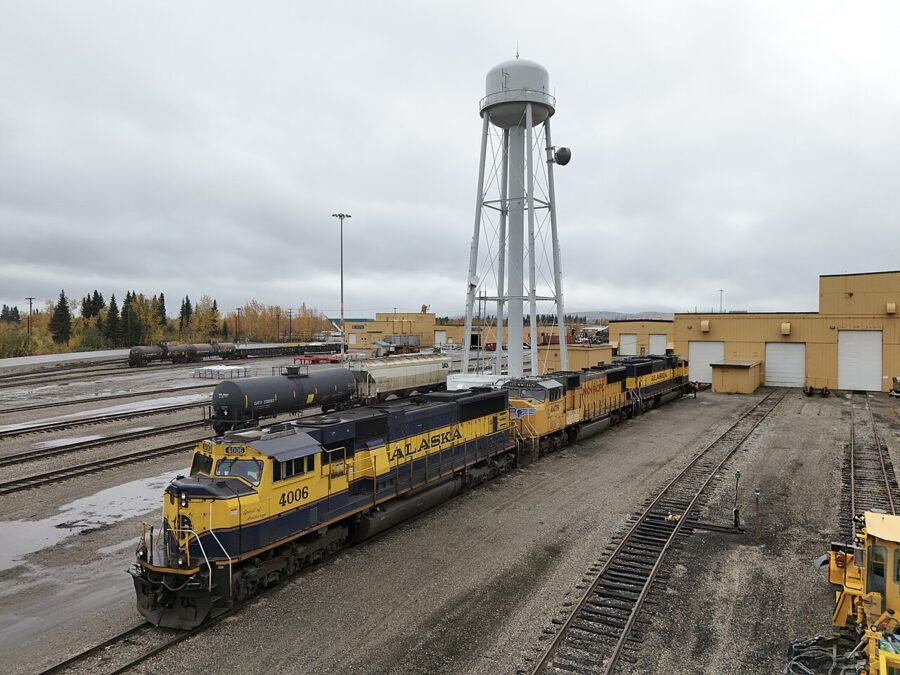
The Hurricane Turn flagstop train
The Hurricane Turn is one of the last flagstop trains in the country. North of Talkeetna there are no roads, and people living in cabins along the line wave the train down to ride into town, or ask to be let off near home. In summer it leaves Talkeetna at 1:00 p.m. Thursday to Monday, turns at Hurricane around 3:30 p.m., and is back about 7:15 p.m.; the round trip costs $128.
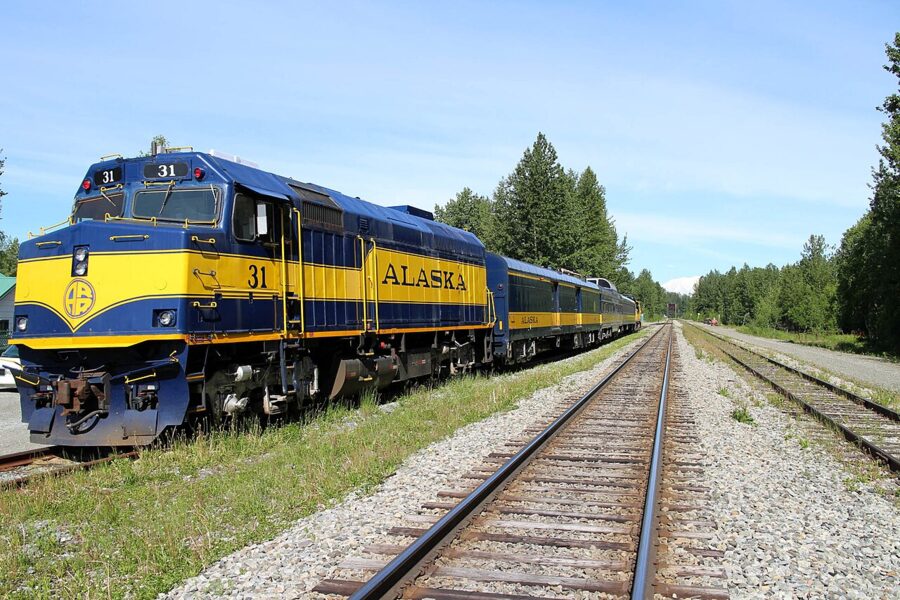
It is Adventure Class only, a working train rather than a sightseeing one, and times vary with how many people flag it. That is the appeal. On a clear day you get Denali over the braided Susitna, the Indian River valley and the view down Hurricane Gulch at the turn, plus the conversations of people who live out there. I would rather do this than a second day on the Denali Star.
In winter it runs once a month, on the first Thursday from October to May, starting in Anchorage at 8:30 a.m. and returning at 8:00 p.m. There is no run in March, when extra Aurora departures take its place. An Anchorage to Hurricane round trip is $153.
Winter, the White Pass & Yukon, and booking
The Aurora Winter Train
From mid-September to mid-May the only long-distance train is the Aurora Winter Train. It goes north from Anchorage to Fairbanks on Saturdays at 8:30 a.m., arriving at 8:00 p.m., and comes back on Sundays, with extra midweek trips in February and March 2027. It also gives flagstop service along the roadless stretch south of Hurricane Gulch, which can stretch the timetable.
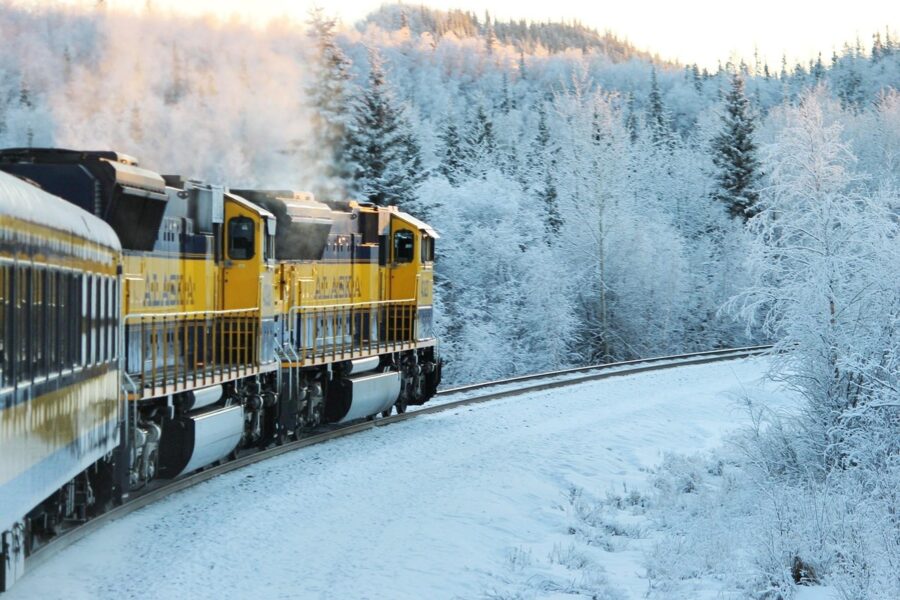
It is cheaper than summer, at $265 one way from Anchorage to Fairbanks, and seniors 65 and over can ride the winter train at half fare through the railroad’s Half Fare Program. The catch is light. In December and January much of a twelve-hour run is in darkness; I would go in late February or March, when the days are long again, Anchorage has its Fur Rendezvous and Iditarod festivities, and the midweek trains make a weekday trip possible.
The northern lights are a reason to go to Fairbanks, not something to count on from the train. The railroad sells rail-and-fly packages for taking the train one way and flying the other, which suits a short aurora trip.
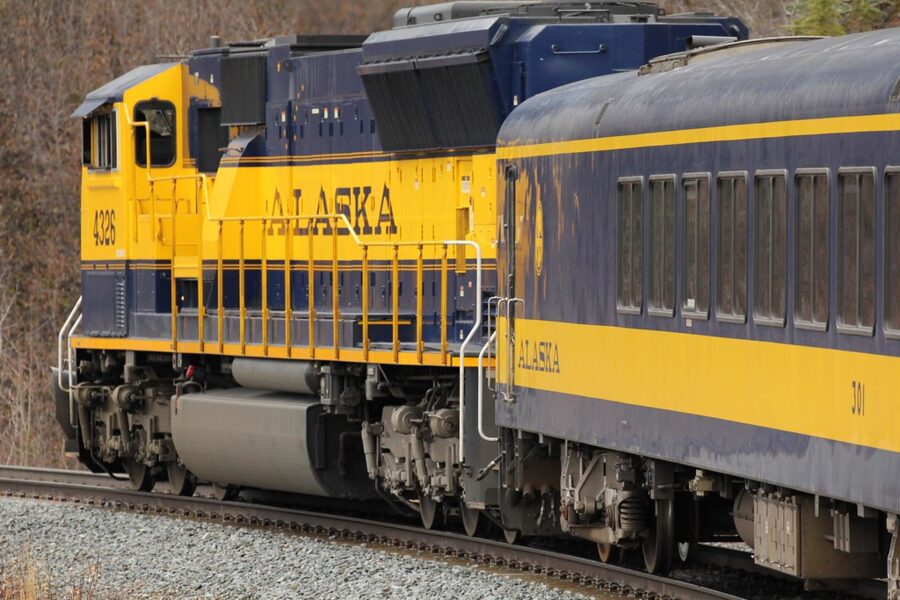
The White Pass & Yukon Route, the other Alaska train
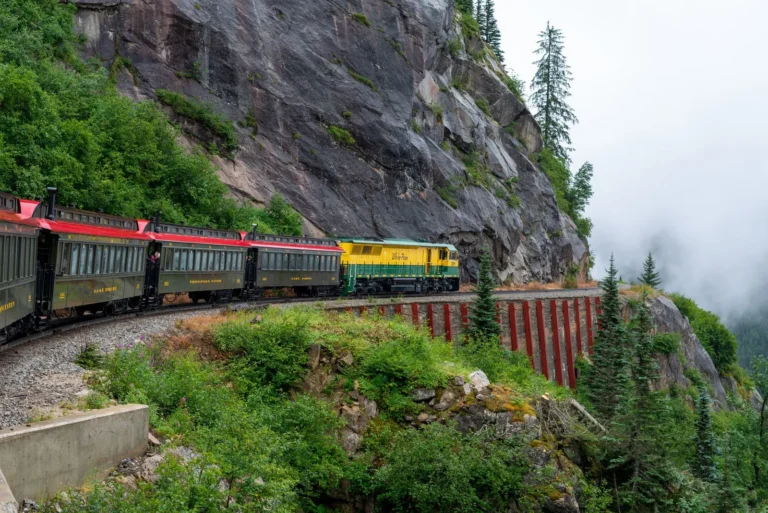
Alaska’s second passenger railroad is far to the southeast in Skagway and has nothing to do with the first. The White Pass & Yukon Route was built in 1898 for the Klondike Gold Rush, and its narrow-gauge trains climb from tidewater to almost 3,000 feet at the summit of White Pass on the Canadian border. If you have ridden the Durango & Silverton, the vintage coaches and the cliff-edge grades will feel familiar.
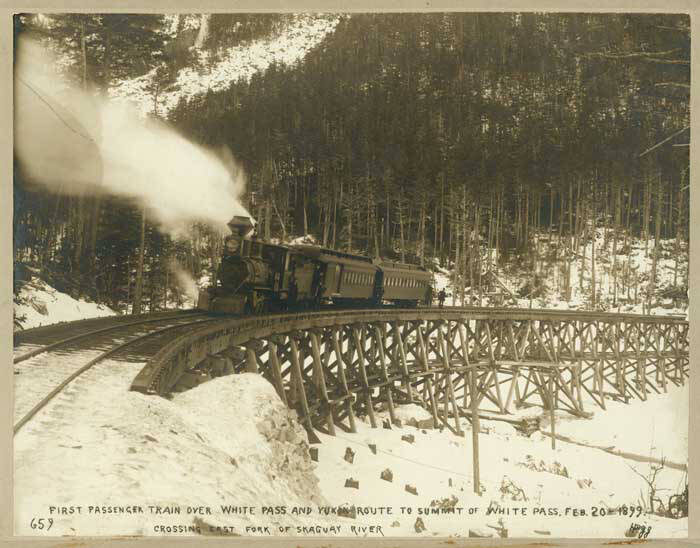
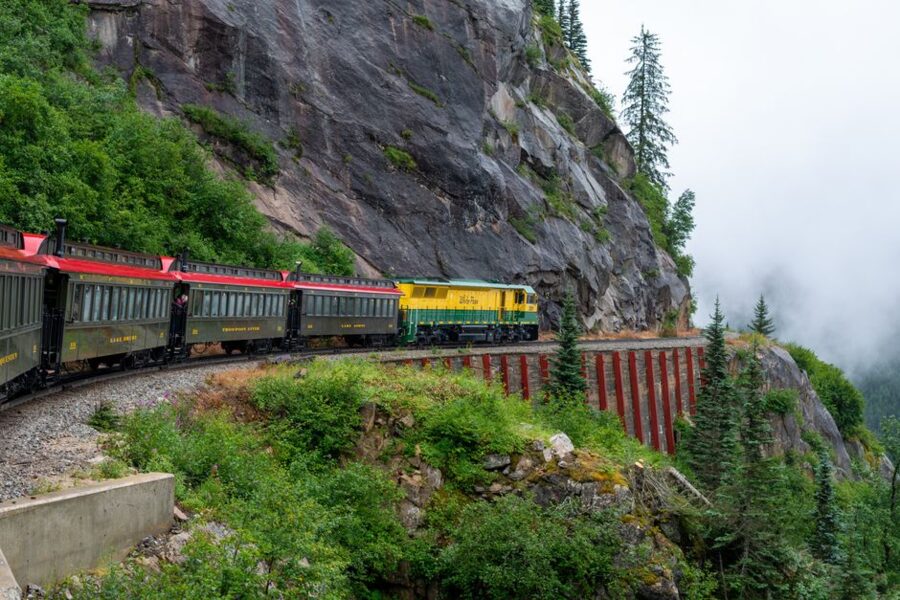
Most people ride the White Pass Summit Excursion, 40 miles round trip in two and a half to two and three-quarter hours, with no passport needed. It runs April 23 to October 6, 2027, at $169 for adults and $84.50 for children 3 to 12. The longer Bennett Scenic Journey goes by train to Carcross in the Yukon and back by bus, eight hours for $319, and it needs a passport.
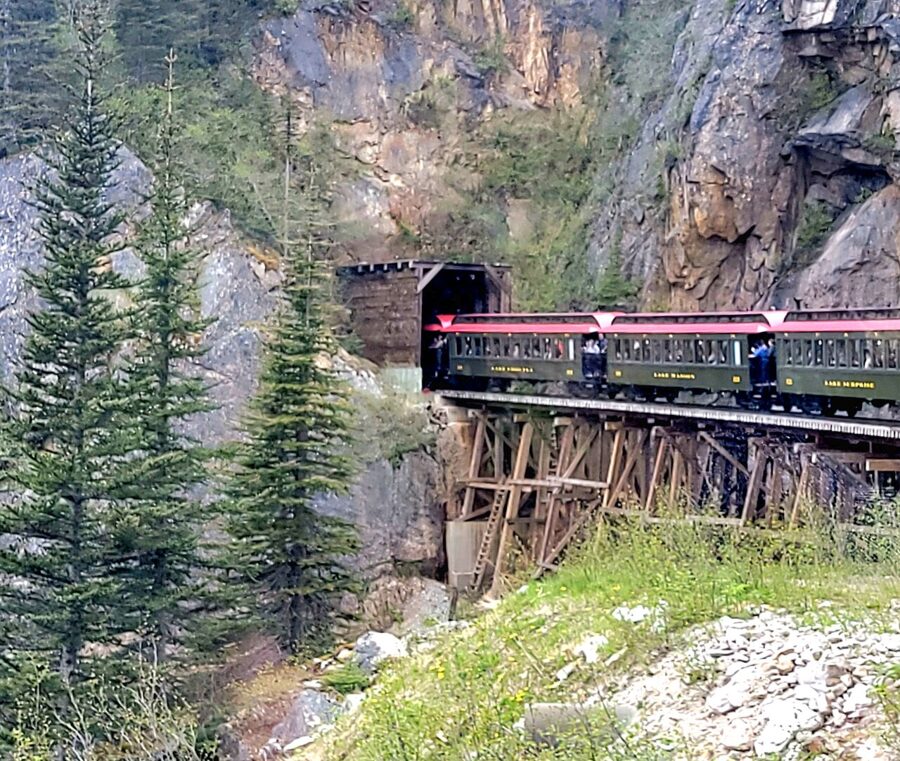
Cruise passengers who book through their ship board on the pier beside it; everyone else books directly with the railway, which charges a $10 penalty per person for cancellations made more than 24 hours ahead and refunds nothing after that. You cannot connect the two railroads by rail: Skagway is reached by ship, ferry or the road from Whitehorse.
Booking the Alaska Railroad
Book rail-only tickets on alaskarailroad.com: search the route, set the fare to Adventure Class or GoldStar, and pay. Reservations made 36 or more days ahead are held for 72 hours before payment is due; inside 35 days you pay in full at booking. Packages that add hotels or tours are booked through the railroad’s reservations office.
The terms are fairly forgiving. Cancel a rail-only booking a day or more before travel and you get 90 percent back; changes carry a 10 percent fee on the changed amount, and nothing is refunded on the day. Active and retired US military and their dependents get 20 percent off.
When to go: June through August is peak season, with shoulder weeks in late May and the first half of September. I like the first half of September for autumn color in Broad Pass, at the cost of colder platforms and shorter evenings.
A few rules catch people out. Each passenger can check two bags of up to 50 pounds and bring one carry-on no bigger than 15 by 14 by 6 inches, and the baggage policy sends bear spray to checked luggage. Adults need photo ID at check-in, and you should check in an hour before departure. This is a day railroad with no sleeping cars; for a bed on wheels you need Amtrak’s sleeper cars in the Lower 48.
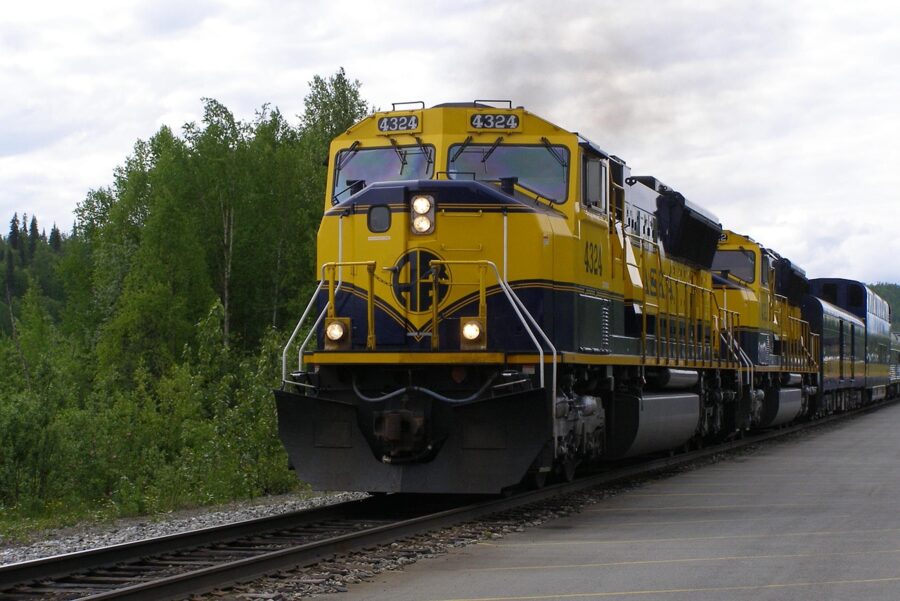
If you have one day for the train, make it the Coastal Classic south from Anchorage, in GoldStar, with a seat on the right and a coat for the platform. If you have three, add the Denali Star north to the park, left side, and leave the last leg to Fairbanks to Adventure Class.