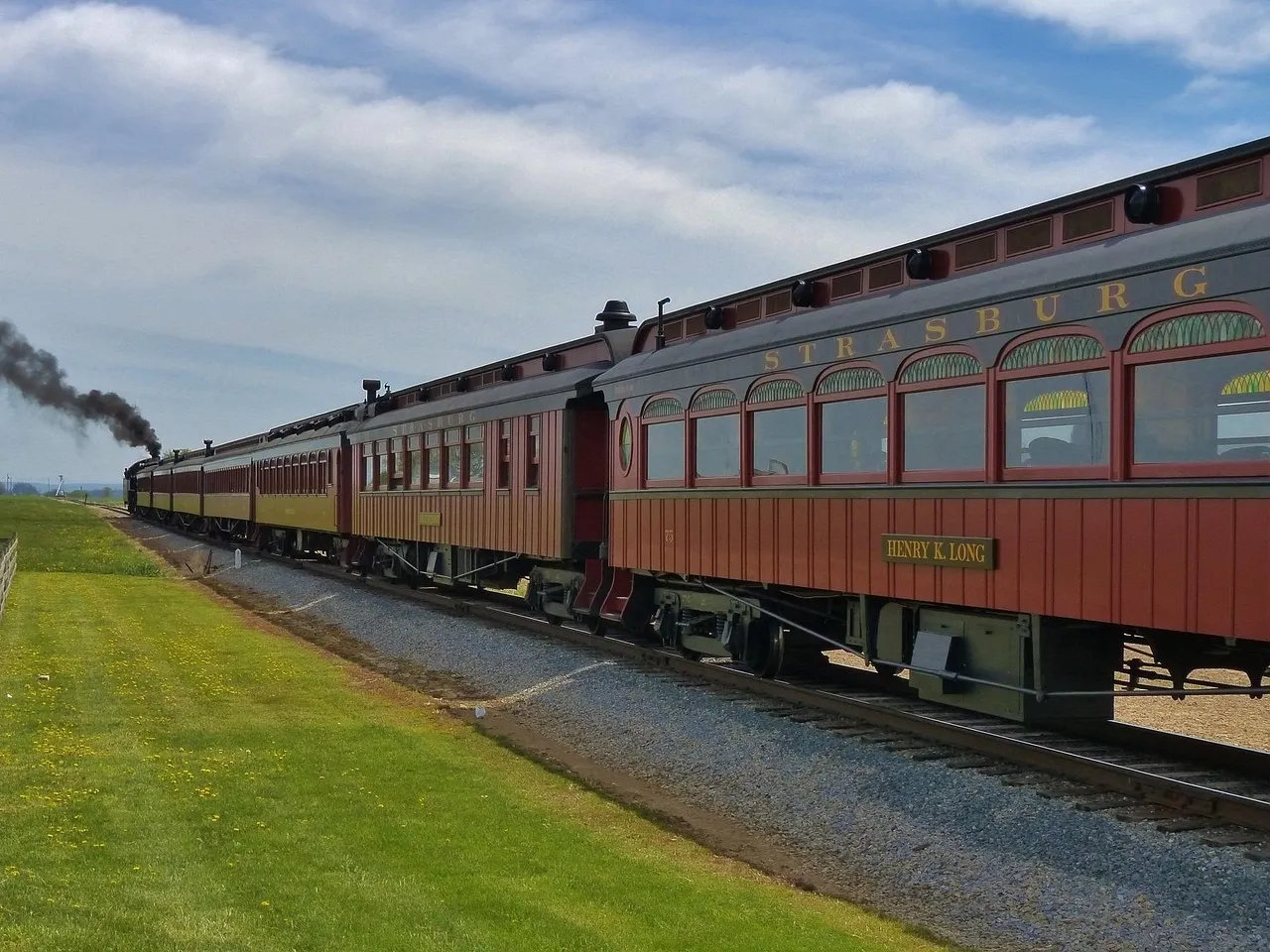
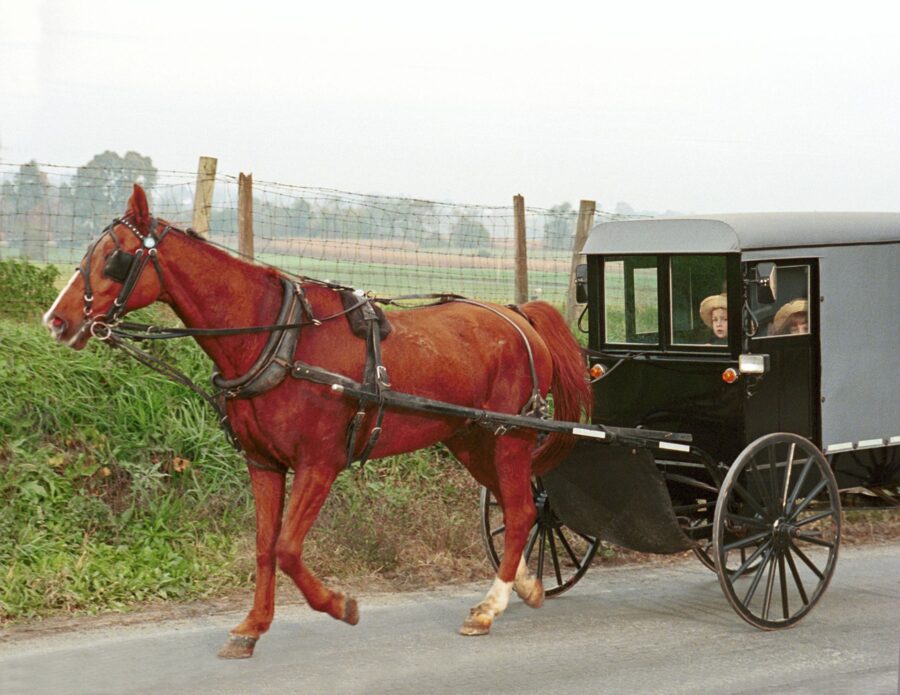
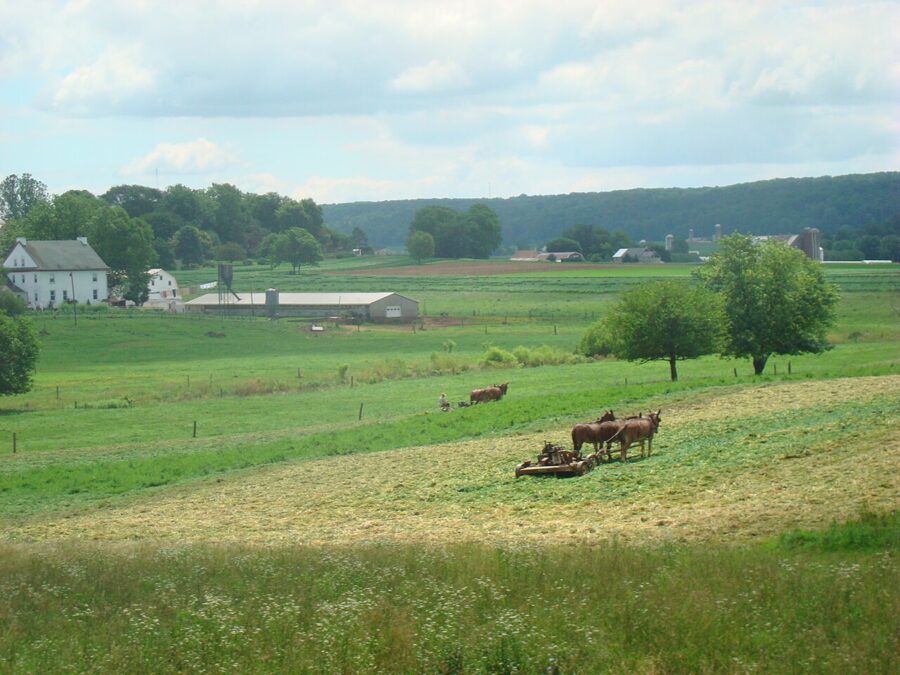
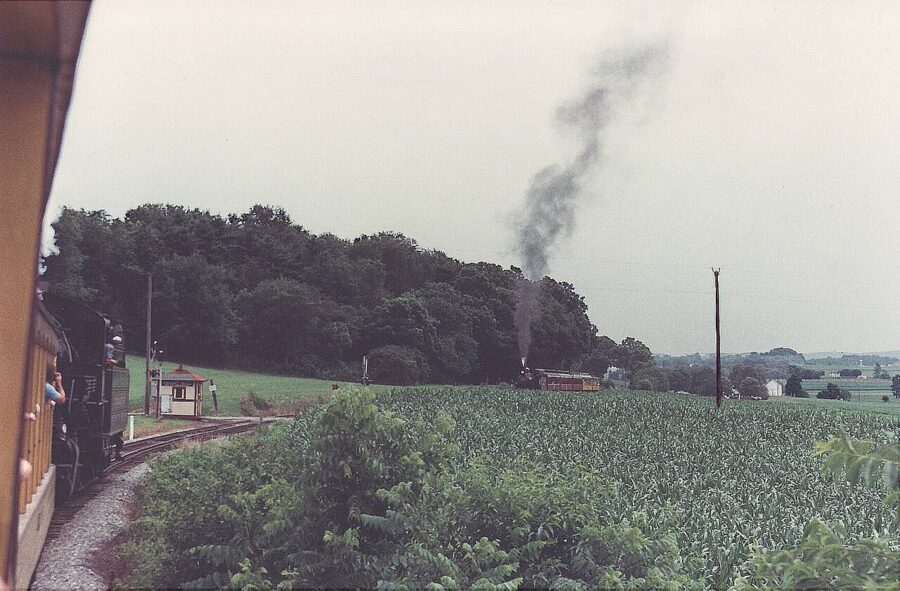
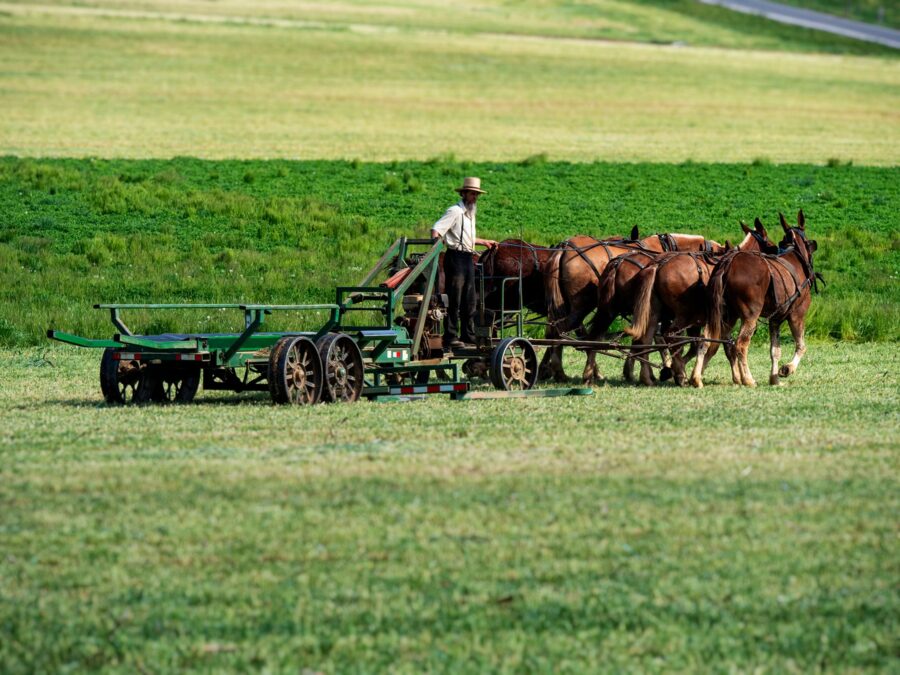
The train leaves East Strasburg with its engine running backward, tender first, and within a few minutes the town is gone and there is nothing on either side but farmland. Corn, alfalfa, soybeans, tobacco in the growing season, and Amish farmers working much of it behind teams of horses. At a road crossing a horse and black buggy waits for the steam train to pass, and for a moment the two oldest ways of getting around Lancaster County sit thirty feet apart, neither of them in a hurry.
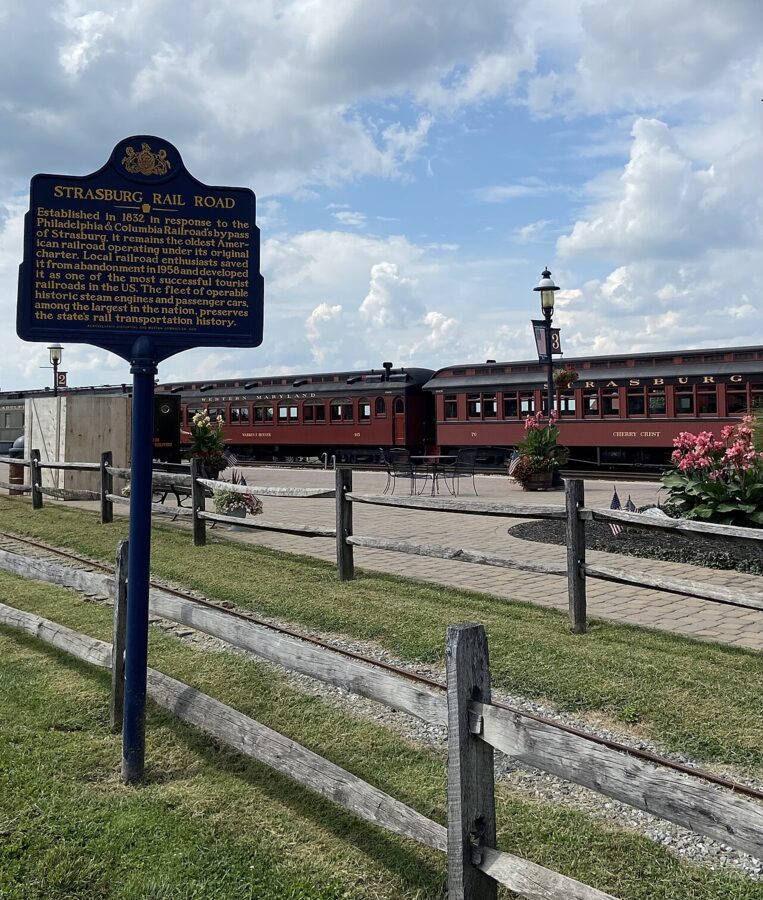
That is the Strasburg Rail Road: 4.5 miles of track from Strasburg to the main line at Paradise, a charter dated June 9, 1832, and a 45-minute round trip that around 300,000 people take every year. What it has is the real thing at close range: coal-fired locomotives built between 1906 and 1924, wooden coaches restored in the railroad’s own shops, and a working farm country outside the window that has not been arranged for anyone.
It also sits in the middle of as good a cluster of railroad sights as any in the country. The state railroad museum is across the road, a model railroad and a toy train museum are a few minutes away, and a day’s trip west or north puts you on the Horseshoe Curve above Altoona or in the roundhouse at Steamtown in Scranton. Strasburg is the place to start, and the place most people never get past.
Stops in this article8
- 01The ride to Paradise and back
- 02Event trains: Thomas, Christmas and the tasting cars
- 03The shops: where other railroads send their engines
- 04The Railroad Museum of Pennsylvania and the neighbors
- 05Lancaster County as a base
- 06Horseshoe Curve and the Railroaders Memorial Museum at Altoona
- 07Steamtown in Scranton
- 08A two- or three-day railroad itinerary
The ride to Paradise and back
The railroad began as a local fix. When the Philadelphia & Columbia Railroad was built west in 1831 it missed Strasburg by nearly five miles, so the town got a state charter for a branch of its own; money ran out after the Panic of 1837, and trains did not run until the early 1850s. By the 1950s the line was nearly dead, hauling about 200 carloads a year. A group of local enthusiasts led by Henry K. Long bought it on November 1, 1958, and their first tourist season in 1959 drew just under 9,000 riders.
By 1962 the figure passed 125,000. Steam had arrived in 1960 with the railroad’s first locomotive purchase, and it has run steam ever since. It is still a private, for-profit company with around 250 shareholders, and it still hauls freight.
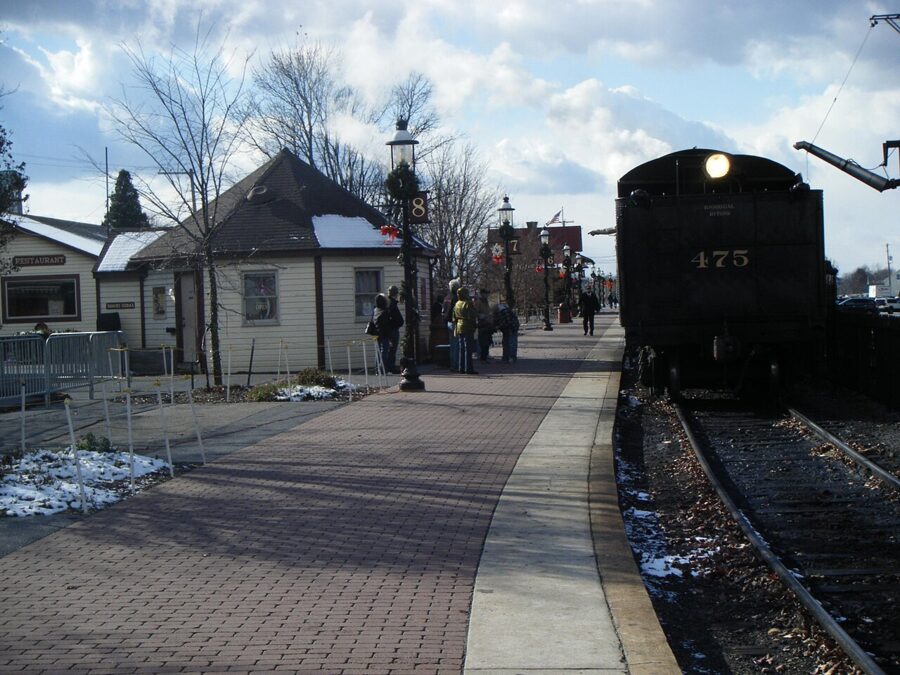
The 45-minute round trip runs 4.5 miles east to Paradise and 4.5 miles back on the same track, with a recorded commentary on the railroad and the farms. There is no turntable at either end, and never has been, so the engine runs backward on the way out, uncouples at the end of the line, and runs around the train to lead it home facing forward. If you want to photograph the locomotive working hard from the train, the return trip is the one.
The pace is slow and the line is level farm country. Two picnic stops, Groff’s Grove and Leaman Place Grove, sit along the route: tell the car host you want Groff’s Grove, get off on the return leg with a cooler, and catch the next train back, usually about an hour later (not on the last run of the day).
Coach, open air, first class or the dining car (as of 2026)
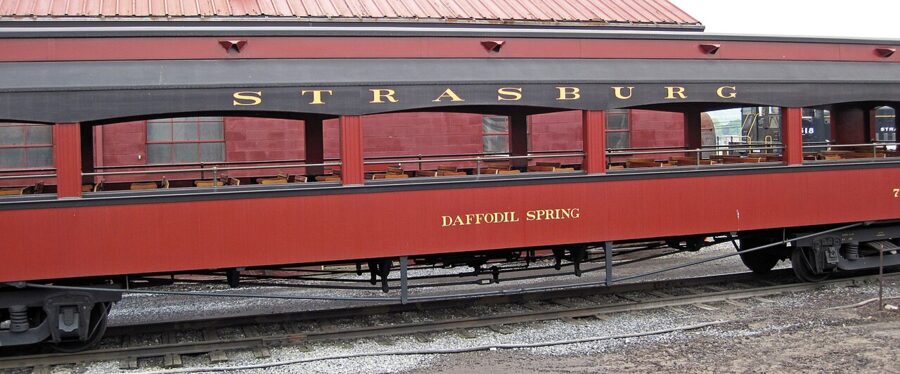
Strasburg runs about 20 operating passenger cars, most of them wooden cars from the late 1800s and early 1900s, and you choose a class when you book. The daily excursion is $32.40 for adults and $26.62 for children 2 to 11 as of 2026. First class, open-air and dining seats are priced by date in the booking calendar.
| Class | What you get | Restroom aboard | Pick it for |
|---|---|---|---|
| Coach | Restored Victorian wooden coach, windows that open, potbelly stove heat in winter | Cars 58, 62, 65, 72 and 105; at least one is on every daily train | The classic ride, families, the lowest fare |
| Open air | Open-sided car with bench seats, nothing between you and the smoke | No | Photographs, warm days, children who want the sound of the engine |
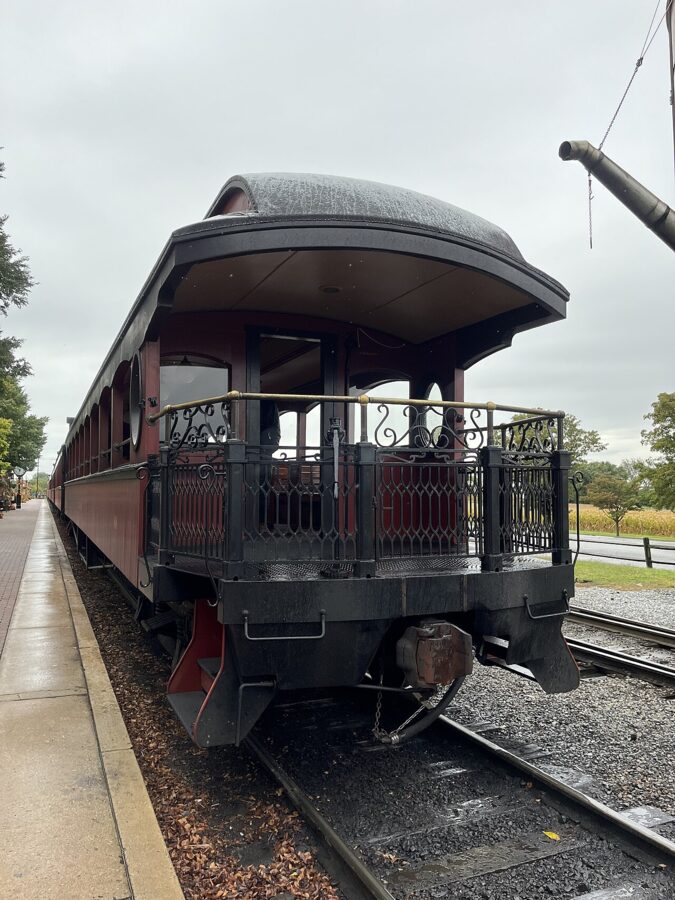
| First Class | President’s Car, Parlor Car or Lounge Car; upholstered seats, climate control | Yes | Hot July afternoons, cold days, a quieter car |
| Dining car | The Lee E. Brenner Dining Car, with a meal or tasting on board | Yes | The ticketed lunch, dinner and tasting trains |
I would ride coach the first time, with a window down in the warm months, and take first class on a hot summer afternoon or in deep winter. The open car is the best seat for the engine’s sound and the worst for comfort: there is no restroom, so use the station facilities first.
The Lee E. Brenner Dining Car was built by the Laconia Car Company in 1926, ran on the Boston & Maine until 1972 and, after coming to Strasburg, was rebuilt in 1993; the railroad calls it the oldest operating all-wood dining car in America. It runs on the ticketed meal trains below.
Booking, rules and what goes wrong
Book online or by phone; the station also sells tickets for most rides on the day. Tickets are non-refundable, but the railroad will move you to another date if you cannot make yours, and if severe weather cancels a train it rebooks you or issues an e-gift card. Otherwise trains run rain or shine and leave on time, so board 10 to 15 minutes early. The railroad’s rules are short: food, water and strollers are fine, pets are not (service animals are), and outside alcohol is banned.
The historic cars do not meet ADA standards. The railroad has a mobile lift with a 400-pound limit and will make a reasonable effort to board anyone, but call the business office on a weekday before you book if steps are a problem.
The railroad closed for track replacement in November 2026 before reopening for Christmas, and the 2027 schedule was not posted by late November. Winter service outside the holidays has usually been lighter, so check your date before counting on daily trains in January or February.
The engines
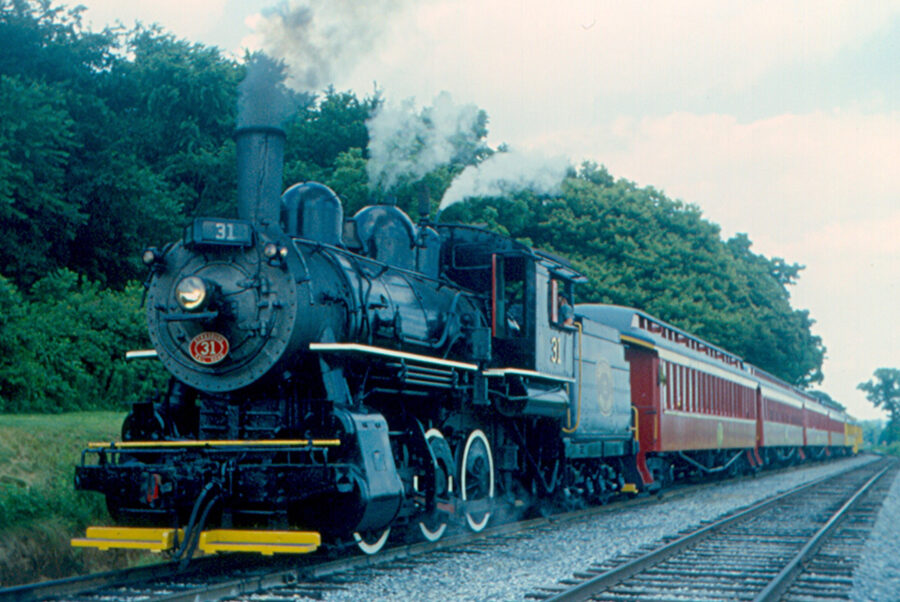
Five steam locomotives are in working order, and which one you get depends on the day:
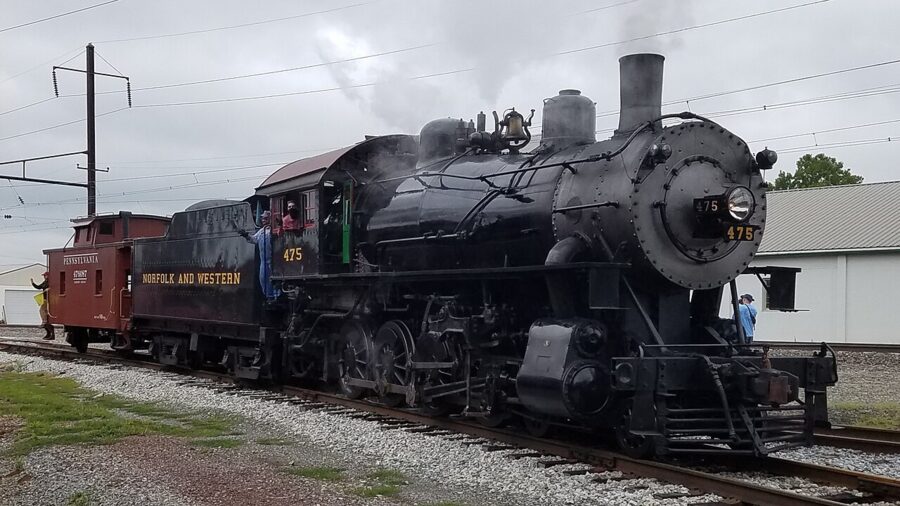
- No. 475, a 4-8-0 built by Baldwin in Philadelphia in June 1906 for the Norfolk & Western, which ran it until 1962. It is the oldest engine on the roster and, by the railroad’s account, the only operable 12-wheel steam locomotive in North America.
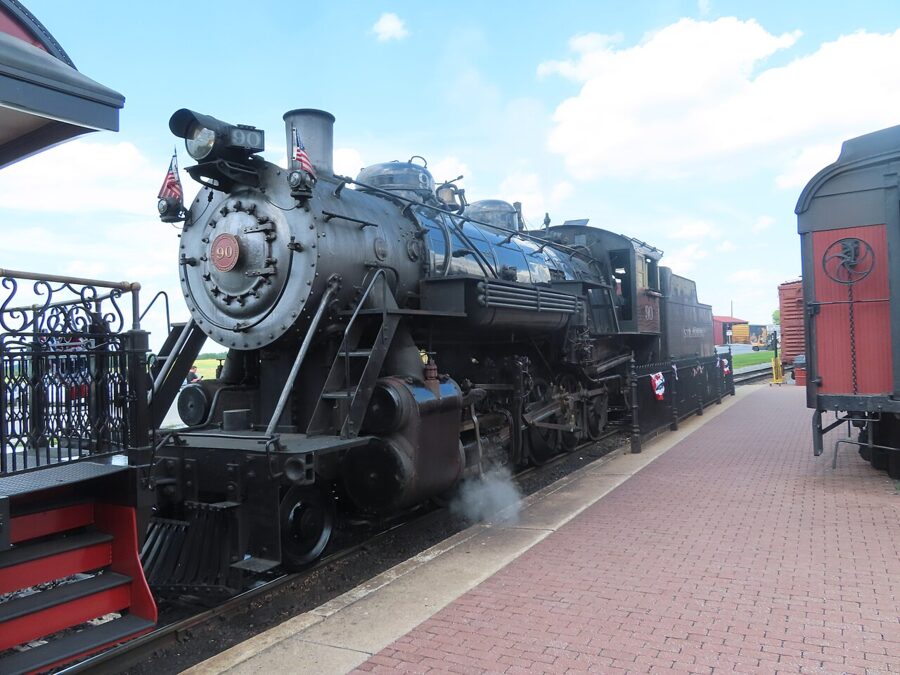
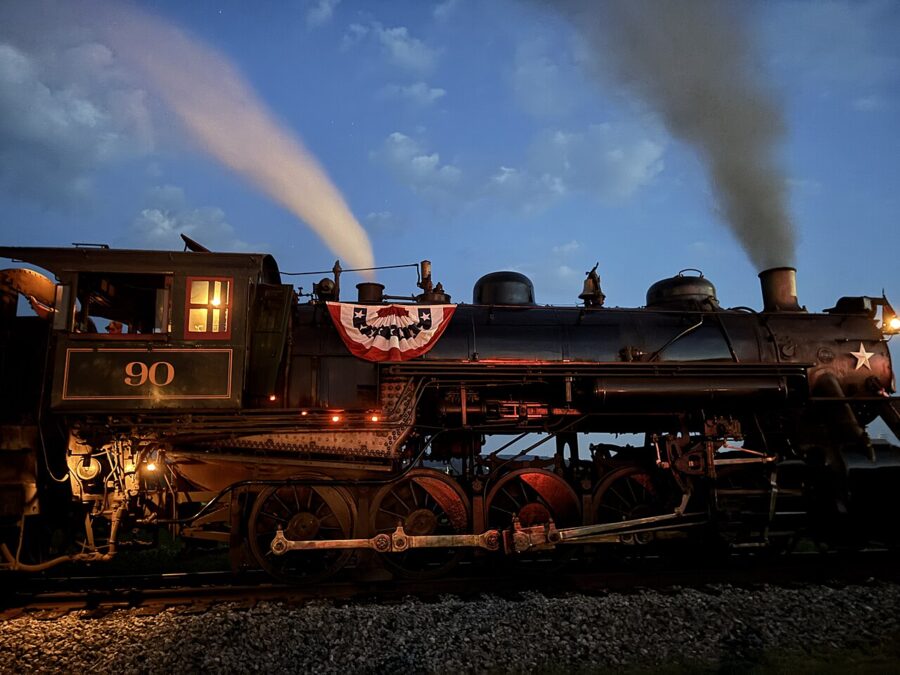
- No. 90, a 2-10-0 Decapod built in 1924, the youngest and largest of the five and the engine most people picture when they think of Strasburg.
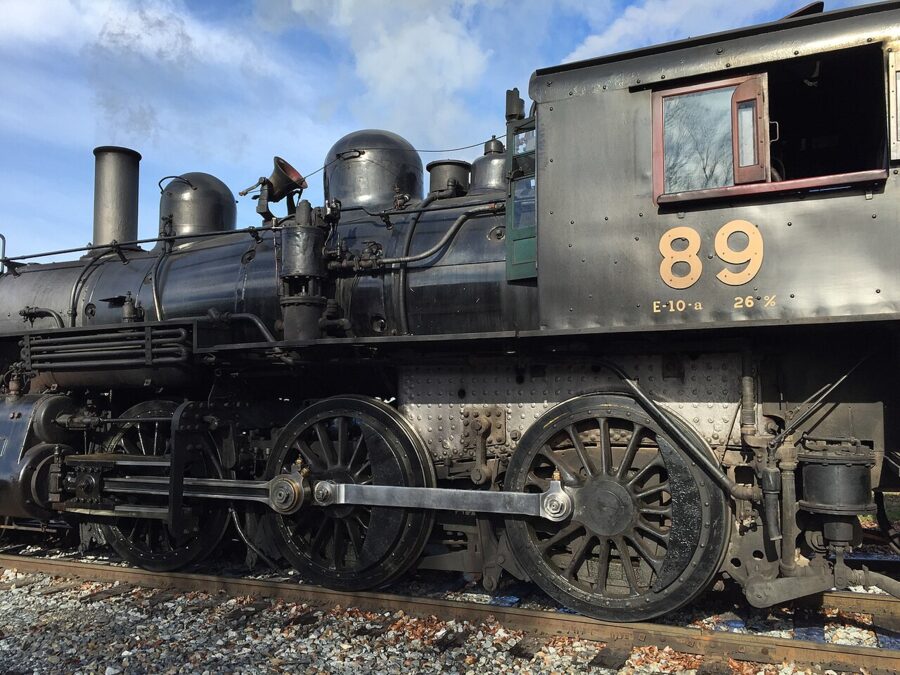
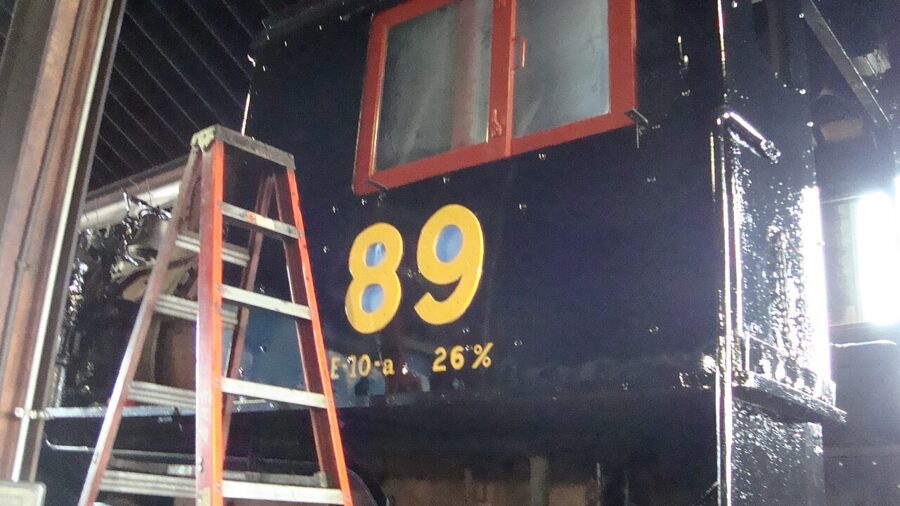
- No. 89, a 2-6-0 Mogul built in 1910 for Canadian National, the usual choice for shorter trains.
- No. 31, a 0-6-0 built by Baldwin in 1908 as Canadian National 7312 and bought in 1960, the first steam locomotive returned to revenue passenger service in the United States, by the railroad’s account.
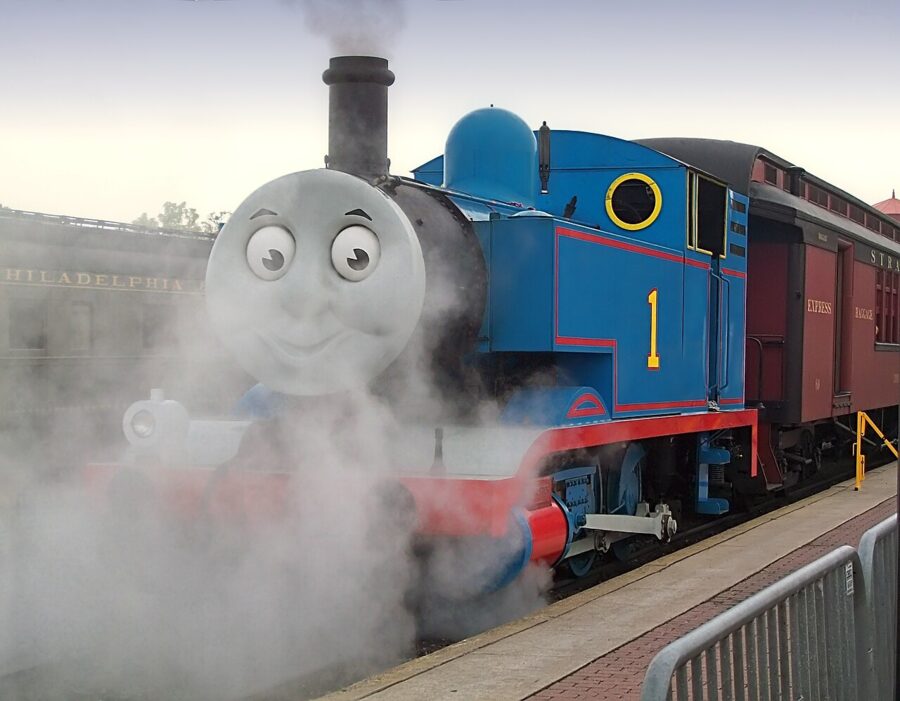
- Thomas, a 0-6-0 built by Porter in 1917 and rebuilt after 1998 to look like the storybook engine.
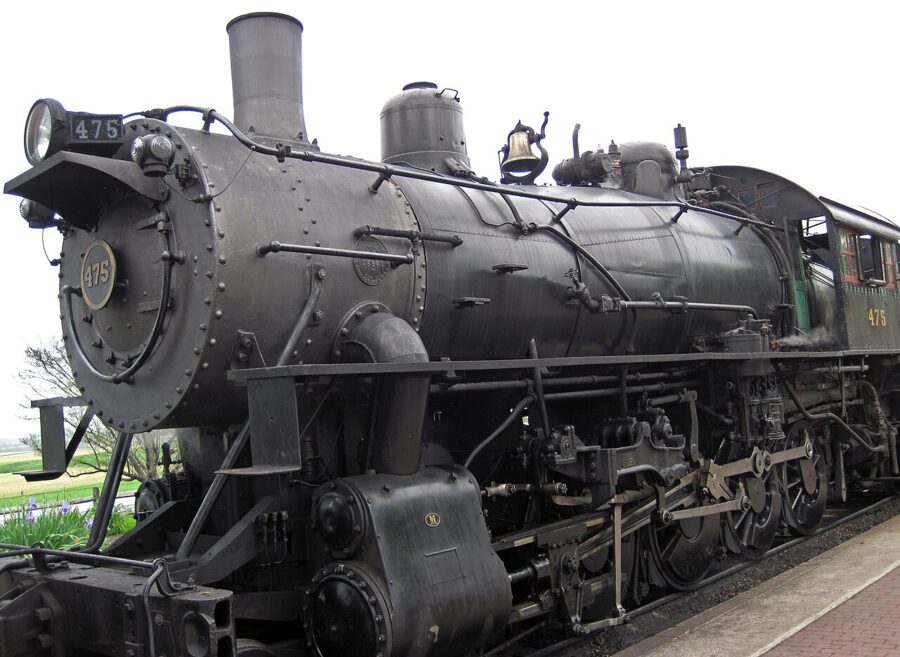
People often ask what happened to No. 475. It was damaged in a minor collision in late 2022, nobody was hurt, and the railroad’s own shop returned it to service.
In 2026 it was the engine for the railroad’s paid in-cab experience, which put a guest at the throttle or on the shovel under a qualified engineer; the October 2026 dates cost $314.15, and you must be 18 with a driver’s license. The railroad sells in-cab sessions on Nos. 89 and 90 as well.
Each trip burns about half a ton of coal and around 1,000 gallons of water. Restoring one of these engines costs about half a million dollars, and upkeep runs roughly $150,000 a year, which goes some way to explaining a $32 ticket for a 45-minute ride.
Event trains: Thomas, Christmas and the tasting cars
Most of Strasburg’s calendar is ticketed specials on the same 45-minute run. They sell out sooner than the daily train, and the adult ones check photo ID for 21 and over.
Day Out With Thomas
Day Out With Thomas is a licensed touring event that Strasburg hosts on two weekends in early summer and two in September. In 2026 it ran June 12–14, June 19–21, September 11–13 and September 18–20, with tickets listed at about $32 to $36. Your ticket buys a train ride with Thomas, and the rest of the day is photo stops, a music corner and a gift shop. Arrive an hour before your departure, as the organizers ask, because the parking lots fill and remote parking runs by shuttle.
Dates for 2027 had not been announced by late November 2026. When they are, I would aim for a Friday or a Sunday morning rather than a Saturday. The National Toy Train Museum down the road let children 12 and under in free on the 2026 Thomas weekends, which makes a good second stop.
Christmas trains
Strasburg runs Santa’s Paradise Express by day and the Night Before Christmas by evening, each $47.70 for adults and $37.10 for children 2 to 11 as of 2026, plus the quieter, sensory-friendly Santa Claus Limited on weeknights from December 2 to 18, which puts Strasburg among the gentlest Christmas trains for small children. Strasburg does not run the licensed Polar Express trains.
Wine, whiskey and dinner
Three adult trains use the first-class cars or the dining car on the regular 45-minute run, and in 2026 each had a fixed price:
- Wine & Cheese, $91.61: a tasting of Waltz Vineyards wines with cheese and crackers in First Class.
- Dinner on the Rails, $110.71: three courses from Cafe 1832 in the Lee E. Brenner Dining Car, with one drink included. You choose the entree when you book.
- Whiskey on the Rails, $116.32: a tasting of Stoll & Wolfe spirits from Lititz with a plated dinner in the dining car, on select Saturdays.
All three are short for the money. Forty-five minutes is enough for a tasting but tight for three courses, and Pennsylvania law means drinks can only be served while the train is moving, never in the station. If you want one, I would book Wine & Cheese and skip the dinner train unless the occasion needs it.
Halloween trains in October, a Mother’s Day brunch, a murder mystery train and themed days for younger children fill out the year.
The shops: where other railroads send their engines
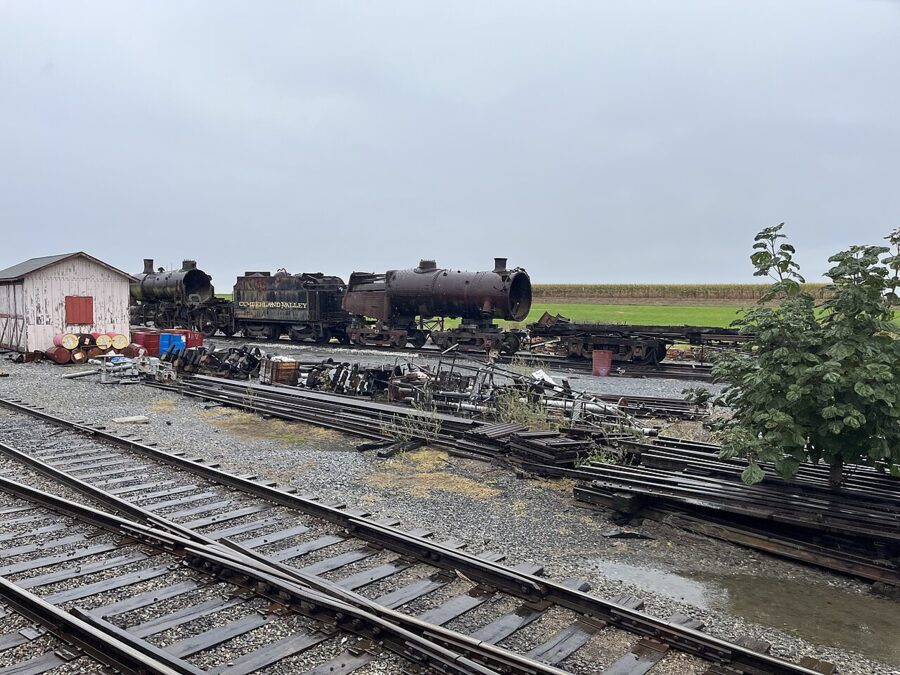
The part of Strasburg most riders never see is the part the rest of the steam world knows best. Its mechanical department was the first steam railroad shop to hold the ASME “S” and NBIC “R” stamps, which certify it to design, build and repair boilers, and it takes outside work from museums and heritage railroads around the country. It also builds and restores wooden passenger cars.
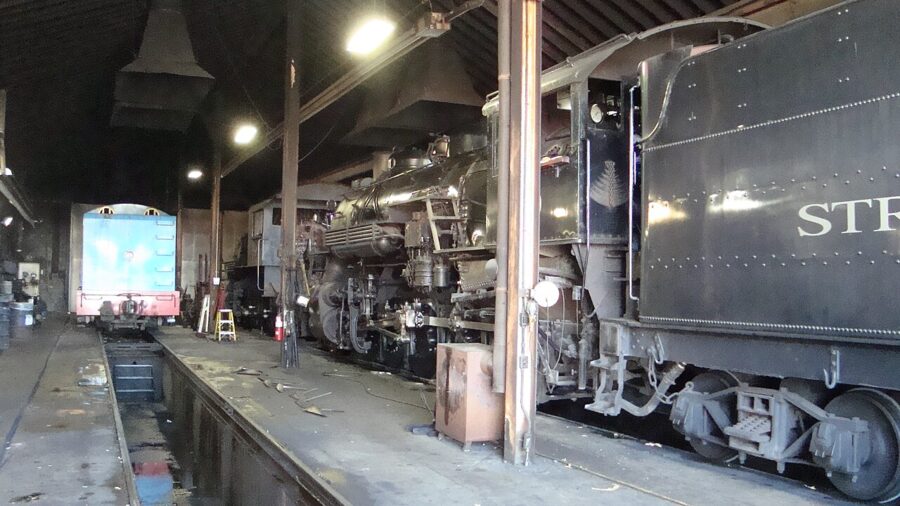
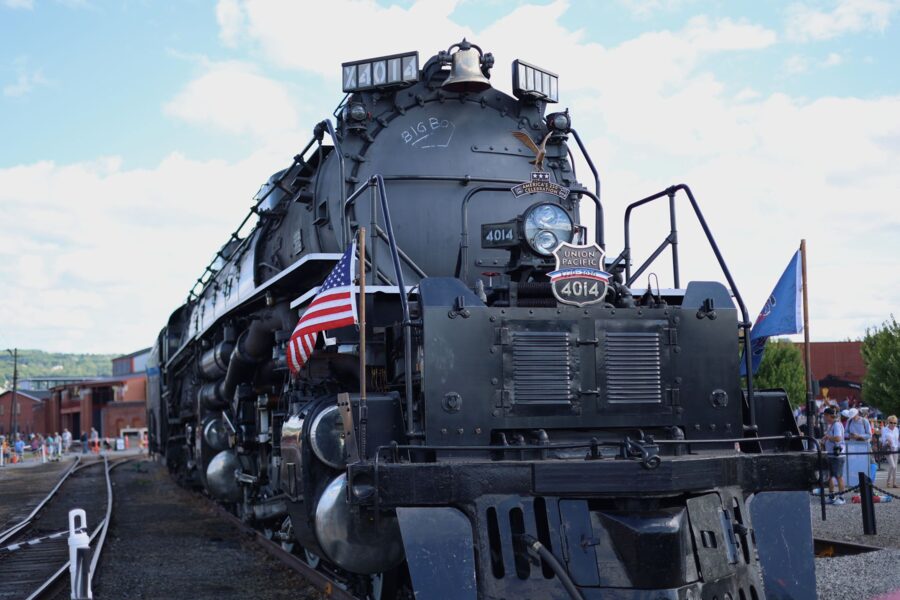
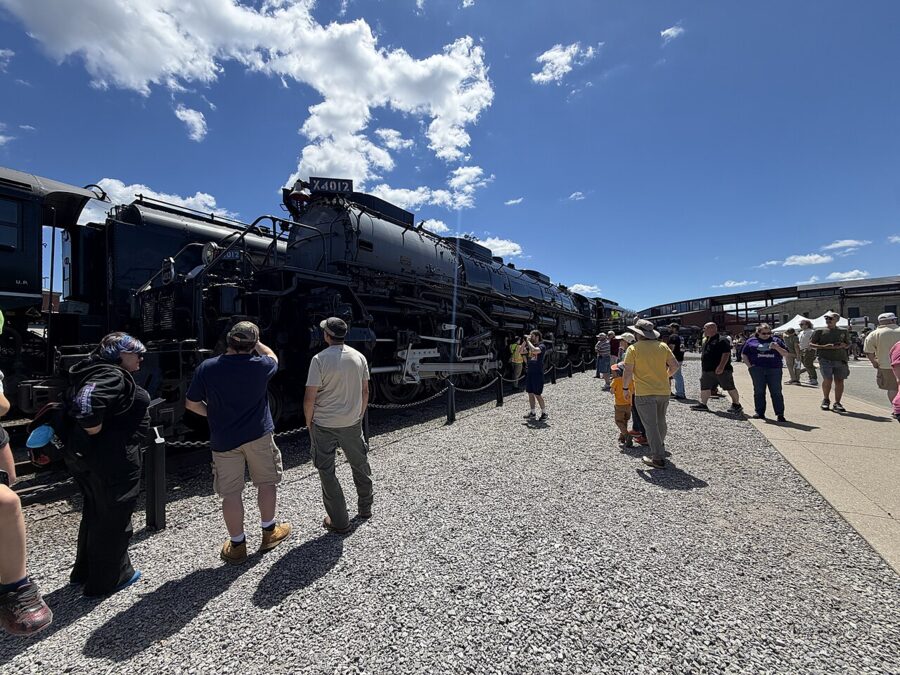
The biggest job in the building in 2026 is Chesapeake & Ohio No. 614, a 4-8-4 that its owner, RJD America, sent to Strasburg in 2025. Through 2026 the shop has been fitting new firebox side sheets, machining staybolts and truing the driving wheels for eight new tires, and the October 2026 update puts the target for a return to steam at mid to late 2027. Earlier jobs include the Huckleberry Railroad’s Baldwin No. 152 and, in 2017, new tires and crank pins for the driving wheels of Union Pacific’s Big Boy No. 4014, as LancasterOnline reported in June 2026.
You can go inside. The Mechanical Shop Tour is an hour long, $34.72 as of 2026, for ages 5 and up, and it often sells out for the day, so buy ahead. Closed-toe shoes are required, photography is not allowed, and it is not suitable for mobility devices. The two-hour Hostling Tour, for ages 10 and up and limited to ten people, watches the crew prepare a locomotive for the day; it is the one I would book.
The Railroad Museum of Pennsylvania and the neighbors
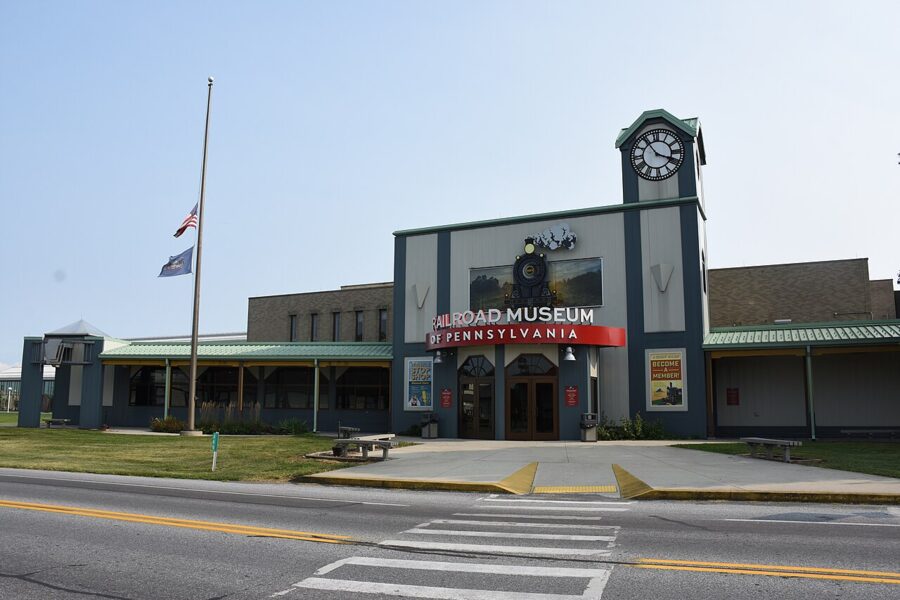
The Railroad Museum of Pennsylvania opened on April 22, 1975, directly across Gap Road from the Strasburg station. It is run by the Pennsylvania Historical and Museum Commission, and it keeps close to 100 locomotives and cars made or used in Pennsylvania, many of them under one roof in a 100,000-square-foot hall with a 1915-style street scene and station inside.
The collection is mostly Pennsylvania Railroad, and outstanding. Look for:
- PRR No. 1223, a D16sb 4-4-0 of 1905 that pulled Strasburg’s tourist trains from 1965 until 1989 and appeared in Hello, Dolly!
- PRR No. 7002, billed as the world’s fastest locomotive for a run reported at 127.1 mph in 1905; the engine on show is a 1939 stand-in, as the original was scrapped.
- PRR No. 4800, the first GG1 electric and the only one with a riveted body, known as “Old Rivets.”
- PRR No. 460, the E6s Atlantic that raced an airplane from Washington to New York with newsreel film of Charles Lindbergh’s homecoming.
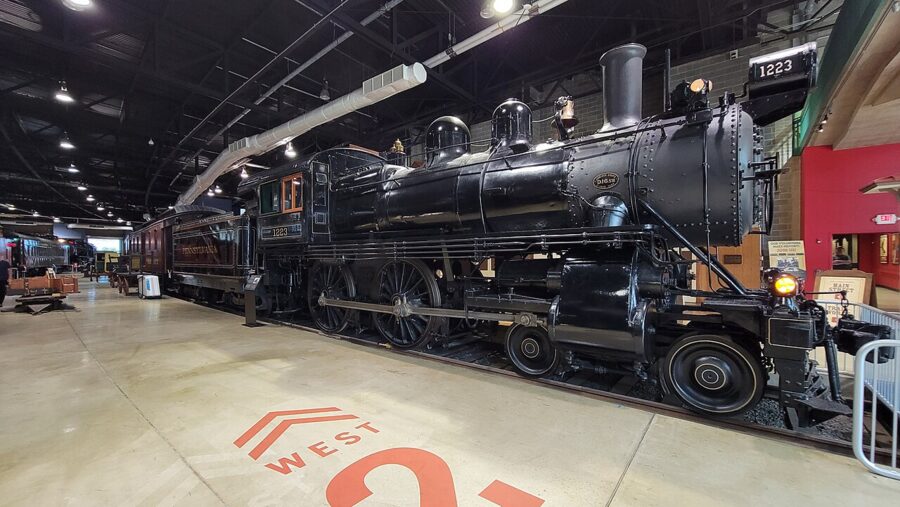
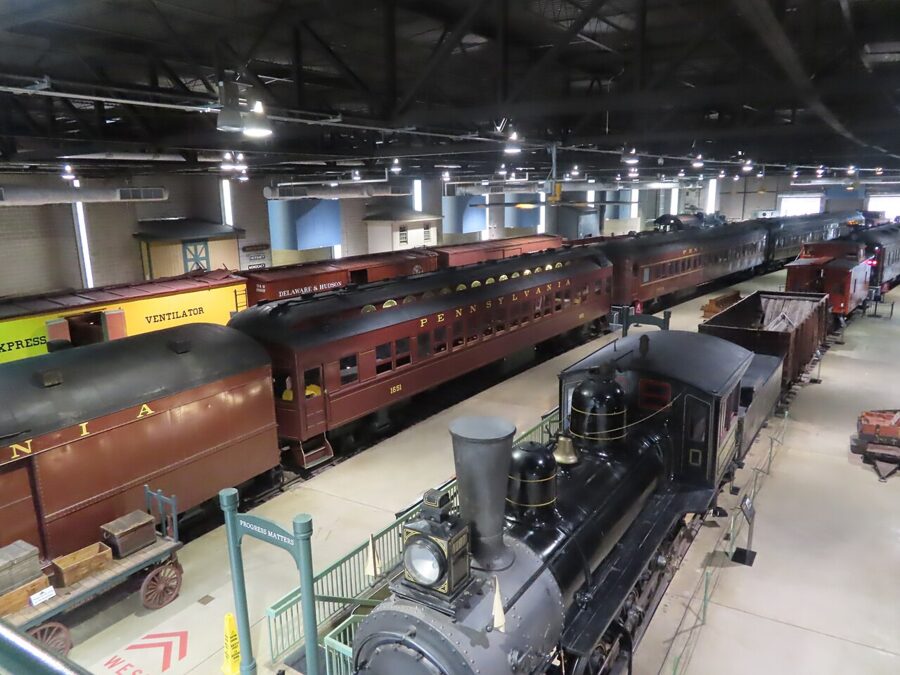
As of 2026 the museum is open Wednesday to Saturday from 10 a.m. to 4 p.m. and Sunday from noon to 4 p.m., closed Mondays and Tuesdays, with last entry at 3:30. Admission is $10 for adults, $9 for seniors 65 and over, and $8 for ages 3 to 11. Allow 90 minutes to two hours, keep your receipt, and you can cross the road for a train and come back the same day.
The outdoor train yard is mostly closed to casual browsing while a six-stall roundhouse goes up; construction began in July 2025 and the museum expects to finish in late 2026 or early 2027. A behind-the-scenes tour of the restoration shop runs at noon on most days for an extra fee, staff permitting.
The Choo Choo Barn and the National Toy Train Museum
Two smaller stops are a few minutes away. The Choo Choo Barn, also on Gap Road, has been open since 1961: a 1,700-square-foot model railroad with 17 trains and more than 180 animated figures, open every day from 10 a.m. to 5 p.m. except a handful of holidays. Admission in 2026 is $12 for adults and $8 for children 3 to 11.
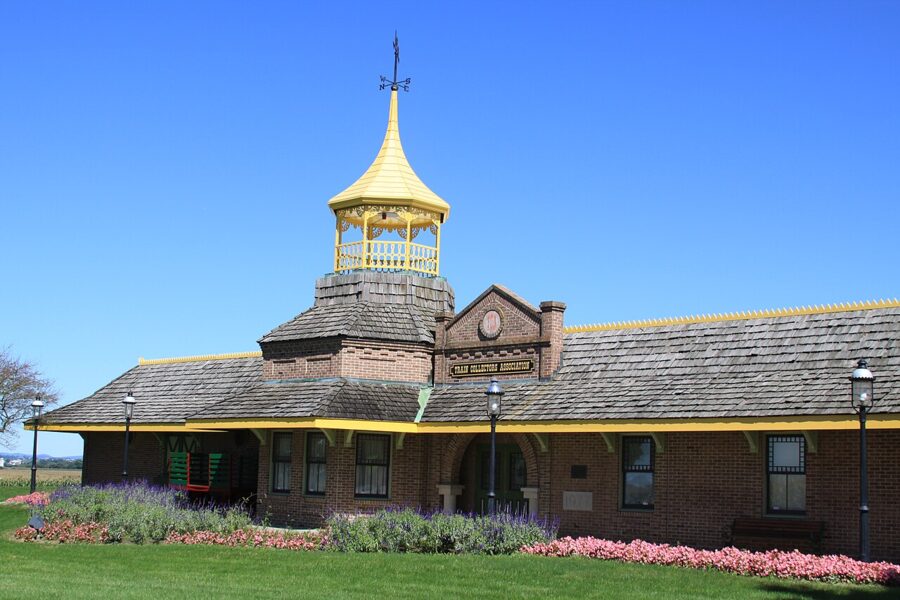
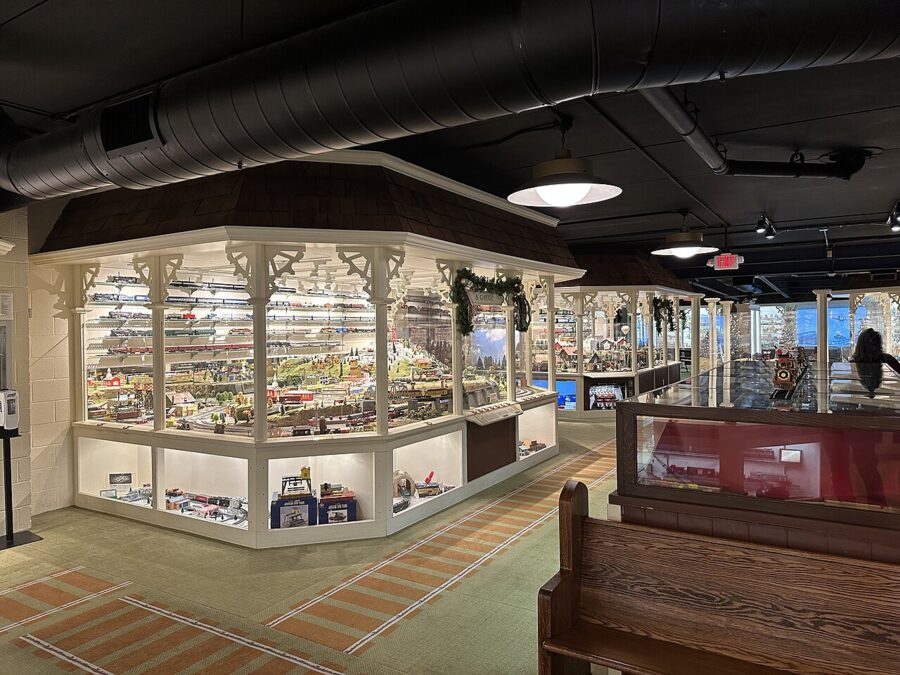
The National Toy Train Museum on Paradise Lane is the Train Collectors Association’s museum, with toy trains from the 1800s onward and operating layouts, some of which visitors can run themselves. It is open every day through January 19, 2027, except Thanksgiving and Christmas, then closes until February 13, 2027. Adults are $8.50, children 4 to 11 are $5.50, and a family ticket is $25.
Lancaster County as a base
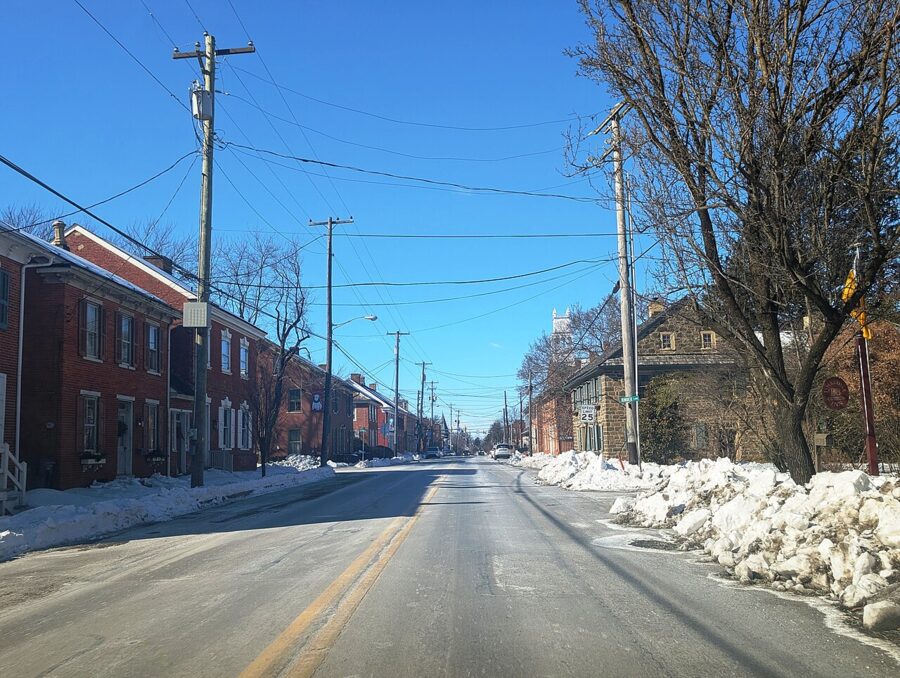
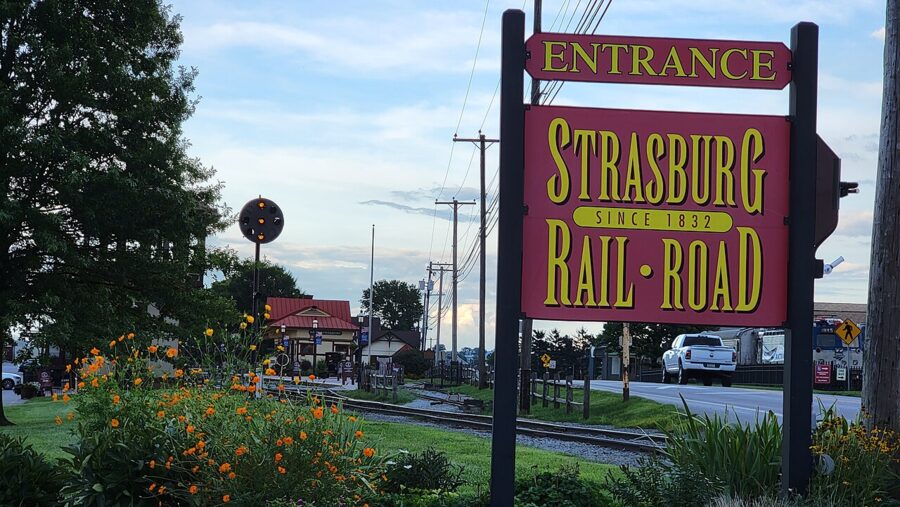
Stay near Strasburg if you can. The station is on Route 741, a mile and a half east of the town square, and the railroad’s own lodging list runs from the Red Caboose Motel, 0.7 miles away, to a farm bed and breakfast and the big resort hotels toward Lancaster. Lancaster city is about 25 minutes away by car; Philadelphia is two to two and a half hours, Harrisburg an hour to an hour and a half.
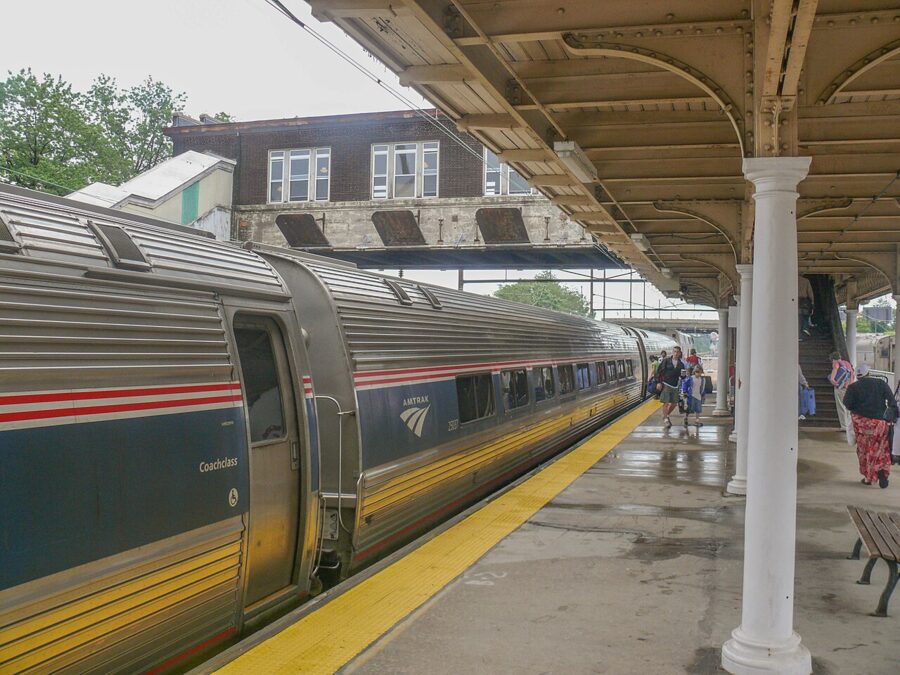
You can arrive by train. Amtrak’s Keystone Service and the Pennsylvanian both stop at Lancaster, and from there it is a taxi or ride-share to Strasburg.
Horseshoe Curve and the Railroaders Memorial Museum at Altoona
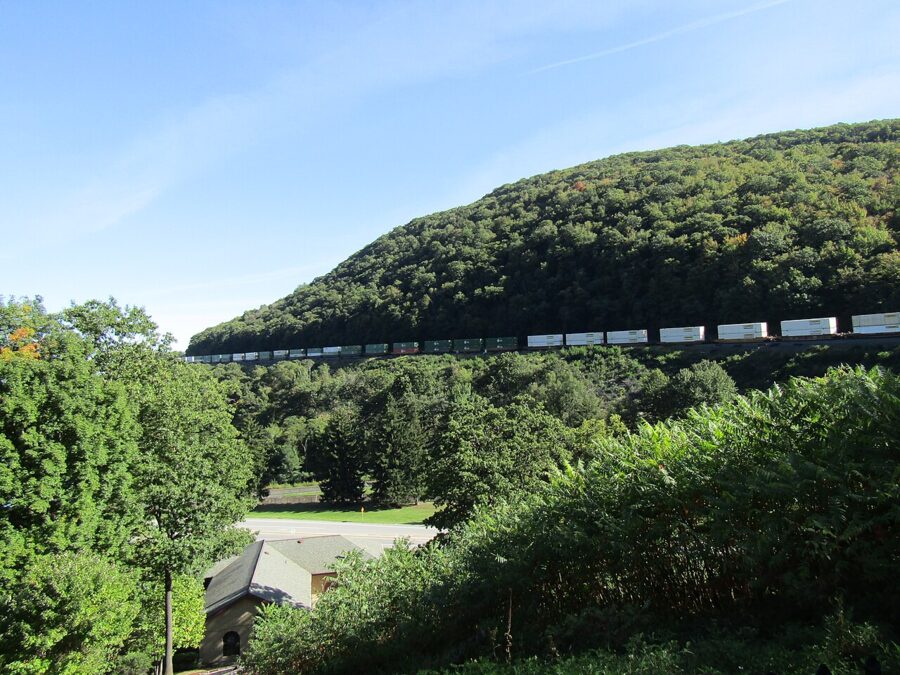
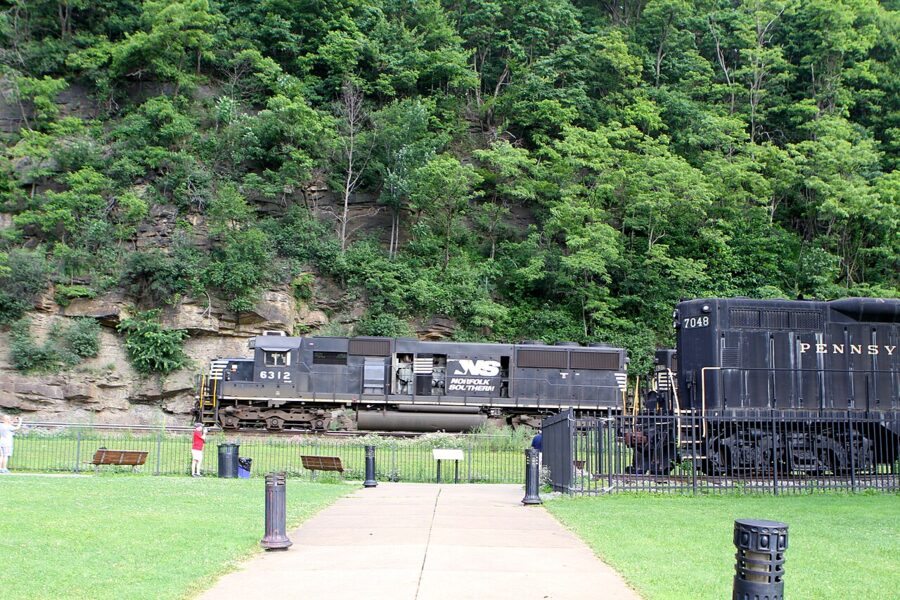
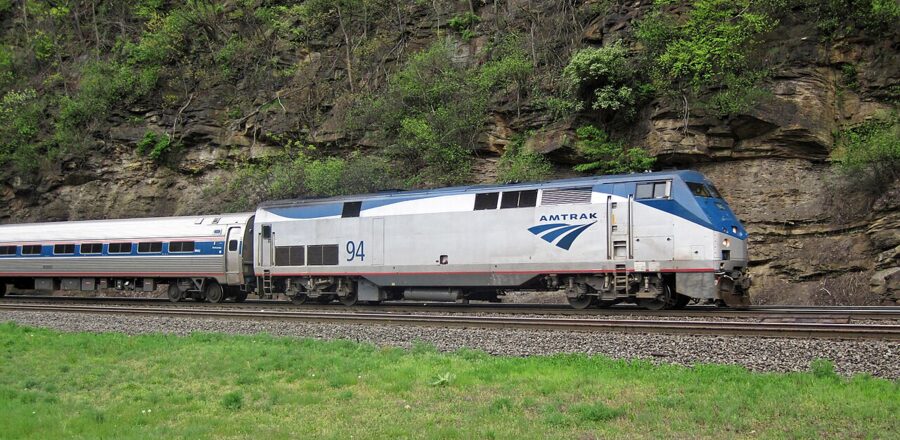
Altoona was the Pennsylvania Railroad’s shop town, and the reason to go is the curve west of it. Opened on February 15, 1854, the Horseshoe Curve swings the main line around a valley to gain height on the Allegheny Front, and Norfolk Southern freight still climbs it alongside the Amtrak trains. It became a National Historic Landmark in 1966, and the park above it has a small museum, films, an observation area and a gift shop.
Both sites are run by the Railroaders Memorial Museum, and the timing matters. They are closed Mondays, Tuesdays and federal holidays, the Curve closes in November and reopens in April, and both shut from a few days before Christmas until a few days after New Year’s Day. The funicular from the parking lot up to the track runs on weekends only and was down for maintenance in November 2026, with a utility vehicle carrying visitors instead and admission discounted while it is out. Call or check the museum’s Facebook page before setting out.
There are no train rides at the Curve. The way to ride it is Amtrak’s Pennsylvanian between New York, Philadelphia, Lancaster, Harrisburg, Altoona and Pittsburgh, which went from one daily round trip to two on November 18, 2026. Lancaster to Altoona takes a little under three and a half hours; the Curve is just west of Altoona, so ride on toward Pittsburgh to see it from the window.
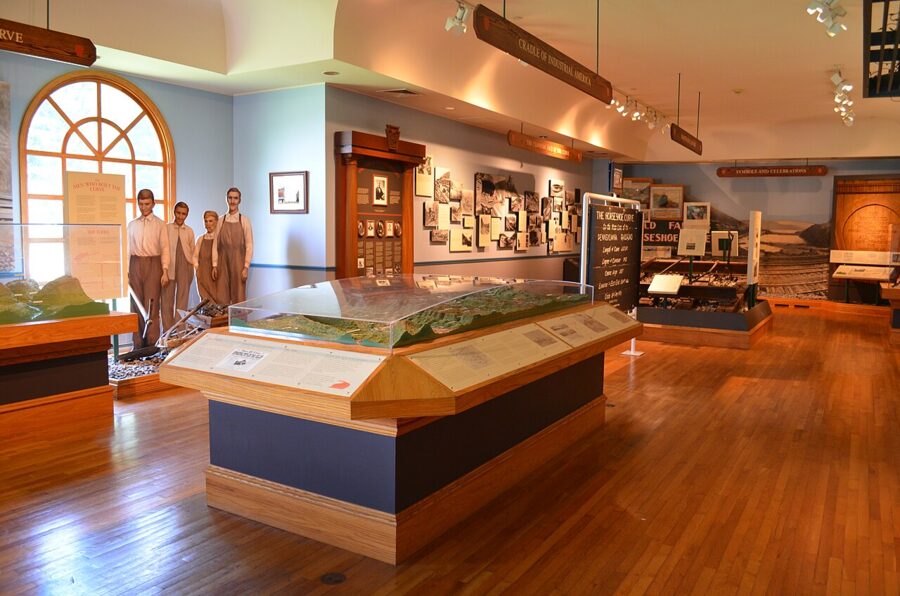
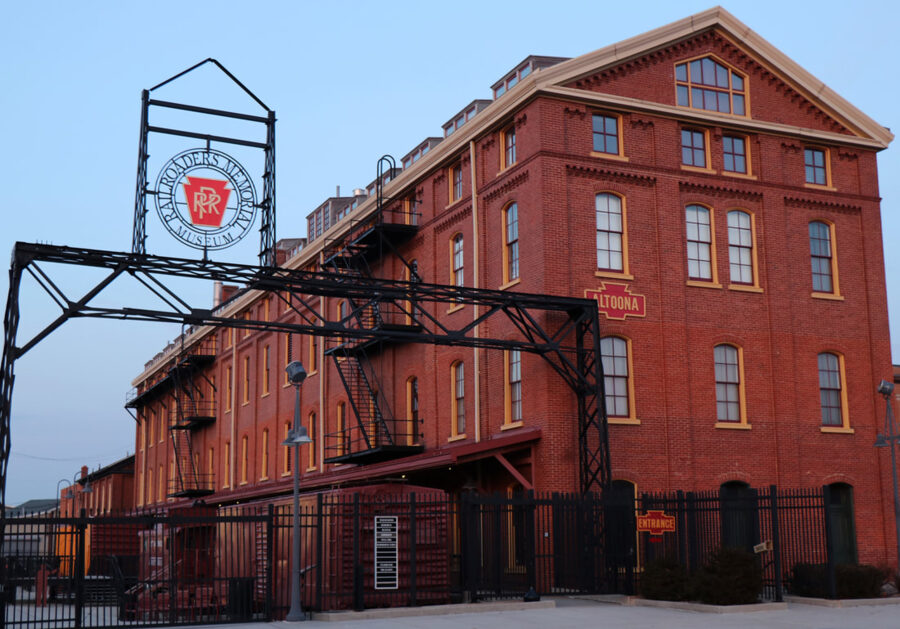
In town, the Railroaders Memorial Museum fills the Pennsylvania Railroad’s 1882 Master Mechanics Building at 1200 9th Avenue with life-size scenes of the Altoona shops and the people who worked in them. Its roundhouse holds K4s No. 1361, the “Spirit of Altoona,” under a long restoration. A combo ticket covers the museum and the Curve on days both are open. For free train watching, the 7th, 8th and 17th Street bridges look down on the main line.
Steamtown in Scranton
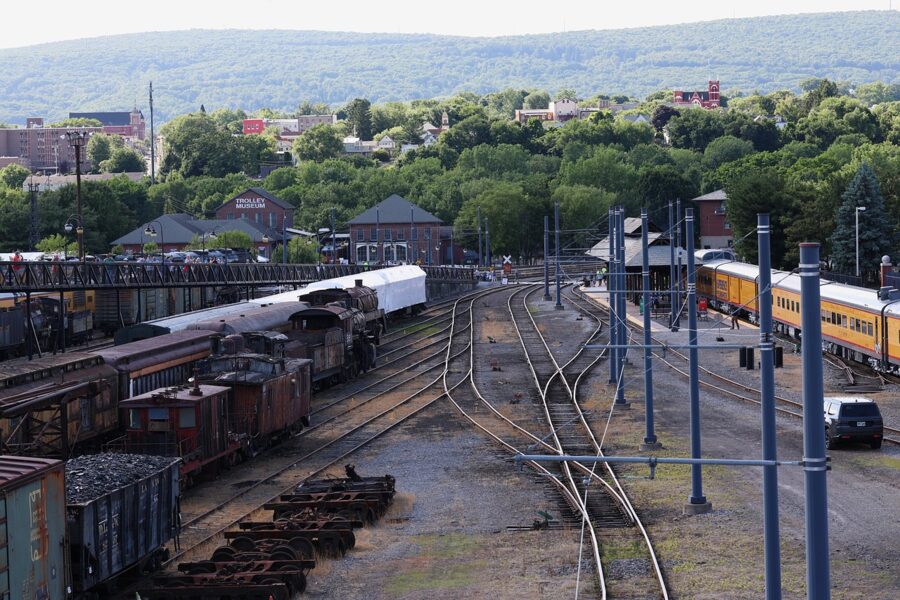
Steamtown National Historic Site is the National Park Service’s railroad park, built around the old Delaware, Lackawanna & Western yard in downtown Scranton, and it is free. You get a working roundhouse and turntable, a history museum, a technology museum and the 18-minute film Steel and Steam, and on most days rangers or volunteers lead locomotive shop tours at 11 a.m. and 2 p.m. (call ahead to confirm).
As of 2026 the park is open daily from 9:30 a.m. to 5 p.m. from early May to mid-November, and from November 16, 2026 to April 30, 2027 it opens Wednesday to Sunday only, 9:30 a.m. to 4 p.m.
Rides are the seasonal part. In 2026 the Scranton Limited yard shuttle ran Fridays to Sundays from June 5 to November 8 at $6 for ages 6 and up and $1 for younger children, and longer excursions to places such as Moscow, Carbondale and the Delaware Water Gap cost $25 to $55 for adults, booked on Recreation.gov. The 2027 schedule usually appears in spring. In December the park’s partner, the Iron Horse Society, runs North Pole Limited trains, worth comparing with Strasburg’s if you live nearer Scranton.
A two- or three-day railroad itinerary
The single rule that shapes the trip: Mondays and Tuesdays are bad days. The Railroad Museum of Pennsylvania, the Railroaders Memorial Museum and the Horseshoe Curve are all closed both days, and so is Steamtown in winter. Plan for Wednesday to Sunday, and between April and October if the Curve is on your list.
| Day | Morning | Afternoon | Evening |
|---|---|---|---|
| 1: Strasburg | First daily train to Paradise; coach with the window down, or first class in July | Railroad Museum of Pennsylvania (closes at 4); Choo Choo Barn or Toy Train Museum if there is time | Wine & Cheese or Dinner on the Rails, if one runs that night |
| 2: Altoona | Westbound Pennsylvanian from Lancaster, or drive | Horseshoe Curve, then the Railroaders Memorial Museum | Overnight in Altoona, or the eastbound train home |
| 3: Scranton (optional) | Drive three to three and a half hours from Strasburg; shop tour at 11 | Roundhouse, museums, Scranton Limited in season | Home, or North Pole Limited in December |
With two days, do Strasburg and one of the others: Altoona for the main line, Scranton for big steam and a free park. Children under ten will get more from a second Strasburg day than from four hours in a car.
Book the daily train a few days ahead for summer and fall weekends, the shop tour as soon as you know your date, and the Thomas, Christmas and tasting trains when they go on sale. It is one of the best tourist train rides in the country because it is so easy to fit in.
Take the first train of the day, sit on the side away from the sun, and when the engine runs around at Paradise, stand at the window for the trip home. The buggy at the crossing will still be waiting, and this time the engine will be facing it.