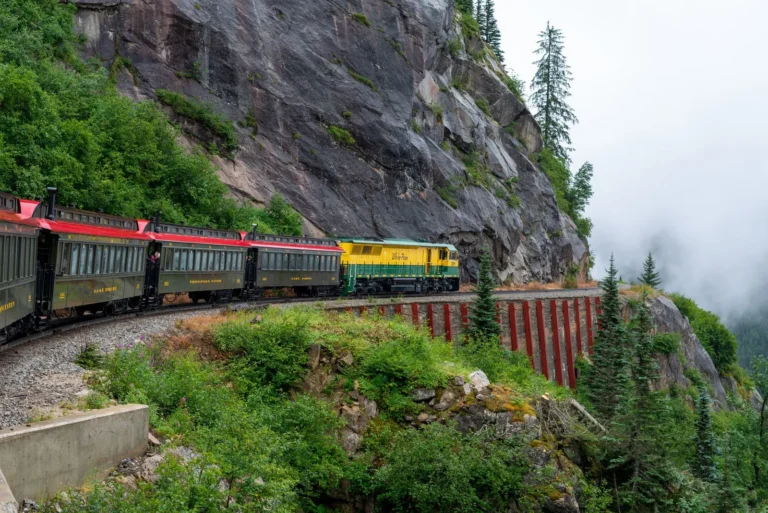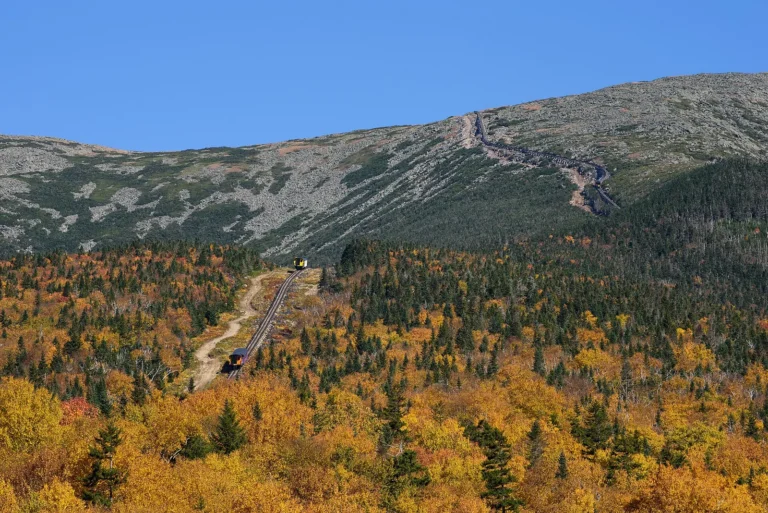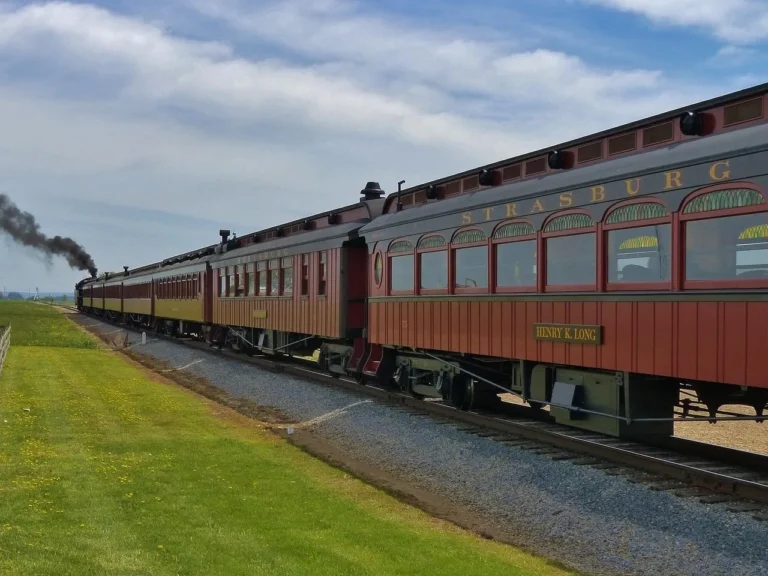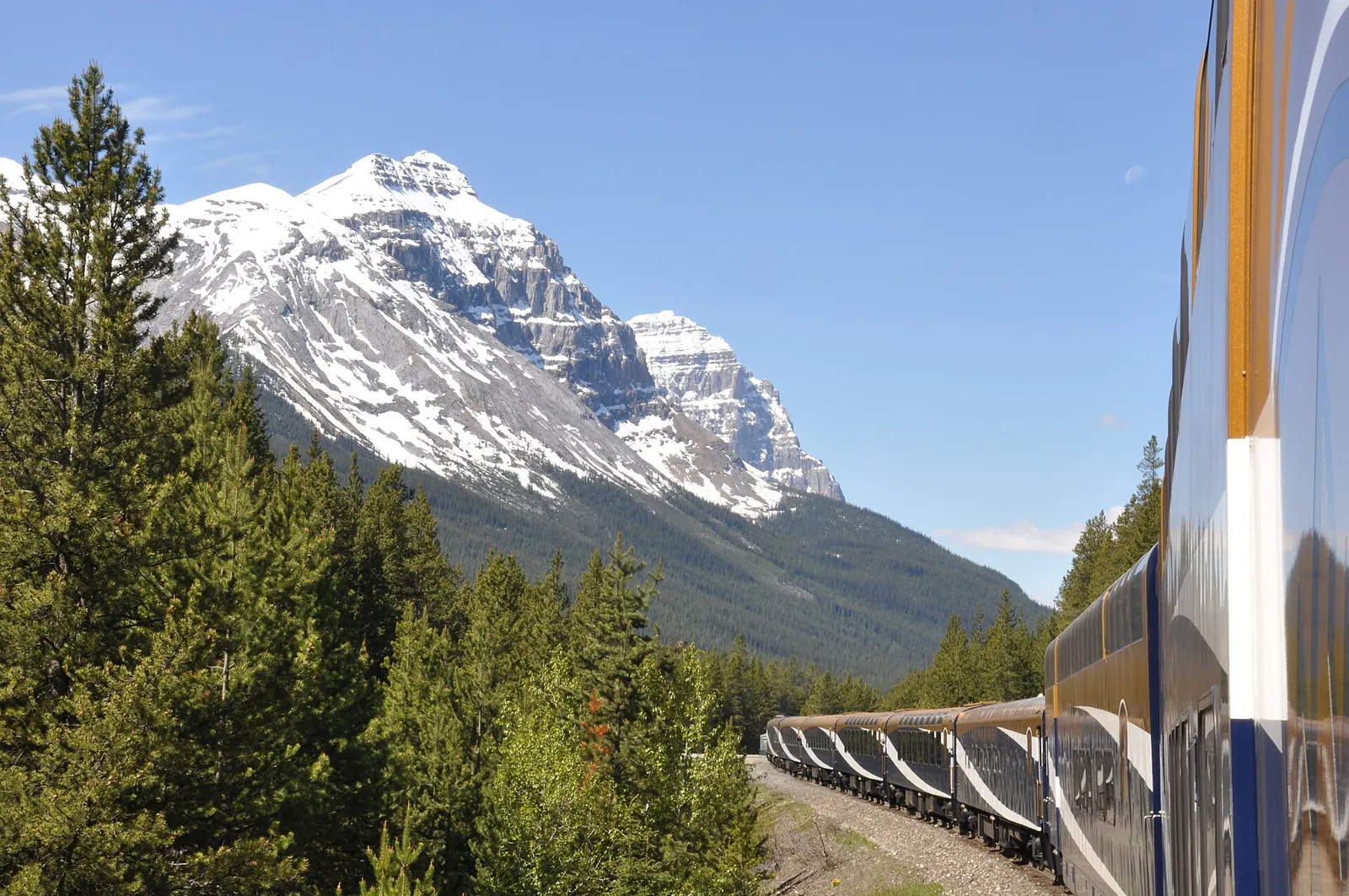
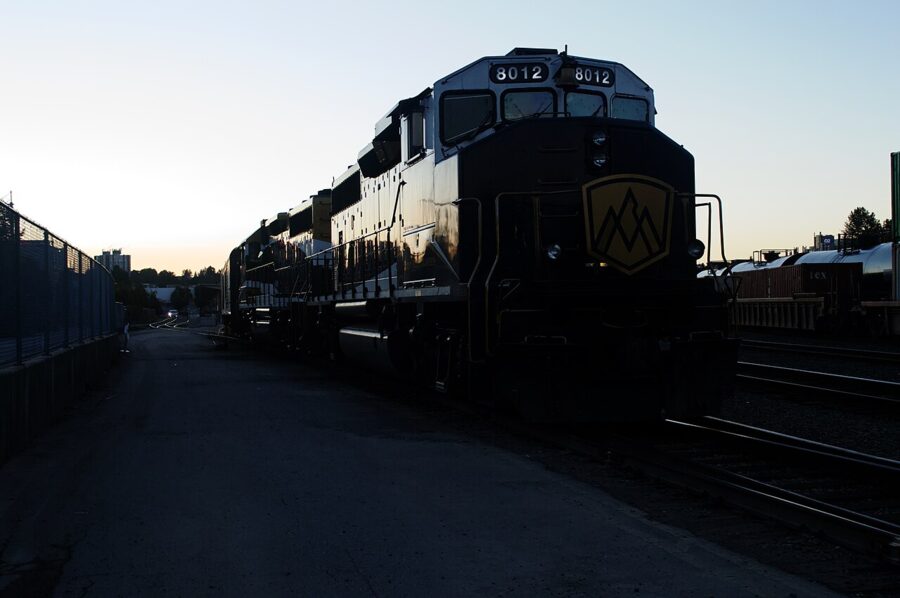
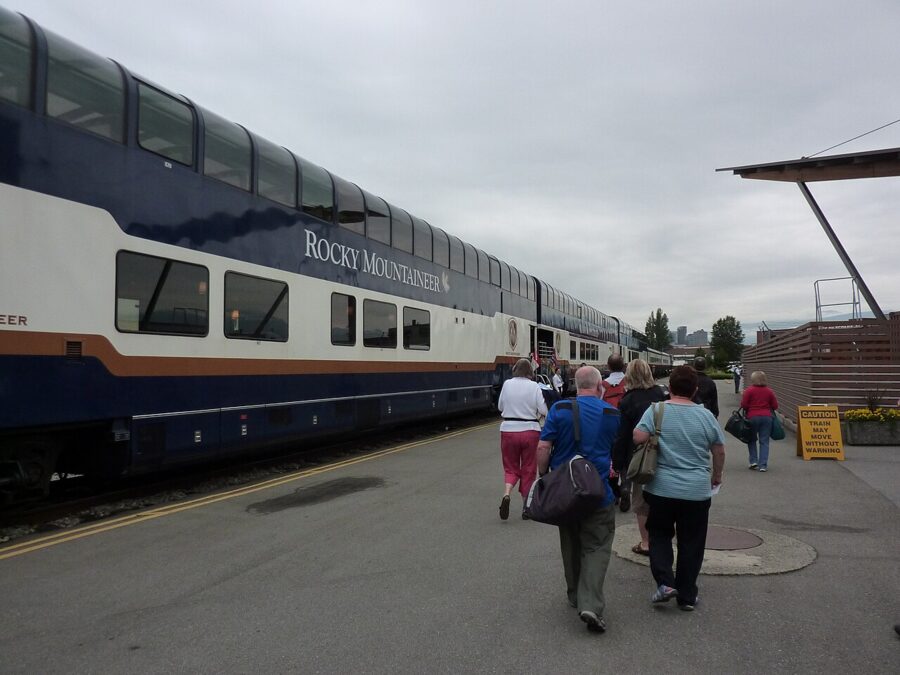
The Rocky Mountaineer leaves its own station on Cottrell Street in Vancouver at 8:00 a.m., and if you are going to Banff you will not get there until somewhere between 8:15 and 9:30 the following evening. In between are two days of daylight, about 590 miles of track, one hotel night in Kamloops and no bed on the train at all. That is the whole idea: the company would rather put you in a hotel than run its train through the Fraser Canyon in the dark.
It is also expensive. A two-day, rail-only trip in 2027 is listed from C$2,354 (about US$1,650) per person, and for that money the choice is narrower than it has been for twenty years. The three-day route through Whistler and Quesnel is gone, the American route runs under a new name, and what is left in Canada is two routes, two classes and a season that runs from April to October.
So the decisions are Banff or Jasper, SilverLeaf or GoldLeaf, a package or the train alone, and whether VIA Rail’s Canadian, which crosses the same mountains for far less, would suit you better.
Stops in this article8
- 01The routes in 2027, and the two that are gone
- 02Daylight only: the timetable and the Kamloops night
- 03SilverLeaf or GoldLeaf
- 04What it costs, and what you get for it
- 05The scenery, route by route
- 06Freight, delays and other things that go wrong
- 07The Canadian compared
- 08Booking: when, how far ahead, and what you lose if you cancel
The routes in 2027, and the two that are gone
Rocky Mountaineer has run since 1990 and carried more than 2 million passengers; it belongs to Armstrong Collective, which also owns the American train. Of the four routes sold in recent years, two remain under the Rocky Mountaineer name for 2027, and the American one continues under a new brand.
| Route | Between | Days on the train | Overnight | Direction | Season | 2027 |
|---|---|---|---|---|---|---|
| First Passage to the West | Vancouver and Lake Louise or Banff | 2 | Kamloops | Eastbound or westbound | April to October | Running |
| Journey through the Clouds | Vancouver and Jasper | 2 | Kamloops | Eastbound or westbound | April to October | Running |
| Rockies to the Red Rocks | Denver and Moab, or Denver and Salt Lake City | 2 or 3 | Glenwood Springs, plus Moab on the 3-day trip | Eastbound or westbound | April to November | Running as Canyon Spirit |
| Rainforest to Gold Rush | North Vancouver, Whistler, Quesnel and Jasper | 3 | Whistler and Quesnel | Both | Ended October 2026 | Not running |
First Passage to the West is the original route and the only passenger service on the old Canadian Pacific main line through Rogers Pass and the Spiral Tunnels. Journey through the Clouds shares the first day to Kamloops, then turns north up the North Thompson River to Mount Robson and Jasper.
Rainforest to Gold Rush and the Quesnel night
If you have read about a night in Quesnel, it belonged to Rainforest to Gold Rush, the three-day route from North Vancouver through Whistler and the Cariboo to Jasper. It made what may be its last run on October 6, 2026, after twenty seasons. Canadian National intends to stop operating its line between Squamish and 100 Mile House, and without anyone to maintain that track the train cannot run.
The company will not operate it in 2027 and has left it out of the 2028 schedule too, so any 2027 itinerary that puts you on the train to Whistler or Quesnel is out of date. Passage to the Peaks, between Banff and Jasper, was a limited run in June and July 2026 and is not on sale for 2027.
Rockies to the Red Rocks is now Canyon Spirit
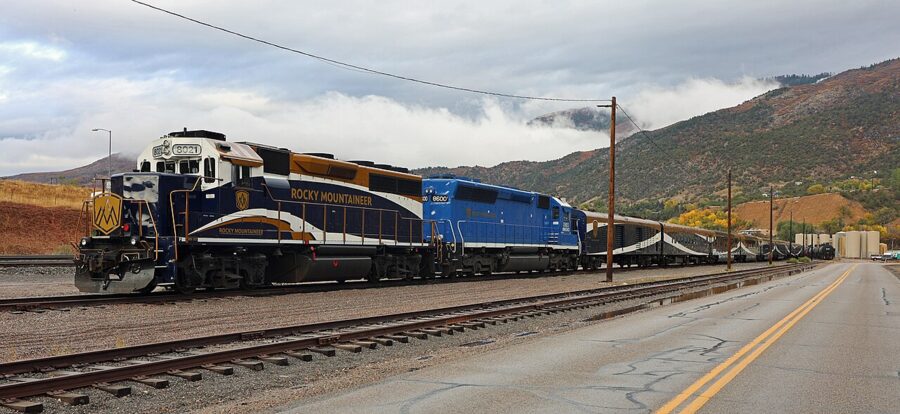
The American route began in 2021 as a Rocky Mountaineer train between Denver and Moab. For 2026 it moved to a separate brand, Canyon Spirit, and stretched to Salt Lake City. The old name still appears on the Rocky Mountaineer site, but booking and rules now sit with Canyon Spirit.
Daylight only: the timetable and the Kamloops night
There are no sleeping cars. Every route stops for the night so that no part of the line is passed in darkness, and on both Canadian routes the stop is Kamloops, with the hotel included. That is the opposite of the California Zephyr or the Ghan, where the bed is part of the ticket.
The days are long, 10 to 14 hours by the company’s count. This is the timetable as published in late 2026; the 2027 details are due in January. Vancouver and Kamloops are on Pacific time, Banff, Lake Louise and Jasper an hour ahead on Mountain time.
| Leg | Departs | Arrives |
|---|---|---|
| Vancouver to Kamloops (both routes) | 8:00 a.m. | 6:15 to 7:45 p.m. |
| Kamloops to Lake Louise and Banff | 6:50 a.m. | Lake Louise 7:10 to 8:10 p.m.; Banff 8:15 to 9:30 p.m. |
| Kamloops to Jasper | 8:15 a.m. | 7:00 to 8:30 p.m. |
| Banff to Kamloops (Lake Louise 9:15 a.m.) | 8:00 a.m. | 7:15 to 8:45 p.m. |
| Jasper to Kamloops | 8:30 a.m. | 5:15 to 6:45 p.m. |
| Kamloops to Vancouver (both routes) | 8:00 a.m. | 6:15 to 7:45 p.m. |
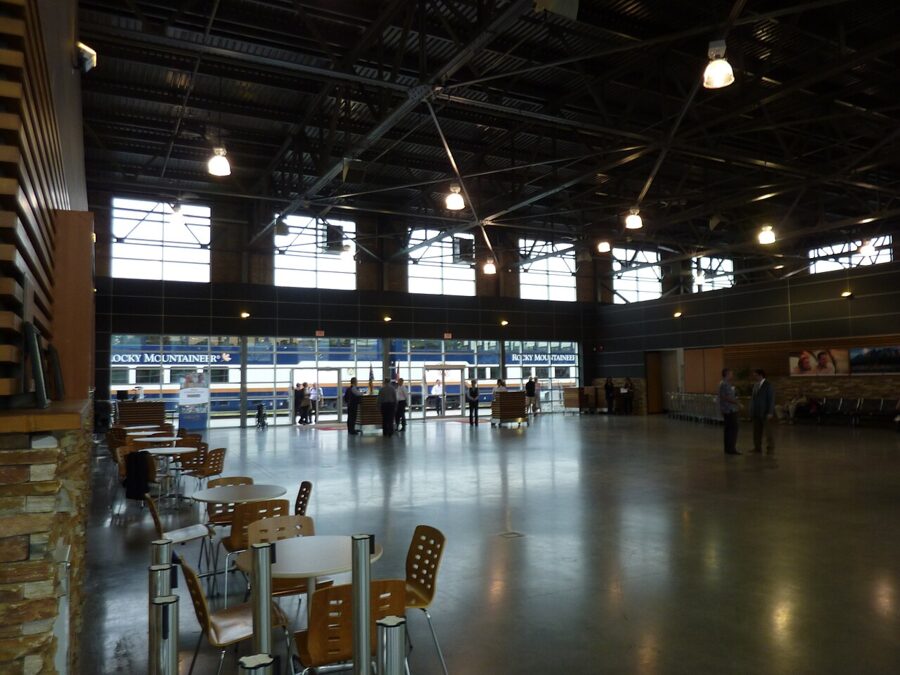
The schedule page gives arrival windows for a reason, and asks you not to book a flight on the day you get off. In Banff and Kamloops the train stops at sidings closed to the public, so motorcoaches take you to your hotel; Lake Louise, Jasper and Vancouver have proper stations.
The Kamloops night is plain: a moderate three-star hotel in both classes, assigned a few days before you travel. Recent examples are the Delta Hotels Kamloops for GoldLeaf and the Fairfield Inn & Suites for SilverLeaf, but you cannot choose. Arrive around 7 p.m., eat in town, and be on a coach before 7 a.m. if you are going on to Banff.
Your suitcases go by road and reach the Kamloops hotel before you do, so you live out of a day bag on the train. The packing rules limit it to 16 by 11 by 8 inches in GoldLeaf and 23 by 8 by 8 inches in SilverLeaf, since neither coach has overhead racks. Checked luggage is two pieces per person, 66 pounds (30 kg) in total.
SilverLeaf or GoldLeaf
Both classes ride the same train, sleep in the same kind of Kamloops hotel, and get breakfast, lunch, drinks and snacks included, with gratuities for the onboard team already in the price. What changes is the coach and how you eat.
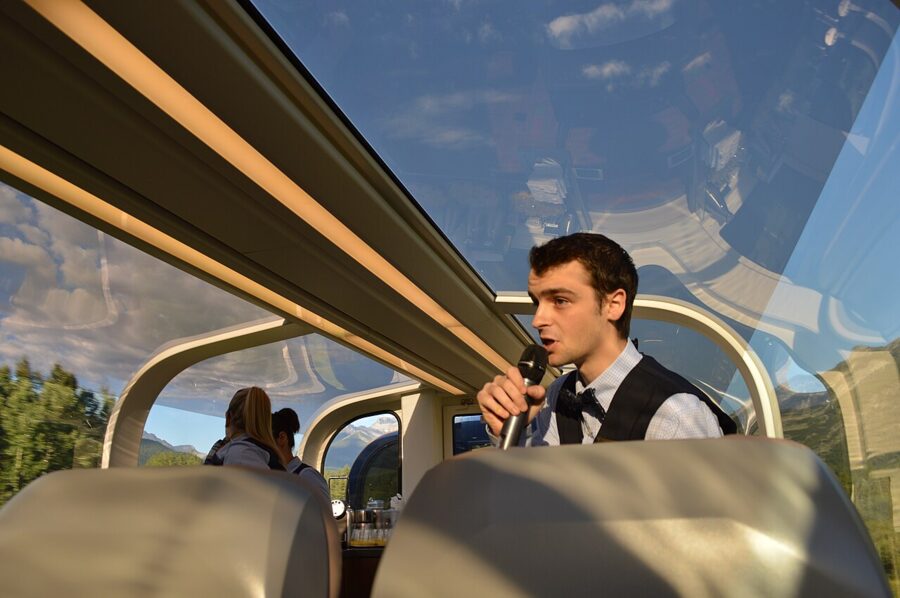
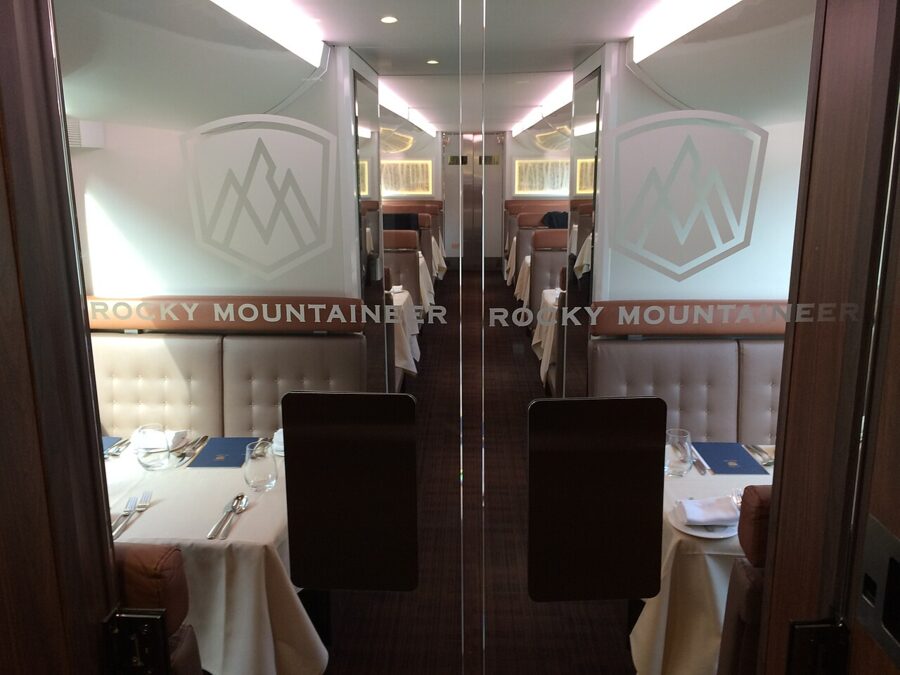
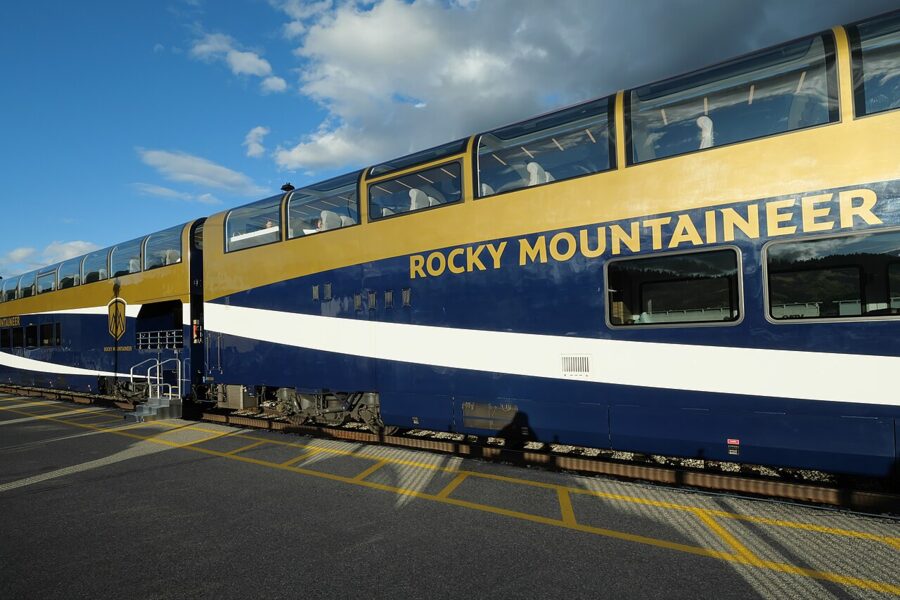
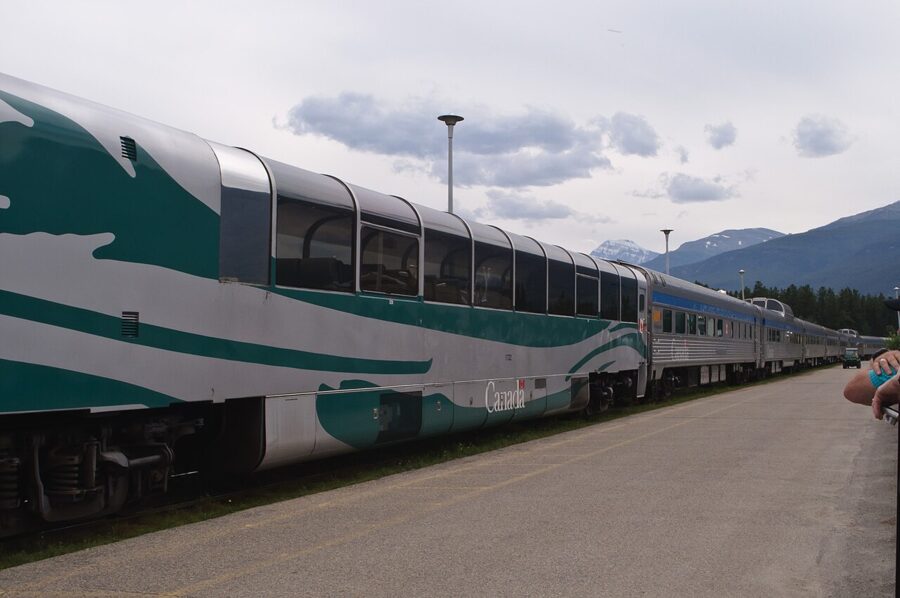
GoldLeaf is a two-level coach. You sit upstairs under a full glass dome and go down a spiral staircase, or take the elevator, to a dining room. The lower level also opens onto a large outdoor platform, the best place on the train for photographs without reflections. A recent sample lunch offered Alberta striploin, seared British Columbia albacore tuna or Fraser Valley chicken.
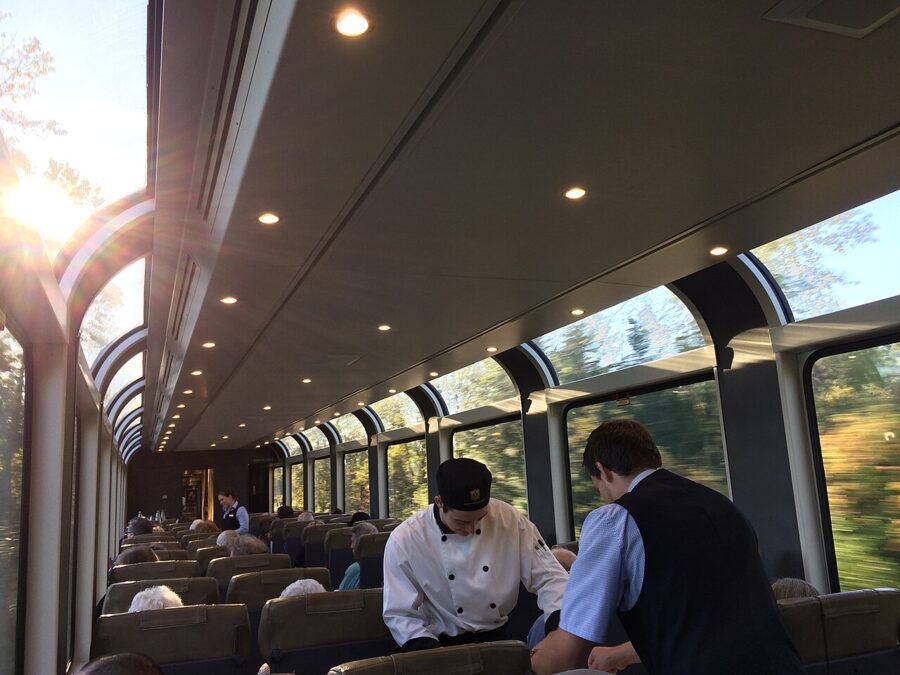
SilverLeaf is a single-level coach with oversized windows that curve into the roof. Meals come to your seat from a shorter menu, and the outdoor area is a small vestibule the company says suits two or three people at a time.
| SilverLeaf | GoldLeaf | |
|---|---|---|
| Coach | Single level, oversized curved windows | Two levels, full glass dome upstairs |
| Meals | At your seat | Lower-level dining room, two sittings |
| Drinks | Wine, beer, spirits, soft drinks | Adds cocktails and premium wines and spirits |
| Outdoor space | Small vestibule | Large platform |
| Package hotels | e.g. Elk + Avenue, Banff | e.g. Fairmont Jasper Park Lodge |
| Extra cost, 2027 rail only | Base price | Roughly C$800 to C$1,100 more per person |
Which one? I would book SilverLeaf on Journey through the Clouds, where Pyramid Falls is beside the track and Mount Robson stands well clear of it, and the SilverLeaf windows catch both. On First Passage to the West I would think harder about GoldLeaf, because the second day runs through deep valleys where a full dome and an open platform show far more of the walls above you.
Skip GoldLeaf if the money would otherwise buy an extra night in Banff or Jasper. A day in the mountains is worth more than a dining room.
What it costs, and what you get for it
Rocky Mountaineer sells trips, not tickets. The cheapest is the two-day rail-only package, which the company calls an Essential Journey: both days on the train, meals and drinks, the Kamloops hotel, luggage handling, and motorcoach transfers to and from the train. Hotels at either end are yours to arrange.
| 2027 rail only, eastbound | Listed price per person |
|---|---|
| Vancouver to Banff | C$2,404 to C$4,224 (about US$1,690 to US$2,960) |
| Vancouver to Jasper | C$2,354 to C$4,104 (about US$1,650 to US$2,880) |
Those are prices as listed in late November 2026, per person sharing a room, before 5 percent GST. The low end is SilverLeaf in April; the high end is GoldLeaf in September. Children pay the adult price, and infants cannot ride on a lap.
American visitors see US dollars, converted at the company’s rate on the day you pay. Book by December 3, 2026, and the current promotion takes up to US$1,100 per couple off eligible 2027 packages.
Packages, and doing it yourself
Above the rail-only trips sit Signature Journeys of three to seven nights, Explorer Journeys of nine or ten, and Circle Journeys that ride both routes. The package types add hotels, some transfers and some tours, and those with nights in the Rockies include your national park pass.
For most couples I think rail-only plus your own hotels is the better buy: you pick the room and the town, and Banff and Jasper hotels are as easy to book as the train. You then need a Parks Canada pass for days in the parks; the daily admission is C$12.25 (about US$9) per adult, and anyone 17 or under enters free.
The scenery, route by route
The company says it travels at “picture-perfect speed,” and the train does slow for the best views. Seats are assigned, but the line crosses its rivers again and again, so both sides get their turn, and the outdoor areas let you see out of either. Westbound, everything below comes in reverse.
Day one, both routes: Vancouver to Kamloops
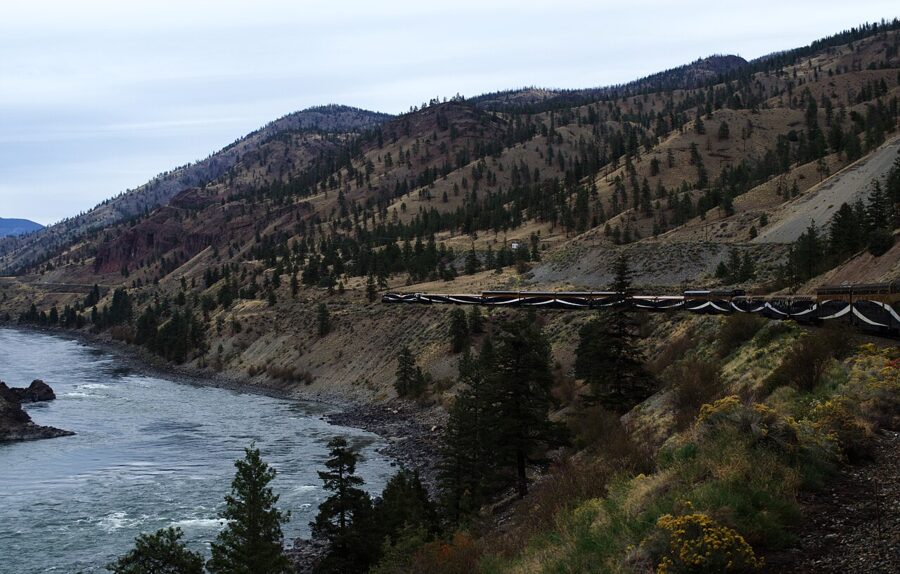
Breakfast comes as the train crosses the farmland of the Fraser Valley. Beyond Hope the mountains close in, and the river narrows to Hell’s Gate, where the whole Fraser runs fast and green between cliffs. Day one covers about 285 miles (460 km).
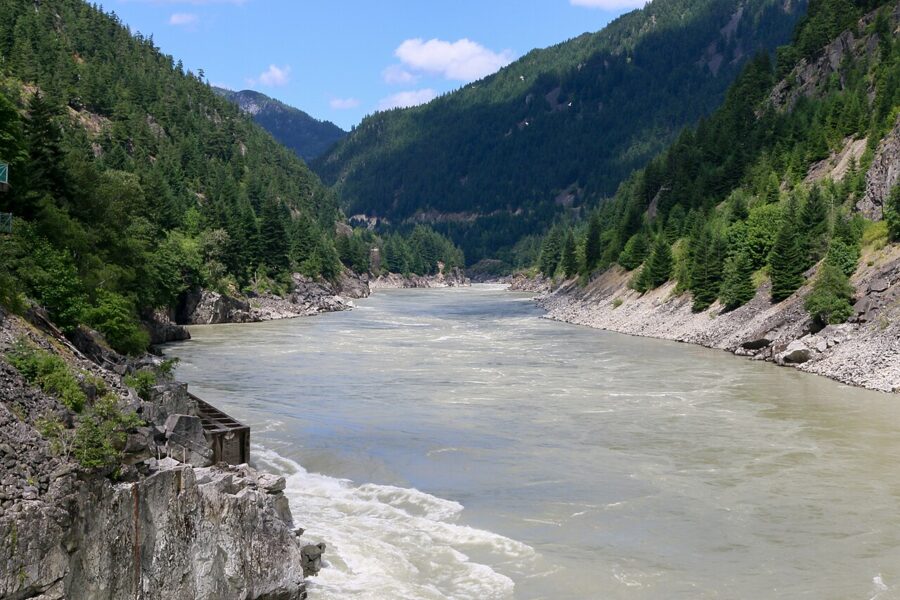
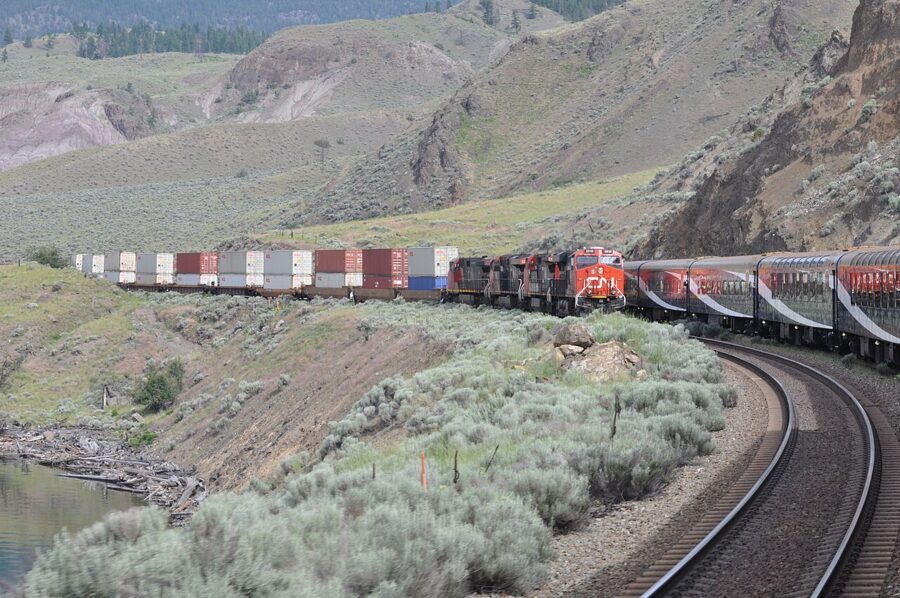
Canadian Pacific and Canadian National share this canyon, one on each bank. At Cisco Crossing, near Siska, they swap sides on a pair of bridges. The hosts point out the Jaws of Death Gorge and Rainbow Canyon, and at Lytton the line leaves the Fraser for the Thompson.
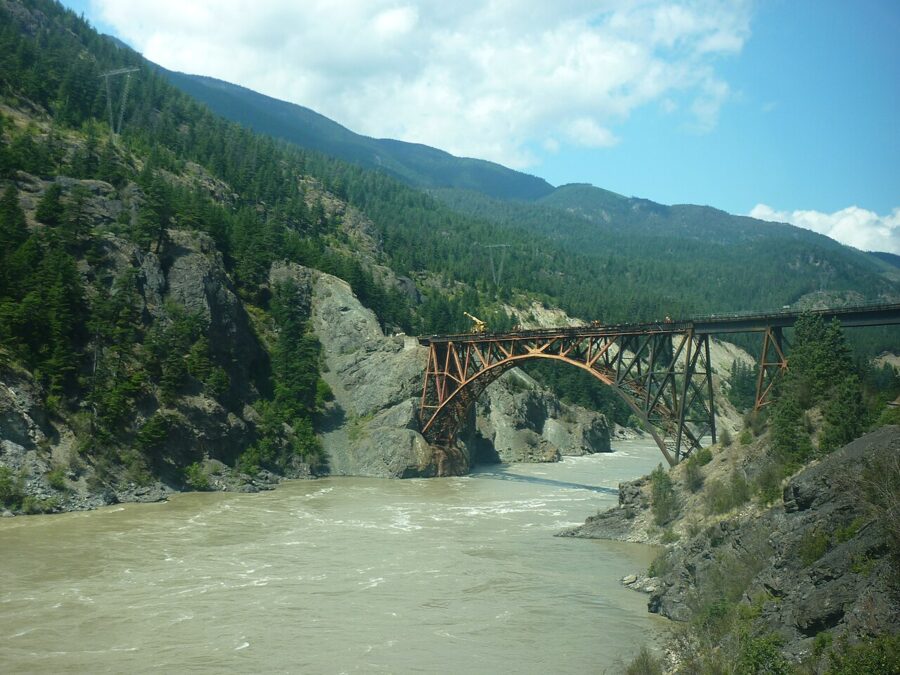
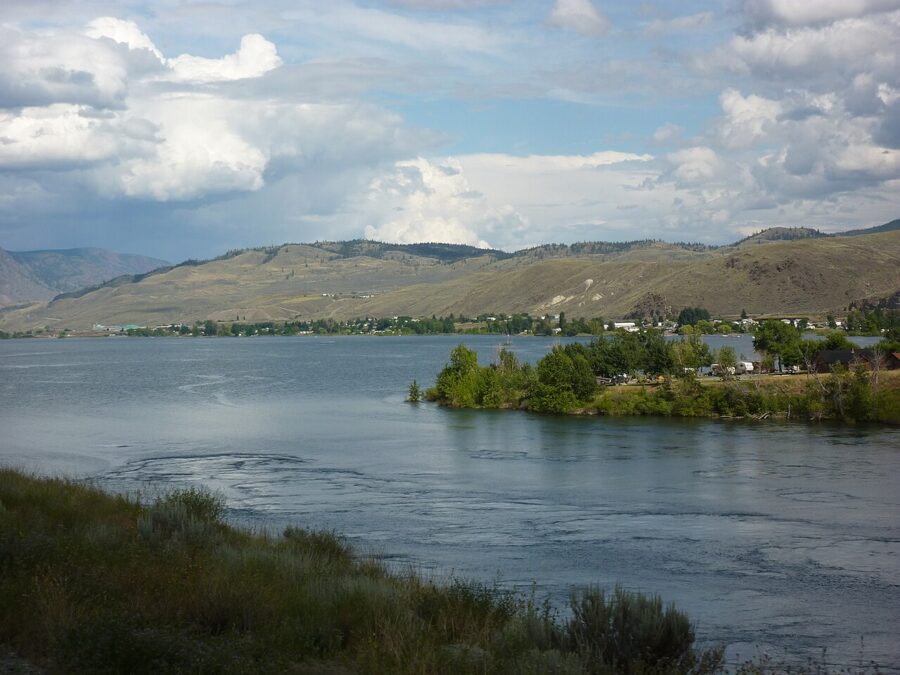
Then the country dries out. Around Ashcroft the forest gives way to sagebrush, bare hills and hoodoos, and the last hour runs beside Kamloops Lake into Kamloops.
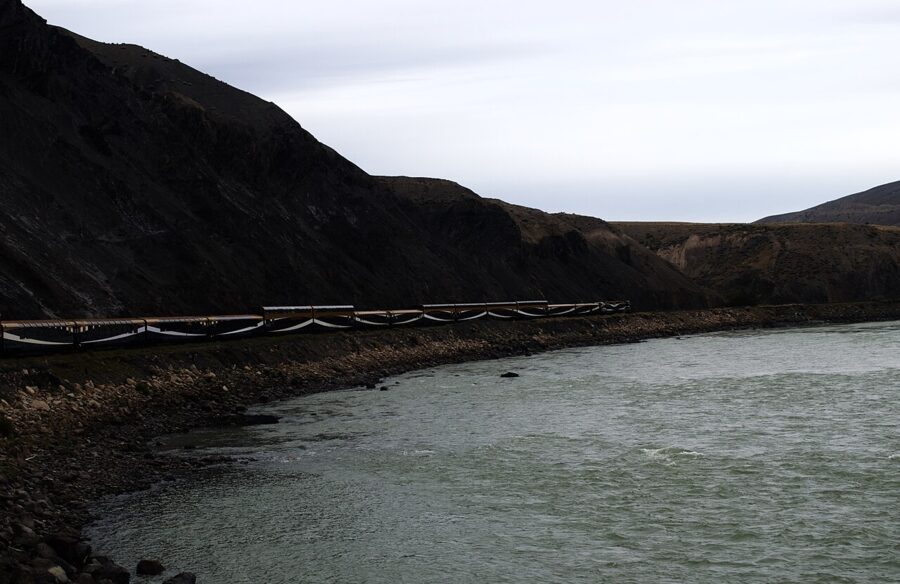
First Passage to the West, day two: Kamloops to Banff
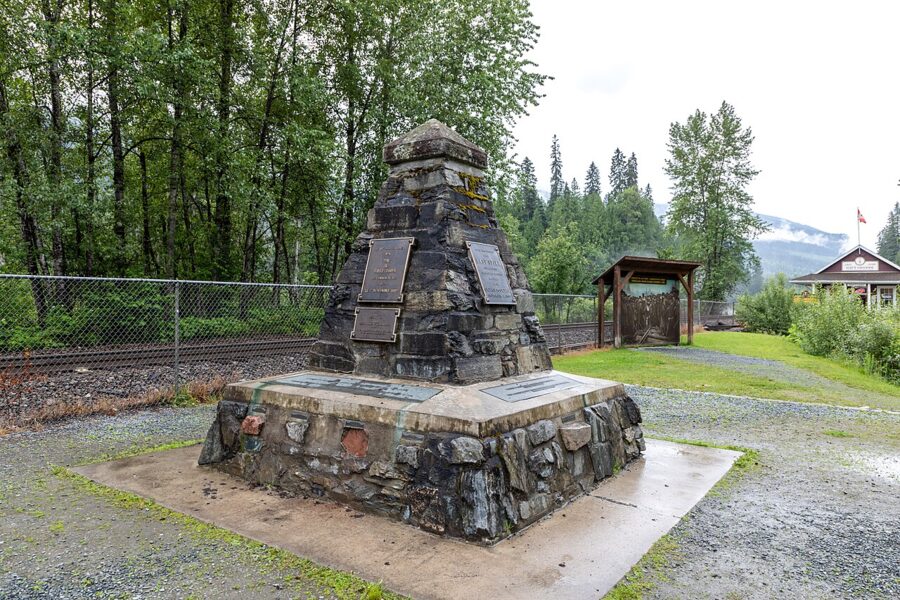
This is the longer second day, about 309 miles (497 km), and it starts early. The train follows the South Thompson and the Shuswap lakes east past Craigellachie, where the last spike of the Canadian Pacific Railway was driven in 1885, then climbs into the Selkirk Mountains and Glacier National Park.
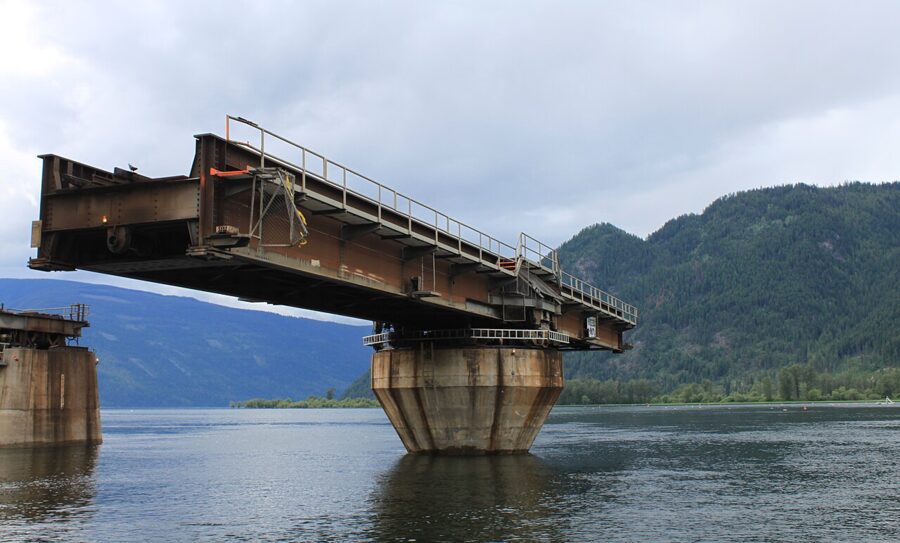
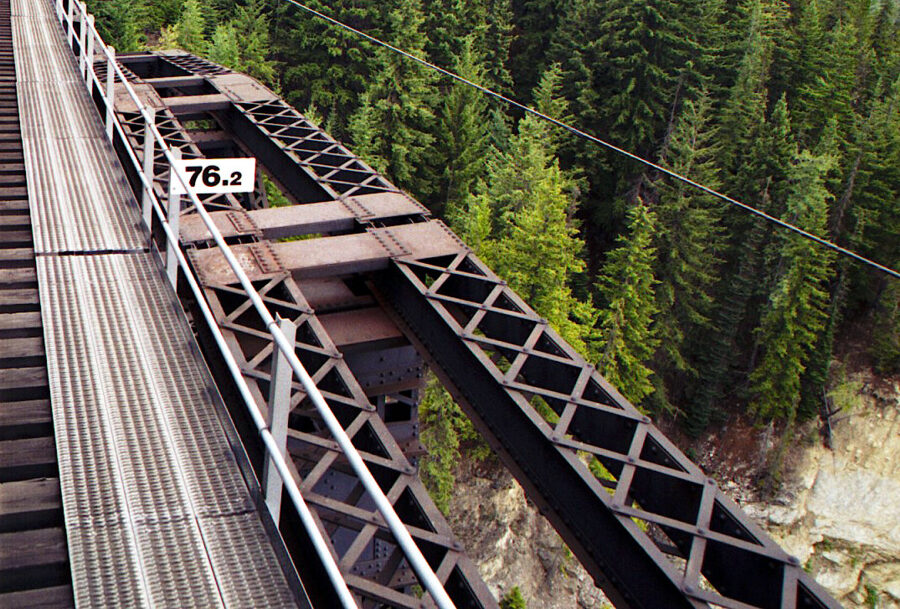
East of Rogers Pass the train crosses the Stoney Creek Bridge, a steel arch more than 250 feet above the creek, built in 1893 to replace a wooden bridge of 1885.
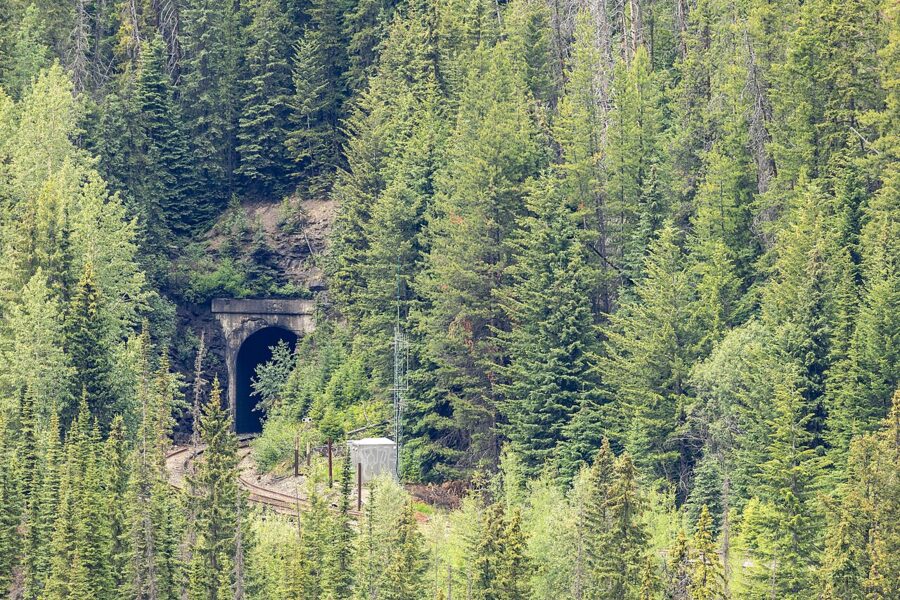
After Golden comes Kicking Horse Canyon, then the climb through Yoho National Park to the Spiral Tunnels. Opened in 1909 to tame one of the steepest main-line grades in North America, they loop the track inside the mountain, so a long freight can pass over its own tail. Above them is Kicking Horse Pass, on the Continental Divide and the Alberta border.
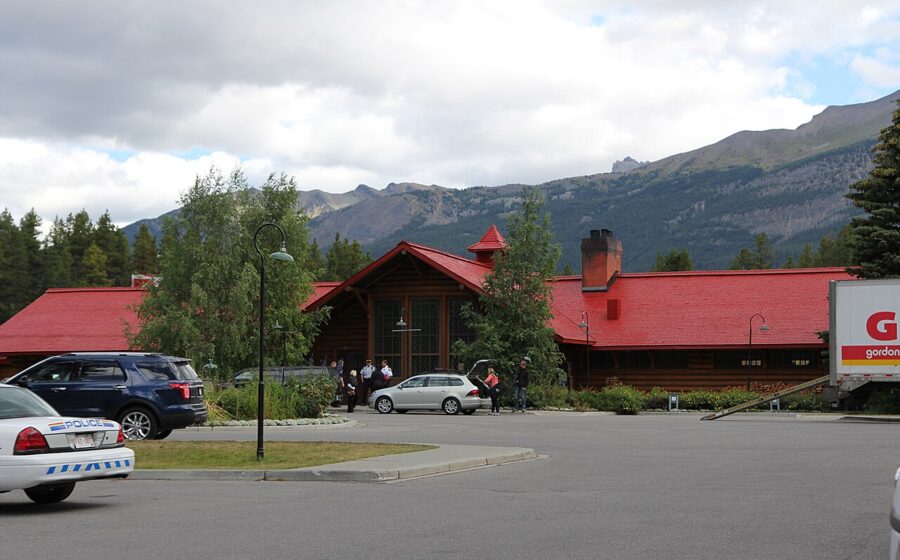
Lake Louise is the first stop in Alberta, at the log station Rocky Mountaineer’s parent company bought in 2025; more than 50,000 of its passengers pass through every year. The lake itself is up the hill, out of sight of the train.
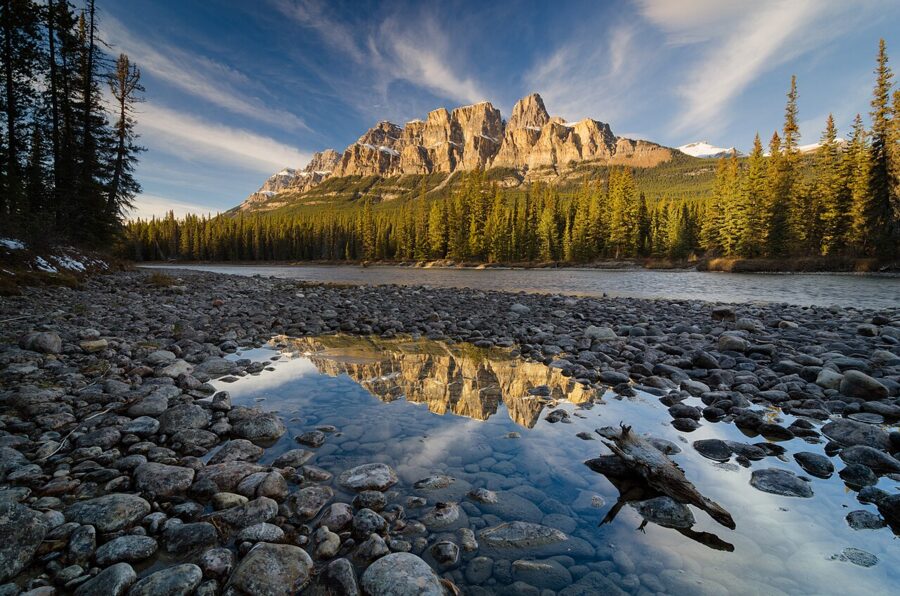
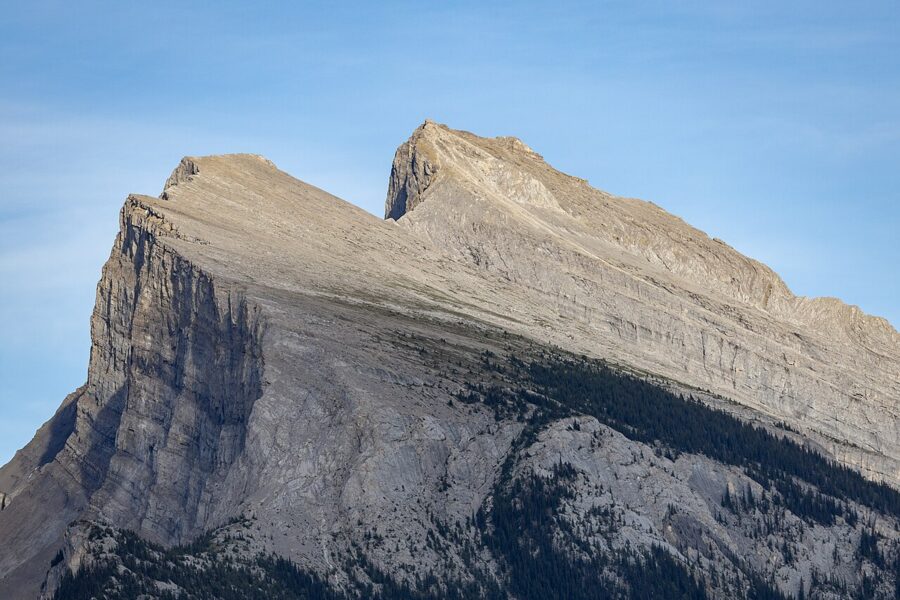
The last hour down the Bow Valley passes Castle Mountain and ends below Mount Rundle in Banff. In June and July it is still light when you arrive. By late September the sun has set before Lake Louise, which is why I would ride this route westbound in the fall: you leave Banff at 8:00 a.m. and see the Rockies in morning light.
Journey through the Clouds, day two: Kamloops to Jasper
The Jasper day is about 274 miles (441 km) on the Canadian National line up the North Thompson River, through Clearwater and Blue River. It is quieter country than the Banff route, forest and river for most of the morning.
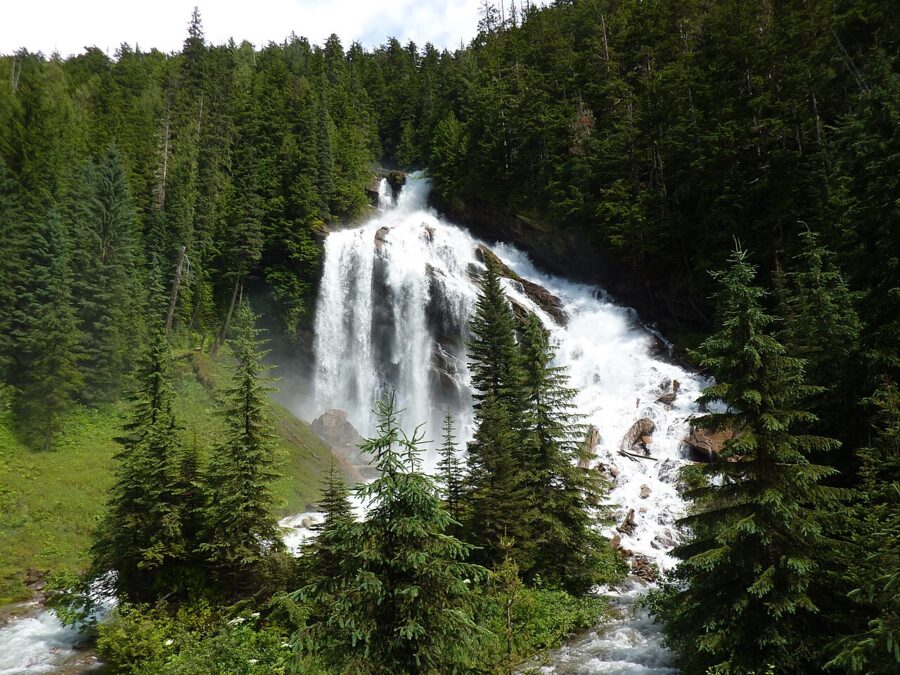
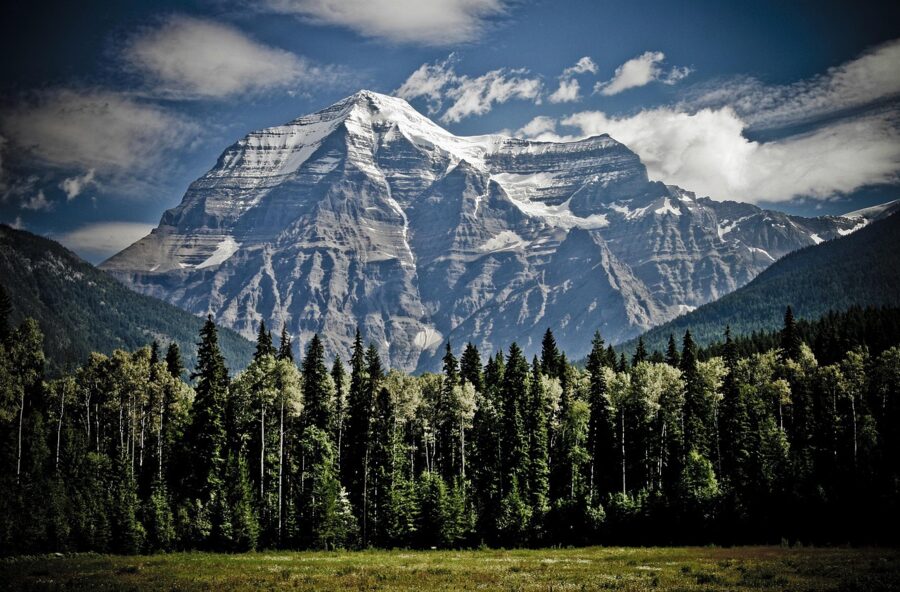
Just north of Blue River the train slows for Pyramid Falls, which drops beside the track. Then come the Albreda Glacier and the approach to Mount Robson, at 12,972 feet (3,954 m) the highest peak in the Canadian Rockies. It stands on the north side of the line, often in cloud, so take the first clear view you get.
The last climb is to Yellowhead Pass, the Continental Divide and the Alberta line, where clocks go forward an hour, before the train drops into Jasper National Park. Jasper’s station is on Connaught Drive, the main street.
Canyon Spirit: Rockies to the Red Rocks
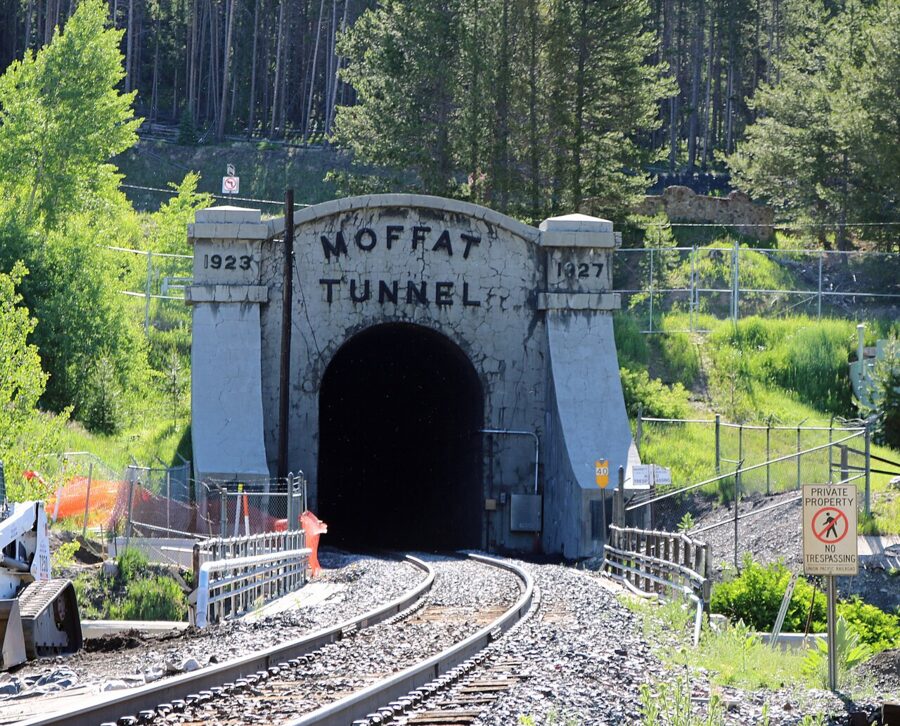
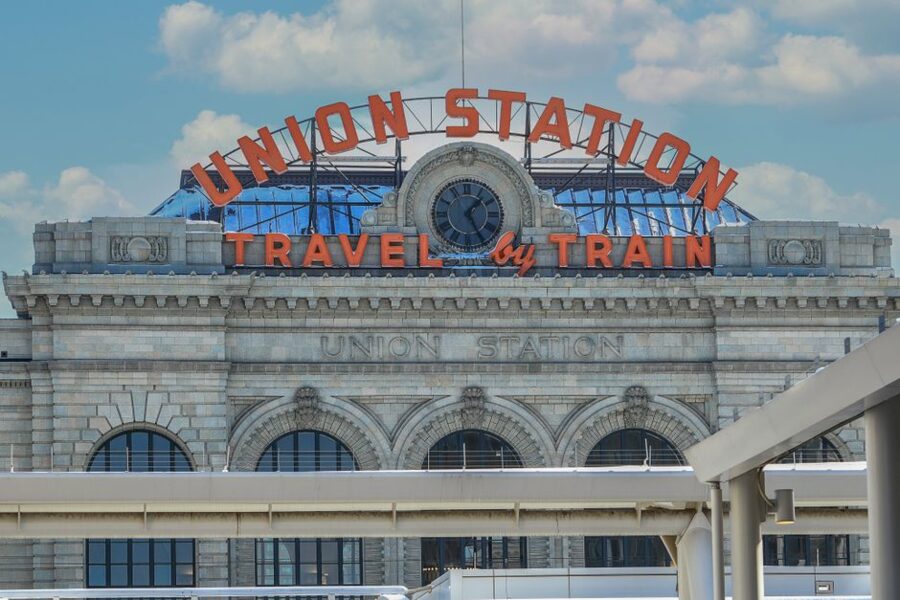
The American train leaves Denver Union Station, climbs the Front Range and passes under the Continental Divide in the six-mile Moffat Tunnel. It follows the Colorado River through Burns Canyon and the 16 miles of Glenwood Canyon on the line the California Zephyr uses, reaching Glenwood Springs after about eight hours and 175 miles (282 km).
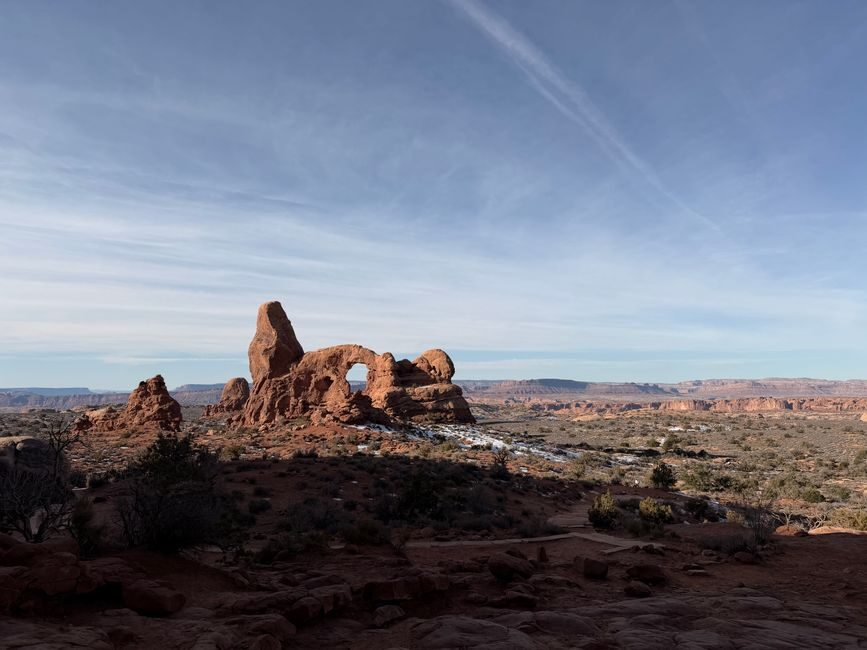
Day two passes Mount Garfield and the Book Cliffs and runs through Ruby Canyon into Utah, about five and a half hours to the Moab area. The three-day trip adds Moab to Salt Lake City through Price Canyon. The season is April to November, and the Canyon Spirit FAQ covers the rest.
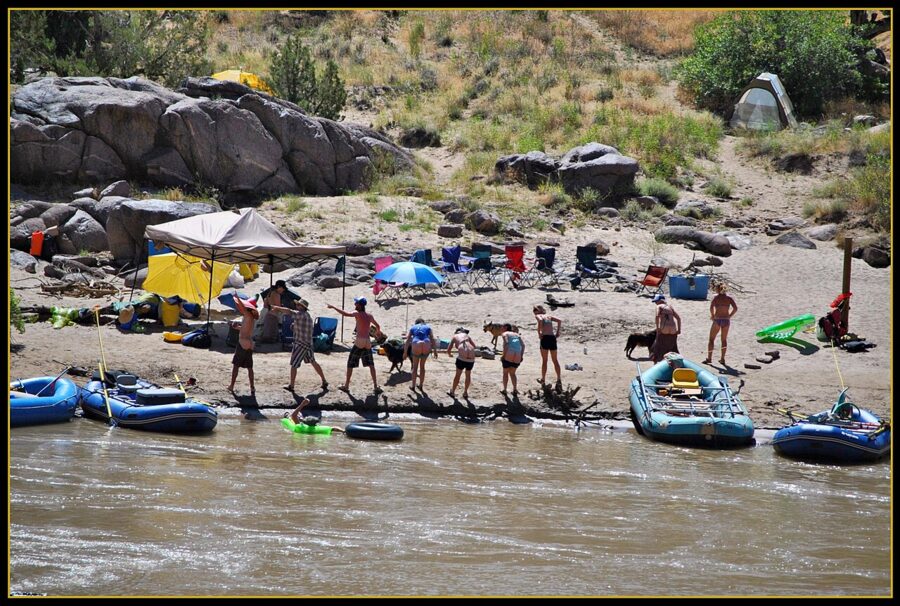
Every Canyon Spirit seat is in a single-level “Signature” coach with meals at your seat. The Premier upgrade adds a lounge car with its own host and bar, paired wines, cocktails and a second outdoor area. Gratuities are included: on a two-day trip, US$48 in Signature and US$62 in Premier.
Freight, delays and other things that go wrong
The Rocky Mountaineer runs on Canadian Pacific Kansas City and Canadian National track. The company says its train has priority but delays happen, which is why the arrival windows are an hour and a half wide.
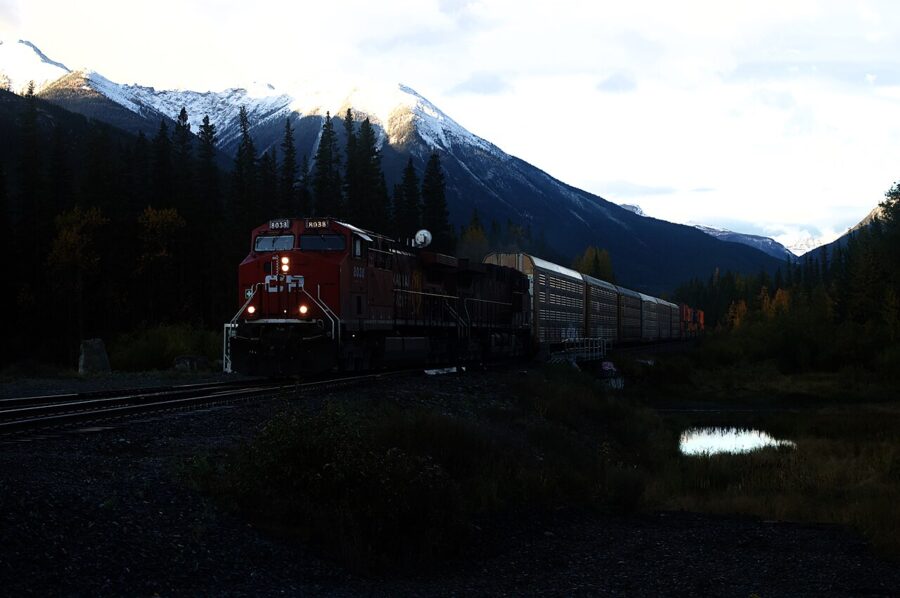
Hold a hotel night at the end and fly out the next day. There is no Wi-Fi and little cell signal, so download what you need in Kamloops. Breakfast may come hours after you leave the hotel, so eat something first. Smoking and vaping are banned on the train, the platforms and the transfers.
The Canadian compared
VIA Rail’s Canadian has run on the Canadian National route through Jasper since 1990. It covers 2,775 miles (4,466 km) from Toronto, twice a week each way all year, with sleeping cars, dome cars and a dining car, and it is the backbone of Canada by train.
The difference is the clock. On VIA’s current timetable, valid to March 10, 2027, the westbound Canadian leaves Jasper at 9:30 a.m., reaches Kamloops North at 6:28 p.m., passes Boston Bar at 11:36 p.m. and arrives in Vancouver at 8:00 a.m. You see Mount Robson by day and the Fraser Canyon in the dark.
| VIA Rail’s Canadian | Rocky Mountaineer | |
|---|---|---|
| Runs | All year, twice a week each way | April to October, not daily |
| Nights | On the train | Hotel in Kamloops |
| Fraser Canyon | At night westbound | In daylight |
| Lowest fare to Vancouver | From Edmonton: Economy C$210 (about US$150); cabin for two C$1,672 (about US$1,170) per person | From Jasper, rail only: C$2,354 |
| Meals | Included in sleeper classes | Included |
The VIA figures are the lowest summer 2026 one-way fares on its fare comparison, before tax. Its Prestige class, with a private shower, starts at C$7,592 (about US$5,310) per person between Toronto and Vancouver, so the Canadian is both the cheapest way through these mountains and, in Prestige, the dearest.
Choose the Canadian to cross the country, travel outside April to October, sleep on a train, or spend far less. An Economy seat from Edmonton gives you Mount Robson for the price of a nice dinner.
Choose the Rocky Mountaineer for every mile in daylight, a hotel bed, someone else handling the bags and the only passenger train through the Spiral Tunnels. If you have already ridden the Canadian west of Jasper, take First Passage to the West, the line the Canadian left in 1990. If a full day of big windows suits you, the Glacier Express and the dome cars of the Alaska Railroad work the same way.
Booking: when, how far ahead, and what you lose if you cancel
The 2027 season is on sale, and so is 2028. The train does not run every day, so seats on any one date are limited. I would book a summer trip by the end of winter, earlier if you want a particular date or a package hotel such as the Fairmont Jasper Park Lodge. Book online, by phone or through a travel agent.
Under the 2027 terms and conditions, the money works like this:
| Days before departure | Payment | Non-refundable if you cancel |
|---|---|---|
| 61 or more | 20 percent deposit; balance due 60 days out | 20 percent of the trip price |
| 46 to 60 | Paid in full | 50 percent |
| 45 or fewer | Paid in full | 100 percent |
The same terms allow no itinerary changes within 61 days of departure, while the company’s general FAQ gives a 15-day cutoff, so check which rule your confirmation quotes. A booking cannot later be moved onto a newer promotion. Buy cancellation insurance when you pay the deposit.
Seat requests and dietary needs must reach the company 60 days out, and travel documents arrive 45 days before departure. You check in online within seven days of the train, then collect boarding passes and luggage tags at a guest center or the morning pick-up.
Canyon Spirit’s rules differ: cancellations are non-refundable unless your itinerary says otherwise, no changes are allowed in the last 15 days, and the company says it will match a lower price found elsewhere.
Which season? April and May bring snow on the peaks, full waterfalls and the lowest prices, though some lakes are still frozen and Moraine Lake may be closed. June to August is busy and light until late. September brings fall color, elk in rut and the highest fares; October is cheaper, with shorter days.
So: Banff for the engineering and the old Canadian Pacific line, Jasper for Mount Robson and quieter country, SilverLeaf unless you are going to Banff and want the dome and the platform, and your own hotels at each end. Book the rail-only trip when you know your dates, be at Cottrell Street before 8:00 a.m., and plan nothing for the evening you arrive.