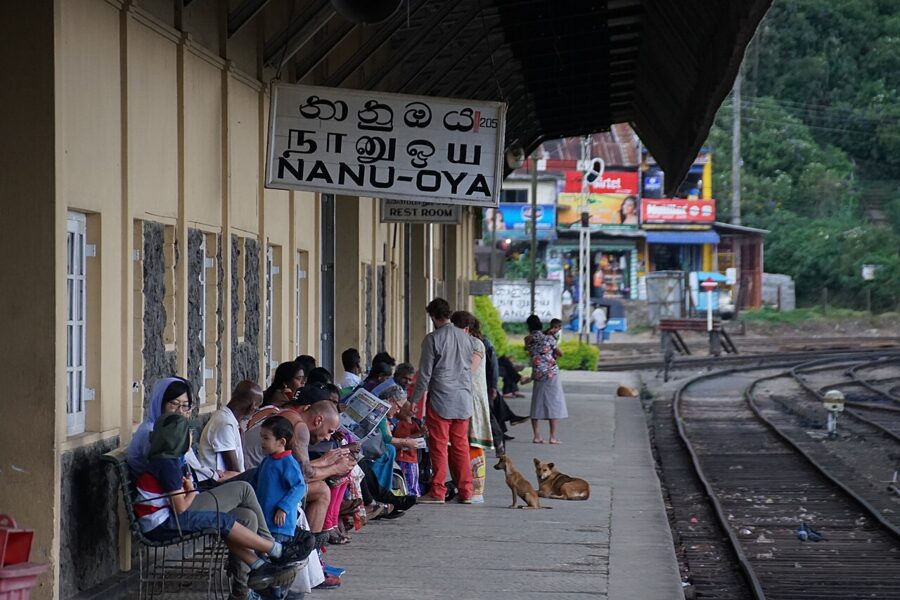
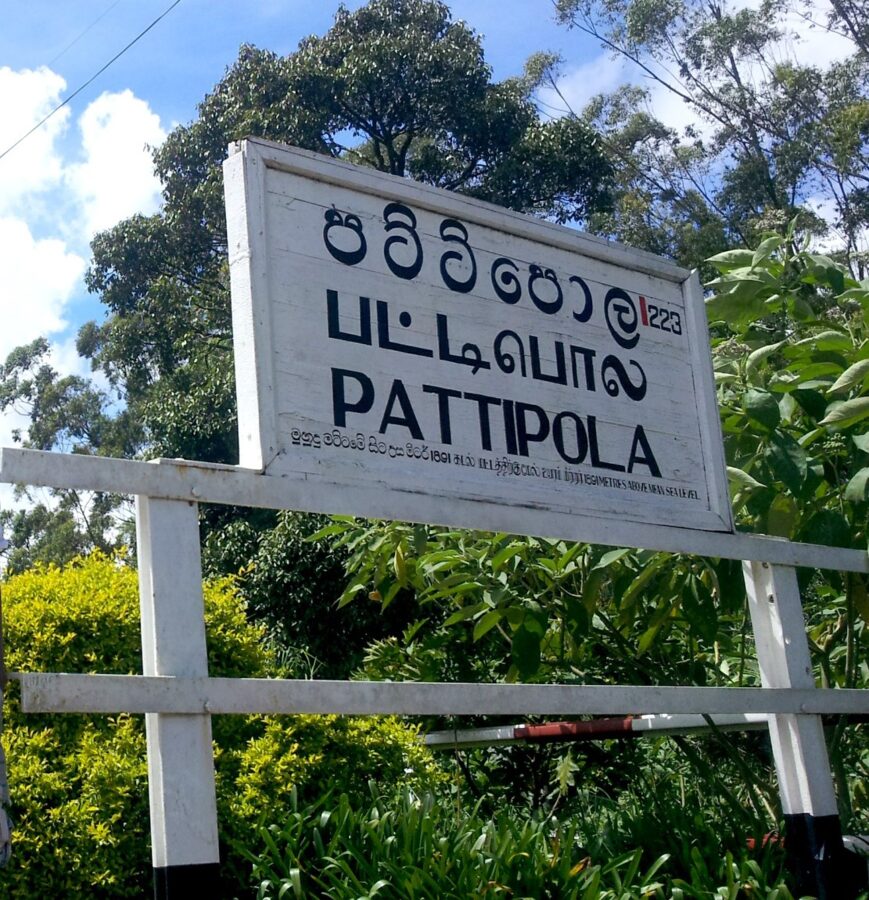
For now, the Kandy to Ella train leaves from Nanu Oya at 9:00 a.m. It is train 1005, Sri Lanka Railways’ daily departure for Badulla, and it reaches Ella at 11:27 a.m. after crossing the highest point on the island’s railways, 6,227 feet (1,898 m) up at Pattipola. Kandy has not sent a train toward Ella since Cyclone Ditwah broke the hill-country line in late November 2025.
That is the first decision for a 2027 trip, before classes, seats or sides. The 2027 Budget, presented on November 12, 2026, put trains back into Kandy in the first quarter of 2027 and on the whole line to Badulla by mid-year. Until then, “Kandy to Ella” means a road transfer to Nanu Oya and two and a half hours on the rails.
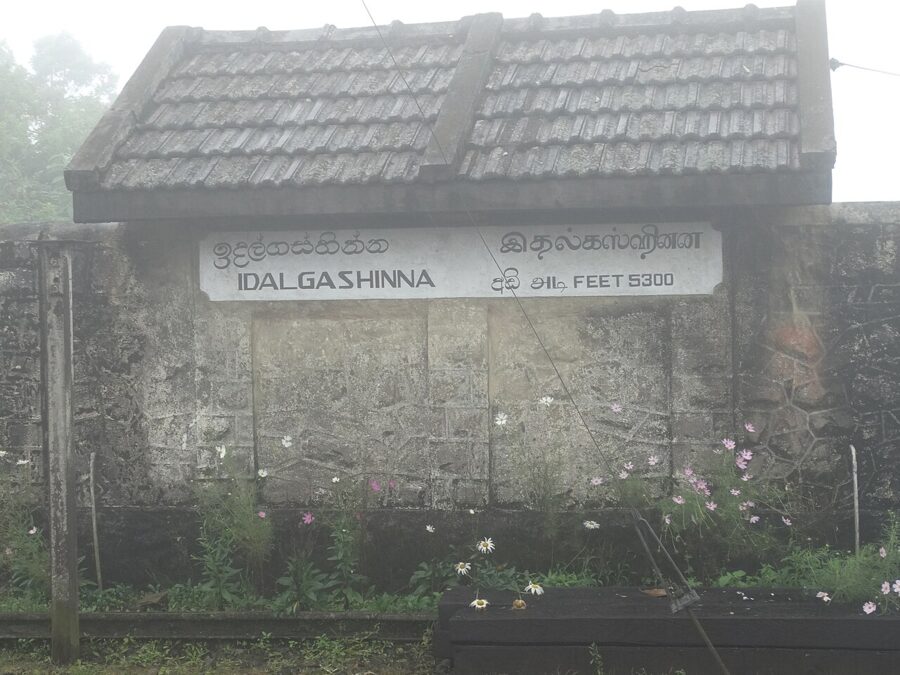
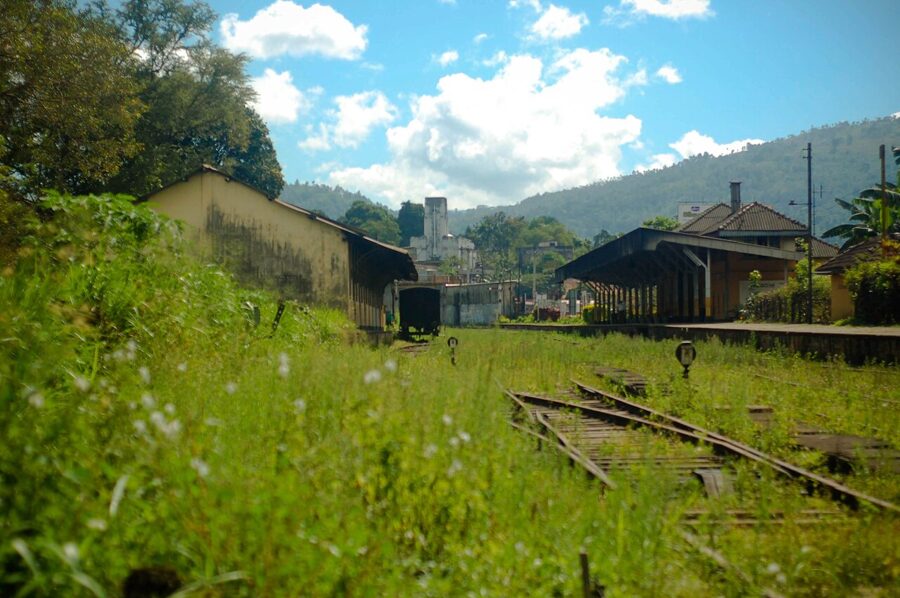
I would plan around the section that is running and treat a through train from Kandy as a bonus. The stretch that made the line famous was always east of Nanu Oya anyway: the summit, the tunnels around Idalgashinna, the Haputale ridge and the drop into Ella.
Stops in this article9
Where the line stands for 2027
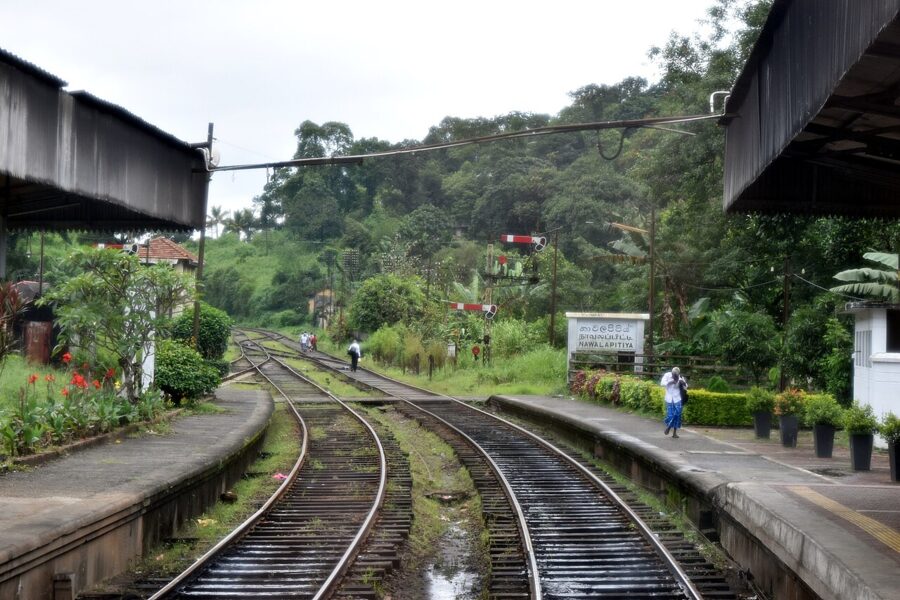
The Main Line climbs from Colombo Fort through Rambukkana, Peradeniya Junction, Gampola, Nawalapitiya, Hatton and Nanu Oya, then crosses the summit to Ella and Badulla. Kandy sits on a short branch from Peradeniya Junction.
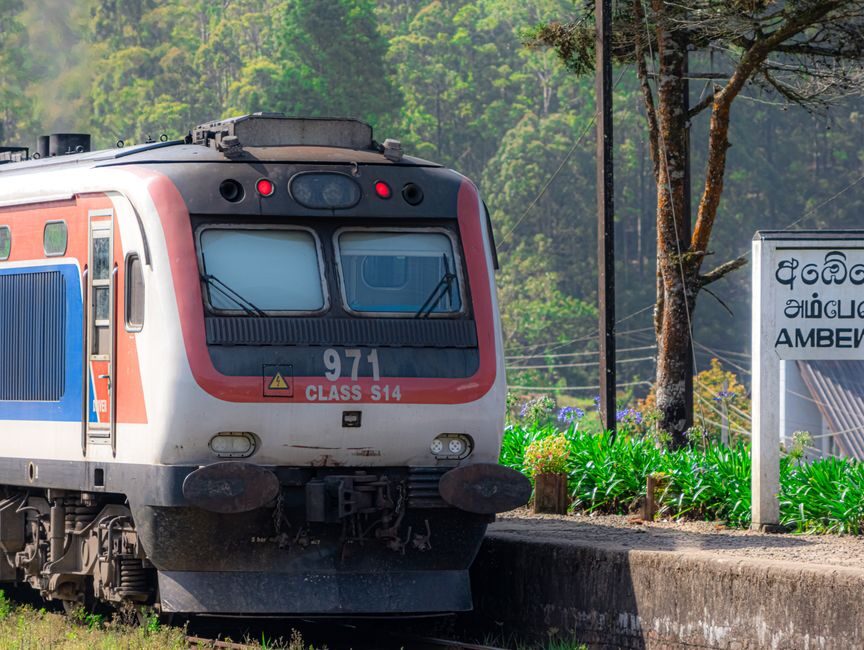
Cyclone Ditwah did damage along almost all of it. By May 2026 railway engineers had counted 198 damaged locations on the Up-Country and Matale lines, 15 of them severe between Peradeniya and Badulla. The far end came back first: Badulla to Ambewela, then Nanu Oya to Badulla on June 20, 2026, once a slip that had left the track hanging near mile 134 between Ambewela and Nanu Oya was rebuilt.
The Colombo end has been harder. Trains from Colombo Fort reached Peradeniya and Gampola again on October 2, 2026, eight a day. On October 5, falling rock derailed a Colombo-bound train between Kadigamuwa and Ihala Kotte, and by October 25 the slope above Kadigamuwa was moving again, so the railway suspended everything between Rambukkana, Peradeniya and Gampola until further notice.
| Section | Status as of late November 2026 |
|---|---|
| Colombo Fort to Rambukkana | Running |
| Rambukkana to Peradeniya and Gampola | Suspended since October 25, 2026 (Kadigamuwa landslide) |
| Peradeniya to Kandy | Closed until the rebuilt Black Bridge at Peradeniya is finished |
| Gampola to Nawalapitiya | Closed for cyclone repairs |
| Nawalapitiya to Hatton | Repaired, but cut off from the rest of the network |
| Hatton to Nanu Oya | Closed for cyclone repairs |
| Nanu Oya to Ella and Badulla | Running since June 20, 2026 |
The official target is in the 2027 Budget: trains into Kandy within the first quarter of 2027 and the full line to Badulla by mid-2027. Earlier targets have slipped more than once. If your trip falls in the first half of 2027, book as if Nanu Oya is the start, and switch only when Sri Lanka Railways publishes a through timetable and opens seats on it.
The route, station by station
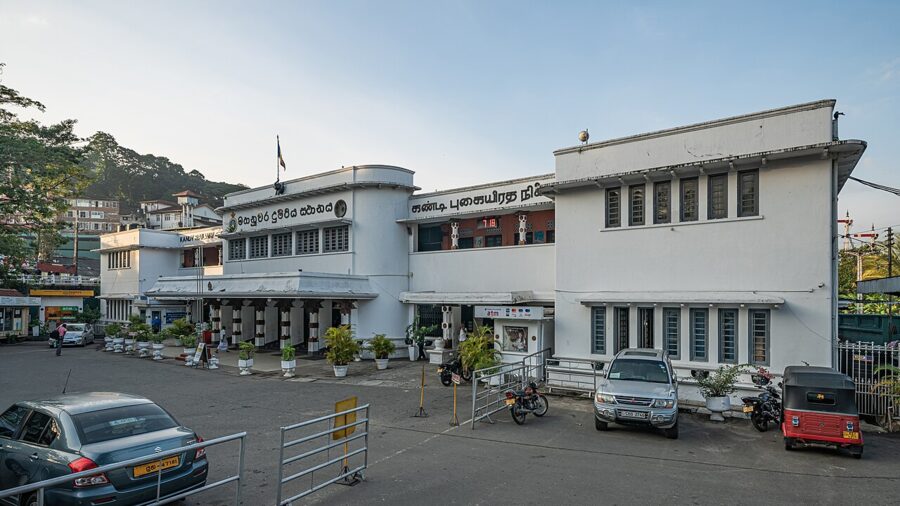
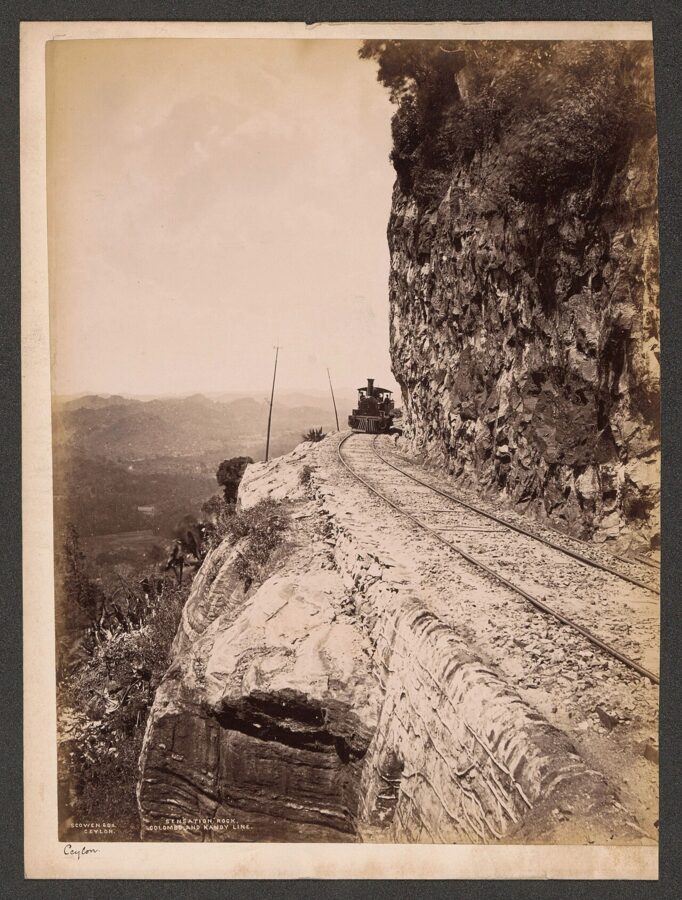
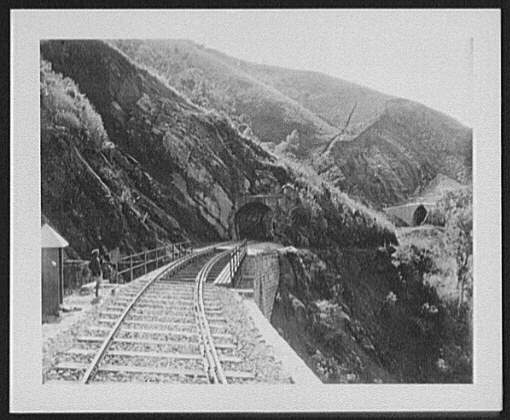
When the line is whole, not every through train enters Kandy: some Colombo to Badulla services stop only at Peradeniya Junction, so check the boarding station on any 2027 ticket. From Colombo you also get the Kadugannawa incline, where the track clings to cliffs with Bible Rock across the valley.
Beyond Peradeniya the line follows the Mahaweli valley to Gampola and Nawalapitiya and climbs through cuttings and tunnels to Hatton and Nanu Oya. It reached Nanu Oya in 1885 and Badulla only in 1924, built to carry coffee and then tea to the port, with gradients as steep as one in 44 and hill speeds the railway puts at 15 to 25 mph (25 to 40 km/h). That is why the full ride from Kandy took six to seven hours.
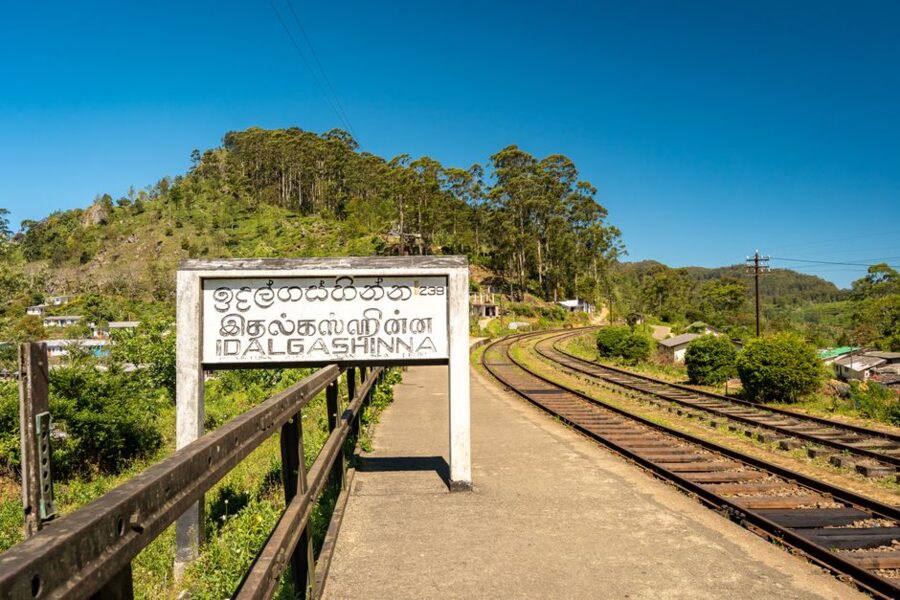
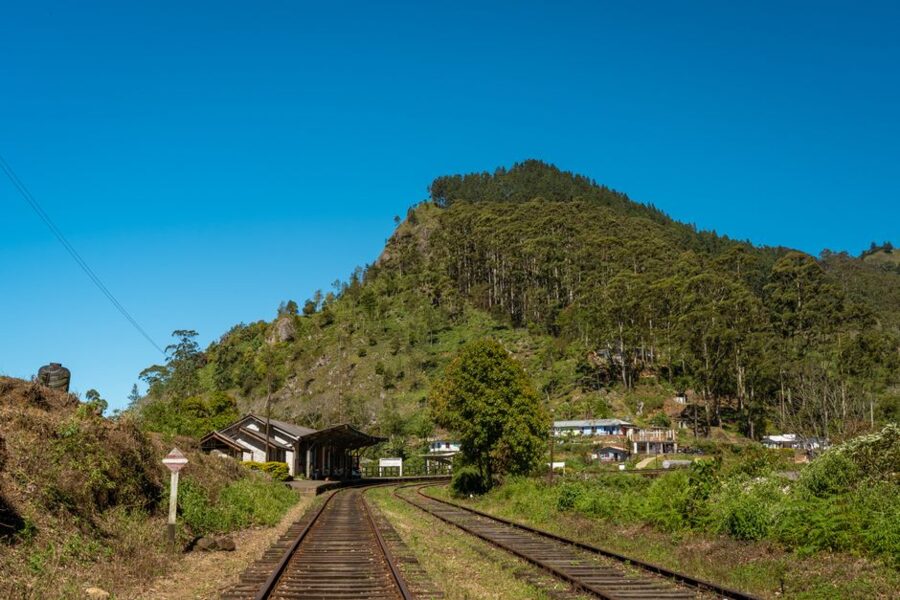
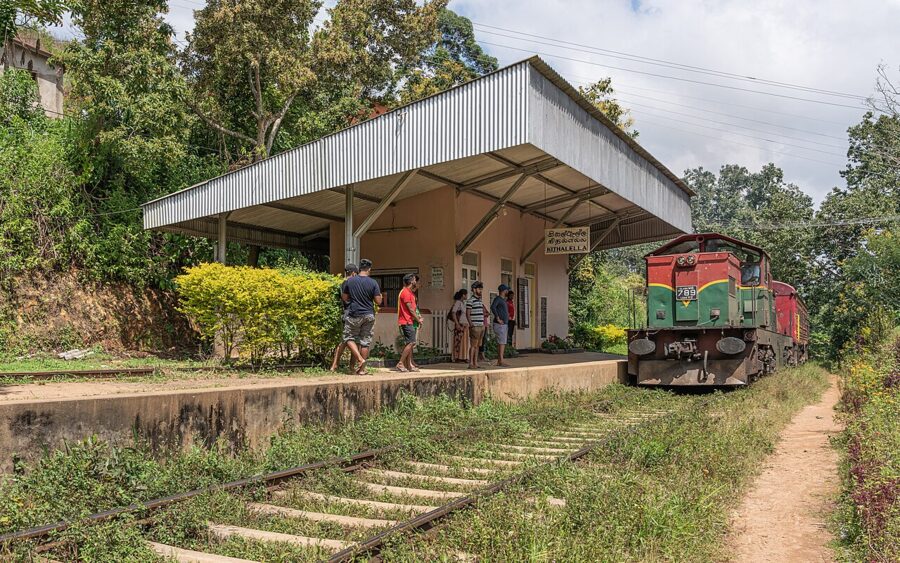
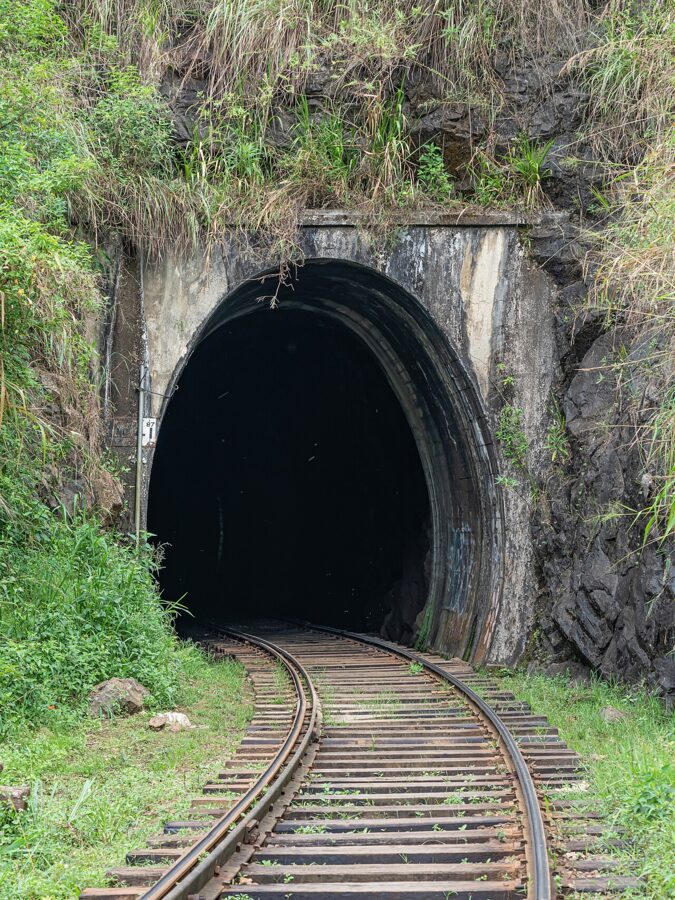
From Nanu Oya the line climbs past Ambewela to the summit at Pattipola, runs through 14 tunnels between Ohiya and Idalgashinna, follows the Haputale ridge and drops through Haputale (4,854 feet, 1,480 m), Diyatalawa and Bandarawela to Ella, Demodara and Badulla.
Six thousand feet is modest next to the Qinghai-Tibet railway, but the drama here is in how fast the ground falls away from the track, not in the height. Between Nanu Oya and Demodara the line covers about 44 miles (71 km), and from the summit at Pattipola to Demodara it loses more than 3,200 feet (about 985 m).
Trains and classes, as of 2026
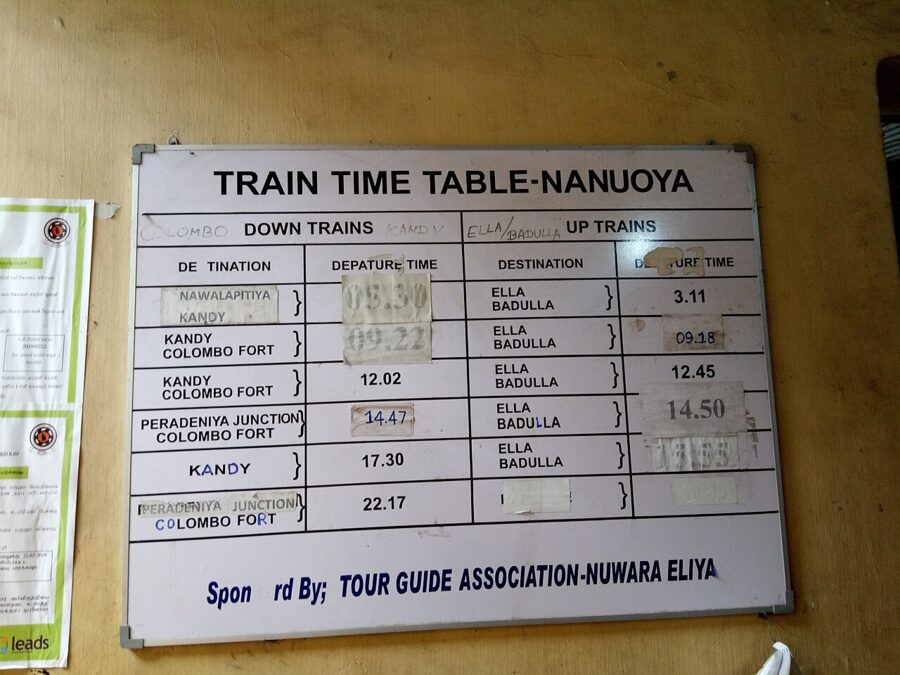
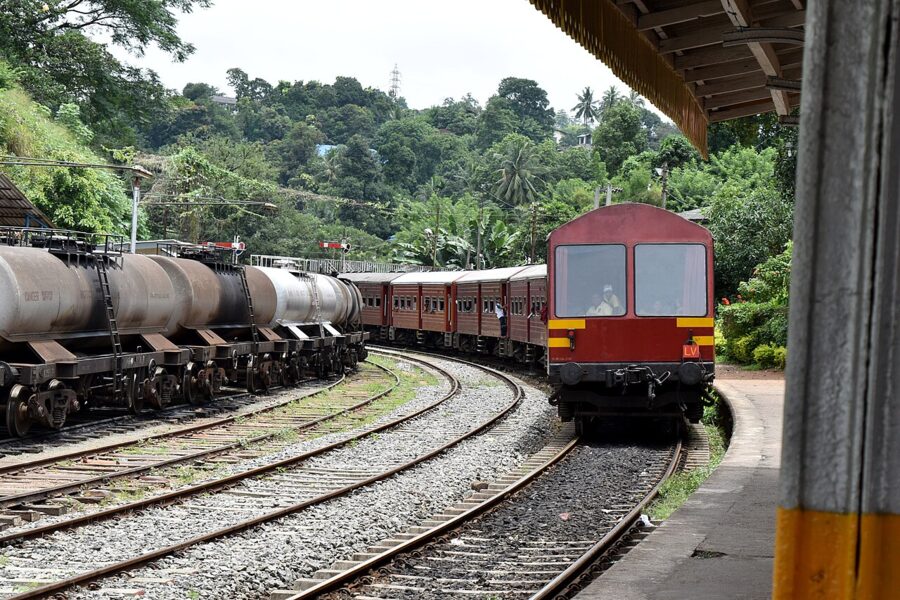
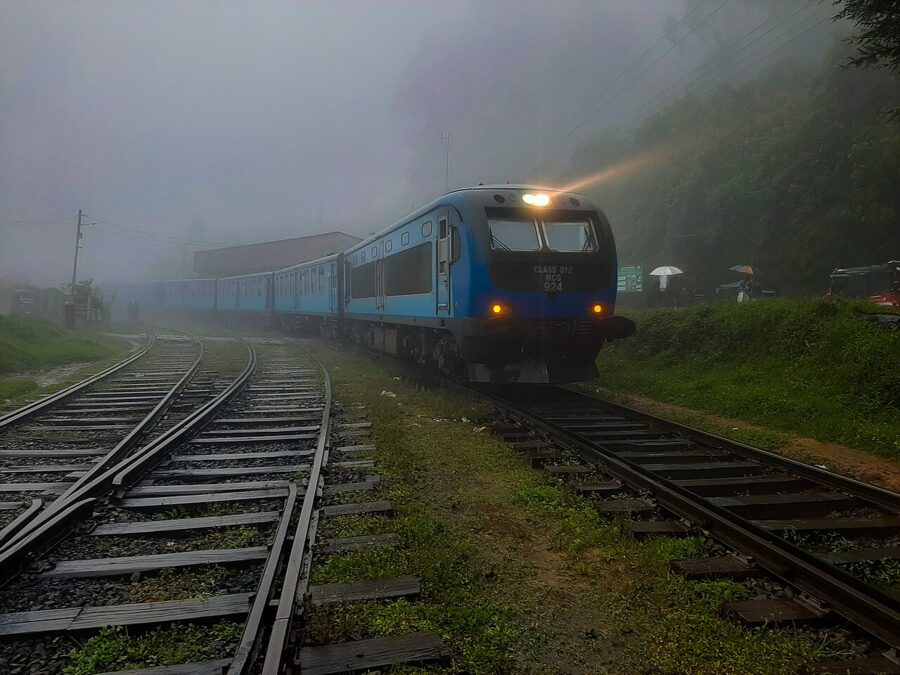
Three pairs of trains run the open section under the Sri Lanka Railways timetable in force from June 20, 2026, all between Nanu Oya and Badulla, and all with a first-class air-conditioned car and second-class reserved seats.
| Train | Runs | Nanu Oya | Ella | Badulla |
|---|---|---|---|---|
| 1005 | Daily | 9:00 a.m. | 11:27 a.m. | 12:16 p.m. |
| 1043 Ella Odyssey | Wednesdays only | 1:00 p.m. | 3:21 p.m. | 4:12 p.m. |
| 1015 | Daily except Wednesdays | 2:30 p.m. | 4:57 p.m. | 5:46 p.m. |
| Train | Runs | Badulla | Ella | Nanu Oya |
|---|---|---|---|---|
| 1044 Ella Odyssey | Wednesdays only | 7:45 a.m. | 8:43 a.m. | 11:29 a.m. |
| 1016 | Daily except Wednesdays | 9:00 a.m. | 9:52 a.m. | 12:16 p.m. |
| 1006 | Daily | 3:00 p.m. | 3:52 p.m. | 6:06 p.m. |
Those times come from the railway’s June 2026 notice, which I would trust over any reseller’s listing. The numbers are the old ones: 1005 and 1006 are the Podi Menike, 1015 and 1016 the Udarata Menike, the named expresses that used to run from Colombo.
| Class | What you get | How you buy it |
|---|---|---|
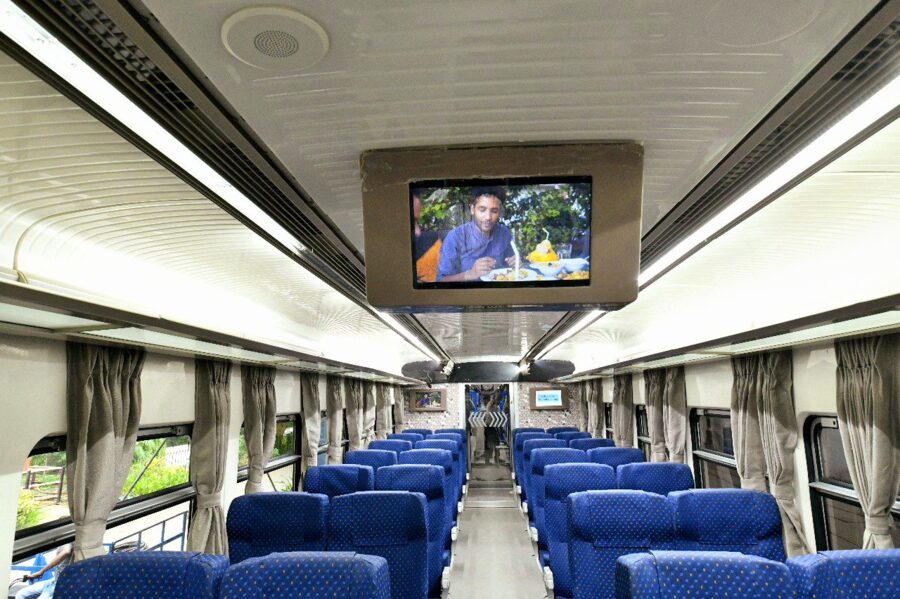
| First class, air-conditioned | Reserved seat, air conditioning, windows that stay shut | Online up to 30 days ahead, or a reservation counter |
| First-class observation saloon | Reserved seats facing a rear picture window; on some through trains, not on the 2026 Nanu Oya trains | Online or at a counter, when the train carries one |
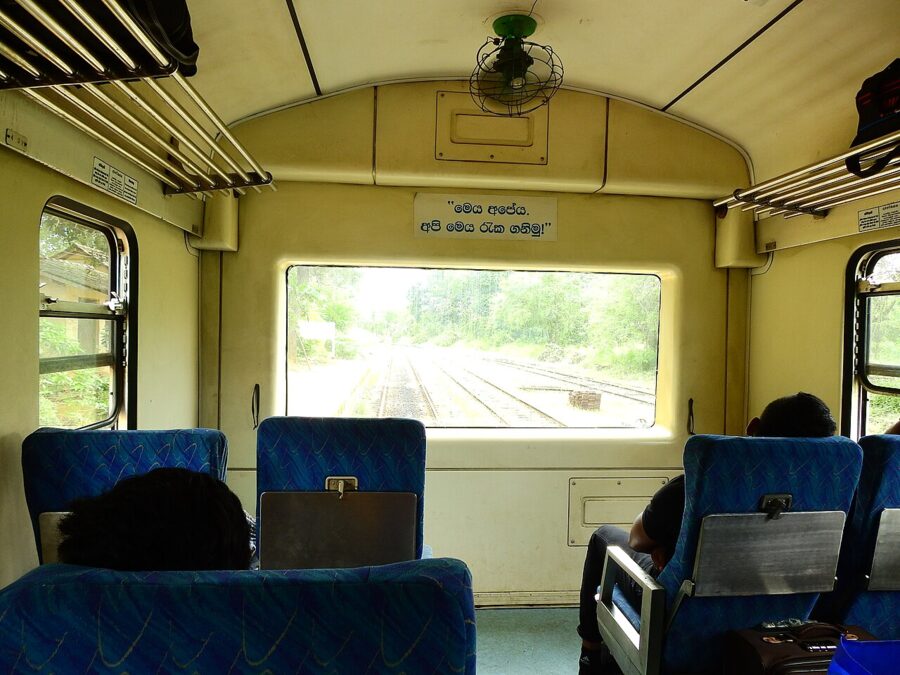
| Second class reserved | Numbered seat, windows that open | Online up to 30 days ahead, or a reservation counter |
| Third class reserved | Numbered seat, plainer and harder | On trains that carry it, as for second |
| Second and third unreserved | Any seat or standing space | Station ticket window, on the day only |
The first-class car is the quietest seat and the worst for views: small windows that do not open, so every photograph goes through glass. Second class reserved is the seat I would book, with a numbered place, a window you can open and nobody standing in the aisle. Third class reserved, where a train carries it, has harder seats and still beats an unreserved car on a busy morning.
The observation saloon is the old luxury of this line. The Udarata Menike started in 1956 with one at the end of its nine carriages, and the diesel multiple units that took over later dropped it. Before the cyclone an observation car still rode at the rear of some Colombo to Badulla trains, seats facing the end window, some without air conditioning so the side windows opened. None of the 2026 Nanu Oya trains lists one.
The Ella Odyssey and other tourist specials
The Ella Odyssey is Sri Lanka Railways’ own tourist train, and in 2026 it runs one round trip a week: Wednesdays, 1043 from Nanu Oya at 1:00 p.m. and 1044 from Badulla at 7:45 a.m. The regular 1015 and 1016 do not run on Wednesdays, so on that day the Odyssey is your afternoon train whether you wanted a special or not. The railway’s other special on the route, the Dunhinda Odyssey, ran from Colombo before the cyclone.
Groups of 10 or more can reserve a block of seats on the Colombo to Badulla trains, both Odysseys included, by applying and paying at least 35 days ahead. The railway’s group reservation charges are LKR 12,000 (about US$36) a seat in first, LKR 10,000 in second and LKR 8,000 in third, as of 2026. That is a charter price, worth it only for a group that must sit together.
Booking a reserved seat
Reserved seats go on sale 30 days before departure, and the morning train is the one most people want. From December to March and in July and August I would book the day the window opens, early (Sri Lanka is five and a half hours ahead of GMT). Outside those months there is more room, but I would not leave a fixed date to the last week.
Online, on the Sri Lanka Railways portal
The official online seat reservation site needs an account and takes up to five seats per booking. You give each passenger’s passport number, pay by card (Visa, Mastercard, American Express, Diners, Discover) or LankaQR, and get the e-ticket by email. It is valid only on the train you booked.
The system assigns seats, so you cannot pick a side. If the site times out during payment, check your card before trying again: under the railway’s terms, a charge with no booking is refunded, which can take 14 to 30 days. Keep a screenshot of the ticket in case you lose signal in the hills.
At the station
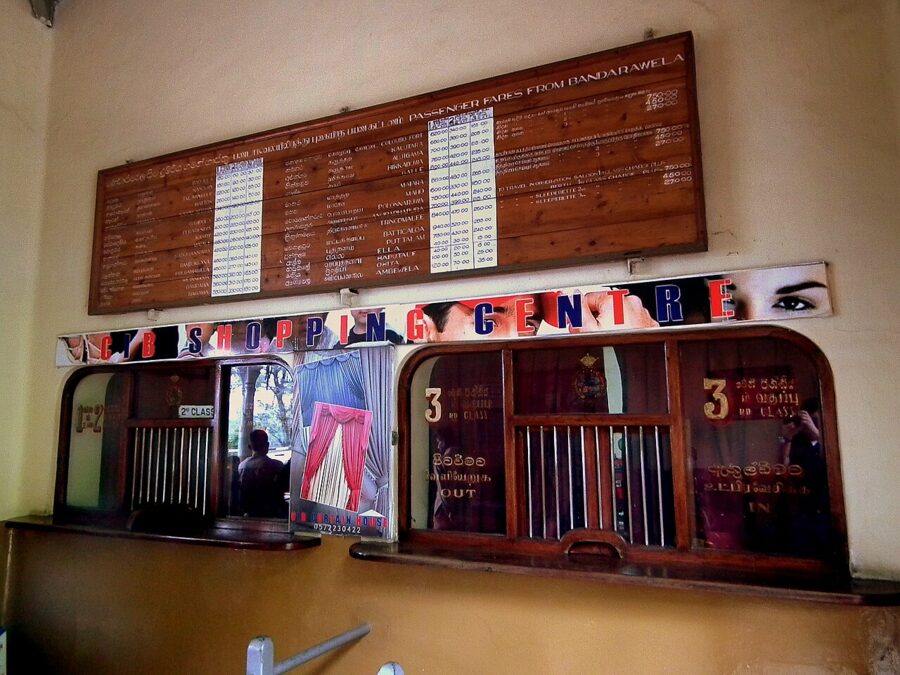
Stations with reservation counters sell the same seats in person, against your passport. On this route Kandy, Hatton, Nanu Oya, Haputale, Bandarawela, Ella and Badulla are on the railway’s list of stations that print, cancel and refund online tickets. Unreserved tickets are sold only on the day at the window, sometimes from just an hour before departure; on a holiday weekend you may stand from Nanu Oya to Haputale.
Agents, hotels and resellers
Hotels, local agents and online ticket sites sell seats bought in advance, at several times the railway’s fare. They help when the window has closed. Check that the ticket names the train number and boarding station, because many listings still say “Kandy to Ella” for a seat usable only from Nanu Oya.
What it costs, as of 2026
Unreserved tickets are cheap. The railway’s published unreserved fares put Colombo Fort to Nanu Oya, for when the line reopens, at LKR 750 (about US$2) in second class and LKR 360 (about US$1) in third. Nanu Oya to Ella is listed at LKR 300 in second and LKR 160 in third as of late 2026, both under a dollar.
Reserved and first-class fares are higher and shown on the portal before you pay, plus a service charge. Cancel in person at one of the stations above: you get 75 percent of the ticket fee back more than seven days out, 50 percent between two and seven days, and never the service charge.
Children up to three share a parent’s seat free, one per adult; older children pay the adult fare. Free luggage runs to 88 pounds (40 kg) in first, 77 pounds (35 kg) in second and 55 pounds (25 kg) in third, though space is tight, and pets are not allowed.
What you see, and which side to sit
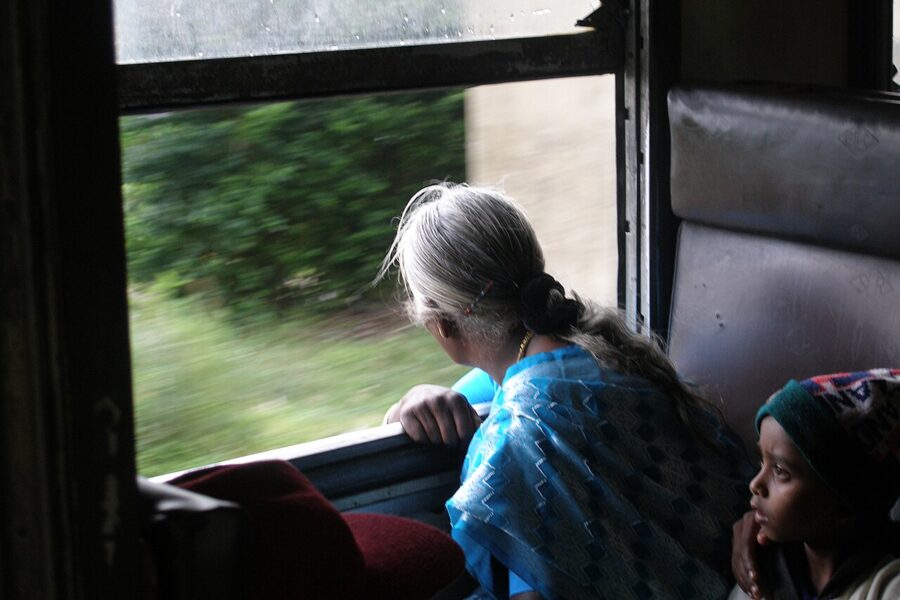
The usual advice from Kandy is the right-hand side as far as Nanu Oya, then the left-hand side to Ella; coming back, the reverse. In practice the reserved cars are rarely so full that you cannot cross the aisle, and open windows and doors let the view in from both sides.
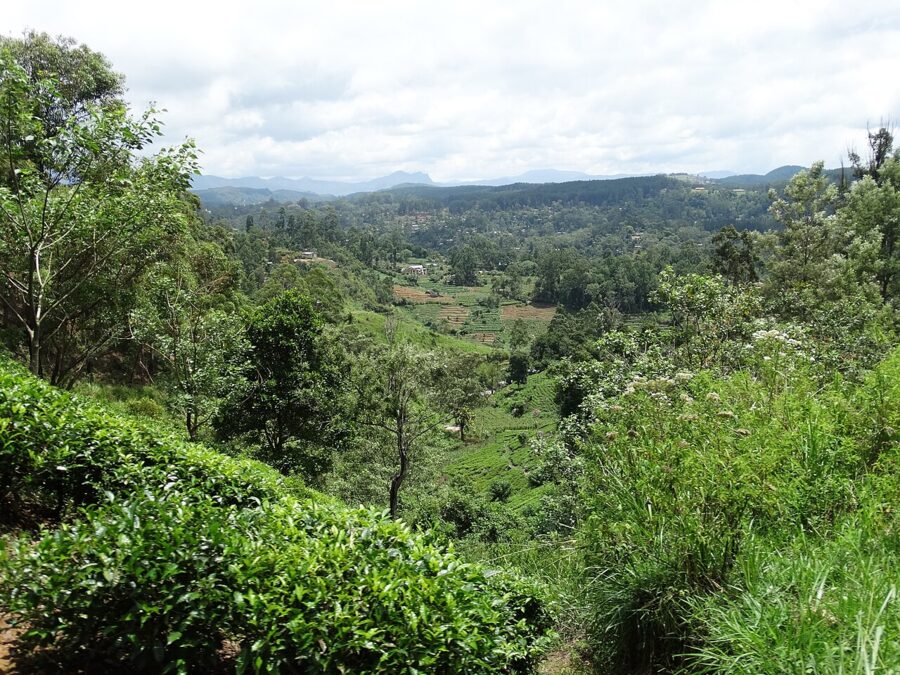
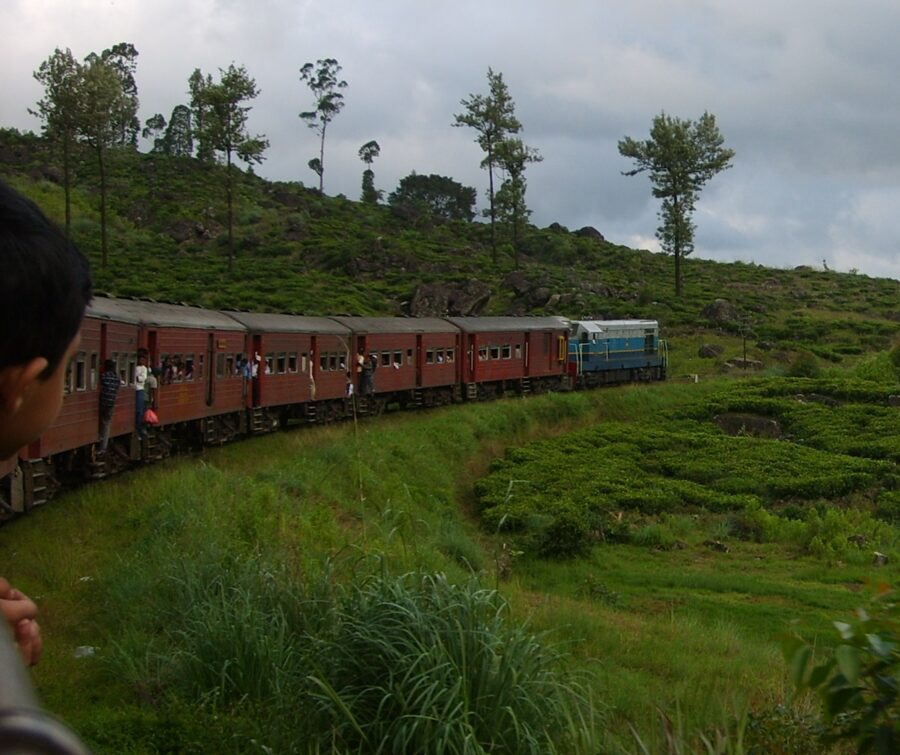
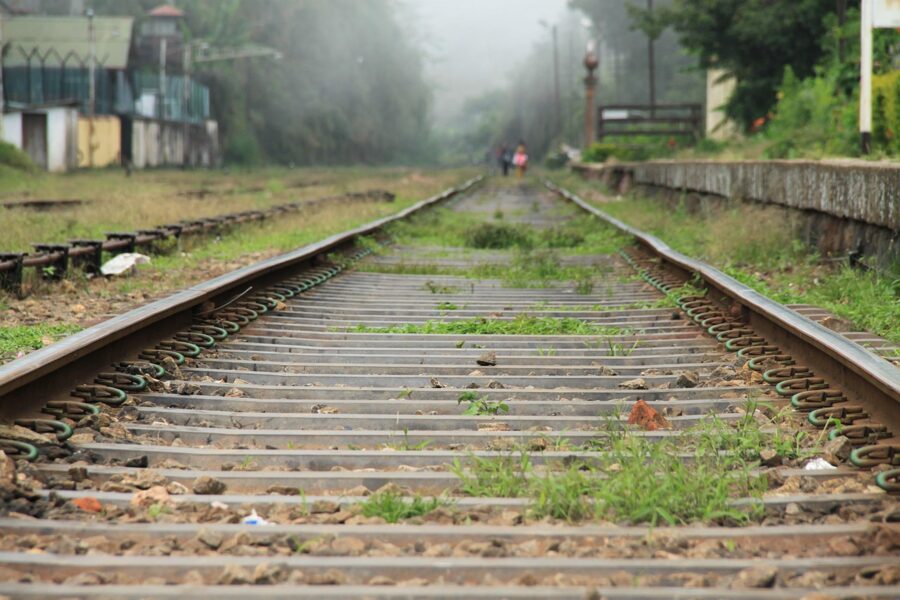
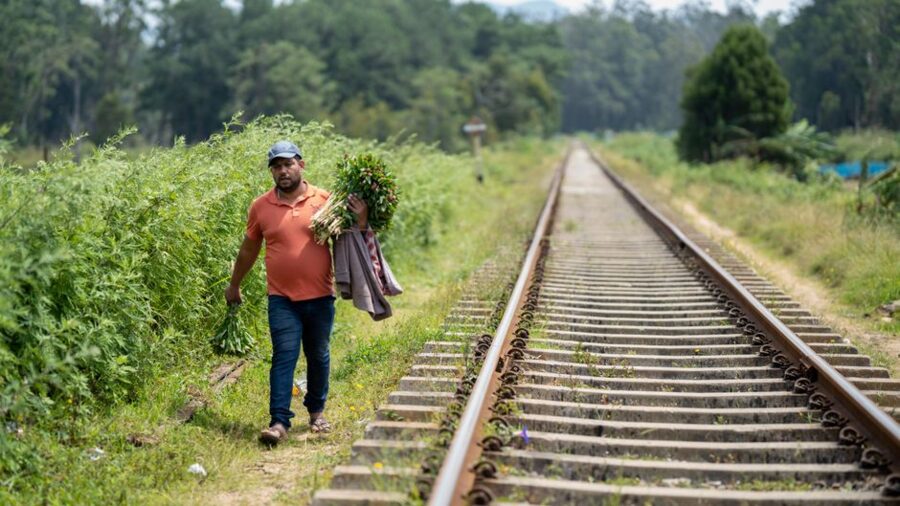
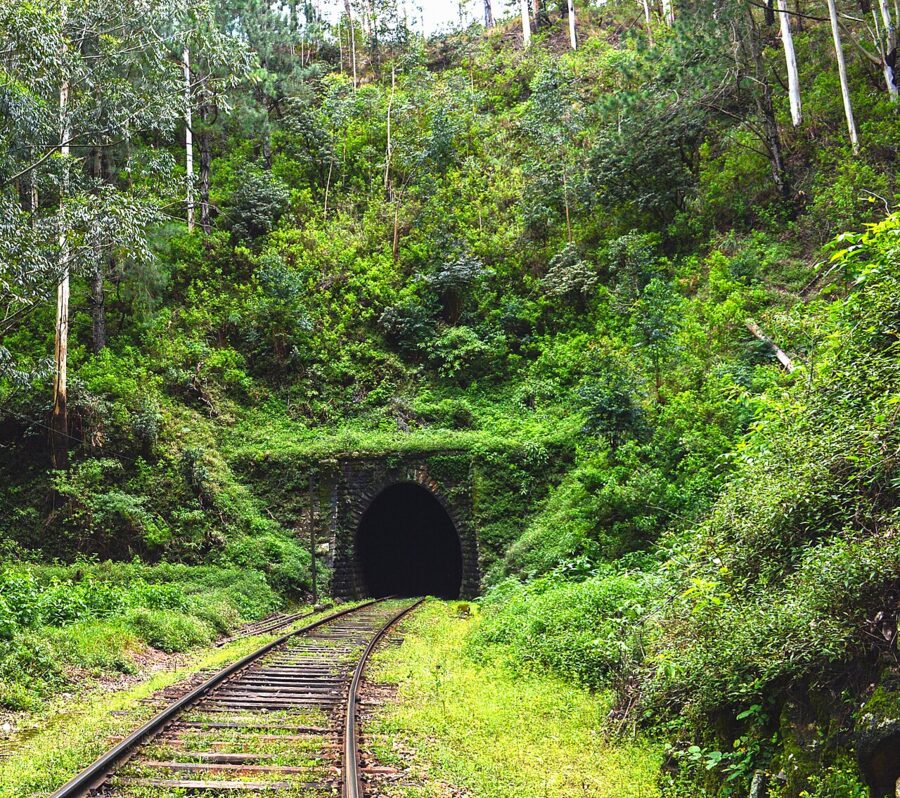
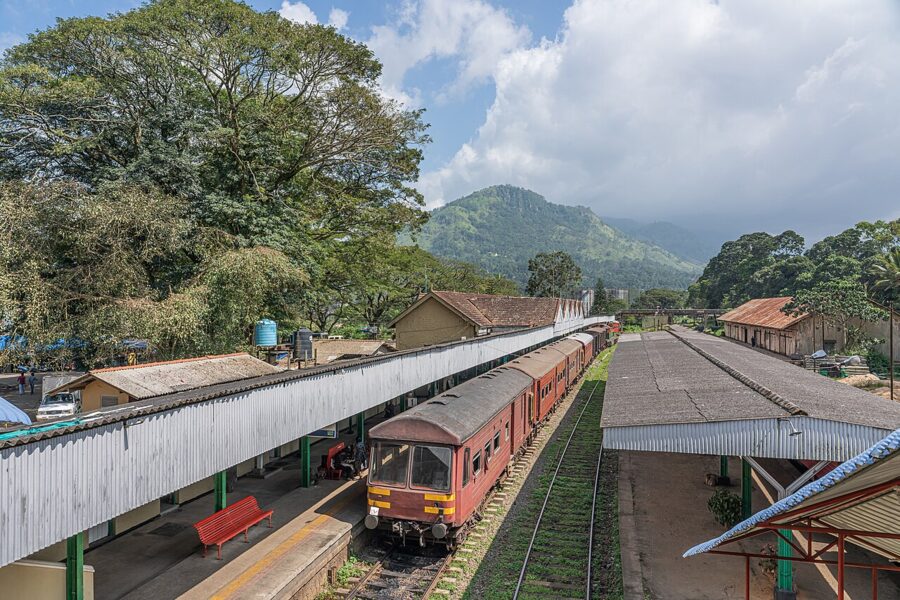
Out of Nanu Oya the train climbs through Ambewela and Pattipola, where grassland, vegetable plots and plantation forest replace tea. Ohiya, after the summit, is the station for Horton Plains National Park, and then come the 14 tunnels, the light in the car going on and off for twenty minutes.
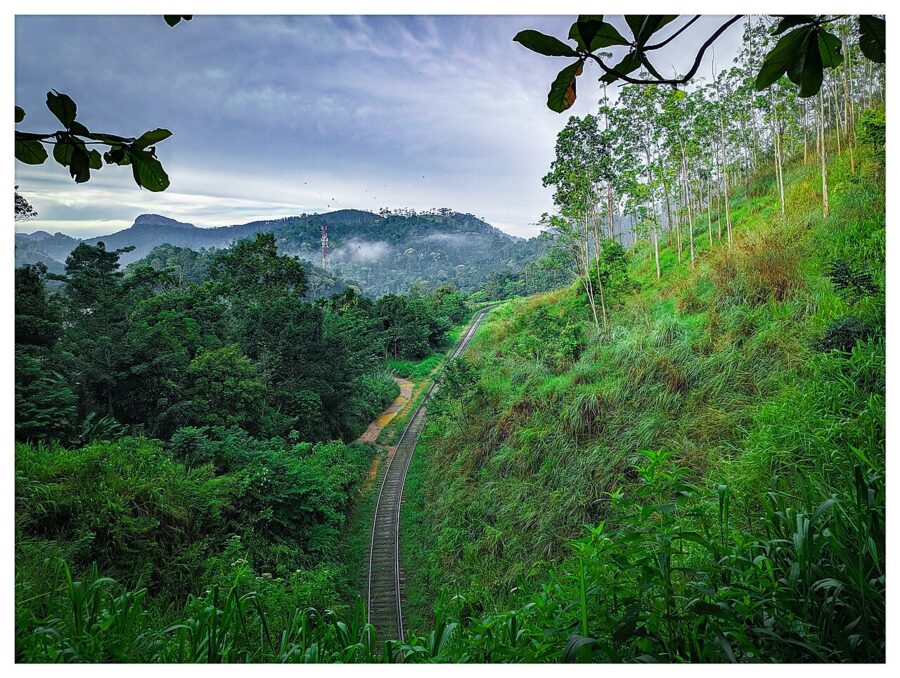
Idalgashinna is the reason I would not obsess over seats. The ground drops away on both sides of the line here: north toward Welimada and Hakgala, south across the plains toward the Udawalawe reservoir and, on a clear day, the coast at Hambantota. The ridge run to Haputale is the best quarter hour of the trip, and it comes about an hour and a quarter after Nanu Oya.
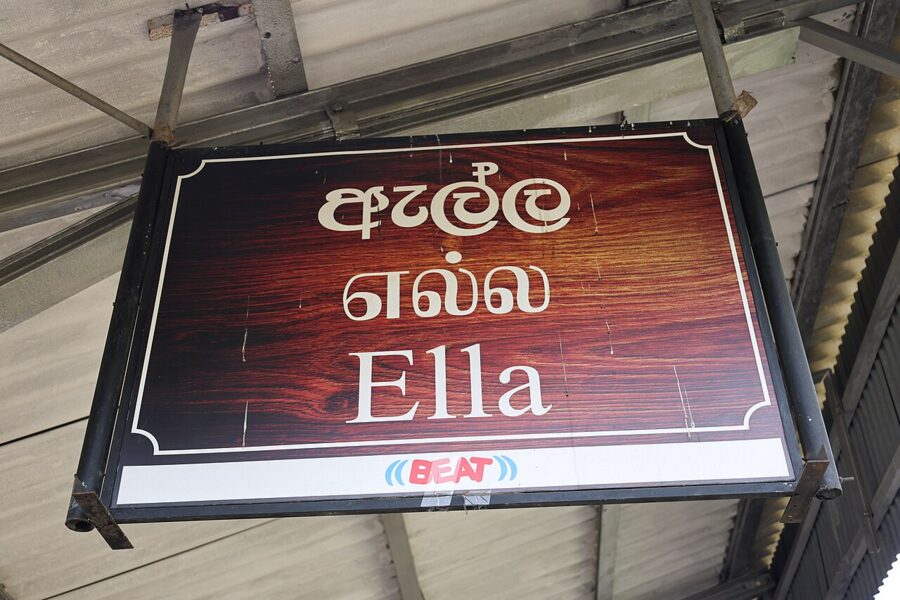
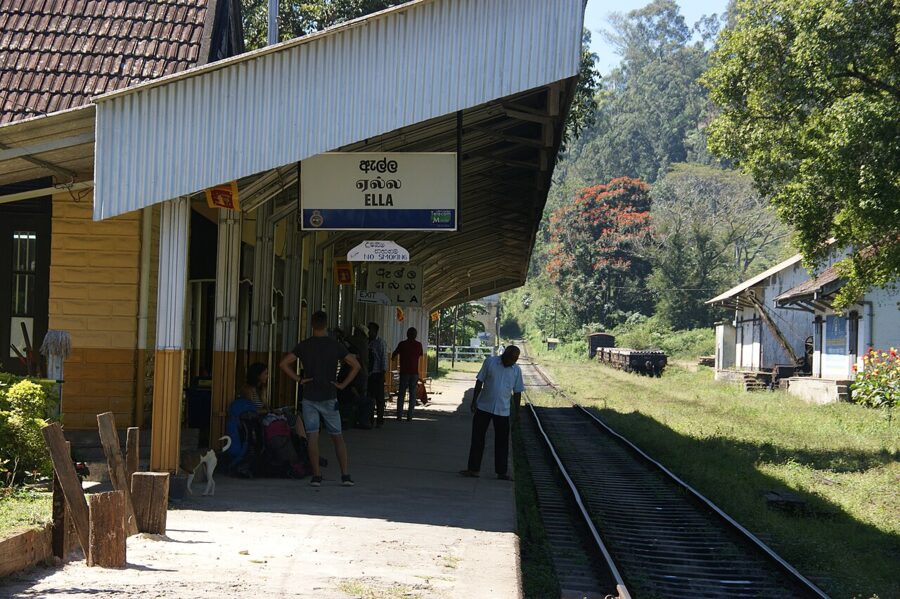
After Haputale the line drops through Diyatalawa and Bandarawela and winds down the side of the Ella valley. Ella comes 2 hours 27 minutes after Nanu Oya on paper, usually later; have your bag ready a stop early.
Nine Arches Bridge, Demodara and Ella
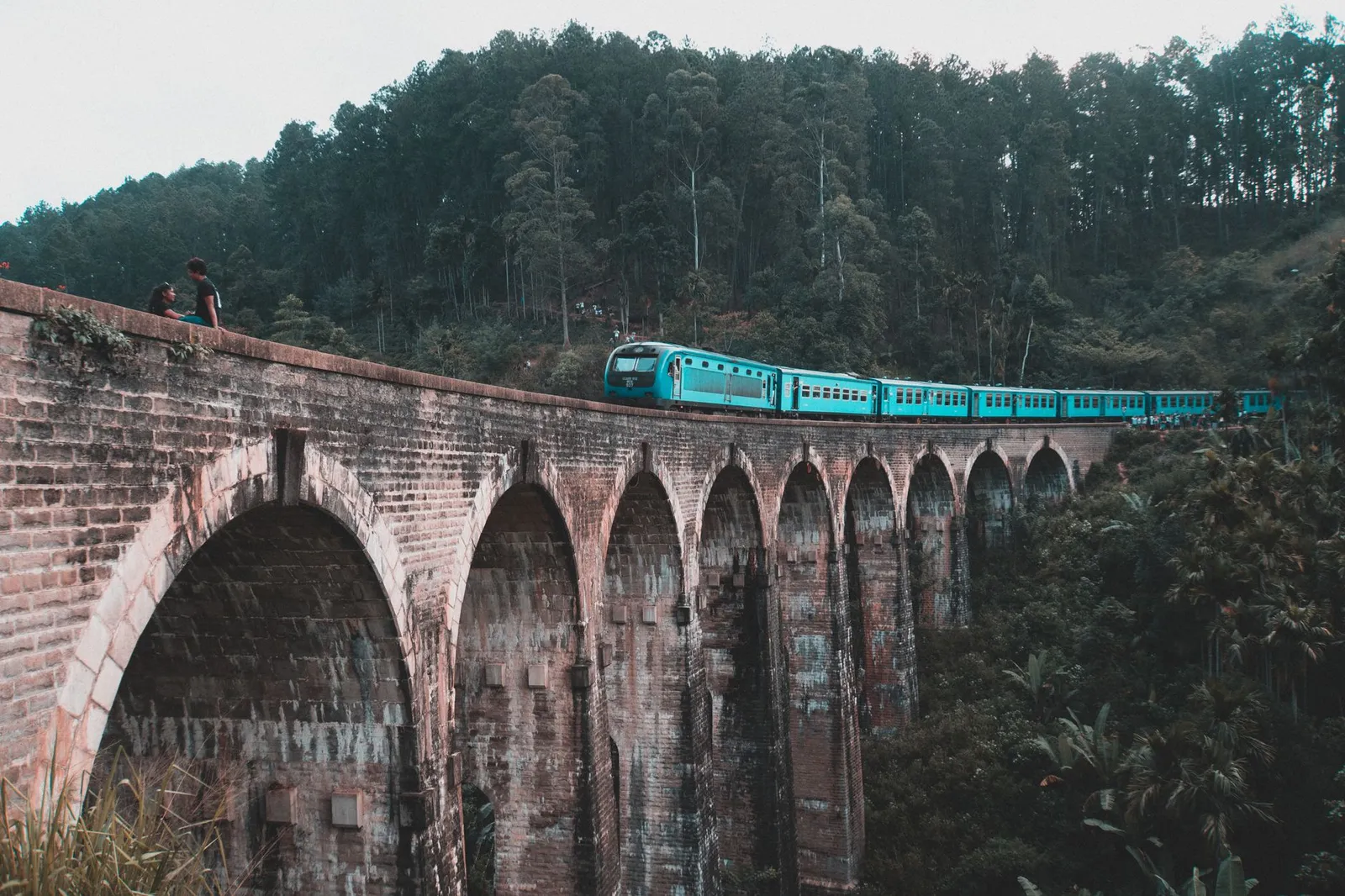
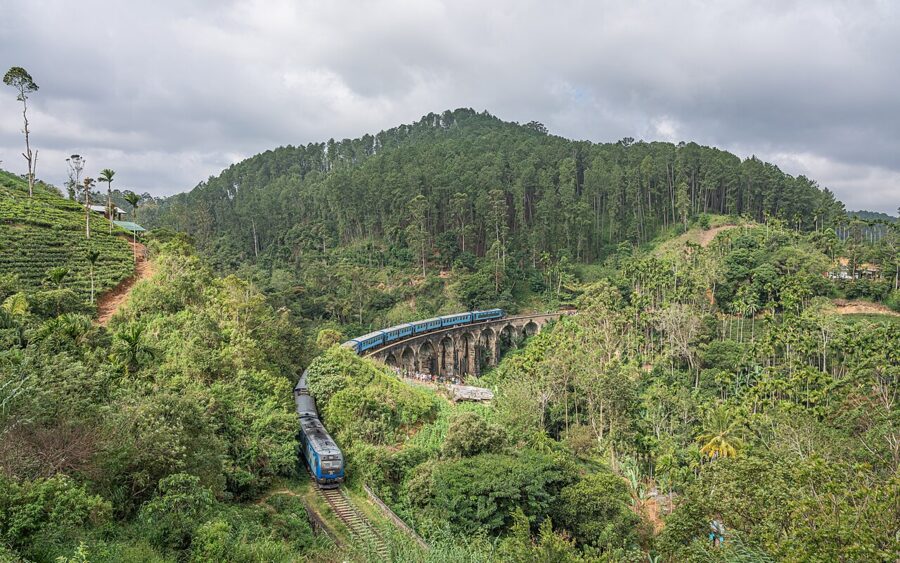
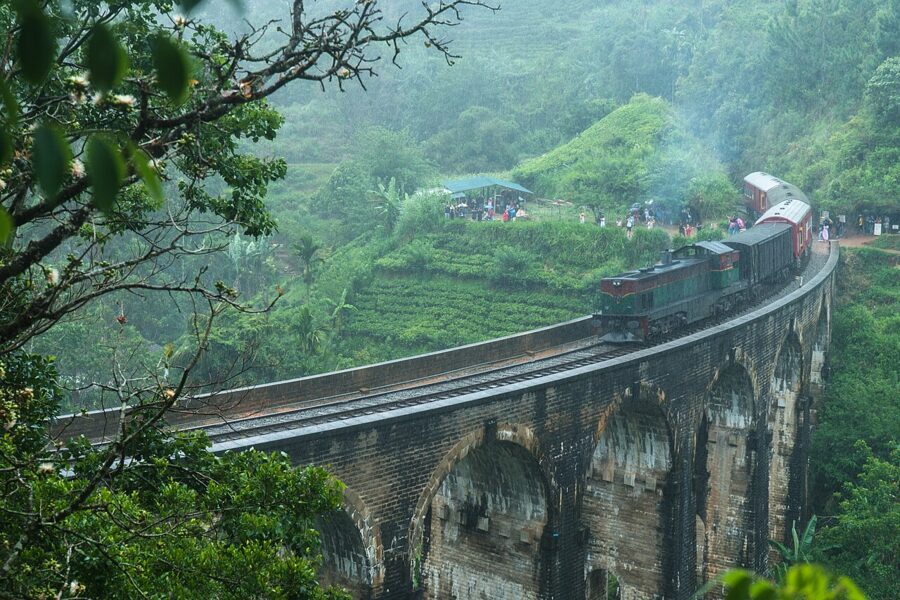
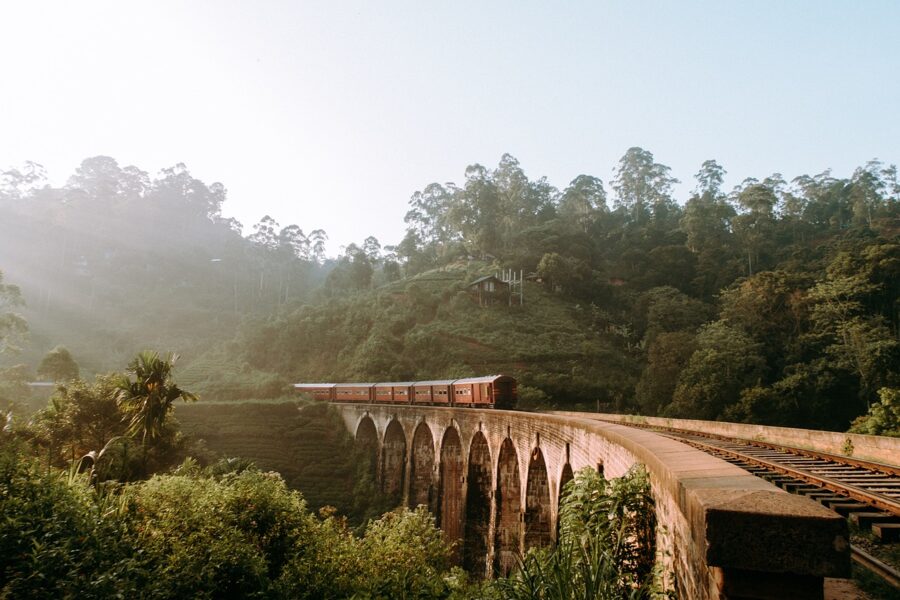
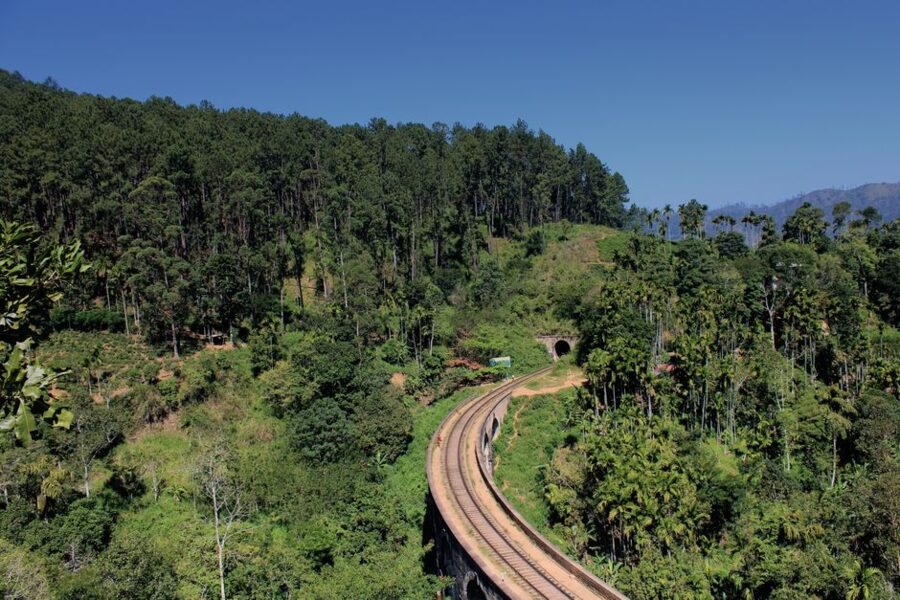
The Nine Arches Bridge is between Ella and Demodara stations, so you cross it after Ella toward Badulla, or before Ella coming back. Harold Cuthbert Marwood of the Ceylon Government Railway designed it to carry the line around a sharp curve on a steep grade, and local labor built it in concrete; sources give its completion as 1919 or 1921.
From the train you see the valley but not the arches. To watch a train cross, walk out from Ella, about two miles (3 km), and time it from the table below: the bridge lies between the Ella and Demodara times. Arrive at the early end and expect to wait.
| Train | Direction | Ella | Demodara |
|---|---|---|---|
| 1044 Ella Odyssey (Wednesdays) | Toward Ella | 8:43 a.m. | 8:19 a.m. |
| 1016 (not Wednesdays) | Toward Ella | 9:52 a.m. | 9:37 a.m. |
| 1005 (daily) | Toward Badulla | 11:27 a.m. | 11:41 a.m. |
| 1043 Ella Odyssey (Wednesdays) | Toward Badulla | 3:21 p.m. | 3:39 p.m. |
| 1006 (daily) | Toward Ella | 3:52 p.m. | 3:37 p.m. |
| 1015 (not Wednesdays) | Toward Badulla | 4:57 p.m. | 5:11 p.m. |
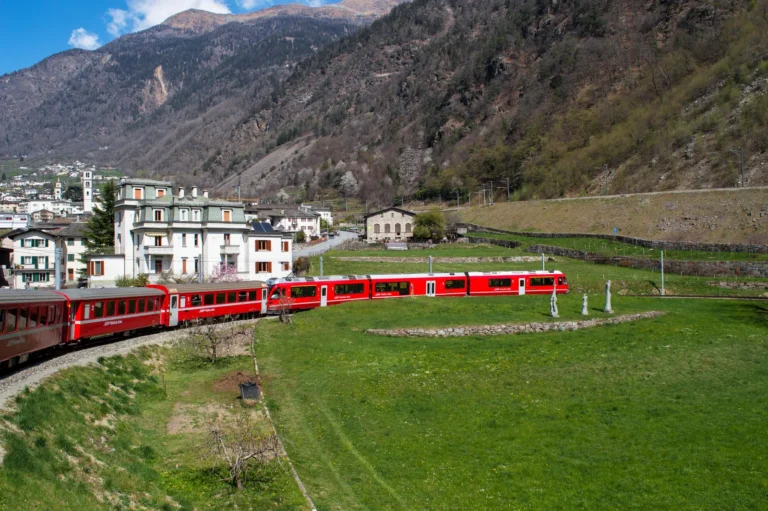
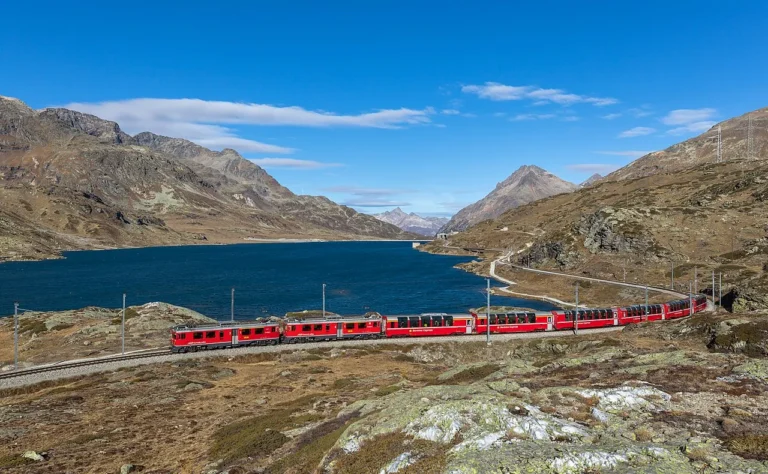
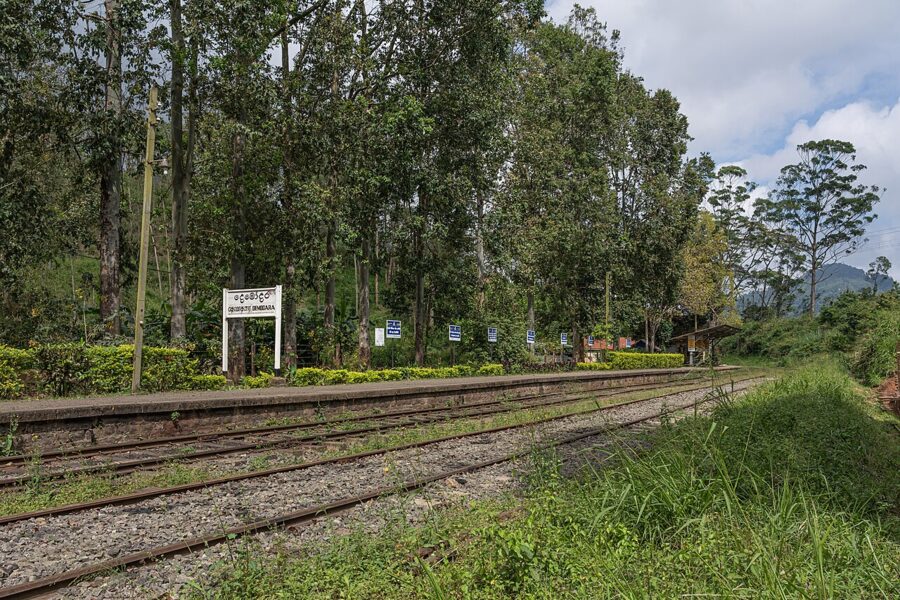
Demodara is the cleverer engineering. The builders could not reach Badulla within the one-in-44 limit, so the line loops around a hill and passes under itself, through a 1,050-foot (320 m) tunnel directly beneath Demodara station; the whole loop is about 3,000 feet (900 m). In Switzerland the Bernina Express ties a similar knot on the stone spiral viaduct at Brusio; Demodara does it with a station on top.
Folklore credits the idea to D. J. Wimalasurendra, the Ceylonese engineer who led the Up-Country line project, after he watched a tea-estate supervisor retie his turban. To ride it, stay on past Ella: the train crosses the Nine Arches, stops at Demodara, then circles the hill and runs through the tunnel beneath the platform it has just left.
Delays, safety and the doors
The trains on this line are slow and often late. Landslides, rockfalls and single-track crossings all add time, and the line has been shut by slips repeatedly since the cyclone. I would not book anything at the far end, a flight, a safari or the last bus, within two or three hours of the timetable.
If a train is cancelled for weather, track trouble or a strike, the ticket fee on a reserved seat is refunded at a station, though never the service charge; when the October 2026 suspension began, the railway offered full refunds at any station. Its terms rule out responsibility for delays caused by floods, landslides and other natural events.
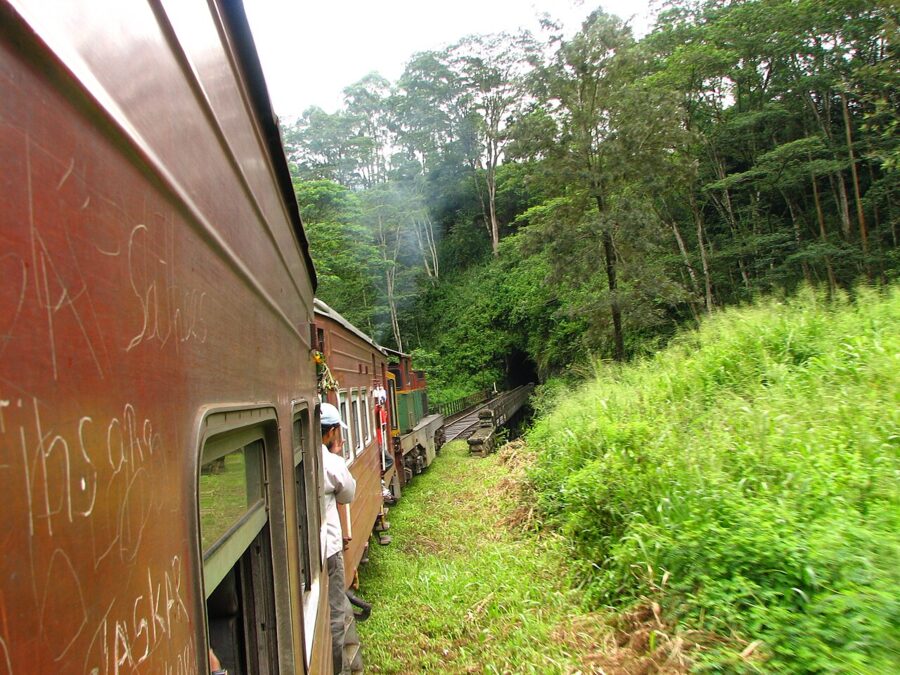
The doors stay open on most second and third class cars, and everyone wants the picture of legs dangling over the valley. I would keep inside the frame. The line runs tight against rock cuttings, tunnel portals, platform edges and trees, and the lurch of a slow train on a curve is enough to throw you.
Weather is the other variable. The northeast monsoon brings rain and cloud to the Uva side of the hills, around Ella and Badulla, from roughly October to January, and mist can hide the whole Haputale ridge for an hour. A rainy day is still worth riding, but if you have a choice of dates, keep one spare.
Kandy to Nanu Oya while the line is shut
Until trains reach Nanu Oya from the west, ride from Kandy by road to Nanu Oya, then take the train. The drive is about two and a half to three hours on hill roads, so a car leaving Kandy around 6:00 a.m. makes the 9:00 a.m. with time for a ticket. Nanu Oya is the railhead for Nuwara Eliya, whose own narrow-gauge branch closed in 1948.
Better, if the trip allows it, is a night in Nuwara Eliya and the 9:00 a.m. next morning. It turns a long day into an easy one. Coming back, the 3:00 p.m. from Badulla leaves Ella at 3:52 p.m. and reaches Nanu Oya at 6:06 p.m., around dusk.
When through trains return, so does the classic plan: an early train out of Kandy, the whole climb, and Ella by mid-afternoon. Before paying, check whether the train calls at Kandy or only at Peradeniya, and which classes it carries.
How I would book it for 2027
For January to June 2027, I would book the 9:00 a.m. from Nanu Oya in second class reserved, on the portal the day seats open, and arrange the road leg from Kandy separately. If the through service opens before your date, add a Kandy seat on the same 30-day window. For the second half of the year, wait for the published timetable before paying anyone for a Kandy departure.
Book the morning train if you can, sit wherever the system puts you, and keep watching from Ohiya on: the tunnels end, the ground falls away on both sides at Idalgashinna, and the best quarter hour of the Kandy to Ella train comes before you reach Ella at all.