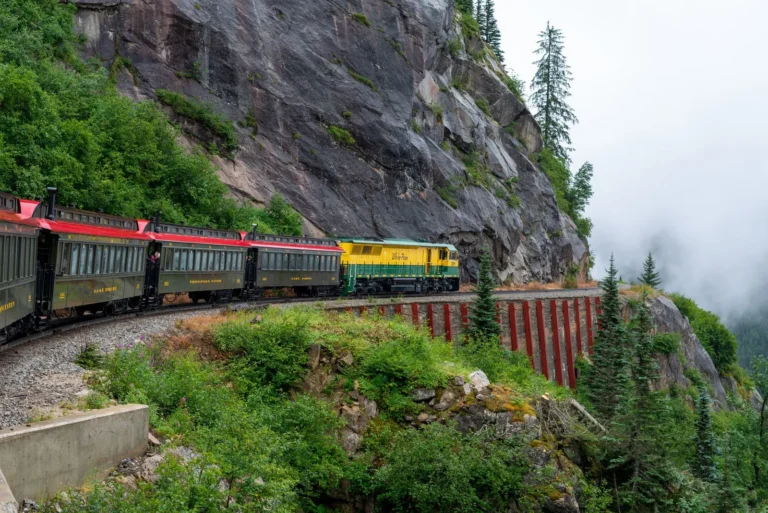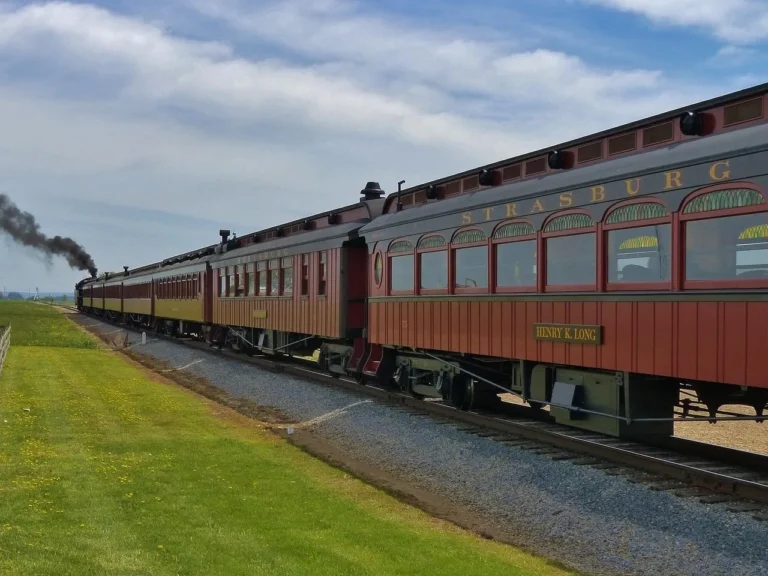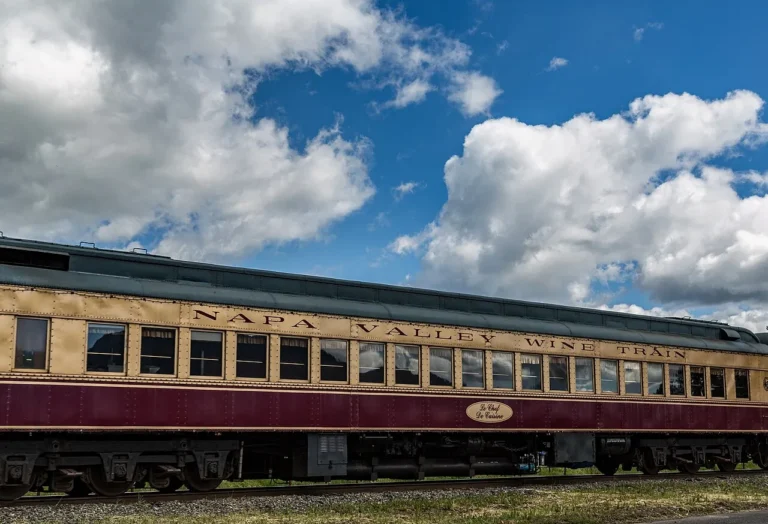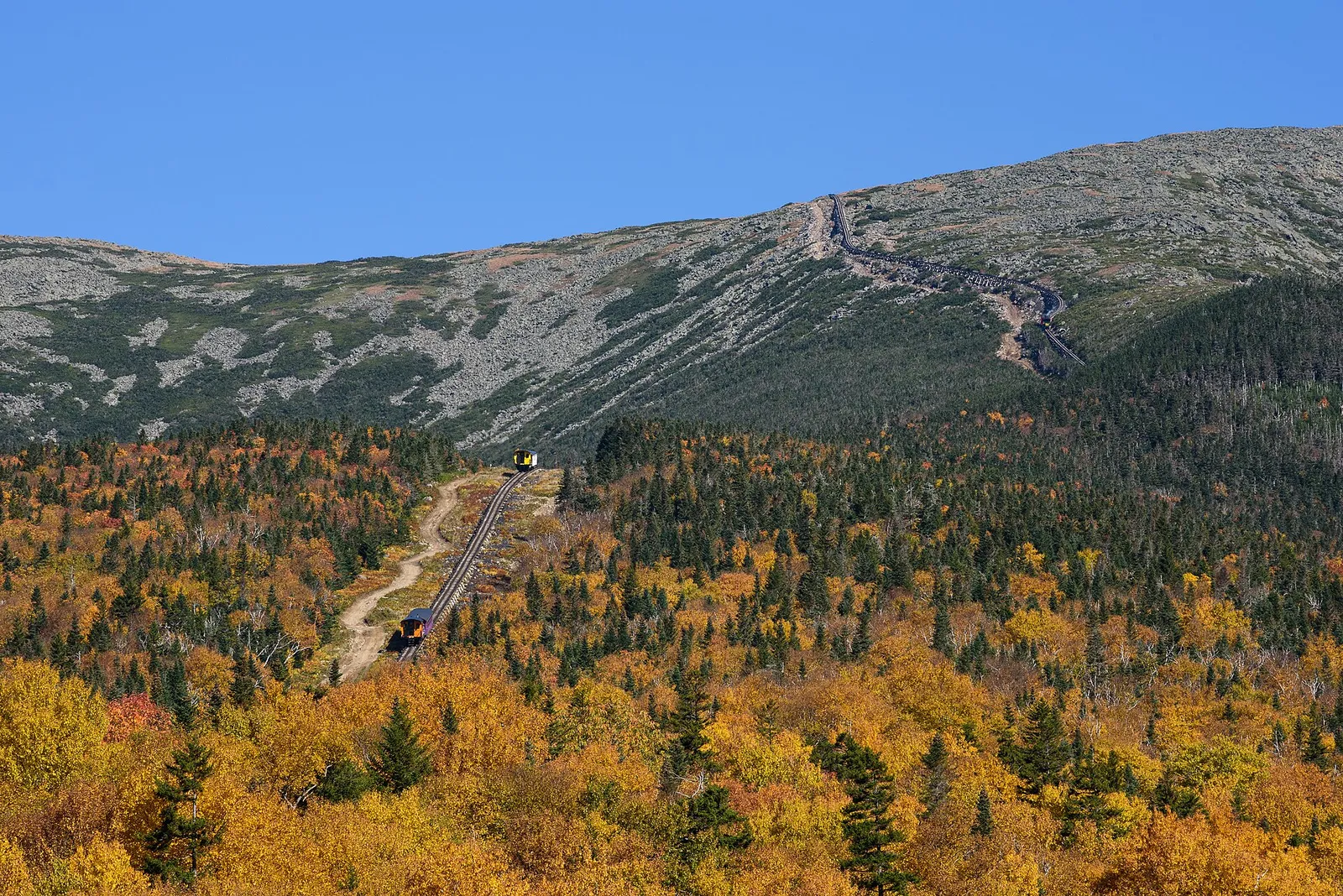
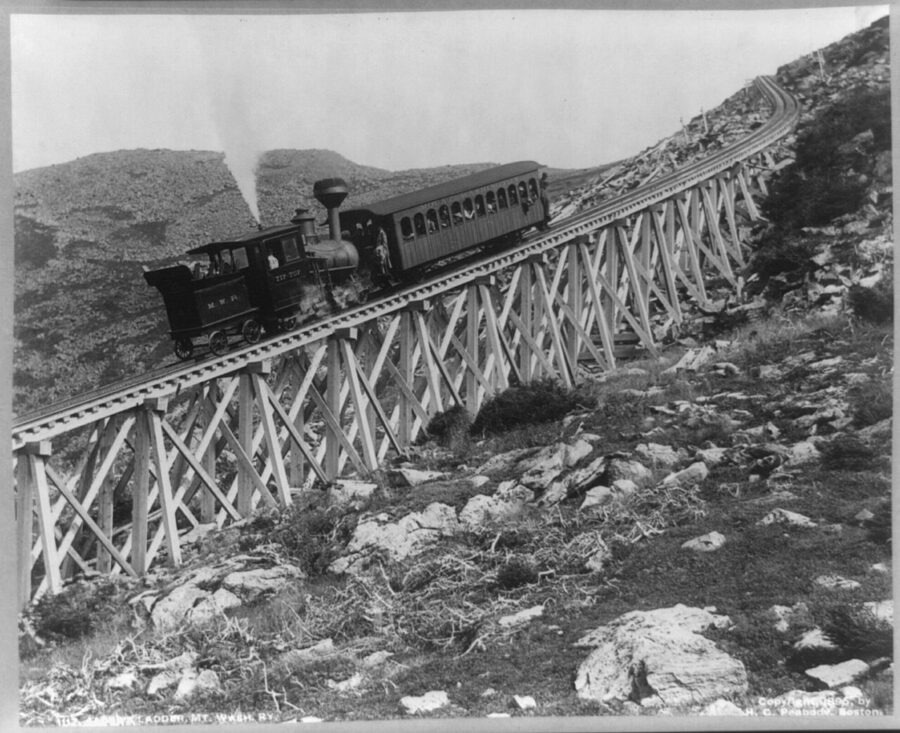
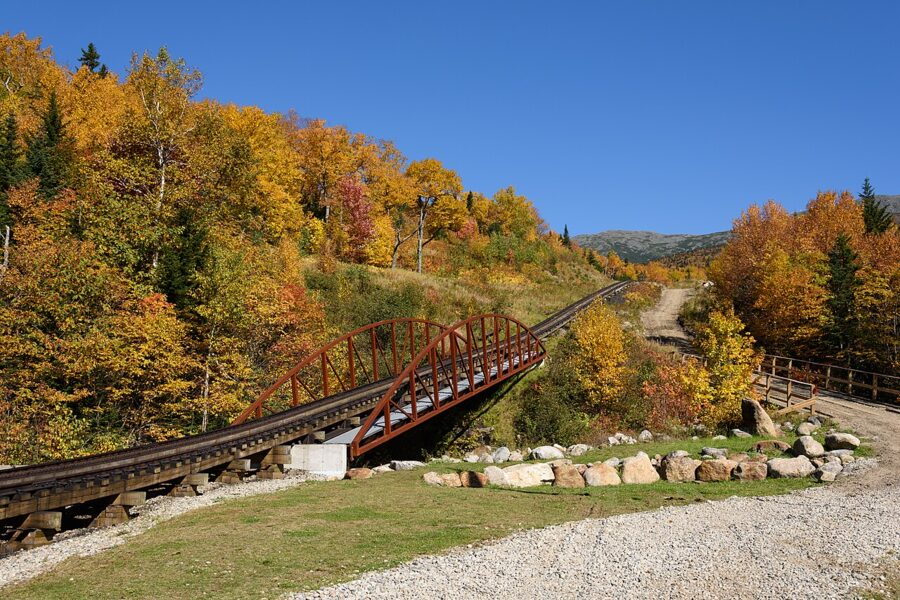
Halfway up the west side of Mount Washington, the track leaves the trees, curves to the left and climbs onto a steel trestle 25 feet above the rocks. This is Jacob’s Ladder, nearly 300 feet long and rising at 37.41 percent, which means 37 feet of height for every 100 feet of track. Look back down the aisle and the far end of the coach sits well below your feet. The railway calls it the steepest railroad trestle in the world, and nobody on board argues.
The Mount Washington Cog Railway has been doing this since July 3, 1869, when it became the first mountain-climbing cog railway anywhere. A locomotive below the coach pushes it about three miles from Marshfield Base Station, at 2,700 feet, to the 6,288-foot summit of the highest peak in the Northeast, with a toothed gear biting a rack rail all the way. Most trains are biodiesel. Two coal-fired steam engines, built in 1875 and 1908, are still on the roster for summer and fall, and their seats are the first to sell out.
The choices that matter are steam or biodiesel, summit or the winter turnaround at Waumbek, and which day the weather gives you, with fares and rules as the railway published them in 2026.
Stops in this article11
- 01Three miles of track on stilts
- 02Biodiesel or steam
- 03The climb, in order
- 04Tickets, steam and seasons (as of 2026)
- 05The weather rules and what you get back
- 06An hour on top
- 07Getting to Marshfield Base Station
- 08The Auto Road instead
- 09With the Conway Scenic and Crawford Notch
- 10What to wear and bring
- 11Booking it
Three miles of track on stilts
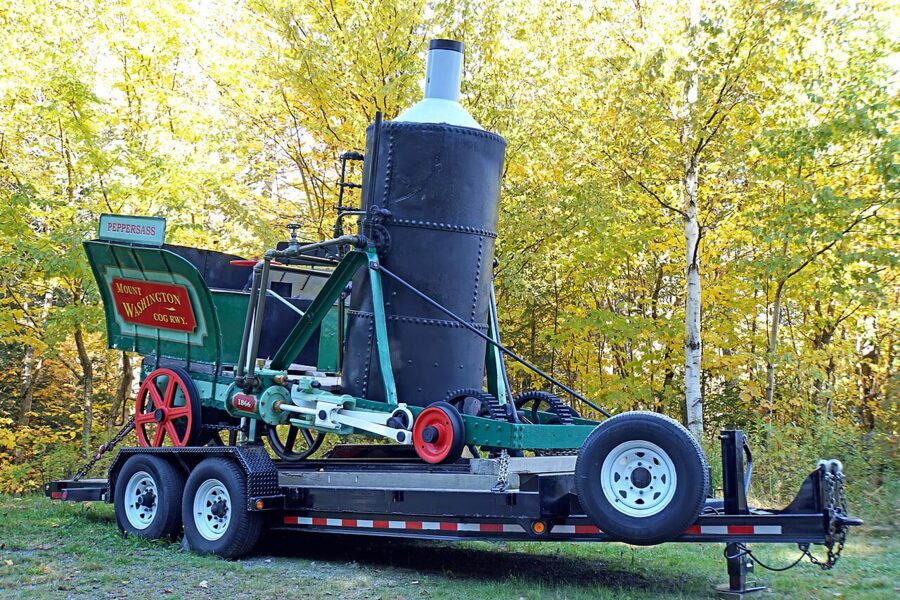
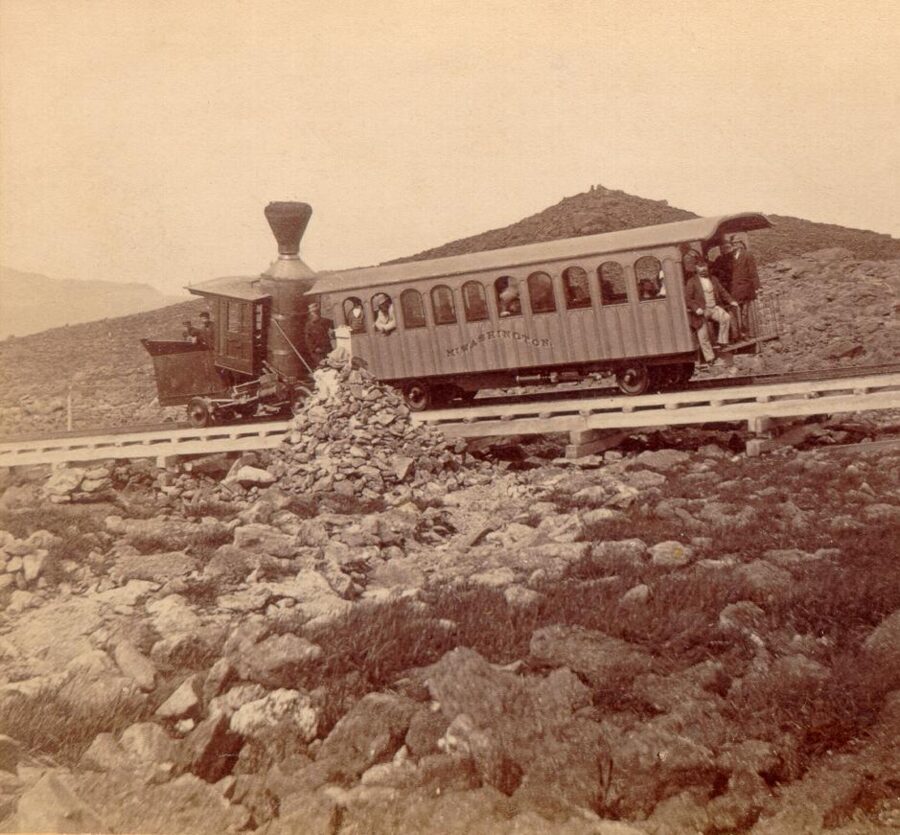
Sylvester Marsh, a New Hampshire man who had made his money in Chicago meatpacking and grain drying, nearly died in a summer storm on the summit in 1857 and decided there should be a safer way up. The state legislature laughed at him in 1858, called him “Crazy Marsh” and granted his charter anyway, with the suggestion that he keep going to the moon. His first locomotive arrived in 1866, cost $2,000 and had a vertical boiler that looked enough like a pepper-sauce bottle to earn it the name Peppersass. Trains reached Jacob’s Ladder in August 1868 and the summit the following July.
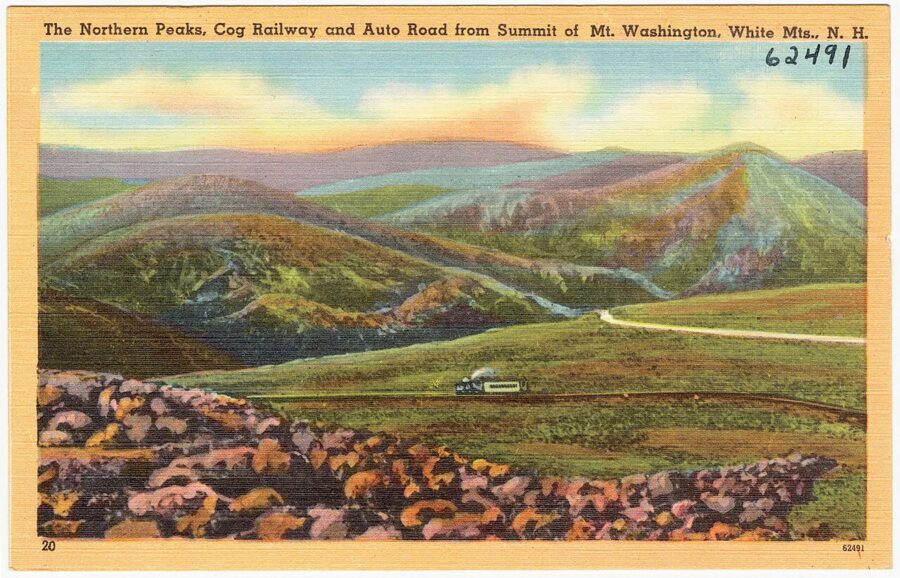
Marsh did not invent the cog and rack, but he was the first to put them on a mountain. The gear under the locomotive meshes with a rack rail between the running rails, like a bicycle sprocket on a chain. The whole main line sits on trestlework above the ground, which the railway says makes it the only one in the world built that way. The average grade is 25 percent and the steepest is the 37.41 percent of Jacob’s Ladder.
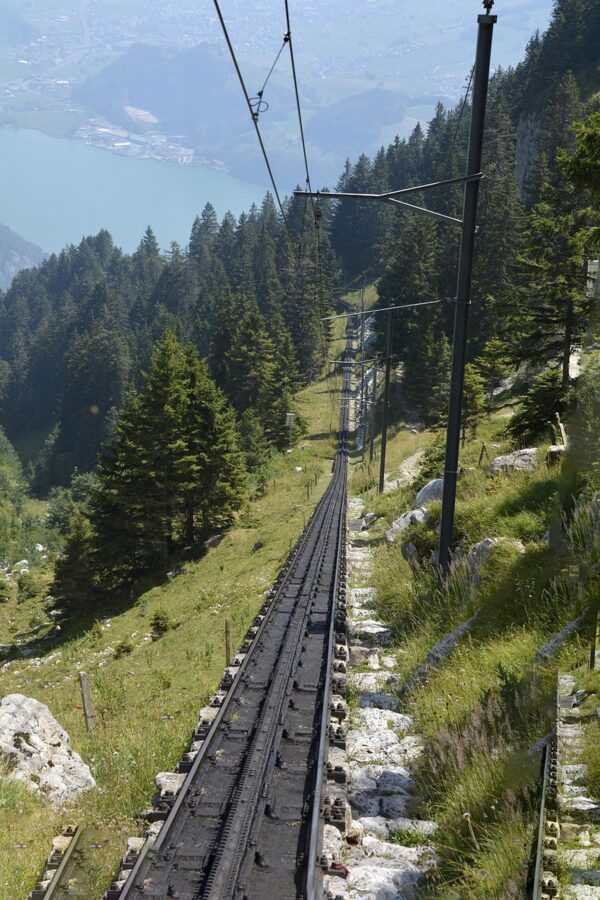
Is it the steepest cog railway on earth? No. The Pilatus railway near Lucerne, which opened in 1889, climbs at up to 48 percent. Mount Washington’s line is second, and it was first by twenty years.
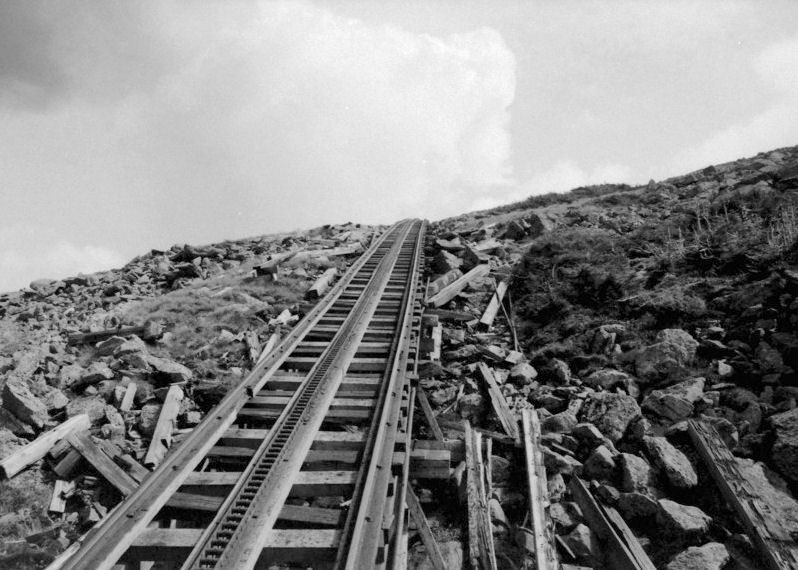
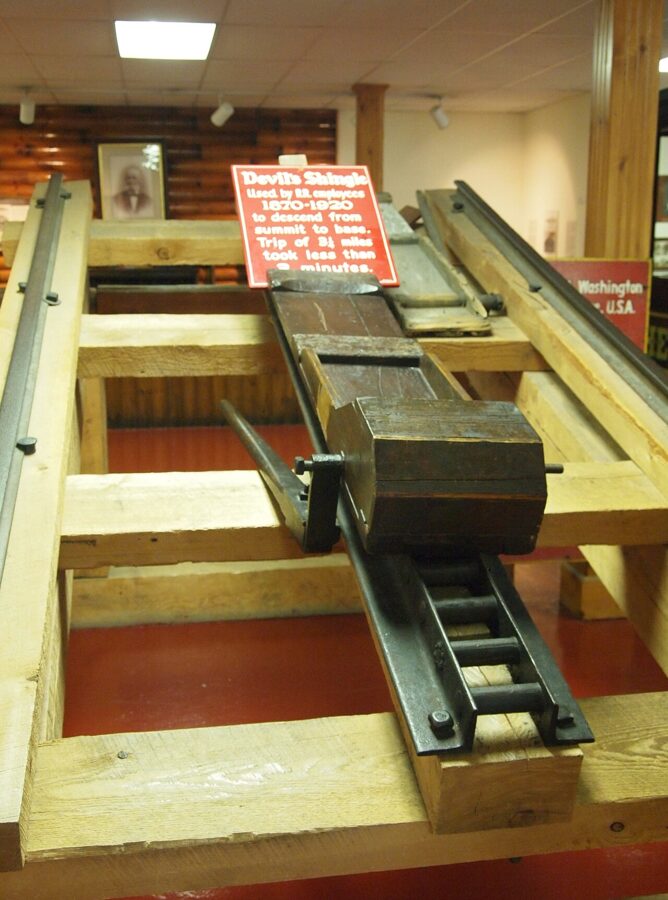
Weather has wrecked the line twice. The hurricane of 1938 threw 163 mph gusts at Jacob’s Ladder and the Long Trestle and destroyed most of both; a Dartmouth College loan paid for the rebuild, and trains climbed again in spring 1939. In October 2017 a flood took out the wooden bridge over the Ammonoosuc, and a steel one was in place by the next season.
Biodiesel or steam
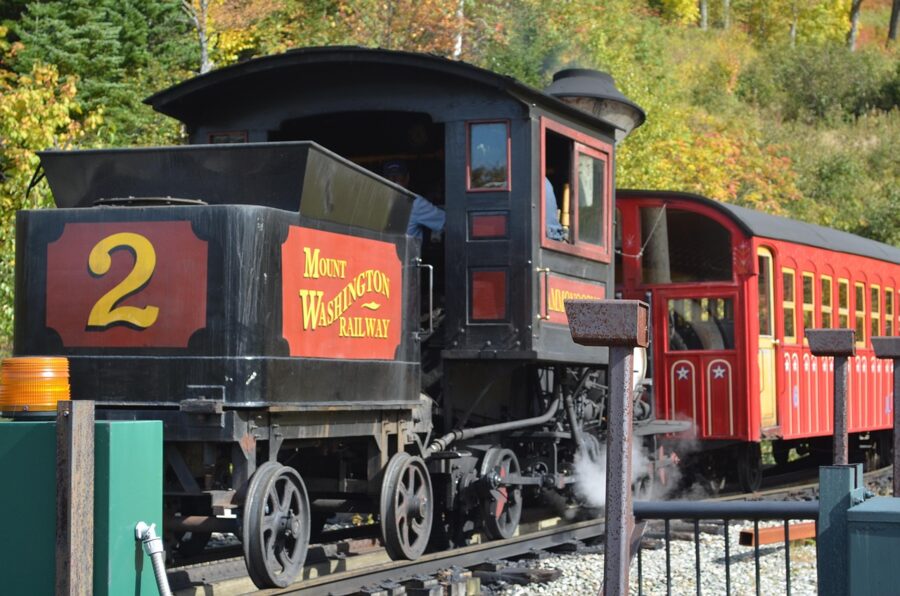
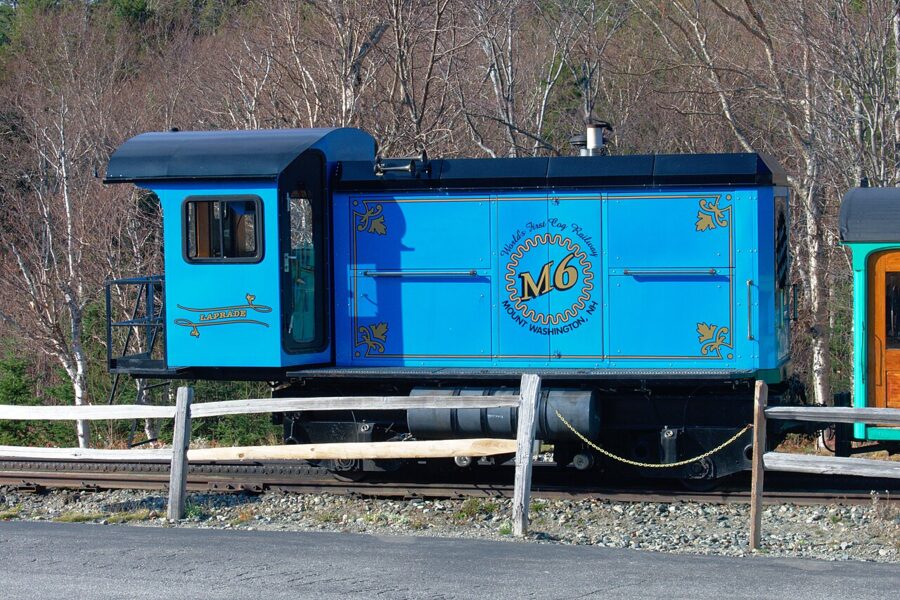
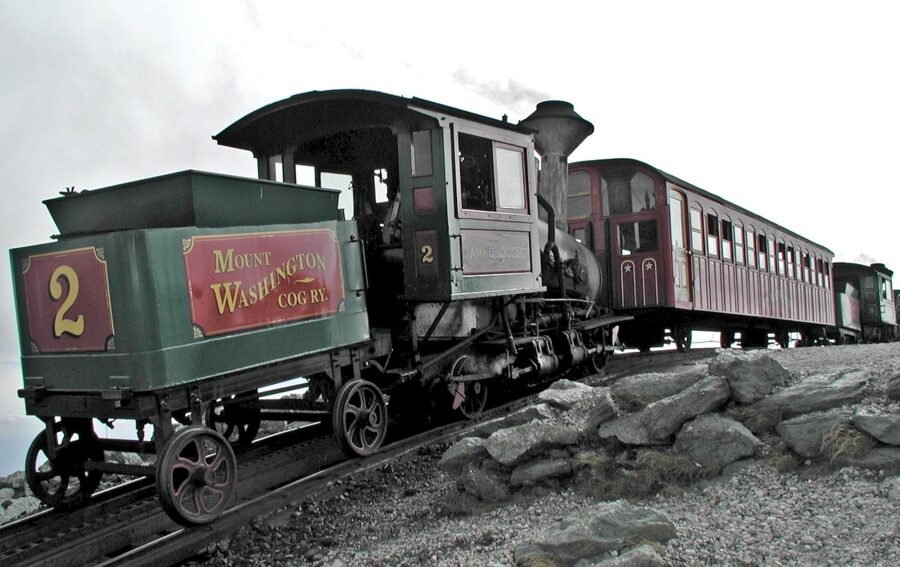
The Cog was a steam railway for 139 years. In 2008 its shop crew rolled out M1, a diesel locomotive designed and built on site for $750,000, and the railway kept building one about every 18 months until M7 was finished in 2019. Each has a 600-horsepower John Deere marine engine driving two cogs hydraulically, and each burns 18 to 22 gallons of biodiesel on a round trip. A steam engine uses a ton of coal and 1,000 gallons of water for the same climb.
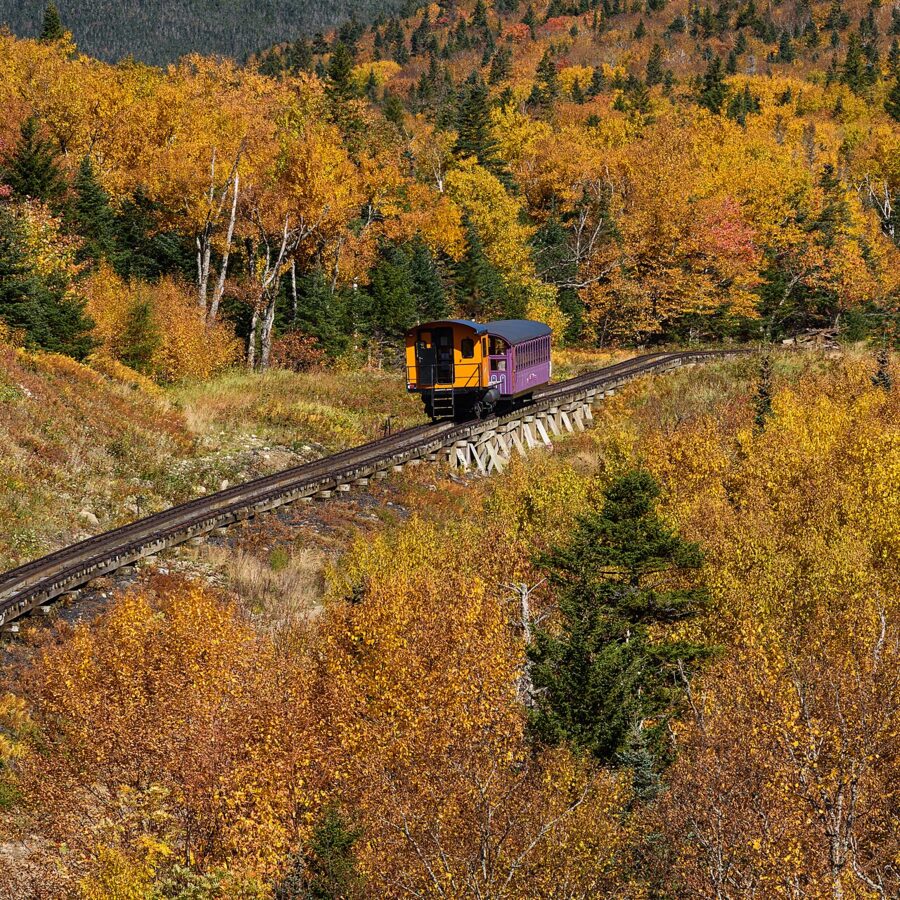
Biodiesel trains reach the summit in about 45 minutes at a top speed of 5 mph. They are quieter, they run every hour or so, and you come home with clean clothes. On a busy morning several leave together, lined up at Platforms A to D with A on the far right as you face the trains.
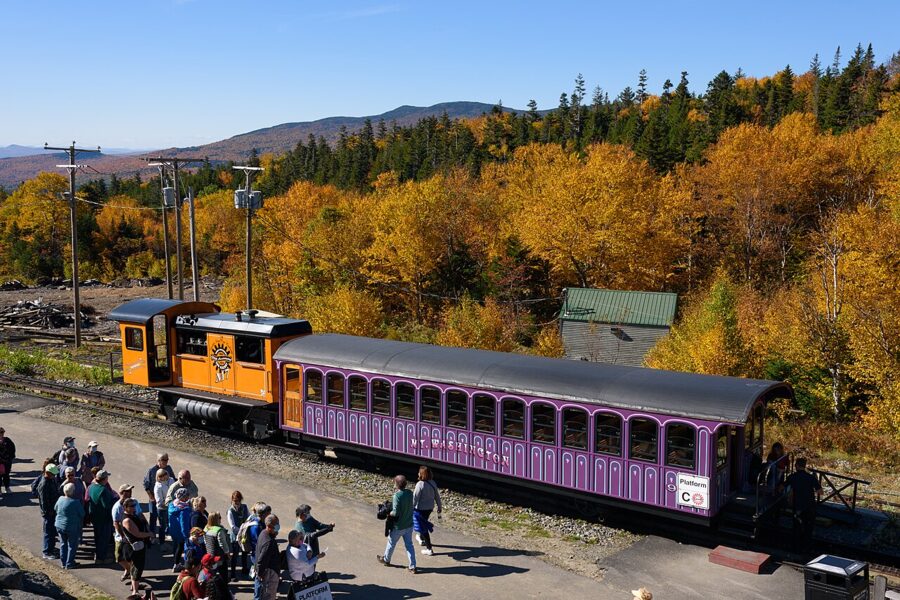
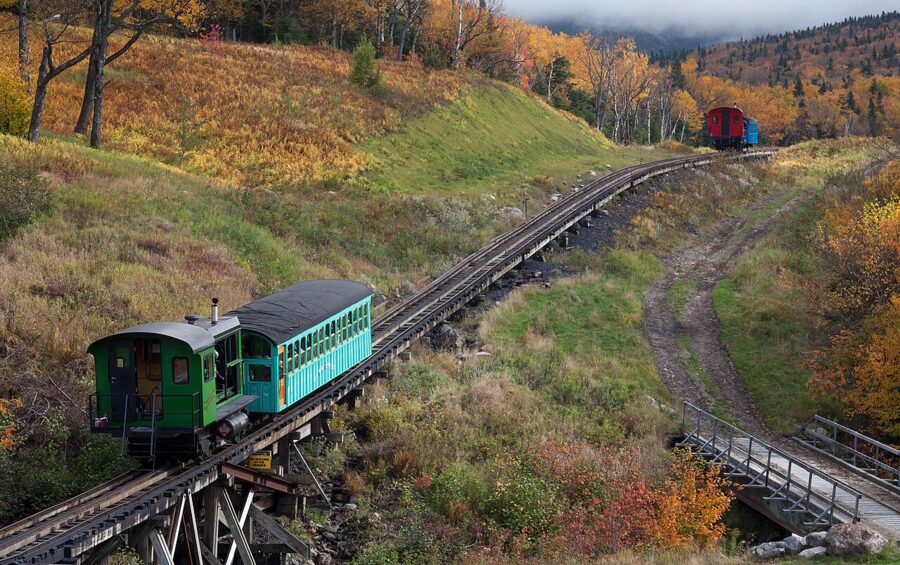
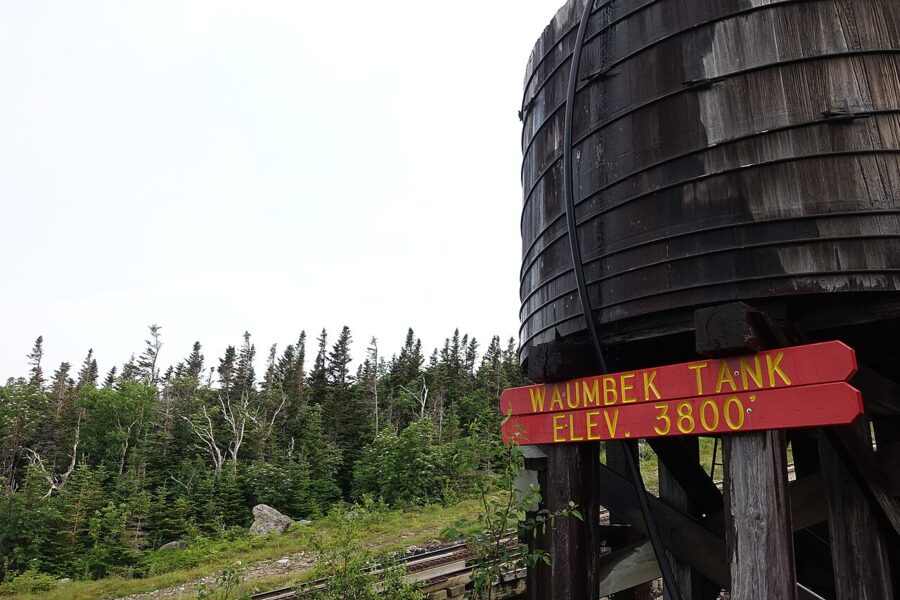
The two steam engines, the Ammonoosuc of 1875 and the Waumbek of 1908, came from the Manchester Locomotive Works in New Hampshire. Their boilers are tilted to sit level on the grade, and a water stop at the Waumbek Tank stretches the climb to about an hour. Expect coal smoke, a whistle that carries across the ravine and cinders on your jacket.
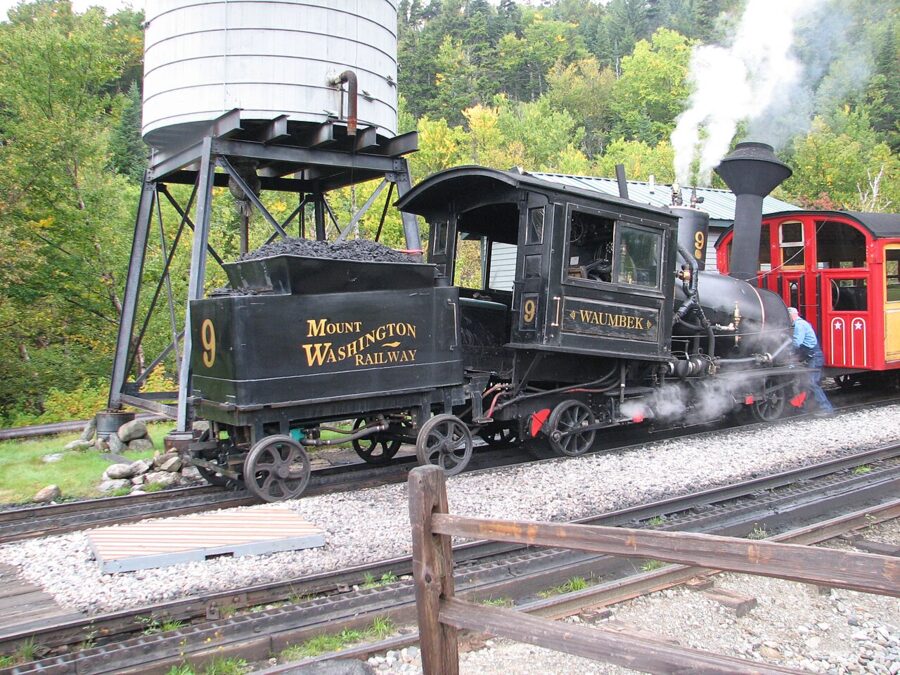
Steam has had a hard two years. In May 2025 neither engine could run at full boiler pressure, and from late August that year the Waumbek only pushed trains halfway up. With a new boiler fitted over the winter, it returned to summit service on July 10, 2026, running Thursday to Sunday at 9 a.m. and 2:45 p.m. The Ammonoosuc is due to follow with the second boiler.
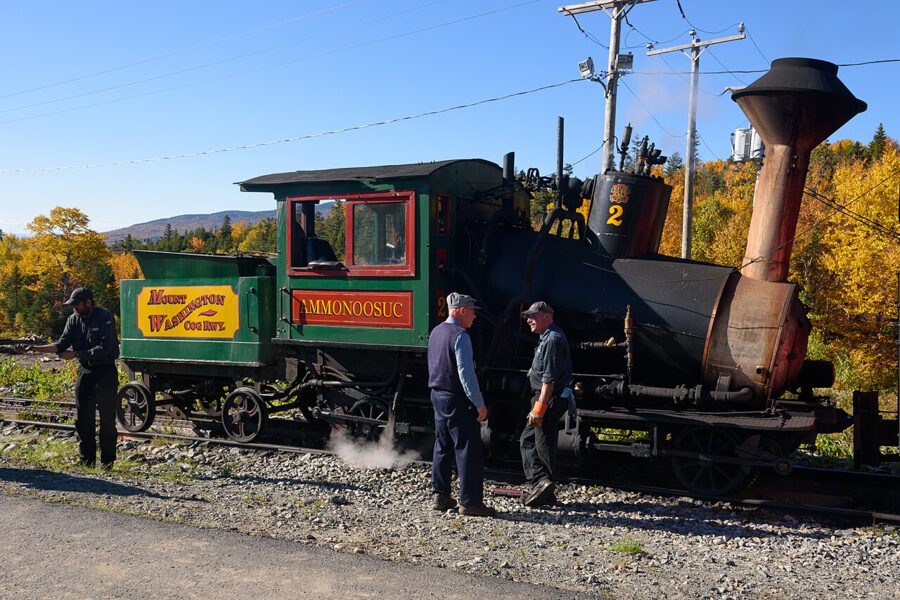
Which one to book
I would book steam if the train itself is the reason you came, and biodiesel if the summit is. Steam costs you time and a sooty jacket and gives you an 1870s railroad on a 37 percent grade. Biodiesel gives you more departures and a better chance of dodging the weather.
Two catches. Steam does not run every day: the 2026 summit pattern was four days a week, and the railway lists its fares, schedules and motive power as subject to change. And in peak foliage season the extra steam trips go only as far as Waumbek Station, roughly 4,000 feet, while biodiesel trains continue to the top.
The climb, in order
Just past the platforms the train crosses the Ammonoosuc River on the steel bridge and the engineer opens up to the full 5 mph. Dense forest closes in on both sides for Cold Springs Hill, the second-steepest stretch at nearly 35 percent. Then comes the Waumbek passing loop, 2,100 feet of double track added in 2000 with solar-powered hydraulic switches at each end, which lets up to seven trains work the mountain at once.
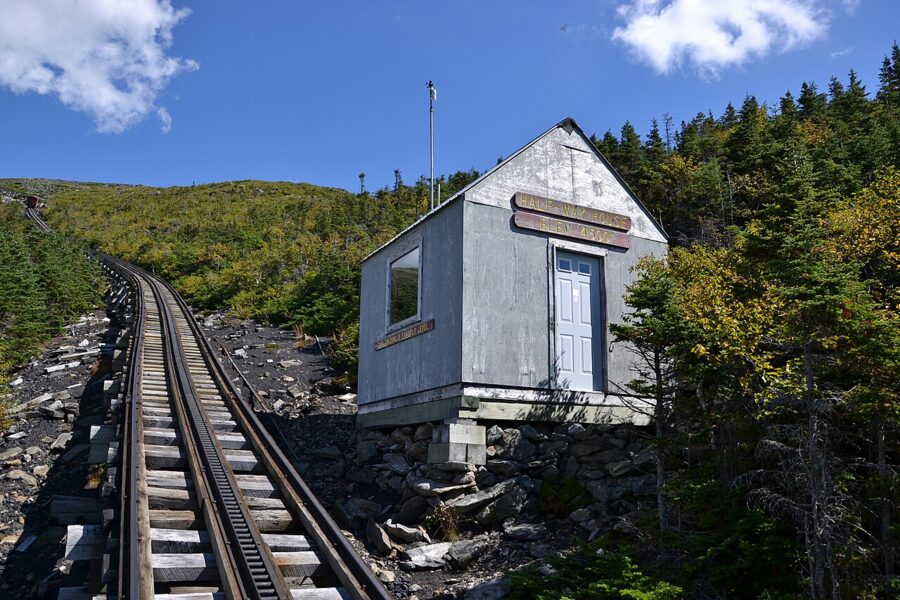
Halfway House, an old track workers’ shelter at about 4,300 feet, passes on the right. Just beyond is Profile Rock, a stand-in for New Hampshire’s fallen Old Man of the Mountain, with a white backing board the railway put up so you can see the face.
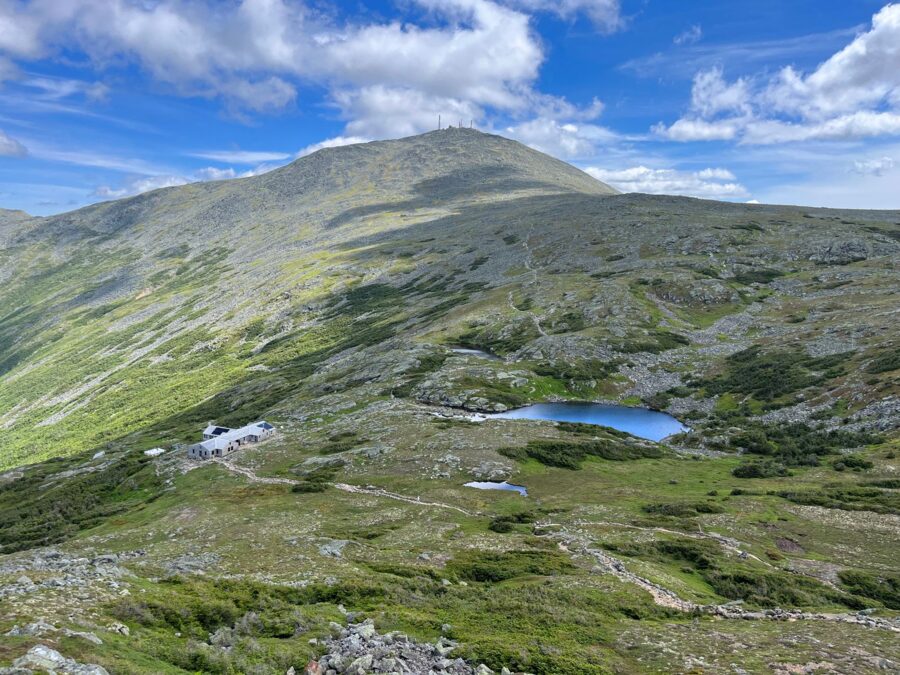
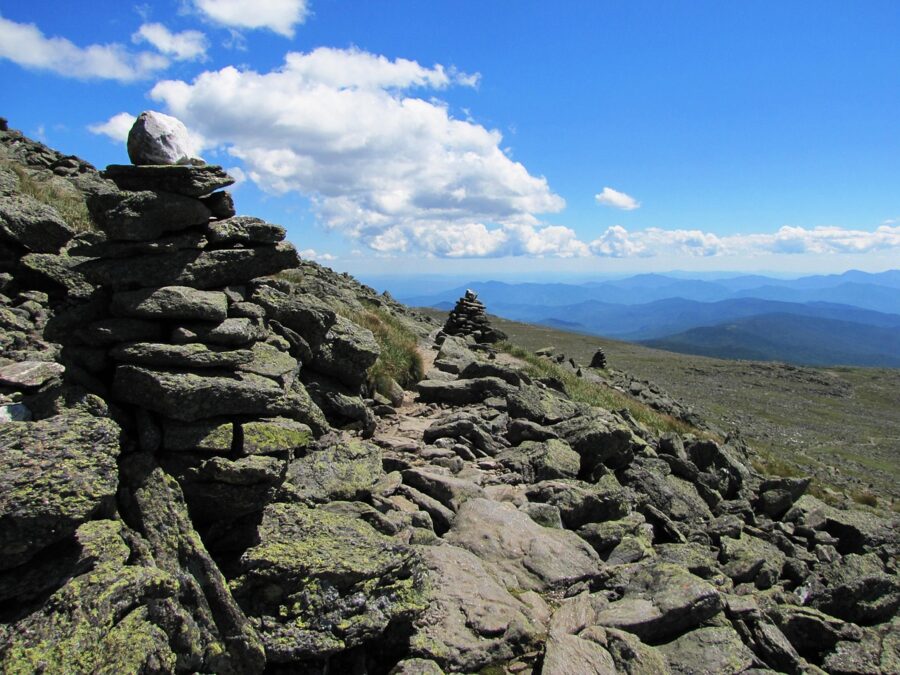
Then the trees drop away and you are on Jacob’s Ladder, with Burt’s Ravine on the left and the Ammonoosuc Ravine on the right. From the middle of the trestle look right across the ravine for the Appalachian Mountain Club’s Lakes of the Clouds hut in the saddle below Mount Monroe. Past Frog Rock, a painted boulder crews use as a marker in fog, you are at tree line, around 5,000 feet, which is low for a mountain because three weather tracks meet here.
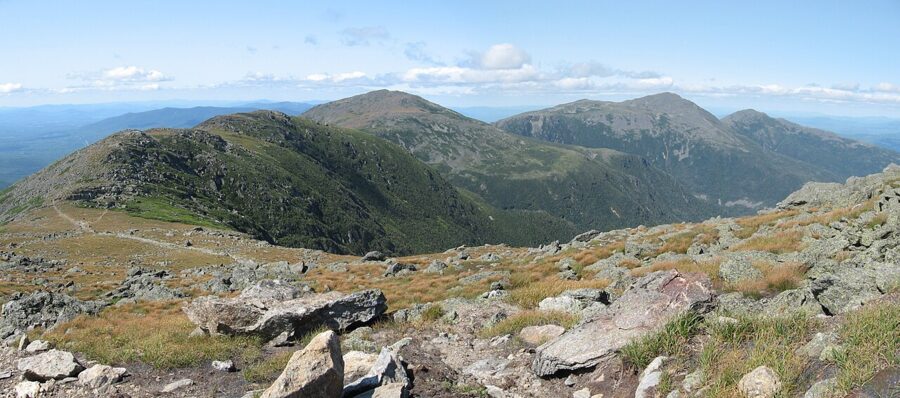
The track turns southeast along the summit cone toward Skyline. Here the left side has the better view: the Northern Presidentials (Mounts Clay, Jefferson, Adams and Madison) and the hills of western Maine beyond them, with the Gulfside Trail, part of the Appalachian Trail, running close beside the rails. Just below the summit, on the right, a white marker on a pile of boulders remembers Lizzie Bourne, who died there in a storm in September 1855, close to a summit shelter she could not see through the fog.
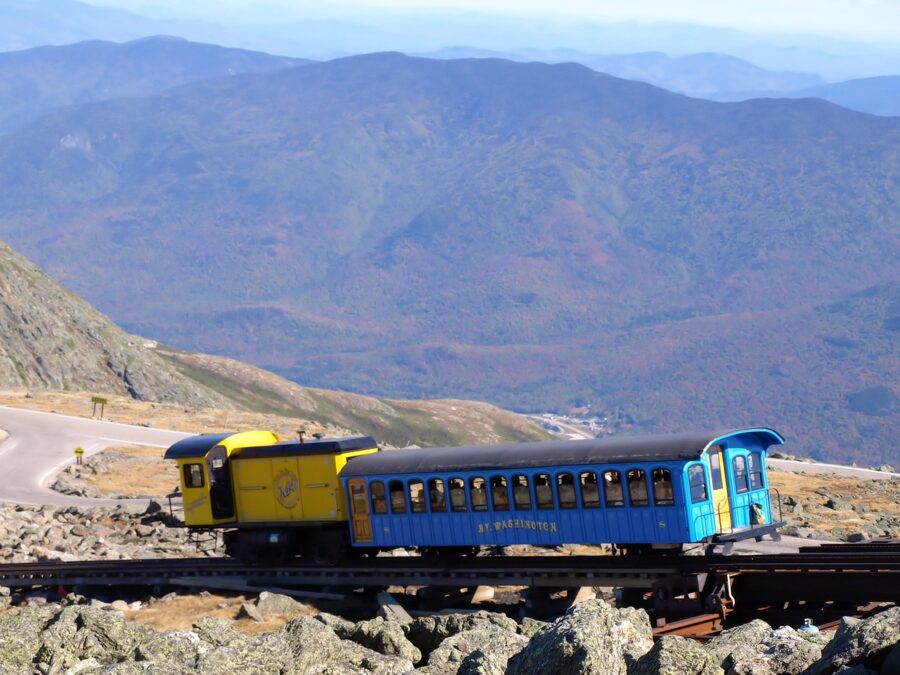
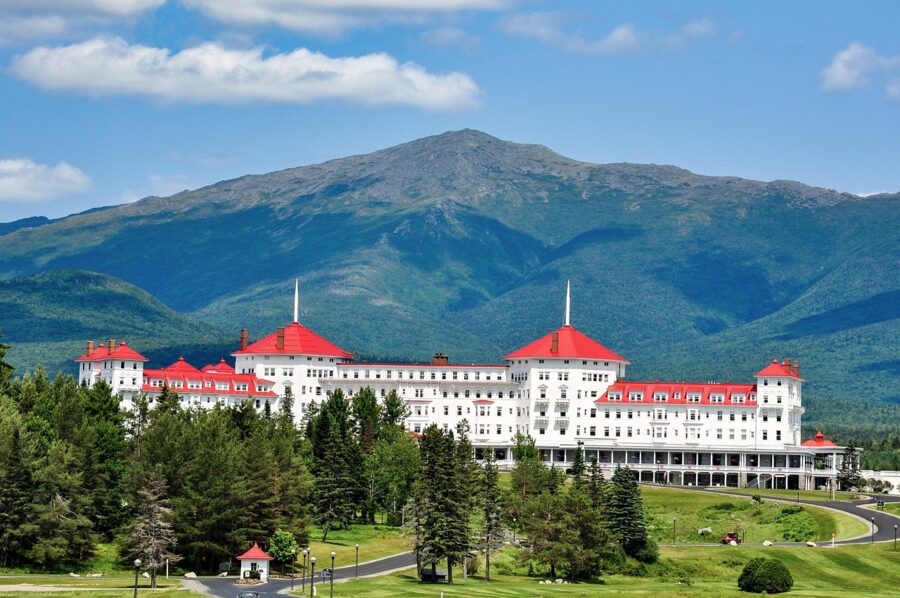
Which seat? Seating is assigned when you book, and the railway asks parties not to buy up every window, so you may not get a choice. If you do, take the left side of the coach going up for the Northern Presidentials and the right for Jacob’s Ladder and the ravine. On the way down the crew flips the seat backs so everyone faces downhill, and the whole line opens up below you, with the red roofs of the Omni Mount Washington Resort and, on a clear day, Mount Lafayette about 25 miles west.
Tickets, steam and seasons (as of 2026)
The summit season runs from early May to late October, weather permitting, with trains every hour or so and a round trip of just under three hours, including about an hour on top. In 2026 the first summit trains went up on May 2 and the last on October 25. Since late October the trains have run only to Waumbek, and the railway lists the Waumbek season through April 29, 2027, with summit trips starting again on April 30, 2027.
Summit fares are dynamic, so they move with the date and the demand. There is no fixed price list, and the railway told The Boston Globe in October 2026 that an adult summit ticket on a peak fall weekend could reach $119. The booking calendar shows the price of each departure, steam included, so compare the two on your date before choosing. Children under 4 ride free on an adult’s lap.
| Item (as of 2026) | What the railway publishes |
|---|---|
| Summit round trip | Just under 3 hours, about 1 hour at the top; dynamic fares, up to $119 for an adult on a peak October weekend |
| Waumbek round trip (winter) | About 1 hour, about 25 minutes off the train; $54 for an adult most of the season, $59 nearer the holidays |
| Steam | Summit steam Thursday to Sunday in summer 2026; often sells out months ahead; foliage steam turns at Waumbek |
| Arrive | 45 minutes before departure; boarding starts 15 minutes before |
| Cancel more than 3 months out | Full refund |
| Cancel 15 days to 3 months out | $15 per ticket plus online convenience fees |
| Cancel less than 15 days out | No refund; credit only, less a move fee |
| Move fee | $15 per ticket ($5 for Waumbek) |
| Missed train | $20 per ticket; $30 on Saturdays, holidays and in foliage season |
The busiest days are summer weekends, holidays, school breaks and the foliage weeks from late September to mid-October, which the railway’s 2026 group calendar ran from September 26 to October 18. Its FAQ says steam trains “often sell out months in advance.” The 2026 summit steam schedule was due out in April, so watch for the 2027 one in spring and book the day it appears.
Tickets are sold online up to departure and at the Base Station ticket office; will-call tickets should be collected 30 minutes before the train. Read the strict refund and cancellation policy before you pay.
Waumbek in winter
From late October to the end of April the trains stop at Waumbek Station, an alpine meadow just below 4,000 feet that the railway recently rebuilt with raised viewing decks, warming huts, a fire pit and free hot drinks. The round trip takes about an hour, with roughly 25 minutes off the train. On a clear day the view runs north to the Canadian border, and the coaches are heated.
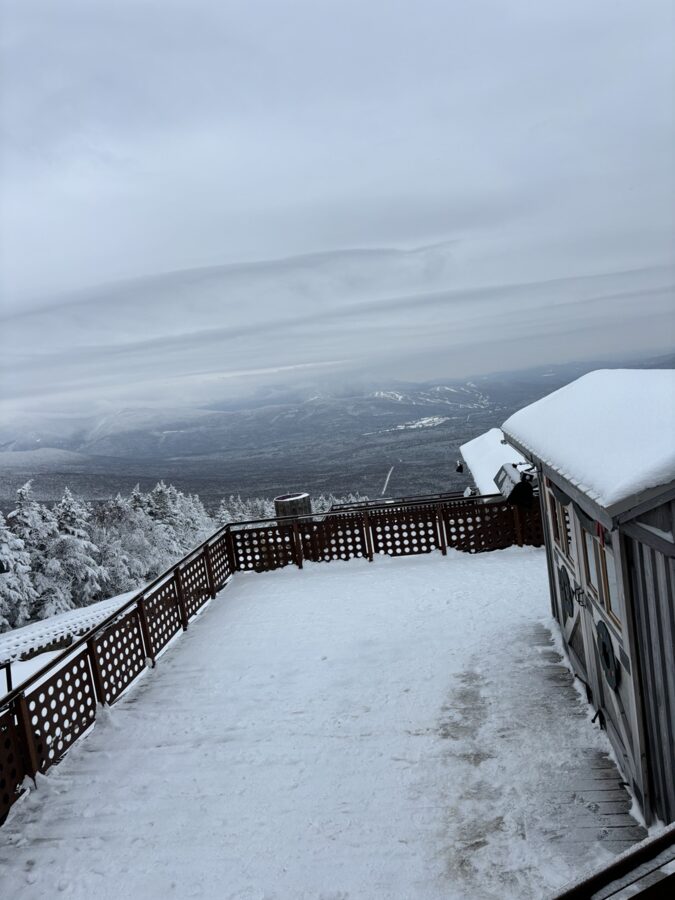
The Santa rides run to Waumbek on the Friday after Thanksgiving, November 27, 2026, and then every Saturday through December 19. Each includes hot chocolate, marshmallows to toast and a gift for every child, and the railway sells a roast-your-own hot dog lunch as an add-on. They fill quickly, as most Christmas trains do.
Early and late summit trips, sunrise and hikers
In the first and last weeks of the summit season the state’s summit building is shut. The railway parks a heated coach at the top as shelter, adds portable restrooms and cuts the layover to 30 to 40 minutes. On two May weekends in 2026 the Mount Washington Observatory let pre-booked tour groups into the building.
In summer 2026 the railway also ran a handful of sunrise trains, climbing in the dark to reach the top in time for sunrise. Hikers can buy one-way up tickets at the Base Station 15 minutes before each hourly departure, then walk down the Jewell or Ammonoosuc Ravine trails. One-way tickets down are sold only in person at the summit post office, and only if a seat is free, so the railway’s advice to hikers is never to climb without being ready to walk back down.
The weather rules and what you get back
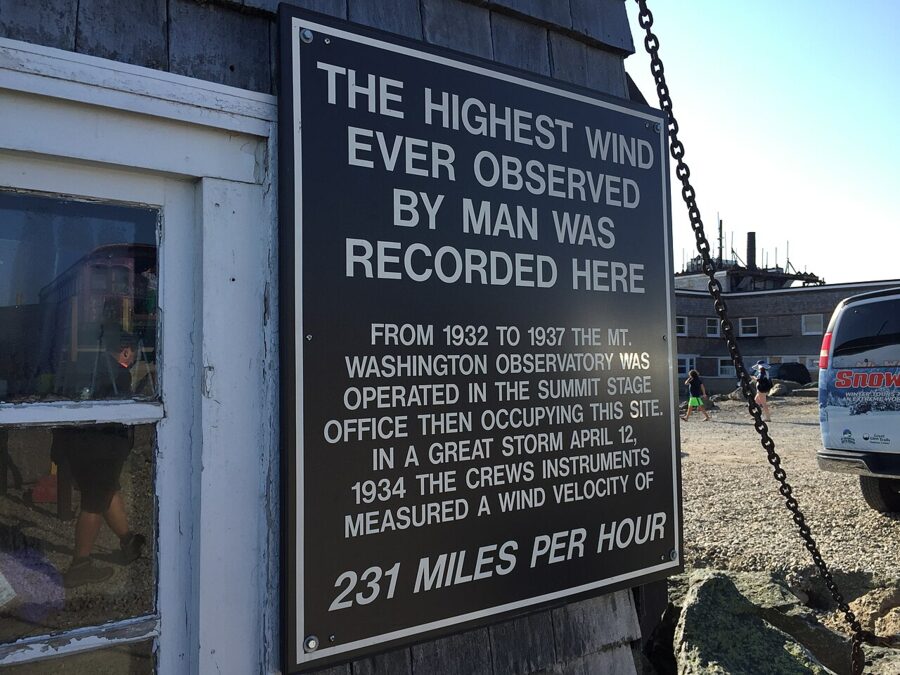
Mount Washington’s summit records hurricane-force gusts on an average of 110 days a year, and on April 12, 1934, observers measured a gust of 231 mph. The Observatory’s 1991-2020 normals put the average July temperature at 49.9°F and the average annual snowfall at 281.8 inches. The warmest reading ever taken up there is 72°F. Snow is possible in any month.
The trains run in almost anything, but the summit does not. When sustained winds on top pass roughly 60 to 70 mph, the state closes the summit building and the Auto Road, and trains turn back early: at Skyline, about 5,500 feet, for a 10-minute stop with everyone aboard, or at Waumbek.
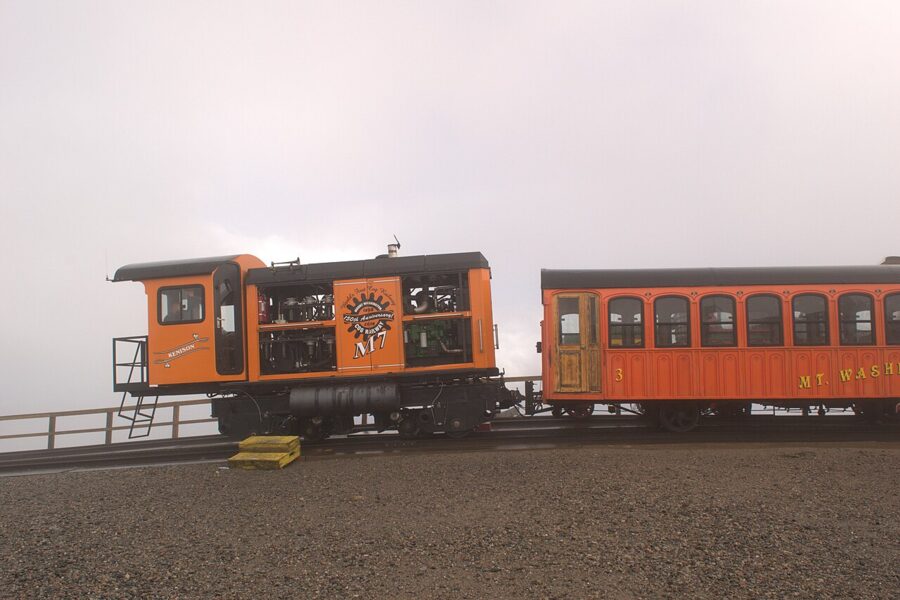
The railway does not refund for bad weather or weather delays. If your trip is cut short to Skyline, you get up to $21 back on an adult ticket and up to $6 on a child’s; if it ends at Waumbek, your fare drops to a flat $57 for adults and $43 for children, as of 2026. You can take a transferable credit for a later ride instead, and a delay of more than 90 minutes that has nothing to do with weather earns the same refund as Skyline.
Check the Mount Washington Observatory’s higher summits forecast the evening before and again in the morning. If it calls for summit winds above 60 mph or zero visibility all day, I would move to another day before the 15-day cancellation line passes, which costs $15 a ticket rather than the whole fare.
An hour on top
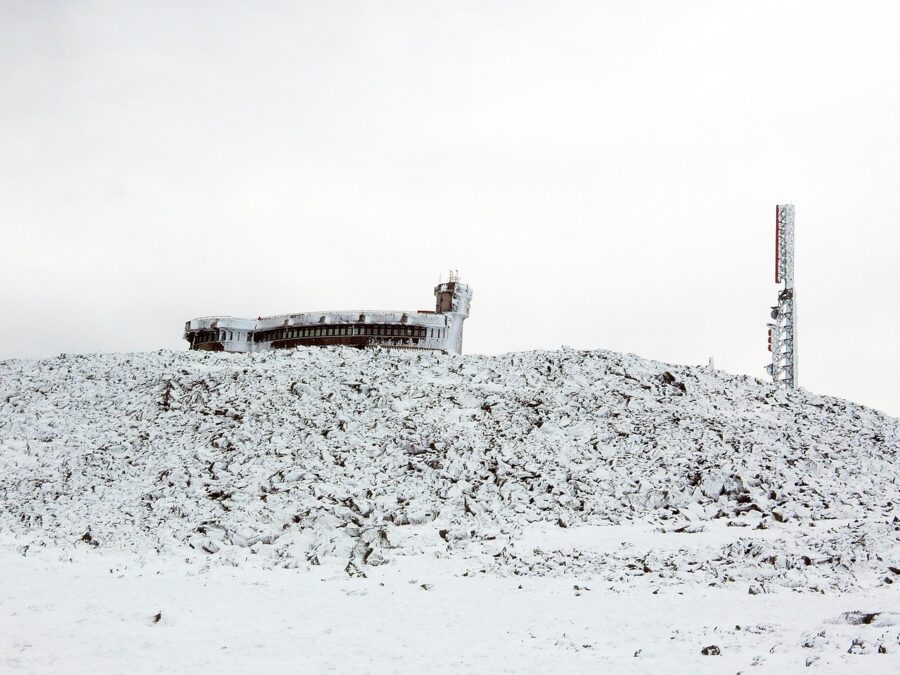
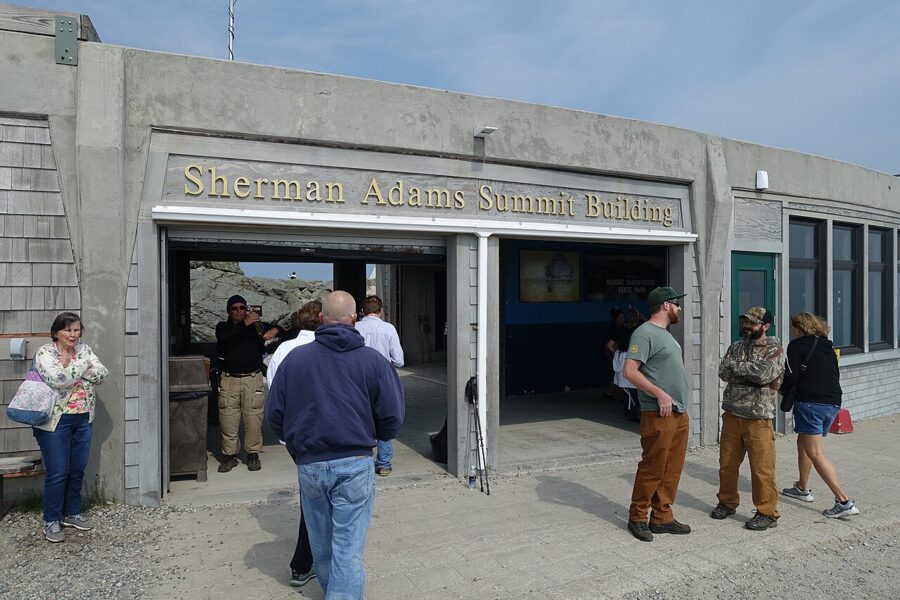
The summit is Mount Washington State Park, run by the state, not the railway. The Sherman Adams Summit Building, opened in 1980 and built for winds over 200 mph, has a cafeteria, gift shops, restrooms, a rooftop deck and a post office with its own postmark. It normally opens just before Memorial Day; in 2026 it closed on October 16, and the state says only that it will reopen in May 2027.
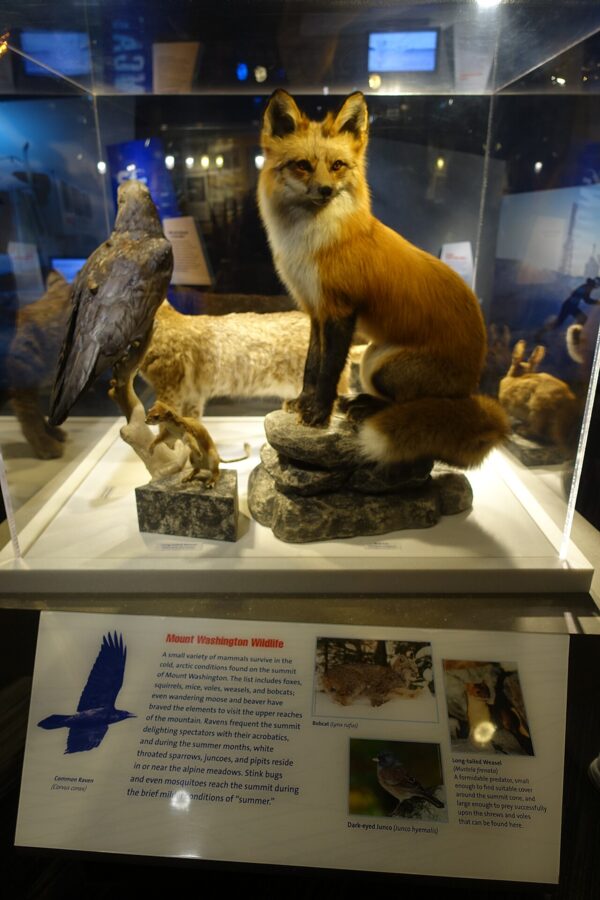
The building’s lower level holds Extreme Mount Washington, the Observatory’s museum about the mountain in winter, where you can see how rime ice forms and sit at the controls of a snowcat. Admission is $2 for visitors 7 and older, and younger children go free. The Observatory itself, staffed around the clock by crews who live on the summit a week at a time, is closed to casual visitors, but its staff lead short weather station tours that fit the train layover and must be booked with the Observatory, not the railway.
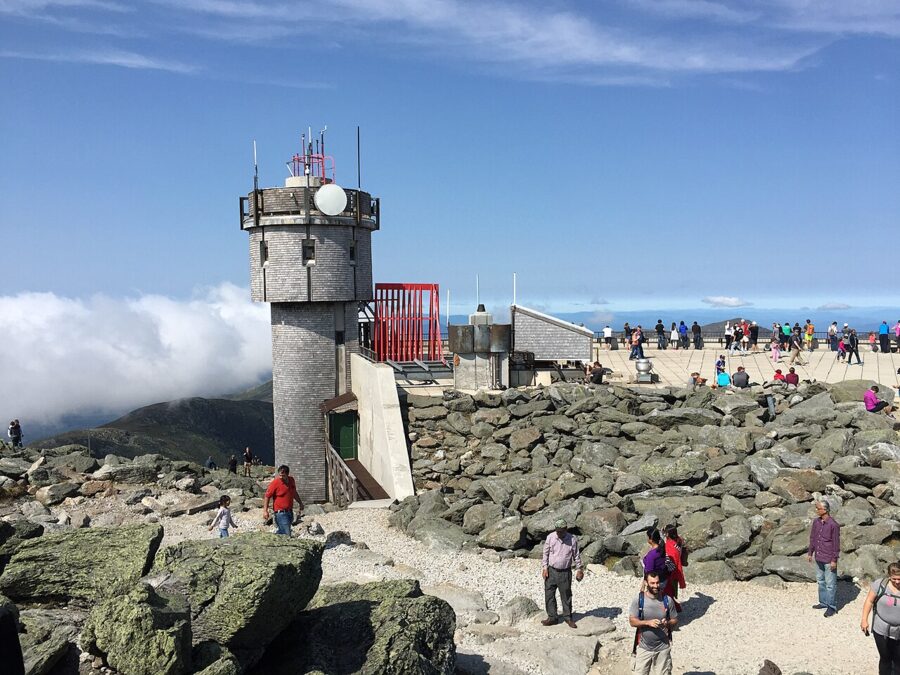
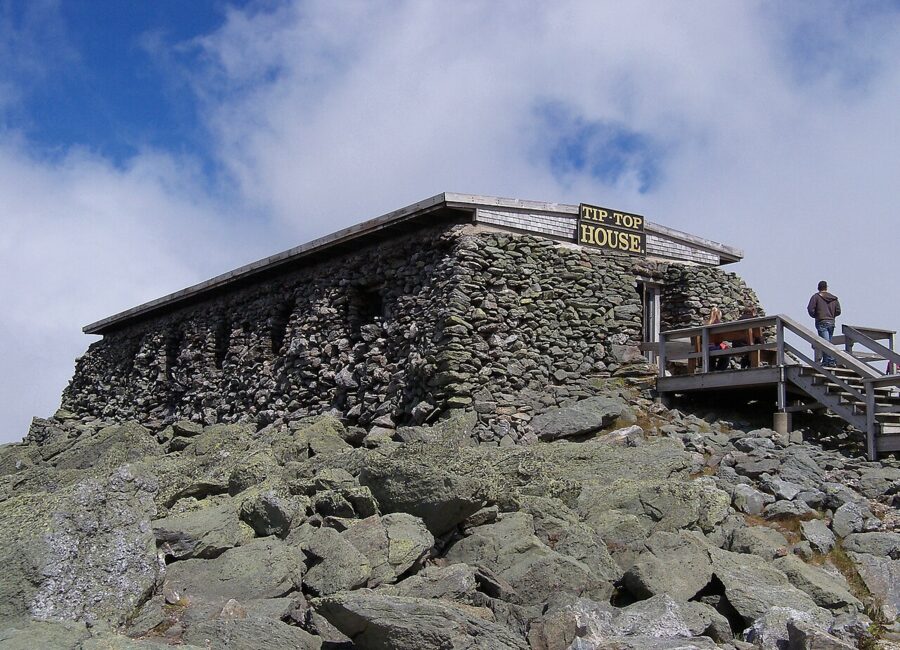
Next door is the stone Tip-Top House, built in 1853 as a summit hotel, the shelter Marsh stumbled into during his storm in 1857. It is closed to the public for renovation, with no reopening date announced as of November 2026. The summit sign beside it draws a line, and that line is shortest right after a train arrives, so go there first.
Do not wander far. You are only guaranteed a seat on your own train, most trains are full, and the alternative is a long walk down.
Getting to Marshfield Base Station
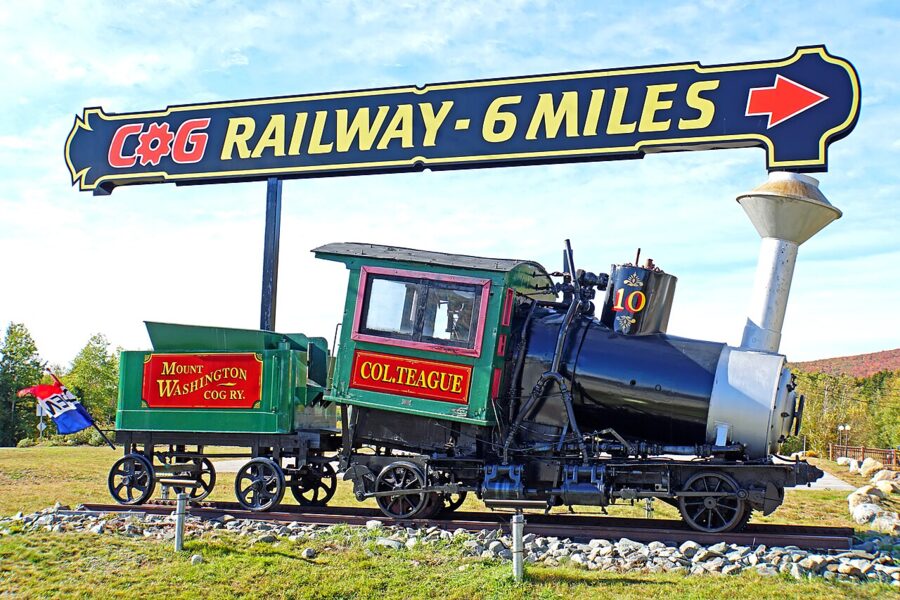
The single most common way to miss the Cog is to trust a GPS. Some apps still send drivers to Pinkham Notch on Route 16, on the east side of the mountain and about 50 miles away. The Base Station is on the west side, at 3168 Base Station Road, six miles up from Route 302 at Bretton Woods.
From Boston and the south, take I-93 north through Franconia Notch to Exit 35, follow Route 3 north about 10 miles to Twin Mountain, turn right onto Route 302 East for 5 miles and turn left at Fabyan’s Station Restaurant. From North Conway and Portland, take Route 302 west past the Omni Mount Washington Resort and turn right at Fabyan’s. The railway’s directions give about 3 hours from Boston (165 miles), 1 hour from North Conway (35 miles), 2 hours from Portland, Maine, 3 hours from Montreal and 6 from New York City.
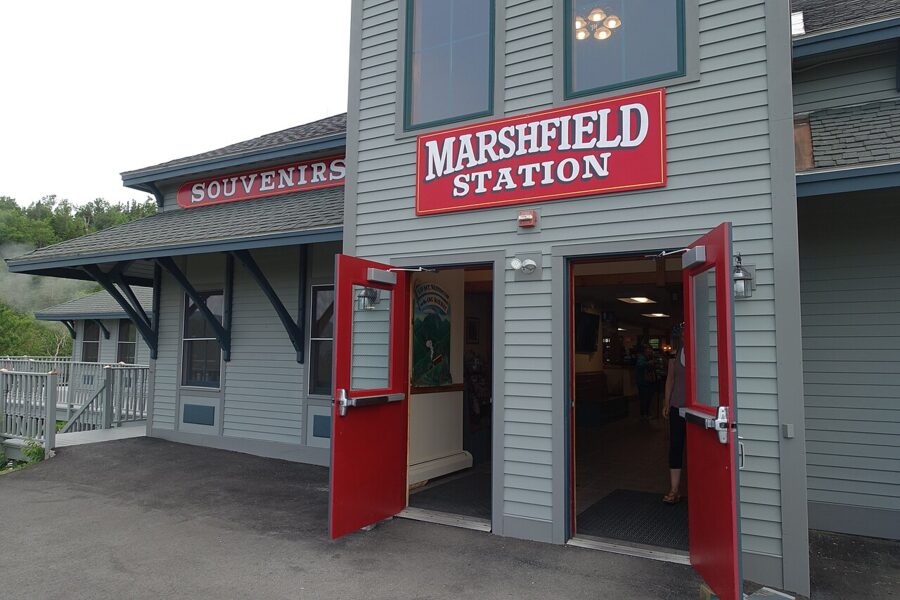
Marshfield Station is open every day except Thanksgiving and Christmas, with a free museum, a food court that sells beer and wine, and free parking. The building is fully accessible, but the coaches have three steps and narrow aisles, so wheelchair users must be able to transfer to a seat. The railway carries folding chairs if there is room, never motorized ones.
The Auto Road instead
Yes, you can drive up Mount Washington. The Mt. Washington Auto Road climbs the east side from Route 16 in Pinkham Notch, near Gorham: 7.6 miles, more than 4,000 feet of climb and about 30 minutes each way. It opened in 1861, before the railway, and bills itself as America’s oldest man-made tourist attraction.
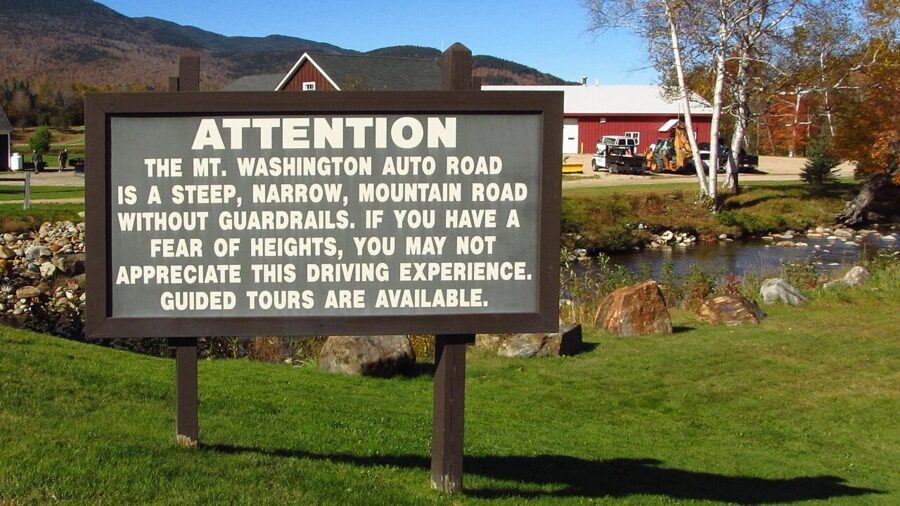
As of the 2026 season the toll was $36 for each adult 13 and older and $15 for children 4 to 12, paid at the Toll House with no reservation, and it includes entry to the Observatory’s summit museum. In 2026 the road opened on weekends from April 25 and daily from May 23 to November 1, weather permitting, with the posted closing time being the last car allowed up; the hours change through the season. If you would rather not drive it, the Auto Road runs two-hour guided tours with about an hour on top.
Which is better? The road gives you your own schedule and a cheaper trip for a family. The railway gives you the climb itself, and nobody has to look over the edge with their hands on the wheel. If someone in your party hates heights, put them on the train.
With the Conway Scenic and Crawford Notch
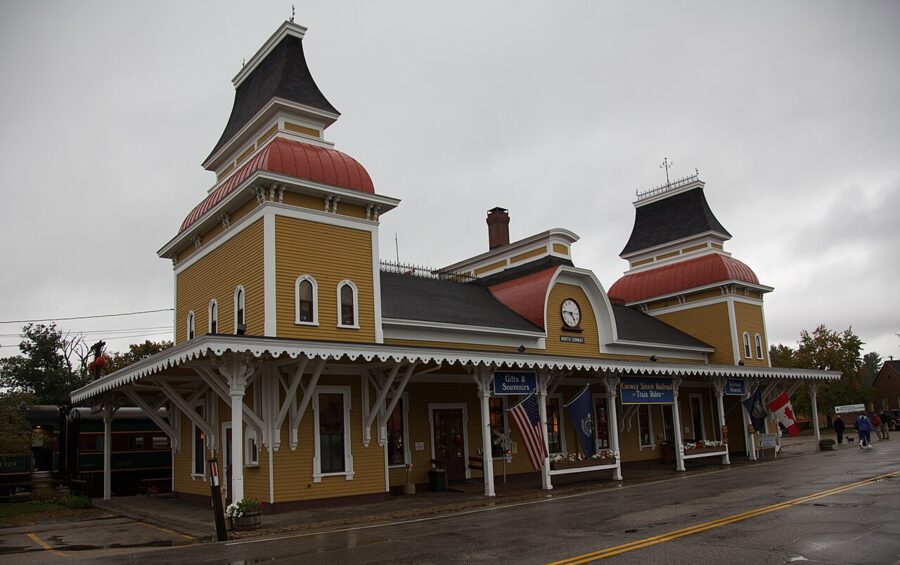
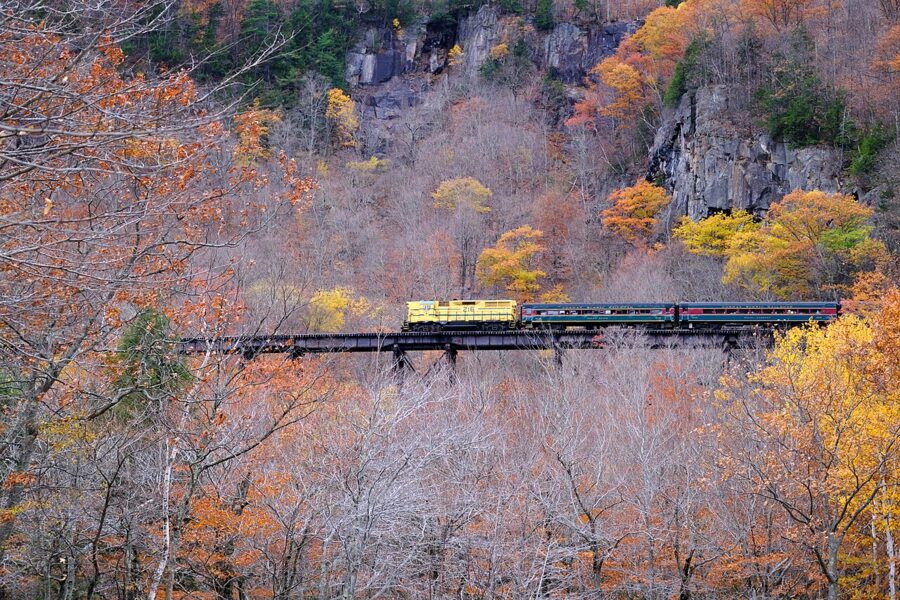
The Cog pairs well with the Conway Scenic Railroad, which runs from its 1874 station in North Conway village up the old Maine Central Mountain Division into Crawford Notch. Its Mountaineer is a 4 to 4.5-hour round trip of 50 to 60 miles in mid-century streamlined cars, crossing the Frankenstein Trestle and the Willey Brook Bridge high above the valley. From July through October it leaves North Conway at 9 a.m. and 1:30 p.m.
| Mountaineer fares (as of 2026) | Adult (13+) | Child (4-12) |
|---|---|---|
| Coach, regular season | $75 | $52 |
| Coach, high season and Winter Mountaineer | $83 | $63 |
| Comfort Class, regular / high | $105 / $130 | $65 / $79 |
| Observation Dome, regular / high | $185 / $198 | $148 / $160 |
On select summer and fall days you can board at Crawford, at the top of the notch, at 11 a.m., ride to North Conway and be back about 3:15 p.m. From Bretton Woods that is the easy way to pair the two, since Crawford is a short drive south on Route 302. The Winter Mountaineer runs into the notch in snow at 10:30 a.m. on select dates from November 28, 2026, through March 2027.
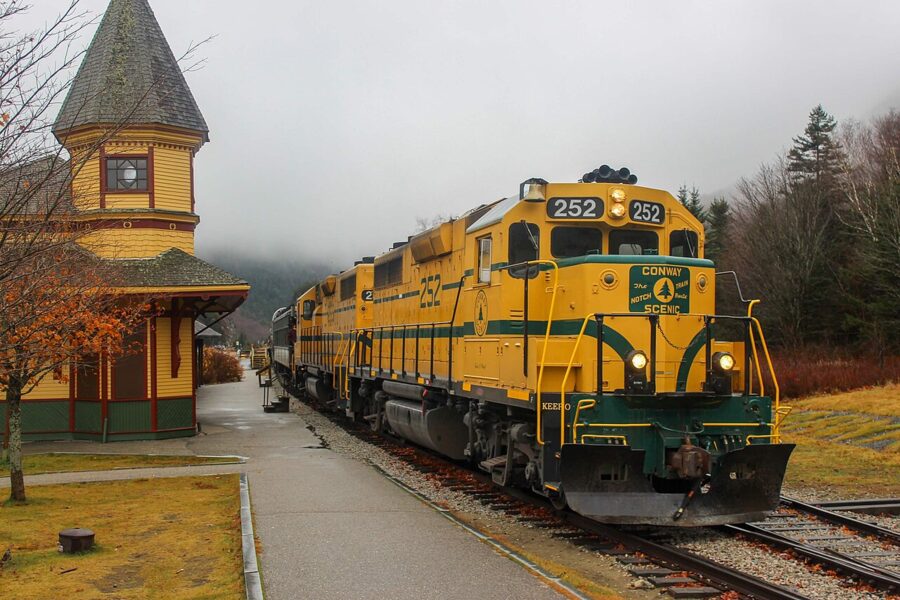
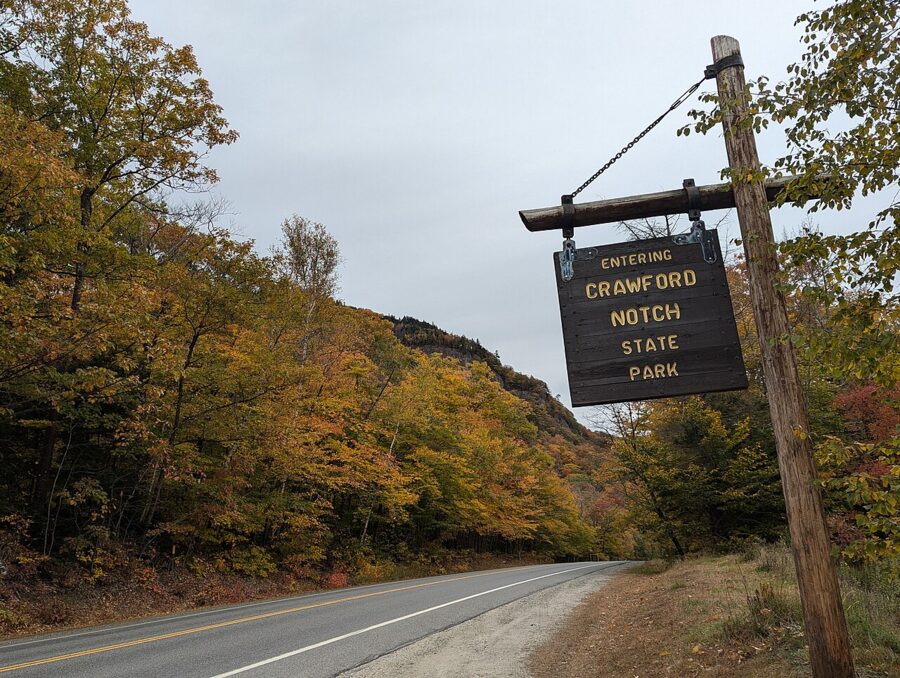
Between the two railways, Crawford Notch State Park covers 5,775 acres along Route 302, with waterfalls, trailheads and the historic Willey House site. My plan would be two days: the Cog on the first, with the earliest steam or biodiesel train you can get, and the Mountaineer from Crawford on the second, with the afternoon free for the notch. In winter the same plan works with Waumbek and the Winter Mountaineer.
The Durango & Silverton and the Alaska Railroad are two more mountain lines worth the trip, and with the Cog they rank among the best US tourist train rides.
What to wear and bring
Bring a waterproof jacket or a poncho and a hat, even in July. The ground at the top is gravel and granite boulders, so wear walking shoes or sneakers rather than flip-flops, and leave the umbrella in the car because the wind will take it. On a steam train, wear something you do not mind getting cinders on.
Waumbek riders need winter boots and gloves. Carry-ons have to fit on your lap. Strollers, car seats, coolers, bear spray and alcohol are not allowed aboard, and neither are pets or emotional support animals, though trained service dogs are welcome.
Booking it
Book the Mount Washington Cog Railway as soon as your date opens, and for steam that means the spring the schedule appears. Take the morning train, ask for the left side going up and keep the 15-day cancellation line in mind when you watch the forecast. Then, at the top of Jacob’s Ladder, look right across the ravine for the hut in the saddle, and back down the track at the trestle you just climbed.