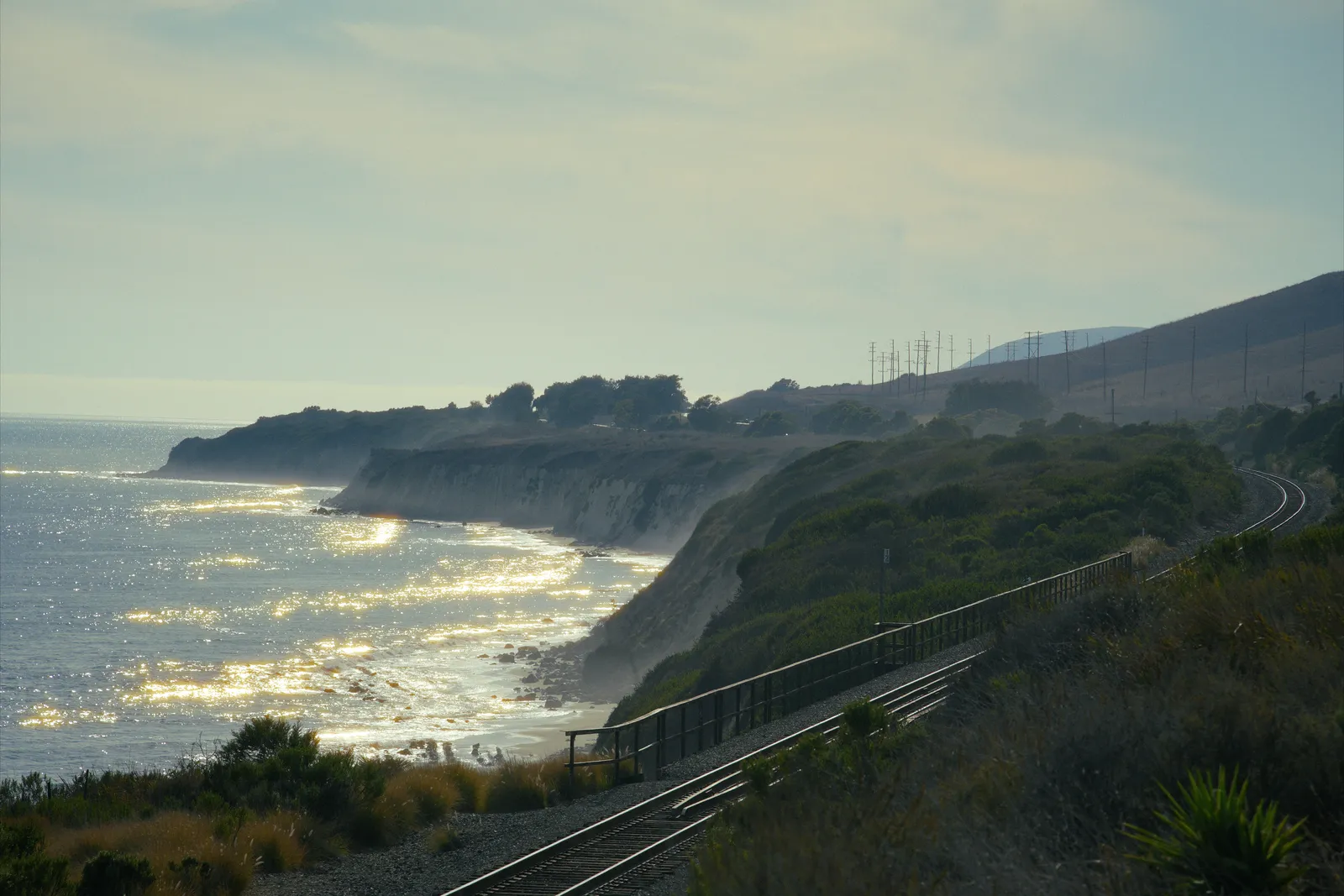
Northbound out of Los Angeles, the Coast Starlight spends its first ninety minutes in the San Fernando Valley, the tunnels under Santa Susana Pass and the strawberry fields around Oxnard. Then, a little before noon, the line swings onto the shore past Ventura and the Pacific fills the left-hand windows, close enough to see kelp in the surf. For the next two hours the ocean stays beside you, and west of Gaviota the train runs where no public highway follows. The upstairs of the lounge car goes quiet.
That stretch is one reason Amtrak’s daily train between Seattle and Los Angeles fills its sleeping cars months ahead. The rest is the length of the West Coast in one ticket: about 1,380 miles and 30 stations through Washington, Oregon and California, the Cascades and Mount Shasta, the Sacramento Valley, San Francisco Bay and the Salinas Valley. Train 14 does it northbound in 34 hours; train 11 takes 35 hours 16 minutes southbound.
The catch is the night in the middle. It falls on different scenery depending on which way you ride, and that one choice decides whether you see Mount Shasta and Odell Lake or San Francisco Bay. Get it right and the 35 hours pass as a run of windows; get it wrong and you sleep through the mountains.
Stops in this article9
- 01The route in order, and which side to sit on
- 02Northbound or southbound: picking the right direction
- 03The train: Superliners, the Sightseer Lounge and the missing Parlour car
- 04Coach, roomette or bedroom (as of 2026)
- 05Dining car and cafe
- 06Schedule, delays and timekeeping
- 07Fares and booking
- 08Stopovers: Portland, Dunsmuir, San Luis Obispo and Santa Barbara
- 09The Pacific Surfliner: the coast in a day
The route in order, and which side to sit on
Of America’s long-distance trains, the Starlight is the only one that stays near the Pacific. The times below are from Amtrak’s Coast Starlight timetable as printed in late November 2026, the same every day of the week. The ocean is on the left going north and on the right going south.
| Station | Southbound train 11 | Northbound train 14 |
|---|---|---|
| Seattle (King Street) | leaves 9:55 a.m. | arrives 7:51 p.m. |
| Portland (Union Station) | 2:22 p.m. | 3:56 p.m. |
| Eugene | 5:15 p.m. | 12:37 p.m. |
| Klamath Falls | 10:08 p.m. | 7:43 a.m. |
| Dunsmuir | 12:45 a.m. | 4:58 a.m. |
| Sacramento | 6:48 a.m. | 11:49 p.m. |
| Emeryville (for San Francisco) | 8:39 a.m. | 9:41 p.m. |
| San Jose | 10:26 a.m. | 7:58 p.m. |
| San Luis Obispo | 3:37 p.m. | 3:05 p.m. |
| Santa Barbara | 6:19 p.m. | 12:15 p.m. |
| Los Angeles (Union Station) | arrives 9:11 p.m. | leaves 9:51 a.m. |
Seattle to Portland: where Puget Sound went
Older guides promise a long run beside Puget Sound south of Tacoma. Since November 2021 the train has taken the Point Defiance Bypass instead, an inland line through Lakewood and DuPont that rejoins the old route near the Nisqually River, so the water you see in older photographs is no longer outside the window. What the Washington leg offers now is Mount Rainier on a clear day, on the left southbound and the right northbound, standing over the farmland south of Tacoma.
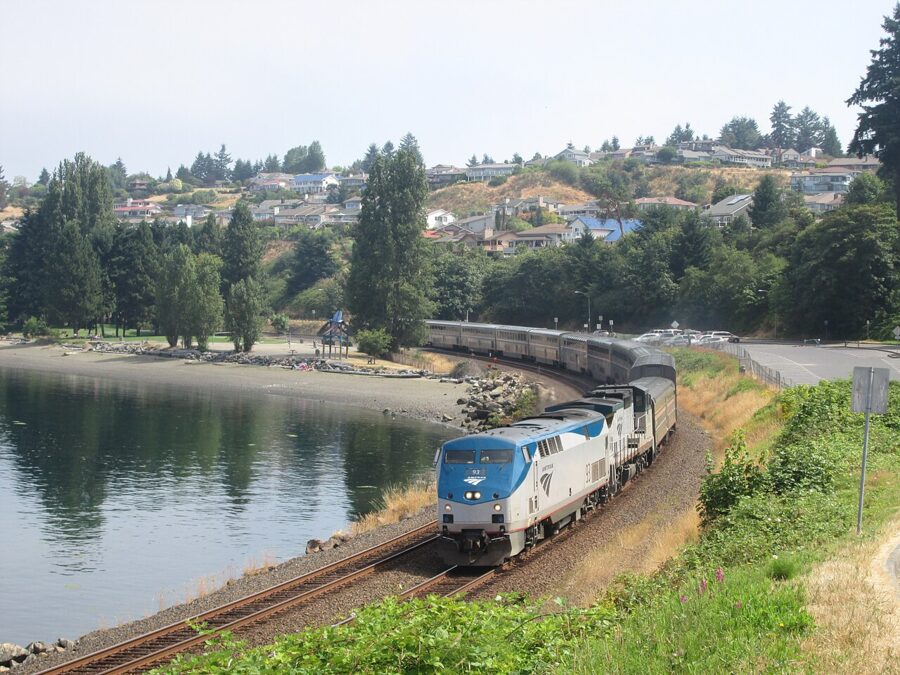
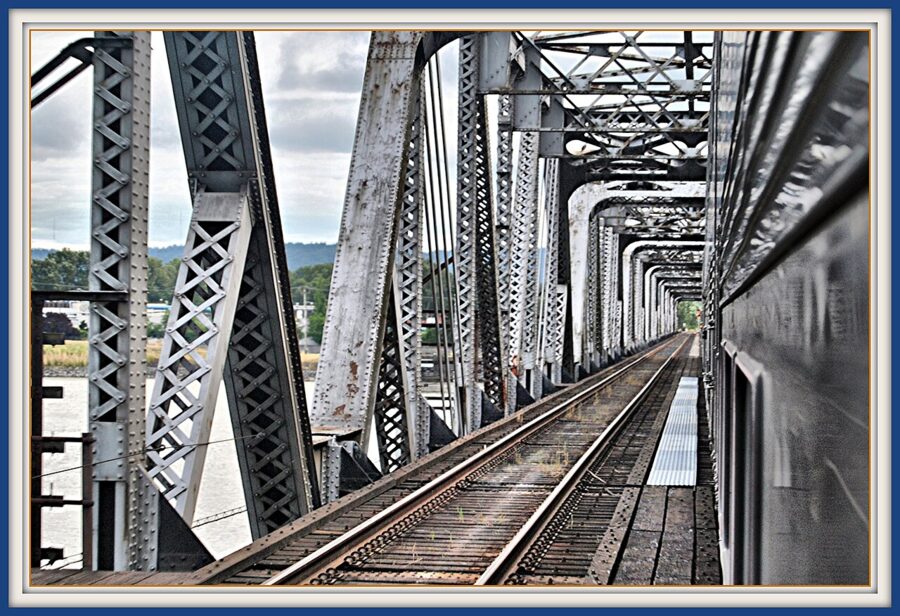
Between Kelso and Vancouver, Washington, the Columbia River comes alongside, and the train crosses it on a long truss bridge into Oregon before rolling over the Willamette on the Steel Bridge into Portland Union Station. Southbound this is early afternoon; northbound it is late afternoon, which in midwinter means dusk.
The Willamette Valley
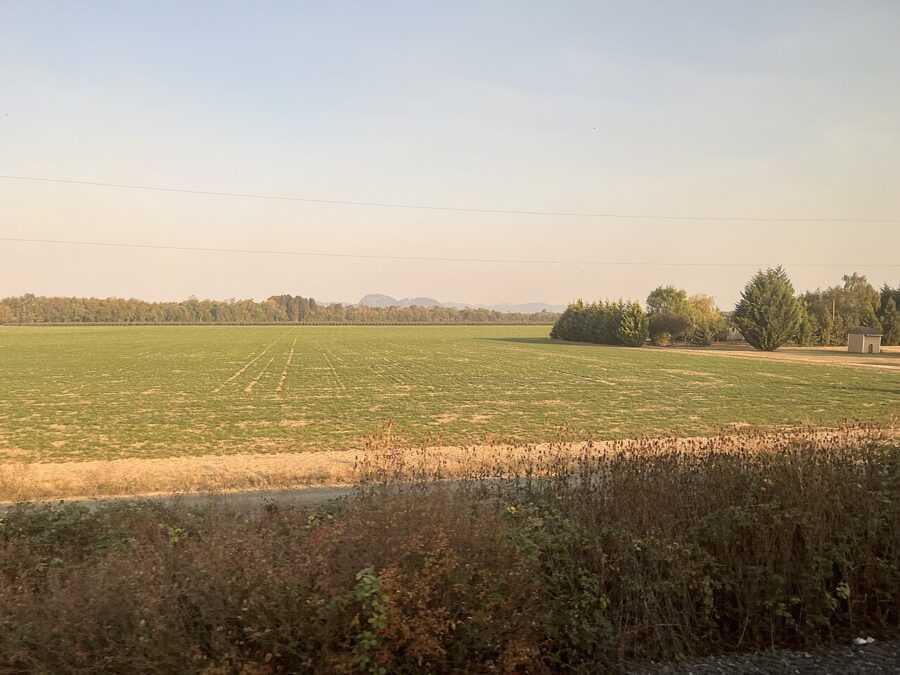
South of Portland the line runs through flat farm country past Salem and Albany to Eugene: grass-seed fields, hop yards and orchards. It is pleasant rather than dramatic, and on a clear day the Cascade volcanoes stand along the eastern horizon, the left side southbound.
Over the Cascades: Salt Creek, the summit and Odell Lake
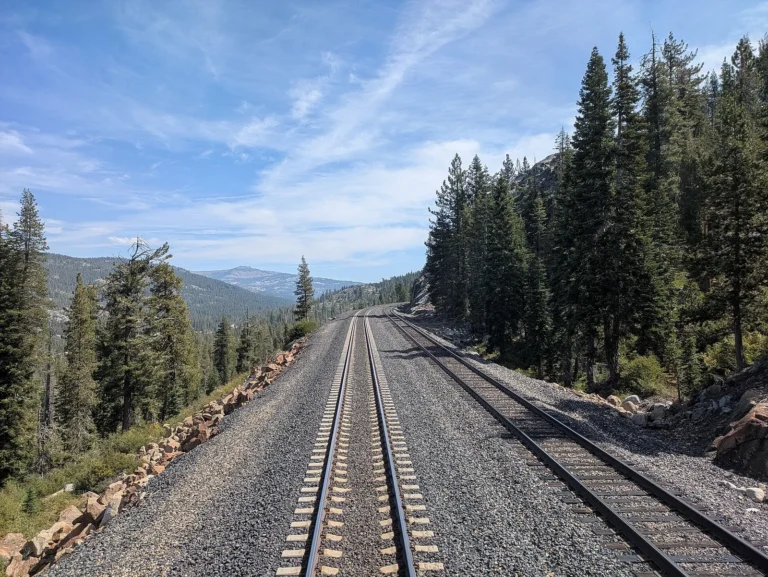
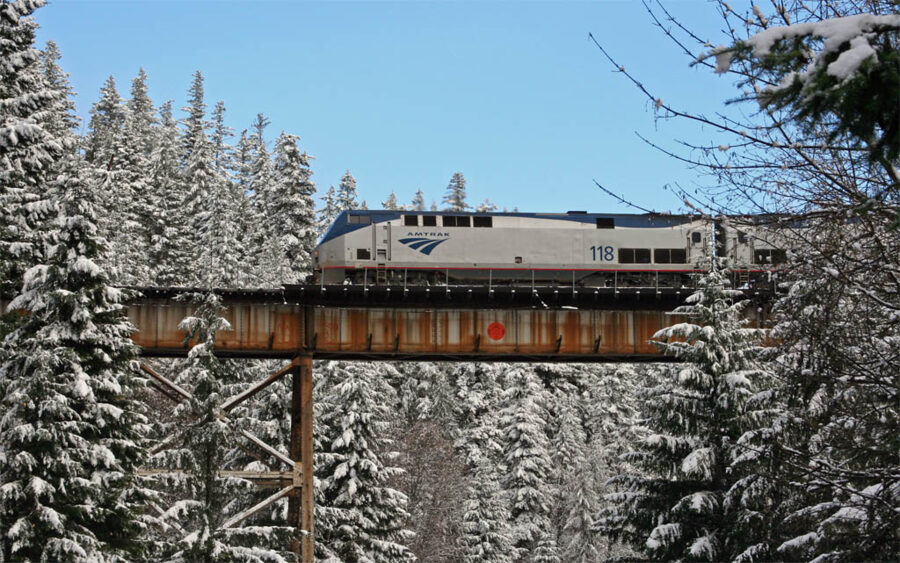
Out of Eugene the train turns east into the Cascade Range on the Natron Cutoff, the line the Southern Pacific finished in 1926. It follows the Middle Fork of the Willamette to Oakridge, then climbs along Salt Creek through a string of tunnels to the summit near Willamette Pass, at about 5,000 feet. In winter the forest here can be white to the treetops.
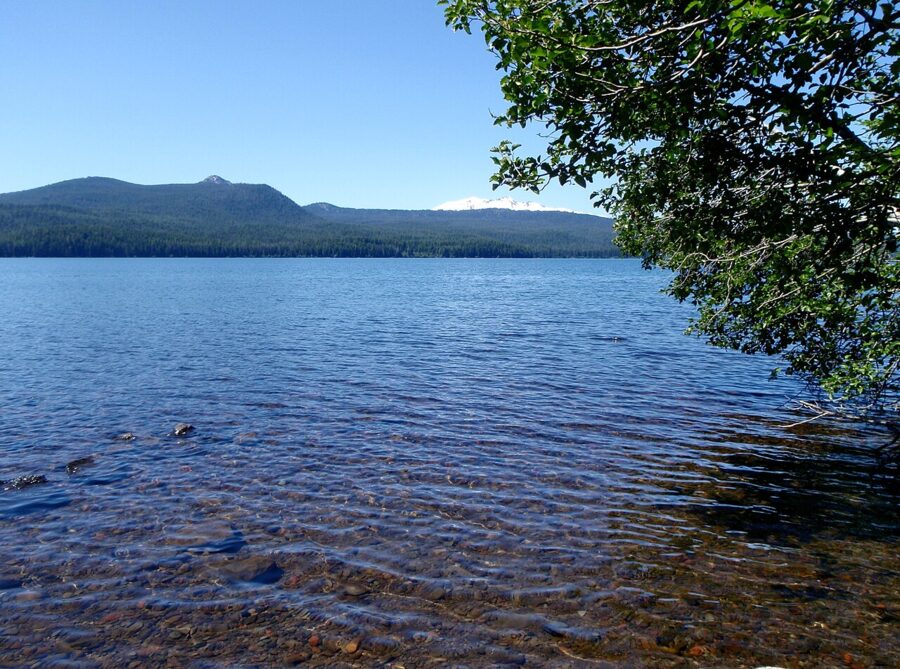
Just past the summit the track runs along the southwest shore of Odell Lake, six miles long and close below the rails. The lake is on the left southbound and on the right northbound. Northbound you are here in the middle of the morning in any season; southbound you only see it in the long evenings of late spring and summer, since train 11 does not reach Chemult until 8:13 p.m.
Klamath Falls and Mount Shasta
East of the summit the country flattens into pine forest and high desert around Chemult, the stop for Crater Lake, and then the line drops to Upper Klamath Lake, on the left northbound, and Klamath Falls. Northbound this is breakfast. Southbound it is after dark.
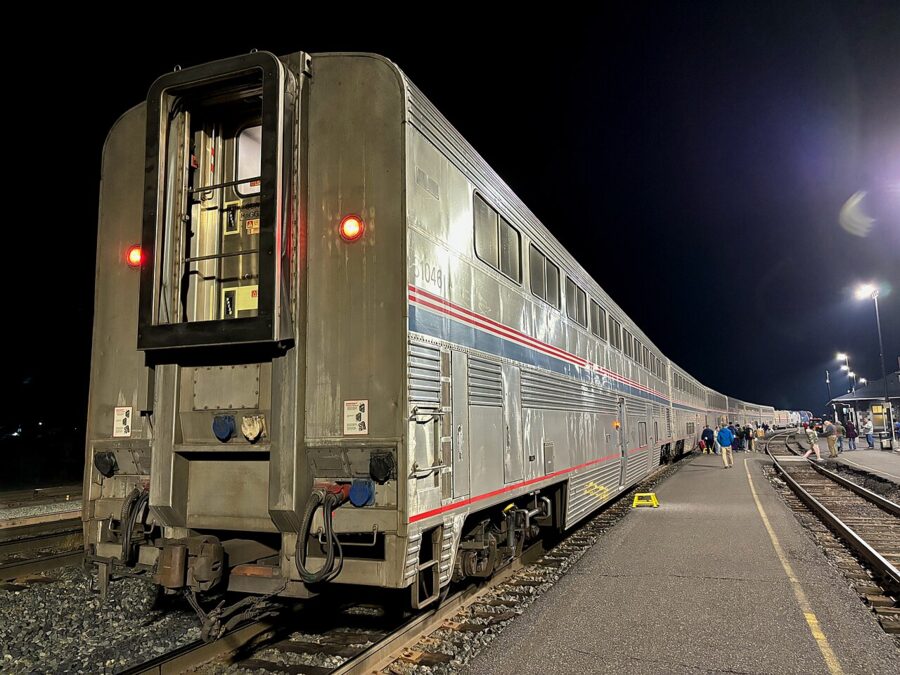
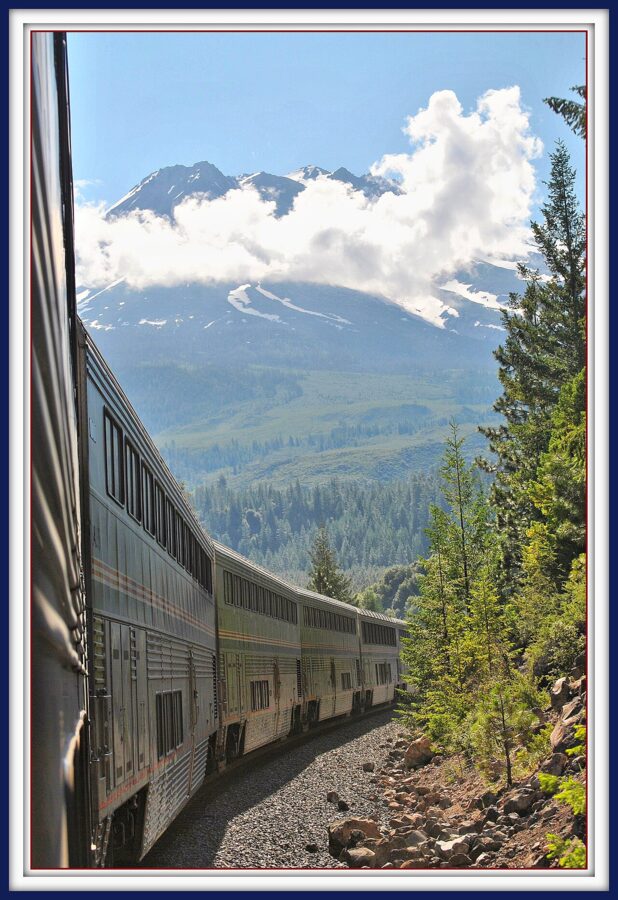
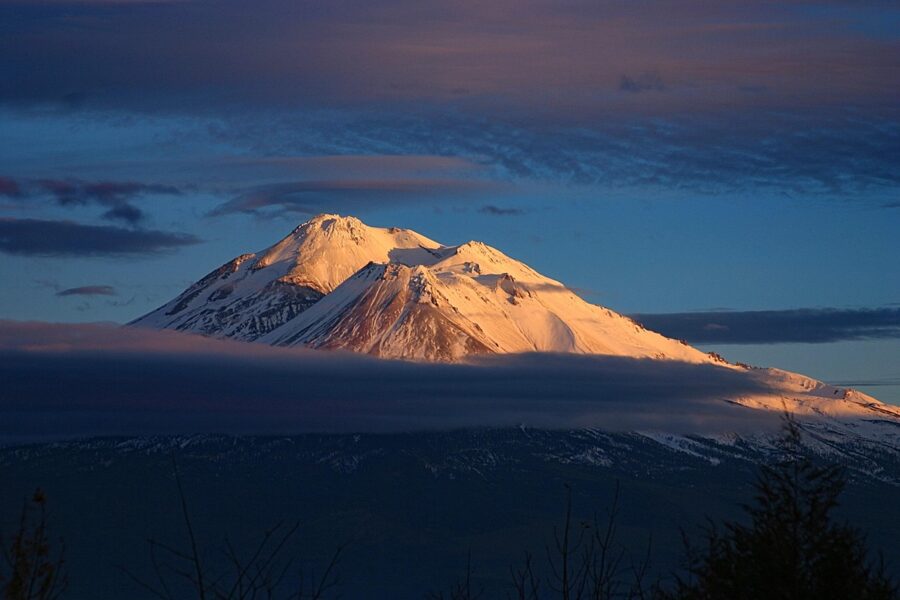
South of the Oregon line the train swings around the north and west sides of Mount Shasta, 14,179 feet and snow-capped most of the year, past Weed and the town of Mount Shasta before dropping to Dunsmuir. The mountain is on the right northbound and on the left southbound. Northbound train 14 passes it between about 5 a.m. and 7 a.m., so you see it at first light from late spring to late summer and in darkness in winter; southbound it goes by around midnight.
The Sacramento River canyon, mostly at night
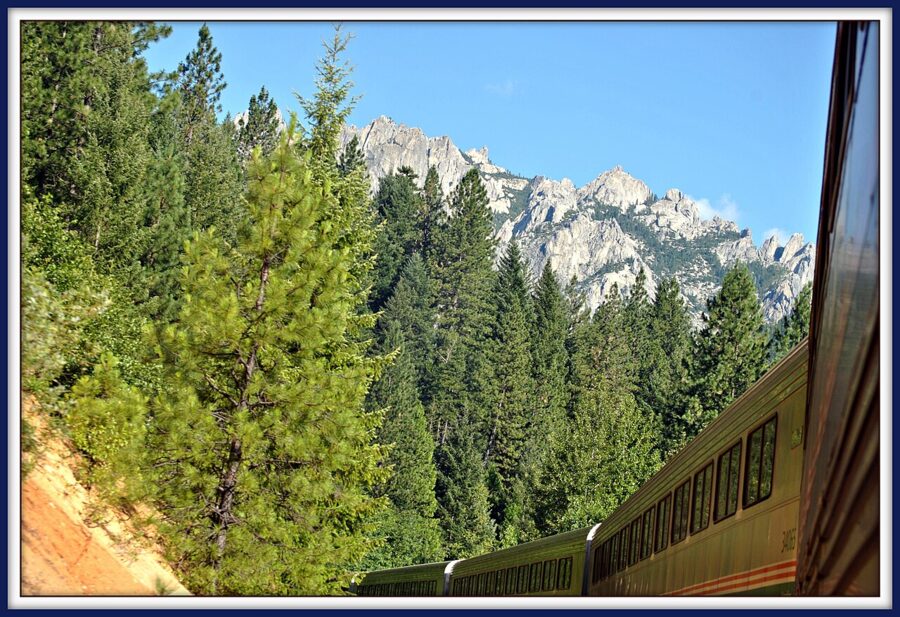
Below Dunsmuir the railroad follows the upper Sacramento River down a narrow canyon to Redding, past the granite spires of Castle Crags. It is some of the finest scenery on the line, and the schedule puts it in the dark both ways: train 11 passes between 12:45 and 2:31 in the morning, train 14 between 3:05 and 4:58. Only a southbound train running hours late shows it to you.
Sacramento, the Carquinez Strait and the Bay
Southbound you wake up in the Sacramento Valley and reach Sacramento at 6:48 a.m., where the California Zephyr also calls. From Martinez the track follows the south shore of the Carquinez Strait and San Pablo Bay, water on the right southbound, and then runs down the edge of San Francisco Bay through Richmond to Emeryville, with the city skyline across the water. It is the best morning of the southbound trip.
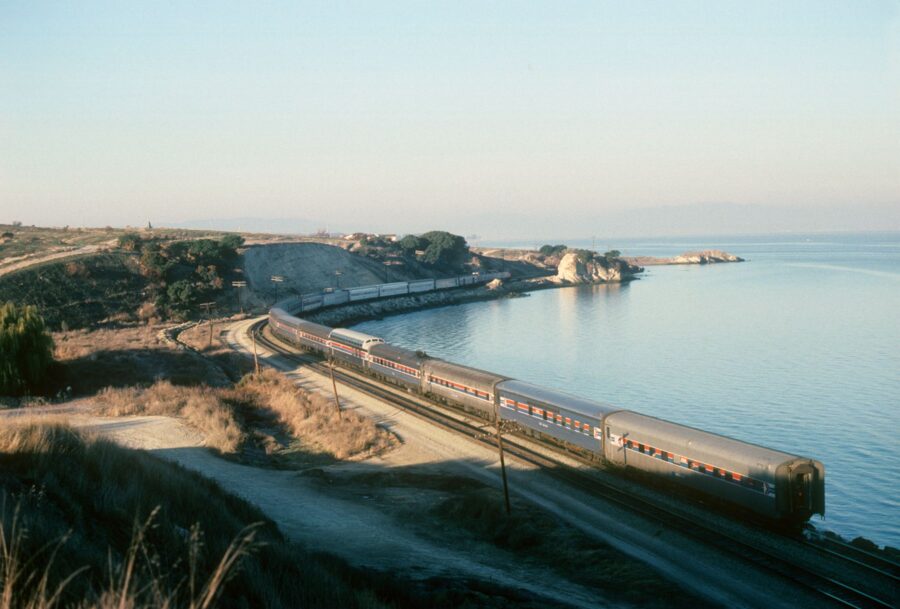
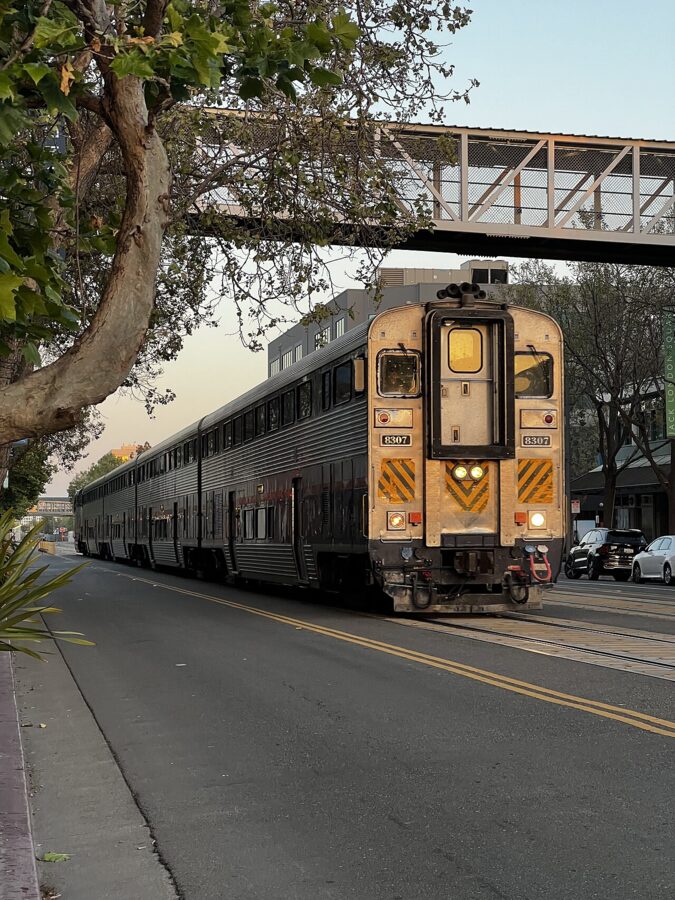
The Coast Starlight does not go into San Francisco. Get off at Emeryville for Amtrak’s connecting Thruway buses to the city, or at Oakland Jack London Square, where the train runs down the middle of the street like a streetcar. South of Oakland the line crosses the flat East Bay to San Jose, skirting the salt ponds and marshes at the southern tip of the Bay near Alviso.
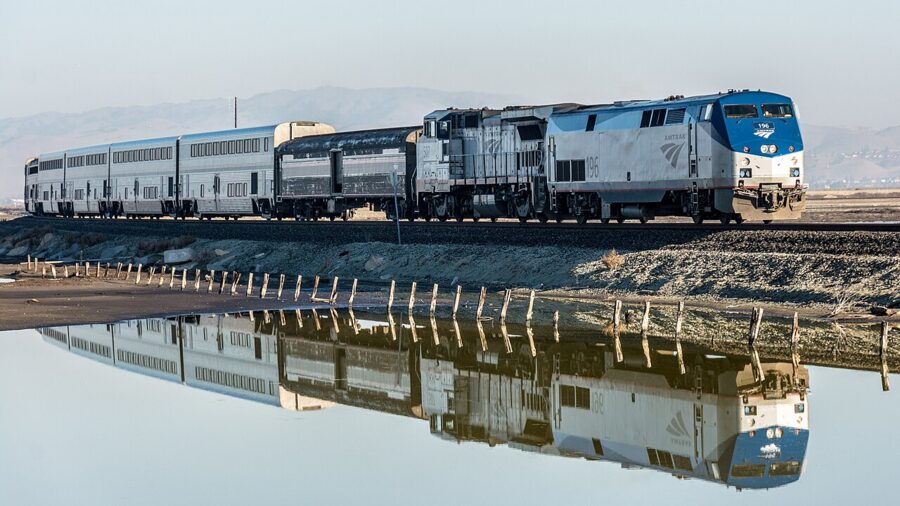
Northbound, all of this goes by after dinner: train 14 reaches San Jose at 7:58 p.m. and Oakland at 9:21 p.m., so you see the Bay at dusk only in midsummer.
The Salinas Valley and the Cuesta Grade
From San Jose the train heads south through Gilroy’s garlic country and into the Salinas Valley, nearly a hundred miles of lettuce, artichokes and vineyards between two mountain ranges. Southbound it is late morning and lunch; northbound it is late afternoon, with the low sun across the fields. Past King City the farms give way to dry oak hills toward Paso Robles.
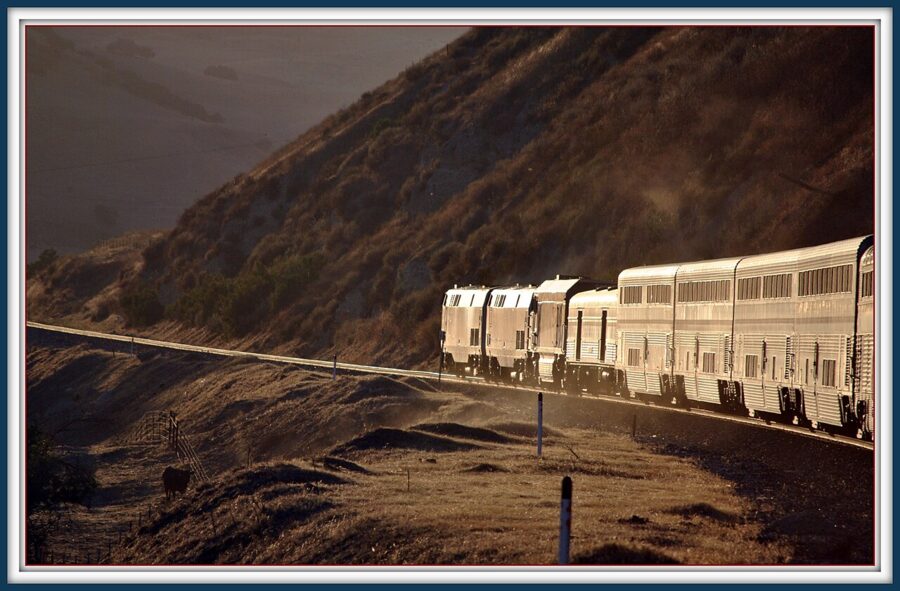
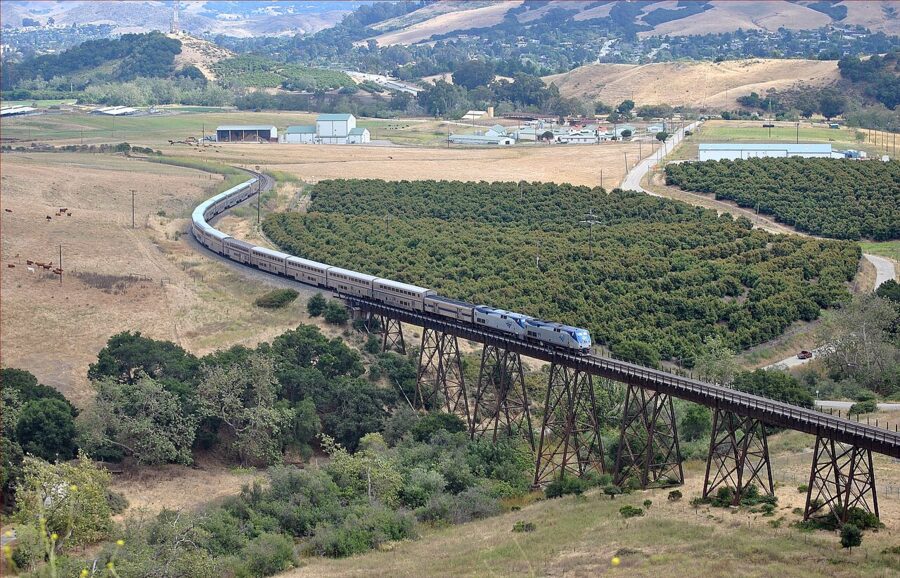
Then comes the Cuesta Grade, the climb between Santa Margarita and San Luis Obispo. The line loops back on itself around a horseshoe curve, goes through a series of short tunnels and crosses the tall steel trestle over Stenner Creek before reaching town, and on the curves you can see the head of your own train from the lounge. Both trains are here in mid-afternoon all year, so neither direction misses it.
The Pacific, Point Conception and Santa Barbara
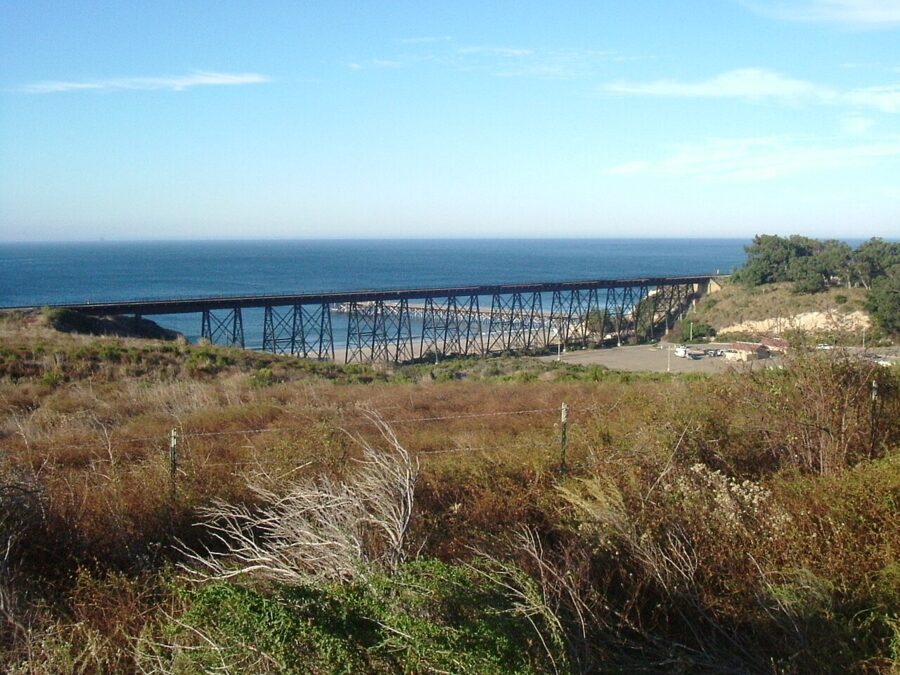
South of San Luis Obispo the line glimpses the ocean at Pismo and Grover Beach, crosses the dune country around Guadalupe, and then reaches the shore at Surf, by the mouth of the Santa Ynez River. From there it runs for about a hundred miles along the shore: through Vandenberg, around Point Conception where the coast turns east, along the Gaviota ranch land into Santa Barbara, and past the beaches of Carpinteria and Rincon to Ventura.
Northbound train 14 runs this section from about 11:30 a.m. to about 2 p.m., in daylight every day of the year. Southbound train 11 leaves San Luis Obispo at 3:37 p.m. and reaches Santa Barbara at 6:19 p.m., which in June is golden afternoon and in December is darkness by Point Conception.
Northbound or southbound: picking the right direction
If you can only ride one way, ride north. Train 14 gives you the coast at midday, the Cuesta Grade and the Salinas Valley in the afternoon, Mount Shasta at dawn in summer, and the Cascades, Odell Lake and the Willamette Valley through the next morning. You lose the Bay Area to the dark, which is the cheapest scenery on the route to give up.
Southbound train 11 is the better choice in summer only, and only if Washington and the Bay matter more to you than Oregon’s mountains. In June and July its evening light reaches over the Cascade summit and the coast is in late sun. Between October and March it spends the mountains and most of the ocean in the dark.
The best seat for the whole trip is on the left side of a northbound train, because the ocean is on that side; for Mount Shasta and Odell Lake, move to the right or to the lounge.
The train: Superliners, the Sightseer Lounge and the missing Parlour car
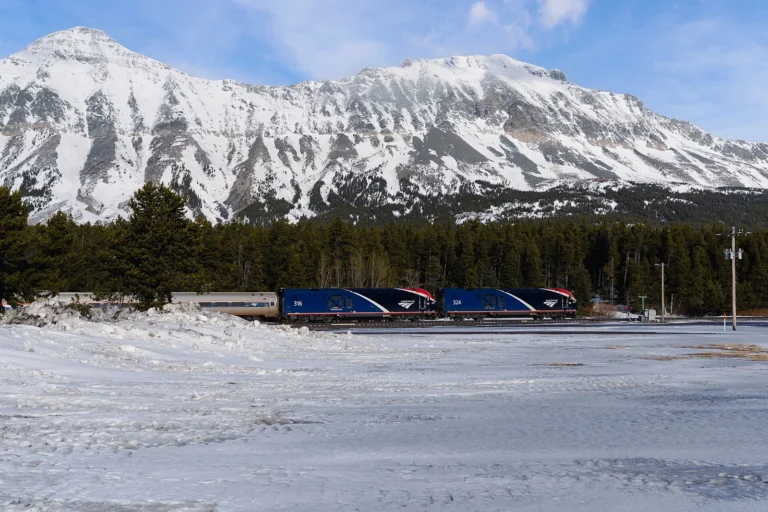
The Starlight runs with Amtrak’s two-level Superliners: coaches, sleeping cars, a dining car and a Sightseer Lounge. In the year to September 2026 it went back to three coaches, and Trains magazine’s analysis of Amtrak’s record year credited the return of the third coach with a large rise in passengers and revenue on the route.
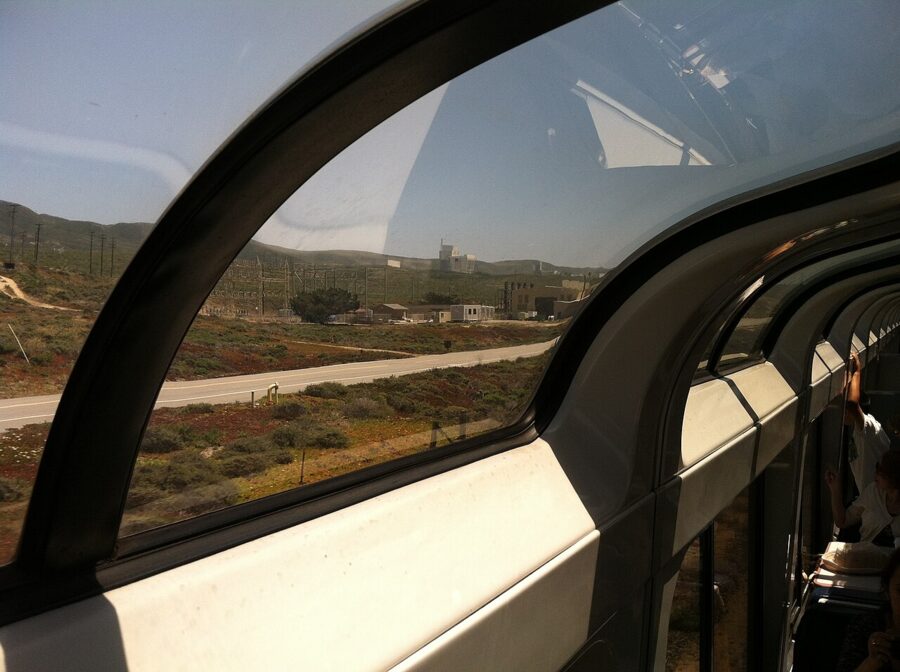
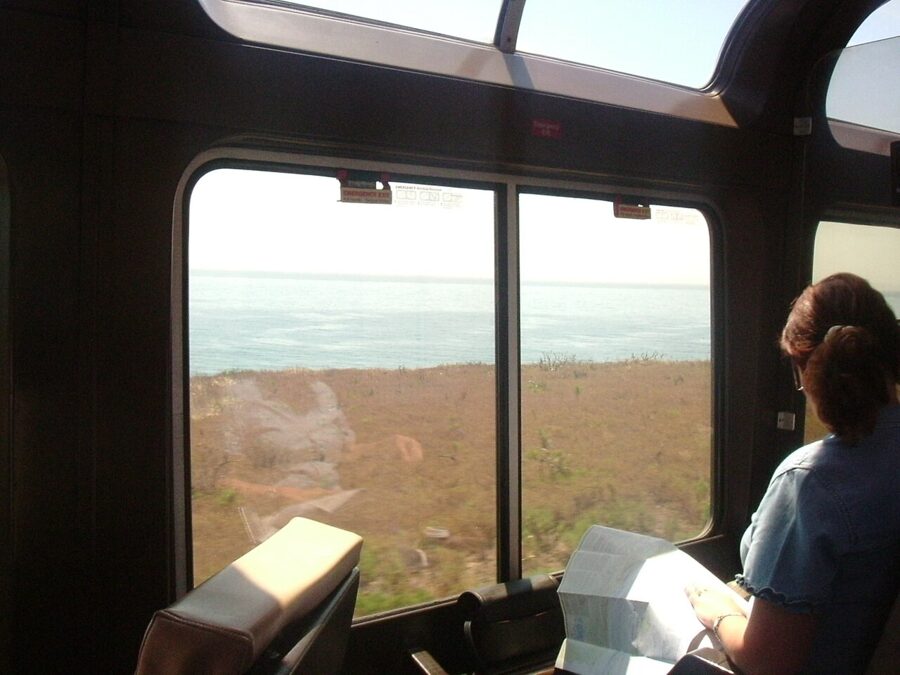
The Sightseer Lounge is the reason to book a day train on this route. Upstairs, swivel seats and benches face side windows that curve up into the roof, so you see the cliffs above as well as the sea below; downstairs is the cafe. On the coast in summer it fills by mid-morning, so go early, and do not hold a seat with a bag.
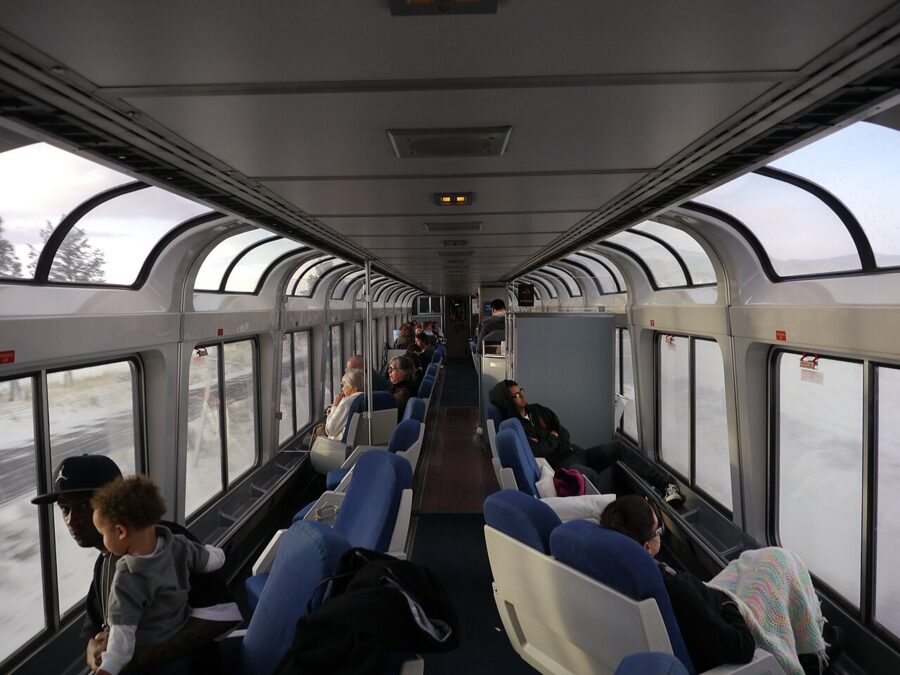
Many guides still describe the Pacific Parlour Car, the lounge for sleeping-car passengers that made this train famous. It is gone. Amtrak retired the Parlour cars, 1950s Santa Fe lounges rebuilt for the Starlight, after the run of February 4, 2018, and nothing replaced them. Sleeping-car passengers now share the Sightseer Lounge with everyone else and have the dining car and their rooms to themselves.
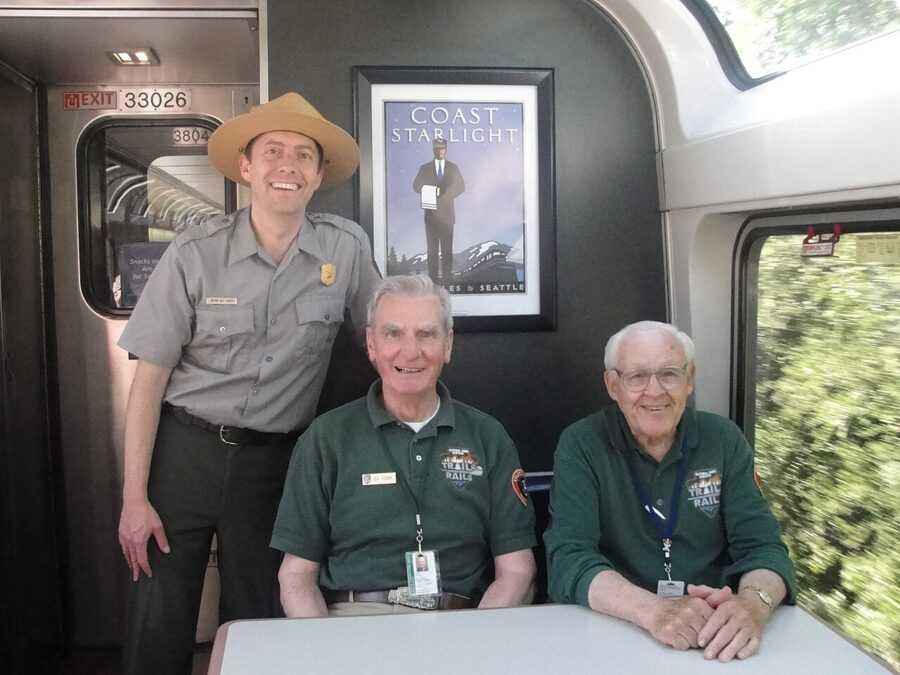
Two practical gaps. There is no Wi-Fi on the Coast Starlight: it is missing from Amtrak’s list of trains with Wi-Fi, and mobile signal drops out in the Cascades, the Sacramento canyon and along the Vandenberg coast. Download what you need in Seattle or Los Angeles. The other is guides: under the Trails & Rails program, National Park Service volunteers give talks in the lounge between Seattle and Portland daily, April to September, and on Saturdays, June to September, between San Jose and Paso Robles and between San Luis Obispo and Santa Barbara, when volunteers are available.
Coach, roomette or bedroom (as of 2026)
Coach on the Starlight is a reserved Superliner seat, upstairs or down; the lower level suits anyone who would rather not climb the stairs. The seats are wide, recline far, and have leg rests, and for a daytime trip of six or eight hours they are all you need. One night in coach is doable with a pillow, an eye mask and a blanket, though the stops keep coming all night.
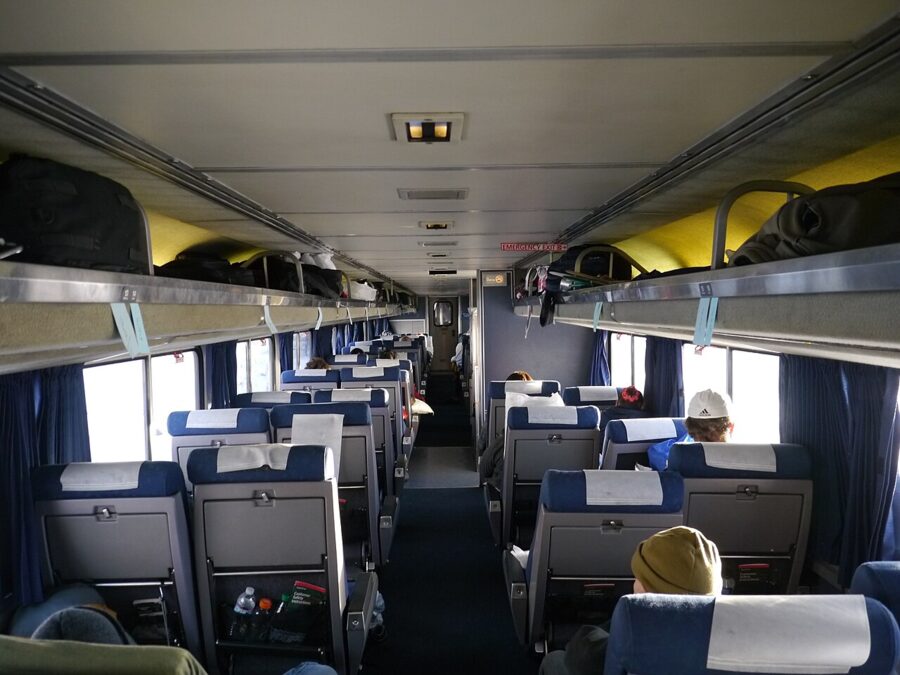
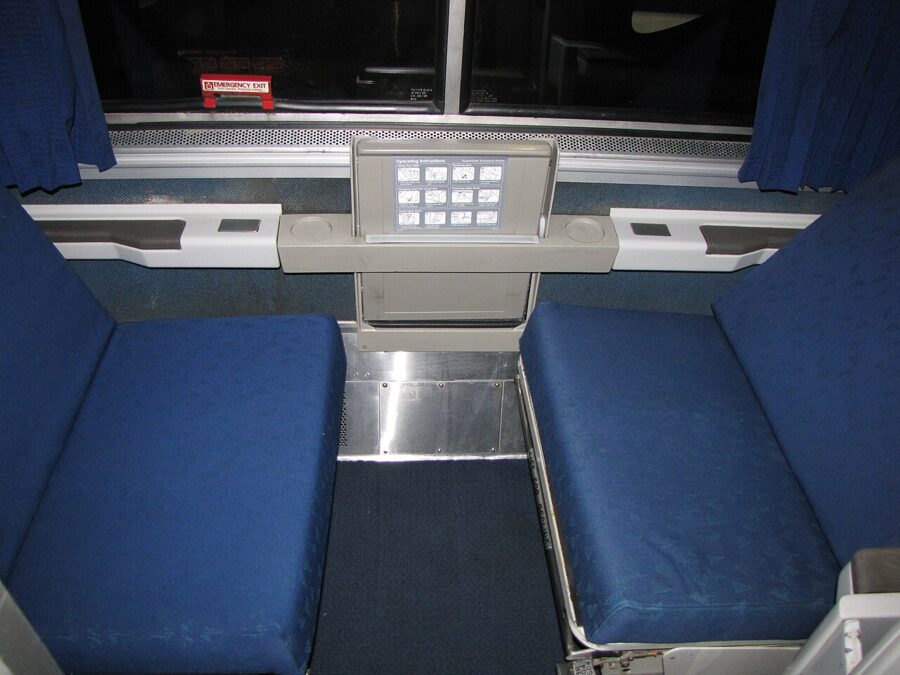
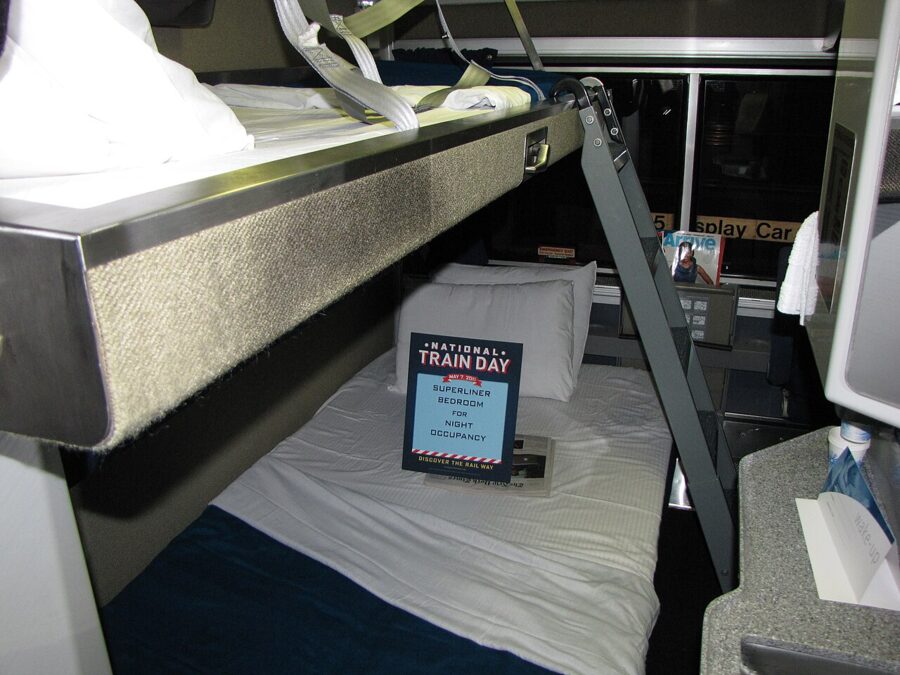
Amtrak now sells its private rooms as First Class, and every room includes meals in the dining car or in your room, a car attendant who makes up the beds, priority boarding, and the Metropolitan Lounges at Los Angeles and Portland on the day you travel. The roomette is two facing seats by a big window that fold down into a lower bed, with an upper berth that drops from the ceiling. Toilets and a shower are down the corridor. For one person it is a private den; for two adults it is snug.
A bedroom is roughly twice the space, 7 feet 1 inch to 7 feet 6 inches long and about 6 and a half feet wide, with a sofa and an armchair by day, upper and lower beds at night, and its own sink, toilet and shower. Two bedrooms can be booked together as a suite. The Family Room, downstairs and the width of the car at 9 feet 5 inches by 5 feet 2 inches, sleeps two adults and two children aged 2 to 12, with shared facilities. There is also an Accessible Bedroom on the lower level.
Which to book: for one night end to end, I would take a roomette alone or with someone you know well, and a bedroom only for two people who want their own shower. Coach for the whole trip saves a great deal and costs you a morning. For daytime segments such as Los Angeles to San Luis Obispo or Seattle to Portland, coach is the right answer.
Dining car and cafe
The Starlight carries a full dining car with Traditional Dining, cooked on board and served at tables with tablecloths, the same service as on the Zephyr and the Auto Train. Breakfast runs from 6:30 to 9:30 a.m., lunch from 11:30 a.m. to 2:30 p.m. and dinner from 5:00 to 9:00 p.m., and lunch and dinner are by reservation. End to end you get five meals: lunch, dinner, breakfast, lunch and dinner.
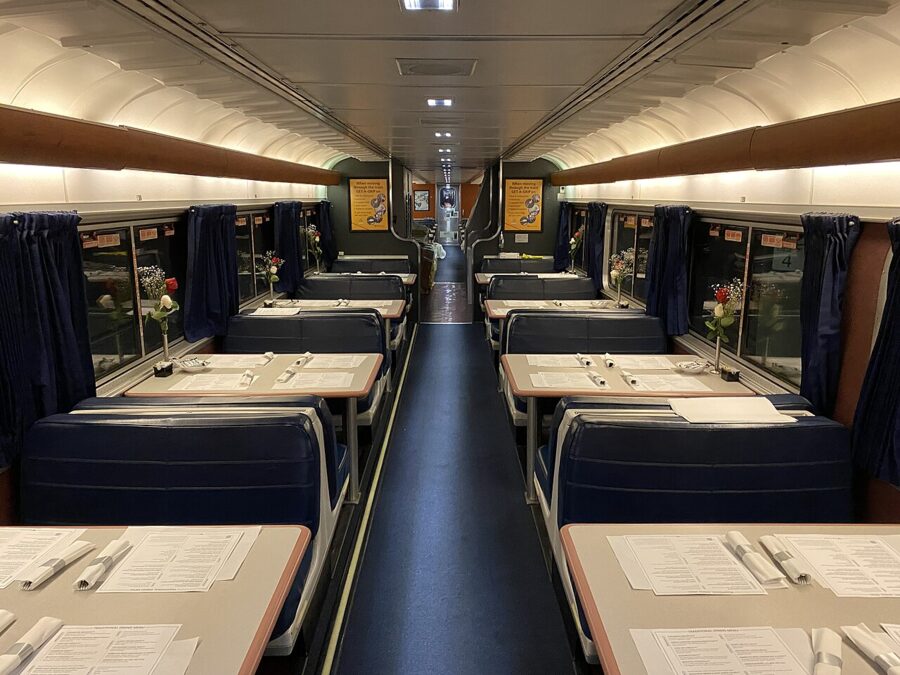
The current menu has French toast and omelets at breakfast, burgers and salads at lunch, and a three-course dinner built around a flat iron steak with port wine sauce, chicken with morel sauce, salmon or pasta primavera. For sleeping-car passengers it is all included, plus the first alcoholic drink at dinner; after that, beer is $8, wine $7.50 a glass and spirits $9 as of 2026. You can also have meals brought to your room.
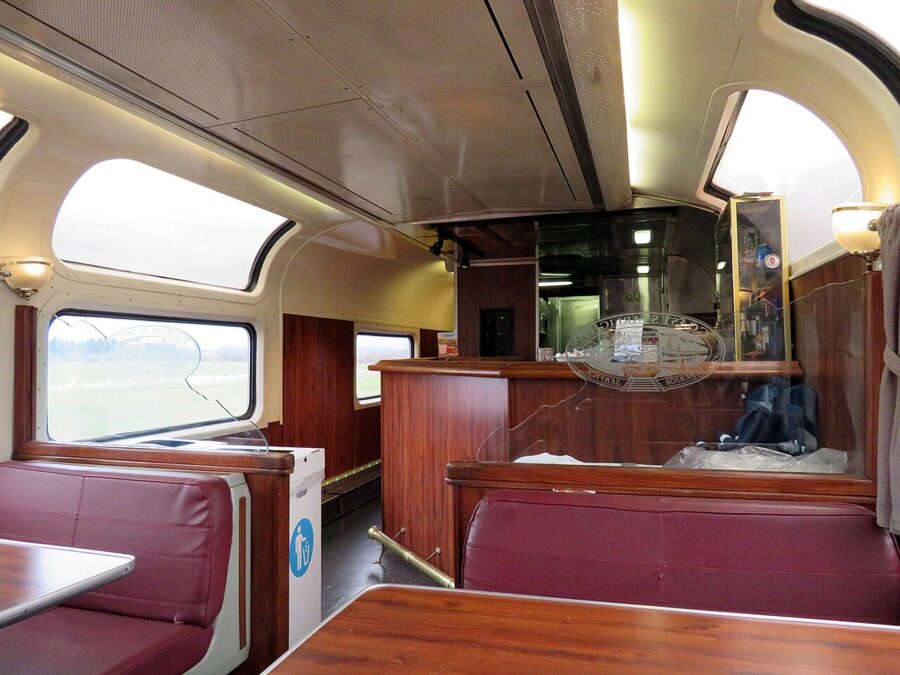
Coach passengers are not shut out. Amtrak says it offers dining car meals to a limited number of coach passengers on the Starlight, paid for on board, so ask the dining car steward early. Everyone can buy sandwiches, hot snacks, drinks and coffee in the cafe on the lower level of the Sightseer Lounge, and nothing stops you bringing your own food for the trip.
Schedule, delays and timekeeping
The Coast Starlight runs once a day in each direction. It is a long run over freight railroads, BNSF from Seattle to Portland and Union Pacific for most of the way south, and delays build up along the way. In Amtrak’s September 2026 host railroad report, 64.7 percent of Starlight passengers reached their stop on time over the previous twelve months, against 55.4 percent across all long-distance trains, and those who were late were late by 70 minutes on average. In 2024 the figure was 53 percent.
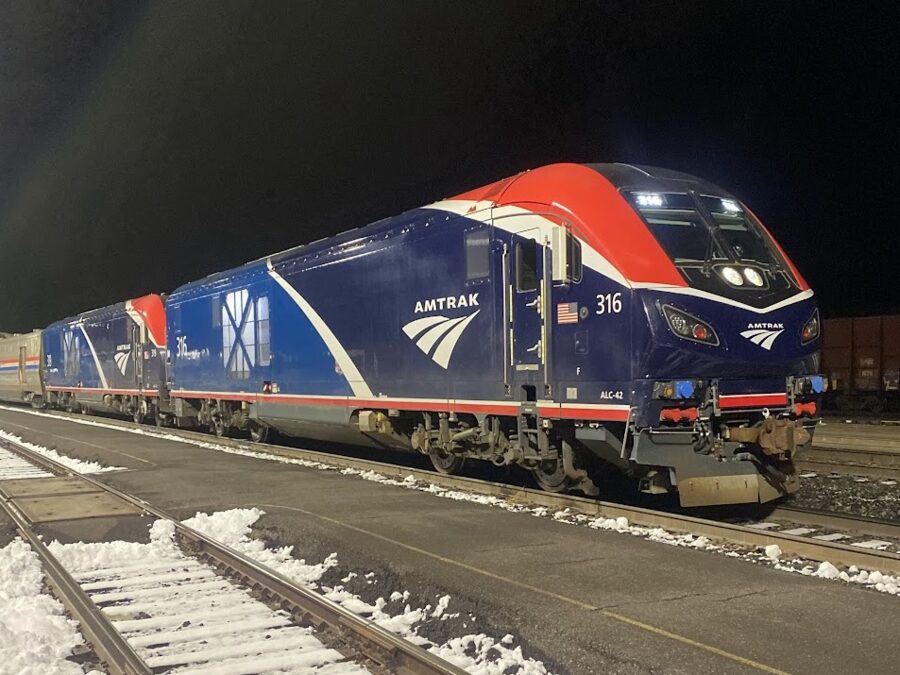
The same report shows where the minutes go. On Union Pacific, delays charged to the host ran at 1,253 minutes per 10,000 train-miles over the year, well above the 900 Amtrak treats as the benchmark, with signals and slow orders the two biggest causes; BNSF was close to the benchmark. The coast is also exposed to weather and track work. A washout near Santa Barbara in January 2026 cut trains back to Emeryville, and Union Pacific track work did the same on October 23 to 26, 2026, with Gold Runner trains and buses covering the gap.
What that means in practice: do not book a flight, a cruise or a same-evening connection out of Seattle or Los Angeles. Plan a night at the end, check Amtrak’s service alerts in the week before you go, and treat a late southbound train as a bonus, since it may show you Castle Crags and the Sacramento canyon in daylight.
Fares and booking
Amtrak prices the Starlight like an airline, so the fare rises as seats and rooms sell. The same room on the same date can move by hundreds of dollars in a week. As one dated example, a search on November 2, 2026, for train 14 from Los Angeles to Seattle on November 5 showed coach from $171 and a roomette at $827 and a bedroom at $2,293 for one traveler, meals included in the rooms. That was for an off-season weekday three days out; summer and holiday trains run much higher.
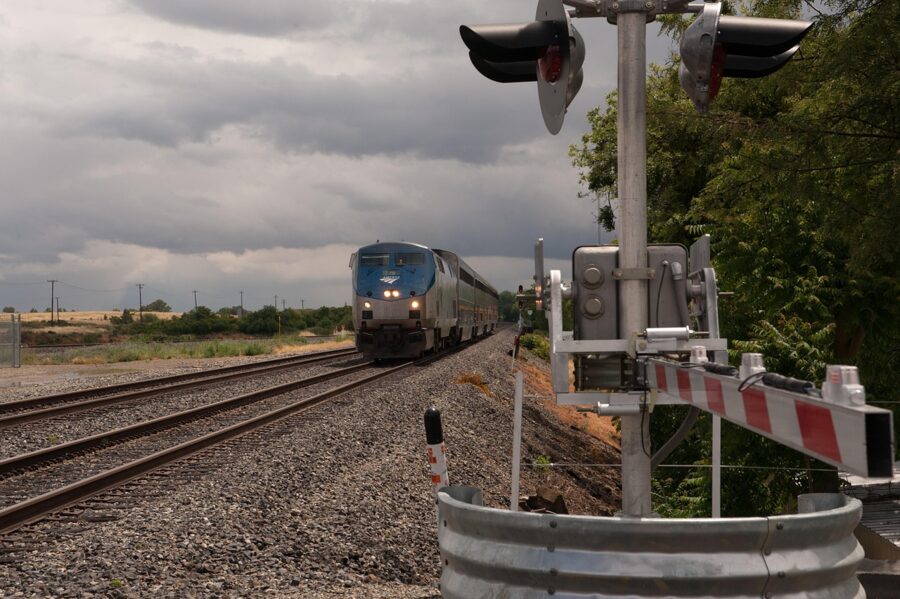
Sales open 11 months ahead, according to Amtrak’s booking tips, and the cheapest rooms go first, especially for June to August. A second traveler in a room adds their own rail fare, which is still far less than a second room. Children 2 to 12 pay half the adult rail fare. If you hold a coach ticket, Amtrak’s BidUp lets you offer a price for an empty room in the days before departure; a winning bid makes the ticket non-refundable.
Segments are where the value is. Los Angeles to San Luis Obispo or Santa Barbara is a daytime coach ride with the best of the coast; Seattle to Portland or Eugene is another. Many people ride north from Los Angeles to Sacramento or Emeryville and connect to the Zephyr east, or make a loop with the Southwest Chief, whose stop at Flagstaff is a short drive from Williams and the Grand Canyon Railway. It is also why the Starlight belongs among the best scenic train rides in the US.
Stopovers: Portland, Dunsmuir, San Luis Obispo and Santa Barbara
Amtrak sells no stopover fare. You book each leg separately, using the multi-city option, and because the train runs once a day a stop means about 24 hours until the next one. A stop turns one long trip into two shorter ones and adds a town, but it does not change what you see in the dark: the train passes each point at the same hour every day.
Portland
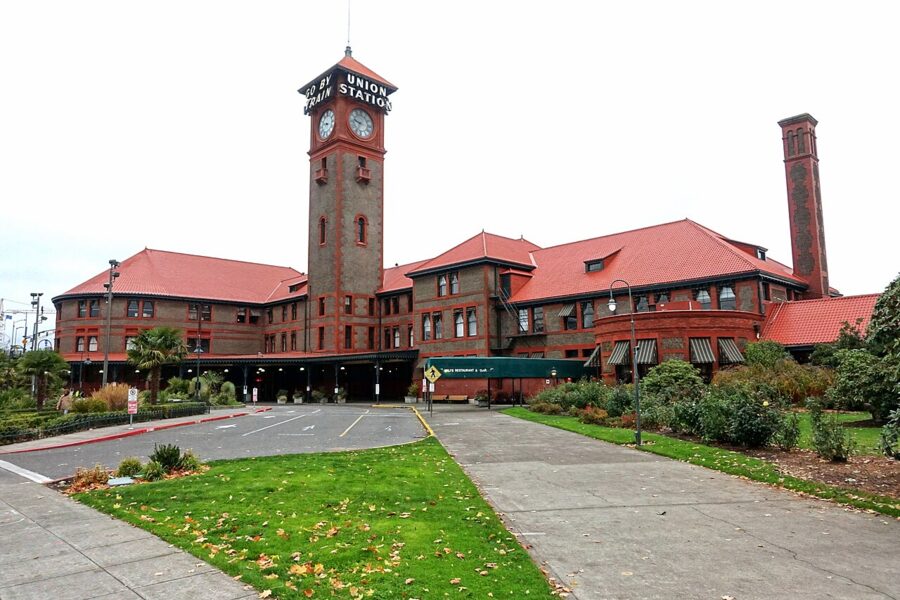
Portland is the easiest stop. Union Station, with its brick clock tower, is at the edge of the Pearl District, and Powell’s City of Books and the downtown are a walk away. Both trains are here in the afternoon, so you arrive with time for the city and leave after a late breakfast and a walk. Sleeping-car passengers can wait in the Metropolitan Lounge in the station.
Dunsmuir
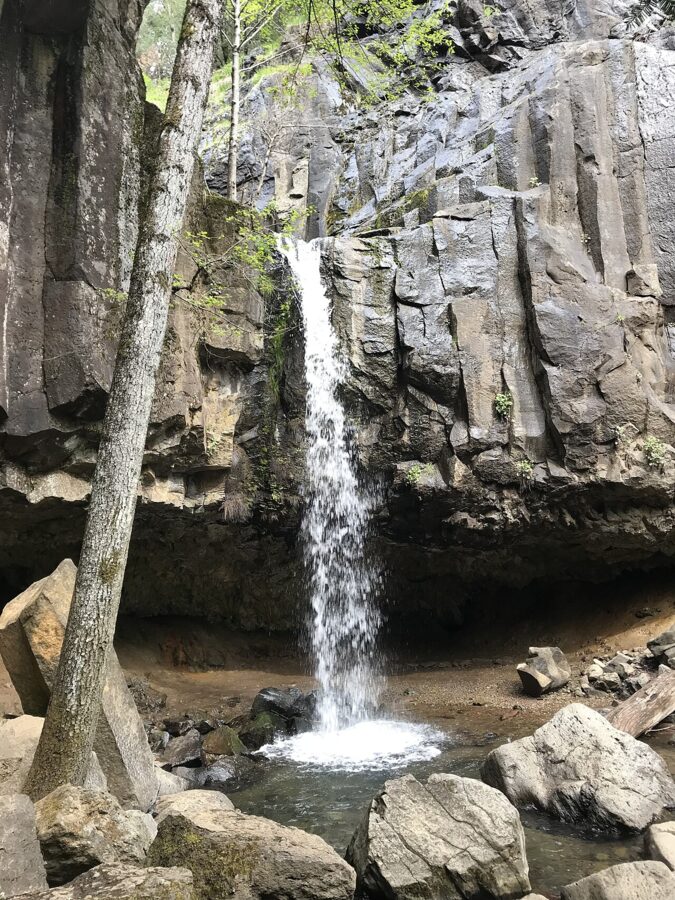
Dunsmuir is the stop for the canyon itself, which you will never see from a train on time. It is an old railroad town below Mount Shasta, and the catch is the clock: trains arrive at 12:45 a.m. southbound and 4:58 a.m. northbound, so book a room for the arrival night. Hedge Creek Falls is a short legal walk away. The better-known Mossbrae Falls has no public access yet: reaching it means walking the Union Pacific main line, which is trespassing, though the city signed a lease with the railroad in June 2026 for a trail that would start at Hedge Creek.
San Luis Obispo
San Luis Obispo is where the coast and the Cuesta Grade meet, and both trains are here in mid-afternoon. The station is about a mile from the old mission and downtown, and on Thursday evenings the Downtown SLO Farmers’ Market fills Higuera Street (6 to 9 p.m. March to October, to 8:30 in winter). It is also the end of the line for the Pacific Surfliner.
Santa Barbara
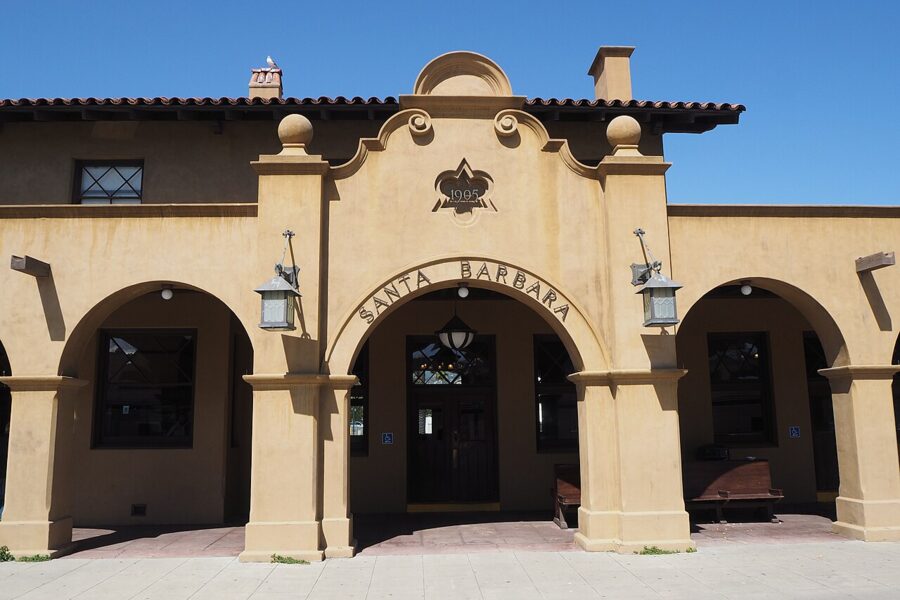
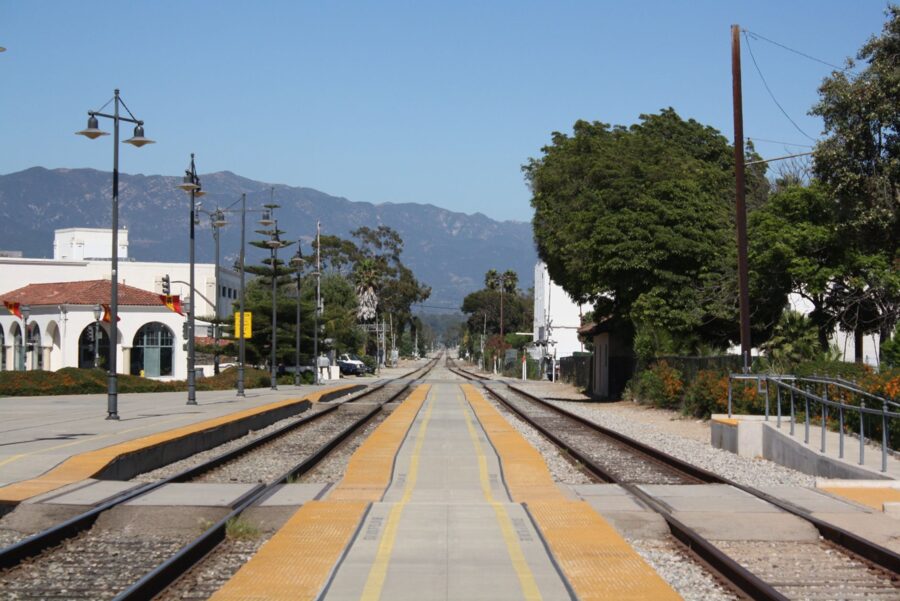
Santa Barbara’s station, built by the Southern Pacific in 1902 in Mission Revival style, sits at the bottom of State Street a few blocks from the beach and Stearns Wharf. Northbound you arrive at 12:15 p.m. with the coast still ahead of you; southbound the 6:19 p.m. arrival is in daylight only in the summer.
The Pacific Surfliner: the coast in a day
If you only want the ocean, you do not need the Starlight. Amtrak’s Pacific Surfliner runs the same track from Los Angeles to Santa Barbara and San Luis Obispo, on a 351-mile corridor that begins in San Diego, and since May 4, 2026 it has run three round trips a day to San Luis Obispo, with six to Goleta. It has free Wi-Fi, which the Starlight lacks, and a Business Class open to anyone.
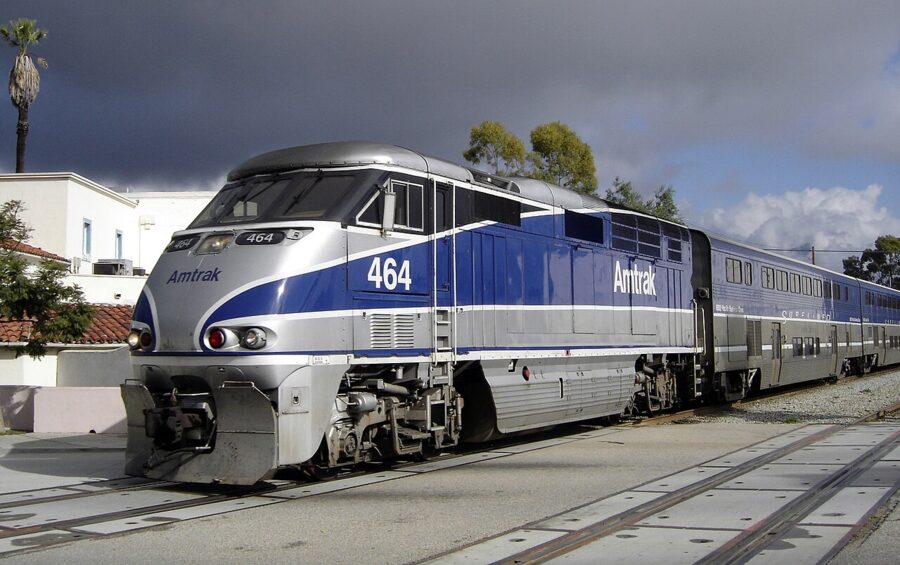
The Surfliner is the right train for a day out, for a one-way leg that fits a road trip, or for picking up the coast at a better hour than the southbound Starlight gives you in winter. Take the morning Starlight north, sit on the left, and get off at San Luis Obispo; take a Surfliner back the next day.
For the whole thing, though, book train 14 north from Los Angeles, a roomette if you can, and the left side of the lounge by 11 a.m. You will have the Pacific by lunch, Shasta at dawn if it is summer, and Odell Lake on the right while the dining car pours the second coffee.