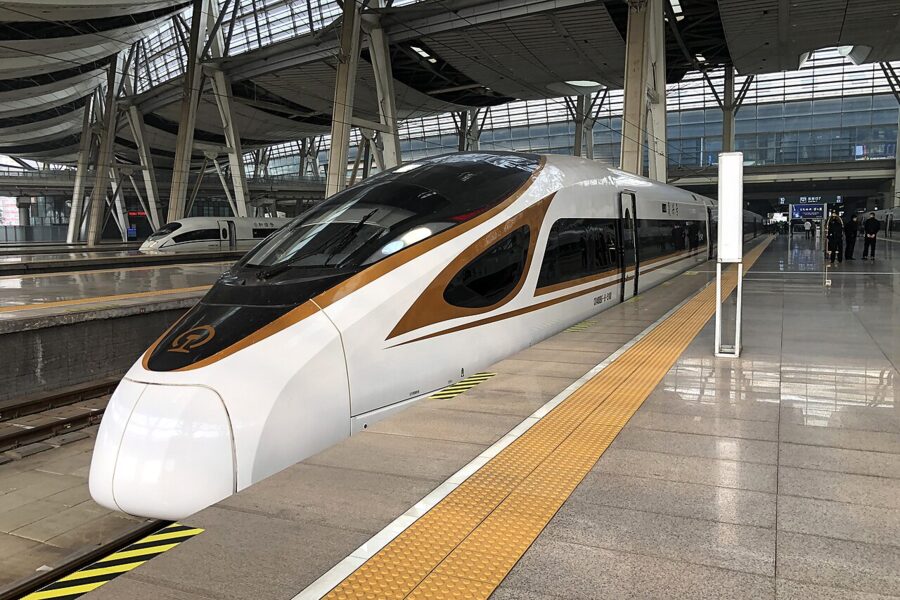
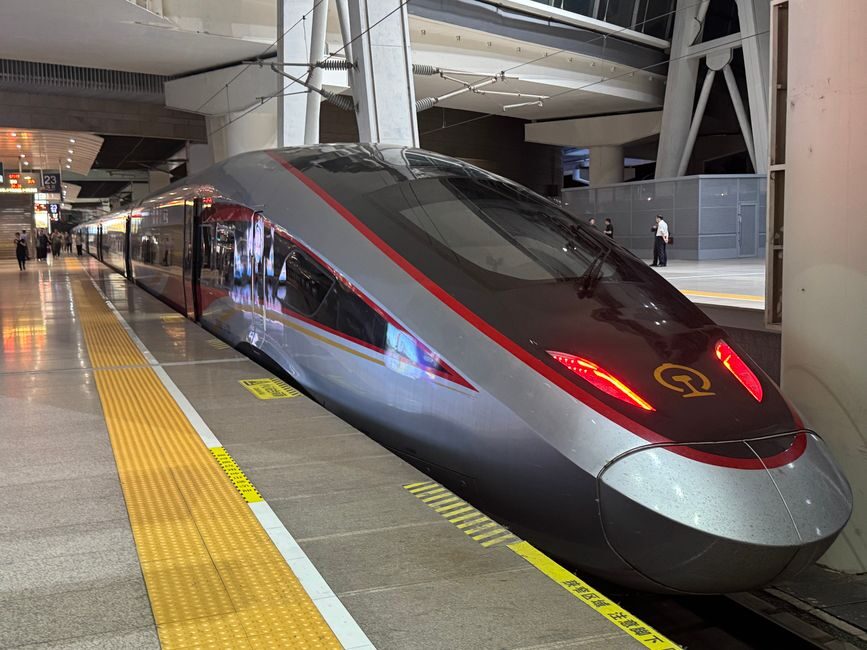
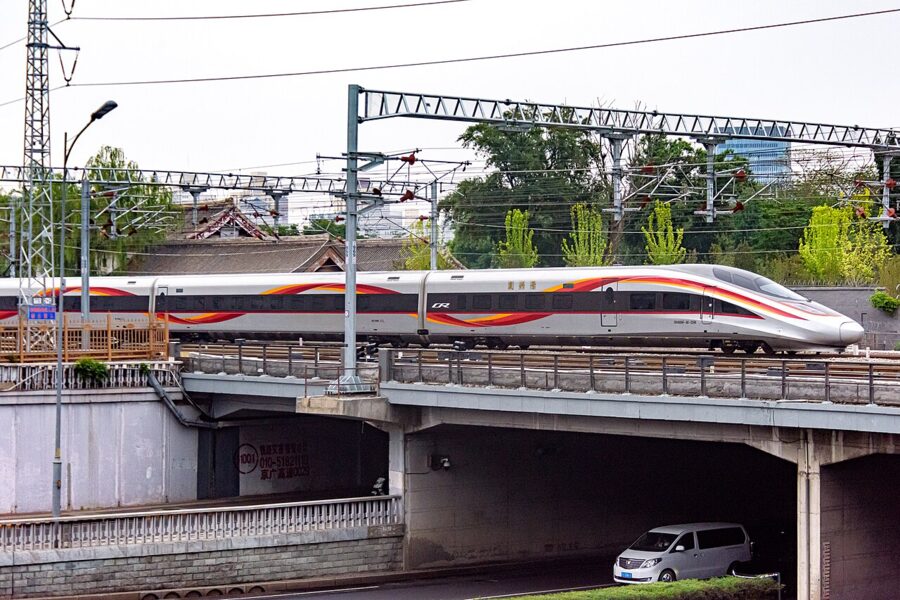
Every hour on the hour through the middle of the day, a Fuxing train leaves Beijing South for Shanghai, and the quickest of them covers the 819 miles (1,318 km) in 4 hours and 18 minutes. A second-class seat on the 9 a.m. train, G7, cost ¥692 (about US$104) as of December 2026, and it was the same price on a Tuesday and a Friday. It crosses the Yangtze at Nanjing on the way and pulls into Shanghai Hongqiao at 1:37 p.m., in time for a late lunch.
The train is the easy part. China’s high-speed network is the largest in the world, the trains are clean and quiet, and the stations are run like airports. What trips up first-time visitors is everything before the platform: buying a ticket with a foreign passport, knowing which of a city’s four or five stations your train uses, and getting through two passport checks and a bag scanner before the gate closes.
Stops in this article11
- 01The network in brief, and the record lines
- 02Booking with a foreign passport
- 03Classes, seats and fares as of 2026
- 04The station routine: ID, security, gates
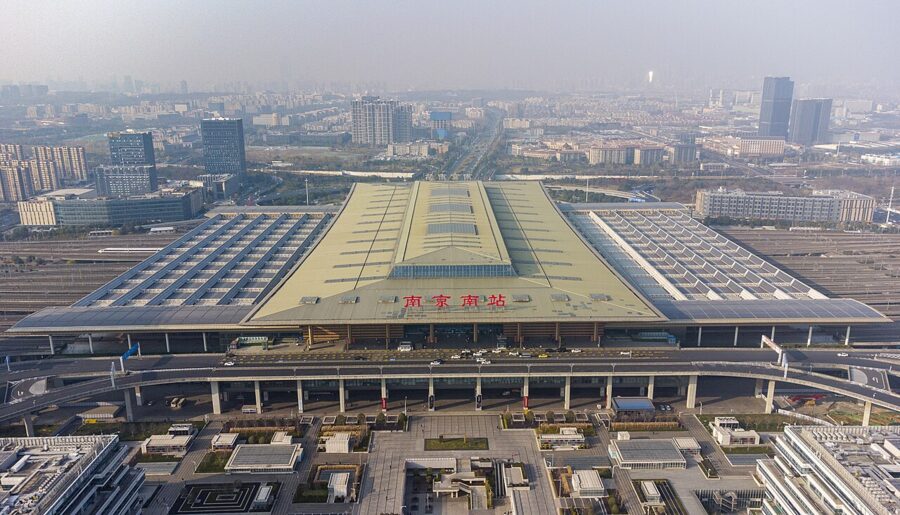
- 05The big stations, and which one is yours
- 06Beijing to Shanghai, train by train
- 07Other classic journeys, with fares
- 08Sleeper trains
- 09Hong Kong and the West Kowloon link
- 10The Qinghai-Tibet line
- 11Putting it together
The network in brief, and the record lines
China passed 31,000 miles (50,000 km) of high-speed line on December 26, 2025, when the Xi’an to Yan’an railway opened, and Xinhua reported the milestone as more than every other country combined. By the end of 2025 the national operator, China State Railway Group, put the figure at 50,400 km, and it plans around 60,000 km by 2030. In practice that means almost any city you want to visit has a fast train, and 97 percent of Chinese cities with more than half a million people are on the network.
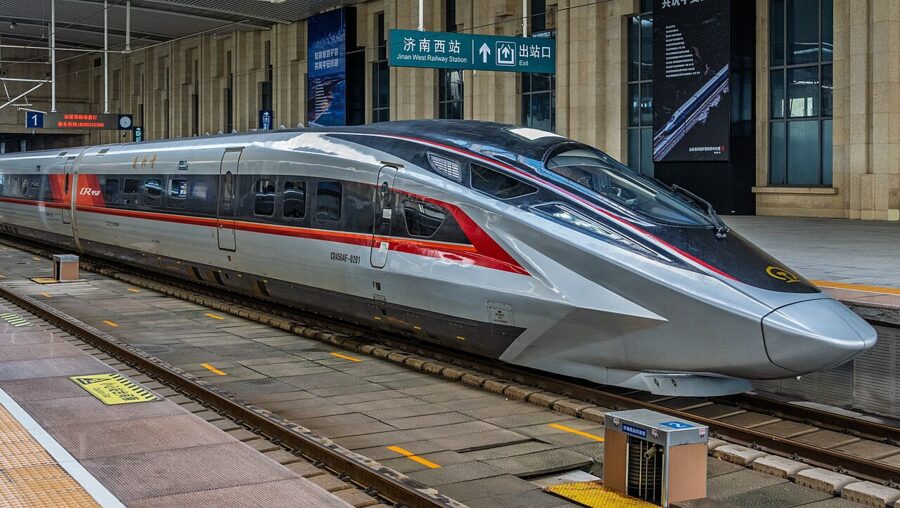
The letter in front of the train number tells you what you are riding. G trains are the fastest, on dedicated high-speed lines, and the ones you want between big cities. D trains are a step slower and include most of the overnight high-speed sleepers, and C trains are short intercity runs such as Beijing to Tianjin.
Z, T and K trains are the old conventional services, slower and cheaper, and they still carry the long sleeper routes such as the line to Lhasa.
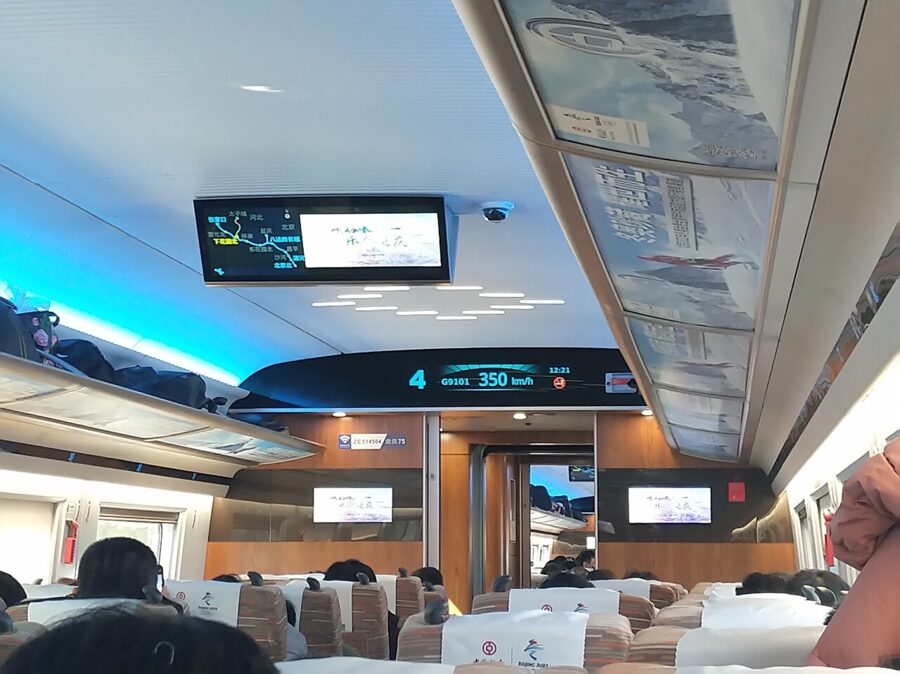
The top speed in passenger service is 350 km/h, reached by the CR400 Fuxing trains on the Beijing-Shanghai line and several other trunk routes. Its successor, the CR450, reached 453 km/h in pre-service trials in 2025 and is built to run at 400 km/h in service. In August 2026 China State Railway Group said the prototypes had finished a 600,000 km trial and moved on to final inspection and certification, but as of late 2026 it was not carrying passengers, and no start date had been announced.
Booking with a foreign passport
Every ticket in China is sold in a passenger’s name and tied to an ID document, and for a visitor that document is your passport. The name and number on the ticket must match the passport you carry, because you will show it to get into the station, through the gate and out at the other end. One passport can hold only one ticket on the same train on the same day.
Tickets go on sale 15 days ahead, counting the day of purchase, at a time that varies by departure station. That is a short window by European or American standards, and it is the same window everyone else has. On ordinary dates the Beijing-Shanghai trains rarely sell out completely, but the fast midday trains and the Friday and Sunday evening services go first, and during Chinese New Year (February 6 in 2027), the May Day holiday and the National Day week in early October, the popular trains sell out soon after release.
12306, the railway’s own site and app
China Railway sells every seat through 12306, named after its customer service number, which has an English website and an app. You register, add yourself as a passenger with your name, nationality and passport number, and the system verifies the passport, either automatically or after you upload a photo of the information page. If neither works, any station ticket counter can verify it in person with the passport in hand.
According to the 2026 edition of the Ministry of Commerce guide for foreigners, reproduced on Hunan’s provincial government site, a verified foreign passenger can pay on 12306 with Chinese or foreign bank cards and with mobile payment apps. Foreign cards do not always go through on the first try, so I would set up Alipay or WeChat Pay with your own card before you fly, and keep it as the backup. Ticket sales and changes run from 5 a.m. to 1 a.m. Beijing time (5 a.m. to 11:30 p.m. on Tuesdays); searching and refunds work around the clock.
You get an e-ticket and nothing to print. Under the 12306 e-ticket rules the passport is the ticket, and the “itinerary sheet” you can download is only a receipt.
Agents, and when to pay one
If 12306 refuses your card or your passport will not verify, licensed railway ticket agents and the big online travel agencies sell the same seats, in English, with foreign cards. They add a service fee and apply their own change and refund rules, and they cannot find seats that 12306 shows as sold out.
At the station counter
Every big station has staffed ticket windows. Bring the passport, write the train number, date and class on paper, and pay by card, mobile payment or RMB cash. The government guide lists only Chinese ID cards and foreign permanent resident cards for the self-service machines, so with a passport you queue at the window.
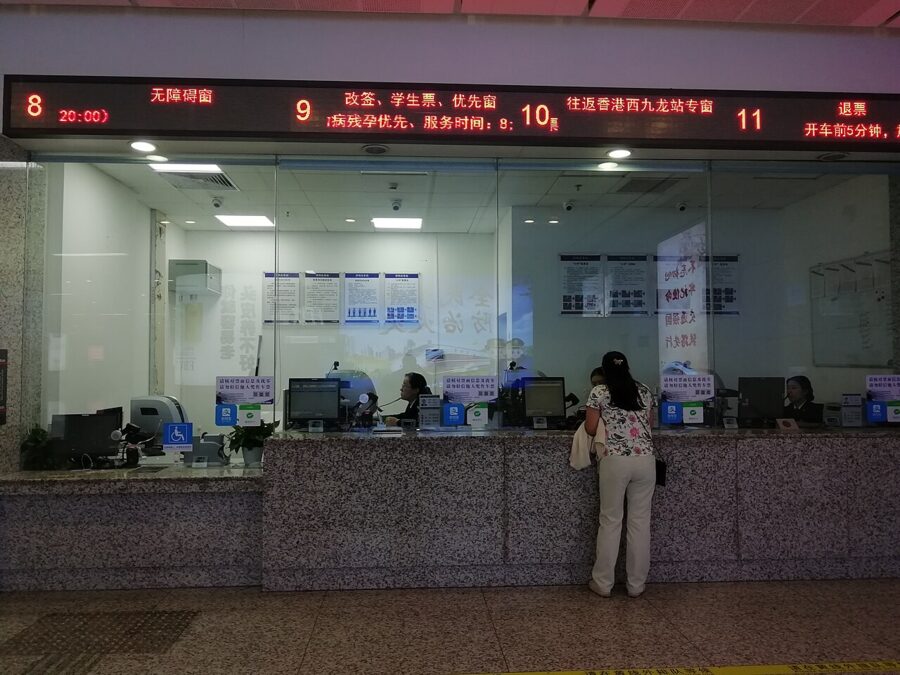
Plans change, and 12306 is generous about it. You can change a ticket once, to a different date, train or class, for free up to 48 hours before departure, and refunds cost nothing eight or more days out, 5 percent up to 48 hours before, 10 percent between 48 and 24 hours, and 20 percent in the last 24 hours (minimum ¥2). For travel from February 2026 on, 12306 also lets you cancel one order a day free within 30 minutes of buying it, as long as the train leaves at least four hours later.
Classes, seats and fares as of 2026
A daytime G train has three classes, and on some trains a fourth. You choose the seat letter when you book, and the letters are the same on every train, which makes the window easy to find.
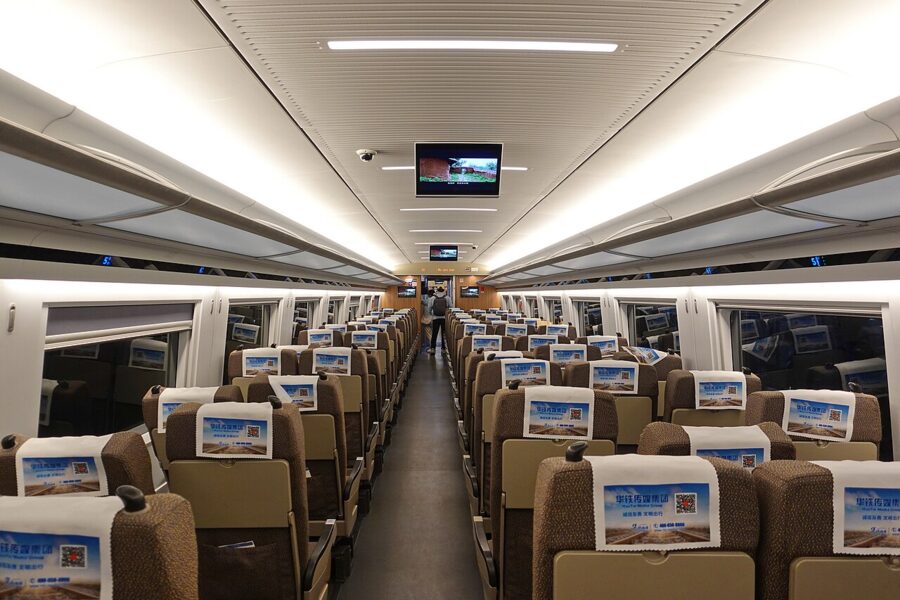
- Second class is five across, ABC and DF, with A and F at the windows. It is clean, air-conditioned and has a power socket per row, and it is what most Chinese passengers ride.
- First class is four across, AC and DF, with wider seats, more legroom and a quieter car. It costs about 60 percent more than second.
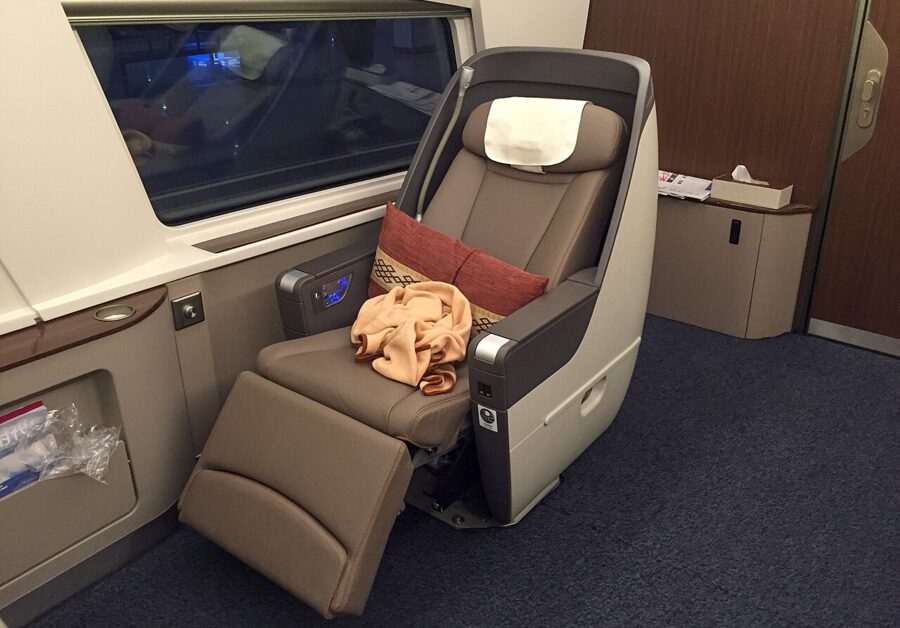
- Business class is three across or fewer, with seats that recline almost flat, usually a meal and drinks, and, at the big stations, a separate waiting lounge. It costs about three and a half times second class.
- Premium first class appears on some trains: first-class seats with a few extras, priced between first and business.
Fares are set train by train, not per route. China Railway publishes a ceiling fare and sells below it, so a slow train that stops everywhere costs less than a fast one, a popular departure costs more, and the same train can cost more on a Friday. These are the fares 12306 was charging from Beijing South to Shanghai Hongqiao for two December 2026 dates; all are adult one-way fares in yuan, as of 2026.
| Train | Departs, arrives | Time | Second | First | Business |
|---|---|---|---|---|---|
| G547 | 6:18 a.m., 12:11 p.m. | 5 h 53 min | ¥553 (US$83) | ¥929 (US$139) | ¥1,995 (US$299) |
| G1 | 6:30 a.m., 11:24 a.m. | 4 h 54 min | ¥598 (US$90) | ¥1,005 (US$151) | ¥1,995 (US$299) |
| G7 | 9:00 a.m., 1:37 p.m. | 4 h 37 min | ¥692 (US$104) | ¥1,107 (US$166) | ¥2,420 (US$363) |
| G669, Tuesday | 9:07 a.m., 2:59 p.m. | 5 h 52 min | ¥525 (US$79) | ¥883 (US$132) | ¥1,870 (US$280) |
| G669, Friday | 9:07 a.m., 2:59 p.m. | 5 h 52 min | ¥598 (US$90) | ¥1,005 (US$151) | ¥2,315 (US$347) |
| G25, Tuesday | 5:00 p.m., 9:18 p.m. | 4 h 18 min | ¥626 (US$94) | ¥1,033 (US$155) | ¥2,156 (US$323) |
| G25, Friday | 5:00 p.m., 9:18 p.m. | 4 h 18 min | ¥661 (US$99) | ¥1,058 (US$159) | ¥2,315 (US$347) |
So the plain answer to what Beijing to Shanghai costs is ¥525 to ¥692 (about US$79 to US$104) in second class as of 2026, depending on the train and the day. The cheapest seat is on a train that takes an hour and a half longer, and I would not save US$25 that way on a trip this long. Pay for one of the on-the-hour expresses instead.
Children 6 to 13 pay a child fare, about half; a child under 6 rides free with a paying adult but gets no seat of their own; from 14 on it is the full fare. Luggage is carried by you, not checked: 44 lb (20 kg) per adult, and on high-speed trains no single piece over 51 inches (130 cm) in length, width and height added together. A full-size suitcase goes in the racks at the end of the car, and those fill up, so board early if you have one.
The station routine: ID, security, gates
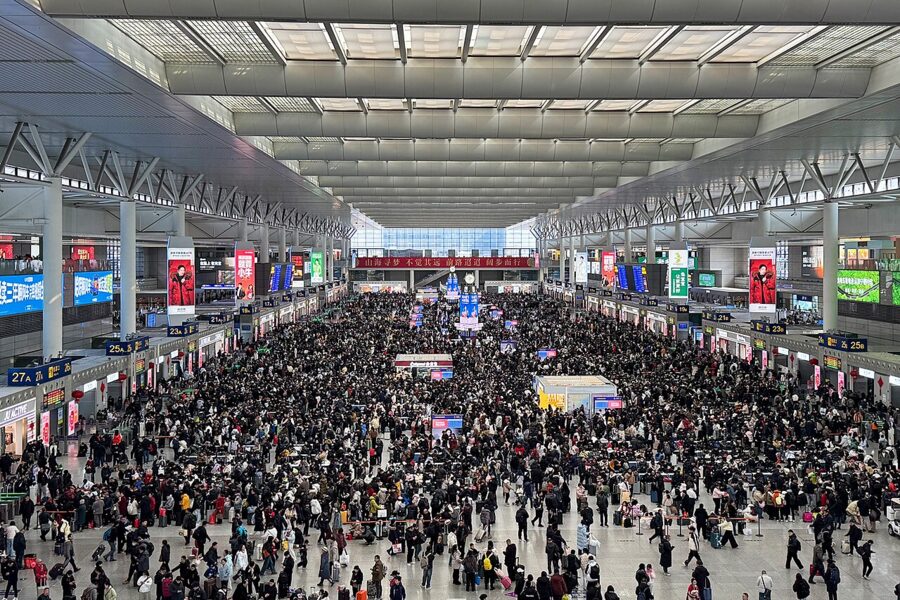
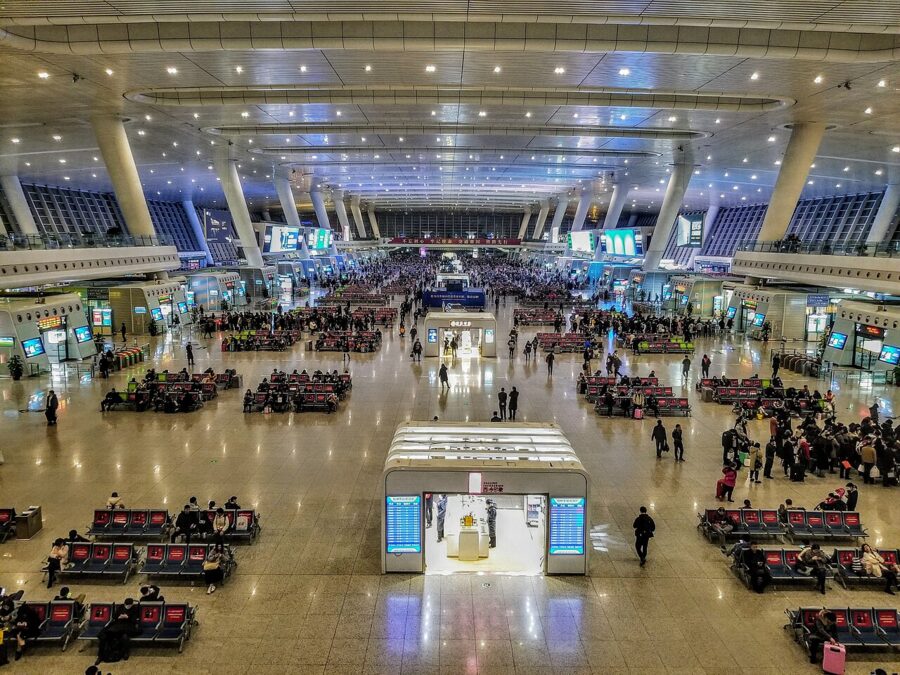
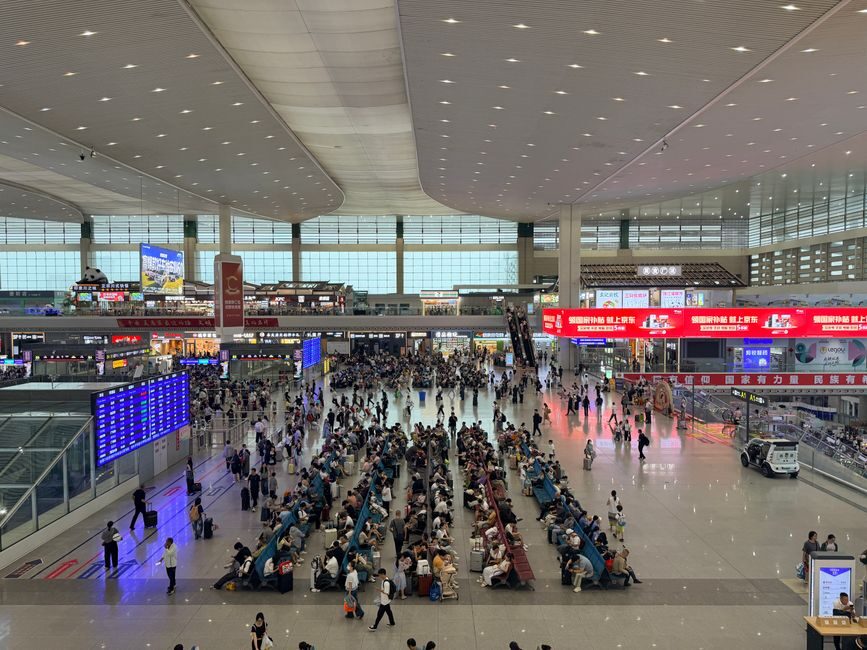
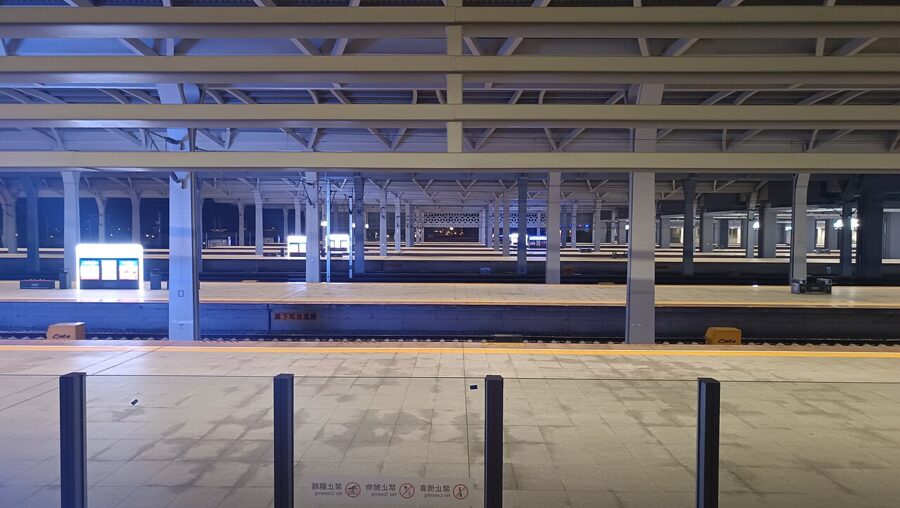
A big Chinese station works like an airport with a train at the end of it. Allow 45 minutes at a station you know and an hour at one you do not, and more on a Friday evening or at a holiday. Ticket checking closes a few minutes before departure, and nobody will hold the train.
- ID check at the door. Chinese passengers tap ID cards at automatic gates; with a passport you usually join the staffed lane next to them, where an attendant looks at the passport and your face. Some stations now read passports at the gates, and if one rejects yours, go to the staffed lane rather than trying again.
- Security. Every bag goes through an X-ray scanner and every passenger through a metal detector. Knives are out, and so are aerosol sprays over 120 ml and more than two lighters per person.
- The waiting hall. Find your train number on the departure boards, which give a gate number, such as 12B, and a status. Check again before you walk.
- The gate. Boarding opens shortly before departure. Use the passport at the gate or show it to the attendant, then follow the signs down to the platform.
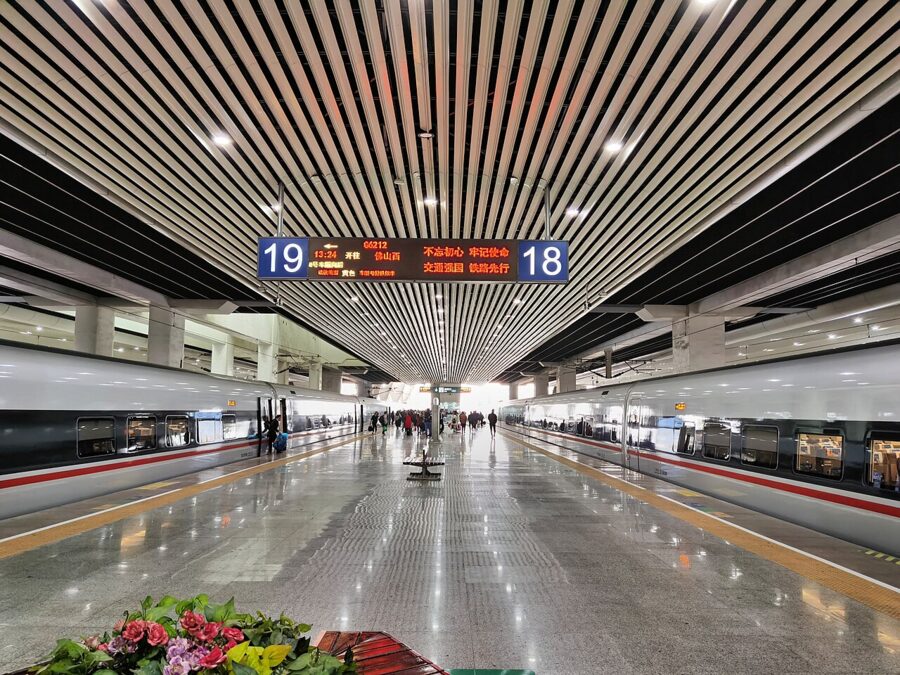
- The platform. Numbers painted on the platform show where each car will stop. Stand at yours; the train will not wait while you walk 16 cars.
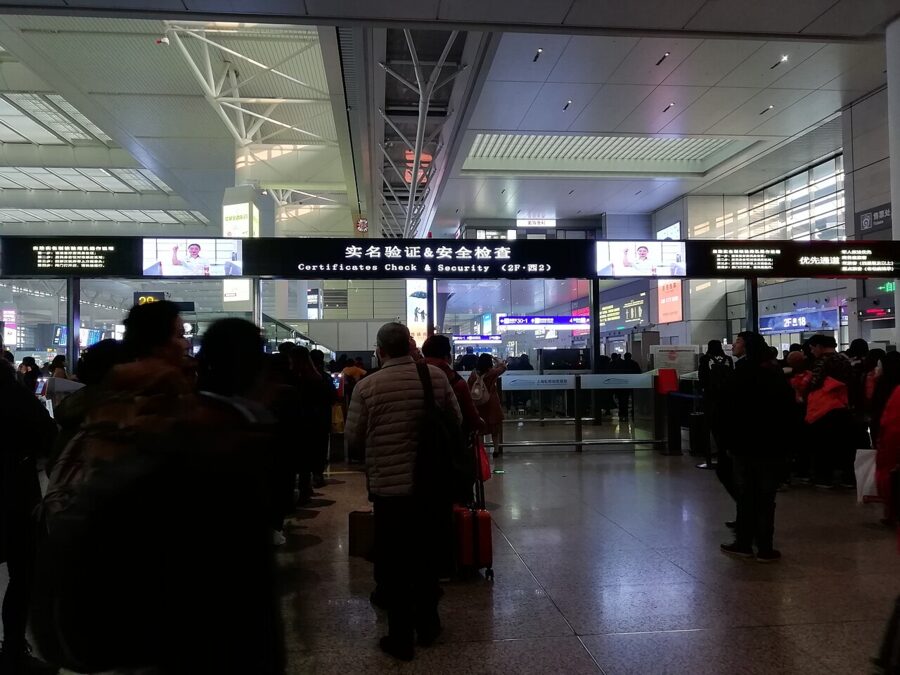
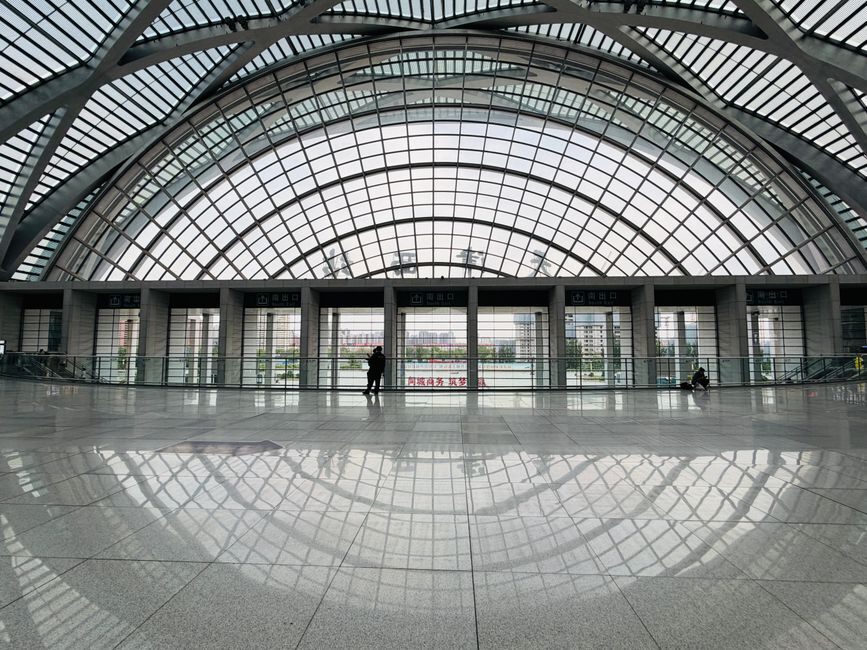
You keep the passport handy at the other end too: the exit gates read it again, and a station staffer will wave you through the manual lane if the gate does not. Keep it in a pocket, not packed away, until you are on the street.
The big stations, and which one is yours
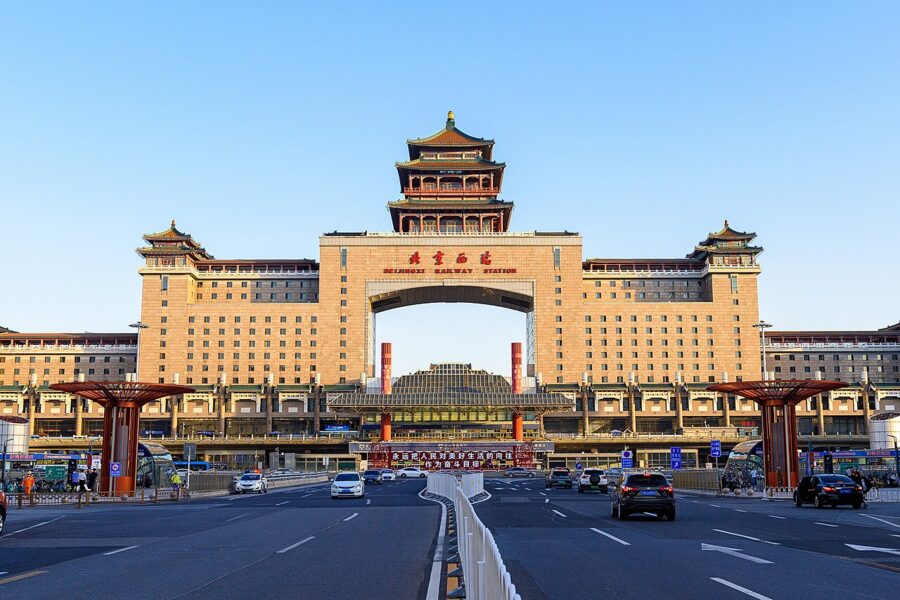
Big Chinese cities have several stations, often 30 minutes or more apart, and the city name alone is not enough when you book. These are the ones a visitor is most likely to use.
- Beijing South: most trains to Shanghai, Tianjin and the east coast. On subway Lines 4 and 14.
- Beijing West: trains to Xi’an, Wuhan, Guangzhou, Shenzhen and Hong Kong, plus overnight trains to Lhasa. Beijing (the old central station) and Beijing Fengtai handle some of the overnight trains to Shanghai.
- Shanghai Hongqiao: almost every train from Beijing, and most to Hangzhou, beside the Hongqiao airport terminal in the west of the city. Shanghai station, in the center, gets a few of the Beijing expresses; the overnight trains end at Shanghai station, Shanghai South or Shanghai Songjiang.
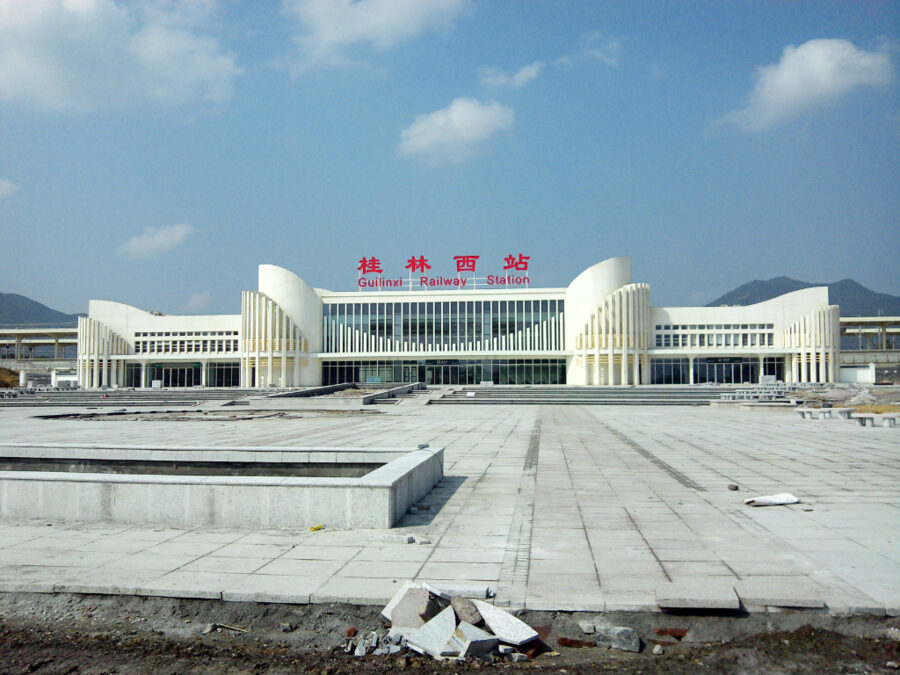
- Guangzhou South: the hub for the south, Guilin and the Hong Kong line, well outside the center.
- Hong Kong West Kowloon: the only high-speed station in Hong Kong, with mainland border formalities inside it.
Beijing to Shanghai, train by train
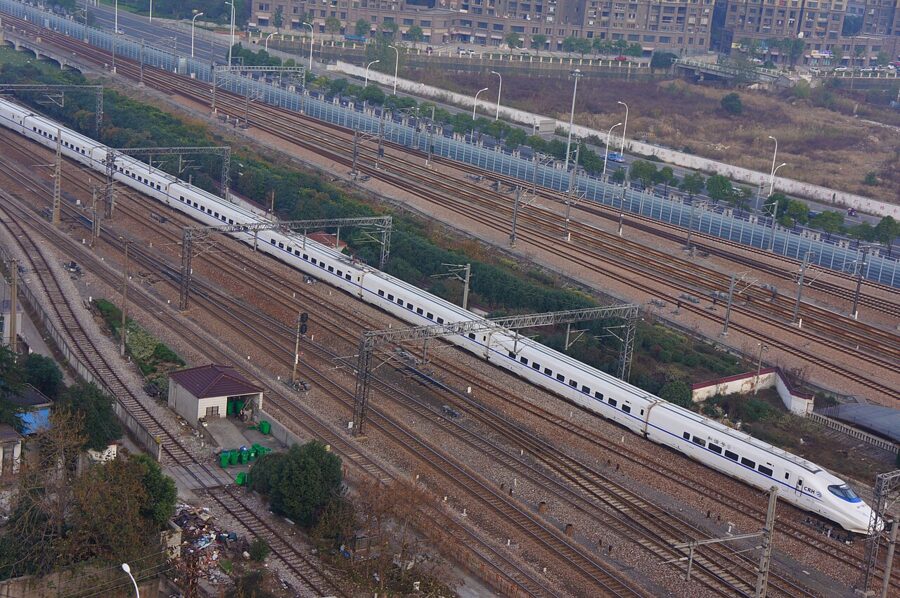
The Beijing-Shanghai high-speed railway opened on June 30, 2011, and runs 819 miles (1,318 km) with 24 stations. China Railway raised its trains to 350 km/h in September 2017, when the Fuxing sets arrived. On a Tuesday in December 2026, 12306 listed 44 G trains from Beijing South to Shanghai, the first at 6:18 a.m. and the last at 7:24 p.m.
The trains to know are the expresses that leave Beijing South on the hour from 9 a.m. to 7 p.m., numbered G7, G9, G23 and so on, with few stops and timings between 4 hours 18 minutes (G25, the 5 p.m.) and 4 hours 43 minutes. Most arrive at Shanghai Hongqiao; G17 at 1 p.m., G29 at 6 p.m. and G33 at 7 p.m. run to Shanghai station, which is closer to the Bund. The early G1 at 6:30 a.m. is worth the alarm if you want an afternoon in Shanghai. The slower trains, 5 hours 30 minutes to almost 8, are cheaper and call at more of the stations in between, such as Qufu East for Confucius’s hometown and Tai’an for Mount Tai, which you might want to stop at anyway.
Going north, G2 leaves Shanghai Hongqiao at 6:43 a.m., and the expresses G8, G10, G12 and G14 follow on the hour from 8 a.m., all reaching Beijing South in about 4 hours 30 minutes. The trains that leave between 3 p.m. and 5 p.m. on Fridays and Sundays are the ones to book on the day the window opens.
Is the train better than flying? Over this distance it usually is. The flight is shorter on paper, but Beijing South and Shanghai Hongqiao are both on the subway and closer to most hotels than Beijing’s two big airports or Pudong, there is no check-in deadline, and you can work or eat in your seat the whole way. Fly if you are staying near Pudong airport, or if the trains you want are full.
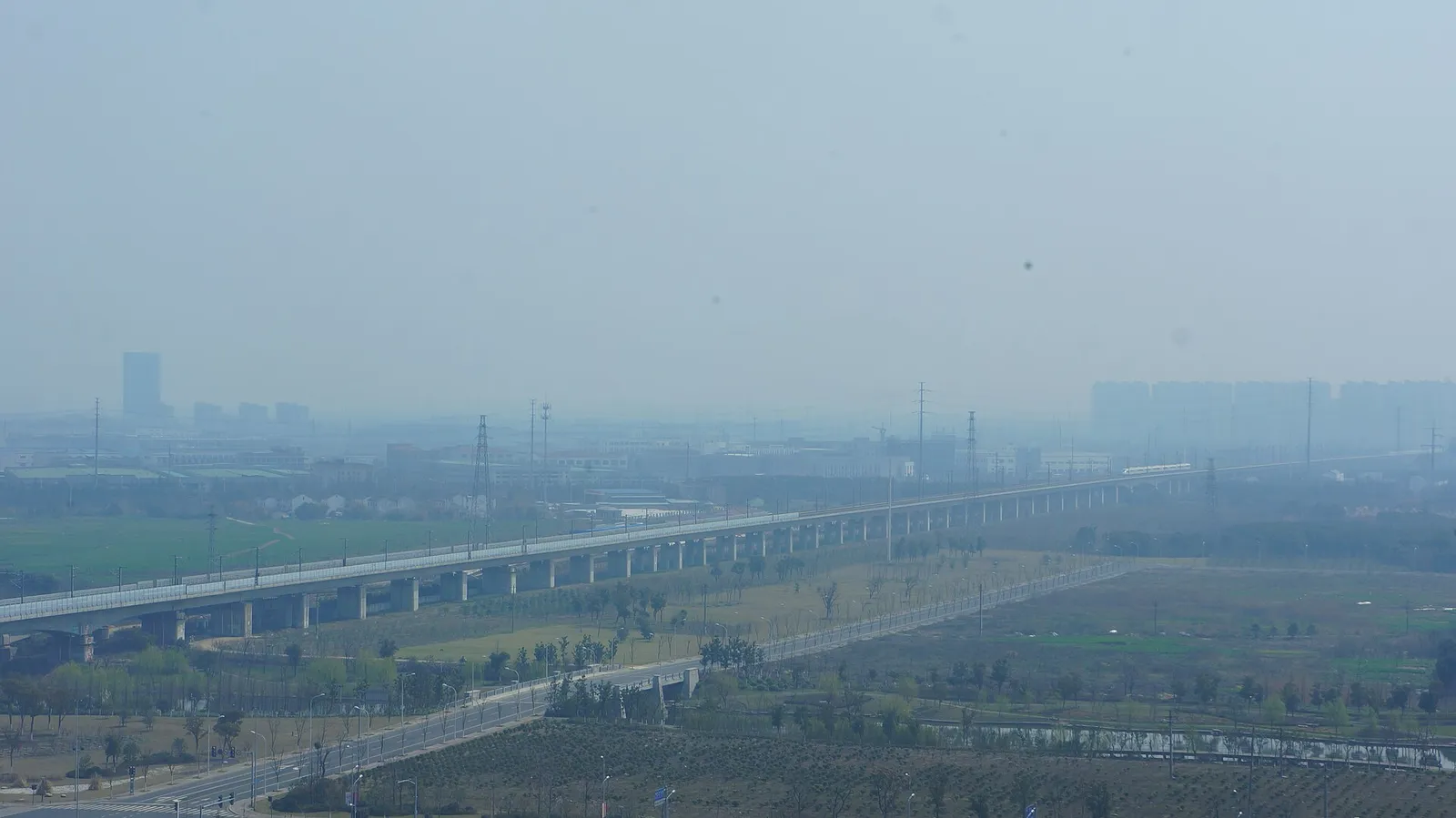
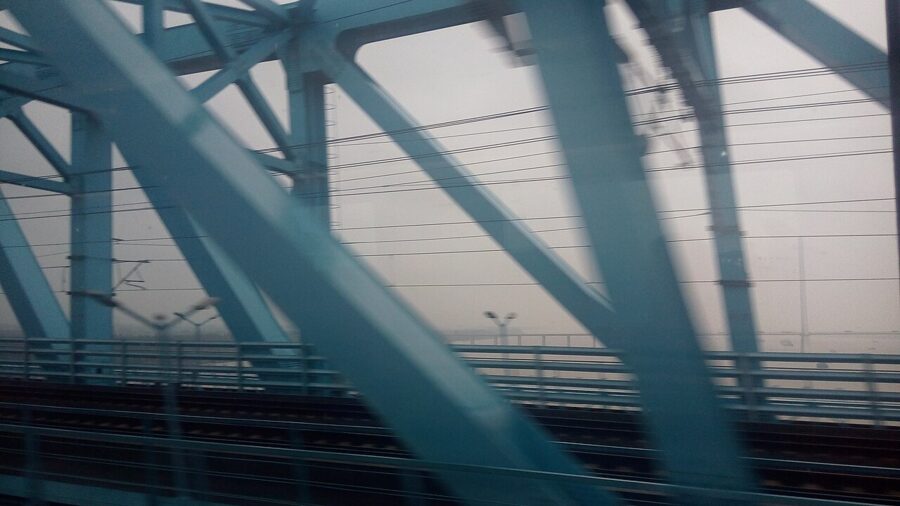
What you see is mostly the North China Plain: flat farmland, factory towns and new apartment blocks, broken by the hills around Tai’an. Between Danyang and Kunshan, on the last stretch into Shanghai, the line runs for 164 km over the Danyang-Kunshan Grand Bridge, the longest bridge in the world, though from a seat it looks like any other viaduct. Take the seat for comfort, not for the view.
Other classic journeys, with fares
The same rules apply on every line, so these worked examples are about choosing the station and the train. Fares are second class as of December 2026, for the trains 12306 listed on a weekday.
| Journey | Fastest | Second-class fare | What to know |
|---|---|---|---|
| Shanghai Hongqiao to Hangzhou East | 45 min | ¥73-87 (about US$11-13) | Trains every few minutes; some run from Shanghai South or Songjiang instead. |
| Beijing West to Xi’an North | 4 h 10 min | ¥587 (about US$88) | First class ¥939, business ¥1,945 on the fastest trains. |
| Chengdu East to Chongqing | 1 h 10 min | ¥125-217 (about US$19-33) | G-train fares; D trains from ¥85. Chongqing has several arrival stations, so check which one is near your hotel. |
| Guangzhou South to Guilin West or North | 2 h 4 min | ¥176-235 (about US$26-35) | Most fast trains run to Guilin West, some to Guilin North. |
| Hong Kong West Kowloon to Guangzhou South | 48 min | ¥215 (about US$32) | Board an hour early for the border checks. |
Sleeper trains
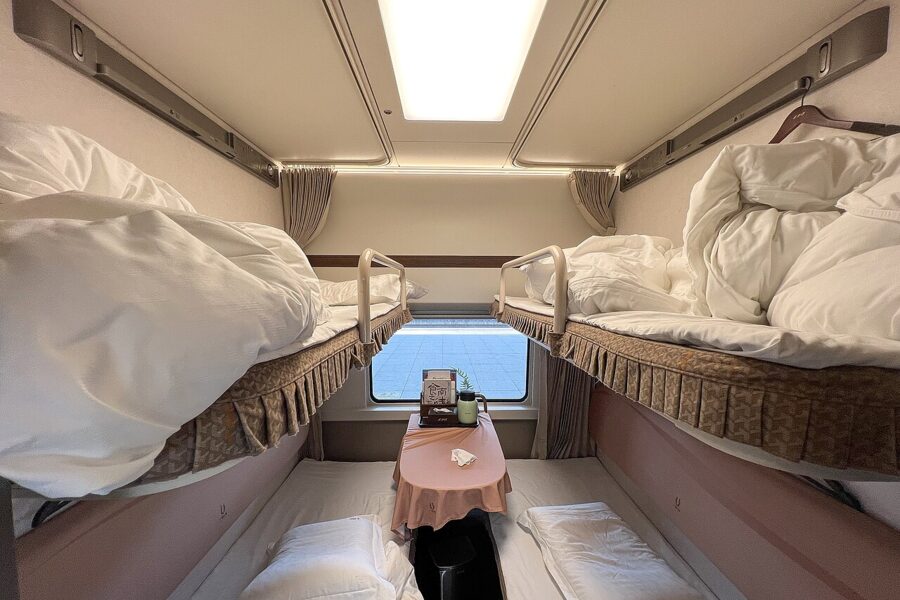
The overnight high-speed sleepers are the one place where China’s trains still do what trains used to do everywhere: put you to bed in one city and wake you in another. On the Beijing-Shanghai route there were four or five a night in December 2026, leaving between 7:10 p.m. and 9:22 p.m. and arriving between 7:25 a.m. and 9:45 a.m. They run slower than the day trains, and they arrive at Shanghai station, Shanghai South or Shanghai Songjiang rather than Hongqiao.
Each has two grades of berth. On a Tuesday in December 2026 a second-class berth cost ¥440-476 (about US$66-71) and a first-class berth ¥601-644 (about US$90-96); on the Friday the same berths were ¥508-578 and ¥650-732. That is less than the business-class seat on a day train, and it saves a hotel night. The old conventional Z281 also still runs, leaving Beijing Fengtai at 7:10 p.m. for a 13-and-a-half-hour trip, with a soft sleeper at ¥476.50 and a hard sleeper at ¥304.50.
The most comfortable bed on a Chinese train is the deluxe soft sleeper, a two-berth compartment on a few conventional overnight trains. Z179 from Beijing West to Xi’an had one at ¥735.50 (about US$110) as of December 2026, nearly twice the four-berth soft sleeper on the same train. None of this is a hotel on wheels in the sense of the Orient Express or the Eastern & Oriental Express; it is a clean berth, a blanket and a reading light, closer to the night trains in Europe.
Hong Kong and the West Kowloon link
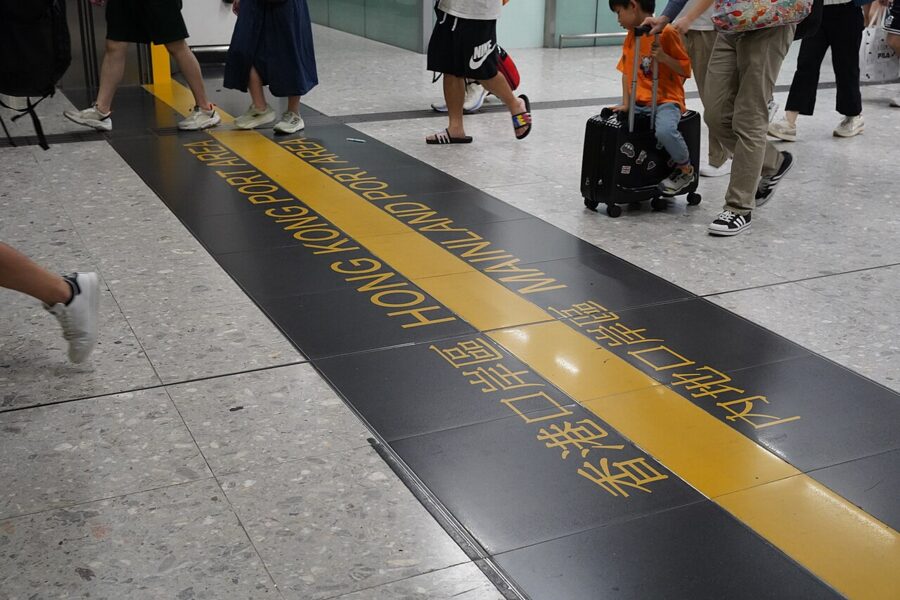
The Hong Kong end of the Guangzhou-Shenzhen-Hong Kong line is run by MTR, Hong Kong’s railway, and ends at West Kowloon in the middle of the city. The trick that makes it work is that mainland China’s border post is inside the station: you clear Hong Kong departure and mainland arrival together in the basement at West Kowloon, and step off the train at the other end like a domestic passenger. That means you need whatever entry permission your passport requires for mainland China before you board, not after.
Tickets are sold on 12306, at the West Kowloon ticket counters and machines, and through designated agents, and the passport rules are the same as on the mainland. Fares are set in yuan by China State Railway Group, and MTR sets the Hong Kong dollar fare once a month at the going exchange rate. On a weekday in December 2026, second class to Guangzhou South was ¥215 (about US$32) on most trains, for a trip of 48 to 75 minutes; first class was ¥323-344.
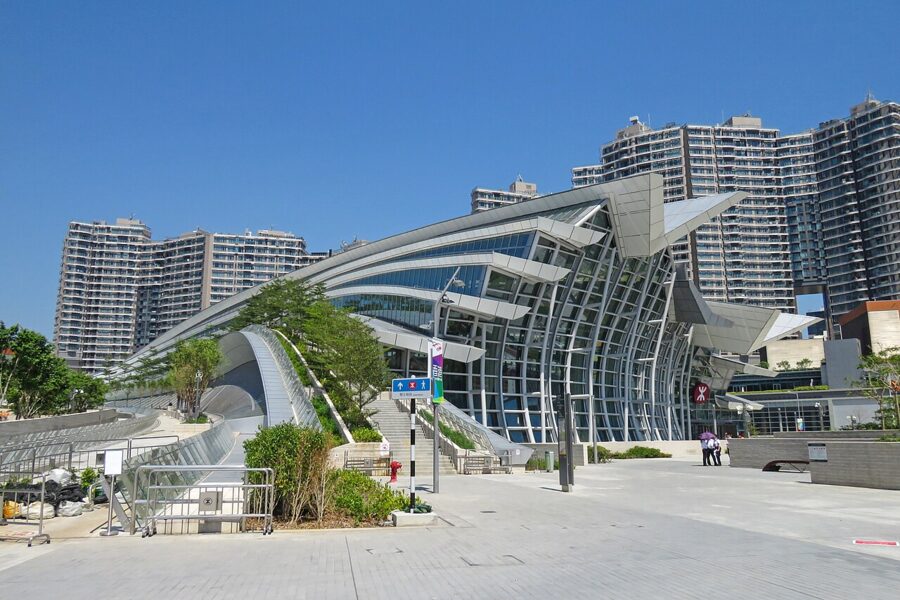
MTR’s own departure guide is the timetable for the hour before your train. The real-name check and ticket verification open 90 minutes before departure and close 30 minutes before; then come security and the two immigration counters on level B3. The boarding gates open 15 minutes before departure and close five minutes before, and MTR says the whole process normally takes 30 to 45 minutes, longer with a passport, at weekends and on holidays.
The long trains from West Kowloon are worth knowing about. G382 left at 11:19 a.m. for Beijing West, arriving at 7:30 p.m., at ¥1,248 (about US$187) in second class as of December 2026, and G902 left at 11:35 a.m. for Shanghai Hongqiao, arriving at 7:43 p.m., for ¥939 (about US$141). The overnight sleepers are better still: G899 from Shanghai Hongqiao left at 8:15 p.m. and arrived in Hong Kong at 7:25 a.m., with a berth at ¥890 (about US$133), and G897 left Beijing West at 9:01 p.m. for a 7:19 a.m. arrival, with a berth at ¥1,150 (about US$172). The Beijing sleeper was not on sale for every date in December 2026, so search your exact date.
The Qinghai-Tibet line
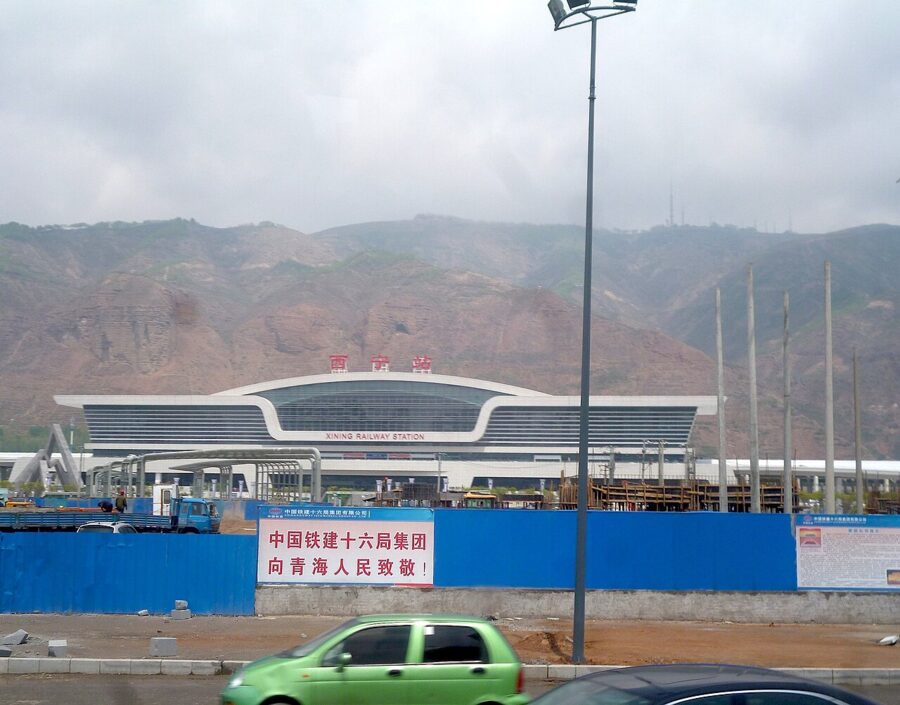
The one long rail journey in China that is not high-speed is the one many visitors want most. The trains to Lhasa are conventional Z-train sleepers, all of them through Xining; from Xining the ride takes about 20 hours, and a soft sleeper cost ¥781 (about US$117) as of December 2026. Foreigners also need a Tibet Travel Permit, which only a registered travel agency can arrange. The permit and the choice of a departure that crosses the high passes in daylight shape any trip on the Qinghai-Tibet Railway to Lhasa.
Putting it together
For a first trip, I would register on 12306 and verify the passport at home, with Alipay or WeChat Pay as the backup. Fifteen days before each leg, book the train and the seat letter you want: for Beijing to Shanghai, an on-the-hour G express, a window seat, and second class unless you plan to sleep. Book a Hong Kong leg on 12306 too, and be at West Kowloon an hour early.
Then take the 9 a.m. from Beijing South, keep the passport in your pocket, and be in Shanghai for a late lunch.