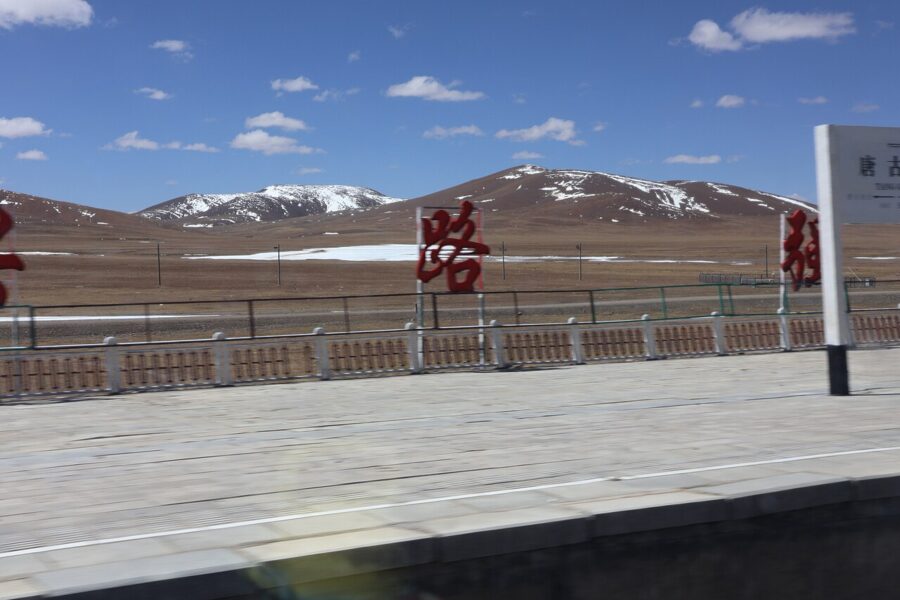
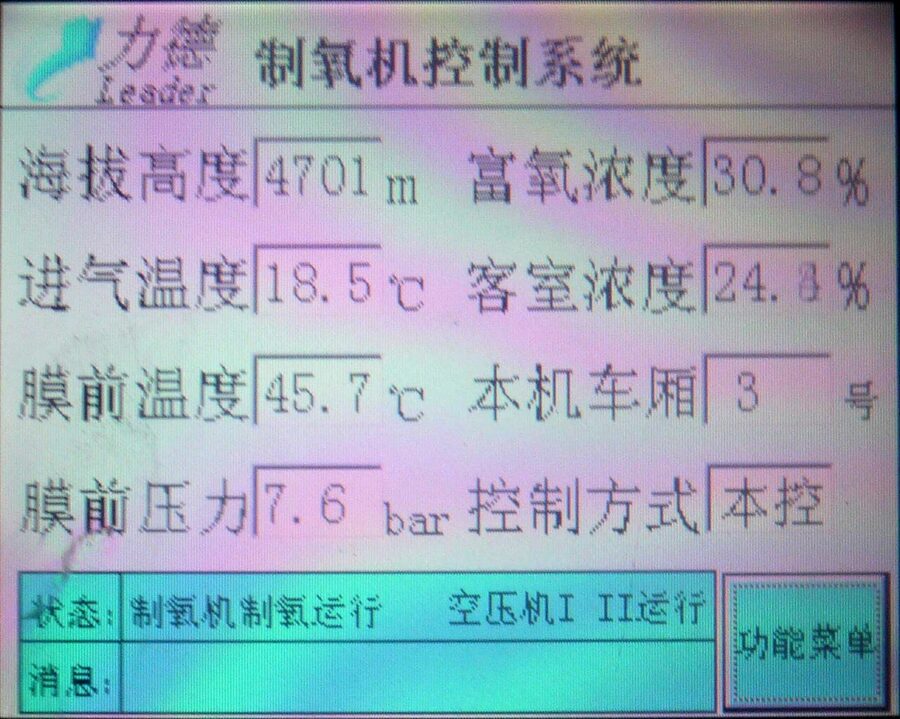
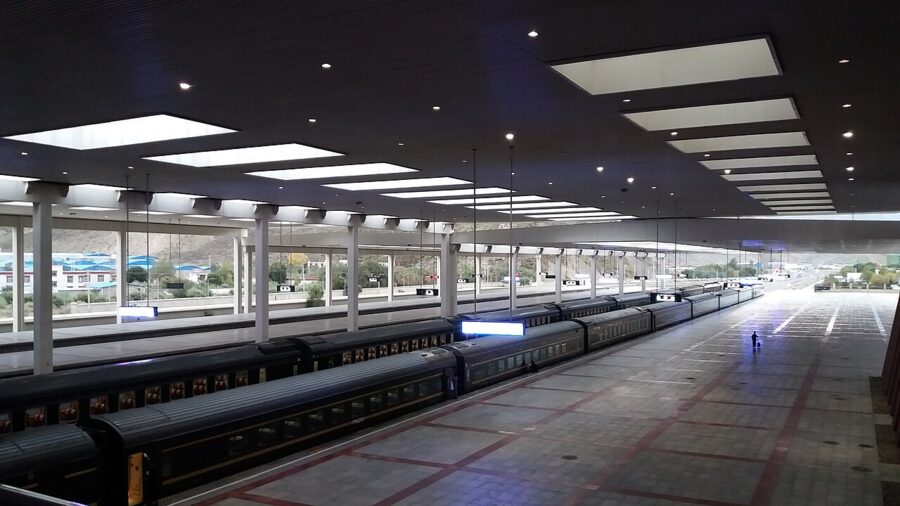
Somewhere between the stops at Yanshiping and Amdo, the train to Lhasa reaches the top of the Tanggula Pass, 5,072 meters (16,640 feet) above the sea, and carries on downhill as if nothing had happened. Nothing marks the moment but a small station called Tanggula slipping past the window, a dusting of snow on a brown plain, and the display at the end of the car showing a number you have never seen on a train before. This is the highest point of any railroad in the world. On the right train you see it in mid-morning sun; on the wrong one you sleep through it.
That choice is the first of several on the Qinghai-Tibet Railway. The line runs 1,956 km (1,215 miles) from Xining, in Qinghai province, to Lhasa, and about 960 km of it lies above 4,000 meters, where the air carries roughly 60 percent of the oxygen it does at sea level. China Railway runs sleeper trains up it every day from Beijing, Shanghai and Guangzhou, every other day from Chengdu and Chongqing, and once a day from Xining itself. The cars are sealed and fed with extra oxygen, and every berth has its own outlet.
The other choices are not about trains at all. A foreigner cannot simply buy a ticket to Lhasa and board: you need a Tibet Travel Permit, which comes only through a registered travel agency, and a guide who meets you at the station. Here is how the line works as of December 2026, which train puts the high country in daylight, what a soft sleeper is like at 5,000 meters, and how the paperwork and the booking fit together.
Stops in this article8
The line: two halves, 22 years apart
The railway is really two lines joined at Golmud. The first half, from Xining west across the Qaidam Basin to Golmud, opened in 1984, and for two decades Golmud was the end of the track. Anyone going on to Lhasa went by road over the Kunlun Mountains and the Tanggula range.
The second half, Golmud to Lhasa, was the hard one. Work began in 2001, and the line opened on July 1, 2006. On the railway’s twentieth anniversary in July 2026, Xinhua reported that it had carried 104 million passengers since 2006, and that in 2006 the line ran five pairs of passenger trains a day. By 2026 it was 13.
Building on frozen ground
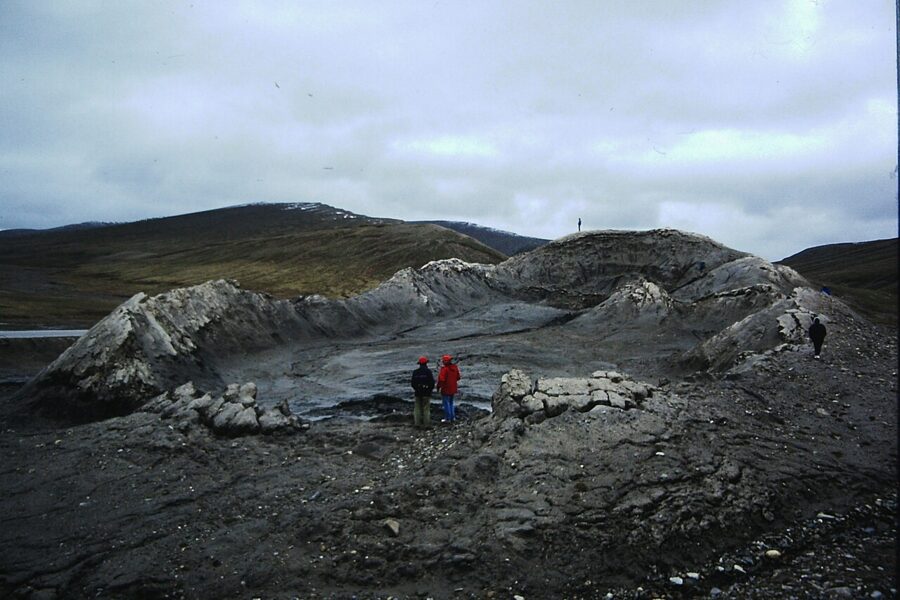
About 550 km of the Golmud-Lhasa section runs over continuous permafrost, ground that stays frozen all year below a thin layer that thaws each summer. A study in Frontiers in Earth Science counts 134 km of that as “warm” permafrost, sitting between zero and minus one degree Celsius, which is the ground that gives way first. Lay an ordinary embankment on it and the dark ballast soaks up the sun, the ice beneath melts, and the track sinks.
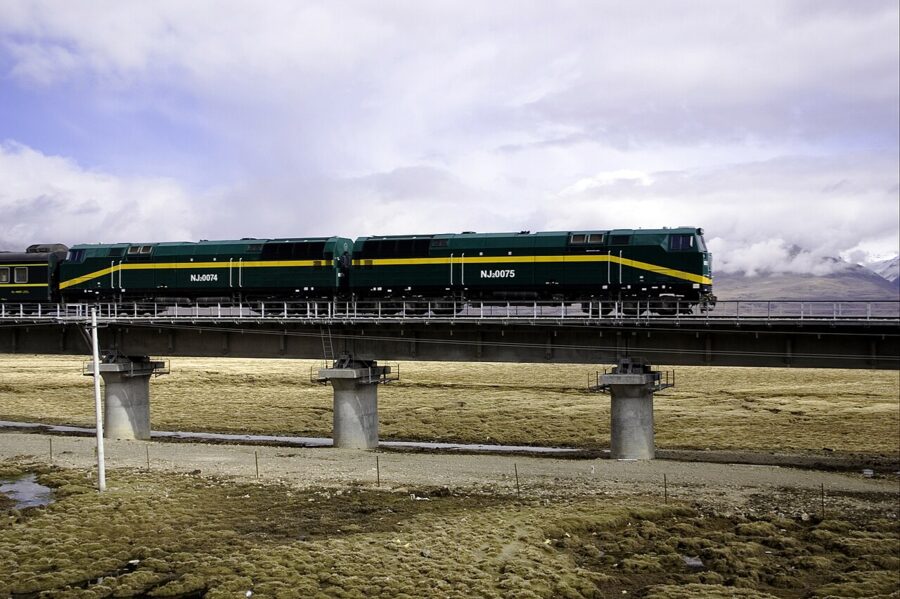
The engineers’ answer was to keep the cold in. More than 150 km of embankment was built with a core or skin of crushed rock, whose open gaps let winter air sink in and summer heat stay out. Where the ground was worst they lined the track with thermosyphons, sealed steel pipes that carry heat out of the ground in winter and do nothing in summer, and over some stretches they gave up on embankments and built bridges.
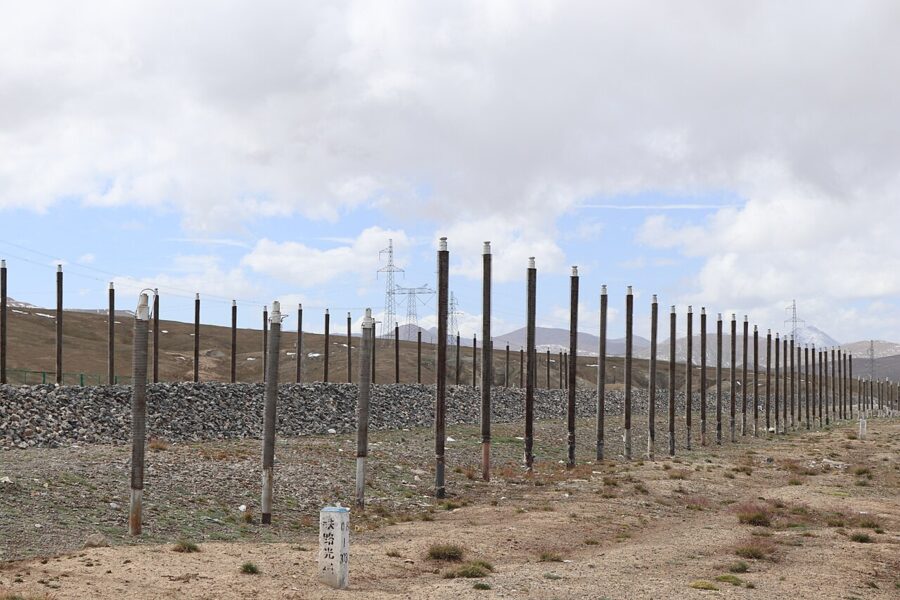
It works, with caveats. A Chinese Academy of Sciences study that followed one embankment from 2006 to 2018 found that crushed rock and thermosyphons together kept it stable where neither did well alone. Other researchers warn that, as the plateau warms, crushed-rock designs on the warm permafrost may not keep up. Trains still run at 100 km/h (62 mph) over the permafrost year-round, which Chinese state media call a world record for a railway on permafrost.
The trains and how long they take
Every train to Lhasa runs through Xining, and every one is an overnight sleeper. The long-distance trains change number partway (the Shanghai train leaves as Z164 and arrives as Z165), so look for both numbers on China Railway’s 12306 site. The table shows the timetable running in December 2026, with fares as charged by China Railway as of 2026 for the cheapest berth in each class; lower berths cost a little more.
| Train | Departs | Arrives Lhasa | Time on board | Runs | Soft sleeper | Hard sleeper |
|---|---|---|---|---|---|---|
| Z21 | Beijing West 7:48 p.m. | 11:46 a.m., day 3 | 39 hr 58 min | Daily | ¥1,144 (about US$171) | ¥720 (about US$108) |
| Z164/Z165 | Shanghai 6:33 p.m. | 3:36 p.m., day 3 | 45 hr 3 min | Daily | ¥1,262.50 (about US$189) | ¥793.50 (about US$119) |
| Z264/Z265 | Guangzhou Baiyun 9:26 a.m. | 2:53 p.m., day 3 | 53 hr 27 min | Daily | ¥1,468 (about US$220) | ¥865 (about US$130) |
| Z322/Z323 | Chengdu West 8:46 p.m. | 7:24 a.m., day 3 | 34 hr 38 min | Every other day | ¥997.50 (about US$149) | ¥627.50 (about US$94) |
| Z223 | Chongqing West 9:00 p.m. | 7:24 a.m., day 3 | 34 hr 24 min | Every other day | ¥997.50 (about US$149) | ¥627.50 (about US$94) |
| Z1671 | Xining 8:40 p.m. | 5:20 p.m., next day | 20 hr 40 min | Daily | ¥781 (about US$117) | ¥495 (about US$74) |
The Chengdu and Chongqing trains alternate days and keep the same times from Lanzhou onward, so between them there is one departure a day for southwest China. The Chengdu train starts at Chengdu Longquanyi at 7:01 p.m., but most people board at Chengdu West. Times are Beijing time, which all of China keeps, so the sun rises late on the plateau: not until about half past eight in December.
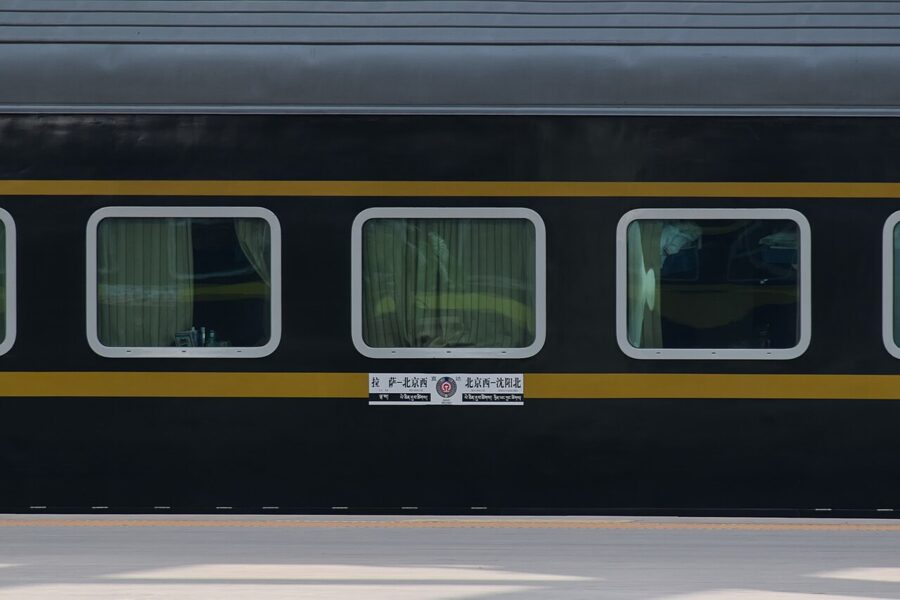
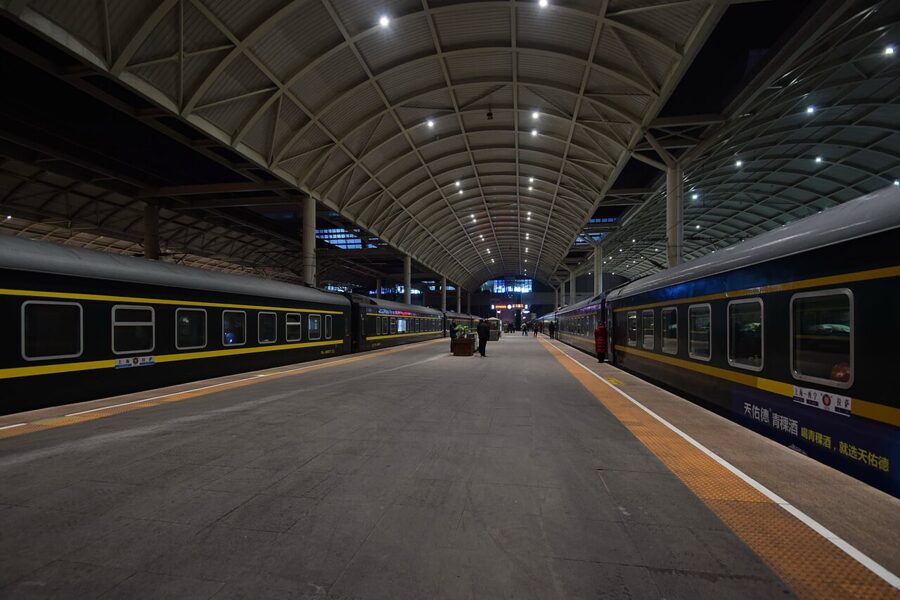
Joining at Xining is the cheap and flexible option: every train above stops there, so you can fly or take a high-speed train to Xining and choose from five southbound departures a day, all at the same Xining fare. Golmud to Lhasa costs ¥564.50 (about US$85) in soft sleeper. From Xining the ride takes between 19.5 and 21 hours, whichever train you take.
Which train puts the high country in daylight
Timing matters more here than on almost any long train ride. On the current timetable every southbound train crosses the Kunlun Pass in the dark, so the question is what you see after dawn: Hoh Xil, Tanggula, Cona Lake and the run down to Lhasa. On the winter timetable:
- Z1671 from Xining leaves in the evening, passes Golmud at 3 a.m., and reaches Yanshiping at 9:36 a.m. You get the Tanggula Pass, Cona Lake and the Nyenchen Tanglha mountains in full daylight, and miss Qinghai Lake in the dark.
- Z164/Z165 from Shanghai leaves Xining at 7:28 p.m. and reaches Amdo at 10:46 a.m., so Tanggula comes up in morning light and the rest of the run into Lhasa is in the afternoon.
- Z264/Z265 from Guangzhou runs about an hour ahead of it, which in December puts Tanggula close to sunrise.
- Z21 from Beijing gives you Qinghai Lake in the late afternoon and the descent from Nagqu to Lhasa in the morning, but crosses Tanggula in the small hours.
- Z322/Z323 and Z223 run past Qinghai Lake at midday and then cross the whole high section overnight, arriving in Lhasa before dawn in winter.
For the scenery, I would take Z1671 from Xining, or the Shanghai train if you want the whole two-day ride. Going home, Z1672 leaves Lhasa at 9:50 a.m. and is in daylight past Cona Lake and Tanggula, reaching Tuotuohe around dusk in December, while Z22 to Beijing, at 3:50 p.m., gives you Qinghai Lake the next morning.
Permits, the agency and the guide
Tibet is the one region of China where foreign tourists need permission to enter. According to the State Department’s April 2026 report on access to Tibet, international visitors have needed an official confirmation letter from the Tibet Autonomous Region government since 1989. That letter is what agencies and travelers call the Tibet Travel Permit. It is arranged through travel agencies registered with the Chinese government, and those agencies have a designated guide accompany you while you are in the region.
In practice that means four things. You cannot apply yourself, so you book a tour, even a short one, with a licensed agency in Tibet. The agency needs a scan of your passport and your Chinese visa, and Tibetan officials quoted in the same report put the number of US visitors in 2024 at 4,425, so this is a well-worn process, not an exotic one. Your guide meets you at Lhasa station and stays with you at the sights, and the agency books hotels that accept foreign guests.
The visa comes first. The United States is not on China’s list of visa-free countries, according to the Chinese Embassy’s visa-free entry FAQ (updated February 2026), so US passport holders apply for a tourist visa before anything else. Agencies ask for several weeks to arrange the permit, and many post the paper original to your hotel in Xining, Chengdu or wherever you board. Carry that original to the train, with your passport; do not count on a copy or a photo on your phone being accepted.
Plan around the calendar. The State Department notes that authorities have kept many foreign tourists out during periods they consider sensitive, such as the anniversary of the March 10, 1959 uprising and the Dalai Lama’s birthday on July 6. Travel beyond Lhasa needs more: some areas require extra permission from the Public Security Bureau, and border areas such as Everest Base Camp can need a military permit as well. The agency arranges these too, but they shape where your guide can take you.
Soft sleeper, hard sleeper, oxygen and altitude
The cars on the line were designed for the plateau. The fleet ordered for the 2006 opening, 361 cars from Bombardier Sifang, was built to work up to 5,000 meters, with sliding plug doors and sealed gangways to keep the air inside at a slightly raised pressure. Railway Gazette’s description of the cars gives the oxygen in the air raised from 21 percent to about 23, fed through the ventilation, with individual outlets for passengers. The windows are double-glazed with a film between the panes against the ultraviolet light.
What this is not is an airliner. The cars are not pressurized to anything like sea level, so you will feel the altitude, and many people get a headache and a poor night’s sleep somewhere past Golmud. Ask the attendant for a nasal tube and plug it into the outlet by your berth if you feel short of breath. Drink a lot of water, skip alcohol, and talk to your doctor before you go about altitude medicine.
Which class to book
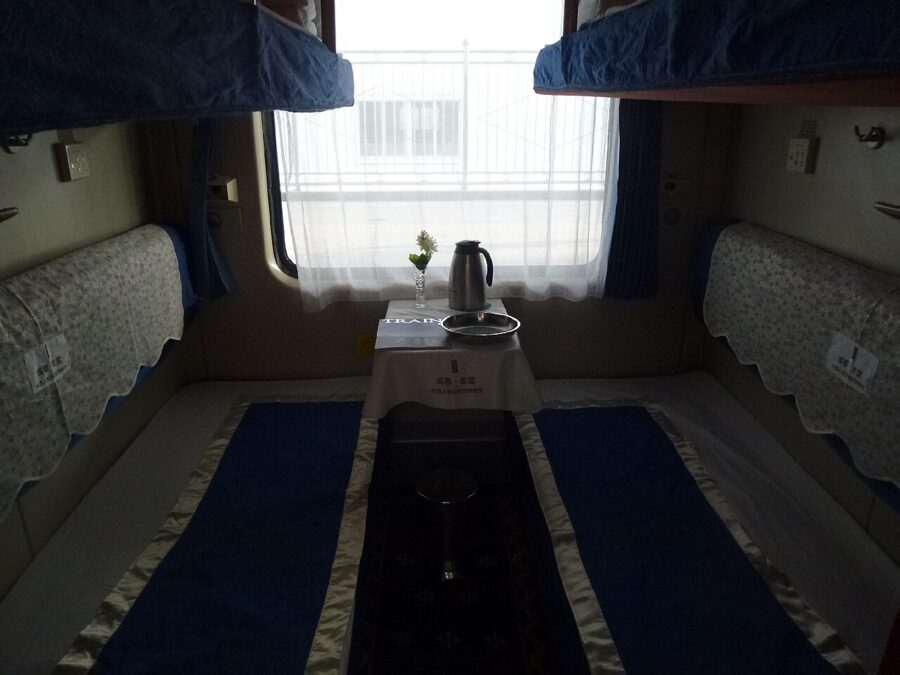
A soft sleeper is a closed compartment of four berths with a door. A hard sleeper is an open bay of six, three high on each side, with no door, and the top berth is cramped under the ceiling. Both come with bedding, and there is hard seat too, which I would not choose for a night above 4,000 meters.
On the Xining run the difference between them is ¥286 (about US$43), and I would pay it: the soft sleeper is quieter, you can shut the door on the corridor, and the four of you share one window instead of six sharing a bay. If you know the Amtrak sleeper car, a soft sleeper is closer to a shared bedroom than a roomette: you will have company, and the washroom is at the end of the car, not in the room.
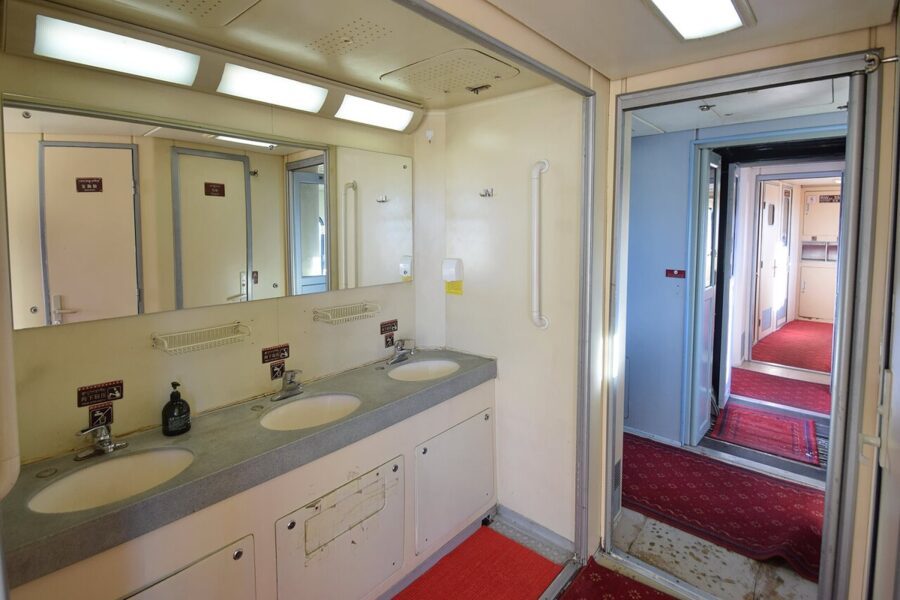
There is a dining car with cooked Chinese food at mealtimes, a hot-water boiler in every car, and trolleys with instant noodles and snacks. Bring food you like, a power bank and downloaded films: outlets are few, and on the high plateau the phone signal comes and goes.
What you see, in order
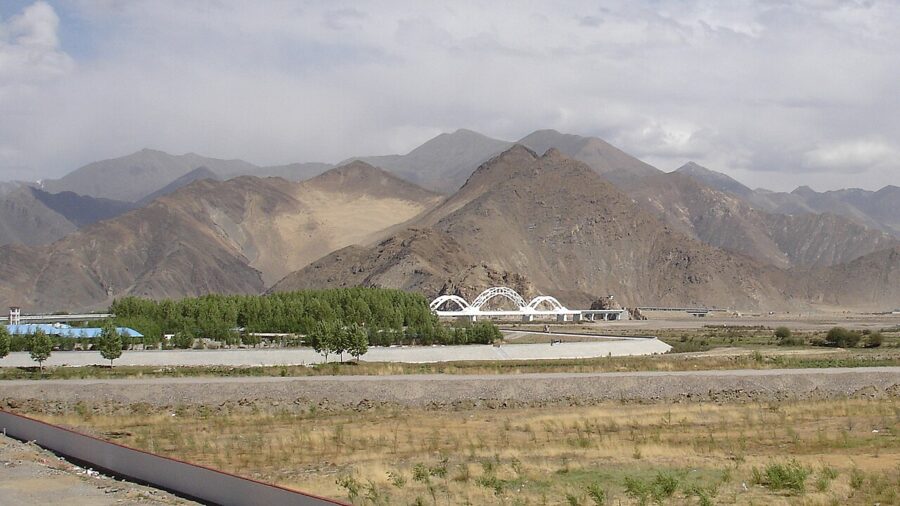
Heading south from Xining, the line climbs west across Qinghai, crosses the Kunlun range, runs for a day over the high plateau, and drops into the Lhasa valley. The order below is the order you see it in; left and right are in the direction of travel.
Qinghai Lake
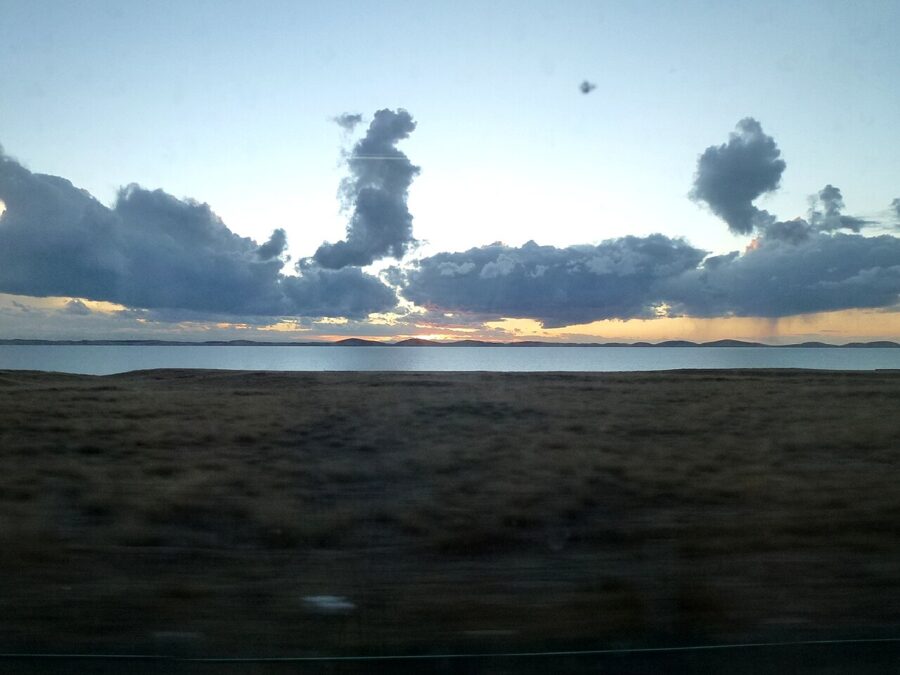
An hour or two out of Xining the railway runs along the north shore of Qinghai Lake, China’s largest lake, with the water on the left. People’s Daily singles out the sand islands and bays on the east and north sides as the views from the train. In winter only the Chengdu and Chongqing trains pass here in full daylight, and the Beijing train in the last of the afternoon light.
The Qaidam Basin and Golmud
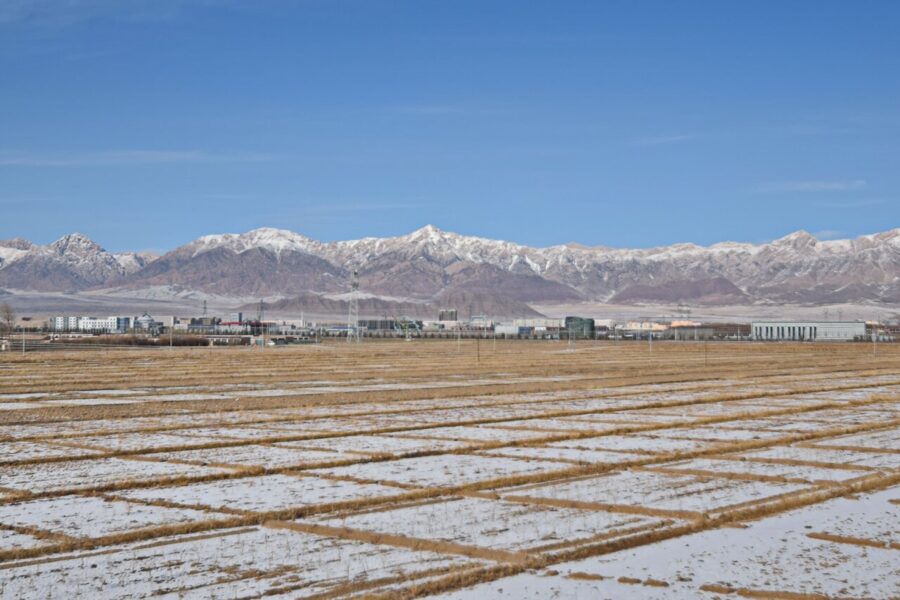
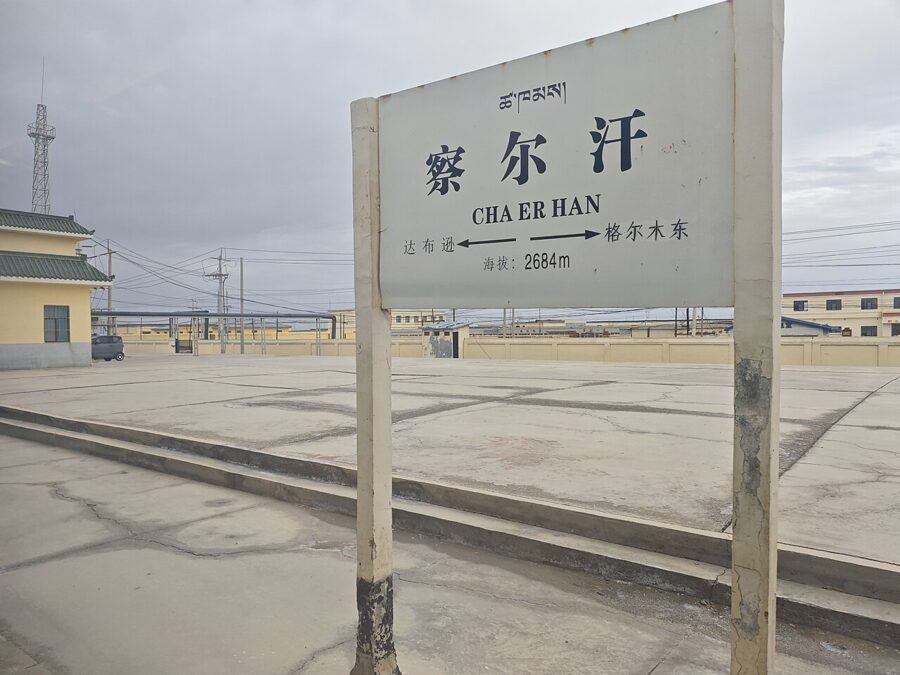
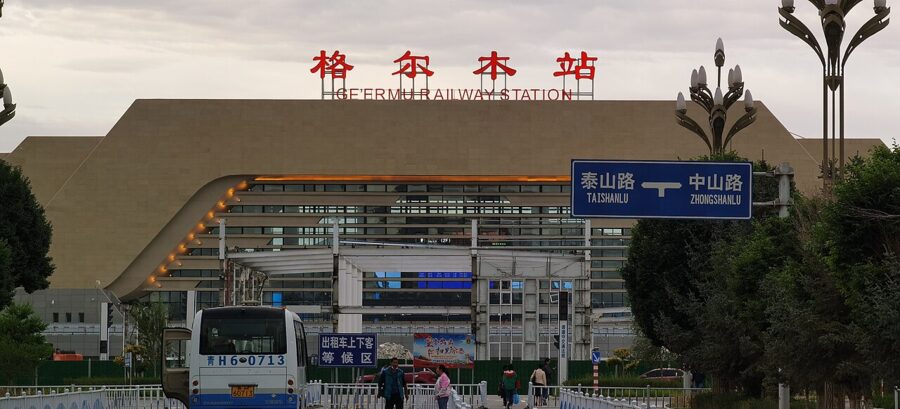
West of the lake the line drops into the Qaidam Basin, a high desert of gravel, salt flats and the town of Delingha. Golmud, about 2,800 meters up, is where most trains stop for 25 minutes before the real climb. On most trains you will be asleep for it.
The Kunlun Pass and Yuzhu Peak
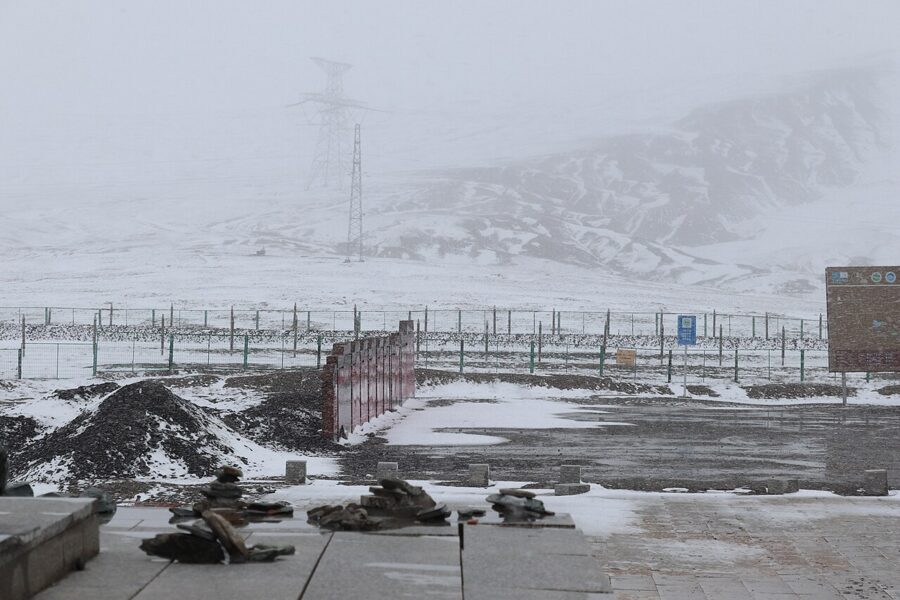
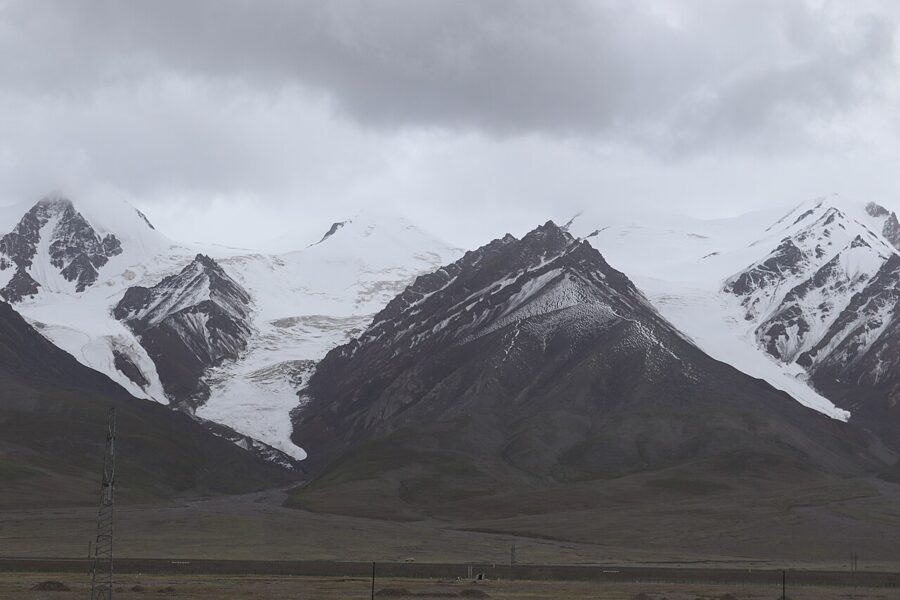
About two hours south of Golmud the line climbs through the Kunlun Mountains and over the Kunlun Pass, and from here to the Lhasa valley it stays above 4,000 meters. Yuzhu Peak, the highest of the eastern Kunlun, stands close to the line on the left. This is the stretch the timetable hides: every train crosses it at night or at first light.
Hoh Xil
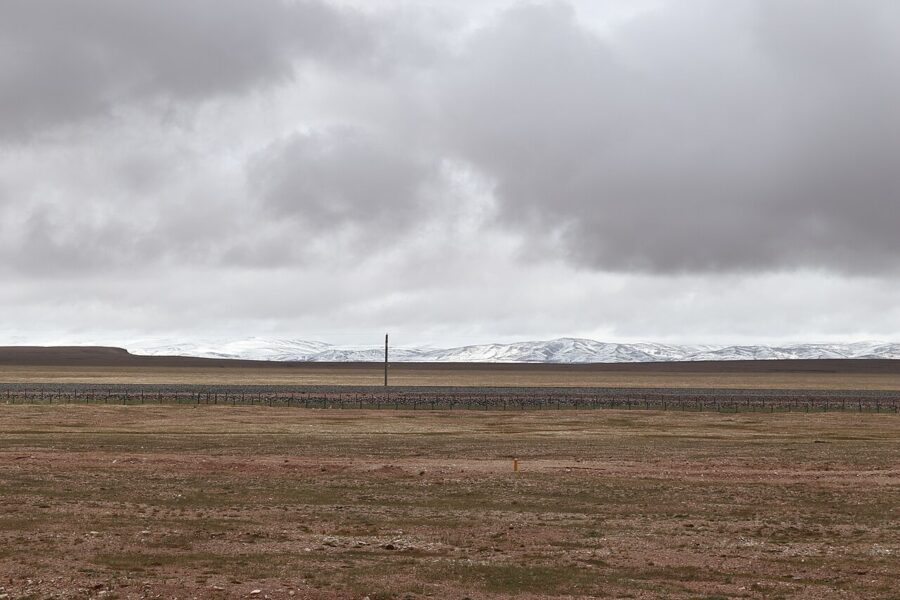
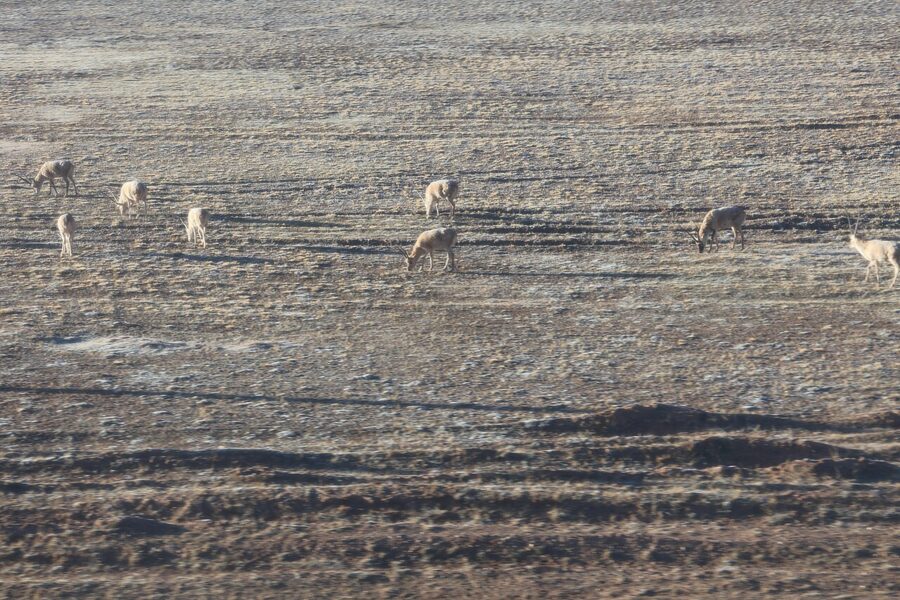
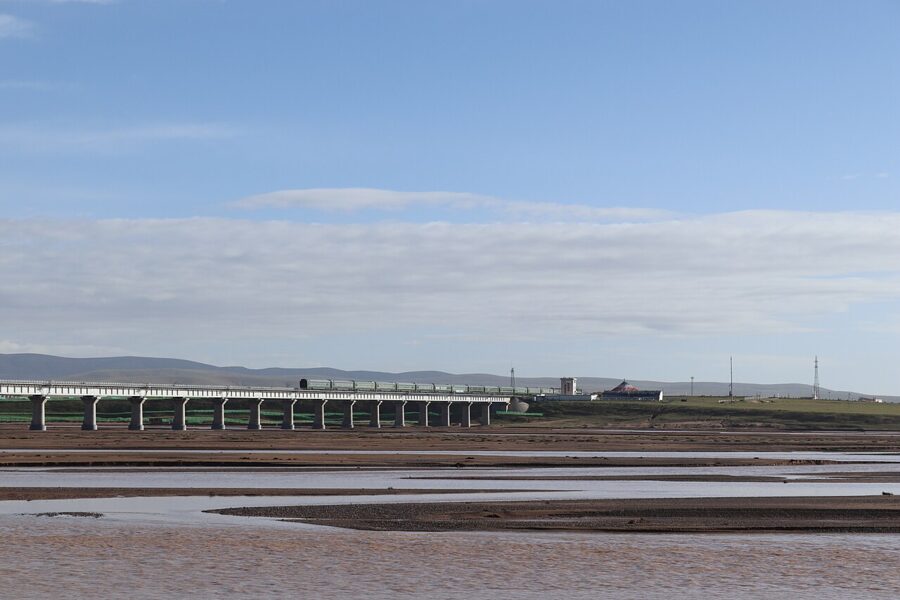
South of the pass the line runs through Hoh Xil, a protected reserve and World Heritage Site where Tibetan antelope come to give birth. Each year from May the females cross the railway to give birth at lakes deep in the reserve, peaking in June and returning in late July and August. The railway has 33 wildlife passages for them, the best known under the Wubei bridge. On Z1671 in summer you cross Hoh Xil in early light, and if you are lucky you see small herds on the plain.
Tuotuohe and the Tanggula Pass
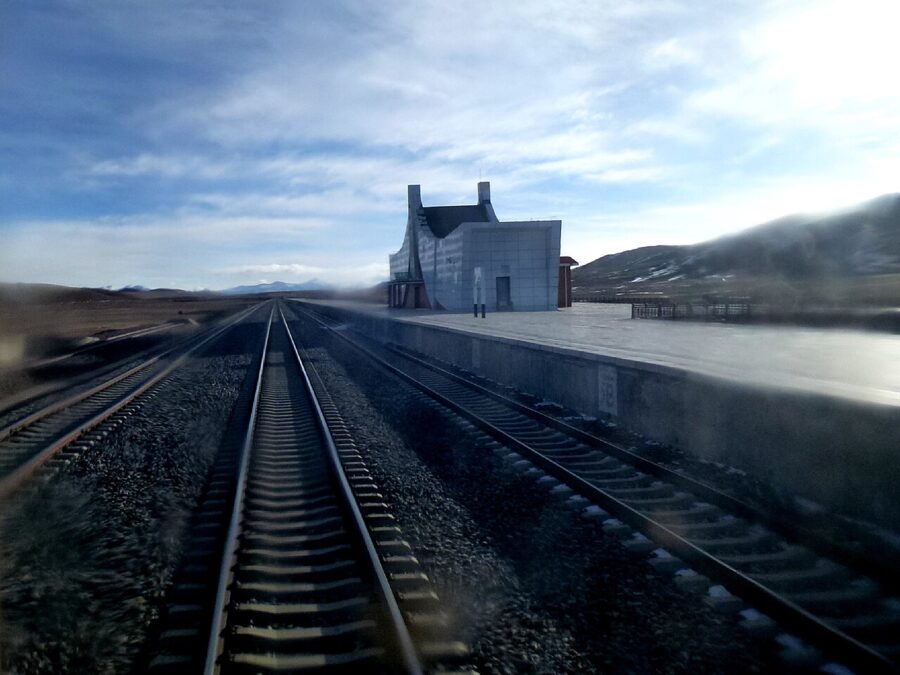
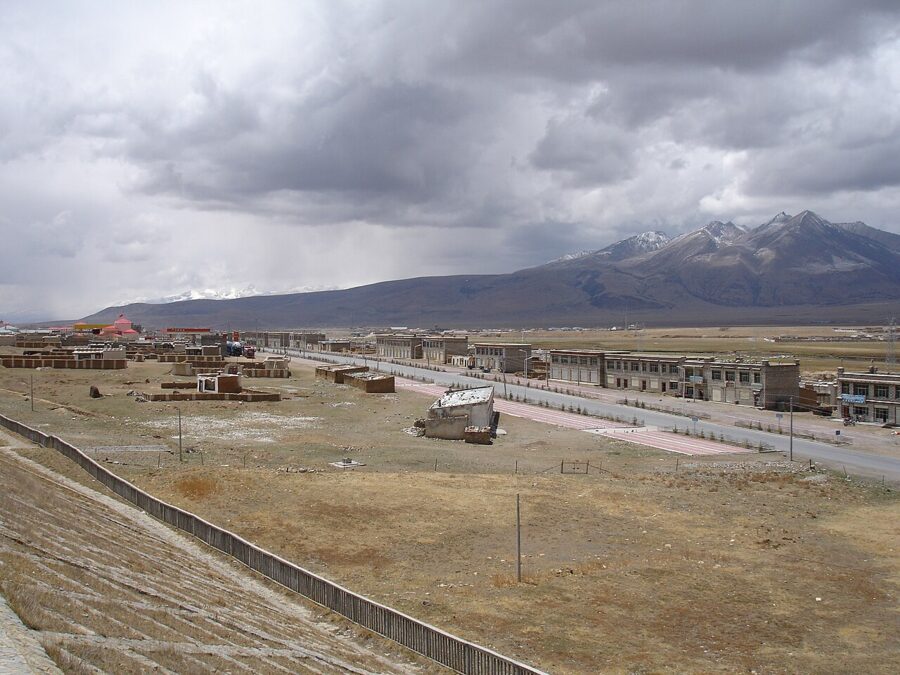
The Tuotuo River, braided across a wide gravel bed, is one of the headwaters of the Yangtze. Beyond it the line climbs for about two hours, by way of Yanshiping, to the Tanggula Pass, 5,072 meters, the highest point of the railway and the boundary between Qinghai and Tibet. Tanggula station, just below it at 5,068 meters, is the highest railway station in the world.
Cona Lake
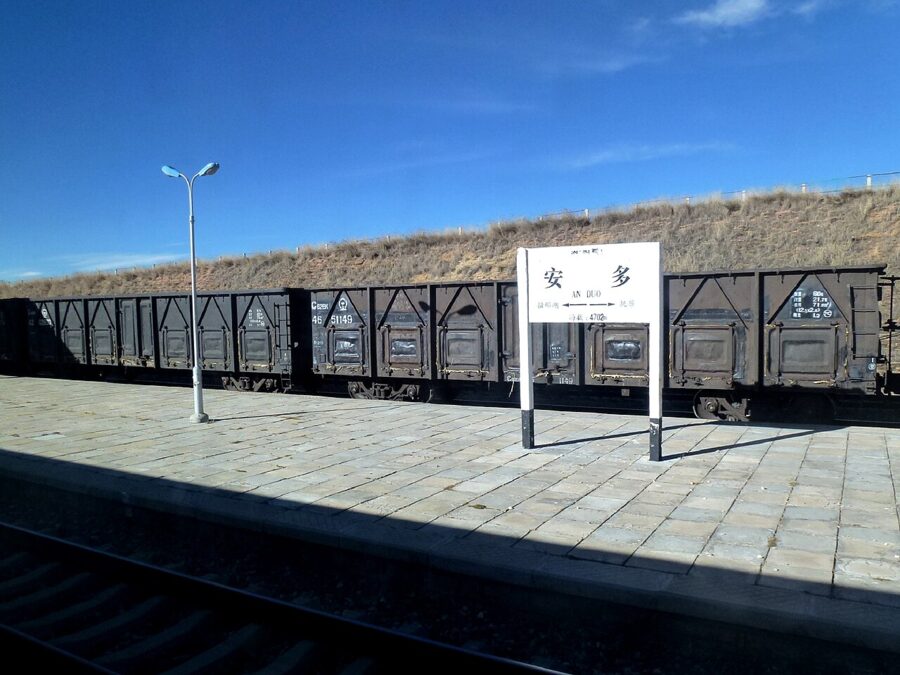
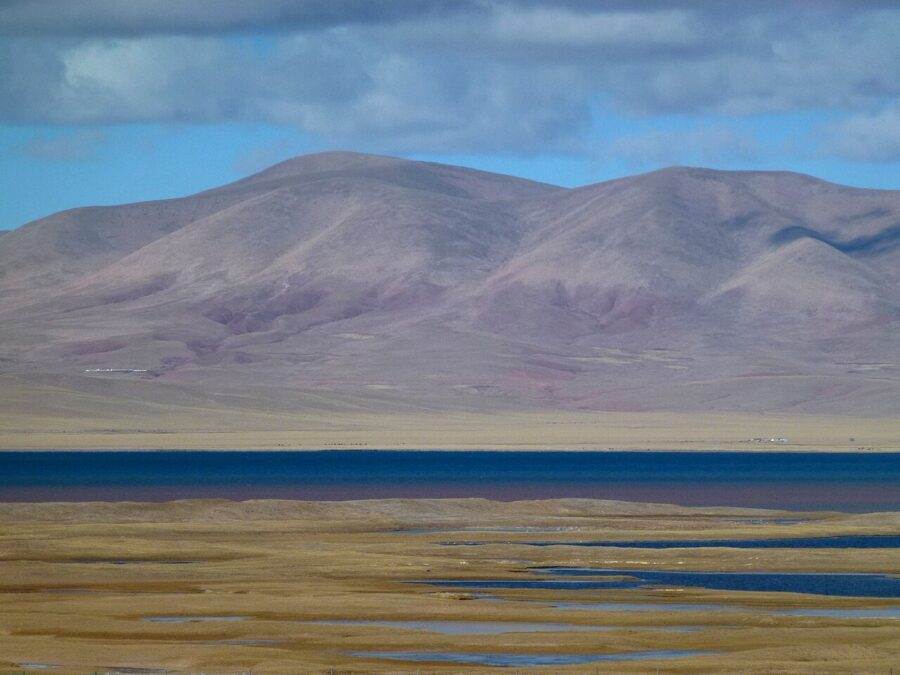
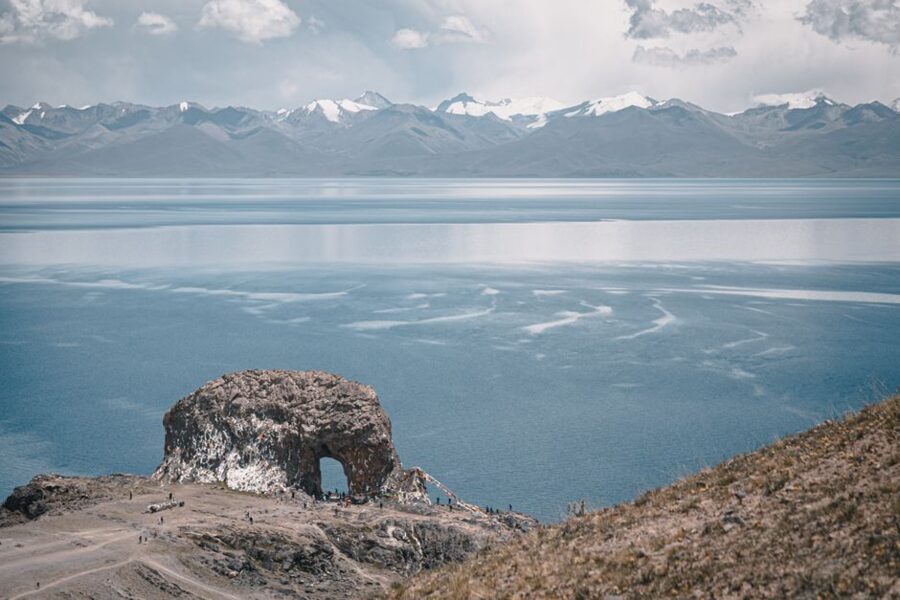
South of Amdo the track runs right along the eastern shore of Cona Lake, at 4,594 meters, for several kilometers. The lake is on the right going south, and this is the best single view on the line: if your compartment faces the other way, stand in the corridor in good time.
Nagqu, Damxung and the Namtso turnoff
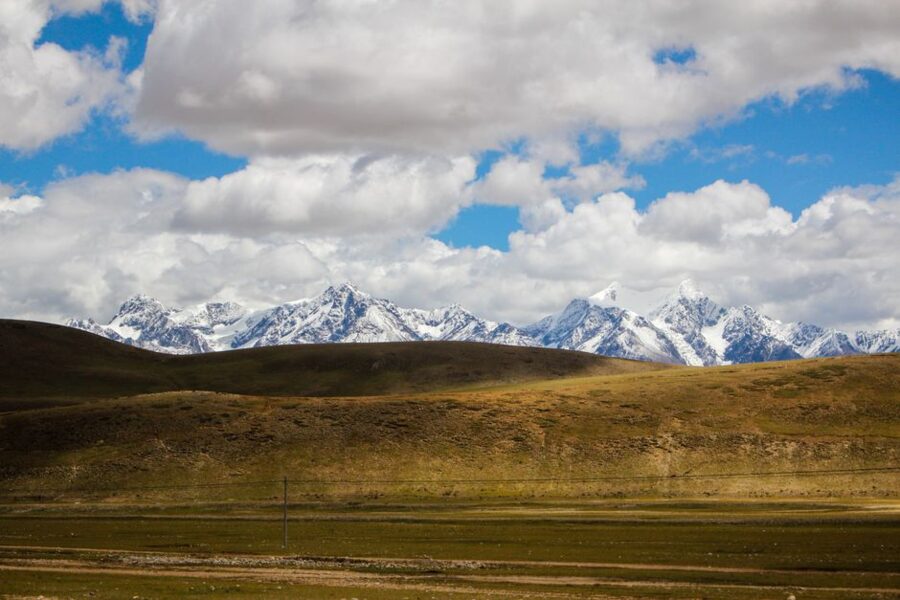
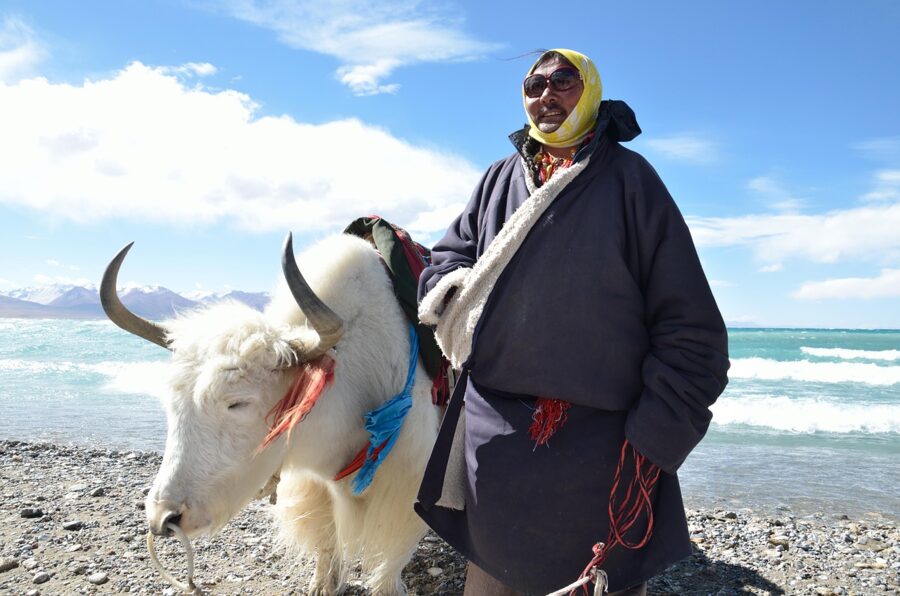
After Nagqu the plateau turns to grazing land, with yaks on the slopes, and the line runs down the long Damxung valley with the snowfields of the Nyenchen Tanglha range on the right. Namtso, the big sacred lake, lies just over those mountains, and Damxung is where the road to it leaves the valley. None of the through trains on the winter timetable stops at Damxung, so Namtso is a day trip by road from Lhasa with your guide.
Lhasa
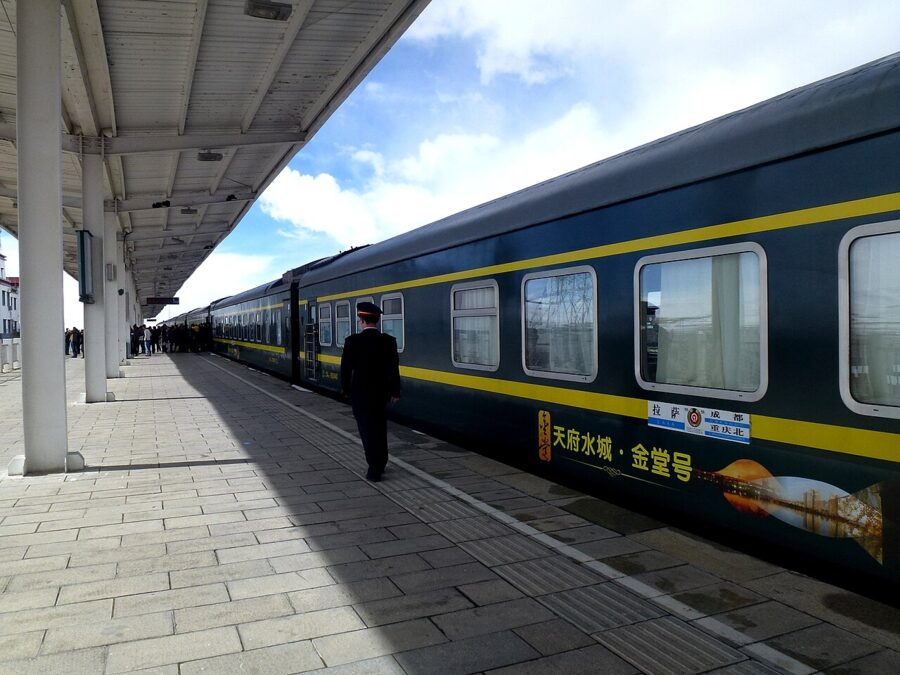
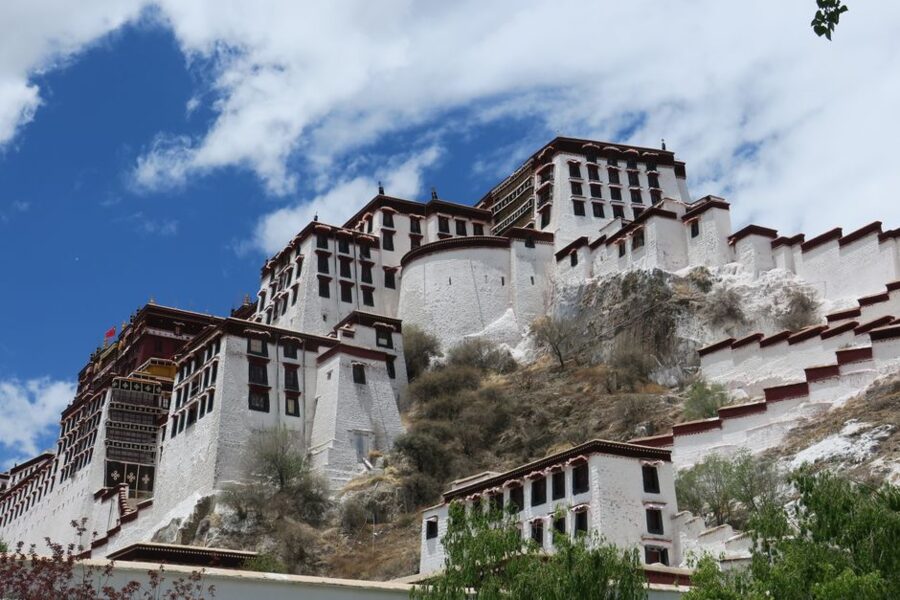
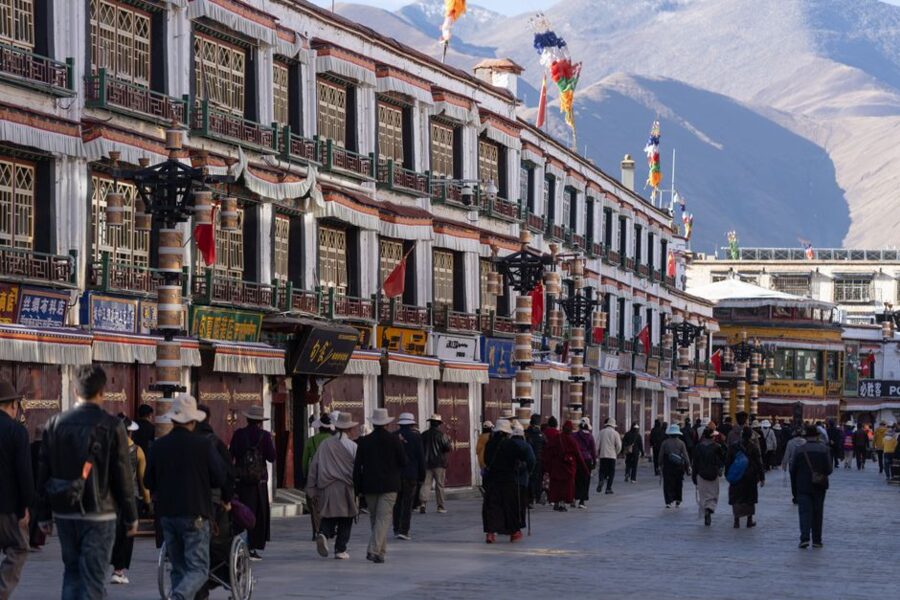
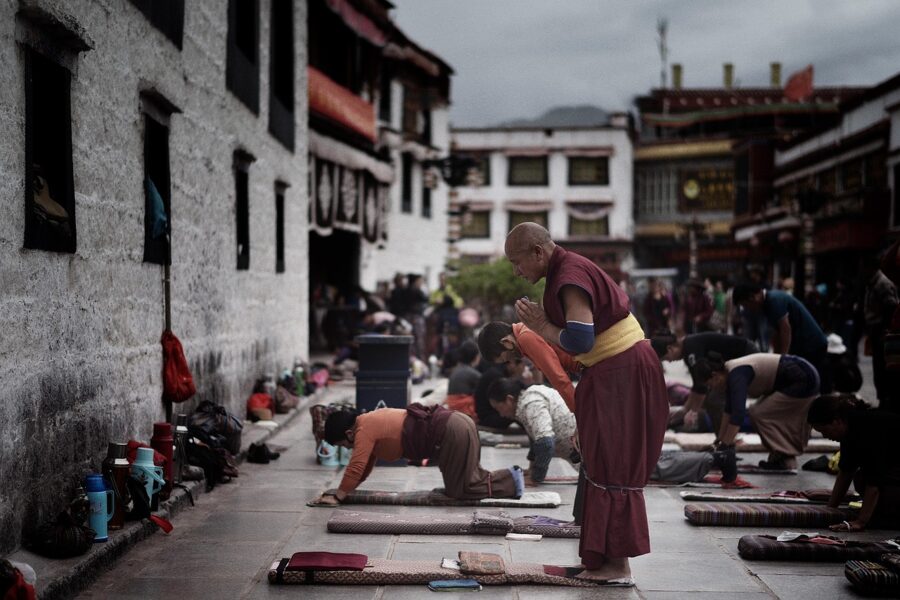
The last hour follows the river down to Lhasa, at about 3,650 meters. After 5,000 meters at Tanggula, the city will feel easy on your lungs, but take the first day slowly anyway and keep the afternoon you arrive free.
When to go
The trains run all year, and each season trades one thing for another. Summer is when the plateau turns green, the antelope cross Hoh Xil, the evening trains pass Qinghai Lake in daylight, and the berths sell out first. Winter trains are emptier and the skies clear, but the days are short, the high section is bitterly cold outside the car, and the sun rises late on Beijing time.
Spring and autumn are the best compromise for the window: April and May, then September and October, with longer days than winter and less crowding than July and August. Avoid planning around early March, when permits have been held up around the March 10 anniversary in past years, and leave slack in any trip that touches July 6.
Beyond Lhasa: Shigatse, Nyingchi and the line from Sichuan
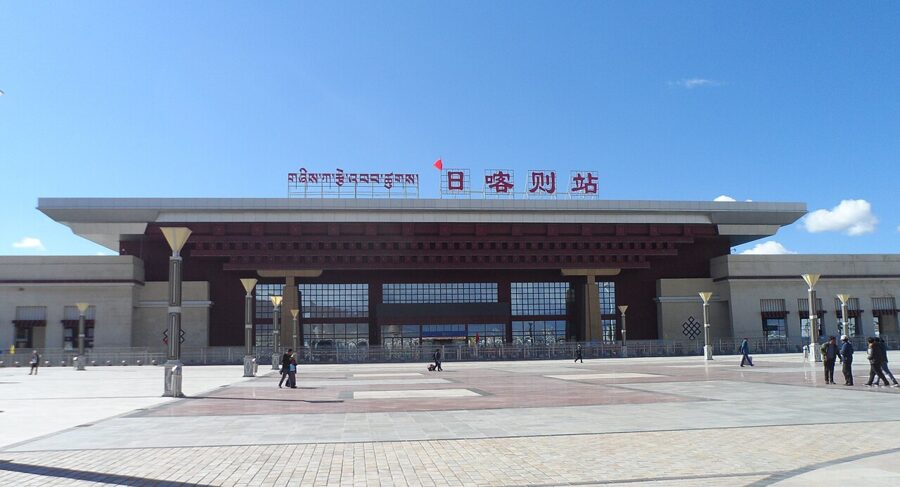
The railway now carries on past Lhasa in two directions. The Lhasa-Shigatse line, opened in 2014, runs west up the Yarlung Tsangpo valley to Tibet’s second city, and on the December 2026 timetable it has three daily trains taking just over two hours, at ¥64 (about US$10) in second class. Shigatse is the base for the drive to Everest Base Camp, which needs the extra permits described above.
East, the Lhasa-Nyingchi line opened on June 25, 2021, and runs Fuxing trains through the gorges of the Yarlung Tsangpo to the forested country of Nyingchi. China Railway says the fastest trip now takes 3 hours 49 minutes. On the December timetable the morning train leaves at 8:00 a.m. and costs ¥129 (about US$19) in second class, and an evening train with sleepers takes five and a half hours.
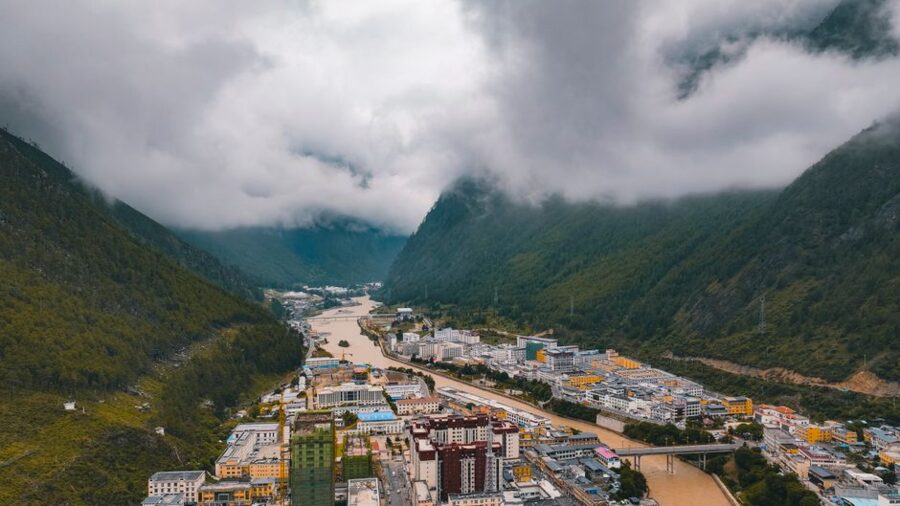
Nyingchi is also the western end of the Sichuan-Tibet Railway, the line that will one day give Chengdu a direct route to Lhasa through the mountains rather than round by Xining. Chengdu to Ya’an opened in 2018, and the central section, Ya’an to Nyingchi by way of Qamdo, is still under construction. Yicai reported in July 2026 that the whole line is expected around 2030, at a cost of more than ¥300 billion (about US$45 billion). Until then, every train from Chengdu goes the long way, by Lanzhou and Xining.
Booking it, step by step
The order matters, because each piece depends on the one before. Get your Chinese visa. Book a Tibet tour with a licensed agency, giving it your train dates, and let it apply for the permit. Then book the train.
China Railway sells tickets 14 days before departure, and each station releases its trains at a fixed time of day: Xining’s go on sale at 3 p.m. Beijing time. Summer soft sleepers to Lhasa go quickly, so have your agency, or a ticket service you trust, ready to buy the moment sales open. Most agencies buy the train tickets along with the permit, and I would let them, because a ticket without a permit does not get you on the train.
For your first time, take Z1671 from Xining in a lower soft sleeper berth, after a night or two in Xining at 2,275 meters to get used to the height. If you want a trip where the train is the point, as it is on the Orient Express, take the Shanghai train the whole way for two nights on board. Either way, set an alarm for Yanshiping, keep the right-hand side for Cona Lake, and watch for the little sign at Tanggula.