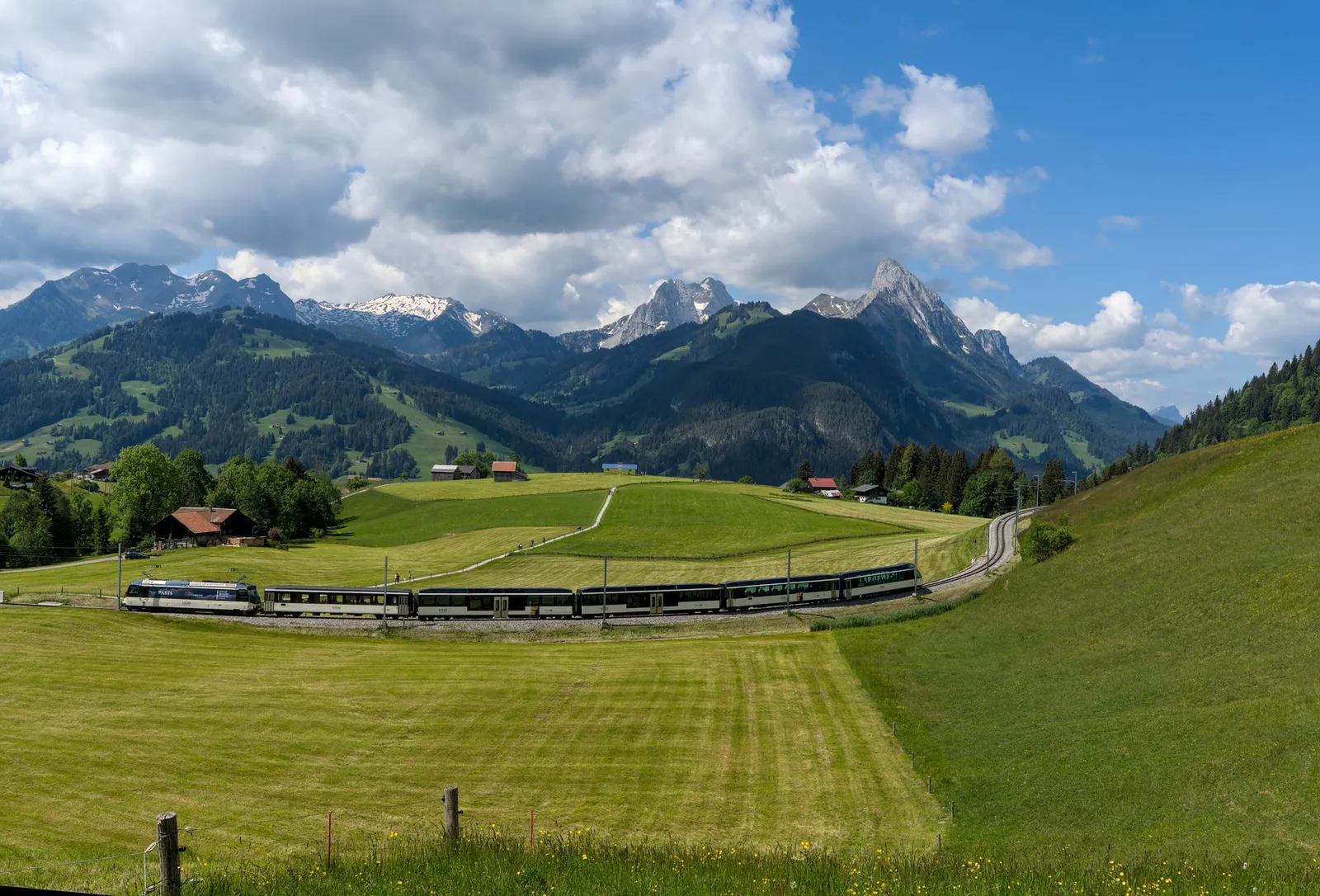
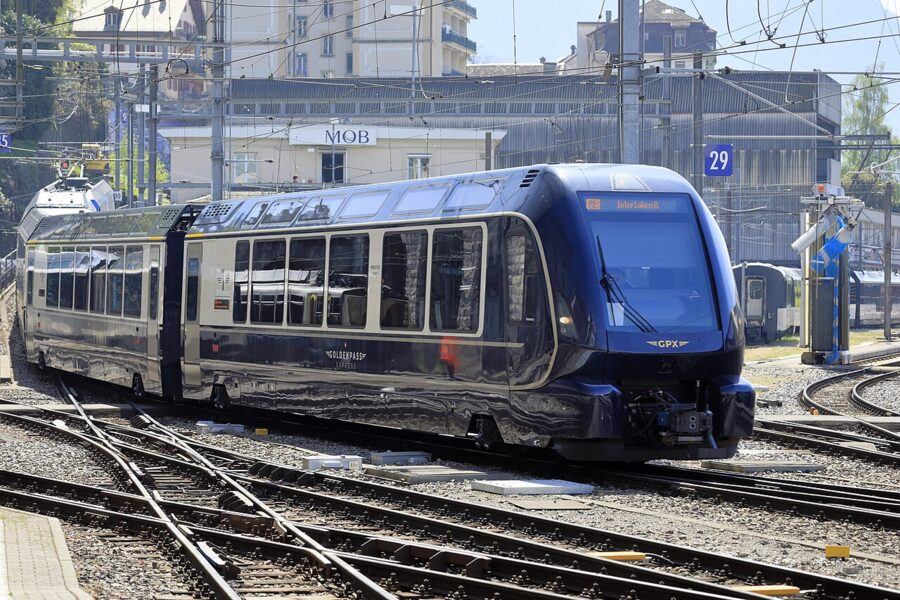
Eleven minutes after it pulls into Zweisimmen, the GoldenPass Express from Montreux leaves on different rails. In between, the cars crawl through a ramp, the bogies lift the weight off their wheels, and the wheels slide apart from meter gauge to standard gauge, 1,000 millimeters to 1,435 (about 39 to 56.5 inches). The car bodies rise at the same time, from 350 to 550 millimeters (about 14 to 22 inches), to meet the higher platforms on the line ahead.
For more than a hundred years nobody stayed in their seat here. The Montreux Oberland Bernois built its railway to Zweisimmen on narrow meter-gauge track, the line on to Spiez and Interlaken is standard gauge, and everyone going between Lake Geneva and the Bernese Oberland changed trains on this platform. Since December 2022 the GoldenPass Express has carried straight on, and it now runs four times a day in each direction.
The ride takes about three and a quarter hours, and there is no supplement for the train itself: a normal Swiss ticket or pass gets you on. What you are really deciding is which of the four departures to take, whether to pay CHF 20 (about US$24) for a reserved seat, and whether the raised Prestige seats at each end of the train are worth CHF 49 more. I would reserve, take the morning train out of Montreux, and sit on the left after Spiez for Lake Thun.
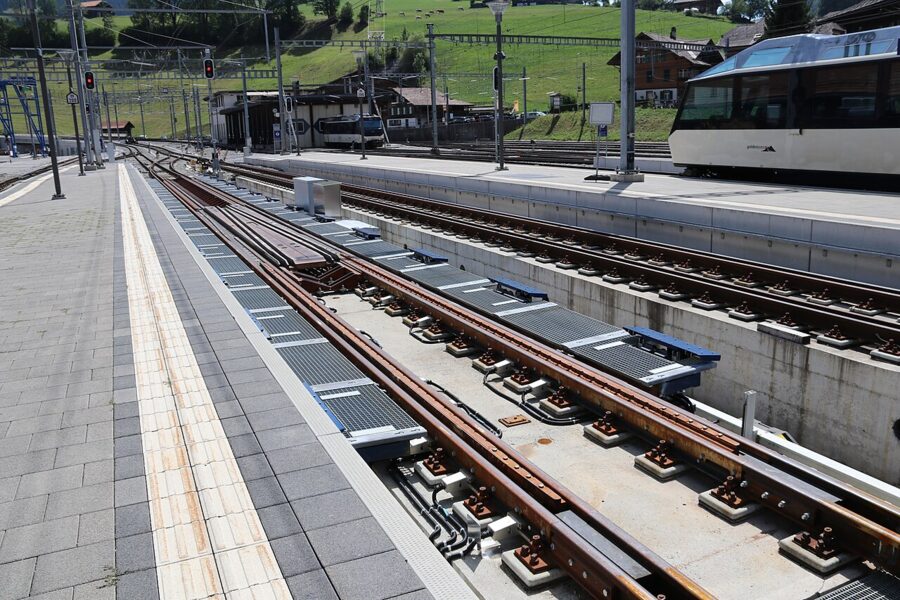
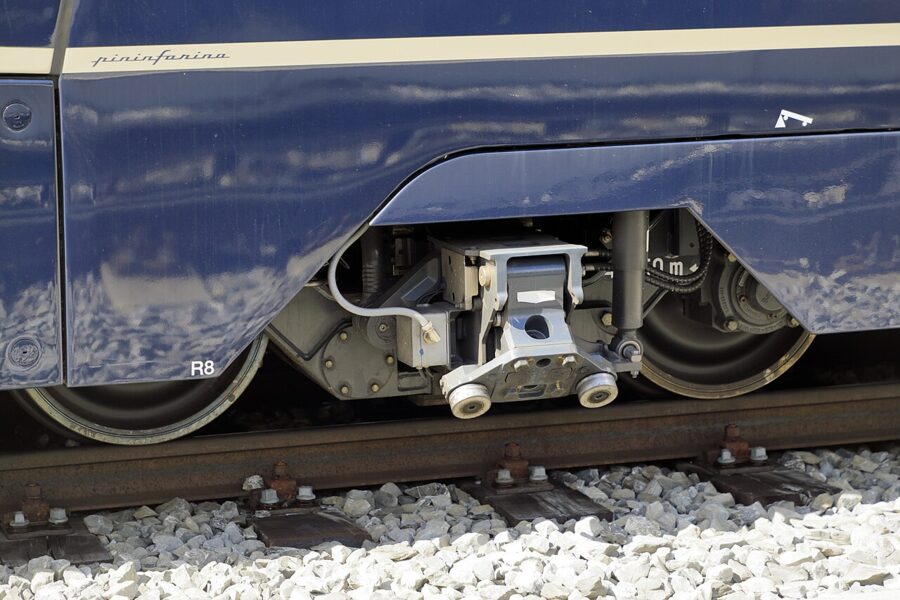
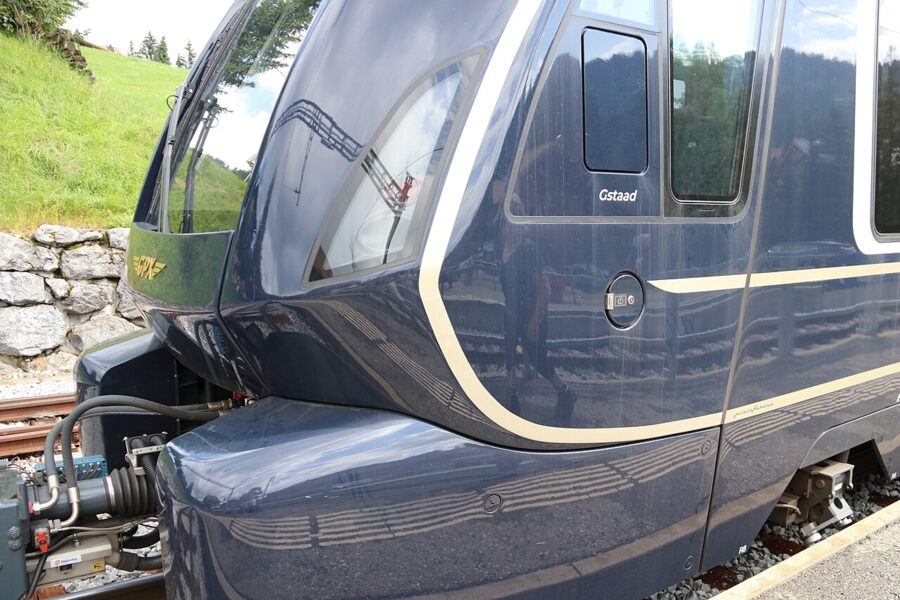
The hardware took the best part of fifteen years. The railroad settled on changing the train rather than the track in 2008, gave the bogie to Prose and Alstom to develop, and had Stadler build the cars to a Pininfarina design; the first ones arrived in July 2020. The bogies are the clever part; around them is a modern panoramic train.
Stops in this article8
- 01The route, and why one train can now run it all
- 02The 2027 timetable: four trains each way
- 03Second, first or Prestige
- 04Tickets, seat reservations and passes
- 05What you see, Montreux to Interlaken
- 06The other GoldenPass trains
- 07Fitting it in with the Glacier Express and the Bernina Express
- 08Practical things
The route, and why one train can now run it all
Montreux to Interlaken Ost is 71.7 miles (115.3 km) through three cantons, Vaud, Fribourg and Bern. The first 38.8 miles (62.4 km), up from the lake to Zweisimmen, belong to the Montreux Oberland Bernois (MOB) and are meter gauge; the last 32.9 miles (52.9 km), down the Simmental to Spiez and along Lake Thun, belong to BLS and are standard gauge. According to BLS’s own route figures, the line climbs from 1,296 feet (395 m) at Montreux to 4,183 feet (1,275 m) at Saanenmöser, through 26 tunnels and over 77 bridges.
The idea of a through train is older than most of the track. A direct link from the Riviera to the lakes of Thun and Brienz was talked about in the 19th century, and a third rail from Zweisimmen to Interlaken was considered in 1928 and again in 1986, both times without the money to build it, as the MOB’s own history sets out. You could ride from Lucerne to Montreux by rail from 1916 on, with changes; the through train is what was missing.
The first GoldenPass Express ran on December 11, 2022. It hit trouble within months: the variable-gauge wheels were wearing the standard-gauge rails faster than expected, and from March 20, 2023 the trains were cut back to the meter-gauge section. Through running returned on June 11, 2023 after the standard-gauge wheel spacing was narrowed by a few millimeters, and the full four trains a day followed later that summer.
The stop at Zweisimmen
The locomotives cannot change gauge, and the two railroads do not even share a current: 900 volts DC on the meter-gauge line, 15 kilovolts AC on the standard-gauge one. So at Zweisimmen the MOB locomotive hands the train to a BLS locomotive (or the reverse going west), and the cars pass through the gauge-adapting ramp at 9 mph (15 km/h). The operator puts the whole change at eight minutes.
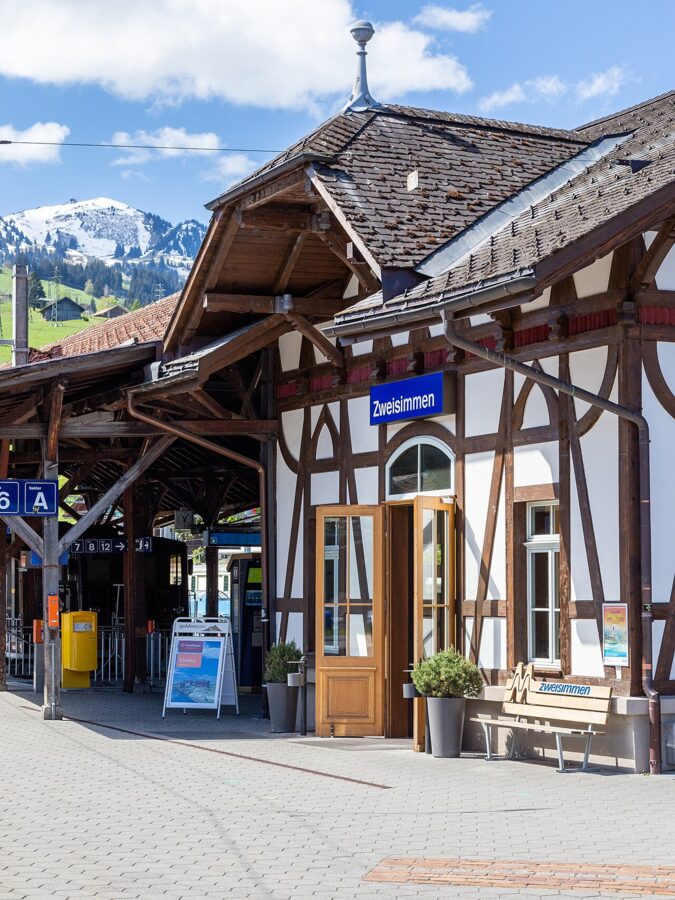
Eastbound the stop is scheduled at 11 minutes, westbound about 8. You stay in your seat, and from the windows there is not much to see beyond one locomotive pulling away and another coupling on. The timber-framed station building is worth a glance while you wait.
The 2027 timetable: four trains each way
The Swiss timetable year starts on December 13, 2026, and the GoldenPass Express keeps four departures in each direction, within a minute of the times it ran in 2025 and 2026. These are the times published for winter 2026–27. The operator has kept one pattern all year in the past, but check the timetable for your date before you book a summer trip.
| Montreux dep. | Gstaad | Zweisimmen | Spiez | Interlaken Ost arr. |
|---|---|---|---|---|
| 7:32 a.m. | 8:58 a.m. | 9:28–9:39 a.m. | 10:23 a.m. | 10:48 a.m. |
| 9:32 a.m. | 10:57 a.m. | 11:28–11:39 a.m. | 12:23 p.m. | 12:48 p.m. |
| 12:32 p.m. | 1:57 p.m. | 2:28–2:39 p.m. | 3:23 p.m. | 3:48 p.m. |
| 2:32 p.m. | 3:58 p.m. | 4:28–4:39 p.m. | 5:23 p.m. | 5:48 p.m. |
| Interlaken Ost dep. | Spiez | Zweisimmen | Gstaad | Montreux arr. |
|---|---|---|---|---|
| 9:07 a.m. | 9:38 a.m. | 10:20–10:28 a.m. | 10:59 a.m. | 12:25 p.m. |
| 11:07 a.m. | 11:38 a.m. | 12:20–12:28 p.m. | 12:59 p.m. | 2:25 p.m. |
| 2:07 p.m. | 2:38 p.m. | 3:20–3:28 p.m. | 3:59 p.m. | 5:25 p.m. |
| 4:07 p.m. | 4:38 p.m. | 5:20–5:28 p.m. | 5:59 p.m. | 7:25 p.m. |
Pick by daylight. In midwinter the sun is down before five, so the 2:32 p.m. from Montreux does Lake Thun in the dark and the 4:07 p.m. from Interlaken climbs to Saanenmöser in the dark. In winter I would take one of the two morning trains in either direction; in summer every departure works, and the 12:32 p.m. puts Lake Thun in afternoon light.
Two closures matter in 2027. From March 30 to May 14, 2027 BLS is rebuilding the line along Lake Thun, and every GoldenPass Express runs only between Montreux and Spiez, with buses on to Interlaken West and Interlaken Ost; the MOB says connections are not guaranteed and the disruption does not qualify for a refund. The same works close Spiez to Interlaken Ost again for the weekend of November 13 and 14, 2027. If your only chance at this train falls in April, ride it to Spiez and treat the lake as a bus trip.
Second, first or Prestige
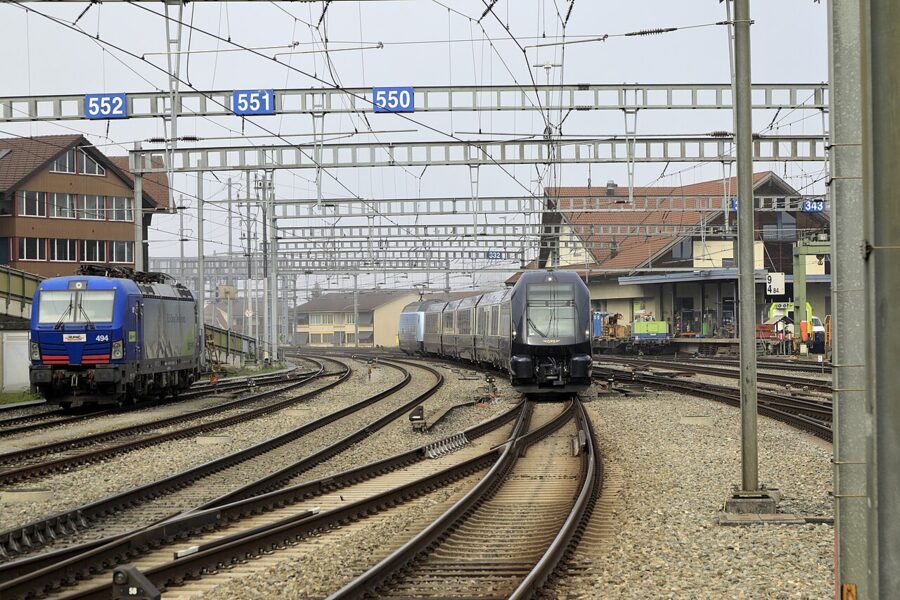
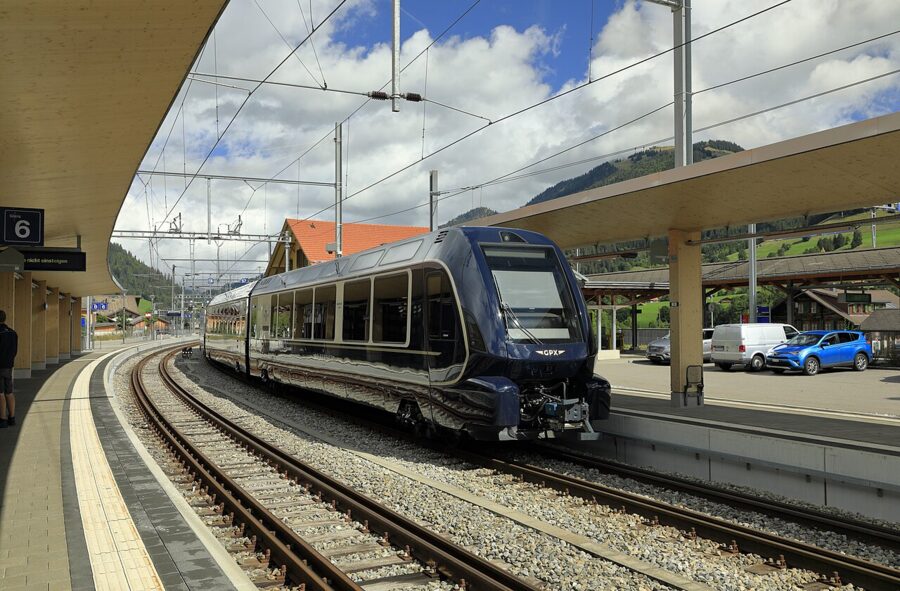
Every car on the GoldenPass Express is a panoramic car, with glass running up into the roof, so even second class gets the big view. The cars have luggage compartments and ski racks, and every class has Swiss, European and USB power sockets. Each train now includes a low-floor car with toilets, baby-changing space and room for two wheelchairs.
Prestige class is 18 seats on a floor raised 16 inches (40 cm) above the rest of the car, directly behind the driver’s cab at each end of the train. The seats are heated and fully adjustable, with a leg rest and a small table, and the crew will turn them on request to face the direction of travel.
Is it worth CHF 49 (about US$59) on top of a first-class ticket? On a clear day on the first trip of your life, yes, for one direction. On a gray day, or if you are holding a second-class pass and would have to upgrade, no: first class has the same windows and costs less. It is also the one class where children under six need a reservation of their own.
Food and drink at your seat
The catering on the GoldenPass Express is served at your seat, and the set packages have to be booked together with your seat reservation, no later than the day before travel. Drinks and snacks are sold on board, paid by card only. The menu leans local: Lavaux wine from Testuz, charcuterie from Buure Metzg in Gstaad, caviar from Oona in Frutigen and beer from Rugenbräu in Interlaken.
| Package (book ahead) | Price, as of 2026 | Classes |
|---|---|---|
| Breakfast box: croissant, jam, butter, hot drink, orange juice | CHF 15 (about US$18) | All |
| Vegetarian platter with a drink | CHF 29.90 (about US$36) | All |
| Cheese platter with a drink | CHF 30.90 (about US$37) | All |
| Local meat and cheese platter with a drink | CHF 31.90 (about US$38) | All |
| Oona caviar (20 g), blinis, sour cream and a glass of Champagne | CHF 94 (about US$113) | First and Prestige only |
The drink with a platter can be a soft drink, beer or wine. The breakfast box on the 7:32 a.m. out of Montreux is the one I would order: it saves getting up early enough to find a café.
Tickets, seat reservations and passes
The MOB charges no supplement on any of its trains, so the GoldenPass Express costs the ordinary Swiss fare for the route. As of 2026, a one-way ticket for the whole run starts at CHF 56 (about US$67) in second class, and first class is about CHF 96 (about US$115). A Swiss Half Fare Card halves both; children from 6 to 15 pay half fare, and under-sixes travel free.
| Item, one way, as of 2026 | Price | Notes |
|---|---|---|
| Ticket, second class, Montreux to Interlaken Ost | from CHF 56 | Half with a Half Fare Card |
| Ticket, first class | about CHF 96 | Needed for Prestige |
| Seat reservation, first or second class | CHF 20 | Optional, any distance, per person |
| Prestige reservation | CHF 49 | Compulsory, on top of a first-class ticket |
| Ticket bought on board from the crew | fare plus CHF 10 (about US$12) | No fee for an upgrade |
Reservations are not compulsory in first and second class, and the reserved-seat fee is the same CHF 20 per person and per journey whether you ride the whole way or two stops. I would pay it from May to October and on any winter weekend: without one you have a ticket, not a seat, and this train fills with people who planned. On a weekday in the low season I would take the chance.
The Swiss Travel Pass covers the fare in its class, as do the Swiss GA travelcard, a Saver Day Pass, and the Eurail Pass and Interrail; none of them includes the reservation. If you have a Half Fare Card, BLS recommends a Saver Day Pass, from CHF 29 (about US$35) when bought early, which can work out cheaper than the ticket on a long travel day. With a first-class pass, Prestige costs only the CHF 49.
How to book
Book on the GoldenPass Express booking page, which sells tickets and reservations together, reservations alone, and the Prestige reservation. In the MOB journey planner, choose “Reservation only” under the discount menu if you already have a pass; no ticket is issued. You can also reserve at a station, as long as it is at least two hours before the train leaves.
Two rules catch people. A reservation belongs to one train: if your connection runs late and you miss it, the MOB says the booking is forfeited and cannot be moved to the next departure. And because the GoldenPass Express carries a crew, you can buy a ticket on board before the train leaves, at the normal fare plus CHF 10, which the other MOB trains do not allow.
What you see, Montreux to Interlaken
This is the eastbound order. Westbound, read it backward and swap left and right.
Montreux and the climb above Lake Geneva
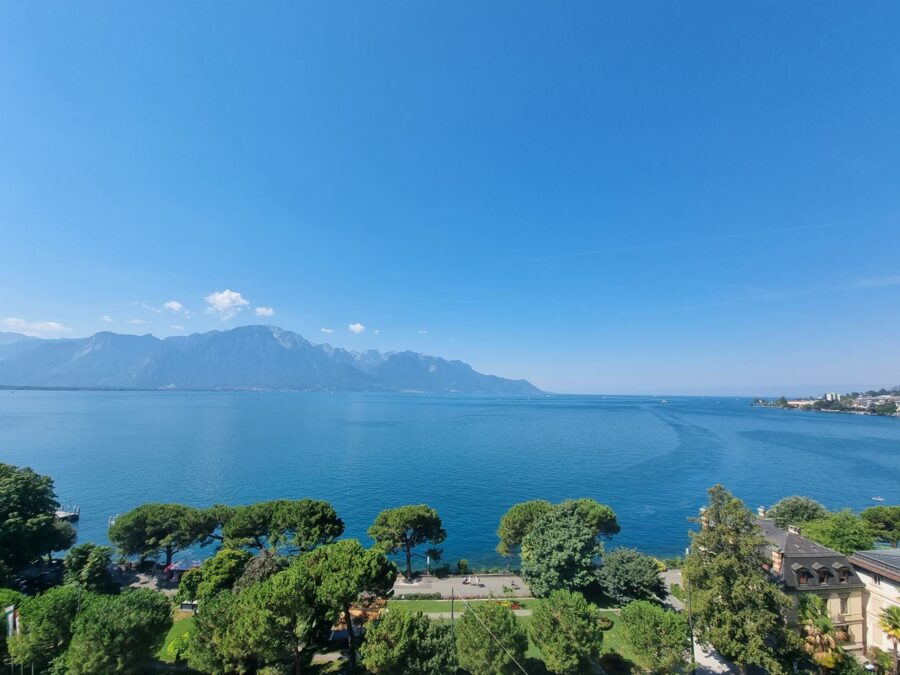
The train leaves Montreux at 1,296 feet and climbs straight up the hillside behind the town in a run of tight curves past Chernex and Chamby. The curves swing the lake from one side of the car to the other, so either side gets it; look across the water to the mountains on the French shore and down to the roofs of Montreux. The GoldenPass Express makes no stops on this climb.
At the top the line goes under the ridge through the Jaman tunnel, at 1.5 miles (2,424 m) the longest on the route. You come out in a different country in all but name: no lake, no palms, just a green valley and farm buildings.
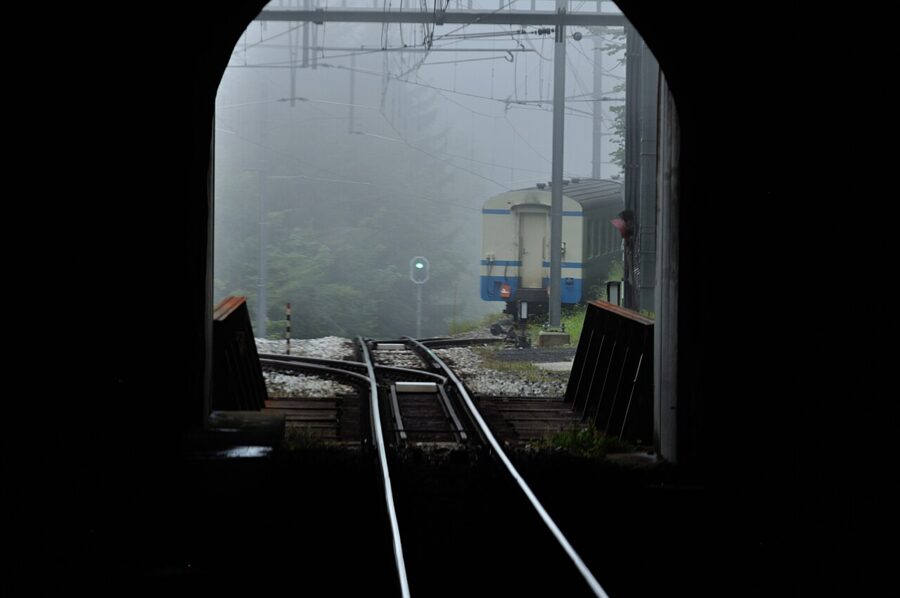
Montbovon and the Pays-d’Enhaut
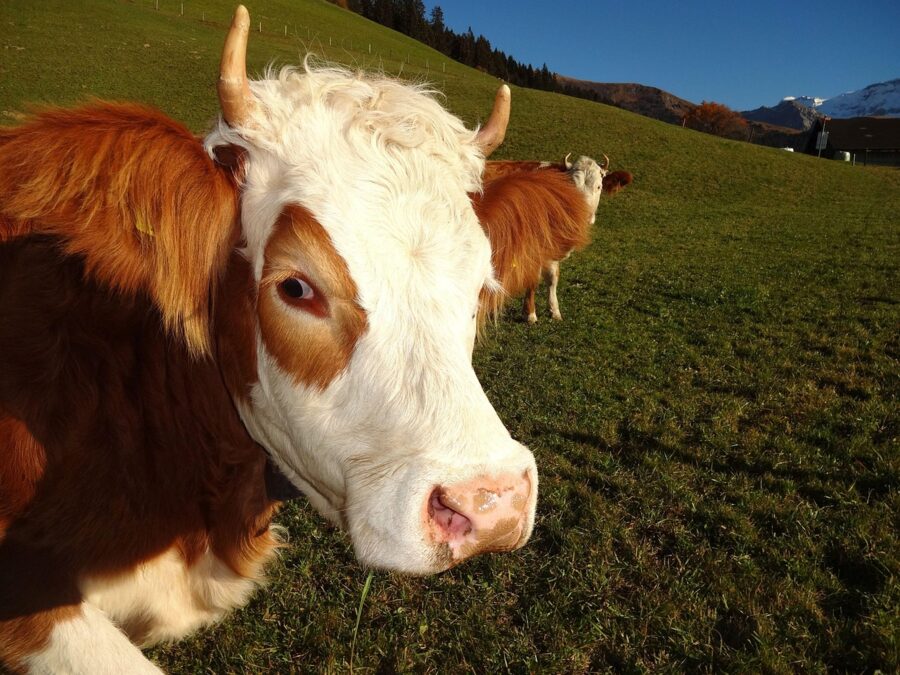
The first stop is Montbovon, at 2,615 feet (797 m), on the edge of the Gruyère district in the canton of Fribourg; the train waits several minutes here eastbound. From here the line follows the Sarine up into the Pays-d’Enhaut, the upland end of the canton of Vaud, with wide pastures and big farmhouses on both sides.
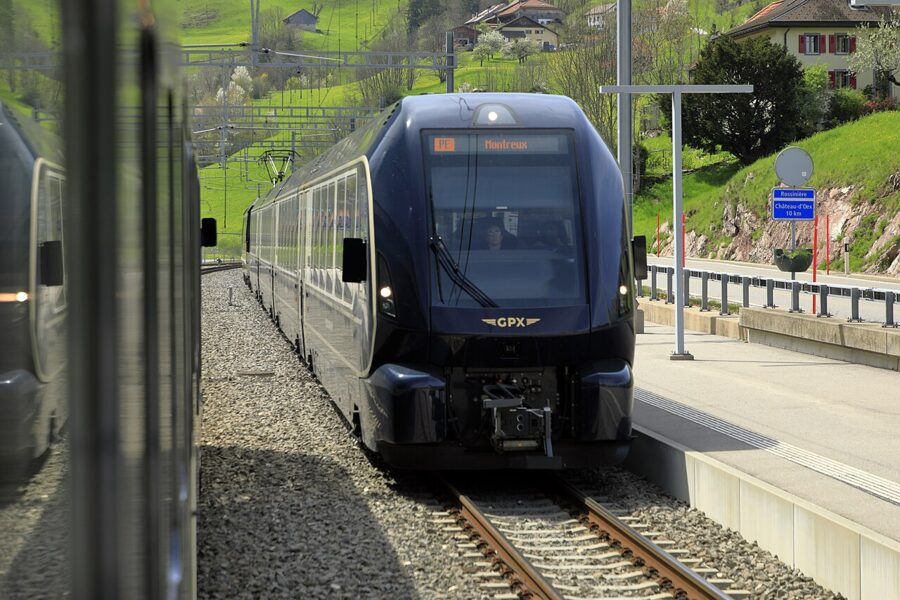
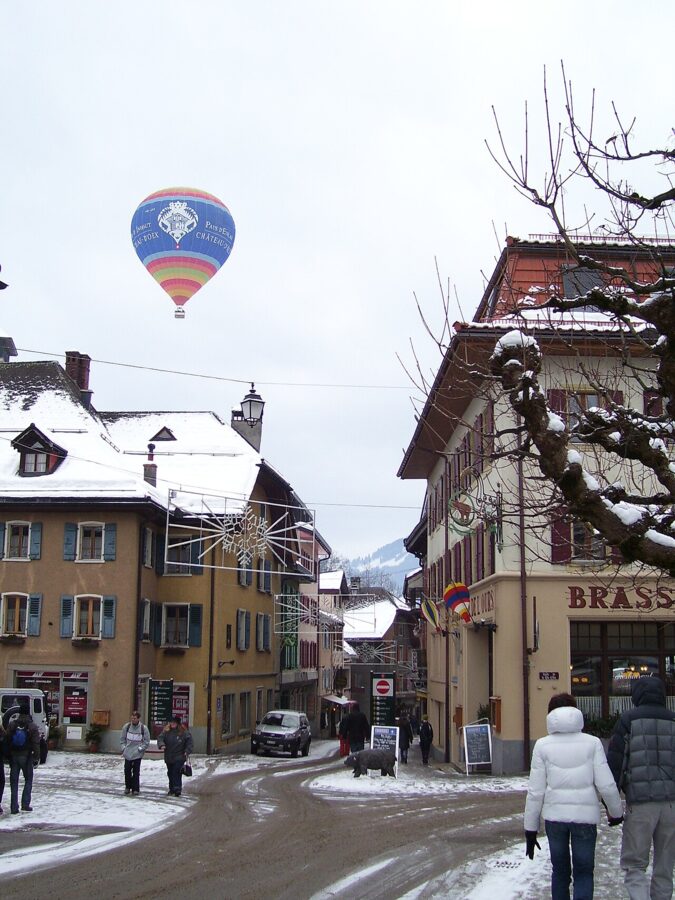
Château-d’Oex, the next stop, is ballooning country: the Pays-d’Enhaut’s balloon festival, which runs from January 23 to 31 in 2027, fills the valley with them. If you travel that week, keep an eye on the sky over the valley from either side of the car.
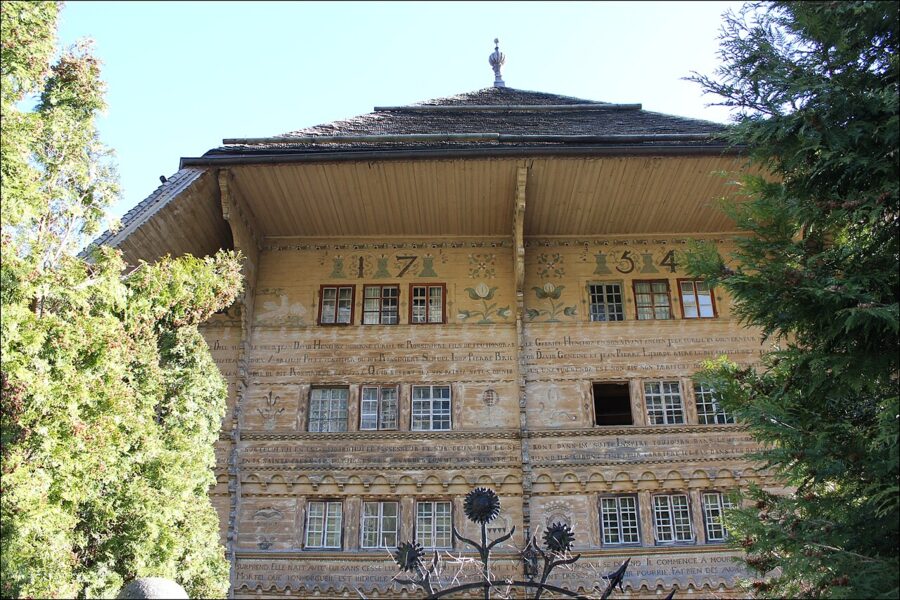
Past Château-d’Oex the train runs through Rossinière, where the Grand Chalet, a huge carved wooden house with rows of windows down its front, was the home of the painter Balthus for his last decades. Then comes Rougemont, the last French-speaking village, and Saanen, where the canton becomes Bern and the station signs switch to German.
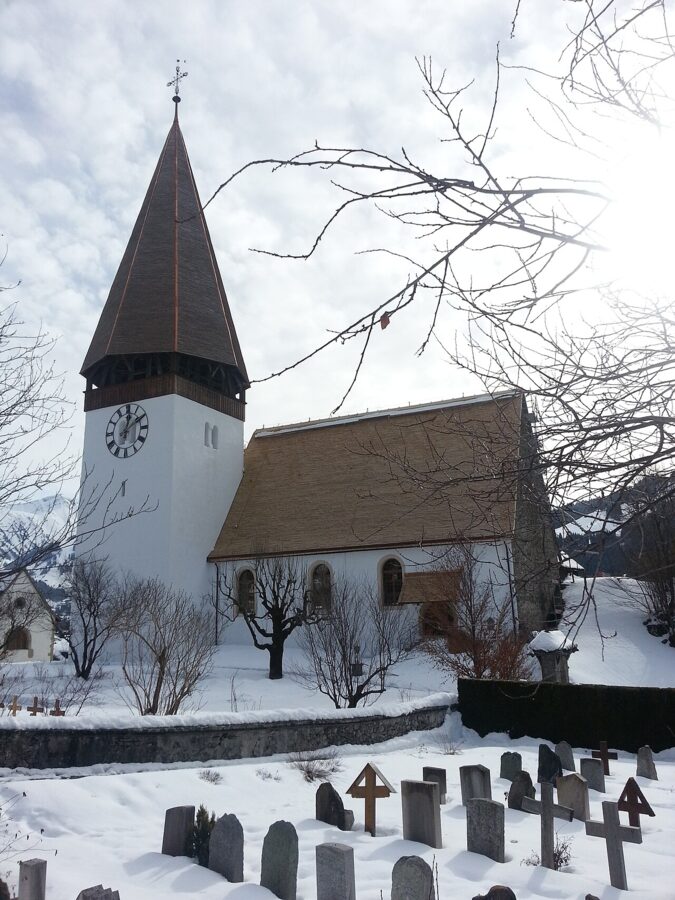
Gstaad, Schönried and the top at Saanenmöser
Gstaad, at 3,442 feet (1,049 m), gets a stop of a minute or two. From here the line climbs again through Schönried to Saanenmöser, the highest point of the trip at 4,183 feet (1,275 m), a broad saddle of meadows that turns into ski slopes in winter.
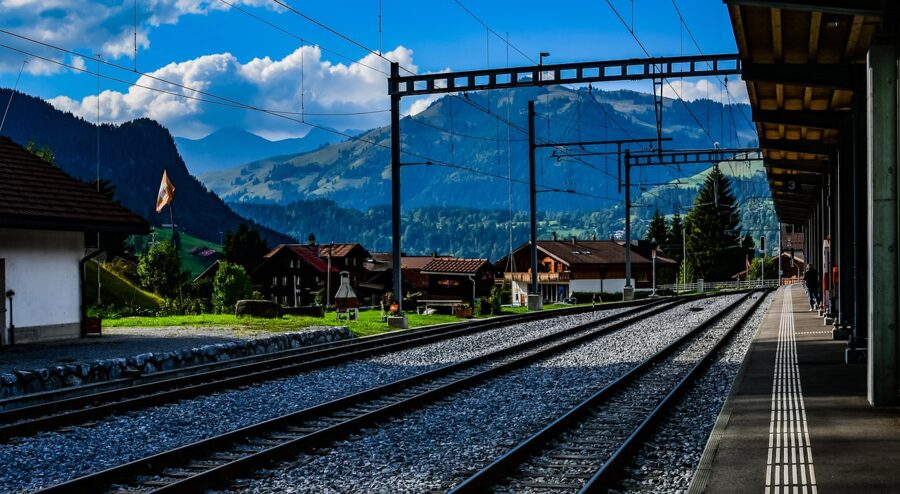
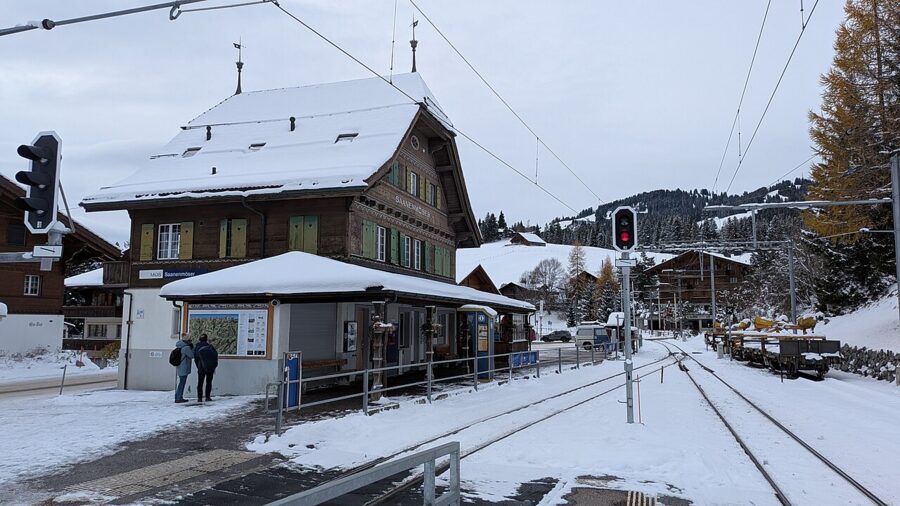
Zweisimmen and down the Simmental
From Saanenmöser the line drops into Zweisimmen, at 3,091 feet (942 m), for the gauge change. Then it follows the Simme downstream on BLS track, past Boltigen and Erlenbach, through a narrow wooded valley with farm villages where the slopes allow them. Oey-Diemtigen is the stop for the Diemtigtal, a side valley that is a regional nature park, and Wimmis sits under the pyramid of the Niesen.
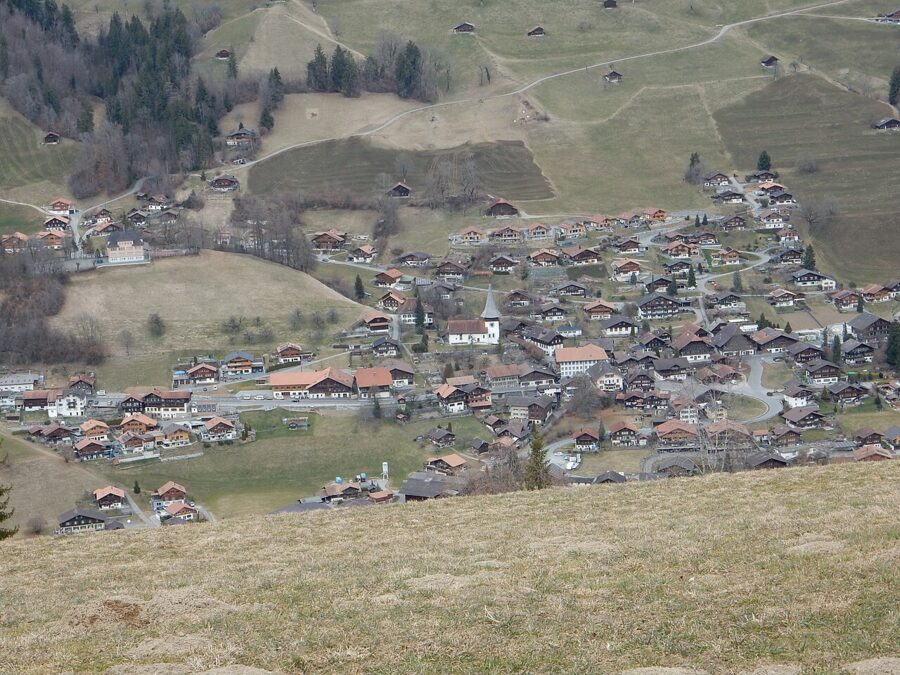
Spiez and Lake Thun
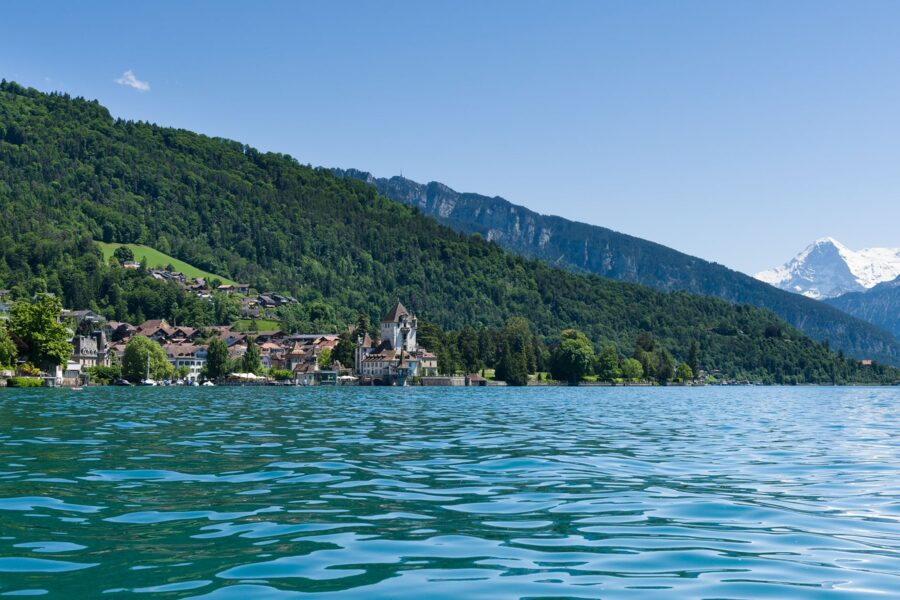
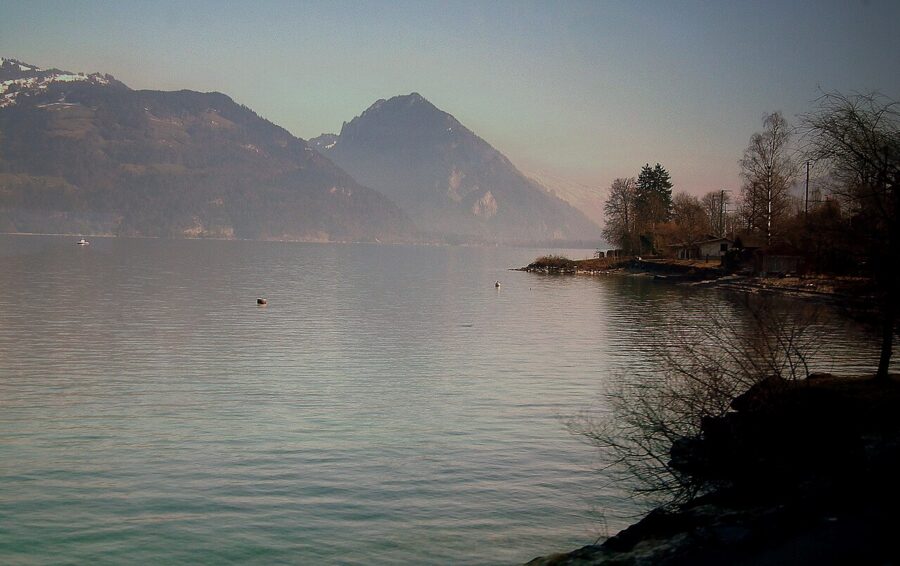
Spiez is where the line meets Lake Thun, above a small bay with a castle and a church on the point. Then comes the best stretch of the eastbound trip: from Spiez to Interlaken the railway runs along the south shore, and the lake is on the left all the way, with Beatenberg and the Harder above Interlaken across the water.
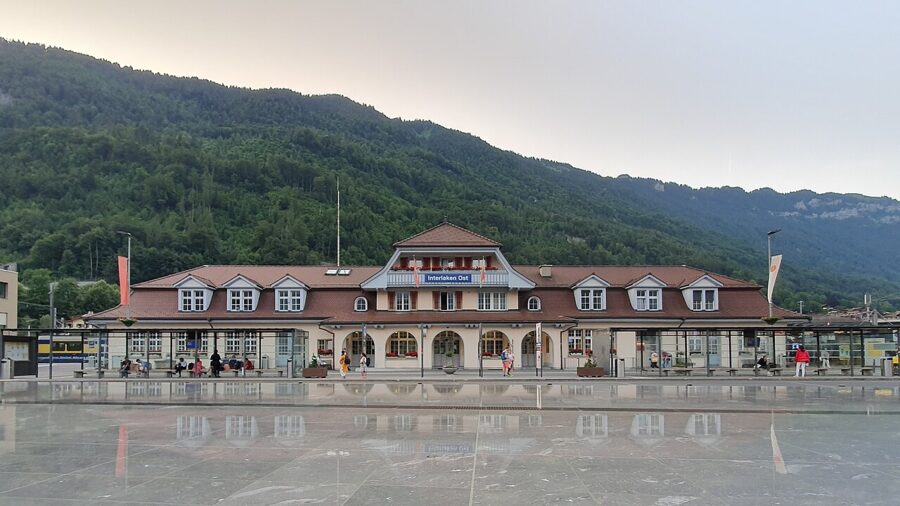
The train stops at Interlaken West, near the town center and the Lake Thun boat pier, before ending at Interlaken Ost, the station for the trains up to Grindelwald, Lauterbrunnen and the Jungfrau region and for the Luzern–Interlaken Express.
The other GoldenPass trains
The GoldenPass Express is not the only way to ride this line, and for part of it, not always the best. Between Montreux and Zweisimmen the MOB runs its own panoramic and vintage trains, and between Interlaken and Lucerne the Zentralbahn takes the GoldenPass corridor on to central Switzerland.
GoldenPass Panoramic
The Panoramic is the MOB’s hourly train between Montreux and Zweisimmen, leaving Montreux at 43 minutes past the hour from 7:43 a.m. to 5:43 p.m. in the winter 2026–27 timetable and taking a little over two hours. The MOB was early to panoramic cars: the designer Sergio Pininfarina suggested the first one in 1976, and the Crystal Panoramic Express followed in 1993; some of its driving cars still run in the Panoramic trains of 2026. A reservation costs CHF 10.
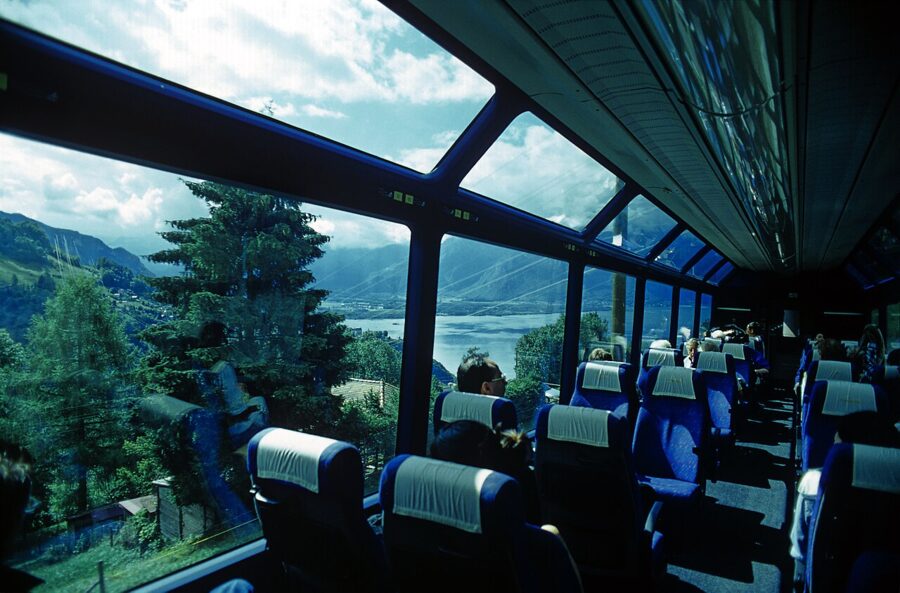
Some Panoramic sets have driving cars with the driver’s cab up in a roof pulpit, so the front seats look straight down the track. These are the VIP seats, and as of late 2026 they cannot be reserved in advance; the train staff sell them on board. If you are taking the Panoramic, board early at Montreux and ask.
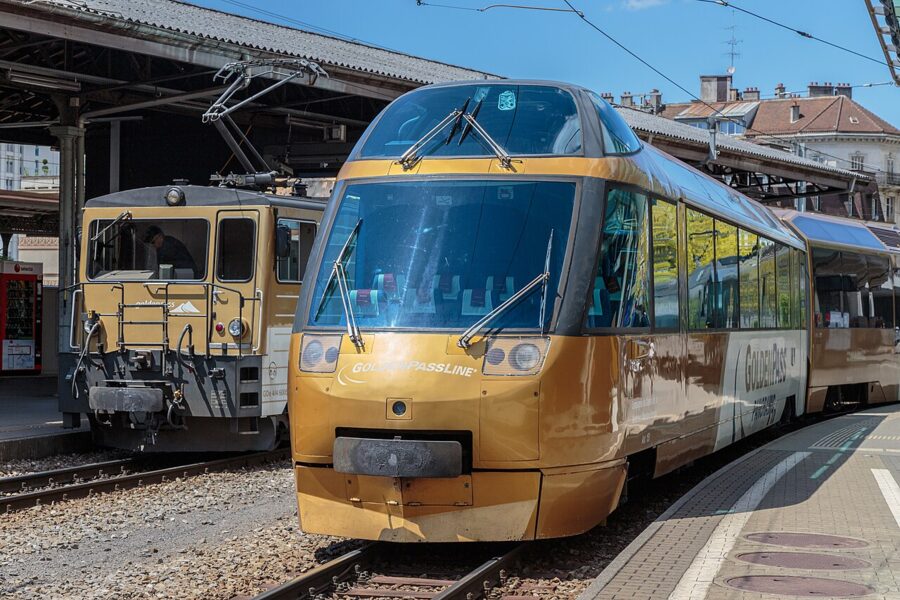
GoldenPass Belle Epoque
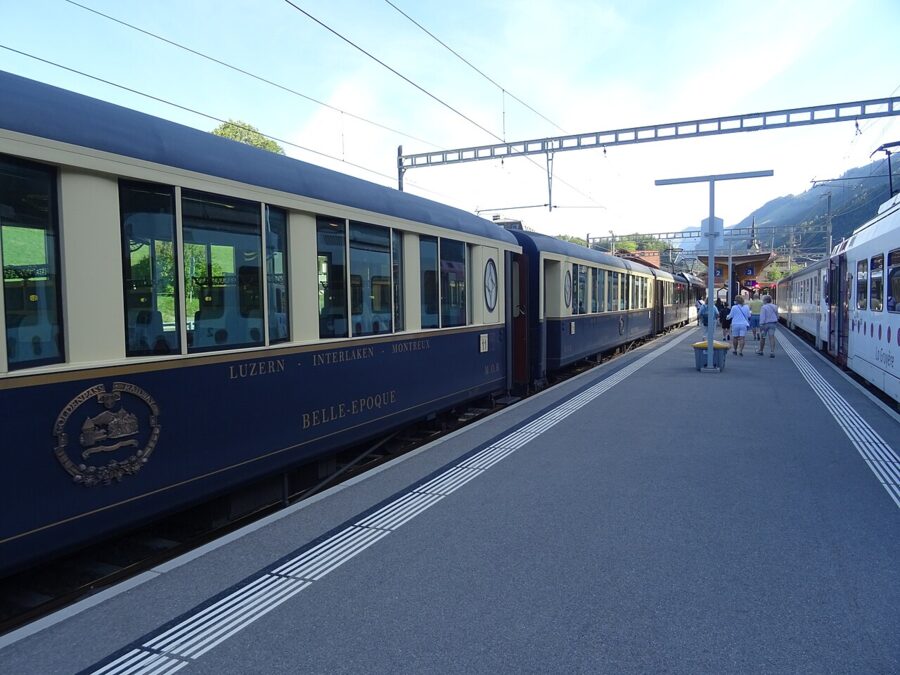
In 1931 the Compagnie Internationale des Wagons-Lits ran a luxury train between Montreux and Zweisimmen called the Golden Mountain Pullman Express, styled on its Orient Express. The economic crisis closed it within a year. Since 2005 the MOB has run Belle Epoque cars instead, rebuilt in its own workshops at Chernex: first-class Pullman cars, a second-class car in the same style and one in “Chalet” style.
The Belle Epoque runs on selected Montreux to Zweisimmen departures; the MOB journey planner lists it as a separate product, so you can choose it when you book a reservation. The cars have no wheelchair access. For Montreux to Interlaken on a fine day with time to spare, I would take the Belle Epoque to Zweisimmen and the regional trains on from there: it is the same fare.
Luzern–Interlaken Express
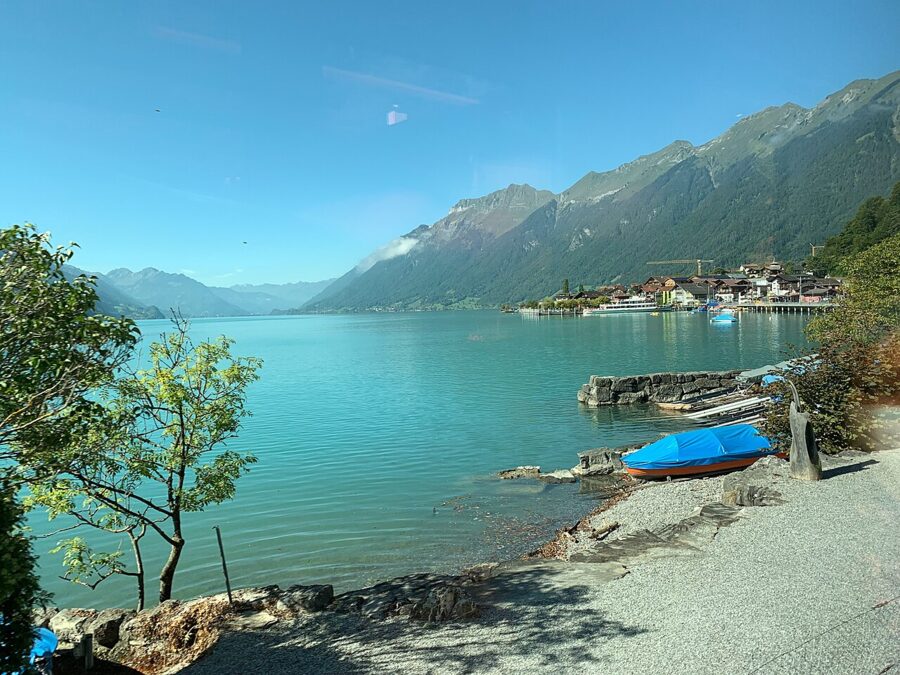
East of Interlaken, the old GoldenPass corridor continues to Lucerne on the Zentralbahn’s Luzern–Interlaken Express, which leaves Interlaken Ost every hour at four minutes past and takes 1 hour 51 minutes, over the Brünig Pass and along Lake Brienz. Reservations for it are made through the Zentralbahn, not the MOB.
Fitting it in with the Glacier Express and the Bernina Express
The GoldenPass Express is one section of the Grand Train Tour of Switzerland, the loop that links eight panoramic routes over 795 miles (1,280 km). The usual way to string the three big ones together is Lucerne to Interlaken, the GoldenPass Express to Montreux, then on to Zermatt for the Glacier Express to St. Moritz and the Bernina Express over the pass to Tirano in Italy.
Montreux to Zermatt takes about two hours and 40 minutes with one change at Visp, so the 9:07 a.m. GoldenPass Express from Interlaken still leaves you an afternoon to reach Zermatt. I would not do both the GoldenPass Express and the Zermatt run on the same day you want to enjoy either; spend the night in Montreux and go to Zermatt the next morning.
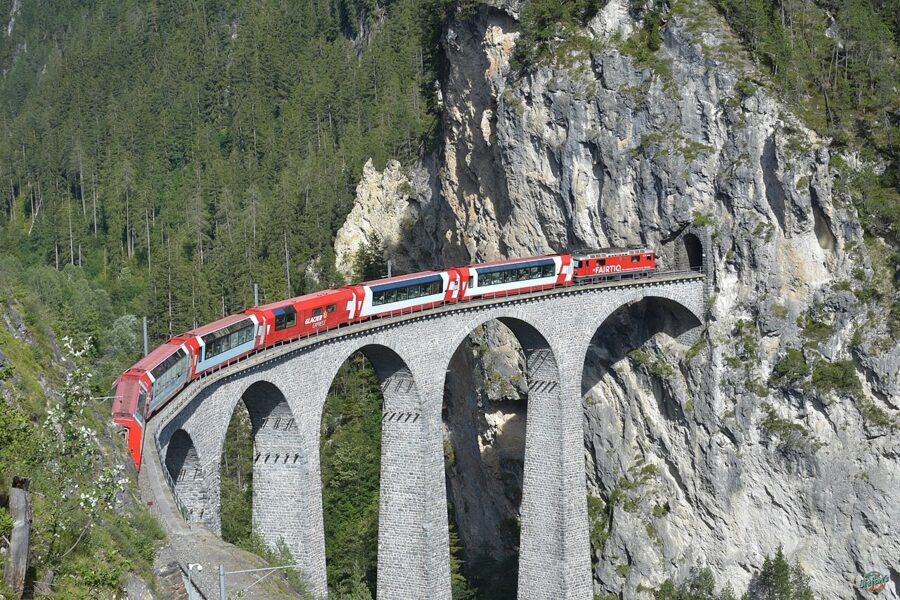
The reservations differ, and that is worth knowing before you plan. The Glacier Express and the Bernina Express need a paid reservation for every passenger; the GoldenPass Express needs one only in Prestige. With a Swiss Travel Pass the GoldenPass Express is the cheapest of the three to add, and the one to book last.
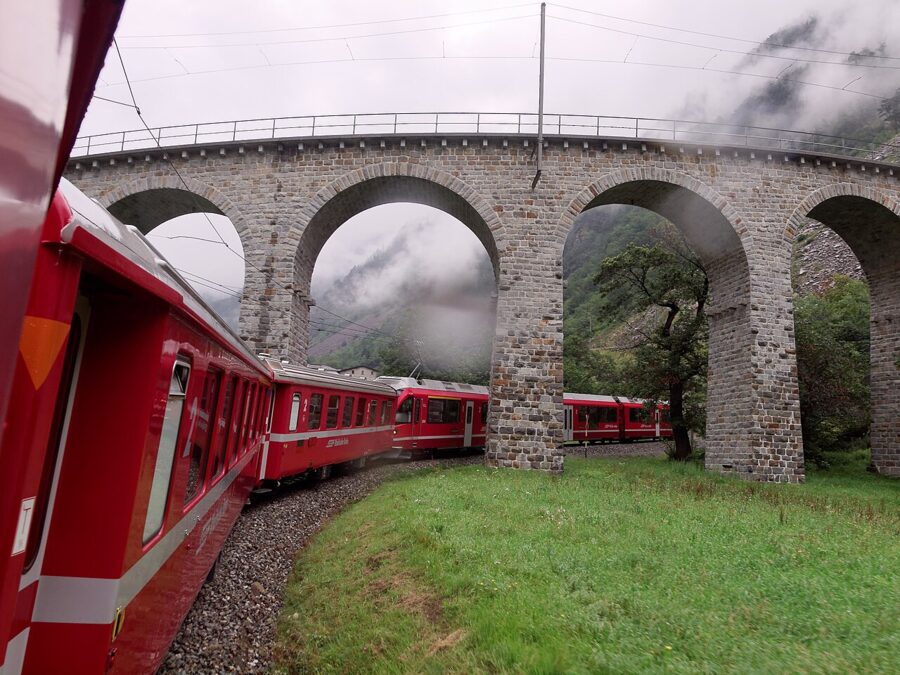
From Tirano you are in Italy, and the rest of Italy by train opens up from Milan. Switzerland’s other panoramic lines are among the best scenic train rides of Europe.
Practical things
Getting to the ends. Montreux is about 1 hour 20 minutes from Geneva Airport on a direct train; Interlaken Ost is about 2 hours 15 minutes from Zurich Airport, with some direct trains. That makes an open-jaw trip easy: fly into Geneva, ride east, fly out of Zurich.
Luggage. Use the luggage compartments and ski racks in the cars, and keep the aisle clear. On a full summer train the racks can fill, so a smaller case that fits overhead is easier.
Accessibility. The low-floor car has two wheelchair spaces, which cannot be reserved; the MOB asks you to register with the SBB Contact Center Handicap. Every GoldenPass Express station is step-free except Oey-Diemtigen, according to the MOB’s accessibility notes.
Dogs. A dog pays second-class half fare, or you buy a dog day pass for CHF 25 (about US$30).
When it goes wrong. If works or a breakdown put you on a bus, the MOB’s position is that it does not qualify for a refund of the reservation. If you miss the train you reserved, the reservation is lost. Build in an hour between a long-distance arrival and your GoldenPass Express, and in April and May 2027 check whether your date falls in the Lake Thun closure before you book a seat to Interlaken.
Back at Zweisimmen, the locomotive that brought you from Montreux pulls away, a BLS one backs on, and eleven minutes later you are rolling down the Simmental without having picked up a bag. Book the morning train, reserve the seat, and keep the left side free for Lake Thun.