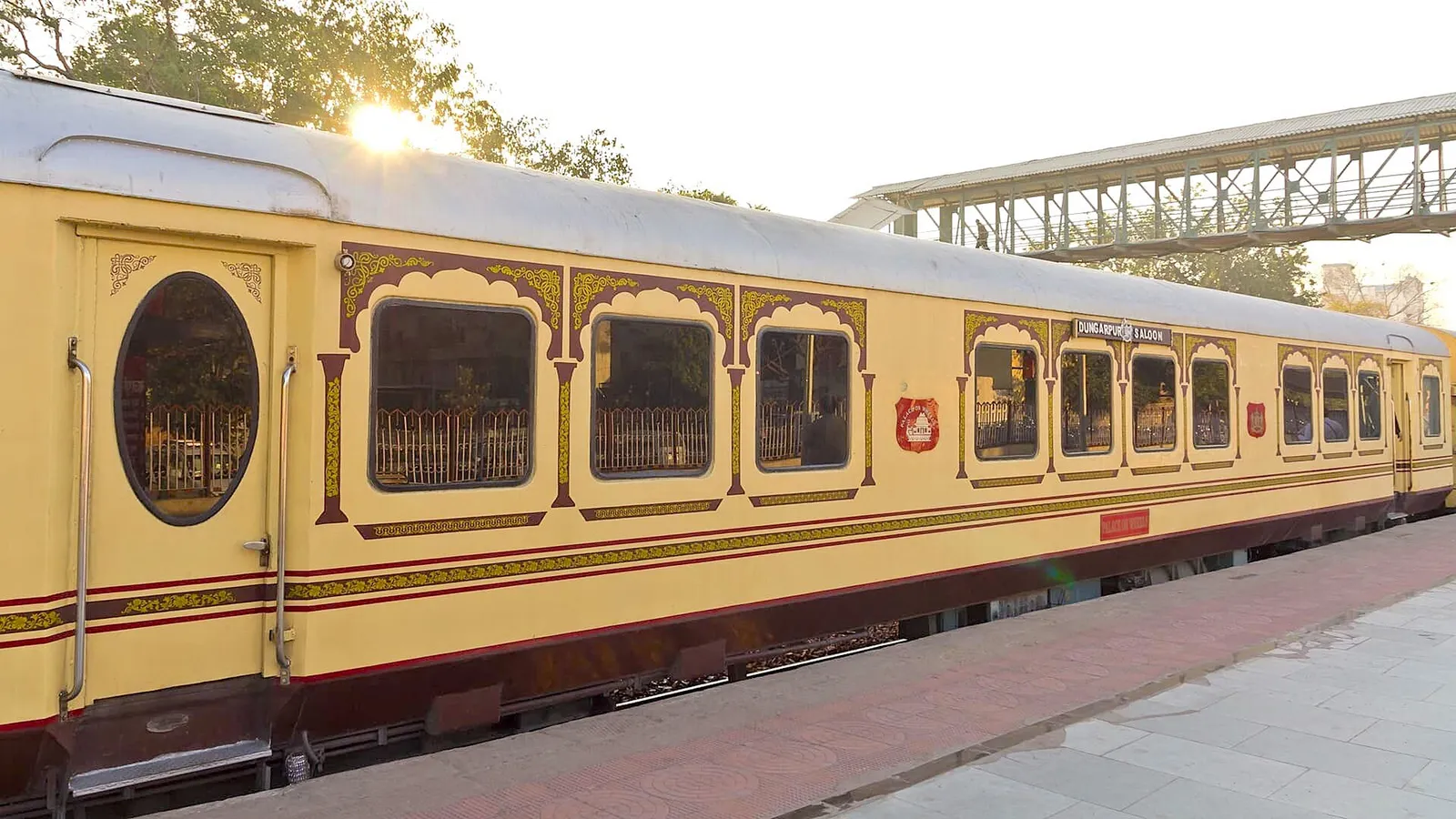
The Palace on Wheels leaves Delhi’s Safdarjung station on a Wednesday evening, and for the next seven nights it does nearly all of its moving in the dark. You go to sleep somewhere in Rajasthan and wake up at the platform of the next city, where a guide, a coach and a fort are already waiting. By the time the train is back in Delhi at 7:00 a.m. the following Wednesday, it has stopped at eight places in two states, and you will have spent more daylight hours in buses, jeeps and boats than at your cabin window.
India’s luxury trains are rail holidays with every day planned, priced per person per night, and the cheapest bed on the Palace on Wheels for the 2026–27 season costs US$6,048 for the week in September or April and US$6,832 from October to March, sharing a twin cabin, before tax. The Maharajas’ Express costs more, the Golden Chariot less, and ordinary Indian Railways trains reach most of the same cities for a small fraction of either.
I would choose the Palace on Wheels over the other three for a first trip to India that is mostly about Rajasthan. Two things decide whether it is a good week or an expensive one: the month you pick, and what your cabin category does and does not include.
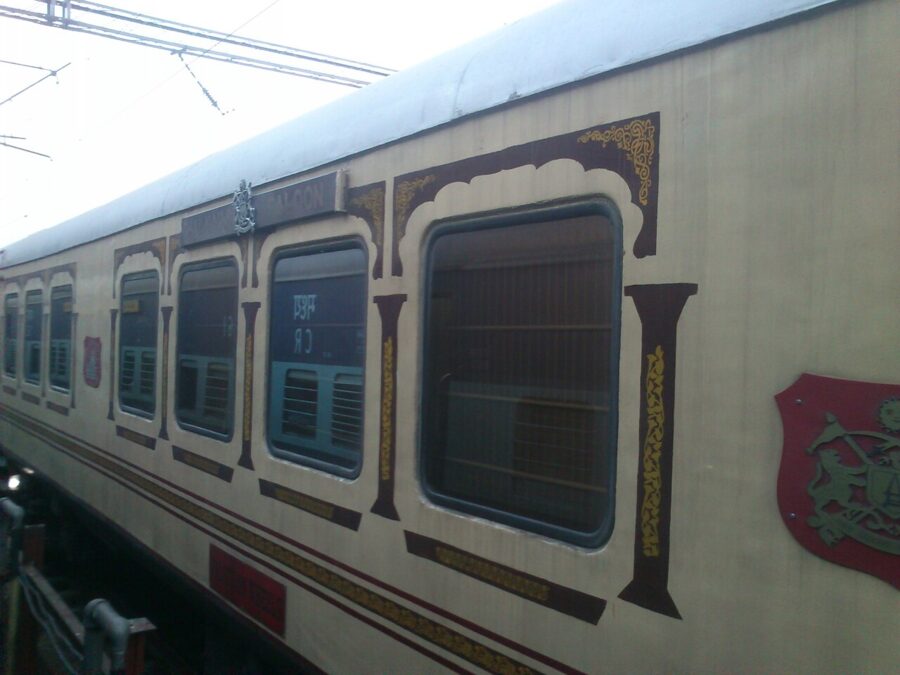
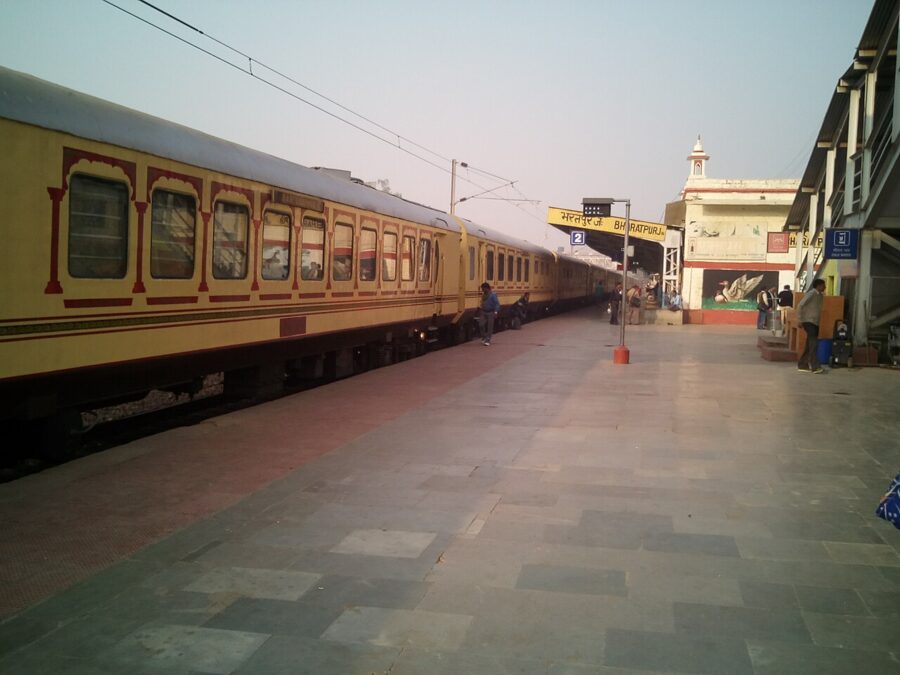
Stops in this article9
Who runs the Palace on Wheels
The train first ran on January 26, 1982, as a joint venture of the Rajasthan Tourism Development Corporation (RTDC) and Indian Railways, and that partnership still stands behind it. Day-to-day operation is contracted out: the current fares and terms are issued by a private operator, Cube Construction Engineering Limited in association with Evident Travel Solutions, under RTDC. The train came back in October 2022 after two seasons lost to the pandemic.
In May 2026 a nationalized bank chartered the whole train for a six-day trip from May 20 to 25, the first time it had run in May in its 44 years. Rajasthan’s summer heat, often above 108°F (42°C), is why the normal season stops in April.
The route, day by day
The published itinerary is a loop: New Delhi, Jaipur, Sawai Madhopur, Chittorgarh, Udaipur, Jaisalmer, Jodhpur, Bharatpur, Agra and back to New Delhi. Every departure leaves on a Wednesday, and new bookings are taken for the full seven nights only. The train runs mostly at night, so what you see of the country from the window is the first hour after dawn and the last hour before dinner.
Day 1, Wednesday: Delhi
Reporting is at Safdarjung station at 4:30 p.m. The welcome is the full production: shehnai players, a turban, a garland, a tika on the forehead and a drink, then the train manager introduces the staff before departure. Dinner is on board.
Fly into Delhi at least a day early. A delayed international flight is the most common way to lose a fare that does not refund.
Day 2, Thursday: Jaipur
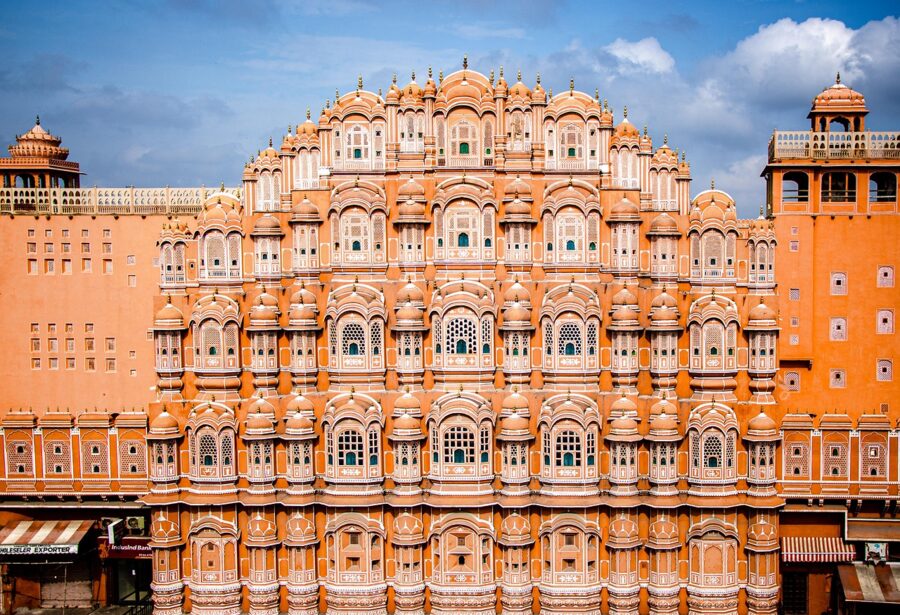
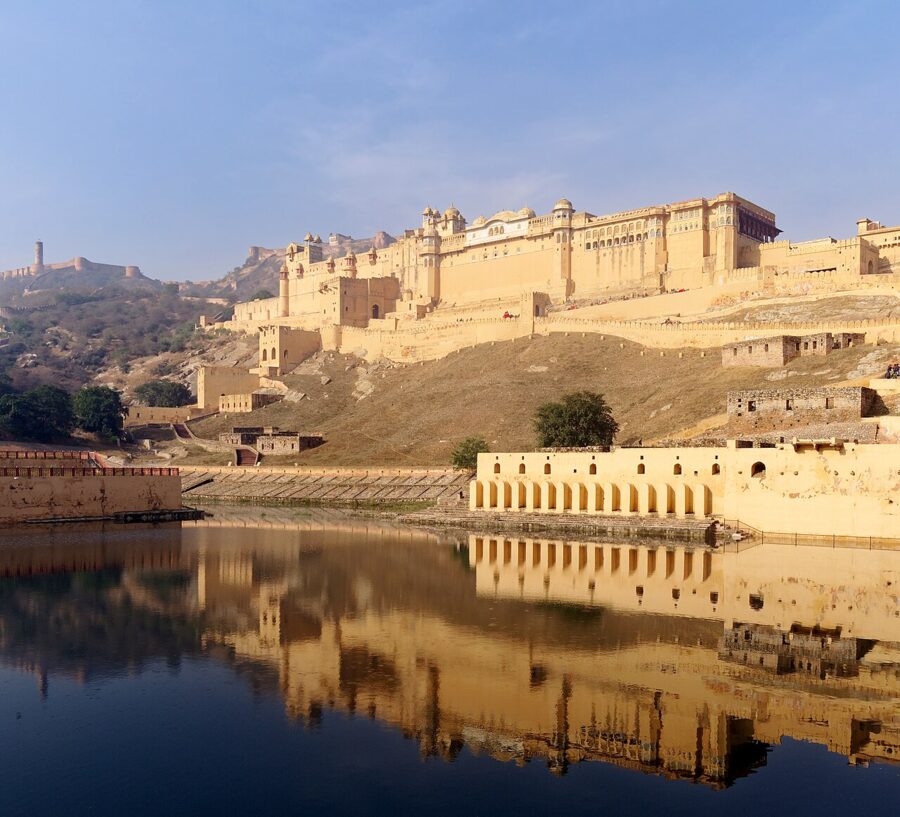
Jaipur is the busiest day of the week: the Albert Hall museum, the City Palace, the Jantar Mantar observatory, Amer Fort on its ridge north of the city and the Hawa Mahal on the itinerary’s highlight list. The operator still lists an elephant ride up to Amer; I would skip it and walk up the ramp.
Day 3, Friday: Sawai Madhopur and Chittorgarh
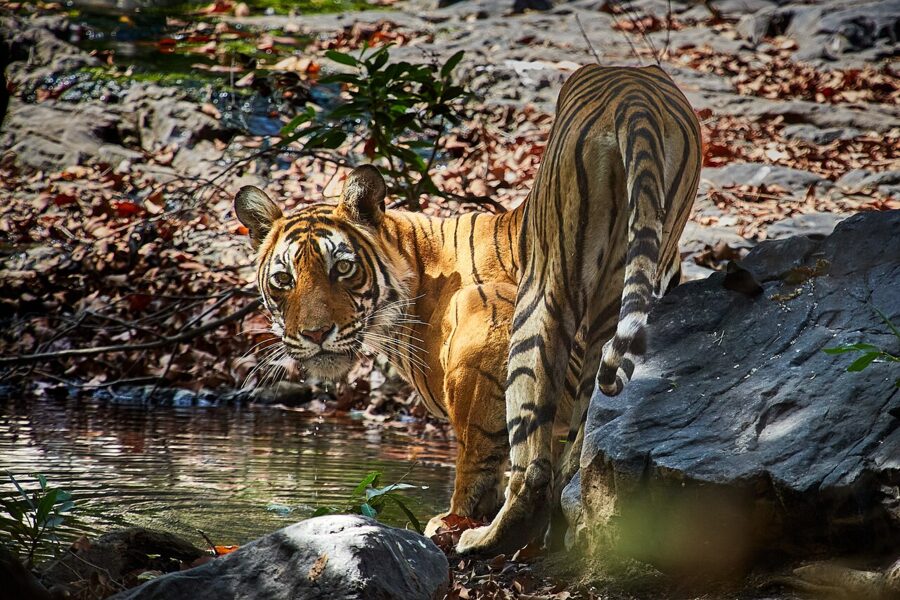
The morning is a shared jeep safari in Ranthambore National Park, the tiger reserve outside Sawai Madhopur. The park’s safari zones close for the monsoon from July 1 to September 30 and reopened on October 1 in 2026, so a September departure may not get its safari at all. If tigers are a reason you are going, pick October or later.
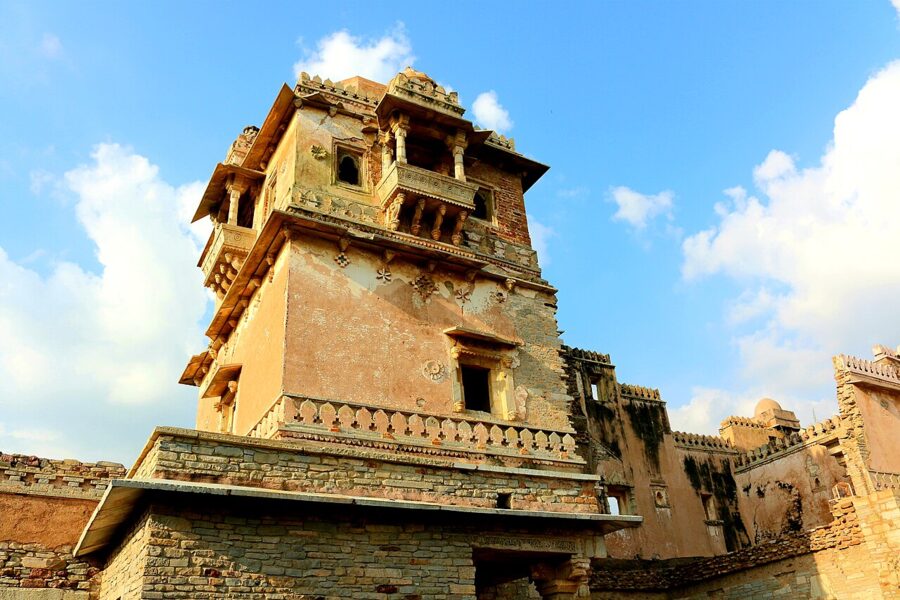
The train then runs on to Chittorgarh, whose fort is one of the largest in India and part of the Hill Forts of Rajasthan World Heritage listing since 2013. The evening ends with the fort’s light and sound show.
Day 4, Saturday: Udaipur
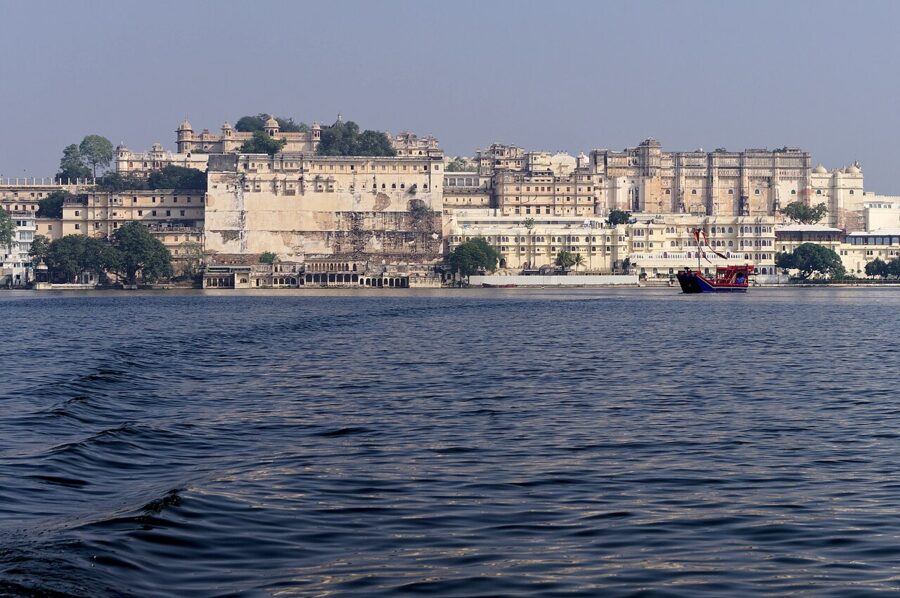
Udaipur gets the gentlest day: the city sights, lunch at a heritage hotel, a painting class with a local artist, and a boat across Lake Pichola to Jag Mandir, the island palace in the middle of the lake.
Day 5, Sunday: Jaisalmer
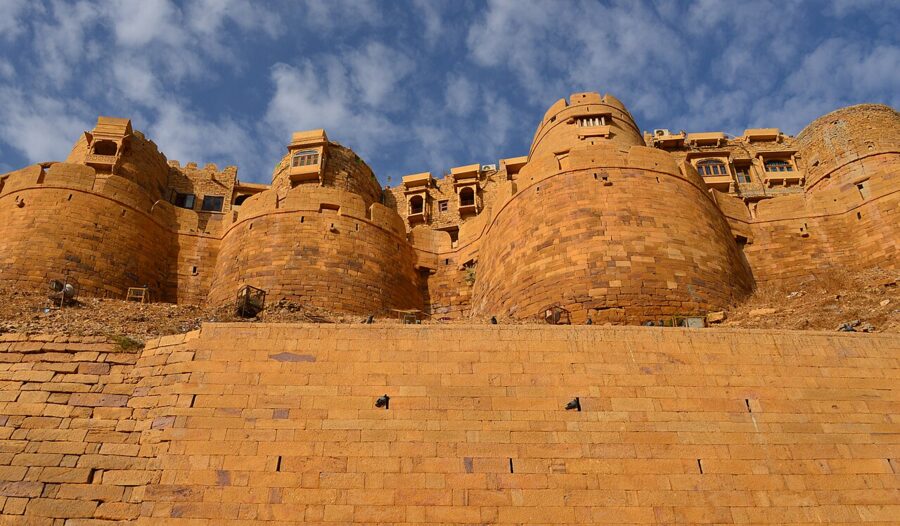
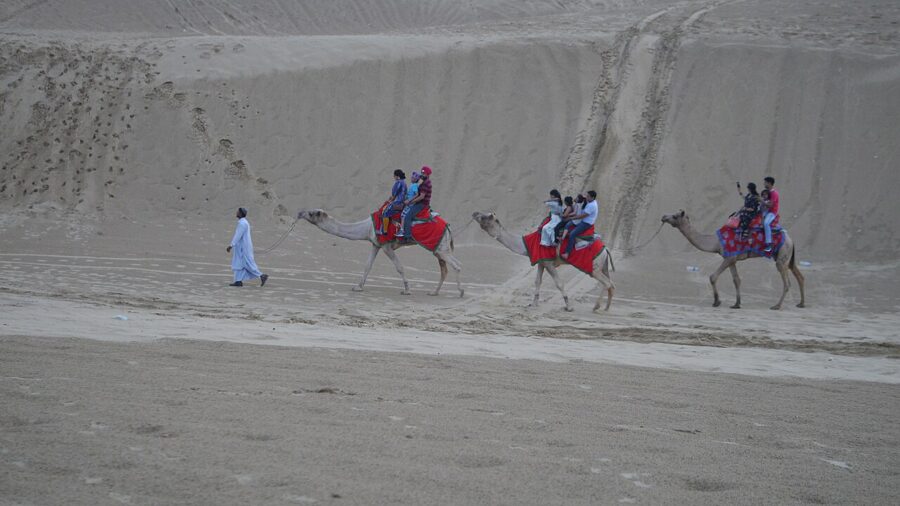
Jaisalmer, founded by Rawal Jaisal in 1156, is the far western point of the loop, out in the Thar Desert near the border with Pakistan. The morning is the fort and the carved sandstone havelis of the old town; people still live inside the fort walls, so this is a neighborhood as much as a monument. In the late afternoon the coaches drive out to the Sam sand dunes for the camel ride, and dinner is served in the open under the floodlit fort.
Day 6, Monday: Jodhpur
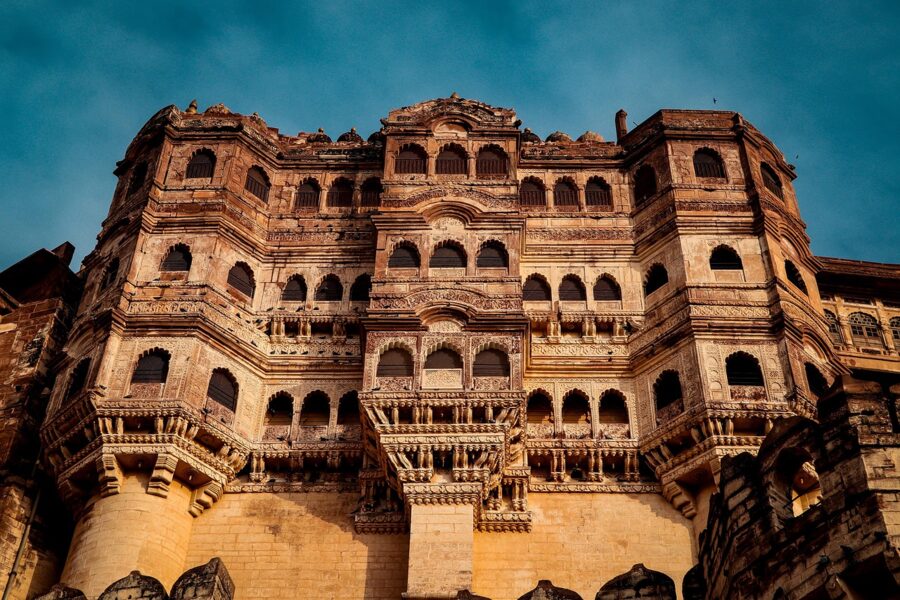
In Jodhpur the Royal Brass Band of Mehrangarh Fort plays the group in. The day covers Mehrangarh itself, the white marble cenotaph of Jaswant Thada below it, and the museum wing of Umaid Bhawan Palace, the 20th-century palace on the opposite hill where the former royal family still lives.
Day 7, Tuesday: Bharatpur and Agra
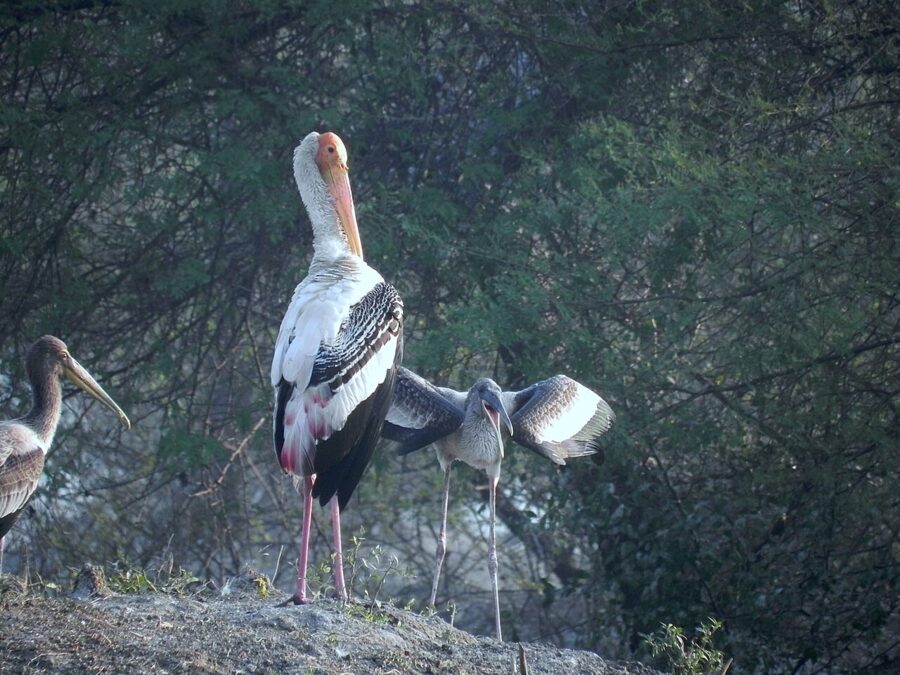
Bharatpur starts early with a cycle-rickshaw ride into Keoladeo National Park, a World Heritage wetland that fills with migrating ducks, geese and storks in winter. The brochure still mentions Siberian cranes, which have not wintered here since the early 2000s; come for the painted storks, pelicans and sarus cranes instead. The train then runs to Agra for the Taj Mahal in the afternoon.
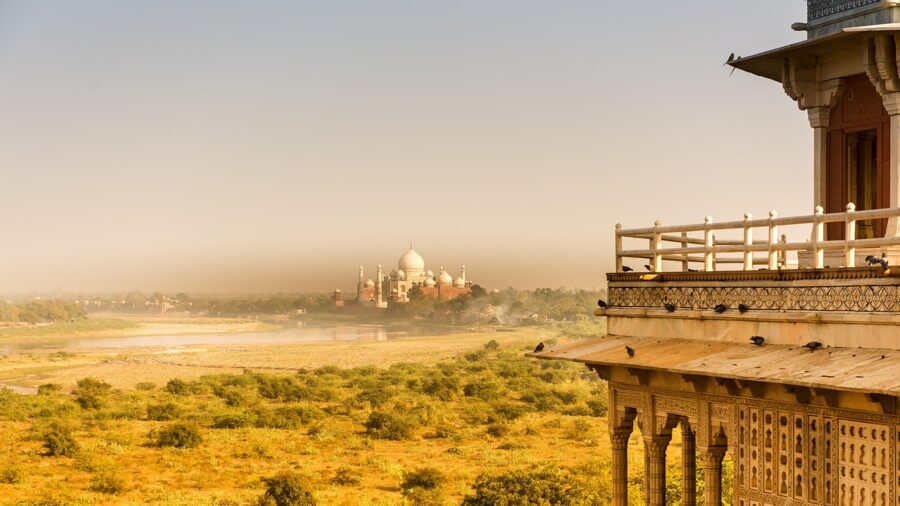
Day 8, Wednesday: back in Delhi
The train arrives at Safdarjung at 7:00 a.m., breakfast is at 7:30 and you are off the train soon after. Book an evening flight or one more hotel night; an early flight out of Delhi on this morning is asking for trouble.
Cabins and what each one includes
The train has 42 cabins in four categories, each themed on a Rajasthani princely state, with a pantry in every saloon and a khidmatgar (attendant) on call around the clock. Every cabin has its own bathroom, air conditioning, a safe and Wi-Fi that works when the mobile network does. The differences are space, bed type and, more than most buyers notice, drinks and transport.
| Category | How many | Size | Bed | Bathroom |
|---|---|---|---|---|
| Deluxe | 36 (12 coaches of 3) | 131 sq ft | Twin beds | Shower |
| Super Deluxe | 3 (Bharatpur coach) | 131 sq ft | Queen | Shower |
| Suite | 2 (Jhalawar coach) | 180 sq ft | Queen | Shower |
| Presidential Suite | 1 (own coach) | 240 sq ft | King | Bathtub and shower |
The operator’s facility sheet is where the categories really separate. Deluxe and Super Deluxe guests get soft drinks only, so beer, wine and spirits go on your bill. Suite guests get Indian-made spirits included, and the Presidential Suite adds imported spirits and a minibar.
Above Deluxe, you also stop touring with the group. Super Deluxe and Suite cabins come with a private car and a private guide at every stop and a 30-minute spa session for two, once; the Presidential Suite gets a larger car and a personal butler, and Suite and Presidential guests can dine in the cabin. Entrance fees, camera fees and the group guides are included in every category, while laundry and the transfers to and from the train are extra for everyone.
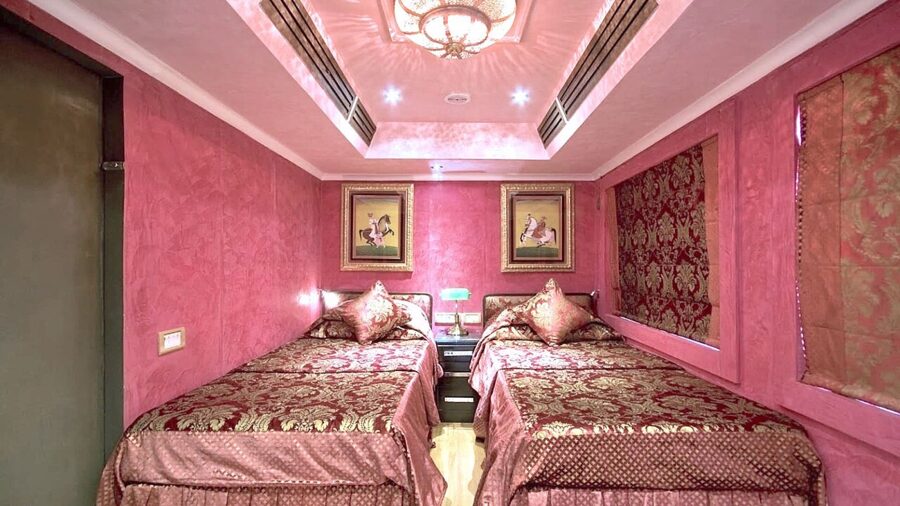
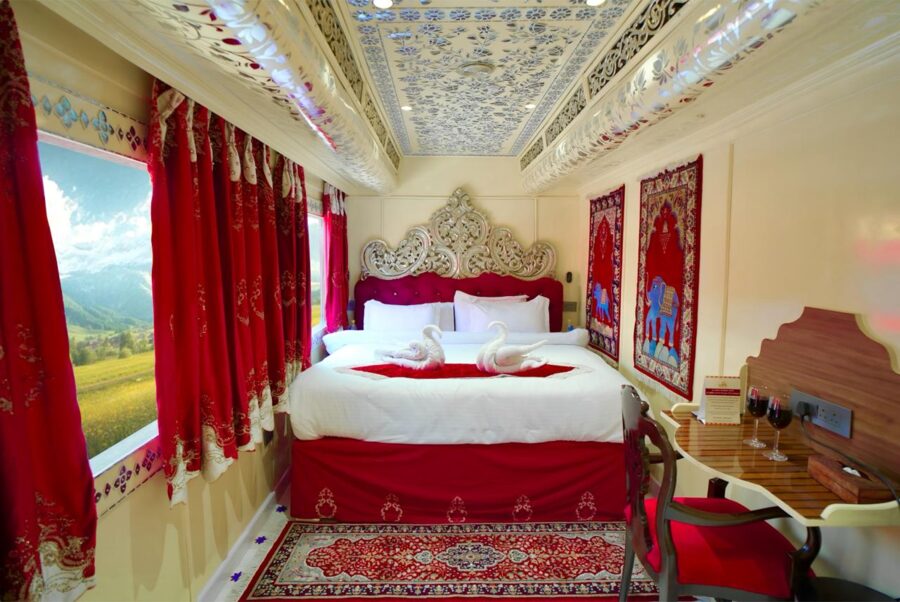
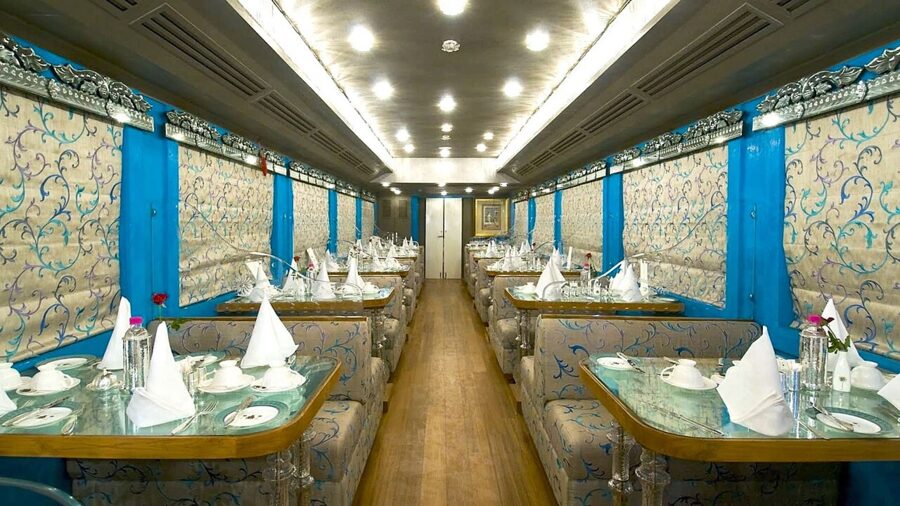
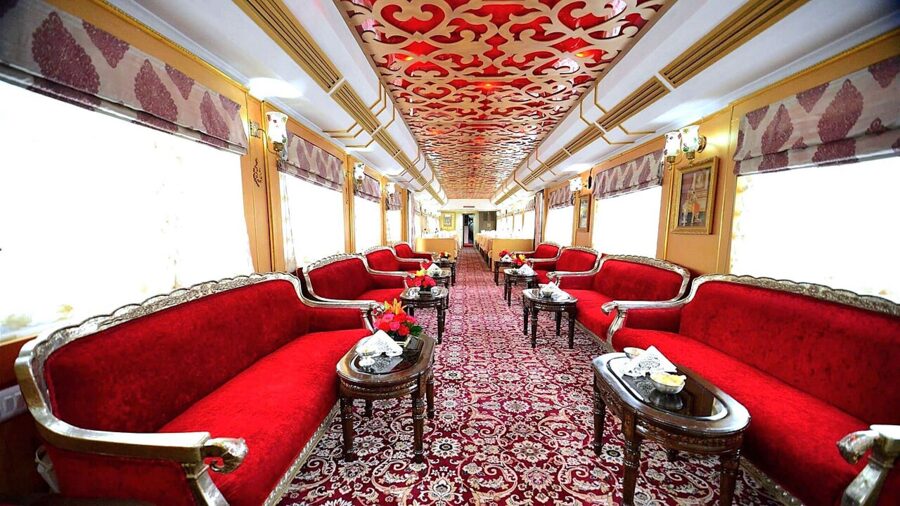
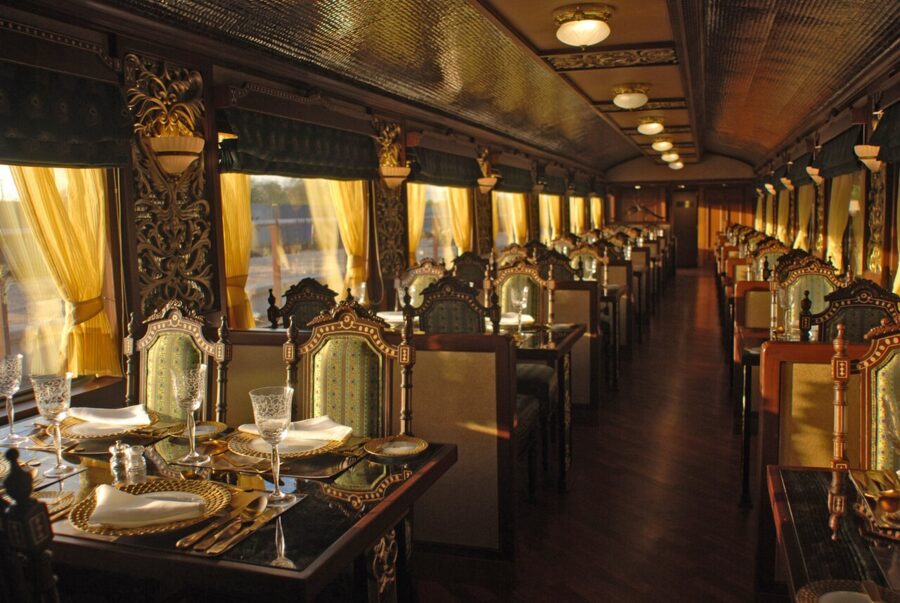
Meals are in two restaurant cars, renamed in recent seasons as Sheesh Mahal, for its mirror work, and Swarn Mahal, for its gilded ceiling; they were the Maharaja and Maharani until then. The menus mix Rajasthani, other Indian, Continental and Chinese dishes, and on some days lunch is at a heritage hotel off the train. A spa car offers Swedish, Balinese and aromatherapy massages at extra cost.
Fares for 2026–27 and 2027–28
The operator’s tariff is published per night and runs through April 2029. Foreign passport holders pay in US dollars. Indian nationals, and holders of OCI and PIO cards, pay a rupee fare that works out cheaper, but only with a copy of the qualifying document at booking. The table shows the dollar fares as of the 2026–27 season; Deluxe is per person, the other categories per cabin for two.
| Category | Sept. 2026 and April 2027, per night | Seven nights | Oct. 2026 to March 2027, per night | Seven nights |
|---|---|---|---|---|
| Deluxe, sharing (per person) | US$864 | US$6,048 | US$976 | US$6,832 |
| Deluxe, single occupancy | US$1,328 | US$9,296 | US$1,501 | US$10,507 |
| Super Deluxe (per cabin) | US$2,350 | US$16,450 | US$2,500 | US$17,500 |
| Suite (per cabin) | US$2,629 | US$18,403 | US$2,748 | US$19,236 |
| Presidential Suite (per cabin) | US$3,223 | US$22,561 | US$3,510 | US$24,570 |
Goods and services tax is added on top. Departures that include Christmas or New Year carry a 10 percent supplement, children under five ride free in a parent’s cabin, and children from five to 12 pay half. The rupee fare for a shared Deluxe cabin in peak season is ₹83,936 a night, or ₹587,552 (about US$6,200) for the week.
For 2027–28 the peak Deluxe fare rises to US$1,025 per person a night, US$7,175 for the week, and the lean-season fares move up to this season’s peak rates. If you are deciding between this winter and next, the decision is worth about US$340 a person.
The best price on the train for 2027 is an offer rather than a fare. For April 2027 departures, the operator lists one guest at full price and the companion at half in a shared Deluxe cabin, which brings the week to US$9,072 for two before tax, about US$4,536 each. April is hot by midday and most of Keoladeo’s winter birds have gone, but it is the cheapest week the train sells.
Season, booking and cancellation
The season runs from September to April. September is humid and the end of the monsoon, with Ranthambore still closed; April is dry and hot. December and January bring cold desert nights, fog that can delay the train around Delhi and Agra, and the Christmas surcharge. My pick is a February departure, with the birds still at Bharatpur, the tiger park open and the days warm rather than hot.
Book on the operator’s site or through one of the general sales agents it lists. Several agency websites carry the train’s name in their addresses; the operator’s own pages end in rajasthan.gov.in.
A booking needs 25 percent down with scans of every passport, and the balance 60 days before departure, after which interest is charged at 12 percent. Inside 60 days you pay in full at once. If the passenger list and passport copies are not in 45 days before departure, the booking is treated as cancelled, and names cannot be swapped once submitted.
- Cancel 120 to 90 days out: 10 percent of the fare is kept.
- 89 to 60 days out: 25 percent.
- 59 to 30 days out: 50 percent.
- 29 days or less, or a no-show: nothing is refunded.
The train needs at least 17 cabins sold to run. The operator reviews loads 60 days out and can cancel a departure up to 30 days ahead with a full refund of what you paid to it, but nothing for flights and hotels booked around it. That is the strongest argument for travel insurance on this trip, and for booking flights you can change.
The other luxury trains compared
India has three other trains in the same business, each with its own region. Fares below are per person sharing a cabin, as of late 2026, before the 5 percent tax. Foreign passport holders are usually quoted separately in US dollars, so treat the rupee figures as a guide to the gap between the trains and get the dollar quote before you book.
| Train | Operator | Region | Trip length | Cabins | From (per person, sharing) | Season |
|---|---|---|---|---|---|---|
| Palace on Wheels | RTDC and Indian Railways | Rajasthan and Agra | 7 nights | 42 | US$6,048 | Sept.–April |
| Maharajas’ Express | IRCTC | Rajasthan, Agra, Varanasi, Khajuraho, Mumbai | 3 or 6 nights | 43 (88 guests) | ₹516,750 (about US$5,400) | Oct.–April |
| Deccan Odyssey | MTDC and Indian Railways | Maharashtra, Goa, Gujarat, Rajasthan | 7 nights | 44 | ₹780,000 (about US$8,200) | 2026–27 season |
| Golden Chariot | IRCTC | Karnataka, Tamil Nadu, Kerala, Goa | 3 or 5 nights | 40 (80 guests) | ₹331,500 (about US$3,500) | 2026–27 season |
Maharajas’ Express
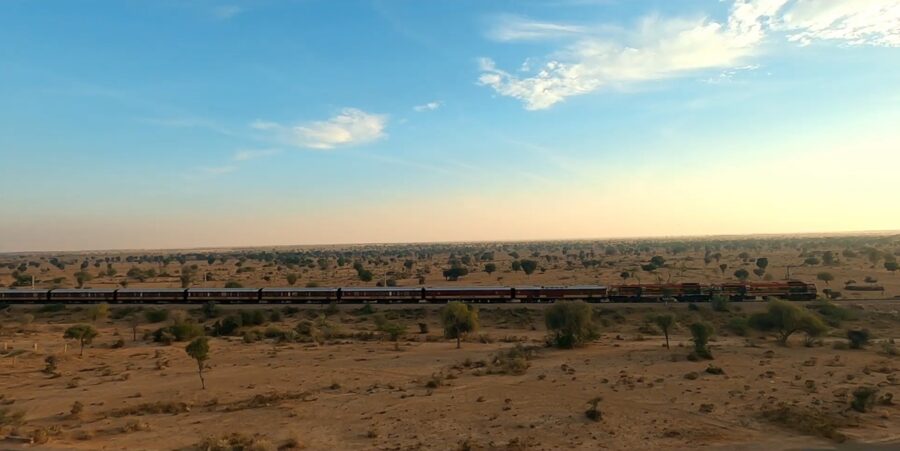
The Maharajas’ Express is run by IRCTC, the tourism arm of Indian Railways, on four fixed itineraries from October to April. The Indian Panorama loops from Delhi through Jaipur, Ranthambore, Fatehpur Sikri, Agra, Orchha, Khajuraho and Varanasi; the Indian Splendour runs from Delhi to Mumbai through Agra, Ranthambore, Jaipur, Bikaner, Jodhpur and Udaipur, and the Heritage of India runs the same way in reverse. The Treasures of India is a three-night Delhi, Agra, Ranthambore and Jaipur loop, the only short luxury trip in the north.
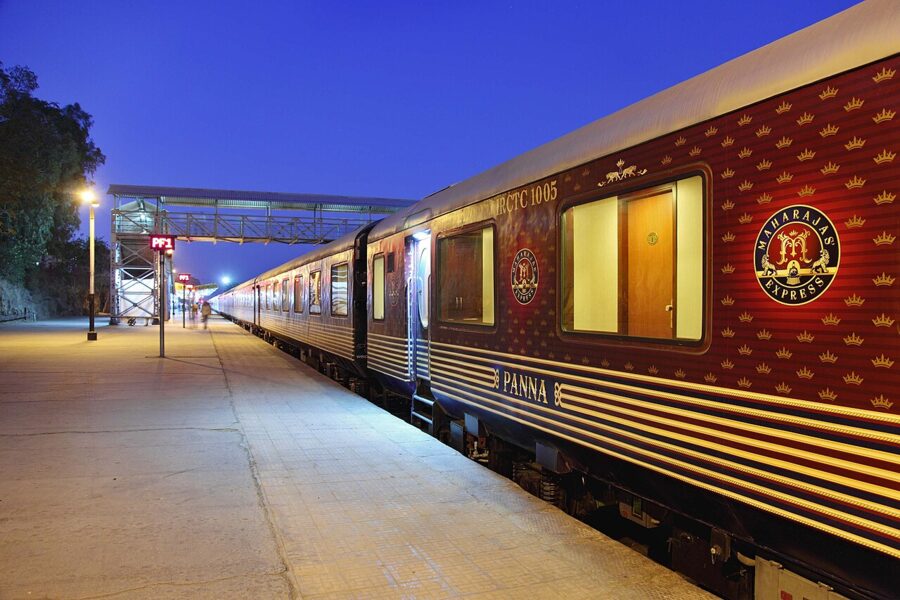
It is the more expensive train and the more polished one. It has 43 cabins for 88 guests: 20 Deluxe cabins of 112 square feet, 18 Junior Suites, four Suites and a Presidential Suite that fills a whole carriage with two bedrooms. The fare includes house wines, beer and spirits, the Palace on Wheels’ biggest gap at Deluxe level, along with porterage and an on-board tour director.
Fares run from about ₹516,750 (US$5,400) to ₹2,613,000 (US$27,500) per person sharing, as listed in a November 2026 guide to IRCTC’s trains, depending on journey, cabin and date. Booking takes 25 percent down and the balance 60 days before departure, as on the Palace on Wheels.
Deccan Odyssey
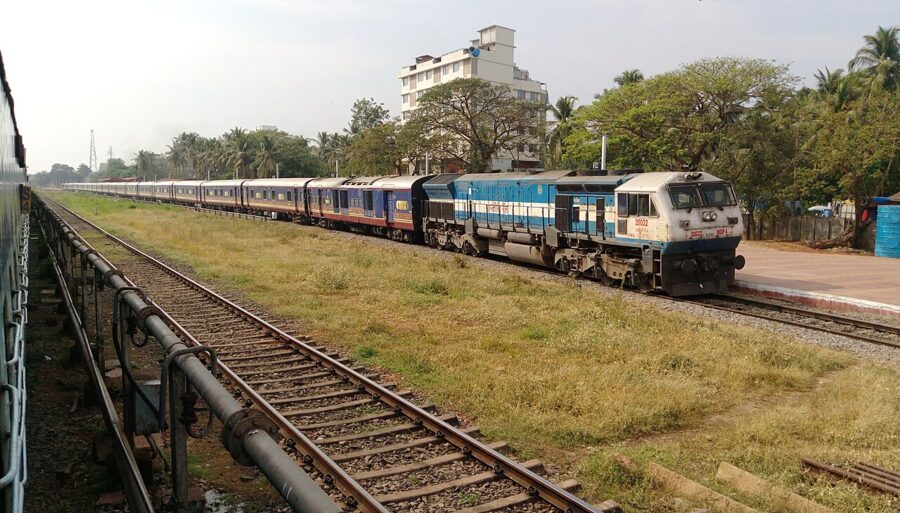
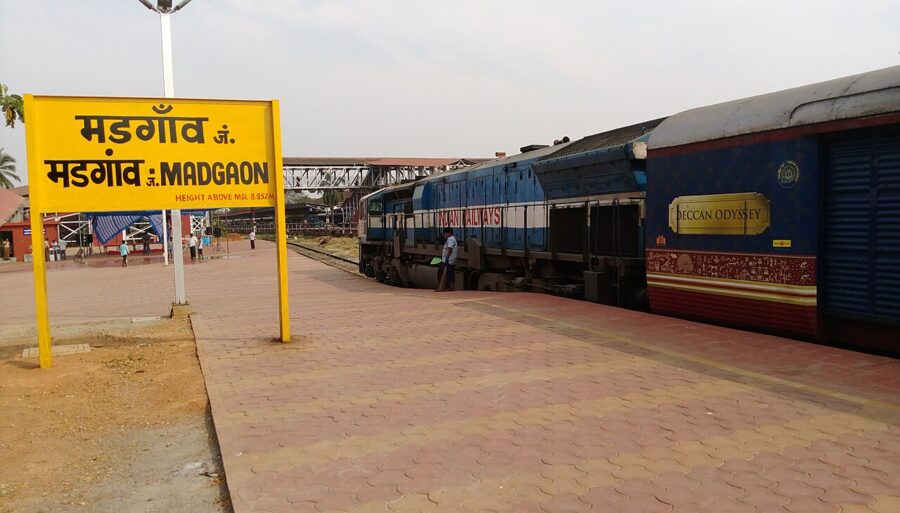
The Deccan Odyssey belongs to the Maharashtra Tourism Development Corporation (MTDC) and first ran in 2004. It stopped in 2019 when its operator, Cox & Kings, went bankrupt, and came back in 2023 refitted, with 21 coaches, 40 Deluxe cabins, four Presidential Suites, two dining cars, a bar car, a spa car and a conference car. Its seven-night journeys mostly start in Mumbai and cover western India: the Ajanta and Ellora caves, Maharashtra’s forts, Goa, and on some itineraries Gujarat and Rajasthan.
Fares for a standard seven-night journey in 2026–27 run from about ₹780,000 to ₹1,680,000 (US$8,200 to US$17,700) per person plus tax, the highest starting price of the four. It has also run the fewest departures since it came back, only seven trips in 2023. Is it still running? Yes, it ran in the 2025–26 season and is on sale for 2026–27, but confirm your date has enough bookings before you buy flights.
Golden Chariot
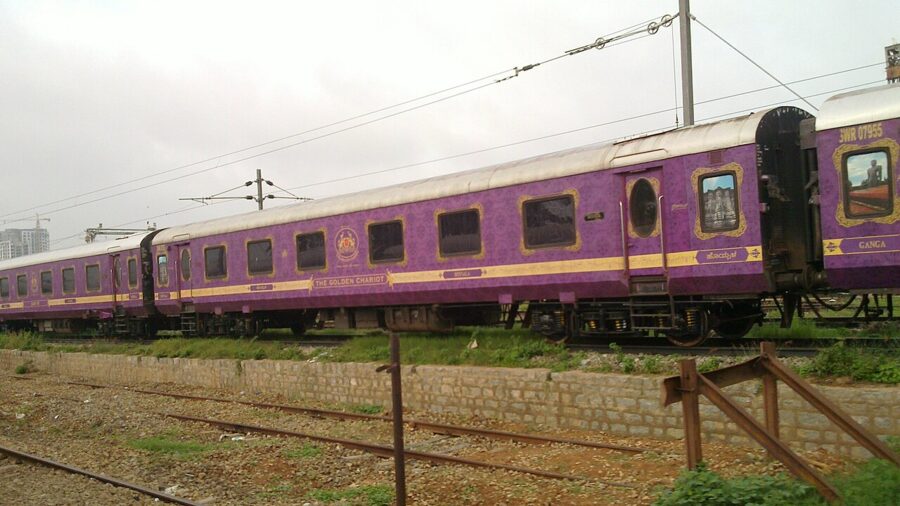
The Golden Chariot is IRCTC’s southern train, and every journey starts and ends in Bengaluru. Pride of Karnataka (five nights) takes in Bandipur, Mysuru, Halebidu, Chikkamagaluru, Hampi and Goa; Jewels of South (five nights) goes to Mysuru, Kanchipuram, Mahabalipuram, Thanjavur, Chettinad and Kochi; Glimpses of Karnataka (three nights) covers Bandipur, Mysuru and Hampi.
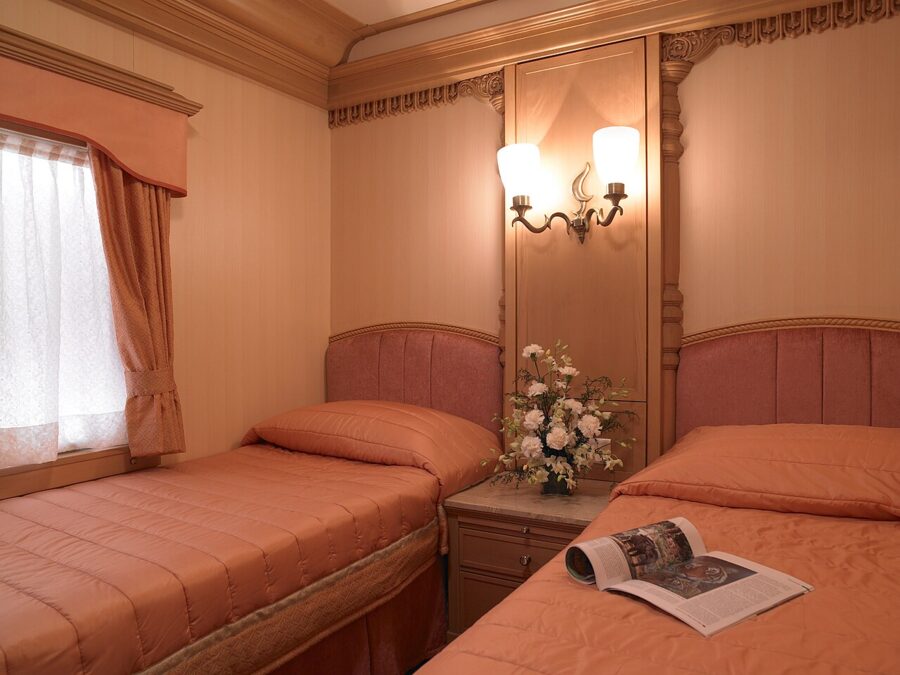
For 2026–27 the train was refitted with new cabins: 40 of them for up to 80 guests, including one cabin designed for wheelchair users, with smart TVs, the Ruchi and Nalapaka restaurants, the Madira bar and a spa. Fares start at about ₹331,500 (US$3,500) per person sharing for three nights and ₹487,500 (US$5,100) for five, before tax, and IRCTC advertised 20 percent off selected 2026–27 departures. The Golden Chariot’s booking terms are gentler than the northern trains’: 20 percent down and the balance 30 days before departure for individual guests.
Which train suits whom
First time in India, mostly Rajasthan: the Palace on Wheels. No other train covers the state as thoroughly in one week, with Jaipur, Chittorgarh, Udaipur, Jaisalmer and Jodhpur each given a day.
You want the Taj Mahal and Varanasi in one trip, and drinks included: the Maharajas’ Express on the Indian Panorama. If you have four days, not eight, its Treasures of India loop is the only short option in the north.
You have been to Rajasthan, or you want temples rather than forts: the Golden Chariot. Hampi, Thanjavur and Mahabalipuram are hard to string together by road, and the three-night trip has the lowest starting price of the four.
You want the cave temples of Ajanta and Ellora: the Deccan Odyssey, if you can get a confirmed departure. Otherwise those caves are easier to reach by flying to Aurangabad and hiring a car.
You are comparing it with luxury trains elsewhere: the Indian trains work like the Eastern and Oriental Express or the Royal Scotsman, tours with sleeping cars where most of each day is spent off the train. If the long hours at the window are the point, The Ghan or the Orient Express give you more of them.
Ordinary Indian trains instead
The plain alternative is to see the same cities on Indian Railways and sleep in hotels, at a small fraction of the price. You lose the guided days and the week without packing; you gain your own pace and the trains Indians actually ride. If you want a long journey through the window, as on the Qinghai–Tibet Railway, an ordinary overnight train across Rajasthan gives you more of it than the Palace on Wheels, which crosses the desert while you sleep.
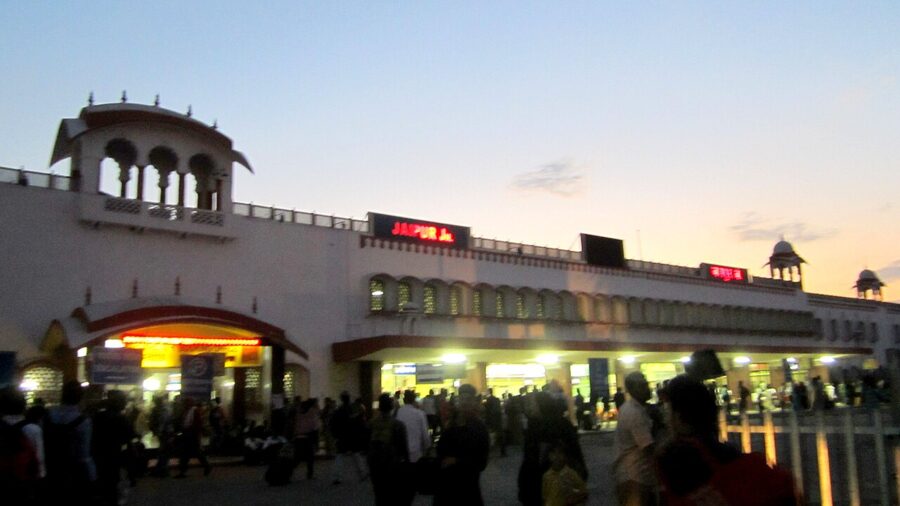
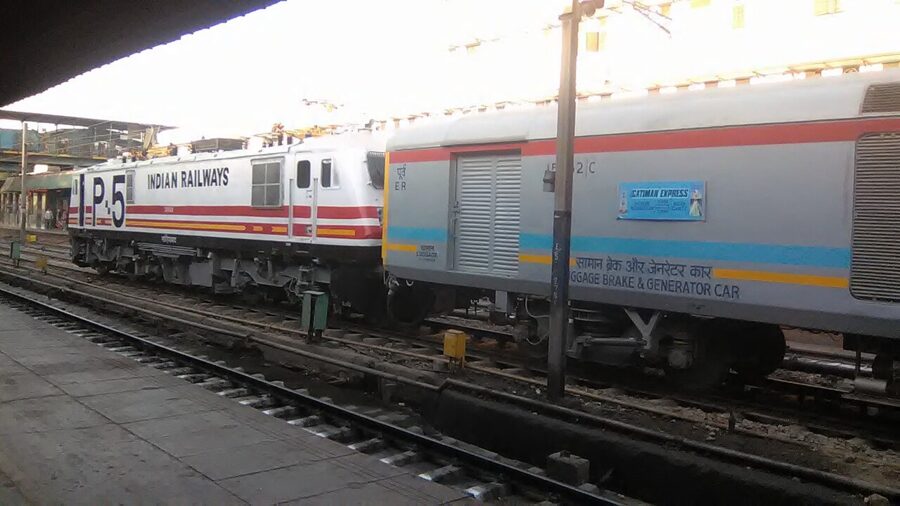
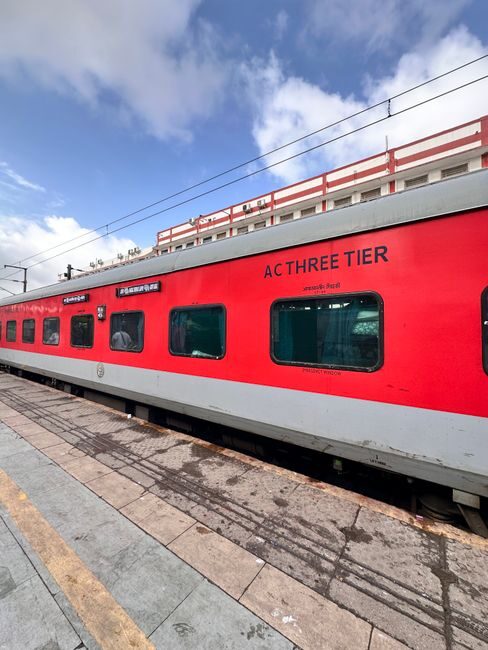
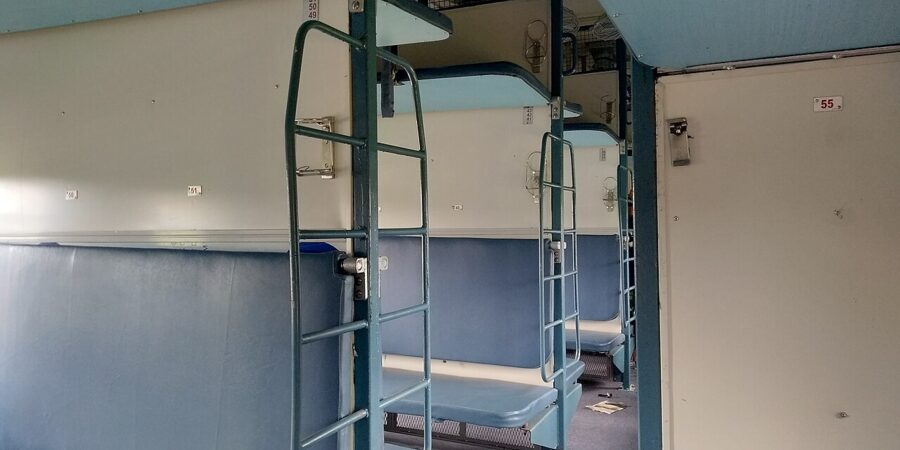
The trains to know are the daytime chair cars between Delhi and the cities of the loop: the Gatimaan Express between Delhi and Agra, the Shatabdi expresses, and the Vande Bharat Express that has run between Delhi Cantonment and Jaipur since April 2023. For the long legs to Jaisalmer, Jodhpur and Udaipur, take an overnight train in AC First Class (1A), which has lockable two- and four-berth compartments, or AC 2-tier (2A), with curtained open berths.
Booking is the hard part. Ordinary reservations open 60 days before travel on IRCTC, the railway’s ticketing site, since a change on November 1, 2024. Foreign tourists can request seats from a separate foreign tourist quota up to 365 days ahead with a passport, with berths allocated when the normal window opens. Since July 2025, Tatkal (last-minute) tickets booked online need Aadhaar, the Indian national ID, which visitors do not have, so use the foreign tourist quota and book early.
Time is the real cost of doing it yourself. Rajasthan’s distances are long, the best trains leave early or late, and a week on your own covers four or five of the loop’s cities comfortably, not eight. The Palace on Wheels buys you the full set in seven days, and that, more than the gilded ceilings, is what the fare pays for.
Booking the Palace on Wheels for 2027
Pick the month first. February for birds, tigers and warm days; April 2027 for the half-price companion offer if you can take the heat; avoid Christmas week unless you want the surcharge and the fog.
Then pick the cabin by what you drink and how you like to tour. Shared Deluxe is the right buy for most couples; if you want a private guide and car at every stop, the Super Deluxe at US$17,500 a cabin in peak season is about US$3,800 more than two people pay sharing Deluxe.
Book on the operator’s site or with a listed agent, pay 25 percent with your passport scans, diary the balance for 60 days out, and buy insurance that covers the operator canceling. Then fly into Delhi on Tuesday, be at Safdarjung by 4:30 p.m. on Wednesday, and let the train do its moving in the dark.