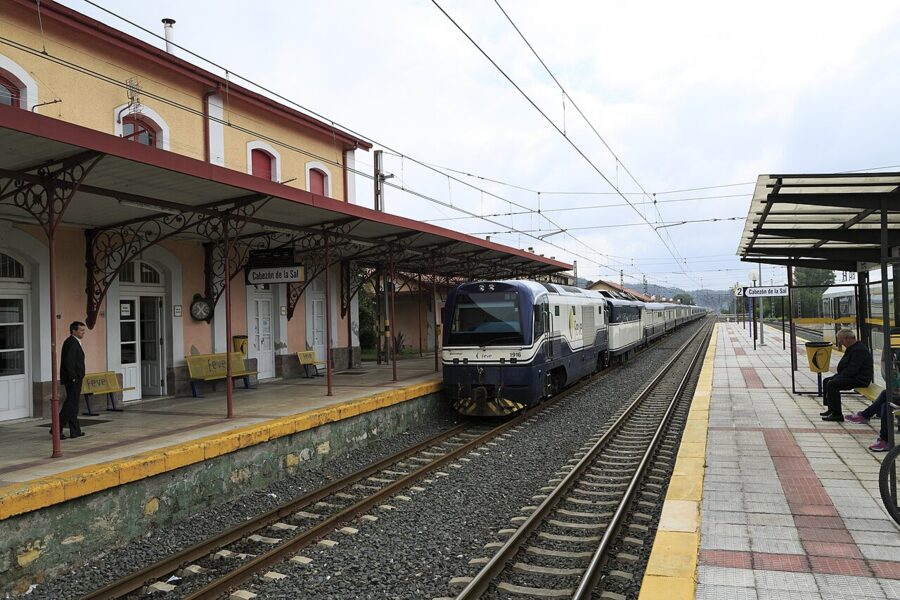
The Transcantábrico does most of its sleeping standing still. Every night of its eight-day run along Spain’s north coast the train pulls into a small station, Carranza, Santander, Cabezón de la Sal, Llanes, Oviedo, Luarca, Viveiro, and stays there until breakfast. The suite you paid for is a quiet room with a guard on the platform, not a berth rocking through the dark.
The second thing to know is the price. For 2027, Renfe charges €11,100 (about US$12,200) per person for the full trip in a shared Gran Lujo suite, as of the fares published in late 2026. That buys a week between San Sebastián and Santiago de Compostela with every meal, every entry ticket, a guide, and a coach that follows the train to the places the rails do not reach.
Spain has three other luxury trains, all run by Renfe: the Costa Verde Express on much the same coast for under half the price, the Al Ándalus in the south, and the small Expreso de La Robla across the mountains to León. There is also the version you assemble yourself on ordinary trains, which costs a fraction and asks for patience. I would choose between them on three things: the room, the season, and how much of the week you are willing to spend on a bus.
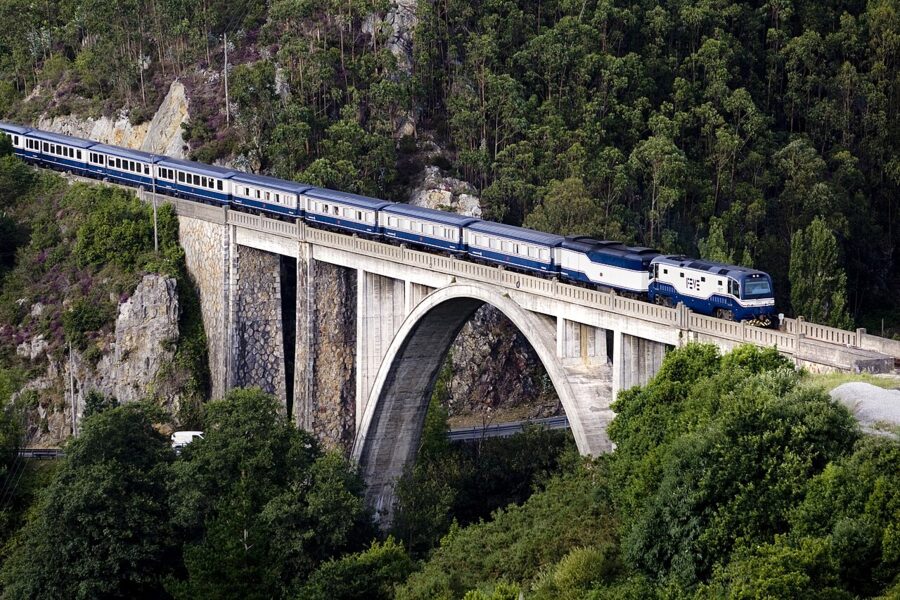
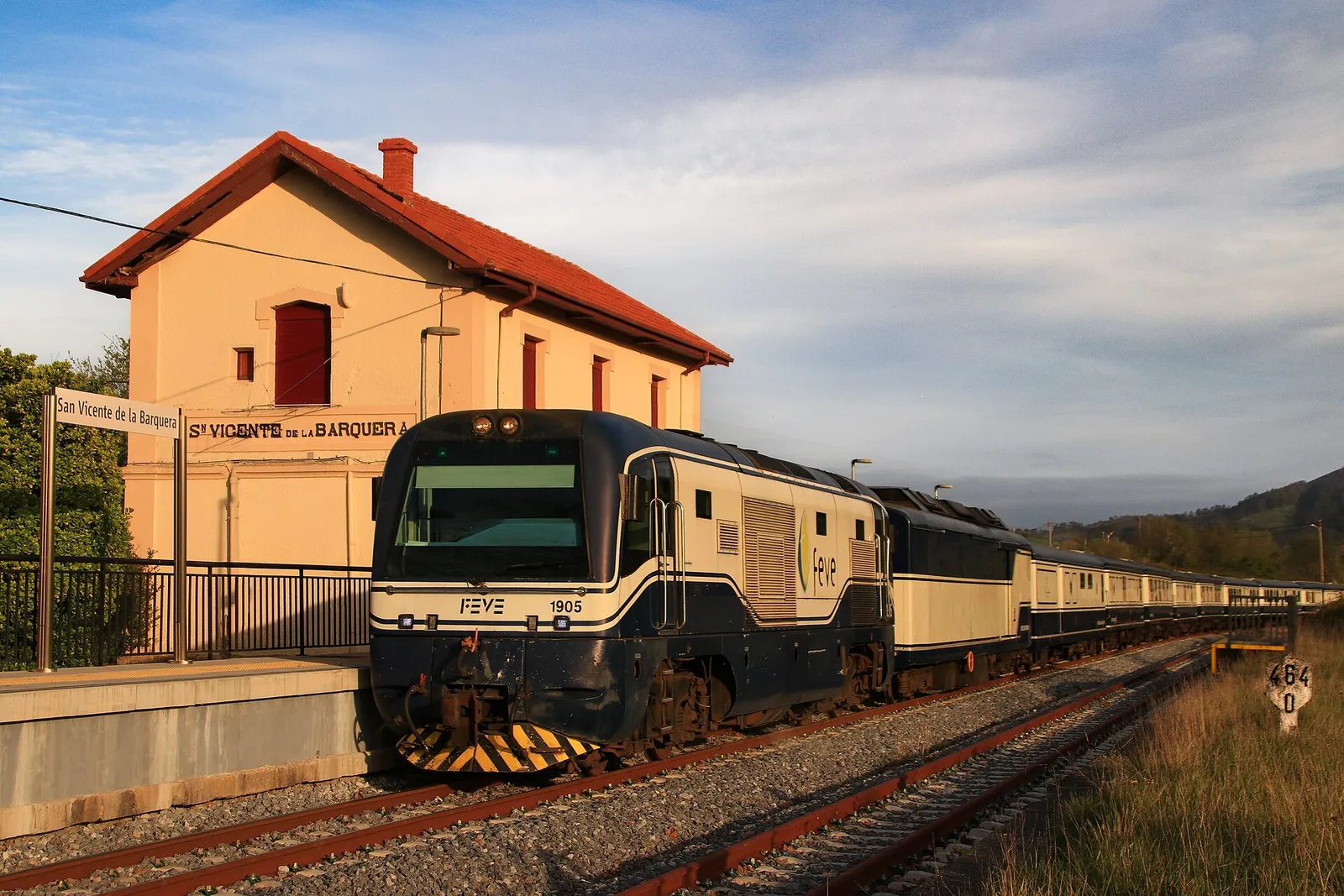
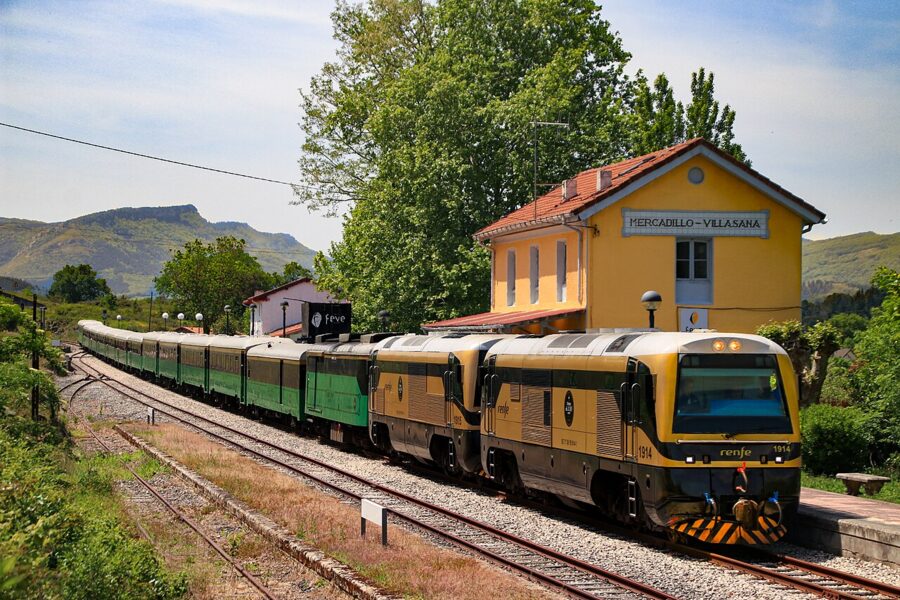
The line it runs on is the old FEVE network, built to a gauge of one meter (3 ft 3 3/8 in). It winds slowly along the coast and stops in towns like Llanes and Viveiro that the high-speed network never reaches.
Stops in this article10
- 01What you are actually booking
- 02The route, day by day
- 03The suites and the lounge cars
- 04What the fare covers, and what it does not
- 052027 prices and departure dates
- 06The Costa Verde Express, the Al Ándalus and the Expreso de La Robla
- 07Booking, deposits and the fine print
- 08Who it suits, and who should skip it
- 09Northern Spain on the ordinary trains
- 10Which one I would book
What you are actually booking
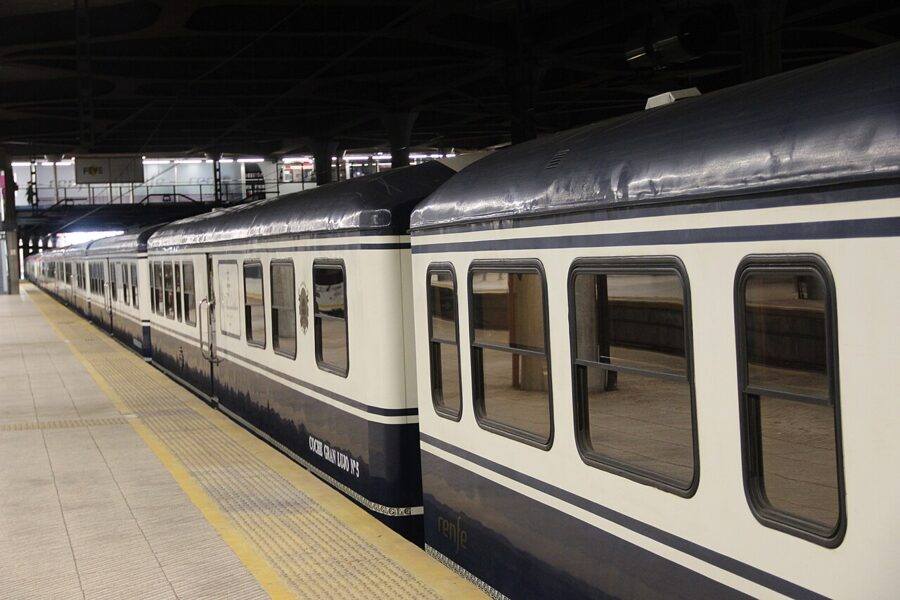
El Transcantábrico Gran Lujo is a hotel train with fourteen suites, four lounge cars and a crew that stays with you all week. Renfe Viajeros, Spain’s state rail operator, runs it. Nothing about it works like a scheduled train: you cannot buy a seat from Santander to Oviedo, only the whole cruise or one of its two short versions.
It is also the oldest train of its kind in Spain. FEVE, the state narrow-gauge railway, launched it in July 1983 on the line north of León, copying the idea of the Orient Express on rails that no international train could use. Spanish railway press calls it the first meter-gauge tourist train in the world.
Renfe took it over when FEVE was folded into it at the end of 2012, and it is still the most spacious and the most expensive of Spain’s luxury trains.
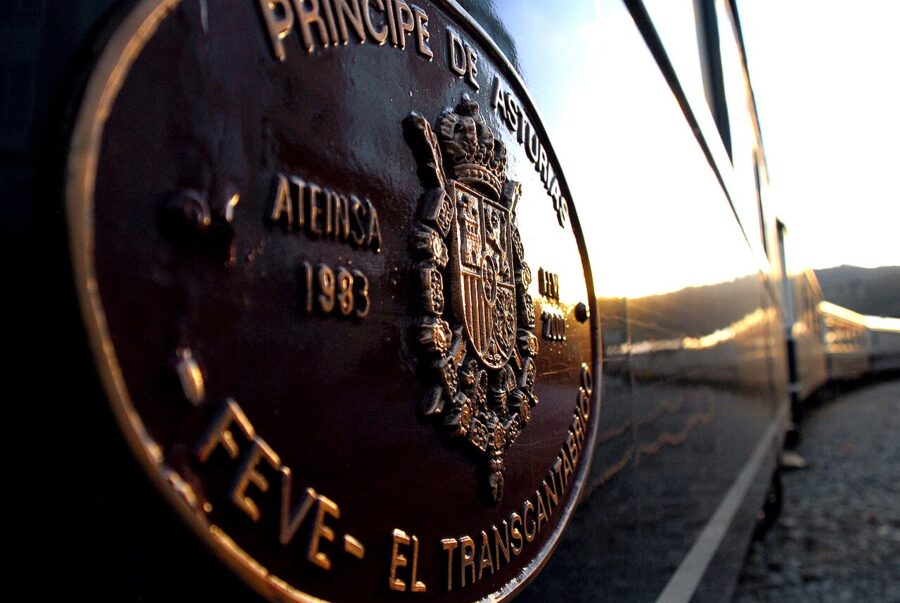
The “Gran Lujo” came later. Around 2010 FEVE stripped one train down to the frame and rebuilt its four-berth cars as suites with a sitting room and a real bathroom, which halved the number of passengers from 54 to 28 and still sold out. The older, simpler train carried on as the Transcantábrico Clásico and is now the Costa Verde Express.
If you have read about the Orient Express or Scotland’s Royal Scotsman, the shape will be familiar: short daytime runs, long stops, excursions by coach, dinner and a bed on board. The difference is the scale. With around 28 guests, you will know everyone’s name by Tuesday.
The route, day by day
The 2027 San Sebastián to Santiago itinerary runs Saturday to Saturday, and every second week the train does it in reverse. Read it closely and you will notice the train never quite touches either end. You meet the group in San Sebastián and board in Bilbao, and at the far end the train leaves you at Ferrol, with a coach for the last stretch to Santiago.
Westbound, the sea is on your right whenever it shows, and the mountains on the left. Eastbound, swap them. In a suite you have your own window on one side only, so if the view matters, the lounge cars are where to spend the coastal mornings.
Days 1 and 2: San Sebastián, Bilbao and Santander
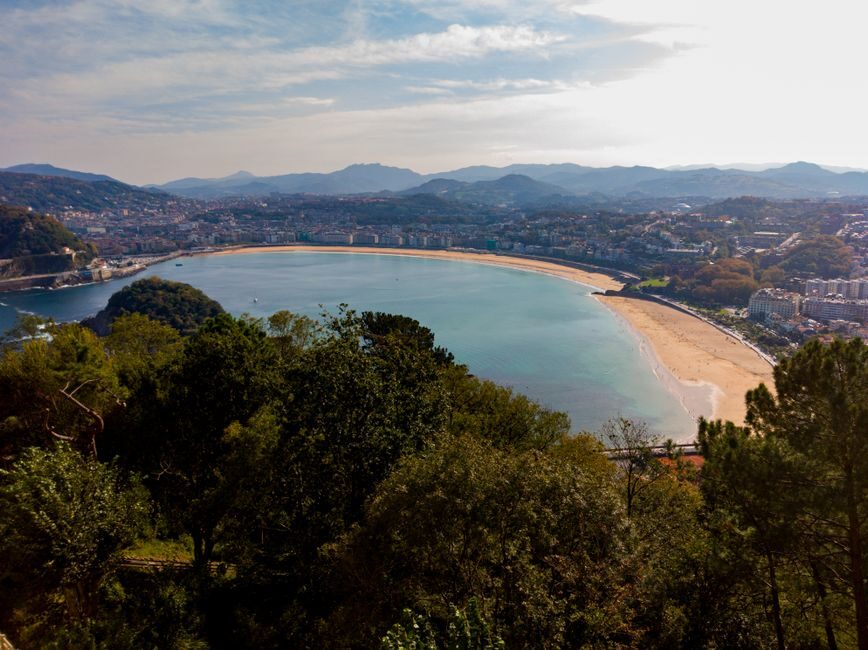
Day one starts with a reception in San Sebastián at 1 p.m., a first look at the city and lunch, then the transfer to Bilbao and the train. The first night is spent at Carranza, a quiet valley stop west of Bilbao. Pack a small bag for the first afternoon, because your luggage goes ahead.
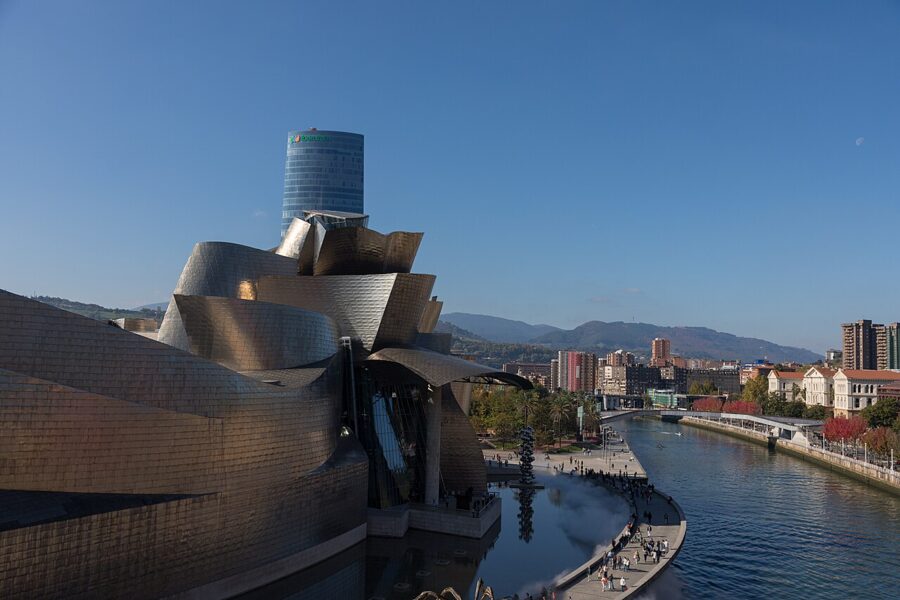
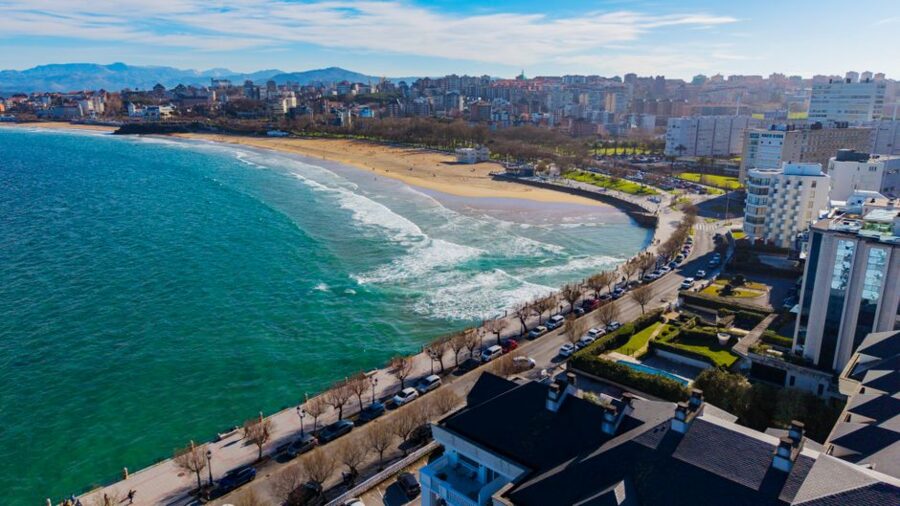
Day two goes back into Bilbao for a look at the city remade around the Guggenheim, then rolls west along the coast to Santander, with free time in the Cantabrian capital and dinner in a restaurant before you return to the train.
Days 3 and 4: Cantabria
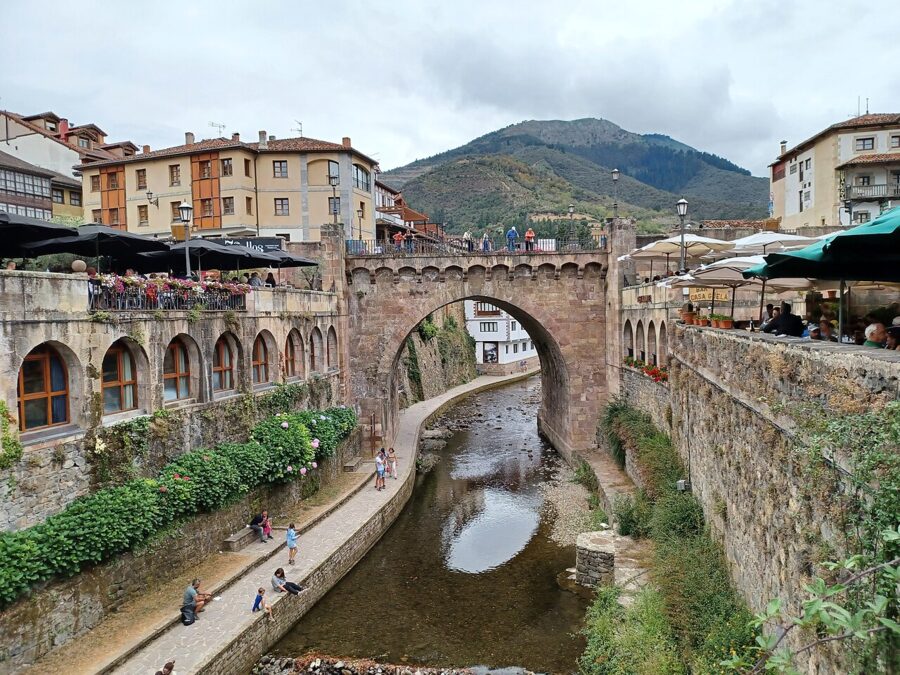
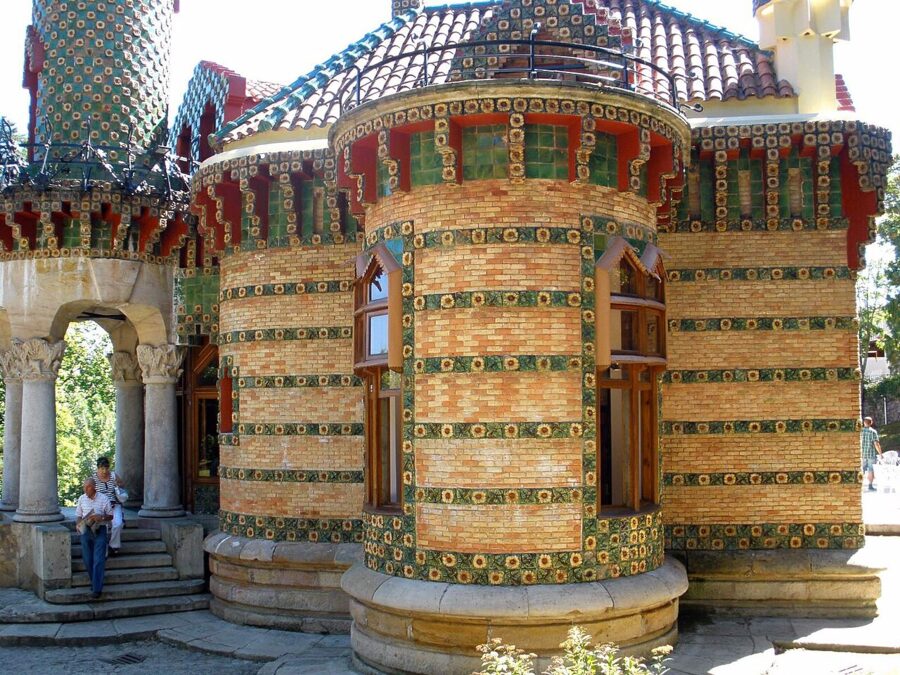
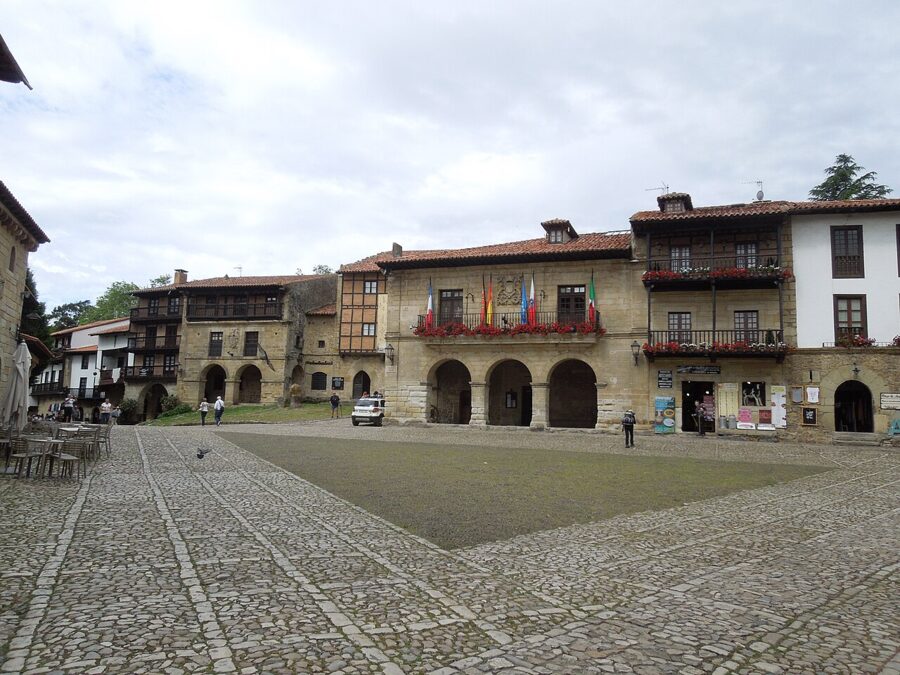
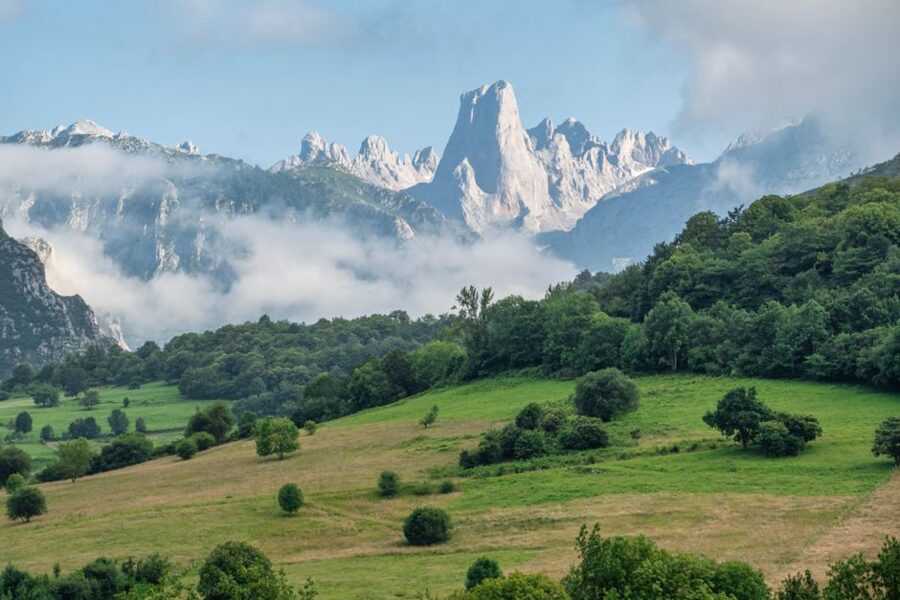
Day three is the first long coach day, inland from Santander to Potes and the foothills of the Picos de Europa, then back to the coast at Comillas, where Gaudí’s El Capricho is on Renfe’s list of visits. The train meets you at Cabezón de la Sal for dinner. Day four starts with Santillana del Mar, one of the best-kept medieval villages in Spain, lunch back on board, then the coast run into Asturias and a night at Llanes.
Days 5 and 6: the Picos de Europa and Asturias
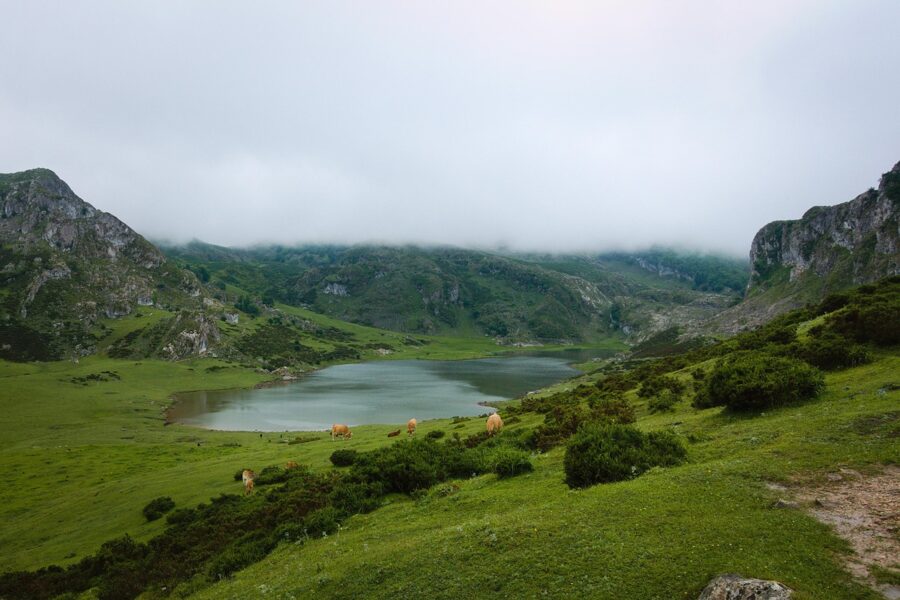
Day five is the second mountain day, by coach from Llanes into the Picos, before the run to Oviedo. Renfe lists the lakes and sanctuary of Covadonga among its Asturias visits. The evening is free in Oviedo, with dinner in a restaurant and the night on board.
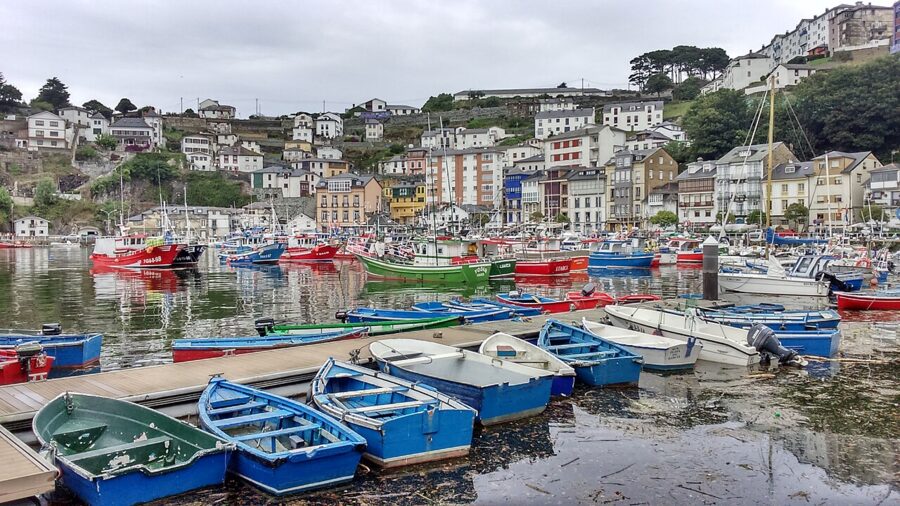
Day six follows the Asturian coast to Gijón, a working port city with a long beach and good cider bars, and on to Luarca, the white fishing town, for the night. This is the day with the most sea in the window.
Days 7 and 8: Galicia and Santiago
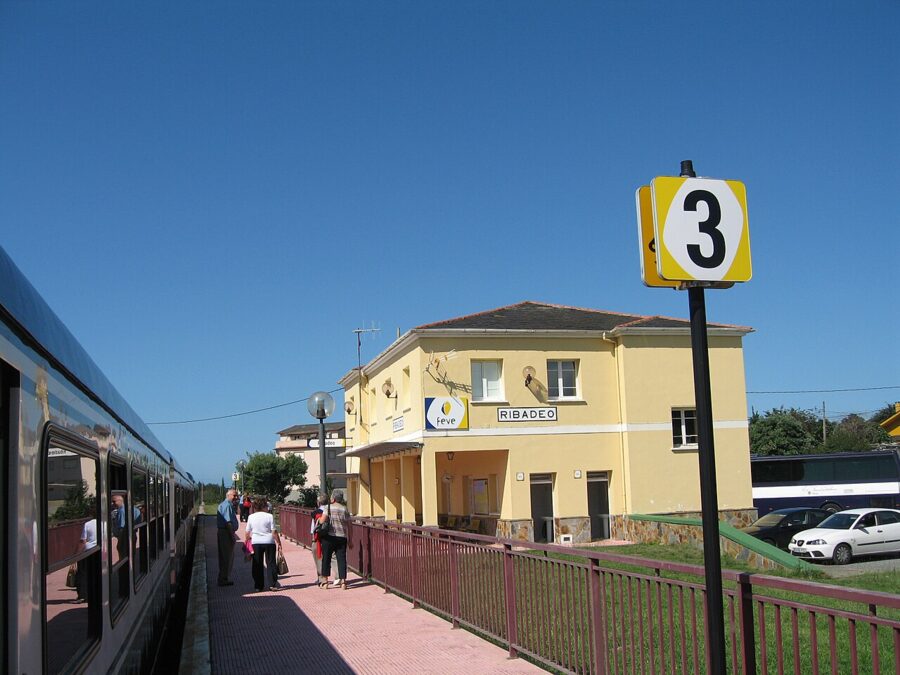
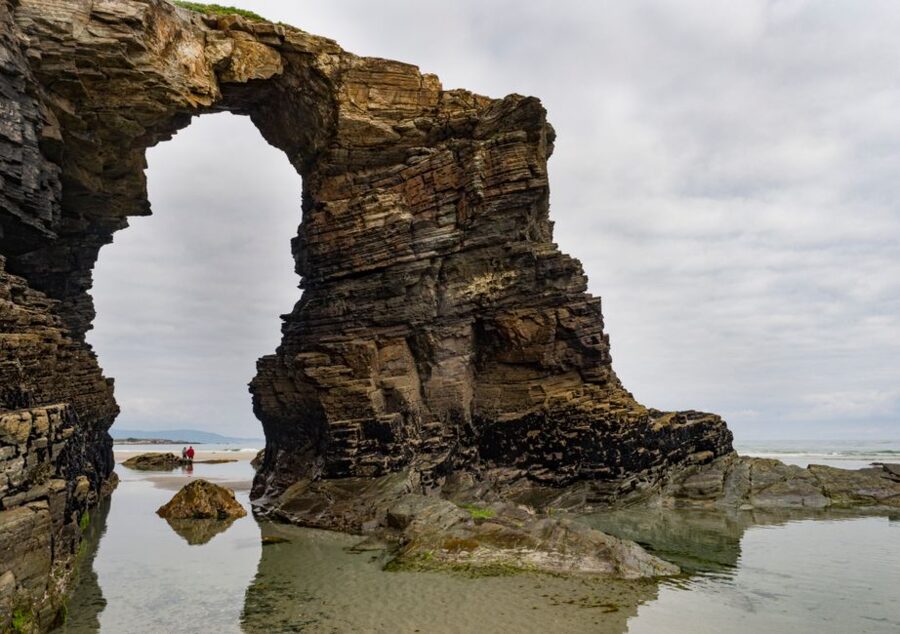
Breakfast on day seven is served as the train crosses into Galicia along cliffs and estuaries. You visit Ribadeo and end at Viveiro for the last night. Renfe lists Playa de las Catedrales, the beach of rock arches west of Ribadeo, among its Galicia visits; the arches are only walkable at low tide, so the day’s timetable decides what you see.
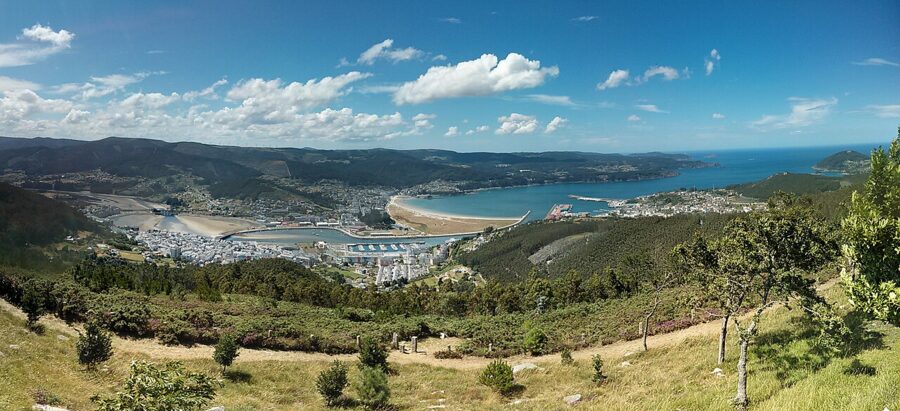
Day eight is the short ride to Ferrol over the last breakfast, the coach to Santiago de Compostela, a guided tour of the old town and the cathedral, and goodbye. Eastbound runs roughly in reverse, ending with a last breakfast on board into Bilbao and a visit to San Sebastián.
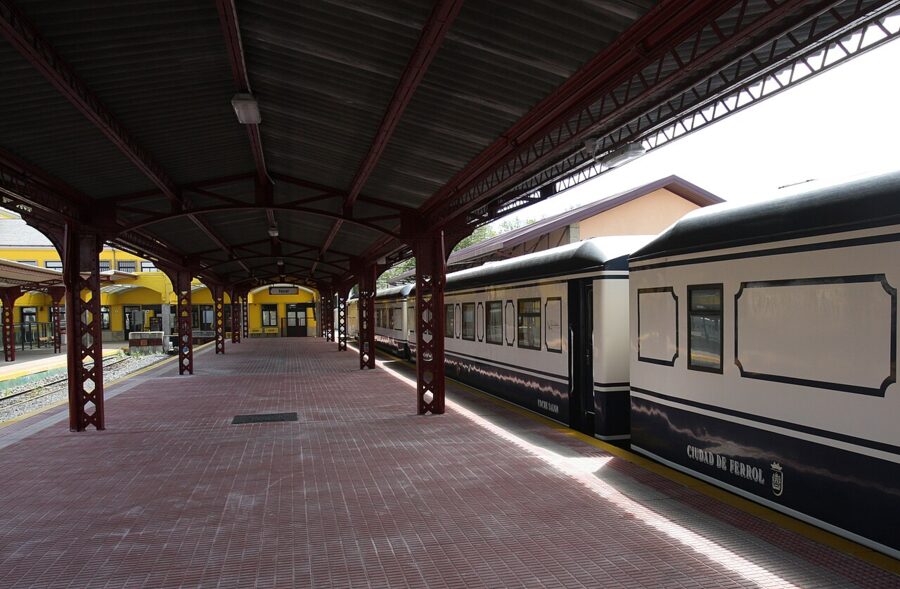
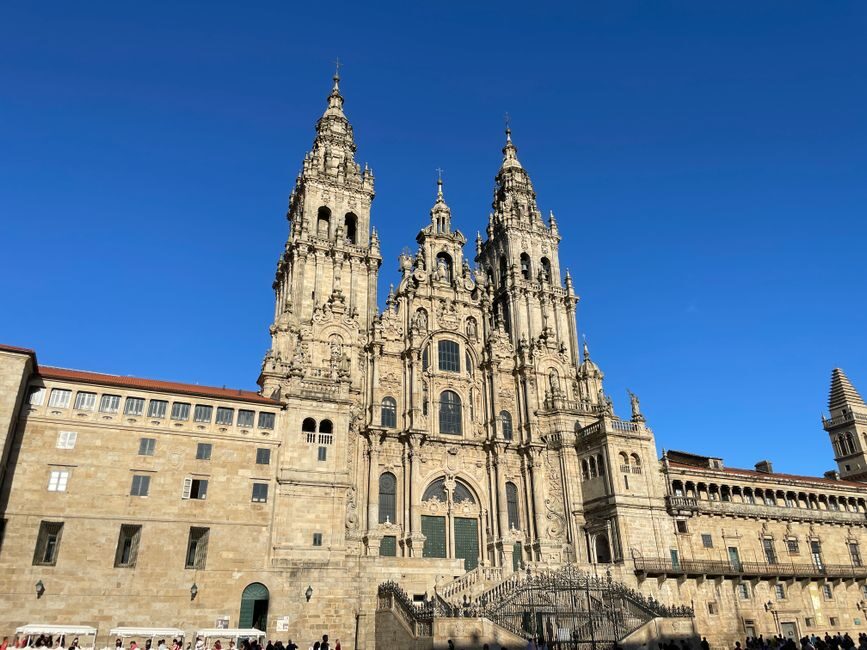
The suites and the lounge cars
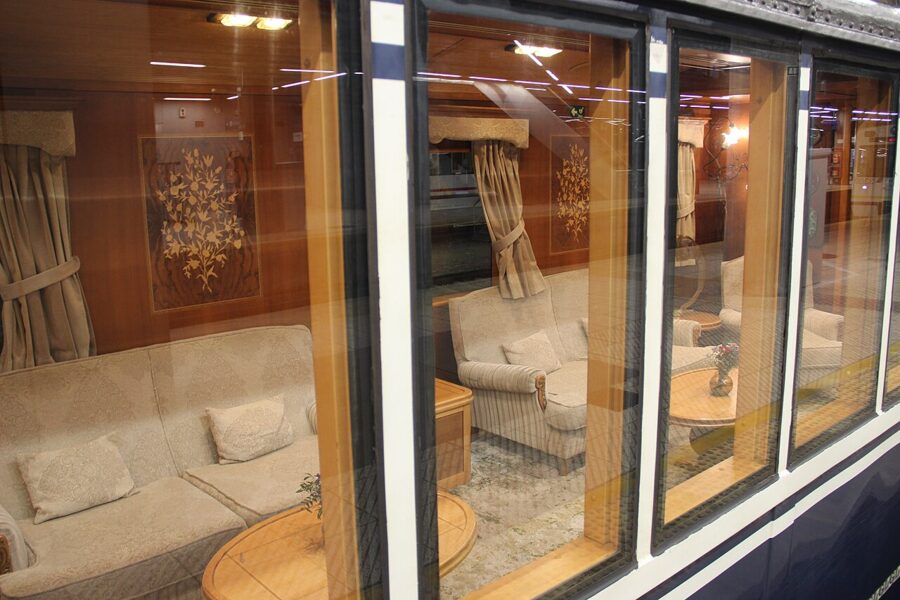
All fourteen suites are the same size, about 138 square feet (12.8 square meters) including the bathroom, which is large for a train. Ten have a double bed of 59 by 75 inches (1.50 by 1.90 meters) and four have two single beds 29 inches (75 centimeters) wide. Each has a separate sitting area with a sofa that converts into a bed, a desk, wardrobe, safe, minibar, climate control, a screen and a computer with internet.
Bathrooms have either a tub or a shower, so ask which when you book. The double beds are a little short for anyone over about six foot two.
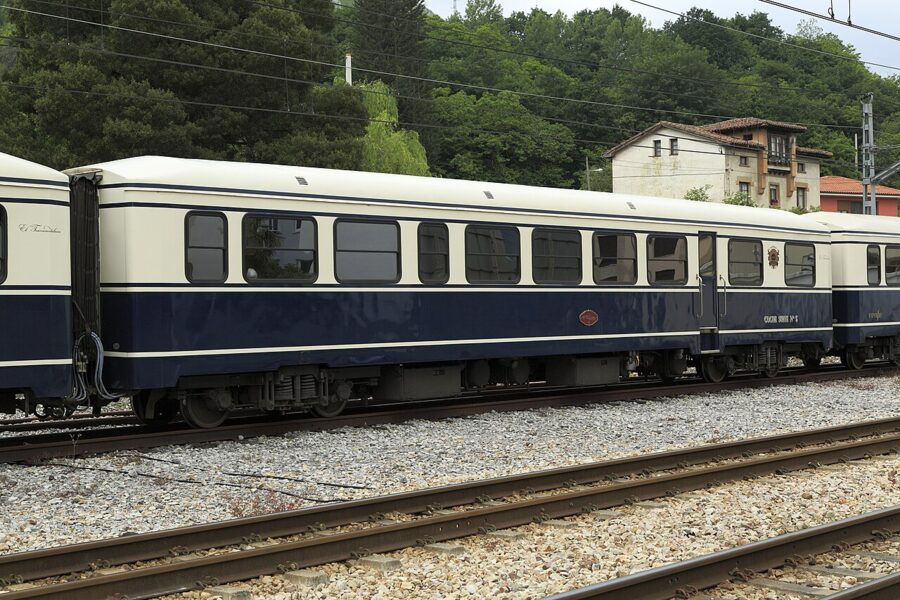
The lounges are the reason to choose this train over a hotel tour. They are original Pullman cars from 1923: a panoramic lounge with glass to the roof, a tea room, a restaurant car and a pub car with live music or a performance every night. Breakfast is à la carte, and the bar stays open.
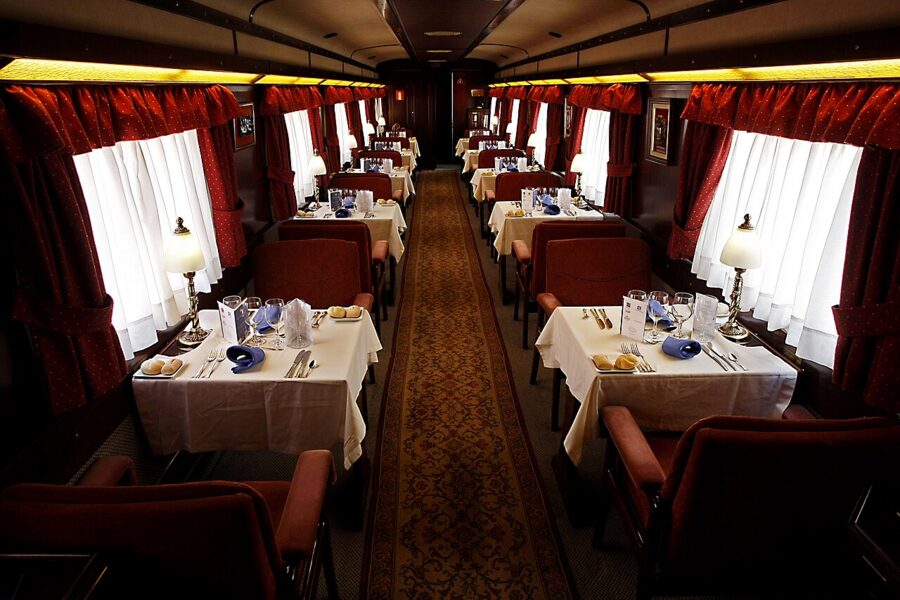
Dress is casual by day, for cobbles and coach steps. Most people change for dinner, but there is no formal night, and the whole train is connected, so you can walk to the pub car in slippers.
What the fare covers, and what it does not
The fare is close to all-inclusive. According to Renfe’s list of what the trip includes, it covers:
- your suite for every night, with luggage handled by the crew;
- every breakfast, plus all lunches and dinners on board or in restaurants, with wine, water, soft drinks and coffee;
- soft drinks in the suite’s minibar;
- the guided excursions, entry tickets to museums and monuments, and shows;
- the luxury coach that follows the train, a multilingual guide, and the farewell dinner party;
- a free Renfe train ticket to the starting point and another home from the end, anywhere in Spain.
That last perk is worth real money: a code for AVE, Alvia, Avlo or long-distance trains that connect with the cruise within 48 hours, so a Madrid traveler rides to San Sebastián and home from Santiago free, with Renfe’s Club lounges at the stations.
What is not included: drinks from the bar outside meals, laundry, and travel insurance. Renfe carries only Spain’s compulsory passenger insurance and itself recommends a policy that covers cancellation fees, which on a five-figure fare is not optional in my view. Tipping is not expected in Spain.
2027 prices and departure dates
Renfe’s 2027 fares are per person in euros, as of late 2026:
| Transcantábrico Gran Lujo, 2027 | 8 days / 7 nights | 4 days / 3 nights |
|---|---|---|
| Per person, sharing a Gran Lujo suite | €11,100 (about US$12,200) | €4,800 (about US$5,300) |
| Add-on for a suite to yourself | €8,100 (about US$8,900) | €4,100 (about US$4,500) |
| Supplement for a third person in the suite | €5,400 (about US$5,900) | €2,650 (about US$2,900) |
A couple pays €22,200 for the full week, roughly US$24,400. A solo traveler pays €19,200, which is the cost of keeping a two-person suite to yourself. Renfe charges in euros, so the dollar figures move with the exchange rate.
The full eight-day trip leaves San Sebastián on March 27, April 10 and 24, May 8 and 22, June 5 and 19, July 3, 17 and 31, August 14, September 11 and 25, and October 9 and 23. Eastbound departures from Santiago are April 3 and 17, May 1, 15 and 29, June 12 and 26, July 10 and 24, August 7, September 4 and 18, and October 2 and 16.
Look at the gap: nothing runs between the third week of August and September 4. The two short trips are bookends to the season, Oviedo to San Sebastián on March 23 and Santiago to Gijón on October 30, each four days and three nights.
The Costa Verde Express, the Al Ándalus and the Expreso de La Robla
The other three are cheaper, and two of them cover ground the Transcantábrico never sees.
| Train | Where | Main trip | 2027 season | Rooms | Per person, sharing |
|---|---|---|---|---|---|
| Transcantábrico Gran Lujo | North coast, San Sebastián to Santiago | 8 days / 7 nights | Late March to late October | 14 suites, 12.8 m² | €11,100 |
| Costa Verde Express | North coast, Bilbao to Santiago | 6 days / 5 nights | May to June, September to October; weekend trips in July and August | Gran Clase suites, 6 m² | €5,300 |
| Al Ándalus | Andalusia, Extremadura and Castile, Seville to Madrid | 7 days / 6 nights | Late March to early July, September | 20 Deluxe suites, 12 Gran Clase rooms | €7,700 to €9,200 |
| Expreso de La Robla | Bilbao to León over the mountains; a pilgrim week in Galicia | 3 days / 2 nights; 6 days / 5 nights | June, July, August, September | Compartments with bunks, 3.4 m² | €1,550; €2,000 |
Costa Verde Express
The Costa Verde Express costs €5,300 (about US$5,800) per person for six days and five nights in 2027, with a €4,250 add-on for a room to yourself. It follows nearly the same coast, Bilbao, Santander, Santillana del Mar, Llanes, the Picos, Oviedo, Gijón, Luarca, Ribadeo and Viveiro, and ends in Santiago, two days shorter and without San Sebastián or Comillas.
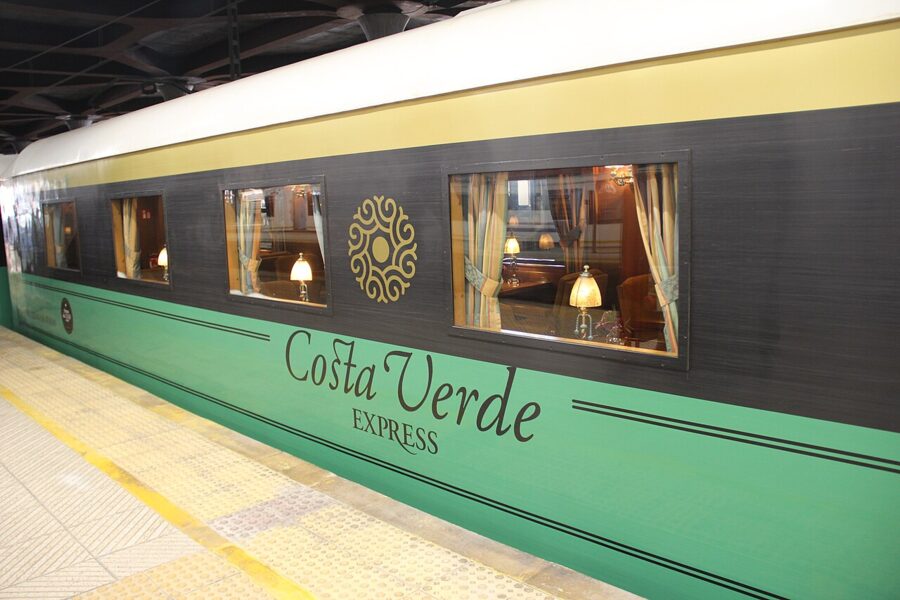
The difference is the room. A Gran Clase suite is about 65 square feet (6 square meters) with a private bathroom and a double bed of 1.35 by 1.80 meters that turns into a sofa by day. There is no separate sitting room, which matters less than you would think, because the four lounge cars, with two bars and a dance floor, are where everyone spends the day.
Regular trips leave Bilbao on May 15 and 29, June 12, September 18 and October 2, and Santiago on May 22, June 5 and 19, and September 25. Three-day trips cost €2,800, and in July and August a “weekend” version runs Oviedo to Oviedo on Fridays with no excursions at all, just the train, Llanes and dinner.
Al Ándalus
The Al Ándalus is the big one, a standard-gauge train whose sleeping cars come from the same French-built series that once carried British royalty from Calais to the Riviera, with lounge cars from 1928 and 1930. In 2027 it does not loop around Andalusia as it once did. It runs a one-way week between Seville and Madrid by way of Jerez, Cádiz, Córdoba, Mérida, Cáceres, Toledo and Aranjuez.
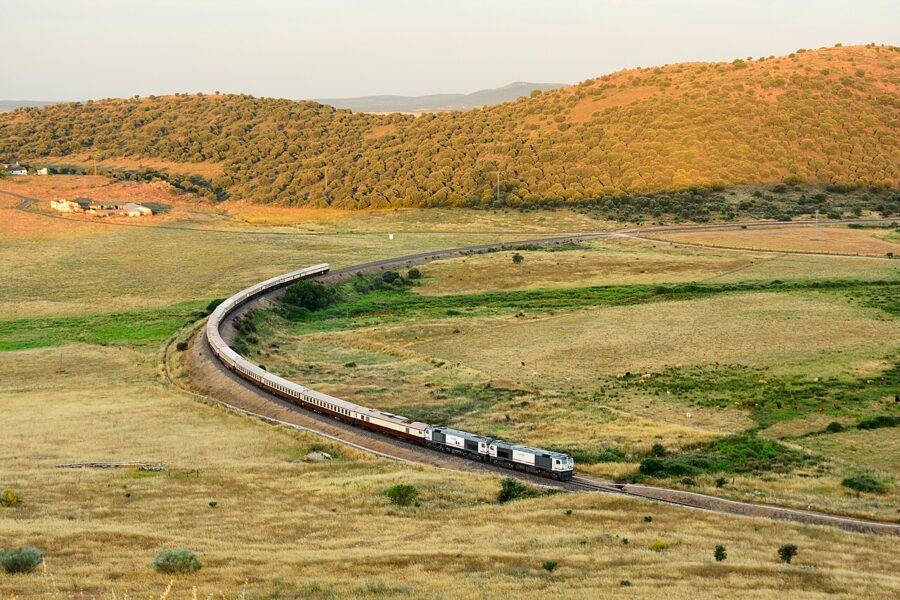
There are two kinds of room. The twenty Deluxe suites have a 1.50-meter double bed that folds into a sofa and about 89 square feet (8.3 square meters); the twelve Gran Clase rooms have two narrow beds and about 6.6 square meters. The 2027 Al Ándalus fares are €9,200 (about US$10,100) per person in a Deluxe suite and €7,700 (about US$8,500) in Gran Clase, for seven days and six nights.
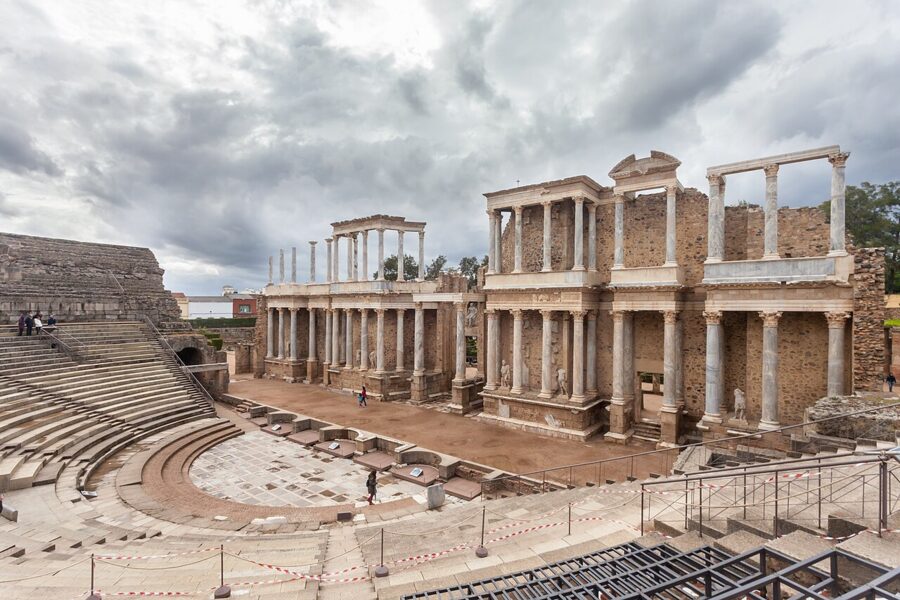
Departures from Seville are on Mondays from March 29 to September 20, and from Madrid from April 5 to September 27, with nothing from mid-July through August, the hottest weeks of the year in the south. Only the Al Ándalus Deluxe suites and the Transcantábrico have room for a cot or a third bed.
Expreso de La Robla
The Robla is the modest one, and I like it for that. It follows the old La Robla coal line from Bilbao across the north of Burgos and Palencia to León, three days and two nights for €1,550 (about US$1,700) per person in 2027. Its compartments are bunk-bed cabins of about 3.4 square meters with their own shower and toilet, and it has three lounge cars with a bar.
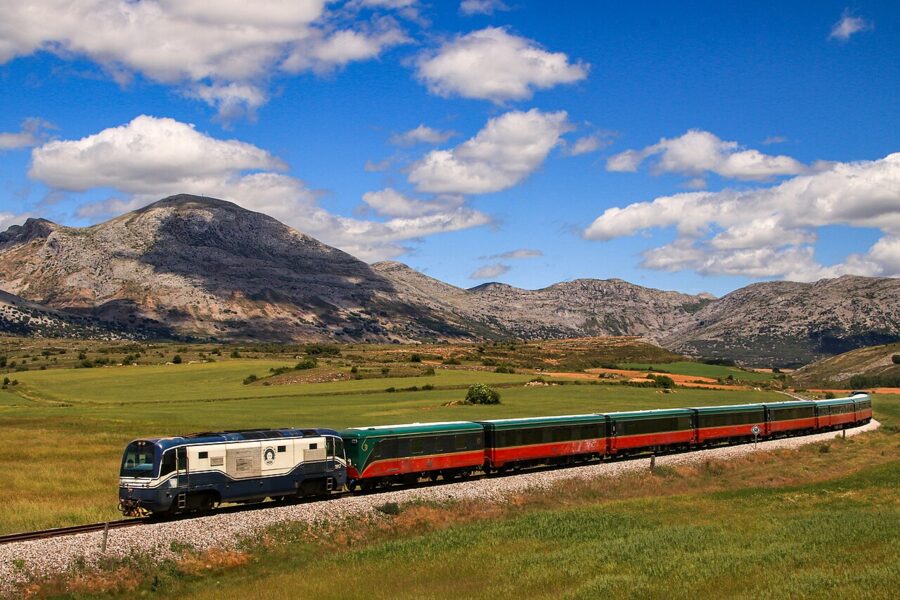
The 2027 dates are few: from Bilbao on June 4 and 18 and September 17, and from León on June 11 and 25. The itinerary takes in Frías and Espinosa de los Monteros, the Romanesque churches of Palencia along the Camino de Santiago, the Roman villa of La Olmeda, and León’s cathedral.
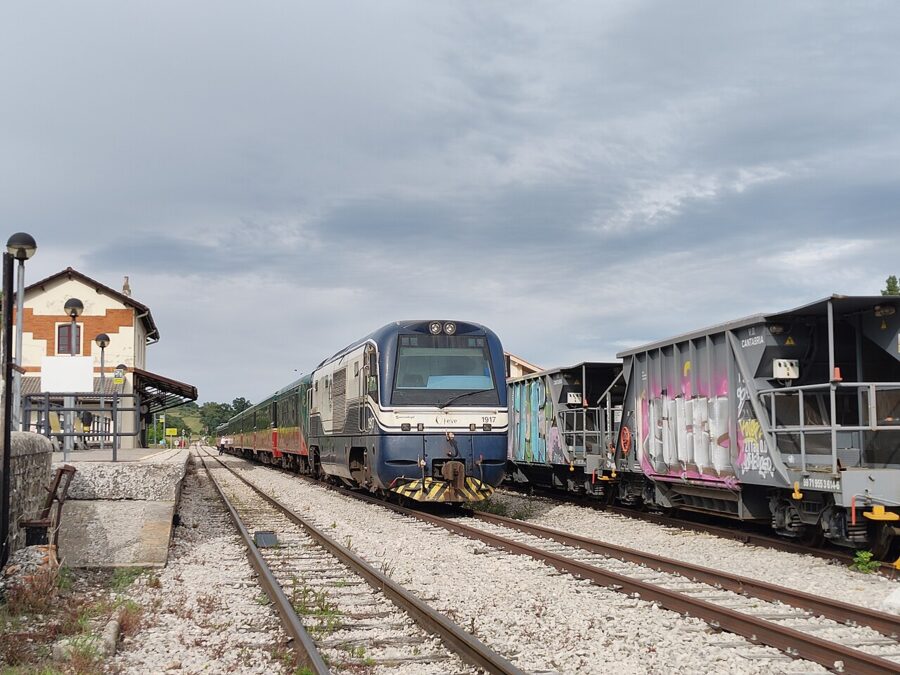
Its other 2027 trip is the Pilgrim’s Route, six days and five nights from Oviedo on July 28 and August 18 for €2,000 per person. The train serves as a rolling hostel on the English Way to Santiago: walkers do the stages from Ferrol, everyone else takes excursions, and the two groups meet for dinner.
Booking, deposits and the fine print
You can book through Renfe’s luxury-train booking page, through Renfe’s reservation center by phone or email, or through a travel agency. Agencies in the US sell it too, often with hotels added, so compare what those extras cost.
Under Renfe’s booking conditions, you pay a 15 percent deposit within four calendar days of the booking confirmation and the remaining 85 percent at least 30 days before departure. Renfe asks for your passport number, date of birth, languages and food allergies before it confirms, because it buys the monument tickets ahead.
The Transcantábrico is excluded from the group deal the other trains offer, a free cabin for every ten booked. With fourteen suites per departure there is not much to go around, and the 2027 season was already on sale by the end of 2026.
Who it suits, and who should skip it
The Transcantábrico suits couples who want northern Spain’s food and coast without driving or packing, and who like the same faces at dinner every night. It suits people who would otherwise hire a private guide in each city. It is also a very good way to eat, with the north’s cooking and its wines in the fare.
Skip it if you cannot manage steps. Renfe’s passenger information says plainly that the luxury trains are historic stock with interiors that cannot take a wheelchair or walking frame. Someone who uses a wheelchair only off the train may travel with a companion.
Skip it, too, if you want to ride a train. The daily runs are short, a few hours at most, and much of the sightseeing happens by coach, sometimes far from the line. Young children are allowed, but the long lunches and late dinners are built for adults, and pets are not allowed at all.
And skip it in late August: it does not run. If your dates are fixed to that fortnight, the Costa Verde weekend trips or the Robla pilgrim week are the only luxury trains moving in the north.
Northern Spain on the ordinary trains
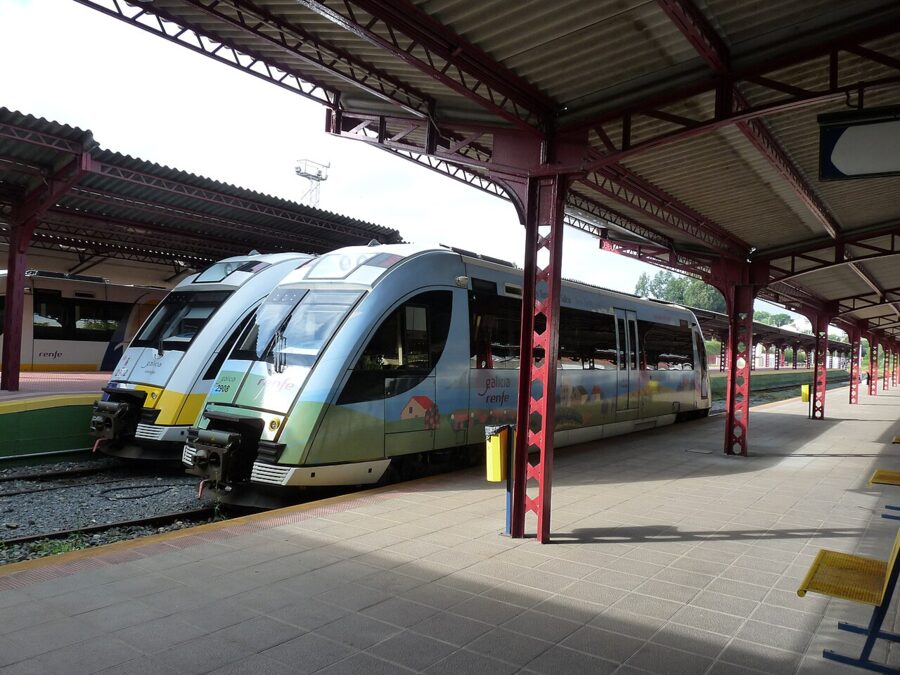
Everything the Transcantábrico does by rail, you can do on Renfe’s local meter-gauge trains for a fraction of the price, as long as you accept two trains a day on the longest stretches and a lot of stops. Timetables and tickets are on renfe.com, in the Renfe app or at the station.
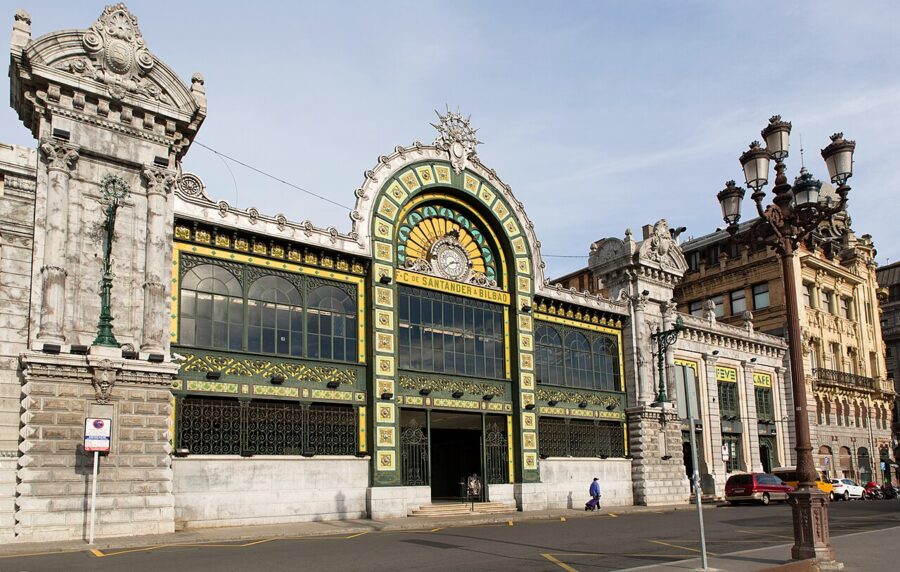
As of the November 2026 timetable, the regional trains take roughly three to three and a half hours from Bilbao Concordia to Santander, about five and a half hours from Santander to Oviedo, and about seven and a half hours from Oviedo to Ferrol. Santander to Oviedo and Oviedo to Ferrol have only two through trains a day each way, one in the morning and one in the afternoon. Miss the morning train and you lose the day.
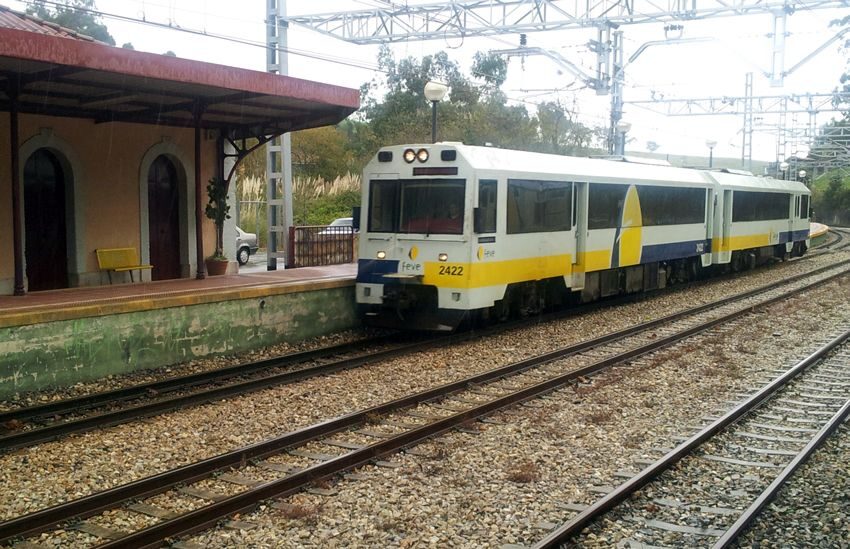
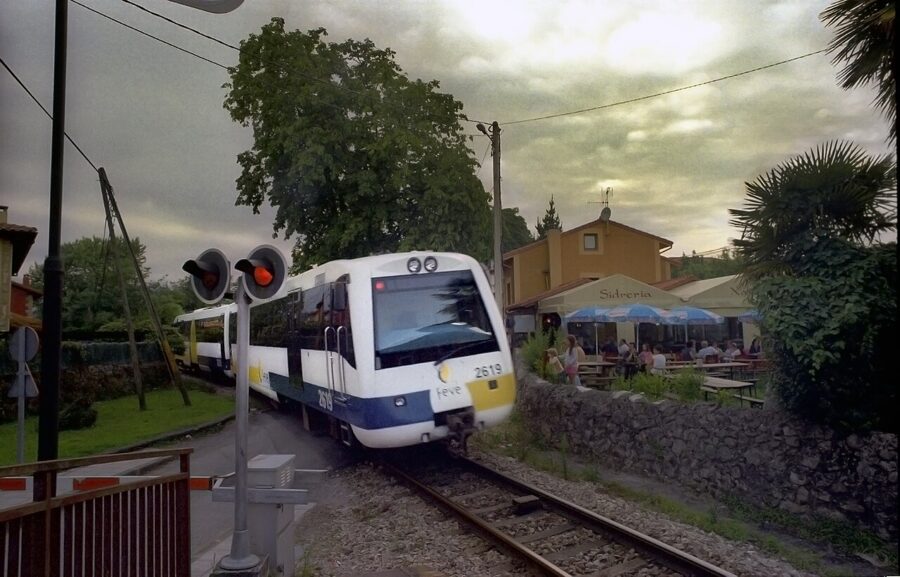
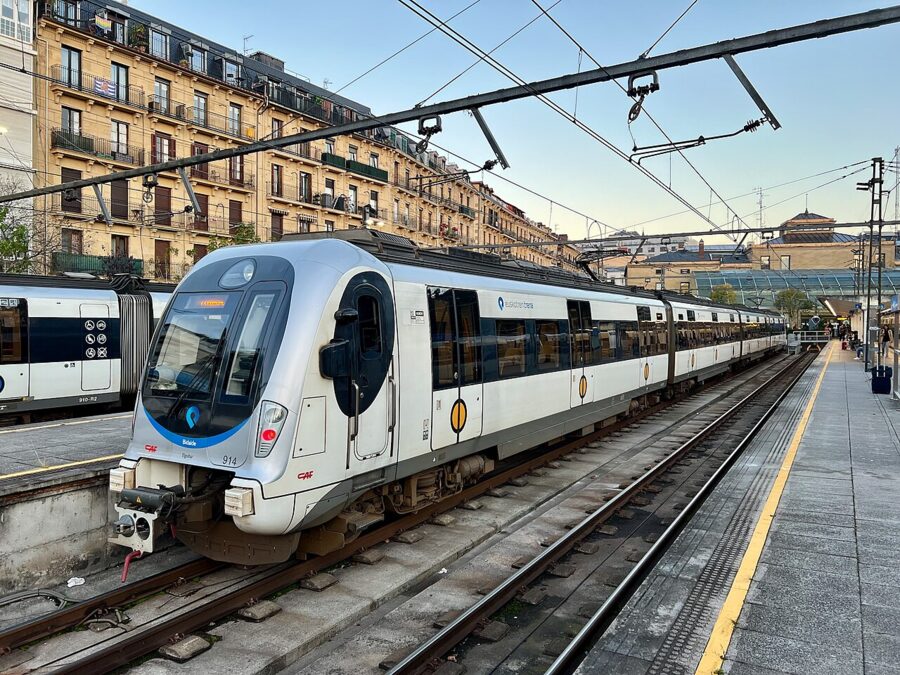
To copy the cruise, take Euskotren’s line from San Sebastián to Bilbao (about two hours forty minutes), then the meter-gauge trains west, stopping two nights in Santander, Llanes, Oviedo and Ribadeo or Viveiro. From Ferrol a Renfe regional reaches A Coruña in about an hour and a quarter, and Santiago is a short high-speed hop beyond. For the Picos and Covadonga, use a local bus or a tour from Cangas de Onís.
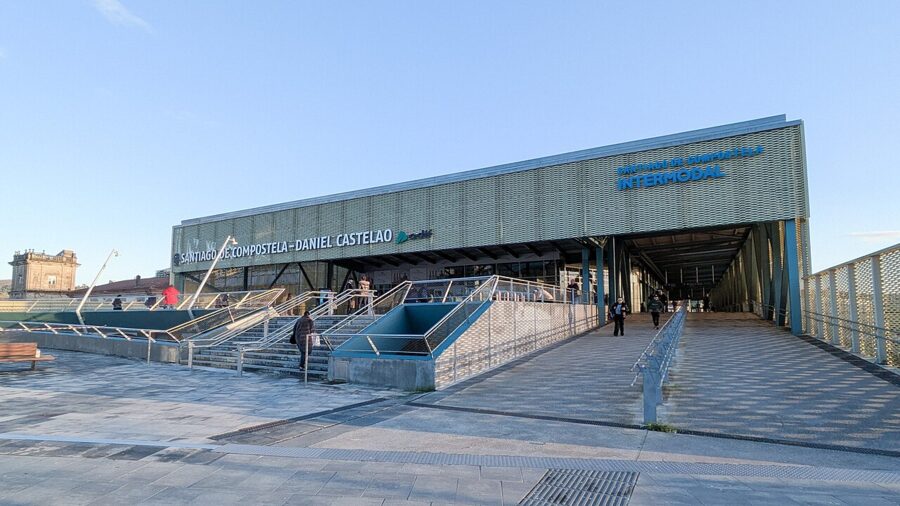
Getting there and back is easy now. High-speed trains reach Oviedo from Madrid in a little over three hours since the Pajares base tunnels opened, and Santiago in about three.
On Spain’s high-speed network, AVE is Renfe’s long-distance brand, Avlo its low-fare version, and Avant its shorter regional high-speed trains, such as the hop between A Coruña and Santiago.
Coming overland from France, the night trains in Europe get no nearer than Latour-de-Carol in the far eastern Pyrenees; for the north coast, a daytime train from Paris to Hendaye and Euskotren across the border to San Sebastián is quicker. Among Europe’s tourist train rides, few give you as much coast for the price of a regional ticket.
Which one I would book
For a first trip with a fixed week and the money, I would book the Transcantábrico westbound in late May or September, when the north is green and not crowded, and take the free AVE home from Santiago. For half the price, the Costa Verde Express is the better value: the same coast, the same lounges in spirit, and a smaller room you will only sleep in.
On a tighter budget, ride the Robla for a long weekend and the meter-gauge regionals for the rest. Either way, book early in the season’s sale, pick a Saturday departure from San Sebastián, and keep a seat on the right side of the lounge for the morning the train runs along the coast into Galicia.