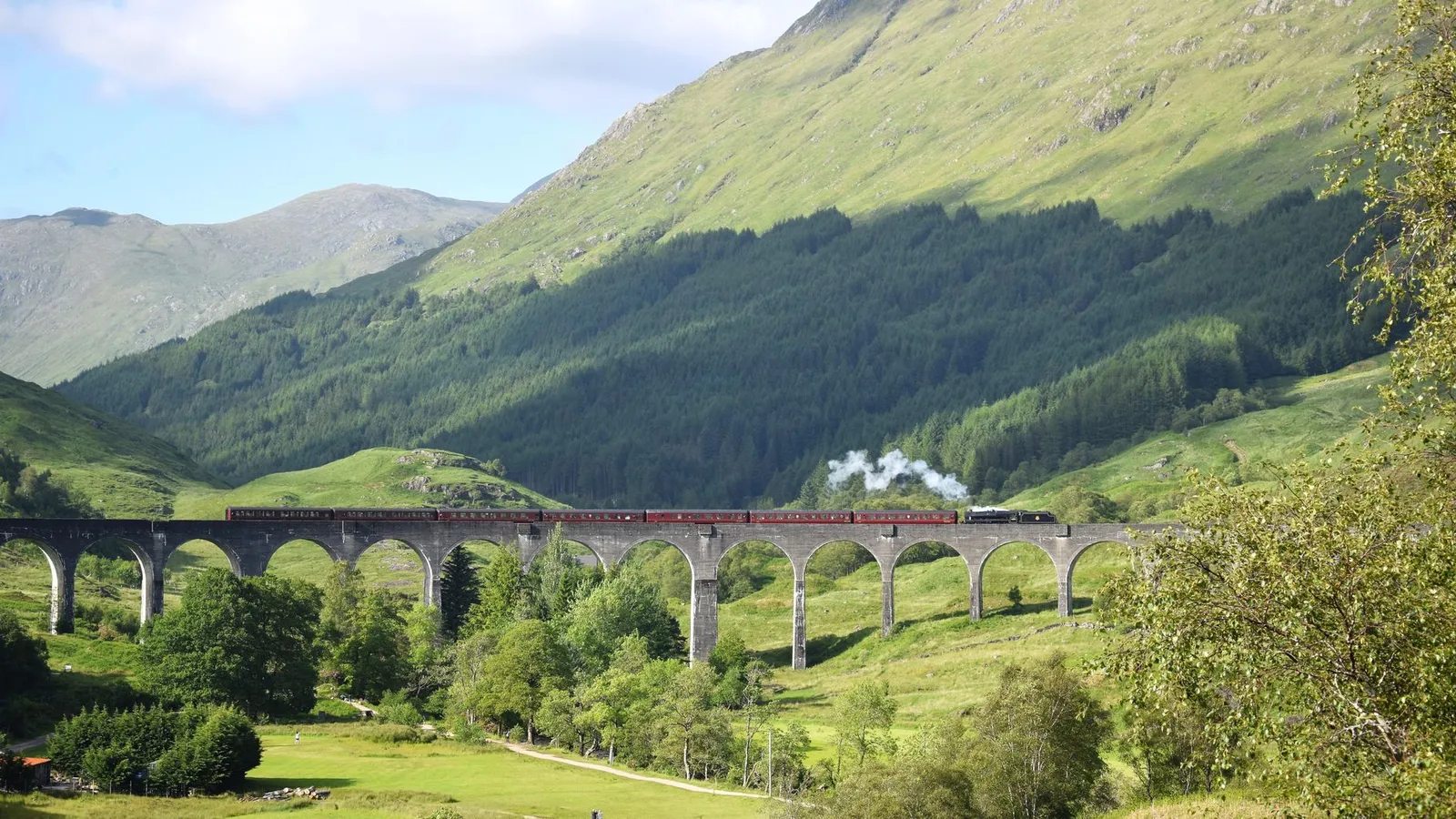
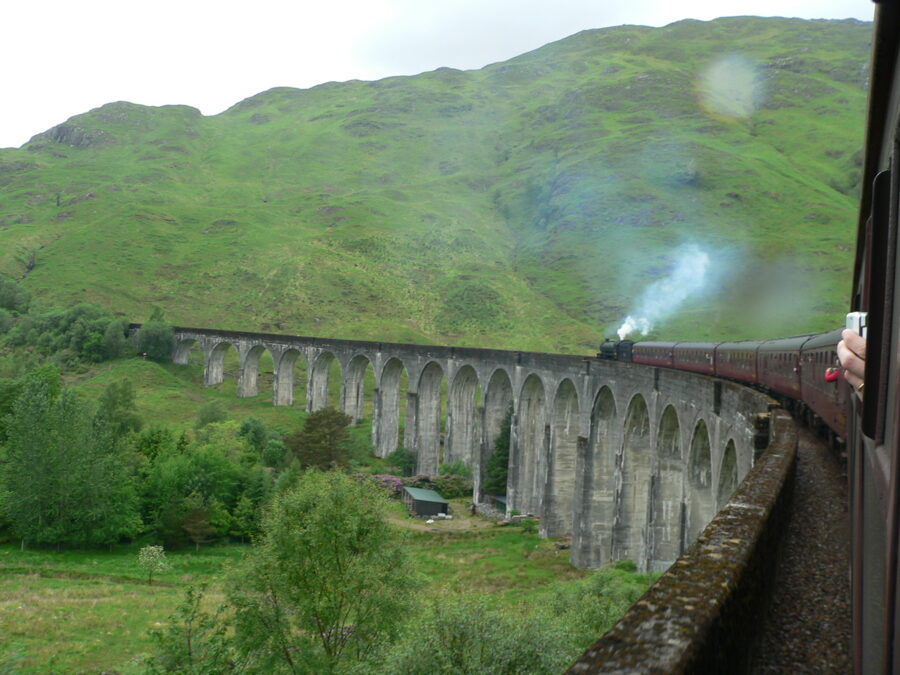
The morning Jacobite leaves Fort William at 10:15 a.m., and 43 minutes later, by the operator’s own reckoning, it slows on a curve of 21 concrete arches a hundred feet above the River Finnan. For the next minute or so you can see the engine from your own window, bent round ahead of you on the viaduct, with Loch Shiel opening out on the left. That minute is most of what people are paying for.
The trouble is getting a seat. The Jacobite is one train, or two on summer days, with a few carriages behind a steam locomotive, running a same-day return from Fort William to Mallaig and back. As of late November 2026, West Coast Railways had not yet put the 2027 season on sale, and its own pages say plainly that there are not many seats.
So there is a decision to make before you make a booking. You can wait for the Jacobite to open and book the hour it does, or you can cross the same viaduct on the ordinary ScotRail train, which runs all year for a fraction of the fare. I would do both if I could, and below is how to choose if you can only do one.
Stops in this article12
- 01The line, the viaduct and the films
- 02The trains: morning, afternoon and the engine
- 03Standard, First and the compartments
- 04What it costs
- 05Booking: when it opens and how fast it sells
- 06Which side to sit on, and what you see
- 07Mallaig: time for lunch, not much more
- 08Glenfinnan from the ground: the station and the viewpoint
- 09The ScotRail train on the same line
- 10Getting to Fort William
- 11What goes wrong, and what to do
- 12Is the Jacobite worth it?
The line, the viaduct and the films
The Jacobite runs over the far end of the West Highland Line, the Mallaig extension, which opened on April 1, 1901, to reach the fishing harbor at Mallaig and the ferries to Skye. It is about 41 miles each way; the operator sells it as an 84-mile round trip. ScotRail’s West Highland trains run the whole line from Glasgow, and the whole run from Glasgow is one of Europe’s great scenic rides.
Regular steam ended on the line in the 1960s and came back for tourists in 1984. West Coast Railways took over the summer steam train in 1995 and gave it its name, after the 1745 rising that began at Glenfinnan. It is not a heritage railway with its own track: the Jacobite is a private excursion on the national network, sharing the single line with ScotRail.
The Glenfinnan Viaduct
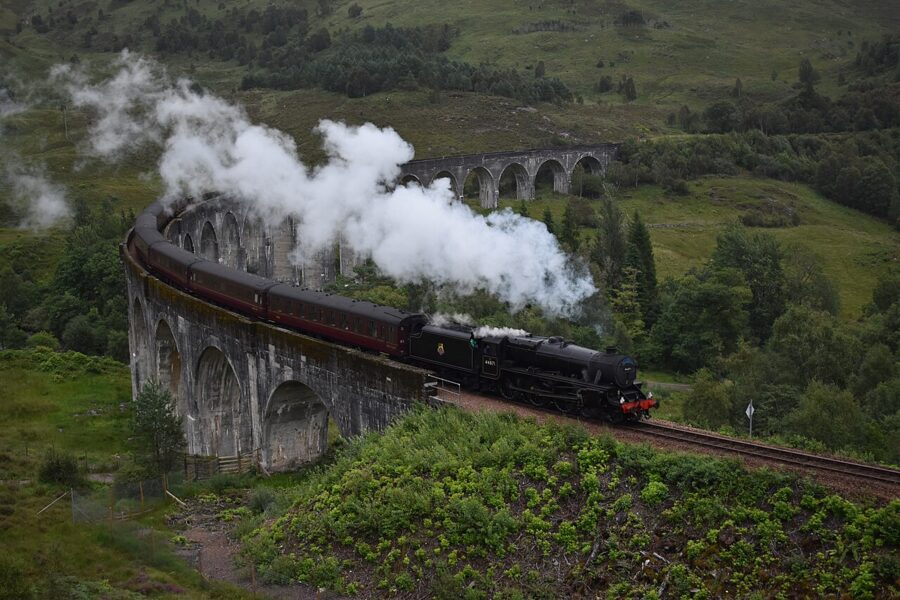
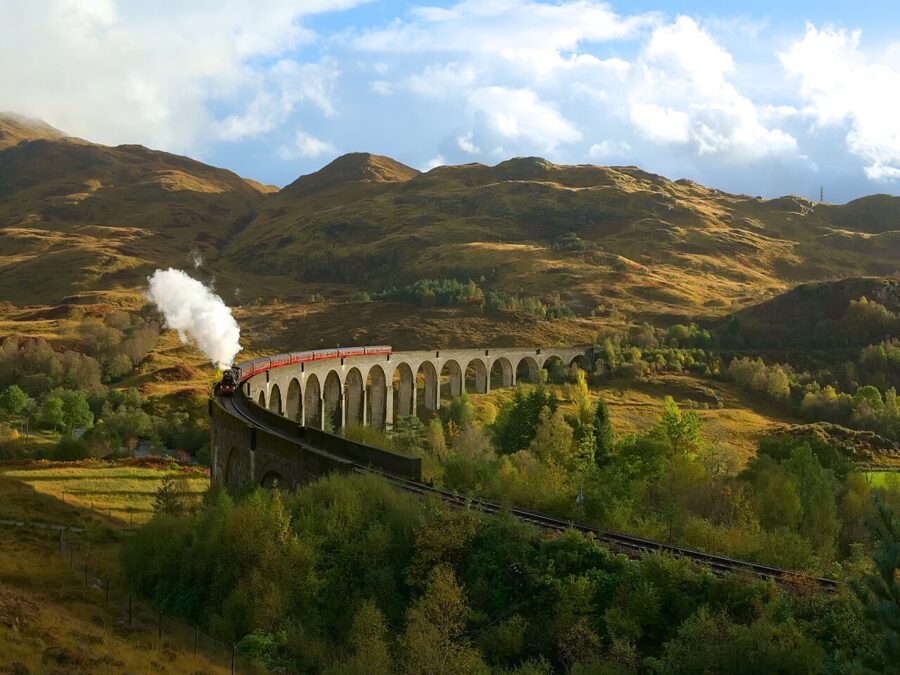
The contractor was Robert McAlpine, remembered as “Concrete Bob” for building in mass concrete where the local rock was too hard to dress. The viaduct has 21 arches, each 50 feet wide, carried about 100 feet above the river on a curve. Historic Environment Scotland lists it at Category A, its highest grade, and records it as 416 yards long, the longest concrete viaduct in Scotland.
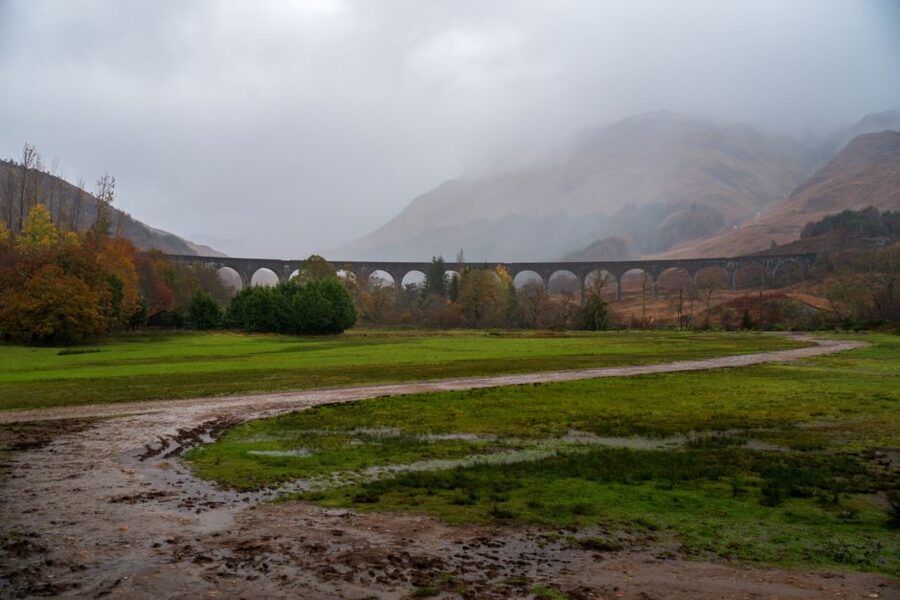
It cost £18,904 when it was built. In April 2025 Network Rail finished a £3.4 million (about US$4.5 million) repair, with rope-access crews patching the concrete and protecting the piers in the river, and it is renewing about three miles of lineside fence nearby. That fence is there for a reason: people walking onto the line for a photo has been a long-running problem here, and the paths below do the job safely.
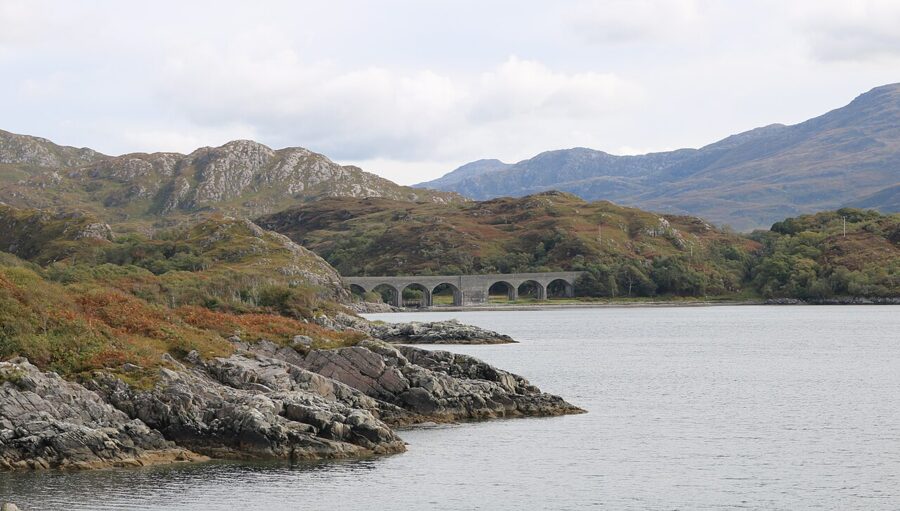
There is a story that a horse and cart fell into one of the piers during building. Surveys of the Glenfinnan piers found nothing. The remains turned up instead in the central pier of the Loch nan Uamh Viaduct, further down the line near Arisaig, which you also cross on the way to Mallaig.
The Harry Potter connection, plainly
The viaduct appears in four of the Harry Potter films, most memorably when the flying car chases the Hogwarts Express in the second one. West Coast Railways supplied the film train and let the crews film on the line, and the Jacobite has been sold as the real Hogwarts Express ever since. VisitScotland’s Harry Potter route names Loch Shiel, the long loch you see from the viaduct, as the setting for the lake at Hogwarts.
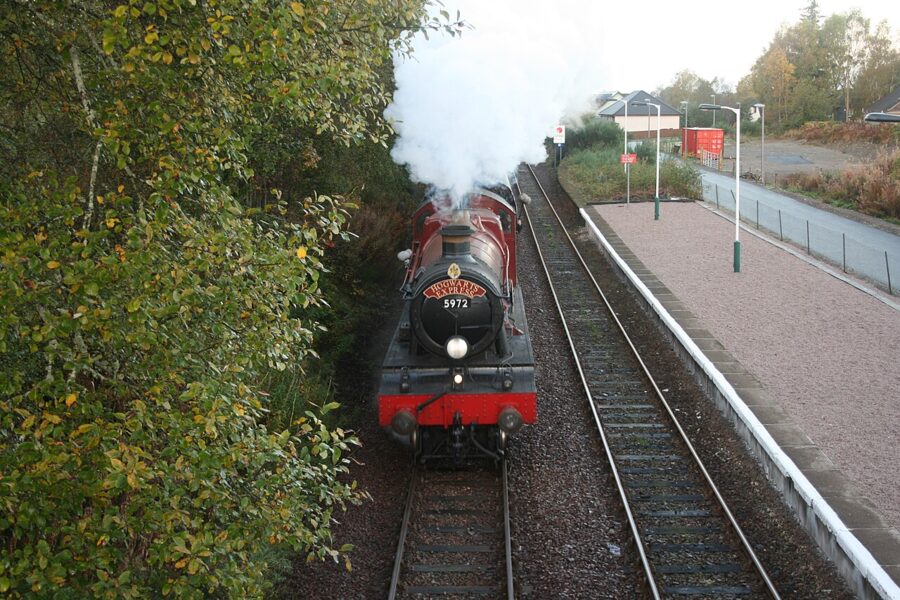
Tell children one thing before you go: the engine in the films was a red Great Western locomotive, No. 5972 Olton Hall, and it is now on show at the Warner Bros. Studio Tour near London. The Jacobite is pulled by a black engine behind maroon carriages, so it looks like the films only in spirit.
The trains: morning, afternoon and the engine
There are two services, and each is a complete return trip from Fort William. The operator’s timetable page, as of November 2026, still showed these times while it waited to publish 2027 dates:
| Morning train | Afternoon train | |
|---|---|---|
| Leaves Fort William | 10:15 a.m. | 12:50 p.m. |
| Arrives Mallaig | 12:25 p.m. | 3:06 p.m. |
| Leaves Mallaig | 2:10 p.m. | 5:00 p.m. |
| Back in Fort William | 4:03 p.m. | 6:52 p.m. |
The morning train runs for the whole season; the afternoon train runs only in the busiest weeks. In 2026 the season started late, on June 1, with the afternoon train from June 10 to September 25 and the morning train running daily until October 23, as the European Rail Timetable reported. In a normal year the morning train starts in spring, so watch for 2027 dates rather than assuming June again.
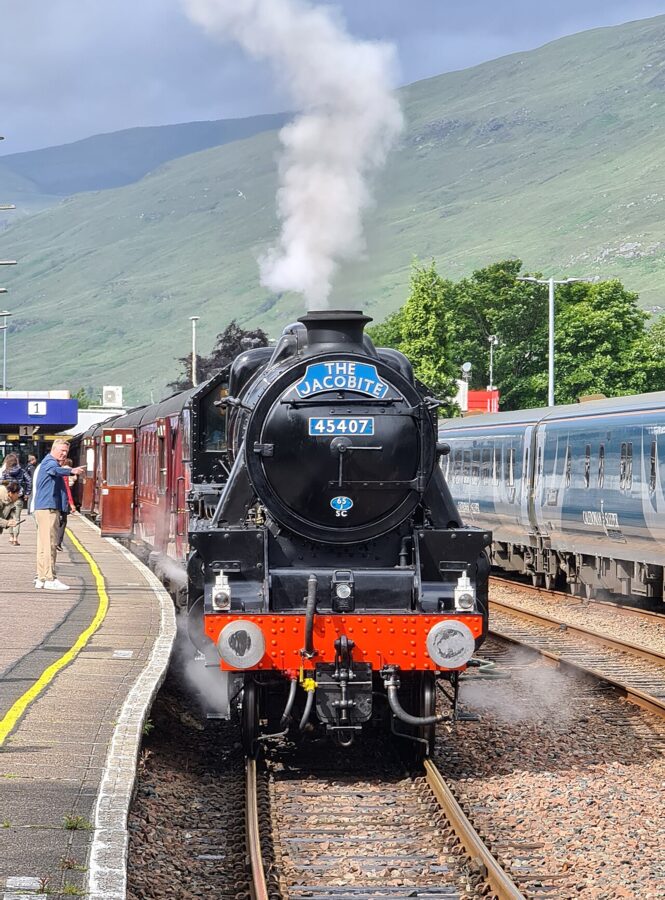
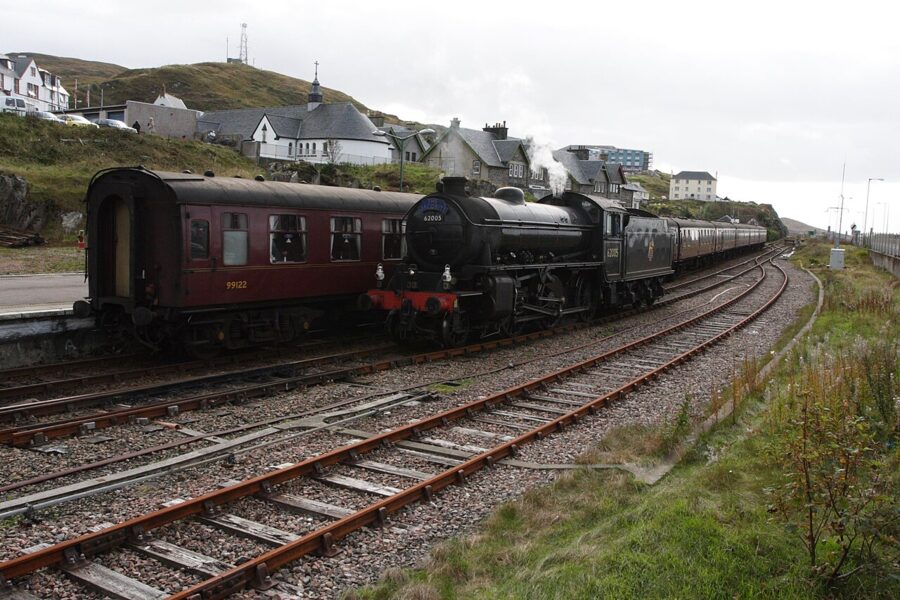
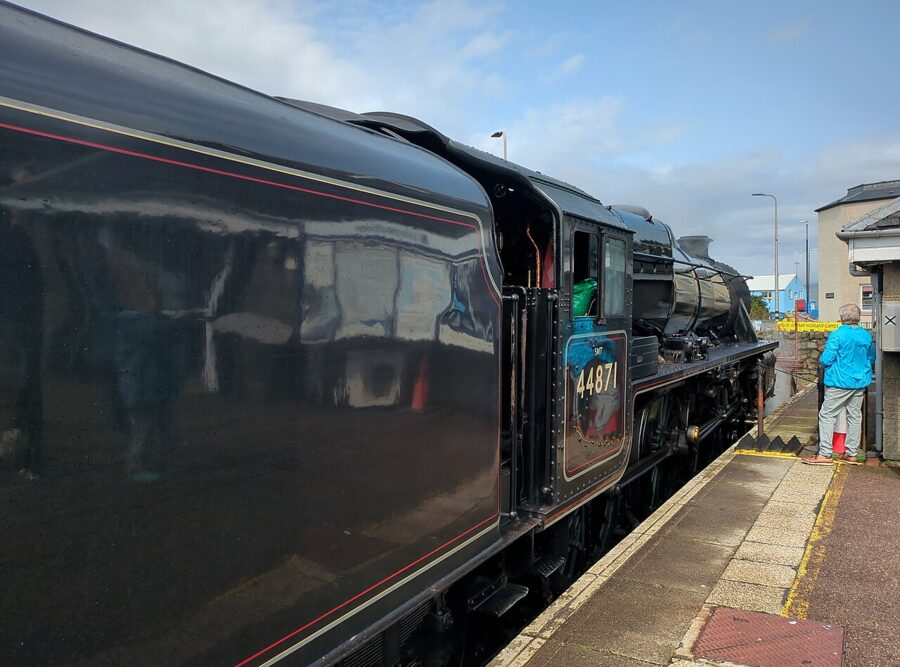
The engine is usually an LMS Black Five, William Stanier’s mixed-traffic design of 1934, of which 842 were built. They are plain, strong engines rather than glamorous ones, and the West Highland’s grades and curves make them work hard, so the sound on the climbs is half the point. When fire risk is high, or a locomotive fails, a heritage diesel hauls the train instead, and the operator does not refund for that.
Standard, First and the compartments
Every seat on the Jacobite is in an old British Railways carriage, Mark 1 or Mark 2, mostly open saloons with tables. The open layout is deliberate: you can see out of both sides of the carriage, which matters more than the class you book.
- Standard Class: tables for four in refurbished Mark 1 or Mark 2 coaches. No food or drink is included, but there is a buffet car (cash only on the day) and you may bring your own.
- First Class: wider, armchair-style seats with more legroom, tables for two on one side of the aisle and tables for four on the other, table lamps in the Mark 1 cars, and one free tea or coffee each way. There is a minimum of two passengers per First Class booking.
- Private table for two: a First Class table sold as a pair, the easiest way to avoid sharing.
- Compartments: one vintage corridor carriage with compartments for up to six, sold whole at a set price and only on the morning train when the Mark 1 set is running. This is the one people call the Harry Potter carriage.
Do not count on the compartments. Through 2026 the operator showed them as unavailable until maintenance was done. Its booking FAQ says the red Mark 1 and Mark 2 carriages are being fitted with central door locking before the 2027 season so they can return on both trains, which is good news for the compartments, but check the booking screen: if the compartment option is missing, they are sold out or not running.
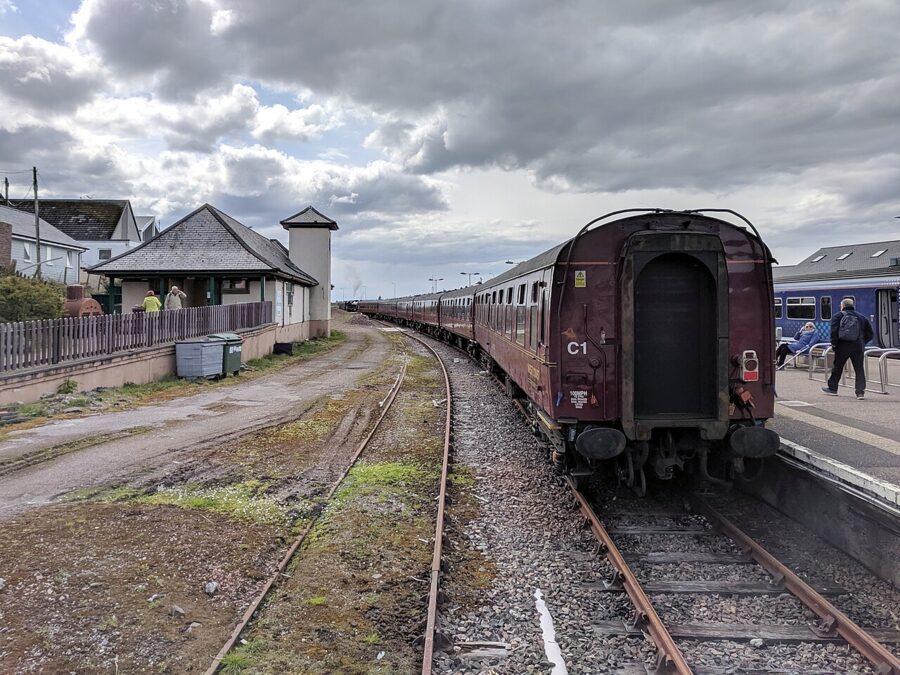
That door-locking story explains the last three seasons. The old carriages have slam doors without central locking, and in 2024 the operator lost its exemption from the safety rule that requires it, so the Jacobite ran for a while with substitute carriages and a cut timetable. In April 2026 it agreed to fit central locking across its Mark 1 fleet, which is why 2026 started late. For 2027 the operator’s pages describe the carriages in two ways, Mark 2 on the season summary and Mark 1 and Mark 2 in the FAQ, so ask before you pay if a particular carriage matters to you.
What it costs
The 2027 fares were not out as of late November 2026. These are the 2026 fares, published by West Coast Railways in December 2025, and they are the best guide to what 2027 will look like:
| Day return, as of 2026 | First Class | Standard Class |
|---|---|---|
| Adult | £116 (about US$155) | £76 (about US$100) |
| Child, 16 or under | £76 (about US$100) | £43 (about US$57) |
| Private table for two (price for both) | £252 (about US$335) | n/a |
Every booking carries a fee of at least £3.75 (about US$5), and any change costs £15 (about US$20) and needs at least seven days’ notice. Children aged three and under ride free if they sit on a lap. There are no concession fares, and British railcards are not accepted.
Extras are sold on top. A pre-ordered high tea of sandwiches, a scone with clotted cream and cakes cost £29.50 (about US$39) a head in 2026, served on the run back from Mallaig, and it has to be ordered at least seven working days ahead. I would skip it and eat in Mallaig instead, where you have the time.
Booking: when it opens and how fast it sells
The Jacobite is sold only by West Coast Railways, online or by phone during UK office hours on weekdays. On October 29, 2026, it posted that 2027 bookings would open soon and asked people to register for launch news; its FAQ told people to check back around the end of November. Sign up, and book the day the season opens.
The operator publishes no sell-out figures, but it does say that seats are few, and VisitScotland warns that the train often sells out. Plan as if your first-choice date will go quickly: be online when bookings open, and have a second date ready.
Read the rules before you pay, because they are strict:
- Returns only, same day, same train. There are no one-way tickets and no open returns; to go out one day and back another you need two returns.
- Up to six people per online booking. Larger groups call the head office.
- No refunds for no-shows or missed trains. The train runs on a national-network path and will not wait for late cars, late buses or a late sleeper.
- No compensation for delays or for a diesel. The Jacobite sits outside the Delay Repay scheme that covers ordinary British trains.
- Tickets come by email in advance, with your seat numbers.
If you miss out, there is one last chance. The guard may sell a few seats on the platform on the day, cash only, first come, first served, and never guaranteed. The operator suggests arriving about an hour before departure if you are trying it.
Which side to sit on, and what you see
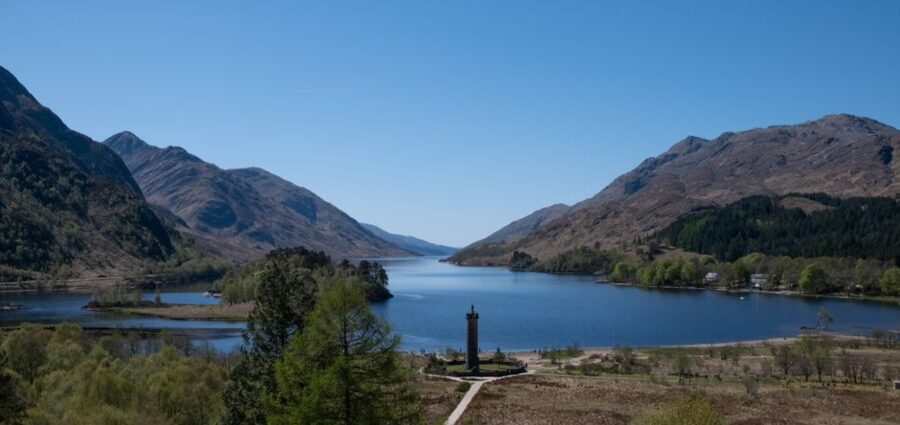
Sit on the left going out to Mallaig and on the right coming back. The viaduct curves with Loch Shiel and the monument on the inside of the bend, which is the left side westbound, and from Arisaig the line runs north up the coast with the sea on the left.
The catch is that you cannot pick. Seats are allocated automatically, with at least one window seat for bookings of two or more, and the operator cannot say which way your seats will face or which side of the train they will be on, because carriages are sometimes turned. In the open carriages that matters less than it sounds: you can see across the aisle, and the train slows on the viaduct, so a right-hand seat still gets a look at the curve.
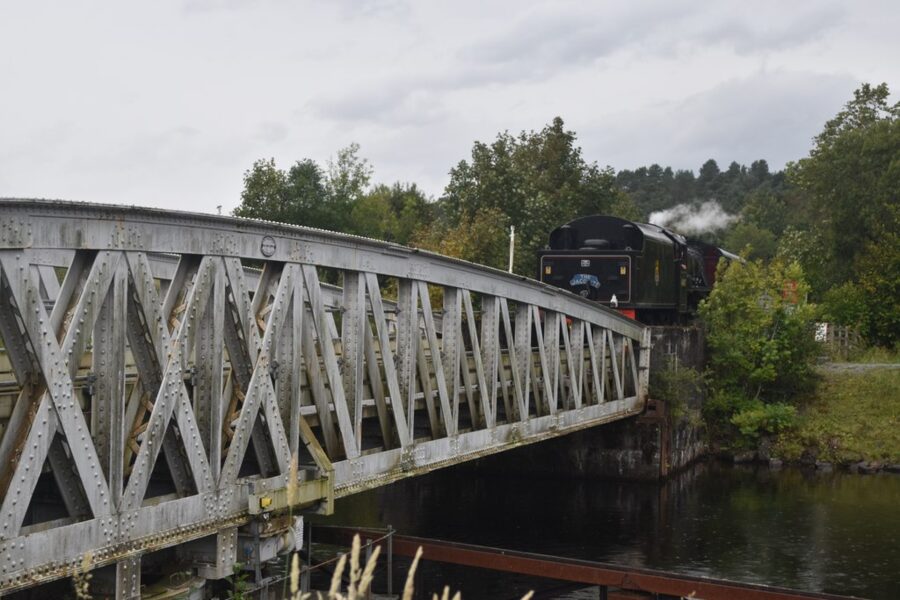
In order, heading west from Fort William:
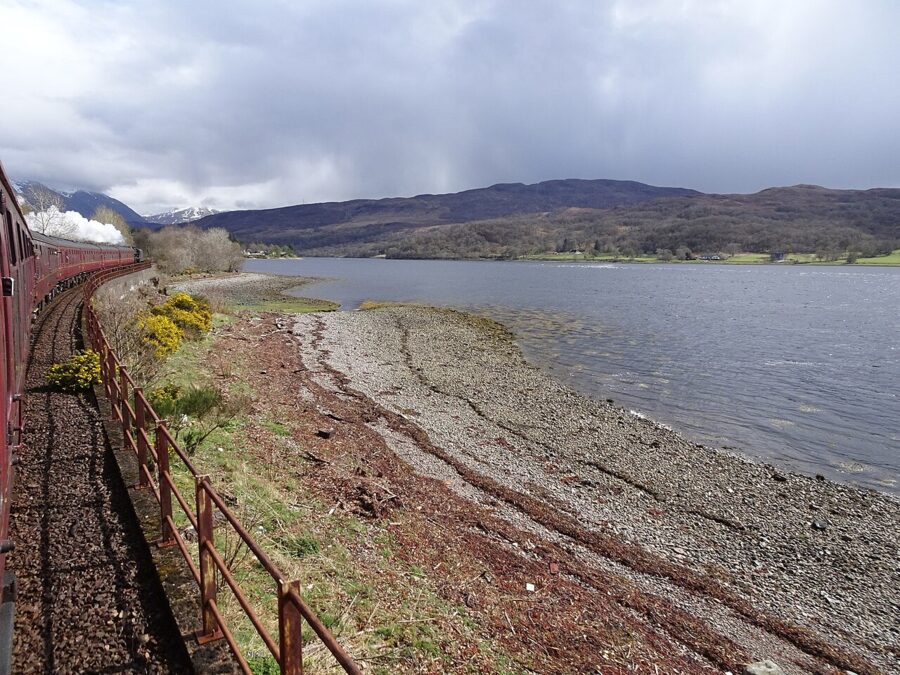
- Banavie and Corpach: the swing bridge over the Caledonian Canal, then the shore of Loch Eil, with the water on the left.
- Glenfinnan Viaduct: about 40 minutes out, the slow crossing, with Loch Shiel and the monument on the left.
- Glenfinnan station: a stop when the timetable allows it, long enough to step out and look at the engine.
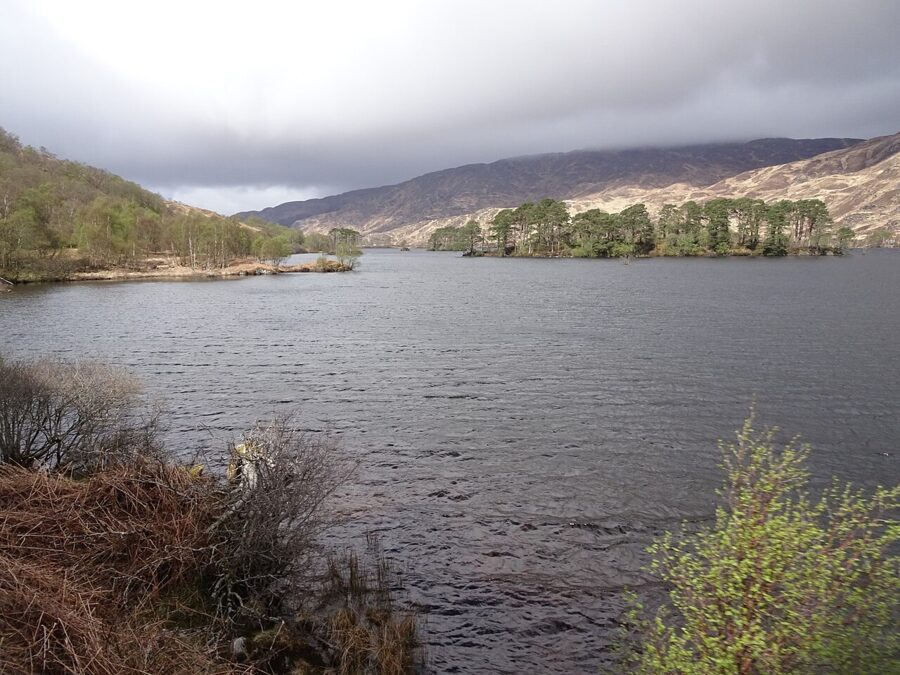
- Loch Eilt: a long loch with small pine-covered islands, right beside the line.
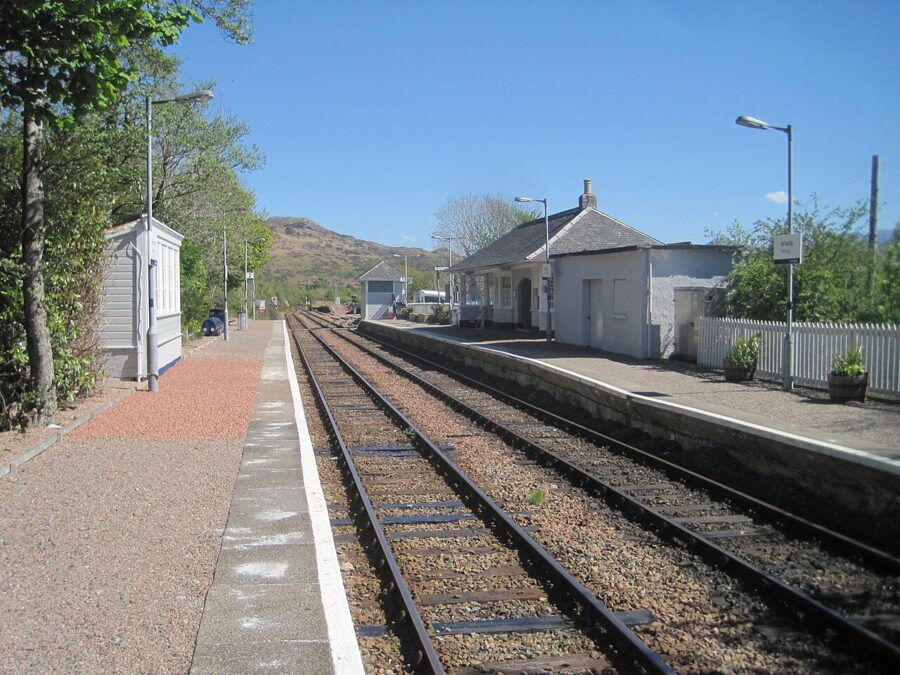
- Loch nan Uamh Viaduct and Arisaig: the second viaduct, then the most westerly mainland station in Britain.
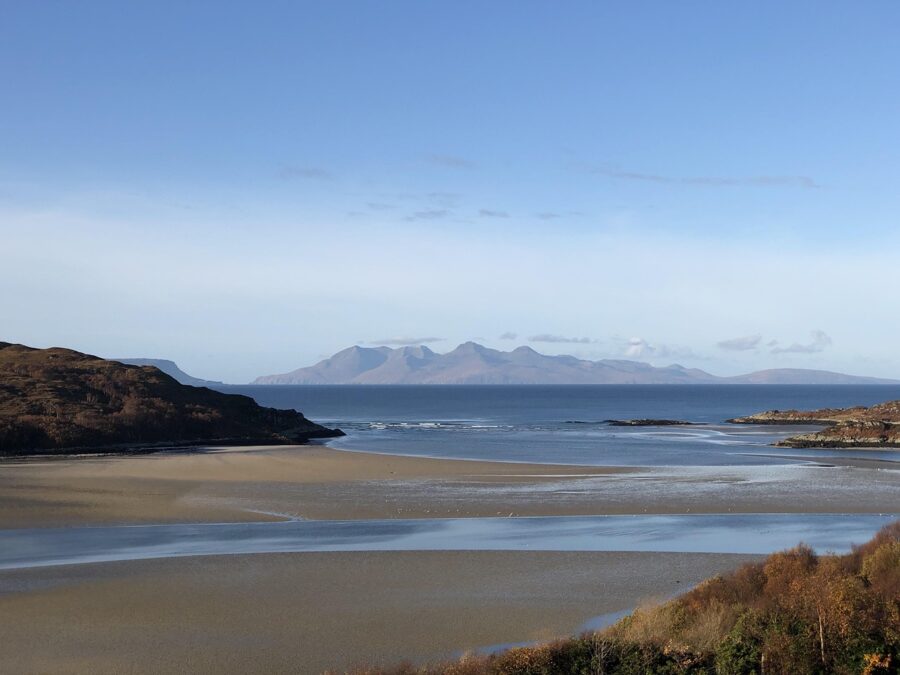
- Morar: white sand beaches, Loch Morar inland and the islands of Rum and Eigg out to sea on the left.
- Mallaig: the end of the line, beside the harbor.
Mallaig: time for lunch, not much more
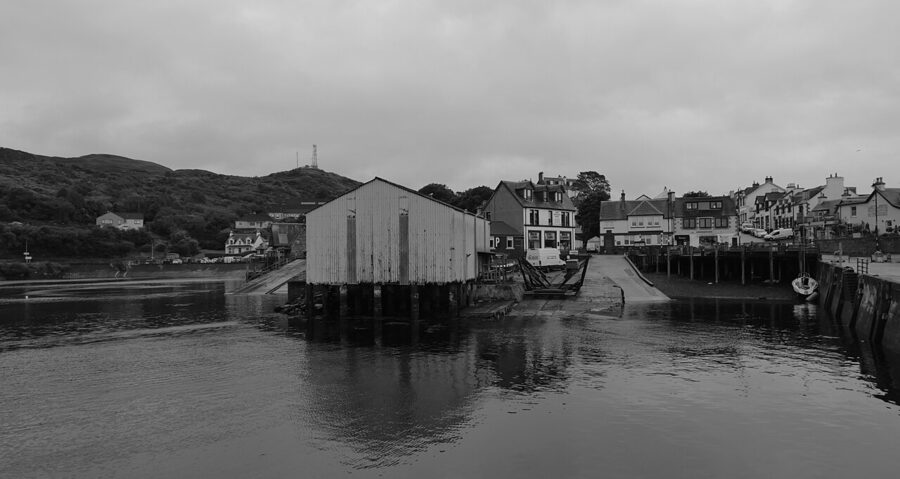
The morning train gives you about an hour and three quarters in Mallaig and the afternoon train about two hours, which is enough for lunch and a walk round the harbor but not for anything further. Mallaig is a working fishing port, and the ferries leave from here for Armadale on Skye, the Small Isles and the roadless peninsula of Knoydart.
Eat first and look second. A full trainload arrives at once, and the queues for fish and chips build quickly. Remember the train will not wait for you: be back on the platform 15 minutes before it leaves.
Glenfinnan from the ground: the station and the viewpoint
The classic photo, the train curving across the arches with steam trailing behind, cannot be taken from the train. For that you need to be at Glenfinnan, about 18 miles west of Fort William on the A830, at the National Trust for Scotland visitor center, which looks after the monument and the paths. The train crosses twice on each return trip, so there are four chances a day when both trains run.
From the visitor center car parks, the Trust’s viaduct page gives these walks:
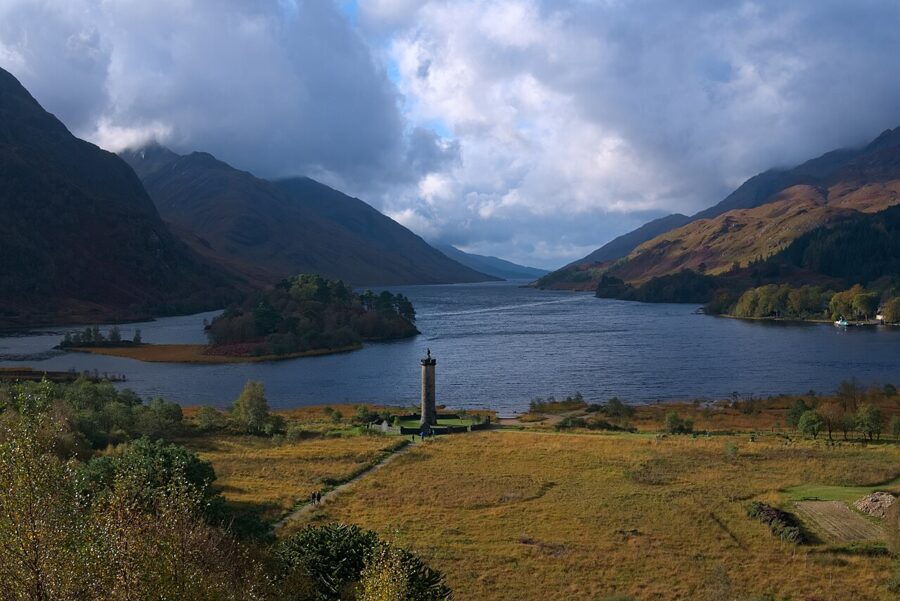
- The viewpoint above the car park: a 5-minute climb with steps and benches, and the widest view: viaduct, Loch Shiel and the monument together, with the train small but whole.
- Under the viaduct: a flat 15-minute walk beside the River Finnan, suitable for wheelchairs and strollers.
- The hillside above the viaduct: another 10 minutes up a path with steps that can be slippery. This is the close, curving shot, and the operator’s own advice is to go under the viaduct and climb the hill to the left, on the west side.
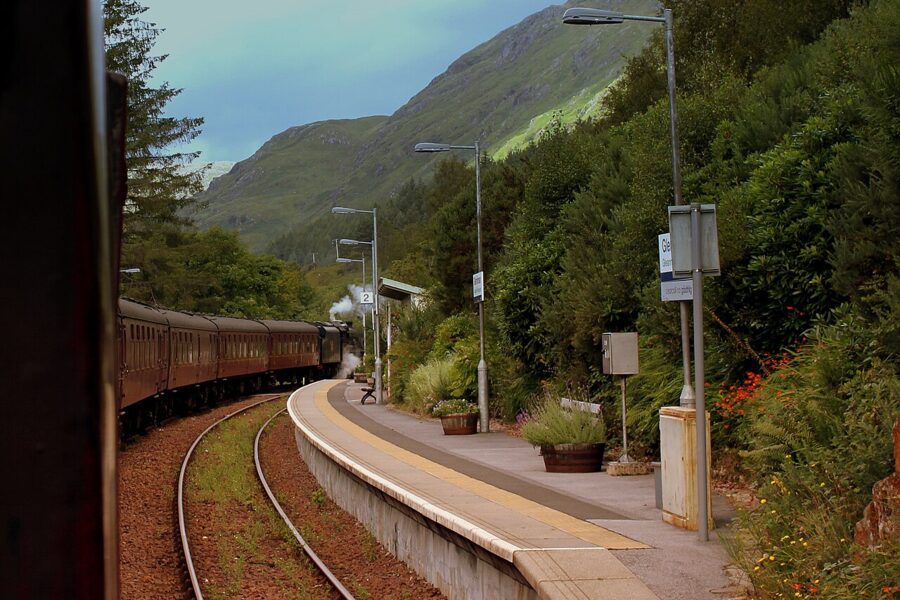
- Glenfinnan station: 15 minutes along the pavement, to see the engine up close at the platform.
Parking is the hard part. The Trust car park cost £5 (about US$7) as of November 2026, free for members; if it and the community car park next door are full, the Trust asks you to come back later, and cars on verges and passing places may be towed. The only public toilets are at the visitor center, with an out-of-hours block in the car park that costs £1.
The Glenfinnan Monument itself, a 60-foot (18 m) tower raised in 1815 where Prince Charles Edward Stuart’s standard was raised on August 19, 1745, can be climbed: £5 (about US$7) for adults as of November 2026, at set times. The visitor center is free, and its exhibition explains the 1745 rising that gave the train its name.
Glenfinnan station and its museum
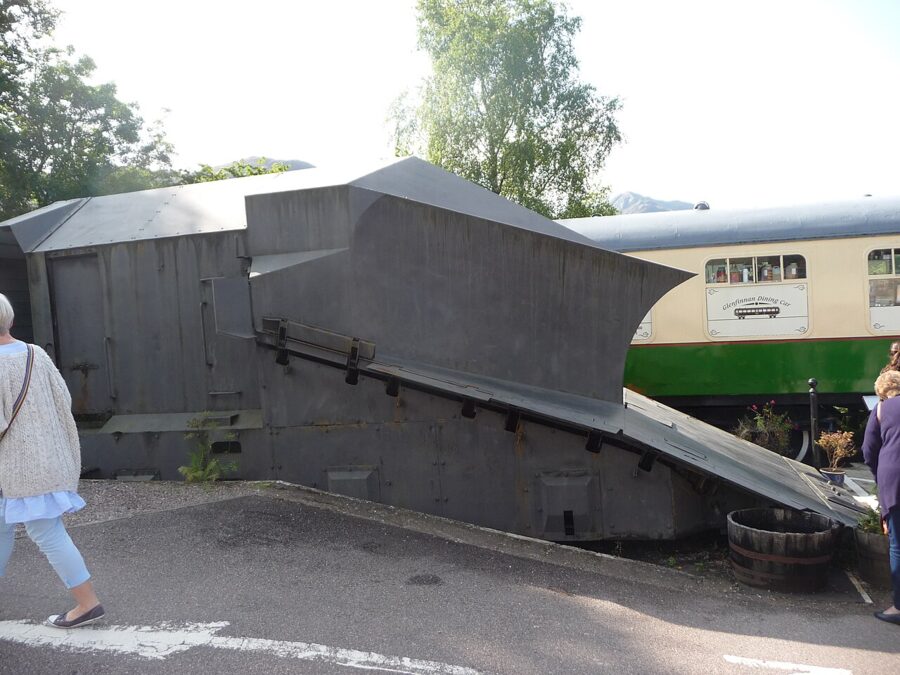
Glenfinnan station has kept its old buildings, and the Glenfinnan Station Museum in the station house tells the story of the line. Two old carriages stand beside the platform, one a dining car and one a sleeping car used as a hostel. Left luggage costs £5, including museum entry, which is handy if you arrive by ScotRail with a bag; in winter the museum opens by appointment.
The ScotRail train on the same line
ScotRail runs the ordinary service from Fort William to Mallaig all year, over the same track and the same viaduct, in ordinary diesel trains. In the timetable running from May 17 to December 12, 2026, there were four trains each way Monday to Saturday, fewer on Sundays, taking about an hour and 25 minutes end to end:
| ScotRail, Monday to Saturday, as of 2026 | Times |
|---|---|
| Fort William to Mallaig | 8:15 a.m., 12:18 p.m., 4:19 p.m., 10:12 p.m. |
| Mallaig to Fort William | 6:03 a.m., 10:09 a.m., 4:05 p.m., 6:15 p.m. |
Check ScotRail’s West Highlands timetable for the version in force when you travel, since the 2027 summer timetable will differ. The fare is ordinary walk-up money: the Trust puts an adult return from Fort William to Glenfinnan at under £10 (about US$13).
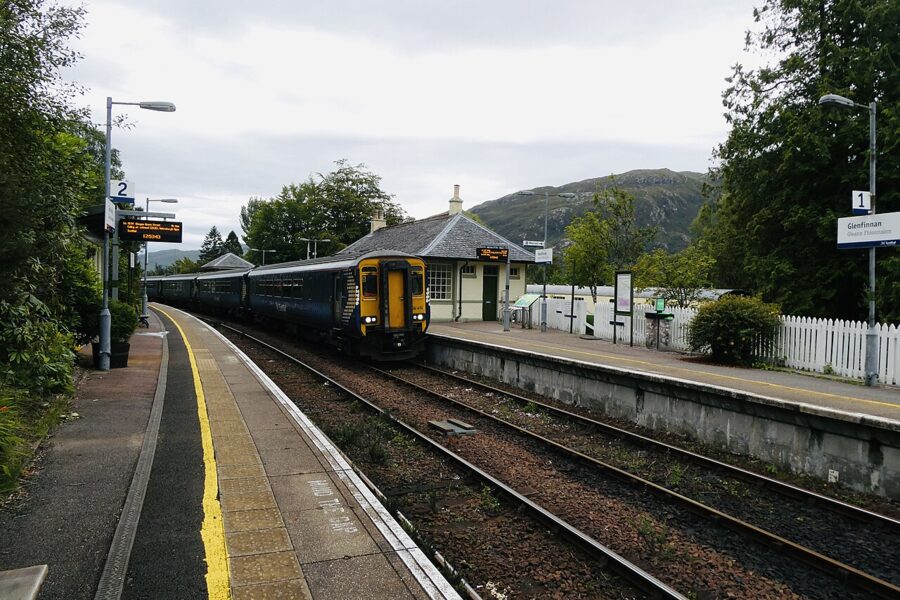
The ScotRail train does several things the Jacobite cannot. You can get off at Glenfinnan, walk the hillside path to the viaduct and watch the steam train cross; you can stop at Arisaig or Morar for the beaches; and you can travel in April or November. What it lacks is the engine, the open windows and the sound on the climbs.
My plan, if you have two days, is this: ride the ScotRail train to Glenfinnan one day and watch the Jacobite from the hillside, then ride the Jacobite the next.
With one day and no ticket, take the 8:15 a.m. ScotRail train to Glenfinnan, see the morning crossing at about 11 a.m., and carry on to Mallaig on the 12:51 p.m. (times from the 2026 timetable). Without a car, Shiel Buses also runs between Fort William, Glenfinnan and Mallaig, and in summer 2026 it added a Fort William to Glenfinnan service from July 4.
Getting to Fort William
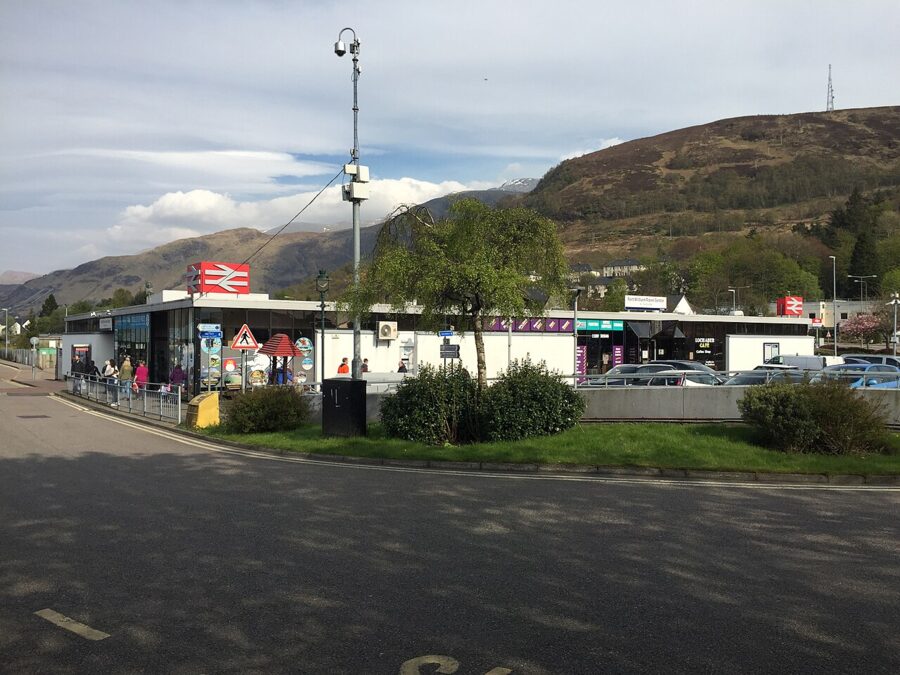
Stay in Fort William the night before; the operator’s directions page says it plainly: the first ScotRail train from Glasgow arrives after the 10:15 a.m. departure. In the 2026 timetable it left Glasgow Queen Street at 8:22 a.m. and reached Fort William at 12:12 p.m., which in theory makes the 12:50 p.m. afternoon train, but with no refund for a missed connection I would not risk it.
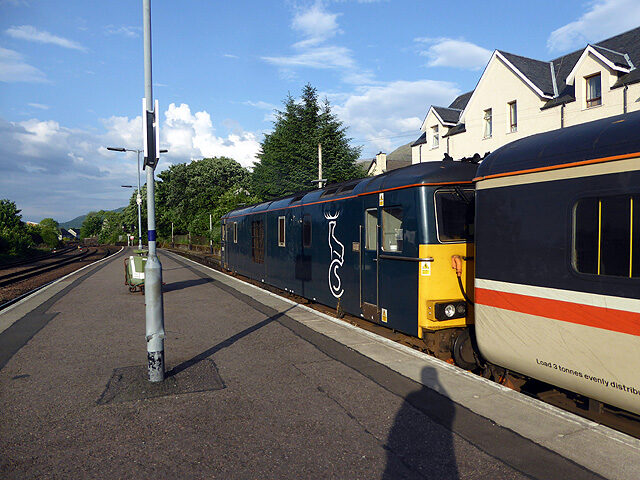
The other way in is the Caledonian Sleeper from London Euston, which crosses Rannoch Moor in the morning on its way in. West Coast Railways notes that most of its passengers from the south come this way, but it will not hold the Jacobite for a late sleeper, and it suggests a night in Fort William if you cannot afford to lose the day. By car, Fort William is on the A82 from Glasgow, and the station has little parking of its own; the long-stay car parks near the station are the ones to use.
What goes wrong, and what to do
Most complaints about the Jacobite come down to four things, all written into the terms.
A diesel on the front, when fire risk is high or an engine fails, means no refund. A delay on the day means no compensation. Extreme heat can mean the service is suspended. A carriage you did not expect can turn up at short notice, because the operator reserves the right to change rolling stock.
There are practical limits too. The train cannot take a wheelchair user seated, motorized scooters are not carried, and bicycles are not allowed; luggage goes where the guard can find room. Toilets are locked while the train stands at stations. A medium-sized dog may travel free in Standard Class, one per booking, but not in First Class or the compartments.
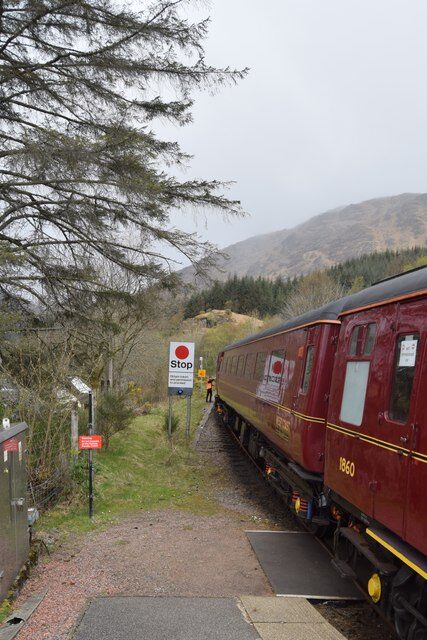
The cure for most of this is travel insurance and a spare day. If the steam matters to you, ring or email the operator in a hot, dry spell to ask whether a steam ban is in force. And if a diesel does turn up, the view at Glenfinnan is the same.
Is the Jacobite worth it?
For the view alone, no: the ScotRail train shows you the same viaduct, the same lochs and the same sea for the price of an ordinary ticket. For the engine, yes, once. A Black Five working up the grades out of Glenfinnan, with steam drifting past an open window, is something the rest of the West Highland Line cannot give you, and it is the reason the train sells out.
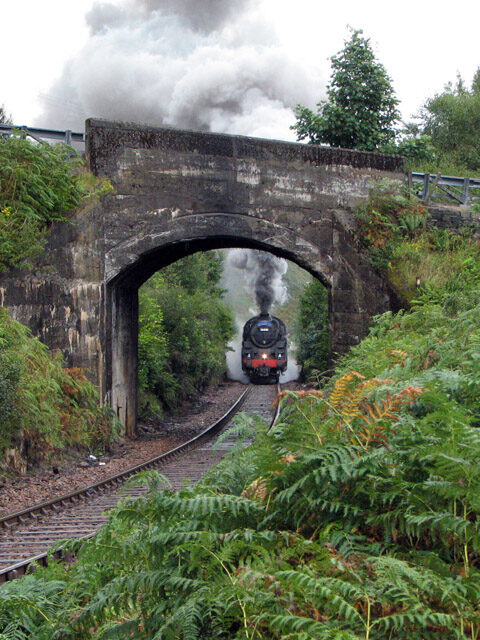
If the Jacobite gives you the taste for the Highlands by rail, the Belmond Royal Scotsman is the other end of the scale, a multi-night luxury train through the Highlands. Most people, though, will be happy with a seat on the left, a window that drops open and a minute on a curve.
Register with West Coast Railways now, book the hour the 2027 season opens, and ask for the morning train. Sit on the left out of Fort William, and keep the right for the run home along Loch Eil.