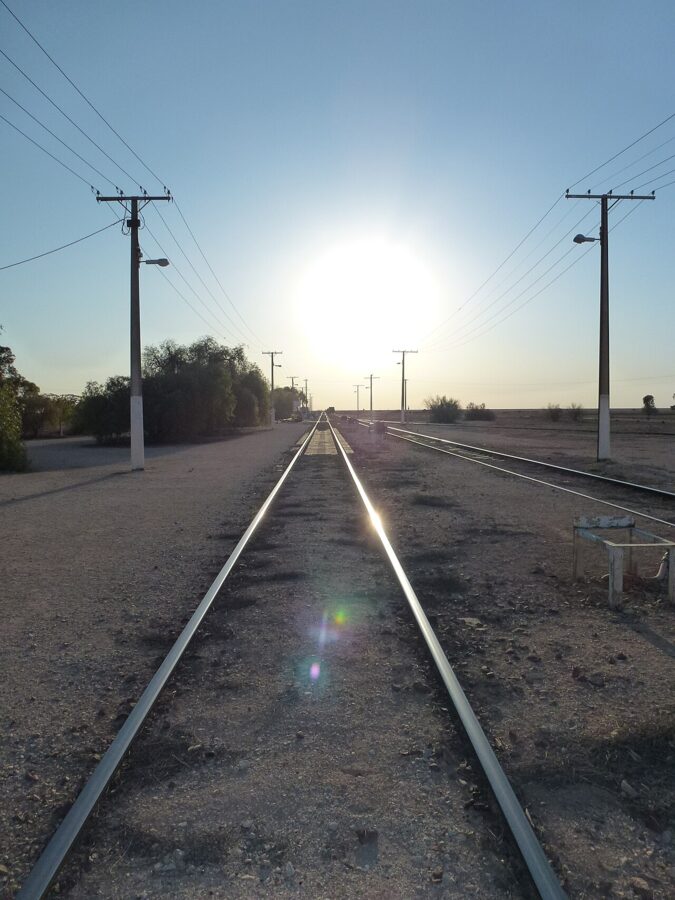
On the eastbound Indian Pacific the sun comes up ahead of the train. By the time the morning stop at Kalgoorlie is over and the train pulls out for the long run east, the woodland thins, then gives up, and what is left in the window is saltbush, bluebush, red ground and a sky that takes up three quarters of the glass. Out on the Nullarbor the track runs dead straight for 297 miles (478 km), the longest straight stretch of railway in the world, and the train keeps to it for hours.
Nothing happens, and that is the point. There are no towns worth the name, a handful of sidings called things like Rawlinna and Cook, and a dining car that serves lunch while the horizon refuses to move. It is the stretch people remember, and nobody photographs it well, because the whole thing is the size of it.
It is also expensive, in a way that surprises people who know American trains. Australia’s long-distance trains are sold like cruises, with every meal, drink and shore excursion in the fare, while New Zealand’s scenic trains are day rides for a fraction of the price. In both countries the choice comes down to which train, which direction, which cabin, and whether an ordinary train will do the job for a tenth of the money.
How the great journeys are sold
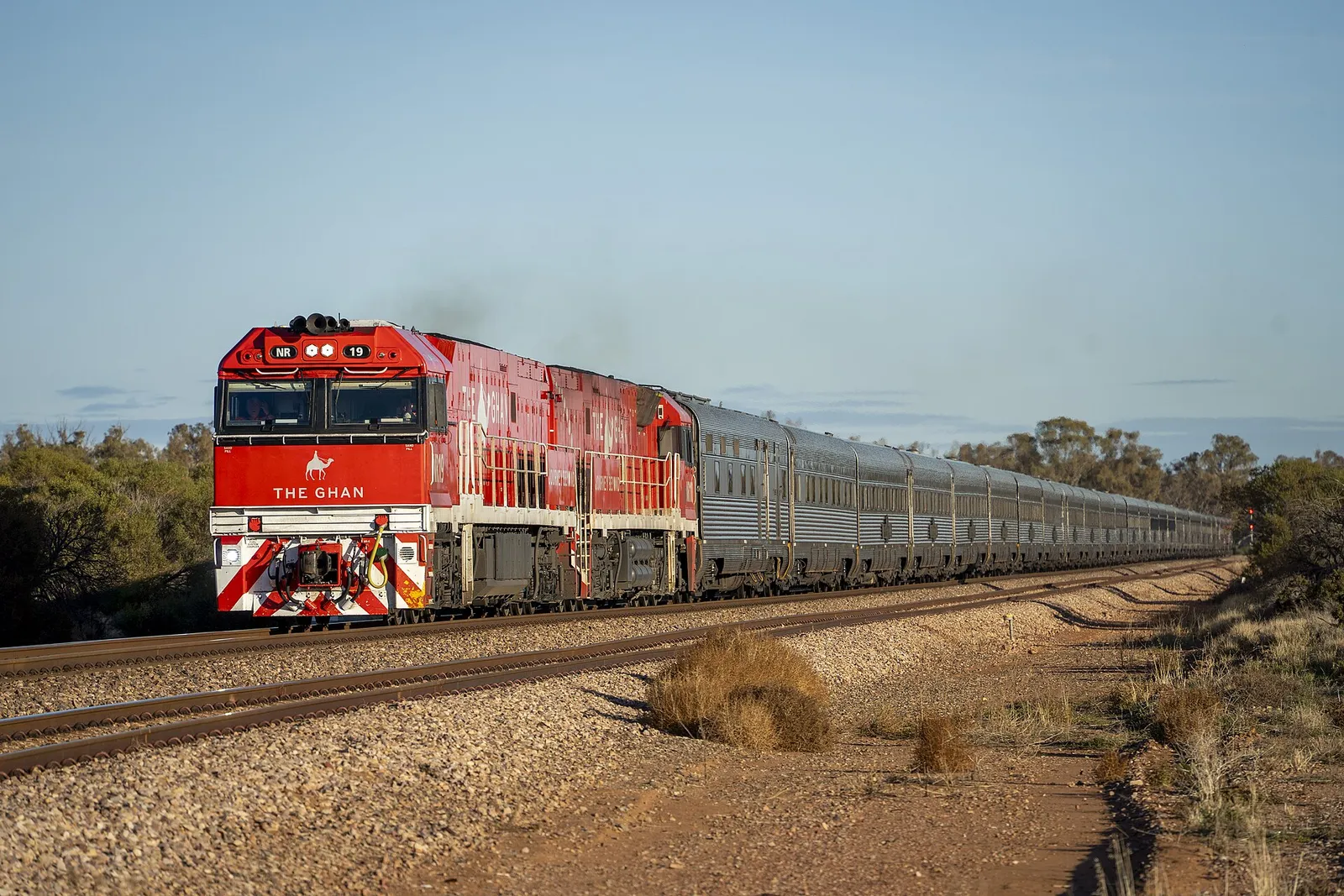
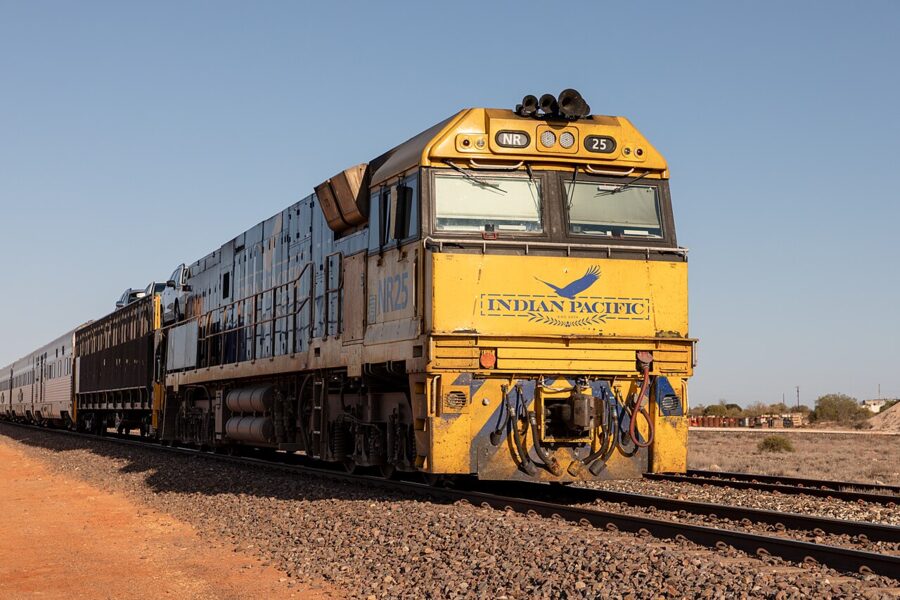
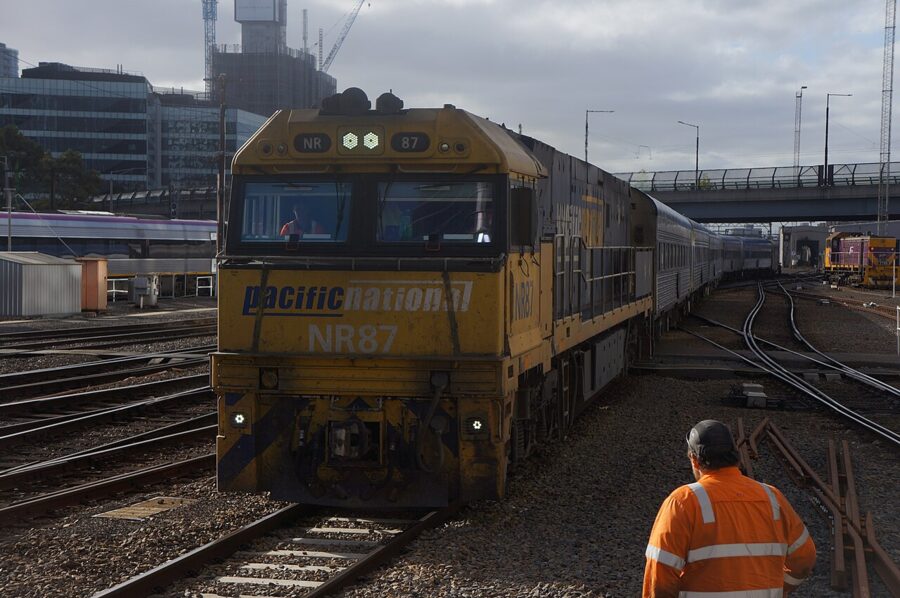
Three of Australia’s famous long-distance trains belong to one Adelaide company, Journey Beyond: The Ghan (Adelaide to Darwin through Alice Springs), the Indian Pacific (Sydney to Perth across the Nullarbor) and the Great Southern (Adelaide to Brisbane, in summer only). It also runs The Overland, a daytime seat train between Adelaide and Melbourne, which is a different kind of trip.
The big three are not transport in any useful sense. You cannot get off at Broken Hill and stay a few days; the stops along the way are for the company’s own excursions, and you can only end your trip in one of the cities on the route. The fare covers the cabin, all meals, all drinks including wine and spirits, and guided outings at each stop, and it is priced like a small-ship cruise.
So the question is not how to get from Sydney to Perth (fly, in about five hours) but whether you want three or four days of this. If you do, direction, month and cabin move the price by thousands of dollars.
The Ghan
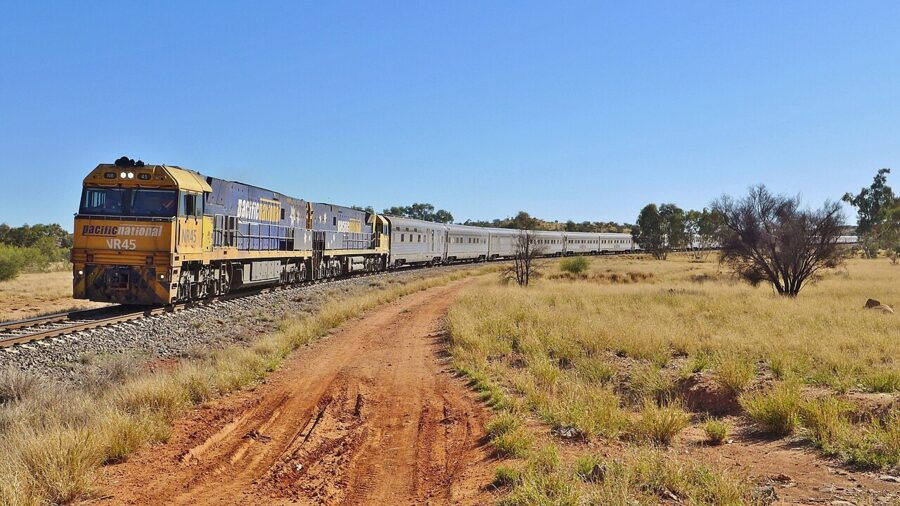
The Ghan runs 1,851 miles (2,979 km) from Adelaide on the south coast to Darwin in the tropics, through the Flinders Ranges, the stony plains of northern South Australia and the red country around Alice Springs. Its name is usually traced to the Afghan cameleers who carried freight into the interior before the railway. The old narrow-gauge line to Alice Springs was replaced by a standard-gauge one in 1980, and the extension north to Darwin only opened in 2004.
It runs from March to November, with a second weekly departure in each direction from April to October. There is no Ghan in December, January or February, when the north is in its wet season and the center is at its hottest.
Northbound in 2026: three days
The northbound trip, The Legendary Ghan, leaves Adelaide at 12:15 p.m. on Sundays (March to November) and Wednesdays (April to October). The first afternoon runs north past the Flinders Ranges. Next morning the train stops at Marla, an outpost about 100 miles (160 km) short of the Northern Territory border, for sunrise around a bonfire, then serves brunch on board.
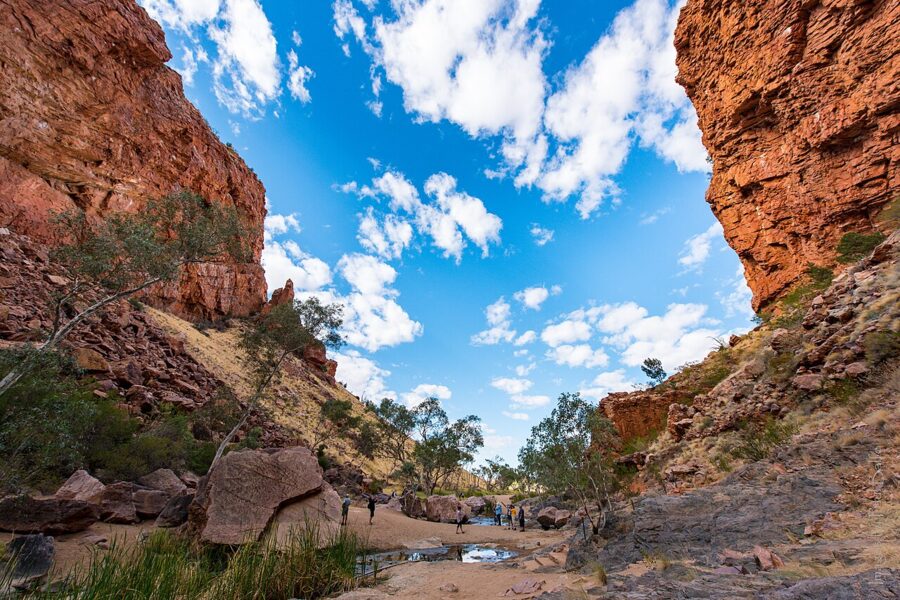
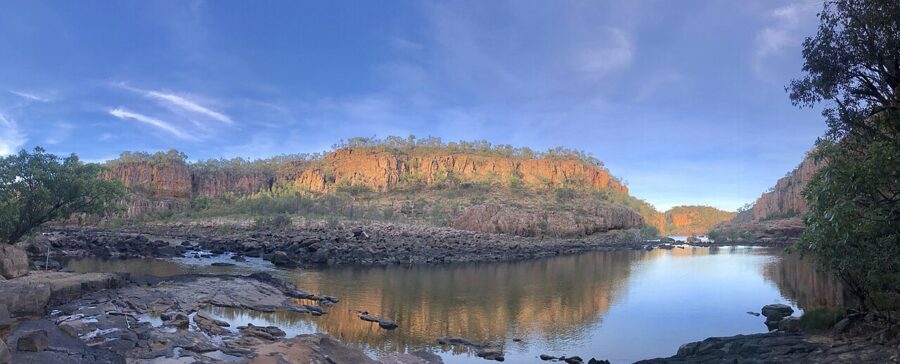
Alice Springs comes at 1:45 p.m., with an afternoon of outings before the 6:15 p.m. departure: Simpsons Gap or Standley Chasm in the West MacDonnell Ranges, the Desert Park, a town tour or a bike ride. The third morning is at Katherine, for a cruise on Nitmiluk Gorge, the Cutta Cutta Caves or the Katherine Outback Experience. The train reaches Darwin at 5:30 p.m. on Tuesdays or 7:30 p.m. on Fridays.
From 2027: four days north
The biggest change on the line in years comes in March 2027, when the northbound trip grows to four days and three nights. The train will leave Adelaide at 3:00 p.m. on Saturdays (March to November) and Tuesdays (April to October), stopping that evening for dinner in a woolshed in the Clare Valley wine country. Next morning it reaches Port Augusta for a full day by coach in the Flinders Ranges, with lunch at Quorn and the ruins of Kanyaka Station; from Marla on, the trip is the same as now.
In Gold Twin the 2027 trip costs about A$900 to A$1,100 (US$590 to US$720) more than the 2026 three-day version. I think it is worth it, because the three-day trip sees the Flinders Ranges only from the window, and they are some of the best country on the line. Journey Beyond says 2027 times may still change, so check them again when final documents arrive 30 days out.

The Ghan Expedition: south in four days
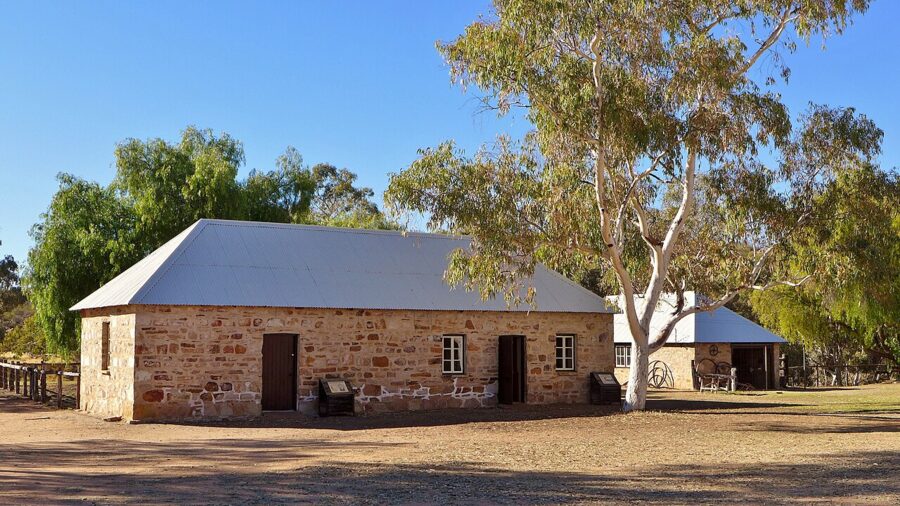
Going south, the four-day trip already exists, and it is the one I would book if you can do The Ghan only once. The Ghan Expedition leaves Darwin at 10:00 a.m. on Wednesdays (March to November) or 9:00 a.m. on Saturdays (April to October), with an afternoon at Katherine. The second day is all Alice Springs, ending with dinner under the stars at the old Telegraph Station.
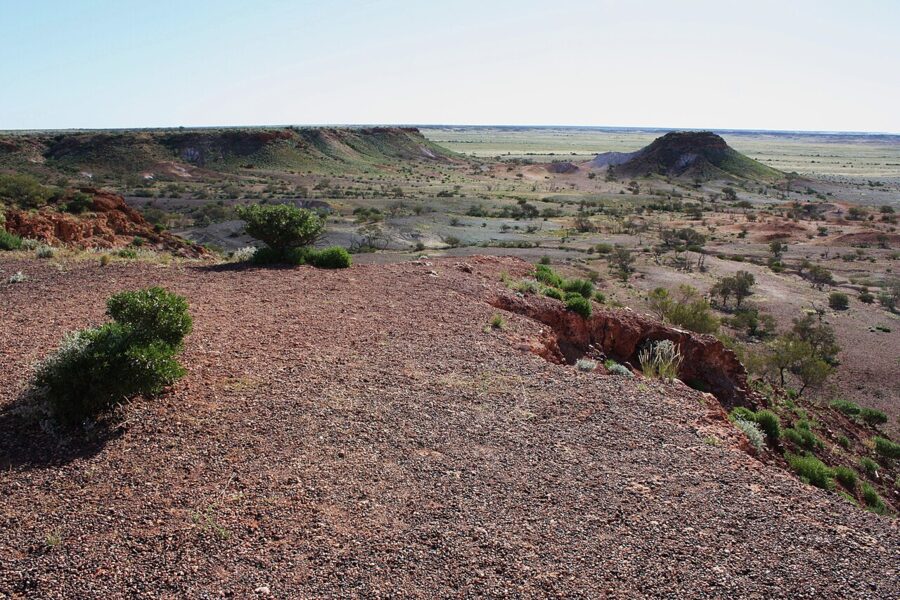
Day three is Coober Pedy, the opal town where more than half the people live underground, reached by coach from a siding called Manguri; lunch is served below ground, and one outing goes to the Breakaways, a run of flat-topped hills north of town. The train arrives at Adelaide Parklands Terminal, Journey Beyond’s own station outside the city center, at 10:50 a.m. on the fourth morning.
The short legs, and the best months
Yes, there is a train between Darwin and Alice Springs: The Ghan, sold in halves. Adelaide to Alice Springs (one or two nights) and Alice Springs to Darwin (one night, called Top End Discovery) ride the same trains. In 2026 each half starts at A$1,790 (about US$1,180) a person in Gold Twin, the cheapest way to try the train, and it pairs well with a few days at Uluru in between.
The best months are May to August: dry season in the Top End, cool season in the center, warm days and nights down to around 40°F (4°C) at Marla. They are also the dearest. March and November are the cheapest, with Darwin and Katherine in the mid-90s°F (mid-30s°C), and April, September and October sit in between on price and weather; those are the months I would aim for.
The Indian Pacific and the Great Southern
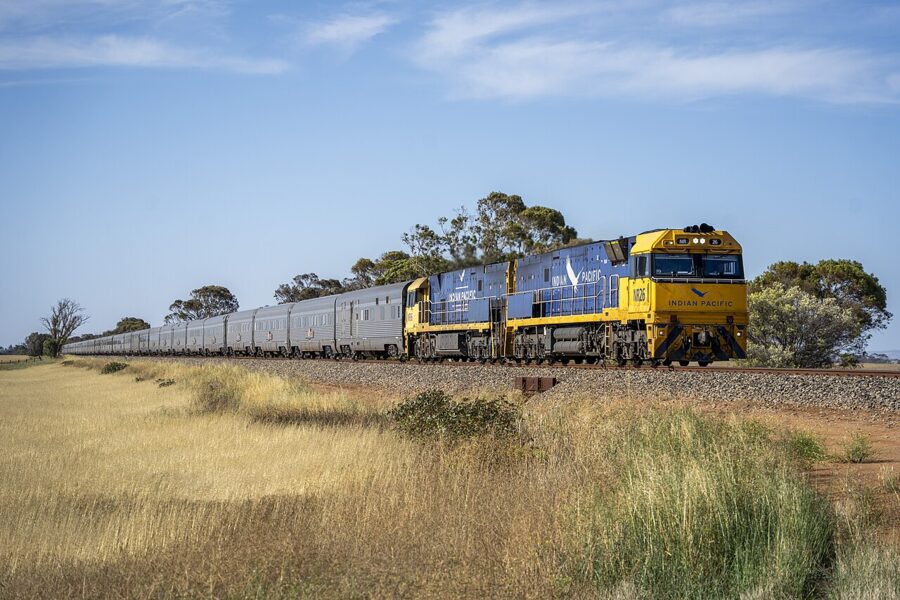
The Indian Pacific has crossed the continent since February 1970, when gauge conversion let a train run from one ocean to the other without a change at the state borders. The route is 2,704 miles (4,352 km), and the train runs every week of the year. If you have ridden America’s long-distance trains, think of the California Zephyr with every meal, drink and outing included, and a far emptier middle.
Westbound: Sydney to Perth in four days
The westbound train leaves Sydney Central at 2:10 p.m. on Wednesdays and climbs into the Blue Mountains in the afternoon. By 6:30 the next morning it is at Broken Hill, the silver-mining town in far western New South Wales, and it reaches Adelaide at 4:05 p.m. for an evening out in the city, the Adelaide Hills or McLaren Vale.
Friday is the Nullarbor day, with stops at Cook in the early afternoon and at Rawlinna for dinner at dusk, and the train arrives in Perth at 2:45 p.m. on Saturday. This direction is a night shorter, and almost all of the crossing happens in daylight.
Eastbound: Perth to Sydney in five days
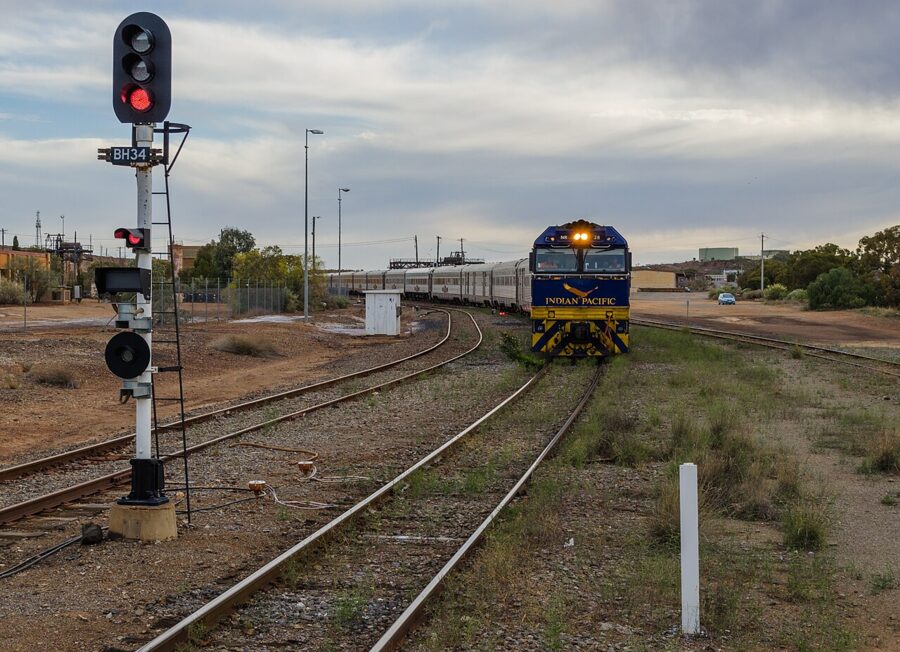
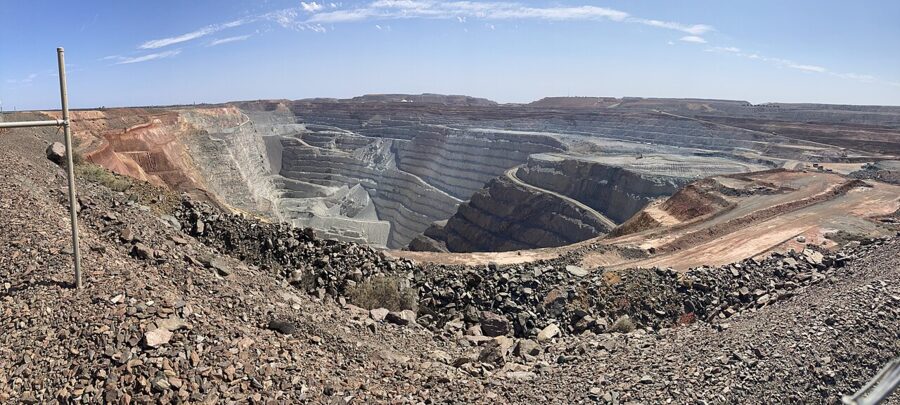
The eastbound trip, sold as The Mighty Nullarbor, leaves Perth at 5:55 p.m. on Saturdays and is in Kalgoorlie at 6:00 the next morning for the gold-rush streets and the Super Pit mine. The rest of Sunday is the crossing, and the train reaches Cook at 10:04 at night for guided stargazing under a sky with almost no artificial light in it.
On Monday coaches take everyone from Long Plains, north of Adelaide, to dinner in the old cellar at Seppeltsfield in the Barossa Valley. Tuesday is Broken Hill. On Wednesday you either leave the train in the Blue Mountains for a morning at Katoomba and a chartered NSW TrainLink train into Sydney (arriving 3:15 p.m.), or stay aboard to Central (12:30 p.m.).
Which way? Westbound is cheaper and gives you Rawlinna and the whole plain in daylight; eastbound adds Kalgoorlie and the Barossa and ends in Sydney, the easier city to fly home from. Sydney to Adelaide and Adelaide to Perth are also sold on their own, and Perth to Adelaide or Adelaide to Perth is the cheapest way to cross the Nullarbor in a sleeper. Fares are highest in March and from September to November, and lowest in June and July.
The Great Southern, summer only
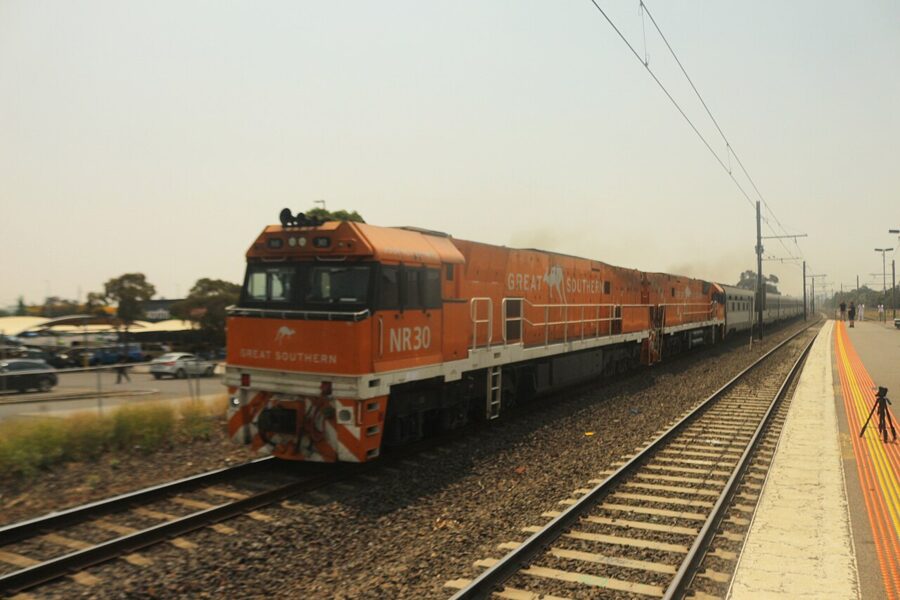
The Great Southern fills the months when The Ghan does not run, from December to February, with the same carriages, cabins and all-inclusive fare. Northbound, the East Coast Adventure leaves Adelaide at 9:00 a.m. on Fridays, with an afternoon in the Grampians, a day in Canberra and a morning at Coffs Harbour before Brisbane at 5:10 p.m. on Sunday. Southbound takes four days from Brisbane on Mondays, with a beach dinner at Coffs Harbour, a day in the Hunter Valley or Port Stephens and a day in Melbourne before Adelaide on Thursday morning.
Track work will divert three northbound departures this season (December 4, January 8 and February 19) away from Coffs Harbour, so those trips lose that morning.
The Overland, a train you can simply ride
The Overland runs by day between Adelaide and Melbourne, leaving Adelaide on Sundays and Thursdays and Melbourne on Mondays and Fridays. It has reclining seats in Red Standard and Red Premium, a cafe car, and stops in western Victoria where you can actually get on and off. Fares in 2026 start at A$165 (about US$110) in Red Standard and A$305 in Red Premium, and to my mind it is the best-value long ride in the country.
Cabins, prices and excursions
The Ghan, the Indian Pacific and the Great Southern share the same classes, and the choice is about space, a private bathroom and who you eat with. Each class has its own restaurant and lounge, and you cannot cross into another class’s carriages to dine with friends who booked differently.
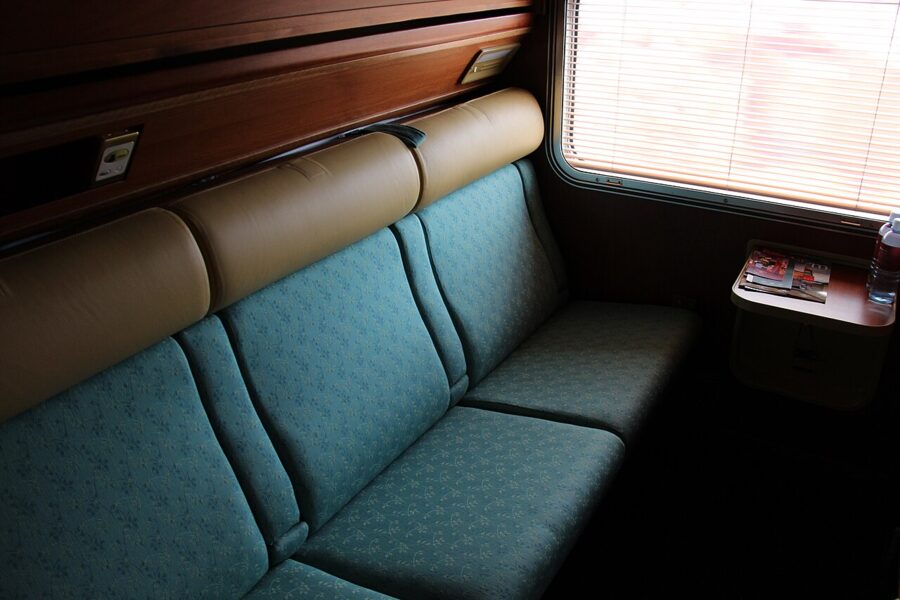
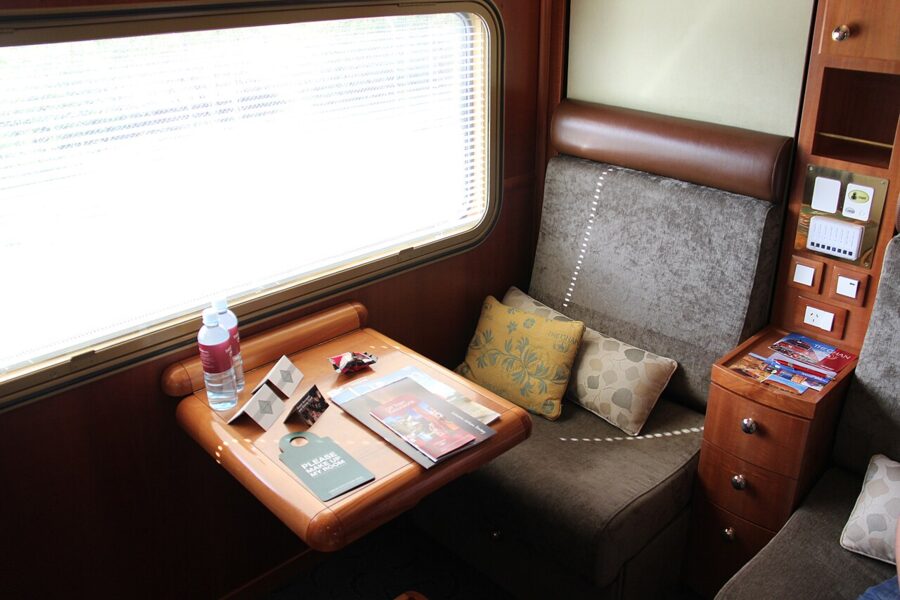
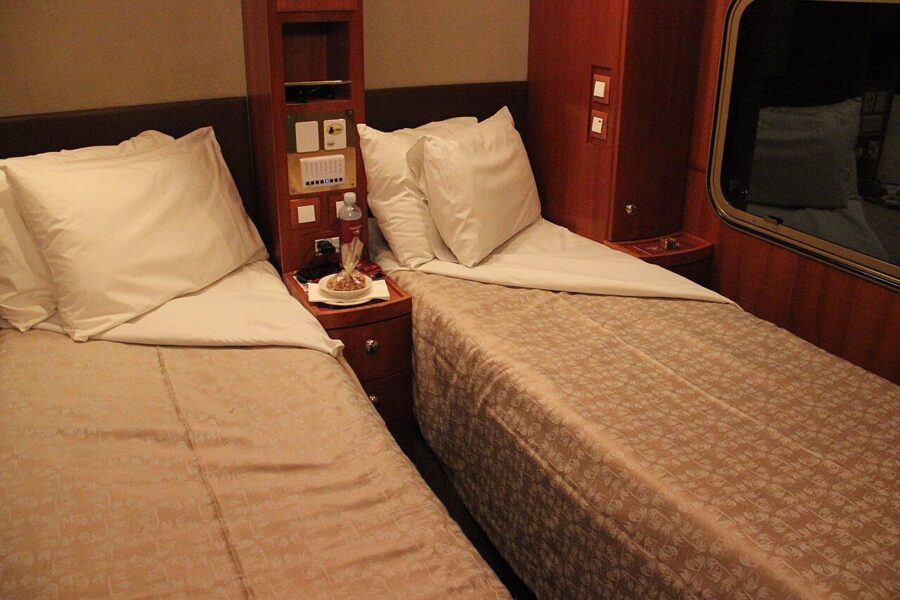
Gold Single is a compact cabin whose seat turns into a bed, with shared showers and toilets at the end of the carriage. Gold Twin has a three-seat lounge by day that becomes upper and lower berths at night, plus a tiny private shower and toilet. Gold passengers eat three-course dinners in the Queen Adelaide Restaurant and can check two 30 kg (66 lb) bags. If you know the Amtrak sleeper classes, a Gold Twin is closer to a bedroom than a roomette, because the bathroom is inside.
Gold Premium is the newer middle class: redesigned twin cabins with a private bathroom, its own lounge and restaurant, four-course dinners, first pick of excursions and three 25 kg bags. Platinum cabins are almost twice the size of a Gold Twin, with a double or two single beds, a full-size bathroom, windows on both sides, five-course dinners in the Platinum Club and hotel transfers. Above them sit the Aurora and Australis suites, added in April 2026, with a separate bedroom and a butler; there are only two on each train.
What it costs, as of 2026
Fares are per person, sharing a twin unless you book a single. Advance Purchase is the cheapest and limited, Everyday is the standard fare, and Flexible costs a few hundred dollars more, so read each one’s change and refund conditions; Platinum and the suites have no Advance Purchase fare. The table runs from the cheapest month to the dearest, from Journey Beyond’s published fares in November 2026.
| Journey | Nights | Gold Twin (Advance Purchase) | Gold Premium Twin (Advance Purchase) | Platinum (Everyday) |
|---|---|---|---|---|
| The Ghan, Adelaide to Darwin, 2026 | 2 | A$2,690–3,490 | A$3,190–4,090 | A$4,790–6,090 |
| The Ghan, Adelaide to Darwin, 2027 (four days) | 3 | A$3,590–4,590 | A$4,390–5,390 | A$6,490–8,090 |
| The Ghan Expedition, Darwin to Adelaide, 2026 | 3 | A$3,990–5,190 | A$4,990–6,090 | A$7,290–9,090 |
| The Ghan, one half (Adelaide–Alice Springs or Alice Springs–Darwin), 2026 | 1 | A$1,790–2,390 | A$2,190–2,890 | A$3,990–4,990 |
| Indian Pacific, Sydney to Perth, 2026 | 3 | A$2,990–3,990 | A$3,690–4,890 | A$6,490–8,490 |
| Indian Pacific, Perth to Sydney, 2026 | 4 | A$3,690–5,090 | A$4,390–5,790 | A$7,490–10,090 |
| Indian Pacific, Adelaide to Perth, 2026 | 2 | A$2,690–3,390 | A$3,390–4,190 | A$5,590–7,290 |
| Great Southern, Adelaide to Brisbane, 2026-27 | 2 | A$2,690 | A$3,190 | A$6,190 |
| Great Southern, Brisbane to Adelaide, 2026-27 | 3 | A$3,990 | A$4,690 | A$8,290 |
A$1 was worth about US$0.66 in late November 2026, so the cheapest Gold Twin on the full 2026 Ghan, A$2,690, is about US$1,770 a person, and a winter Platinum Expedition about US$6,000. The suites start at A$8,390 (Aurora) and A$12,490 (Australis) for the three-day Ghan. Gold Single runs a few hundred dollars below Gold Twin, and the Great Southern’s departures around Christmas and New Year are sold at lower festive fares.
Prices are climbing: Journey Beyond’s FAQ says rising energy and operating costs have brought “modest pricing adjustments” for 2026 and 2027 on new bookings, and offers such as free flights or a hotel night come and go. The 2027 season is on sale, 2028 is open only for registering interest, and sold-out departures have an online wait-list.
The excursions, and what they leave out
The Off Train Experiences are the part of the fare people underrate. Every stop has several included choices, from a gorge cruise or a winery dinner to bike rides and longer walks; you pick them online before departure and confirm them with your hospitality attendant on board.
The upgrades are the main thing you will pay extra for: helicopter flights over Nitmiluk Gorge and near Alice Springs, a scenic flight from Coober Pedy over the Painted Hills and Lake Eyre, and from Alice Springs a flight to Uluru on Sundays or a longer Uluru day on Thursdays. Each replaces that day’s included outing, has weight limits, and is best booked in advance through the Travel Centre.
A few rules catch people out. Checked bags are out of reach until the end, so keep medicine and a warm layer in your cabin bag, and dress is smart casual, not formal. Book a hotel for the night after arrival rather than a same-day flight, as Journey Beyond itself advises. You can ask for a forward-facing cabin, but only about half face forward and none is guaranteed.
Queensland and the ordinary trains
Everything above is a tourist product. Australia also has ordinary long-distance trains, run by the states, that cost a fraction as much, let you get off where you like, and go places the big three never stop.
The Spirit of Queensland
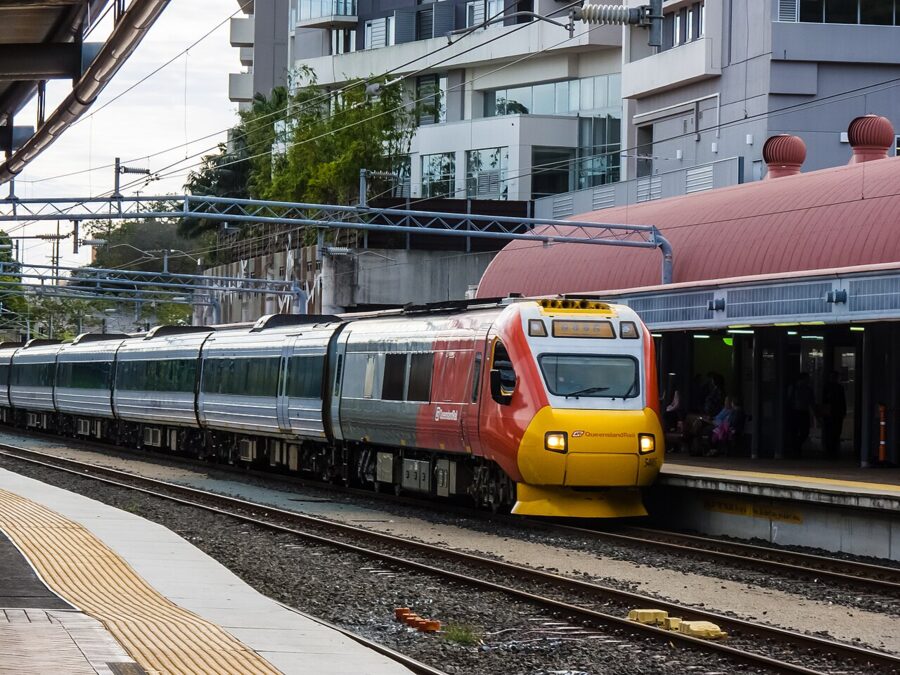
Queensland Rail’s Spirit of Queensland runs up the coast between Brisbane and Cairns, 1,045 miles (1,681 km) in about 25 hours. It leaves Brisbane at 3:45 p.m. on Mondays, Wednesdays, Fridays and Saturdays, and Cairns at 7:40 a.m. on Mondays, Wednesdays, Fridays and Sundays, with RailBus coaches to Airlie Beach and Hervey Bay.
The overnight class is RailBed, a wide seat that the crew makes up into a flat bed with sheets and a duvet, with meals served at your seat, a seatback screen, a power point and showers at the end of the carriage. The advance-purchase BQuick RailBed fare from Brisbane to Cairns starts at A$411 (about US$270) for travel to March 31, 2027, and Cairns to Townsville in a seat starts at A$50. There is no Wi-Fi and long stretches have no phone signal.
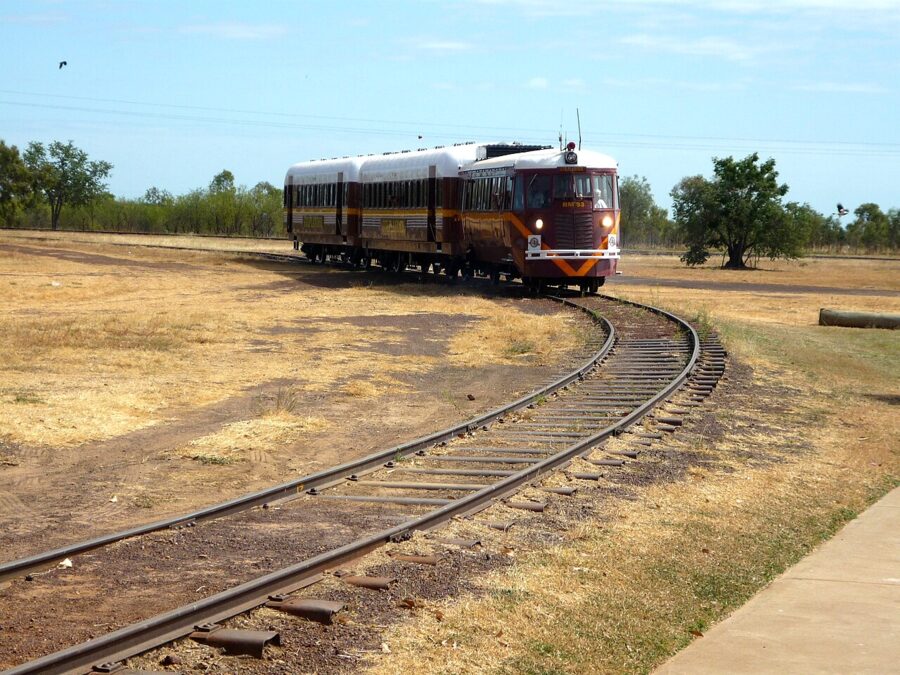
Queensland Rail also runs the Spirit of the Outback to Longreach twice a week, trains to Charleville and from Townsville to Mount Isa, and the Gulflander, a single railmotor running once a week between Normanton and Croydon on a line never joined to the rest of the network. Bookings are open to March 31, 2028.
The Kuranda Scenic Railway
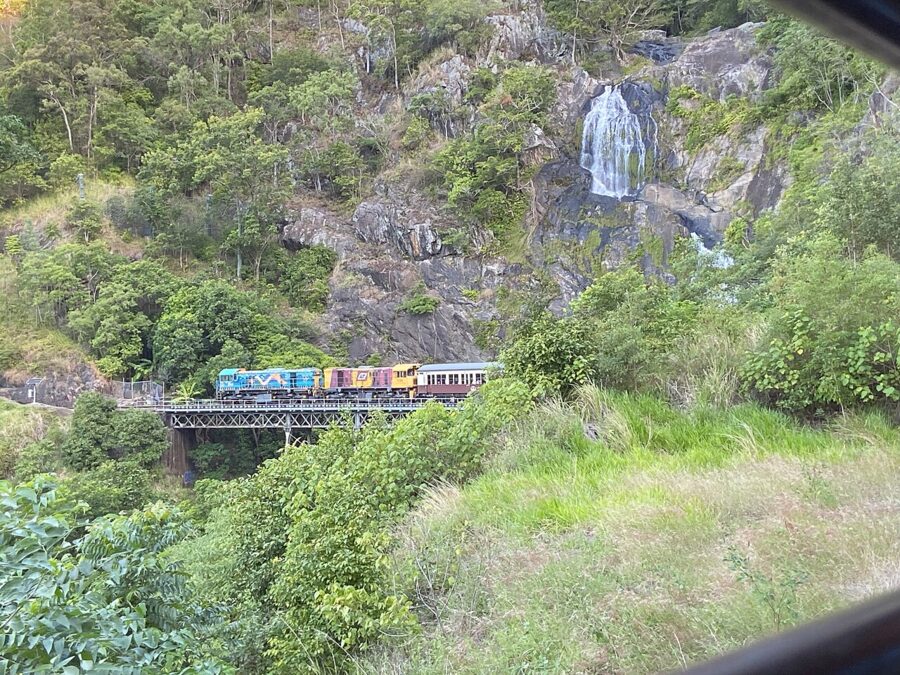
If you are in Cairns, this is the one to do, and it takes a morning. The Kuranda Scenic Railway climbs 23 miles (37 km) up the Barron Gorge to the village of Kuranda, rising 1,073 feet (327 m) through 15 tunnels and over 55 bridges, on a line that opened to passengers in June 1891. Heritage Class rides in timber carriages more than a century old, and the trip takes just under two hours.
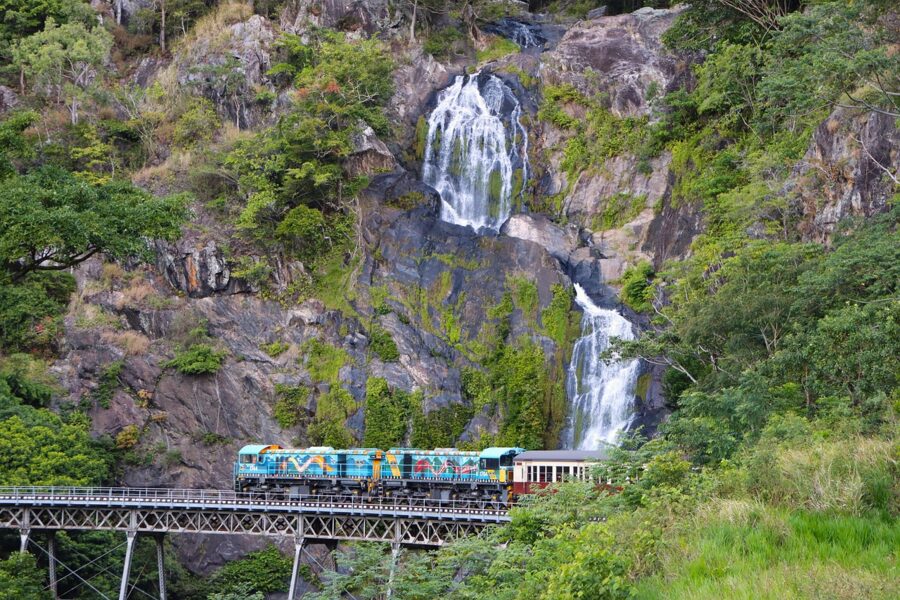
Trains leave Cairns at 8:45 and 9:30 a.m., calling at Freshwater 25 minutes later, and come back from Kuranda at 2:45 and 3:30 p.m., daily except Christmas. Heritage Class is A$58 (about US$38) one way or A$87 return; Gold Class, with lounge seats and drinks, is A$115 or A$201 and runs only on the later train each way. Fares rise about 3.4 percent from April 1, 2027.
The usual plan is the train up and the Skyrail Rainforest Cableway down, sold as a package, but Skyrail does not run every day, and on those days the railway suggests the train both ways. I would take the earlier train up for the most time in Kuranda.
NSW TrainLink and V/Line
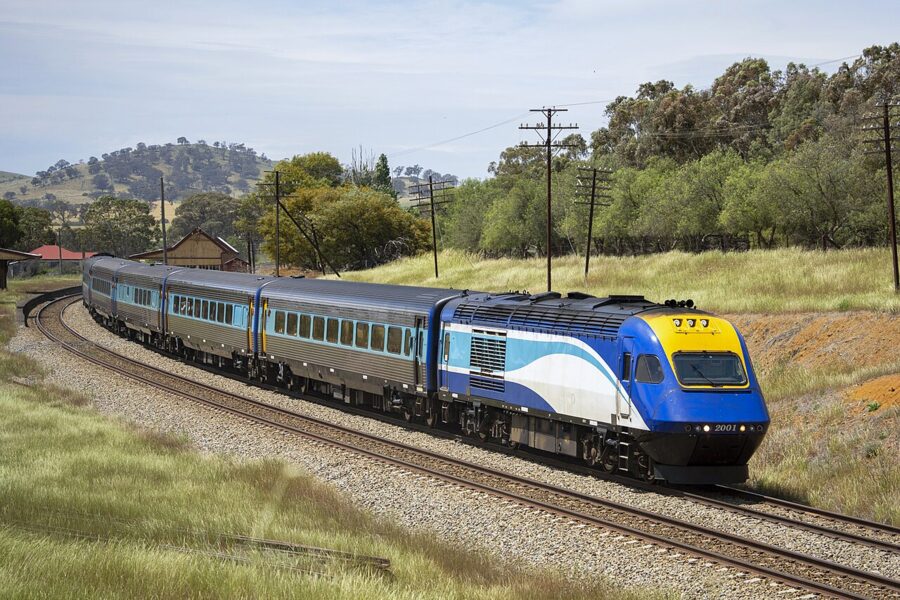
In New South Wales the long-distance trains belong to NSW TrainLink: the XPT from Sydney to Melbourne and to Brisbane, and Xplorer trains to country towns. Both fleets are decades old, and the new regional fleet meant to replace them by 2023 is still in testing.
The fares are the draw. Online Saver fares cut up to 35 percent off standard adult tickets on set dates into 2027, children ride for A$1 with an adult, and the Discovery Pass gives unlimited travel to more than 365 destinations. One warning: NSW TrainLink says industrial action on the national track network may disrupt trains from November 26 to December 3, 2026.
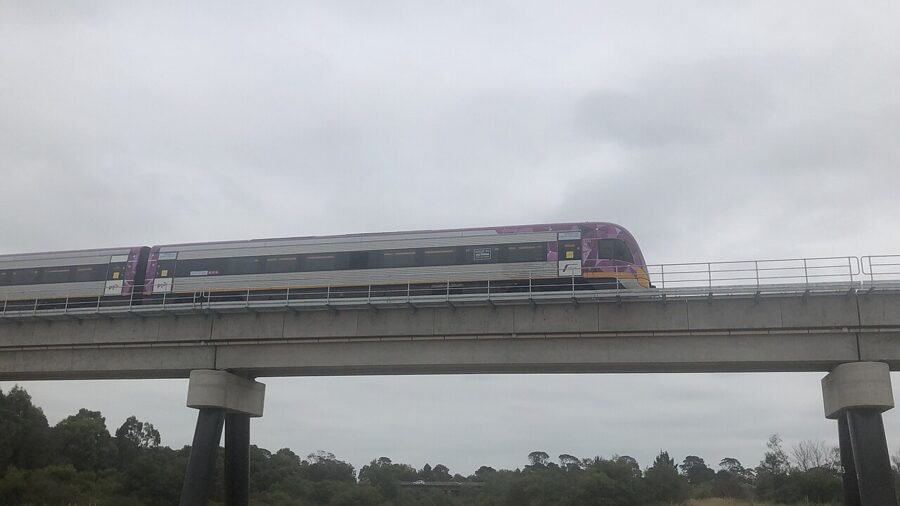
In Victoria, V/Line runs regional trains out of Melbourne to Geelong, Ballarat, Bendigo, Gippsland and beyond, mostly in modern VLocity railcars. Short trips use the same myki card as Melbourne’s trams, and regional fares have been capped at the price of a day’s travel in Melbourne since 2023, which makes a day out to Ballarat or Bendigo the cheapest train ride in Australia worth taking.
New Zealand: the TranzAlpine and the others
KiwiRail runs New Zealand’s three long-distance trains as Great Journeys New Zealand. None runs overnight; they are day trains with big windows, an open-air viewing carriage, a cafe, and a Scenic Plus upgrade with meals, local wine and a host. They are seating only, so book ahead, because a full train takes no walk-ons.
The TranzAlpine
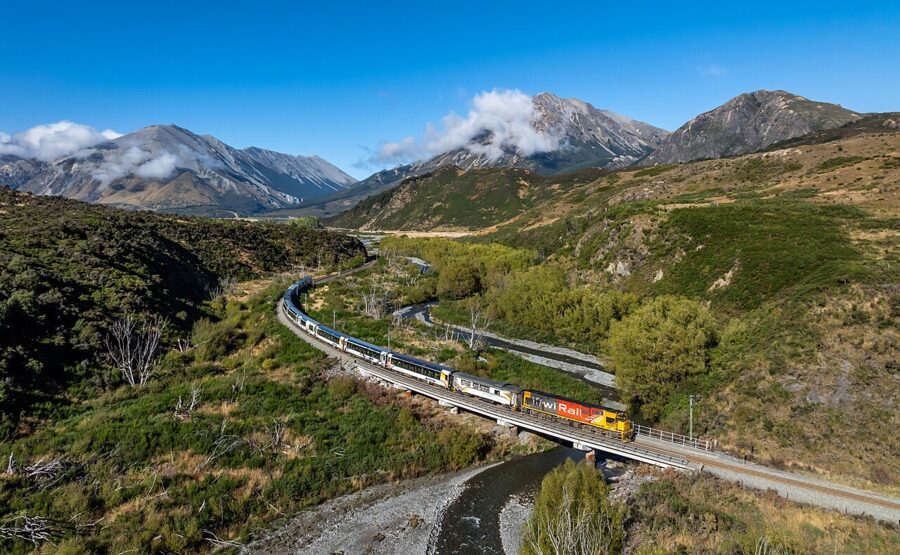
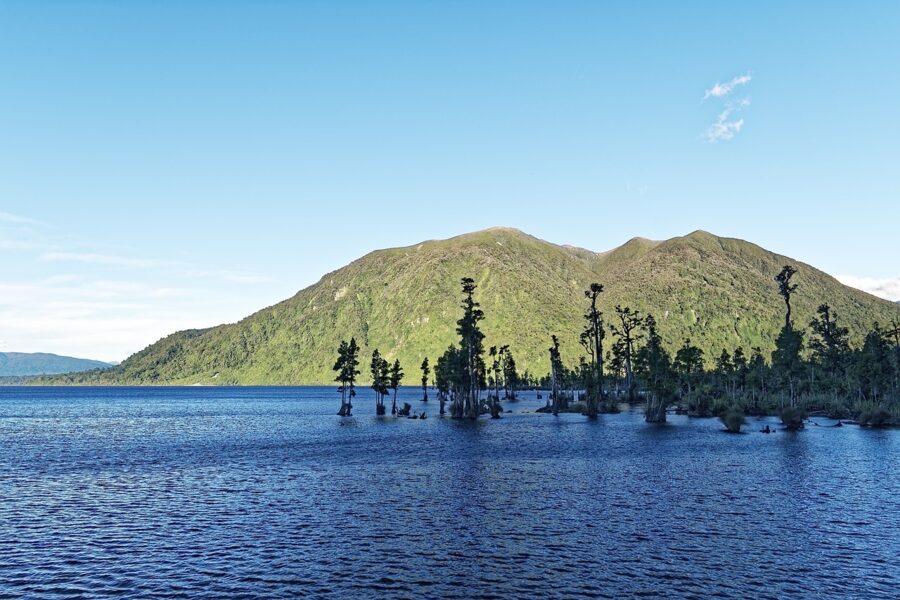
The TranzAlpine crosses the South Island daily between Christchurch and Greymouth, 139 miles (223 km). It leaves Christchurch at 8:15 a.m., crosses the Canterbury Plains to Springfield, then climbs the Waimakariri Gorge over viaducts and through short tunnels to Arthur’s Pass at 10:40. After the Otira Tunnel under the main divide it drops to the greener West Coast past Lake Brunner, reaching Greymouth at 1:10 p.m.
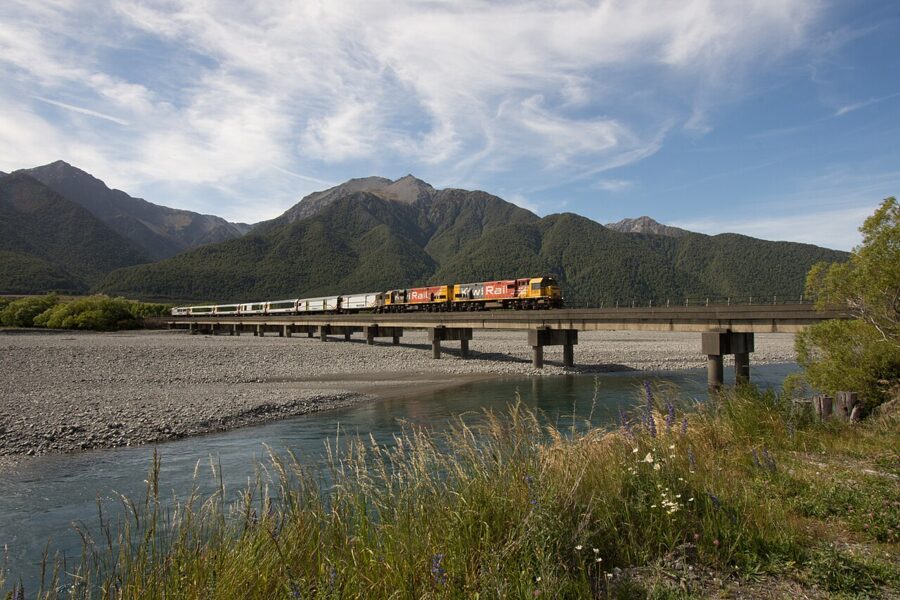
The train goes back the same afternoon, so it works as a day trip, though a night or two on the West Coast is better. Scenic fares start at NZ$249 (about US$135) one way and Scenic Plus at NZ$499, as of November 2026, and children 14 and under ride Scenic for NZ$50 with a paying adult under a limited-time offer. The best of it is between Springfield and Arthur’s Pass, where the Staircase Viaduct stands 240 feet (73 m) above the stream.
Two warnings. After a coal train derailed on November 3, 2026, the TranzAlpine is running only to Arthur’s Pass, with a bus on to Greymouth, until about November 30. In 2027 it will not run at Easter (March 26 to 29), May 22 to 28, September 25 to 28, Labour Weekend (October 23 to 26) or Christmas Day.
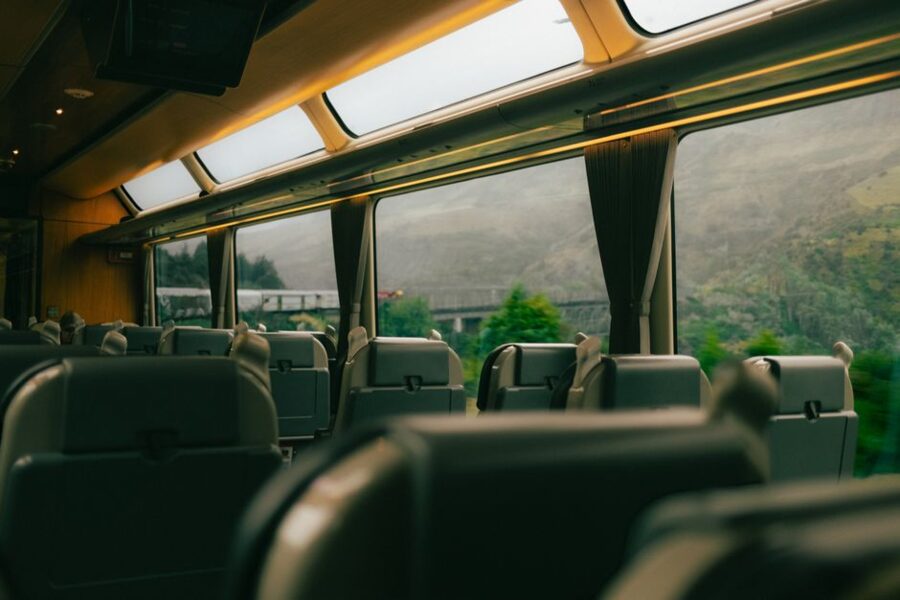
The Northern Explorer
The Northern Explorer runs between Auckland and Wellington in a day, three times a week each way. Southbound trains leave Auckland at 7:40 a.m. on Mondays, Thursdays and Saturdays and reach Wellington at 6:20 p.m.; northbound trains run on Wednesdays, Fridays and Sundays. Fares start at NZ$249 in Scenic and NZ$549 in Scenic Plus, and there are no trains from December 25, 2026, to January 11, 2027.
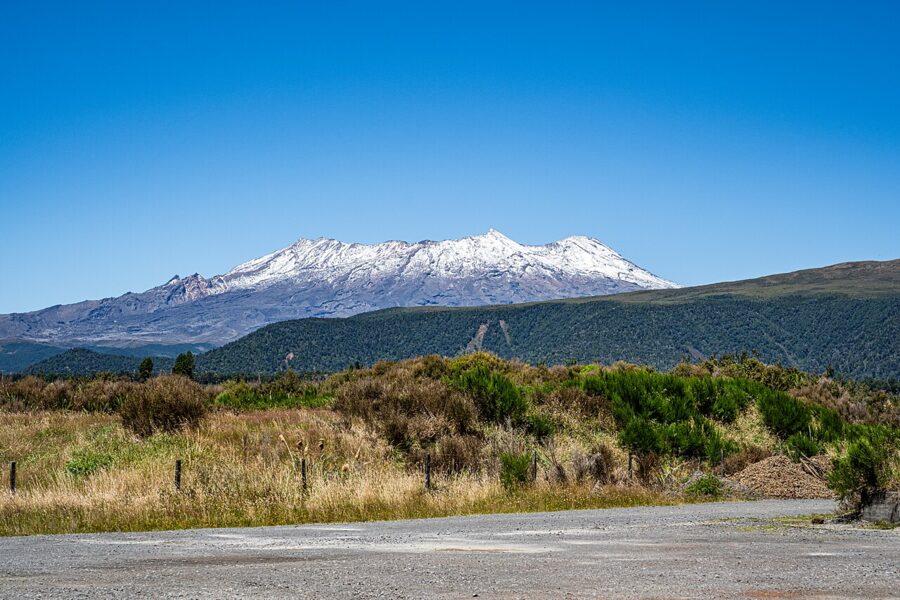
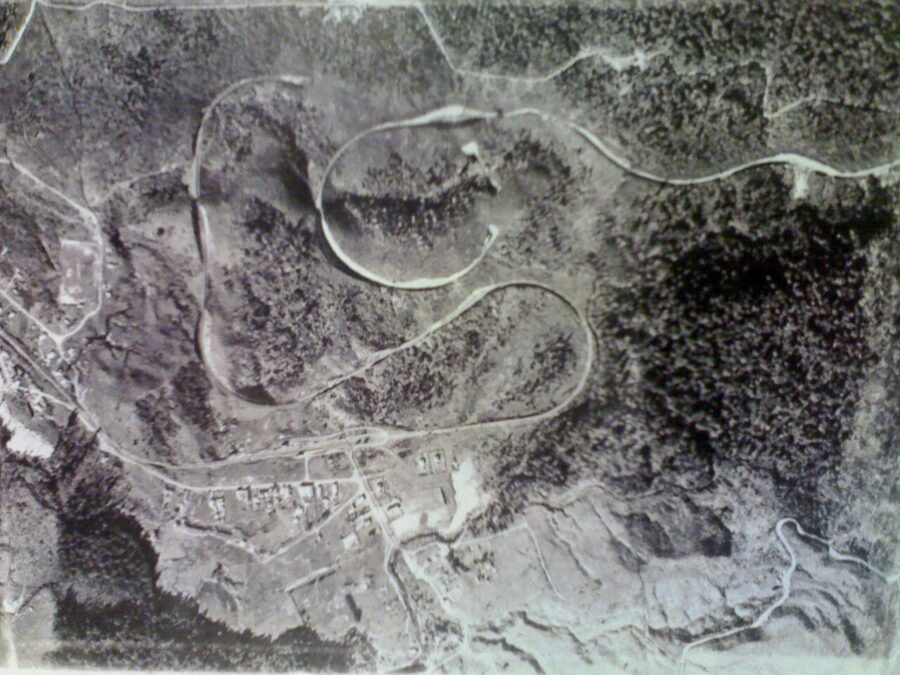
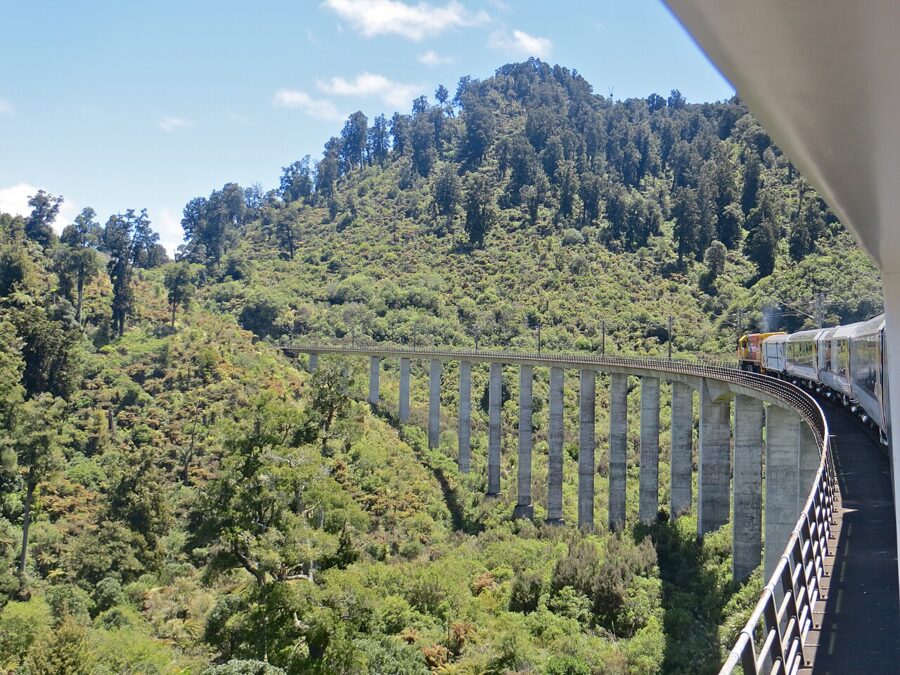
The middle of the day is the part to watch. After Taumarunui the line climbs the Raurimu Spiral, a horseshoe and loop that lifts it 456 feet (139 m) onto the volcanic plateau, then runs past National Park and Ohakune under Mount Ruapehu and across a string of tall viaducts.
The Coastal Pacific
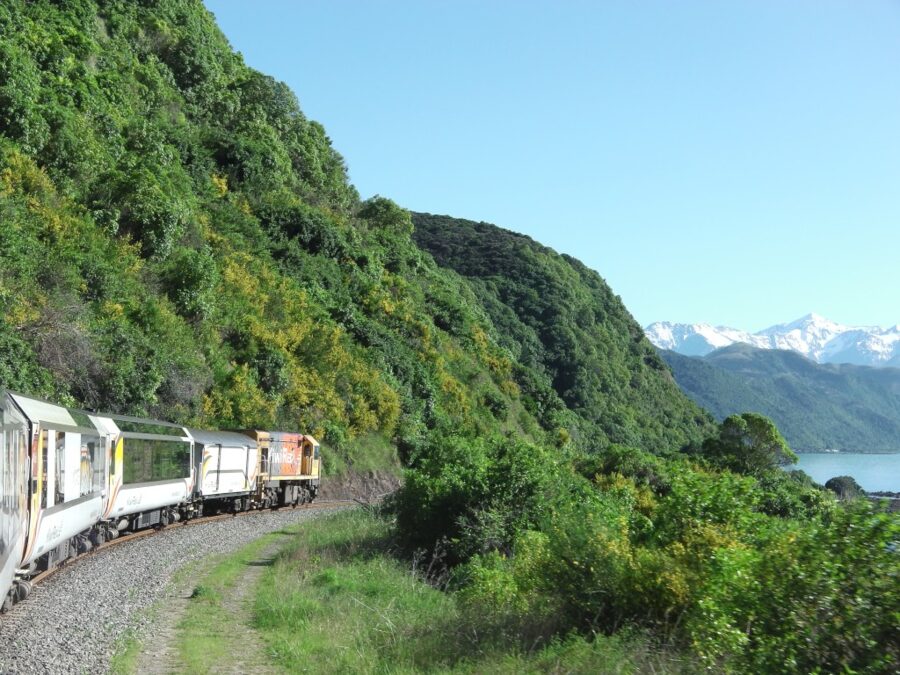
The Coastal Pacific runs daily between Christchurch and Picton from September 1 to April 30, and not at all in winter. It leaves Christchurch at 7:00 a.m., reaches Kaikoura at 10:00 a.m. after a run along the shore and through tunnels in the cliffs, and arrives in Picton at 12:40 p.m. The southbound train leaves Picton at 1:40 p.m., and fares start at NZ$259 in Scenic and NZ$519 in Scenic Plus.
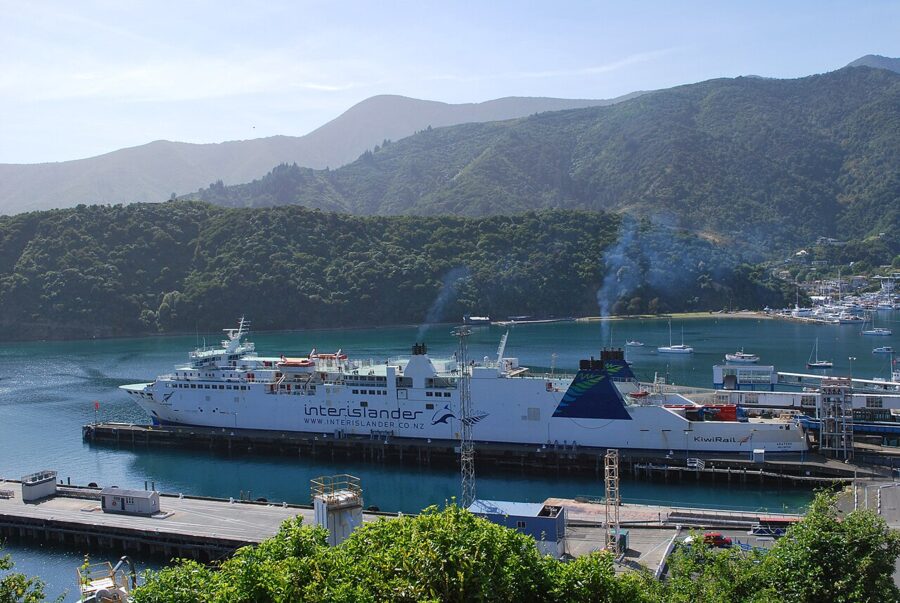
At Picton it meets KiwiRail’s Interislander ferry to Wellington, which makes the Coastal Pacific and the Northern Explorer two halves of one trip. Sit on the right going north for the sea.
Choosing between them
If you have one trip and the money, take The Ghan Expedition south between April and October. It has more variety than any other train here, tropics to opal fields, and the four days give the excursions room. From 2027 the four-day northbound trip is just as good, and a little cheaper.
If you want distance and emptiness, take the Indian Pacific west from Sydney to Perth, in June or July for the lowest fares. From December to February, The Ghan is off, the Great Southern runs its summer season, and the Indian Pacific runs as usual.
If the cruise-style fares are too much, the ordinary trains are good and cheap: the Spirit of Queensland to Cairns for the price of a hotel night, the Kuranda railway from there, and The Overland or V/Line around Melbourne.
In New Zealand, do the TranzAlpine if you do only one: a day in the Southern Alps for about the price of dinner for two. With more time, the Northern Explorer, the ferry and the Coastal Pacific take you from Auckland to Christchurch in two days between September and April, and the TranzAlpine finishes it on the third. It is the same idea as the great scenic lines of Europe: short rides through big country, by day.
Book the Australian trains early, especially for May to August, and the New Zealand ones for any summer weekend. Then, if you can, keep a morning on the Nullarbor clear of everything else: take the eastbound Indian Pacific out of Kalgoorlie with a window and nothing planned, and let the straight do the rest.