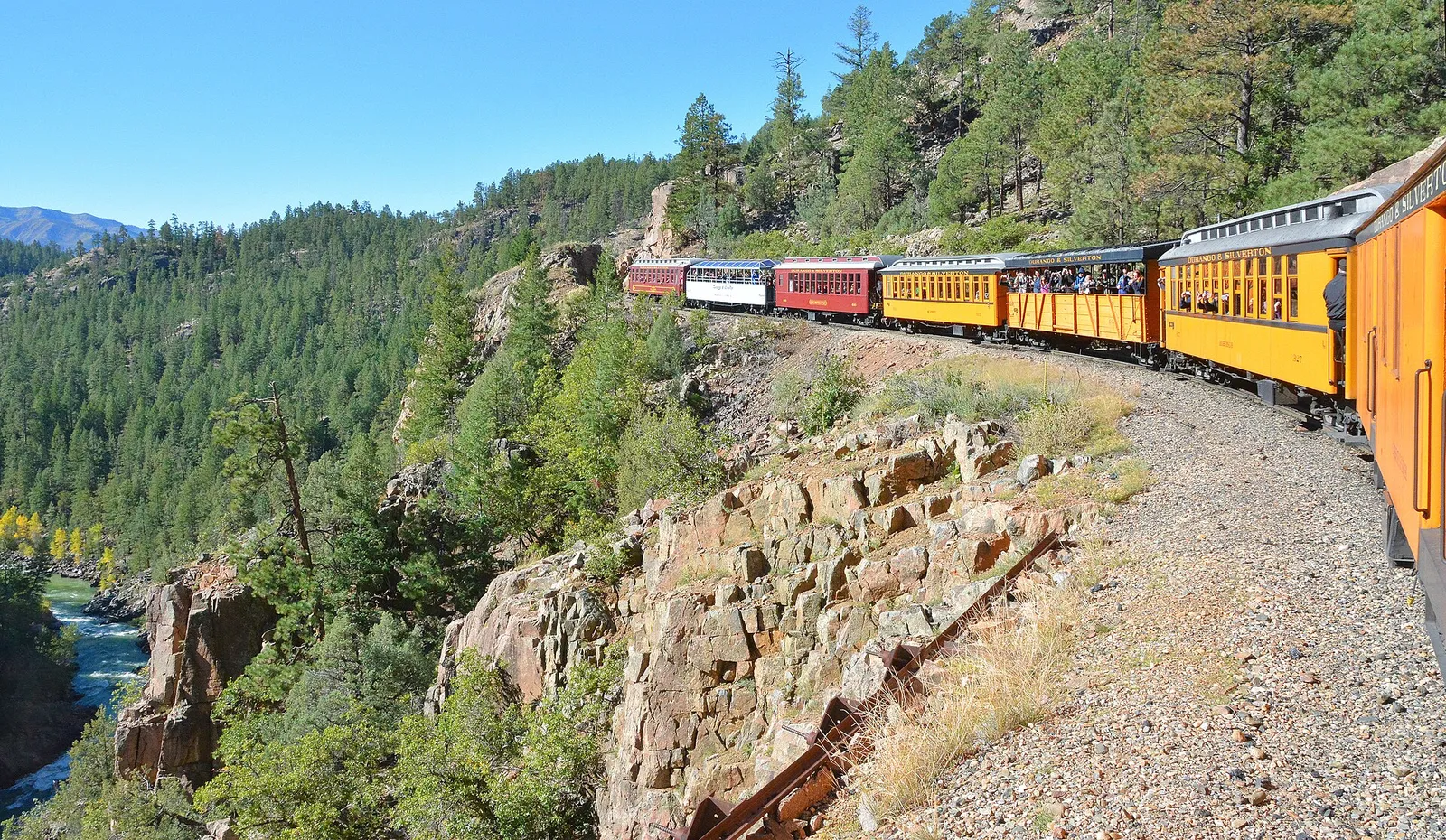
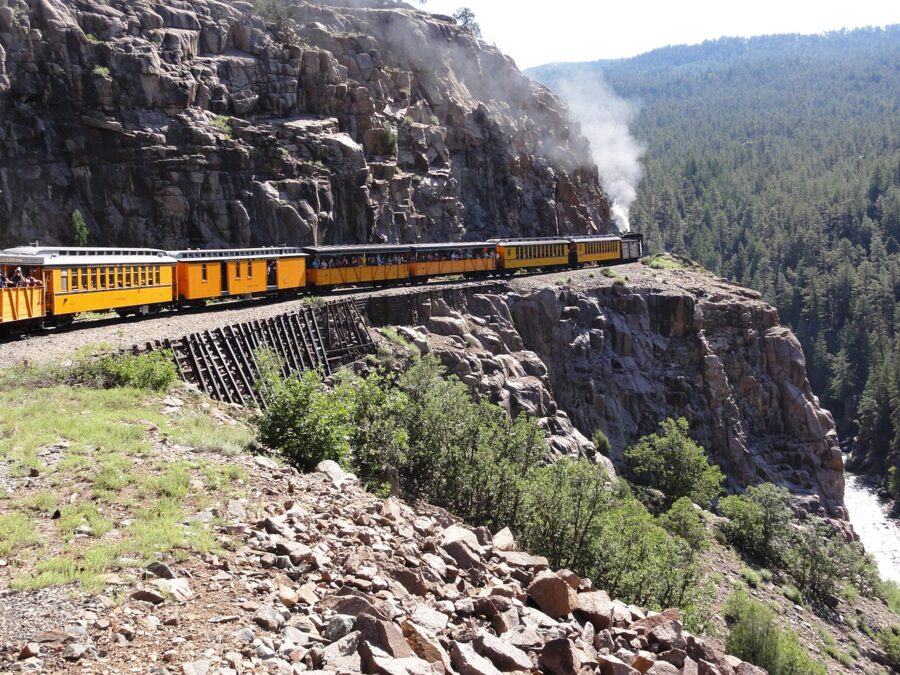
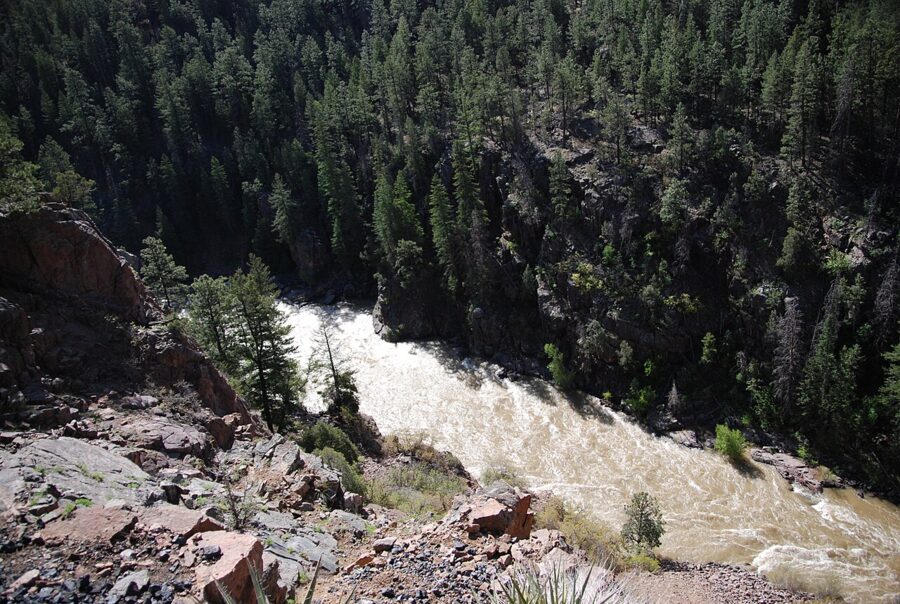
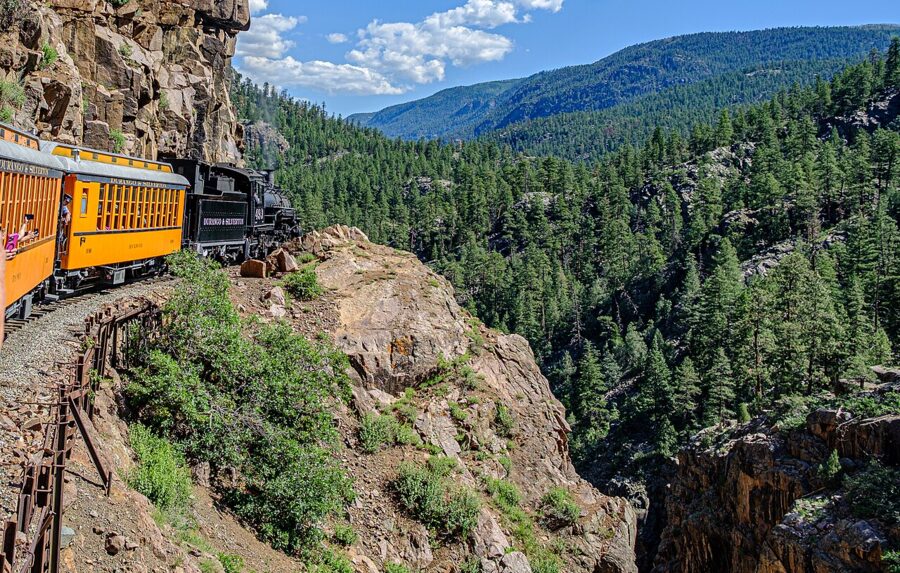
Eighteen miles out of Durango, the northbound train leaves the farms of the Animas Valley behind, squeezes through a cut blasted in solid rock at Rockwood, and comes out on a ledge. The track runs along a shelf hacked into a cliff, the Animas River is a pale ribbon hundreds of feet below, and the train eases along with nowhere to go but forward. This is the High Line, and it is the reason most people ride this train at all.
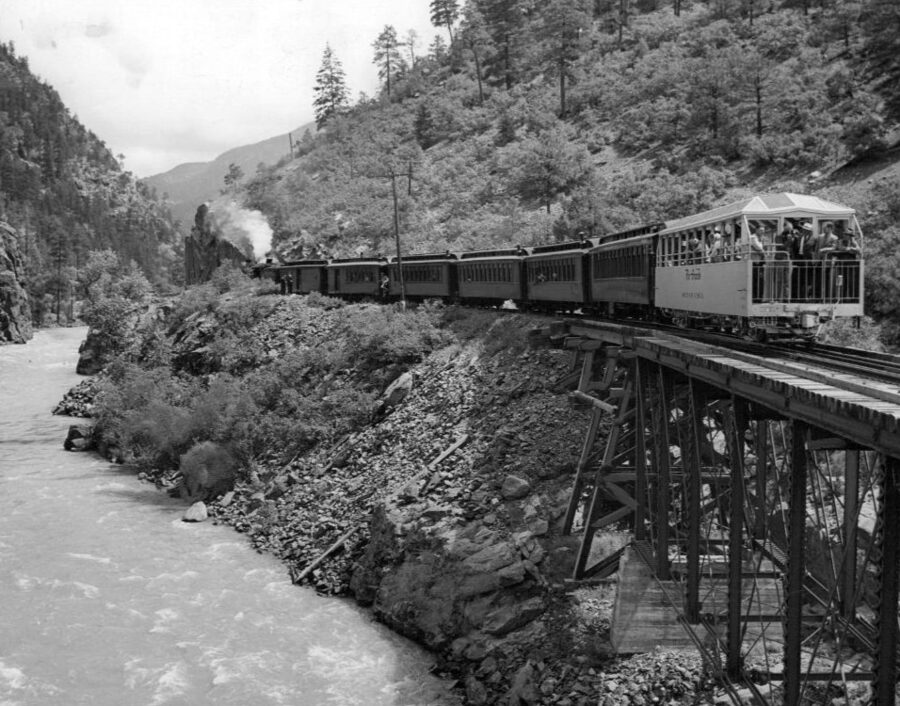
The ledge belongs to the Durango & Silverton Narrow Gauge Railroad, a 45-mile branch of the old Denver & Rio Grande that has carried trains between Durango and Silverton since July 1882. It was built to haul silver and gold ore out of the San Juan Mountains, and it still runs on rails three feet apart, mostly behind steam locomotives built in 1923 and 1925, at a top speed of 18 mph. North of Rockwood there is no road at all, only the river, the railroad and the Weminuche Wilderness.
Riding it means four decisions: which trip, which car, which side and which month. Get them wrong and you can spend nine hours facing the cliff wall, or reach Silverton with 30 minutes to see it.
Stops in this article13
- 01The trips: Silverton, the bus combinations and Cascade Canyon
- 02What it costs in 2026
- 03Which car
- 04Which side to sit
- 05The route, in order
- 06Two hours in Silverton
- 07Steam and diesel
- 08The museum and the yard
- 09Fire and flood: what 2018 and 2026 changed
- 10Off the train: Needleton and Elk Park
- 11Pairing it with the Cumbres & Toltec
- 12Durango as a base
- 13Booking and what goes wrong
The trips: Silverton, the bus combinations and Cascade Canyon
The railroad runs two seasons. From early May to the start of November, trains go all the way to Silverton, 45.4 miles (73 km) and nearly 3,000 feet higher than Durango. From late November to the end of April, snow closes the upper canyon, and the train turns at the Cascade Canyon wye, 26 miles up the line. The 2027 summer timetable was not yet published in late November 2026, so the times and fares below are the 2026 ones, the best guide to next year.
The full Silverton round trip
The classic day is train both ways: 3½ hours up, about two hours in Silverton, 3½ hours back. The Scenic Round Trip Silverton Train ran daily at 9:00 a.m. from May 2 to November 1, 2026, reaching Silverton at 12:30 p.m., leaving at 2:45 p.m. and getting back to Durango at 6:15 p.m. In the busier months there were extra departures at 8:15 a.m. (May 19 to October 17) and 9:45 a.m. (June 8 to August 9 and September 7 to October 11).
It is a long day, and I think it is worth it once: the return puts you on the other side of the canyon in afternoon light. With young children, or doubts about nine hours on a bench, take one of the combinations below.
Train one way, motorcoach the other
The railroad’s Skyway Tour pairs one leg on the train with one leg on its own motorcoach over U.S. 550, the San Juan Skyway, which crosses two passes above 10,000 feet. In 2026 you could ride the 8:15, 9:00 or 9:45 a.m. train up and be back by bus at 4:15 or 4:45 p.m., or take a 9:30 a.m., 10:15 a.m. or noon bus up and catch the 2:00, 2:45 or 3:15 p.m. train down. The road is a mountain highway with long drops in places, but the stretch with the fearsome reputation runs north of Silverton toward Ouray, not this part.
The bus is added to the train fare, and the morning buses were listed at $10 as of 2026. One page of the railroad’s site also quotes $32 for afternoon bus service, so look at the total before you pay. The tightest version is The Silverton Express: the noon bus up, the 2:00 p.m. steam train down, back in Durango at 5:30 p.m. It gives you all of the canyon and only half an hour in Silverton, which is enough for a walk to Blair Street and not much else.
I would take the train up in the morning and the bus back: you arrive in Silverton with the steam engine, and the afternoon is shorter. Bus-up trips suit a free morning in Durango.
The Cascade Canyon winter train
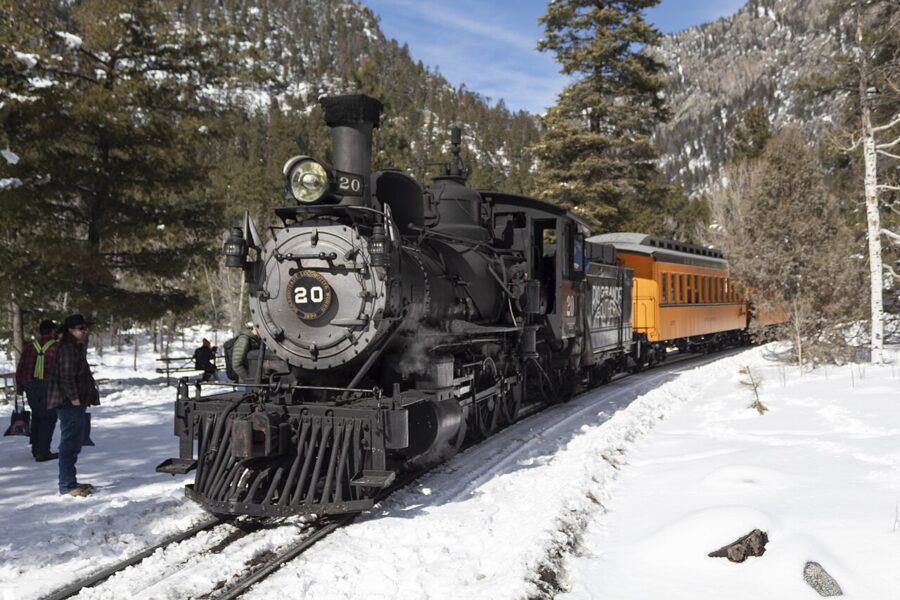
From November 20, 2026, to April 30, 2027, the Cascade Canyon Winter Train leaves Durango once a day at 9:15 a.m., runs 26 miles up the river, spends an hour at Cascade Canyon and is back at 2:30 p.m. It does not run every day: the winter calendar is set date by date, with gaps in December, January and February and near-daily trains in March and April. The coaches are heated, there is a fire at Cascade, and boxed lunches must be ordered a day ahead.
It is a good trip, and the snow on the canyon walls is something the summer riders never see. Since Rockwood is 18 miles up and Cascade is 26, the winter train still crosses the High Line. What it misses is the upper canyon and Silverton itself.
| Trip (as of 2026) | Season | Leaves Durango | Back in Durango | Adult coach fare, all-in |
|---|---|---|---|---|
| Silverton round trip, train both ways | May 2–Nov 1, 2026 | 9:00 a.m. (also 8:15 or 9:45 a.m. on some dates) | 6:15 p.m. on the 9:00 a.m. train | $118 |
| Skyway Tour, train up, bus back | May 19–Oct 11, 2026 | 8:15, 9:00 or 9:45 a.m. | 4:15 or 4:45 p.m. | $118 plus bus |
| Skyway Tour, bus up, train back | May 19–Oct 11, 2026 | 9:30 or 10:15 a.m., or noon | 5:30, 6:15 or 6:45 p.m. | $118 plus bus |
| The Silverton Express | Summer and early fall 2026 | Noon (bus) | 5:30 p.m. | $128 including the bus |
| Cascade Canyon Winter Train | Select dates, Nov 20, 2026–Apr 30, 2027 | 9:15 a.m. | 2:30 p.m. | $97 |
What it costs in 2026
Every fare includes the railroad’s 8% Historic Preservation Fee. The railroad now prints its prices “all-in,” so the figure you see on the fare page is what you pay, before parking. Child fares are for ages 4 to 11; under-4s ride free on a lap. A one-way ticket costs the same as a round trip, which matters if you plan to stay the night in Silverton.
| Car, Silverton train (2026) | Adult | Child 4–11 |
|---|---|---|
| Standard coach (steam) | $118 | $108 |
| Standard coach (diesel 8:15 a.m., June 8–August 9) | $110 | $100 |
| Standard open gondola | $129 | $119 |
| Deluxe: San Juan coach | $161 | $161 |
| First Class: Prospector or Red Mountain | $226 | $226 |
| First Class: Silver Vista or Knight Sky (glass roof) | $233 | $233 |
| First Class: Yankee Girl (21+) | $226 | Adults only |
| First Class: Alamosa parlor car (21+) | $259 | Adults only |
| Presidential: Cinco Animas (21+) | $313 | Adults only |
Winter is cheaper. On the 2026–27 Cascade Canyon train, standard coach is $97 for adults and $87 for children, the San Juan is $134 (through January 3), the First Class cars run $172 to $199, and the Cinco Animas is $215 (through January 3), all round trip and all-in as of 2026. Parking at the railroad’s lot at 209 W. College Drive was $10 a day for a car, and you can buy it with your tickets.
Which car
The railroad sells four classes, but the real choice is between an enclosed coach, an open car, or a premium car with an attendant. Not every car runs on every train, so check the classes of service page for your departure.
Standard: coach or gondola
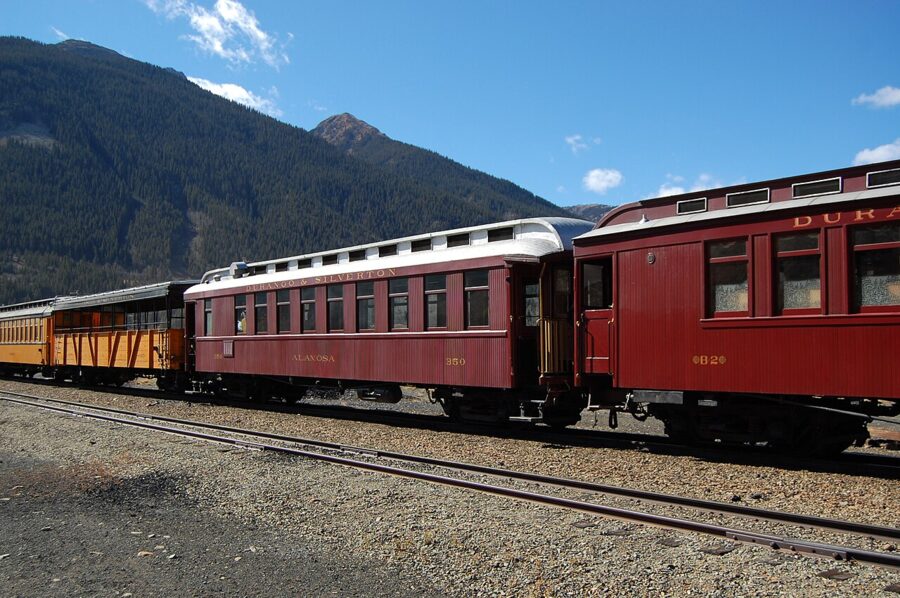
Standard coaches are vintage enclosed cars with forward-facing padded seats and windows that open as far as you like. The railroad says the seat is as wide as an economy airline seat; extra-space seating costs more. Each coach has a restroom, and in winter the cars are heated.
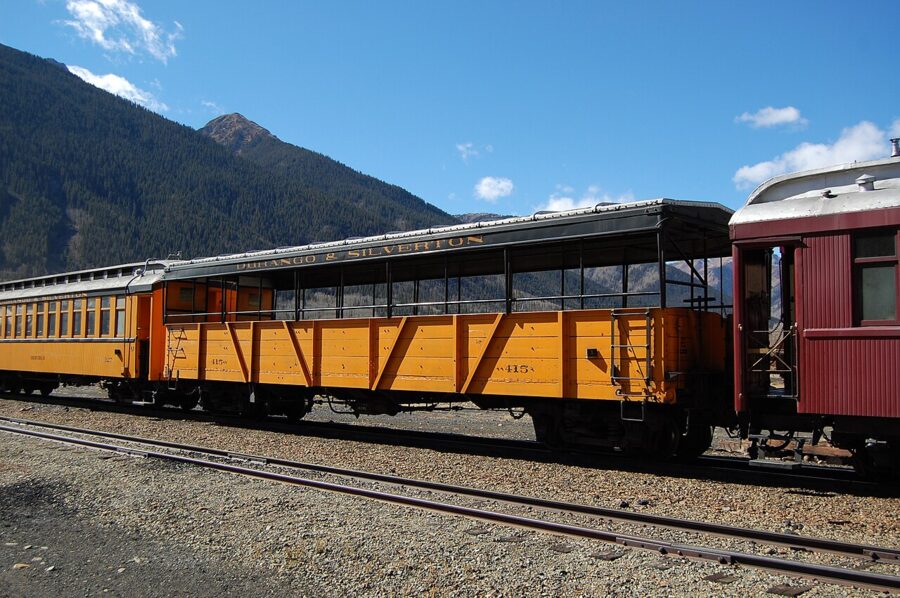
The open gondolas have a roof, open sides and seats that face outward, so you watch the canyon instead of the seat back in front of you. For $11 more than coach as of 2026, I think the gondola is the best value on the railroad in summer. Bring a jacket even in July, wear sunglasses against grit from the locomotive, and book the side you want, because your seat faces only one way. Many riders spend the High Line on their feet anyway.
Deluxe: the San Juan
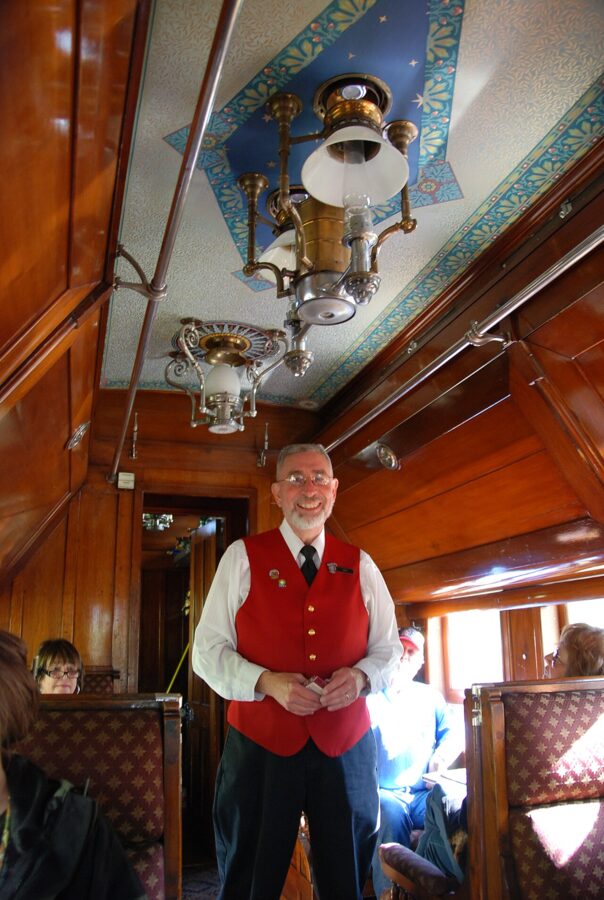
The Deluxe class is a single car, the San Juan, an enclosed coach built in 1887 and refitted with wide, overstuffed seats three across. At $161 for adults and children alike as of 2026, it suits families who want more room than coach without the adults-only rules of some First Class cars.
First Class and Presidential
First Class and Presidential cars come with an attendant, unlimited non-alcoholic drinks, a morning pastry, a souvenir mug and a tote bag per couple. The Prospector and Red Mountain have table-and-chair seating and take all ages. The Silver Vista and the Knight Sky have glass roofs; the Knight Sky was built in Durango and entered service in May 2012, and it has the biggest open platform on the train. The Yankee Girl, rebuilt from an 1880 car and named after a mine north of Silverton, is for 21 and over.
Two cars stand apart. The Alamosa, built in 1881, is a parlor car for 24 passengers with its own outdoor platform. The Cinco Animas is the presidential car at the back of the train: Pullman-style berth seating, an observation parlor and a private rear platform, for 21 and over, sold in pairs at $313 a seat as of 2026.
One catch the fare page does not spell out. In summer 2026 the Cinco Animas and the Knight Sky ran on the 8:15 a.m. train, and between June 8 and August 9 that train was pulled by a diesel. If steam is part of what you are paying for, book those cars in May, late August or September.
Which side to sit
On the way up to Silverton, sit on the right. The High Line drop is on the right side of a northbound train. On the way back, the same views are on the left, which is why the round trip is a better deal than it looks: you see the canyon twice, once from each side.
The river crosses under the track at several bridges, so neither side wins all day, but the High Line is the stretch everyone remembers. In a gondola, where seats face outward, picking the wrong side means looking at rock for the best stretch of the trip.
The route, in order
The first stretch is farmland, as the train runs north up the Animas Valley past Hermosa. The mileposts start at 451.5 in Durango and end at 496.9 in Silverton, because they still count the distance from Denver on the old Rio Grande.
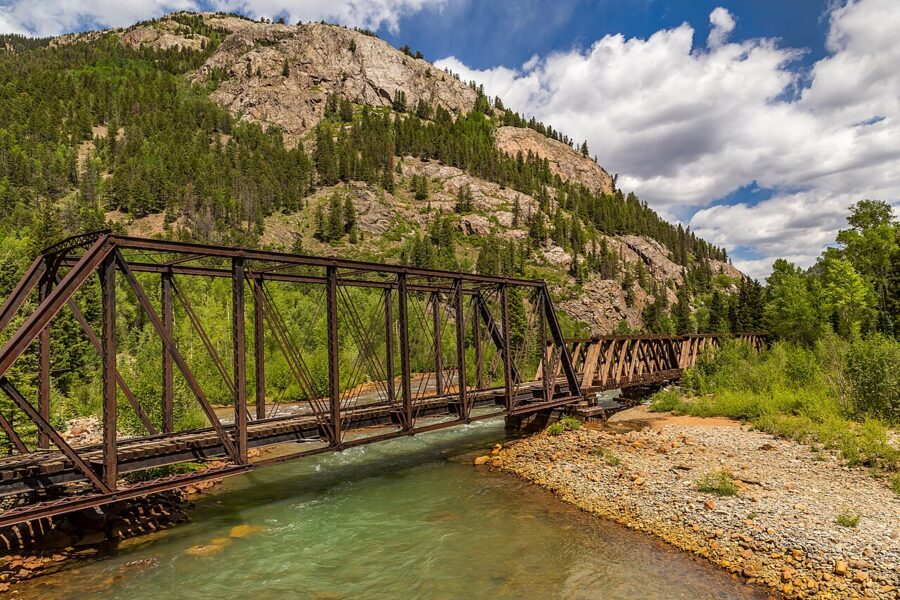
Rockwood is the last place the train meets a road. Beyond the rock cut comes the High Line, then the High Bridge across the Animas, and from there the train climbs the narrow canyon past the Cascade Canyon wye where winter trains turn. Needleton and Elk Park are flag stops for hikers. The last few miles open out into Bakers Park, and the train rolls up the middle of Silverton.
Two hours in Silverton
Silverton sits at 9,305 feet, which makes it about 10 degrees cooler than Durango, and the air is thin enough that walking uphill tells you so. The town was laid out in 1874, and when the railroad arrived in 1882 it was the center of a district of mining camps. By 1883 it had about 2,000 people and dozens of saloons. The whole town is now a National Historic Landmark, and the train unloads close to Blair Street, the old red-light district.
Two hours goes fast. Eat first, then walk: Blair Street, then Greene Street with the city hall and the county courthouse. Stay within a few blocks of the train and keep an eye on the time; the train leaves on schedule. If you want more, the railroad’s overnight package with the restored 1883 Grand Imperial Hotel on Greene Street ran from May 2 to October 30, 2026.
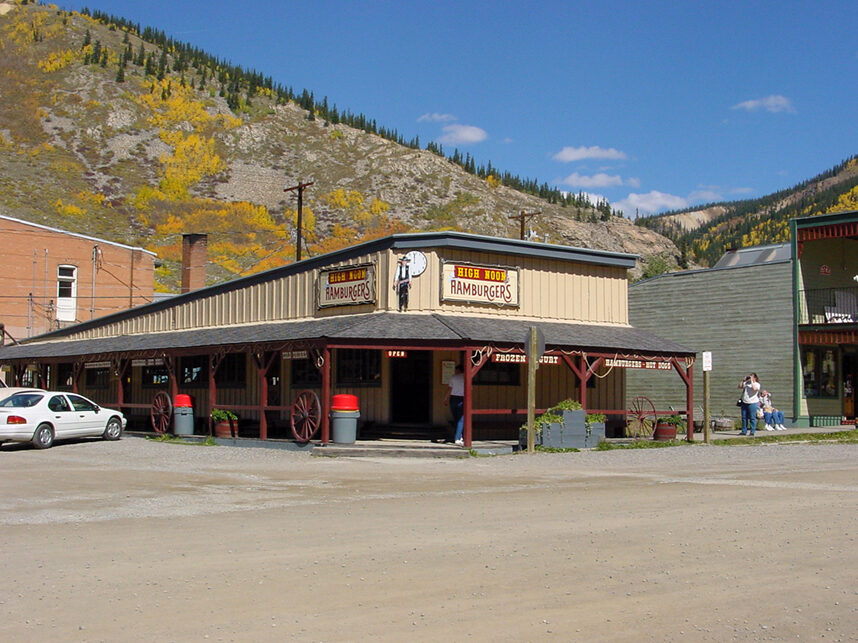
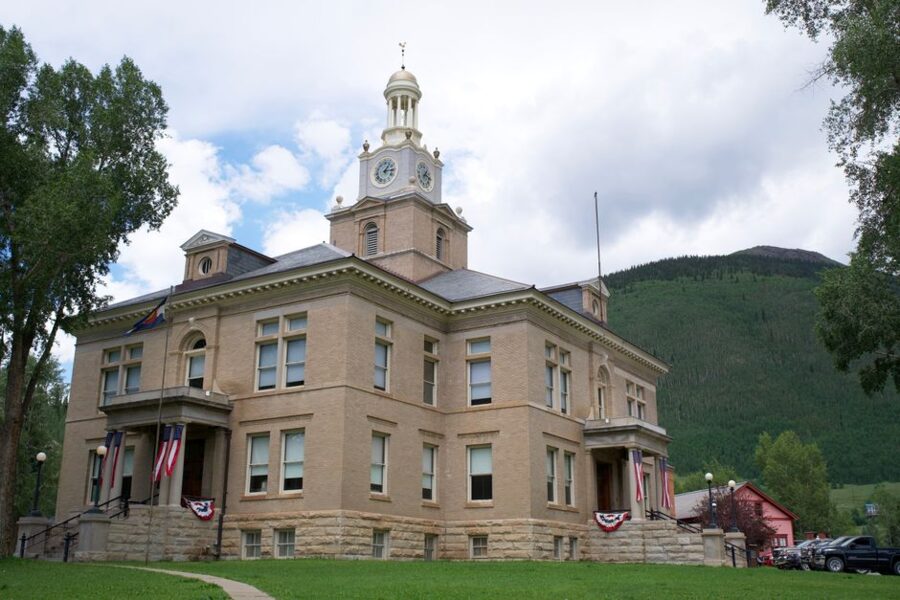
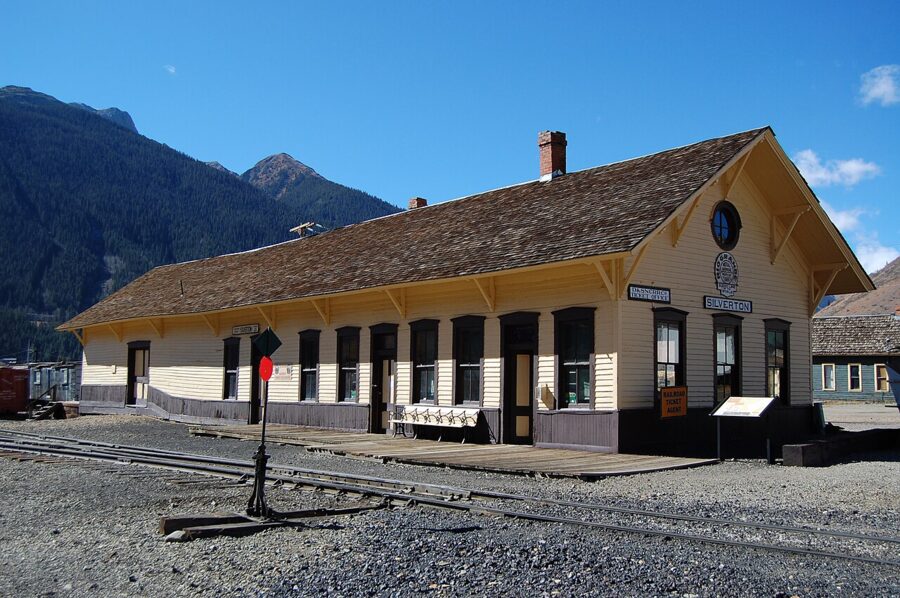
For lodging and the rest of the town, start with the Silverton visitor site.
Steam and diesel
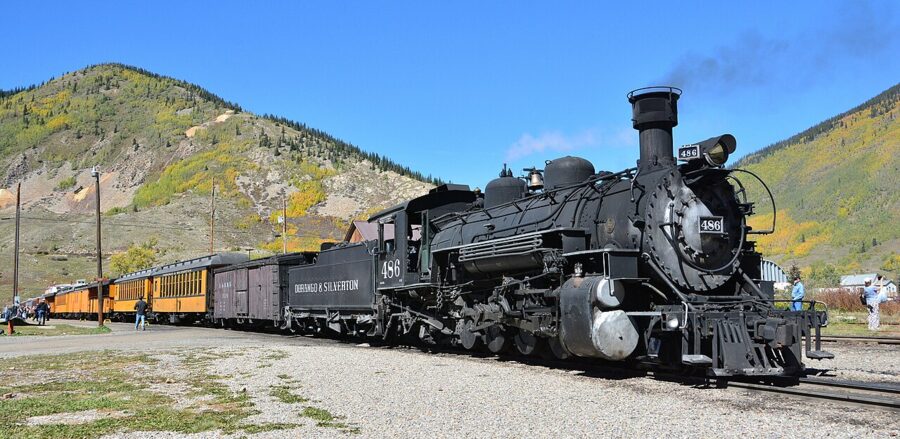
The steam fleet is the line’s own. The railroad’s three K-28s (Nos. 473, 476 and 478) date from 1923 and its four K-36s (Nos. 480, 481, 482 and 486) from 1925, and all of them came to Durango from the Denver & Rio Grande Western. The restored K-37 No. 493 has run on the line too. For most of the line’s life they burned coal; as of 2024, according to the railroad, every one of its steam locomotives burns oil.
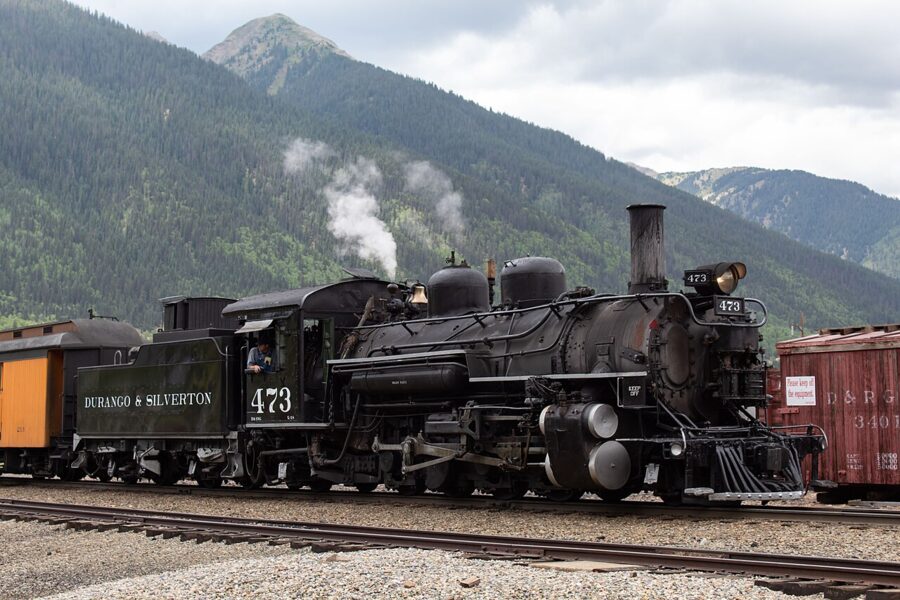
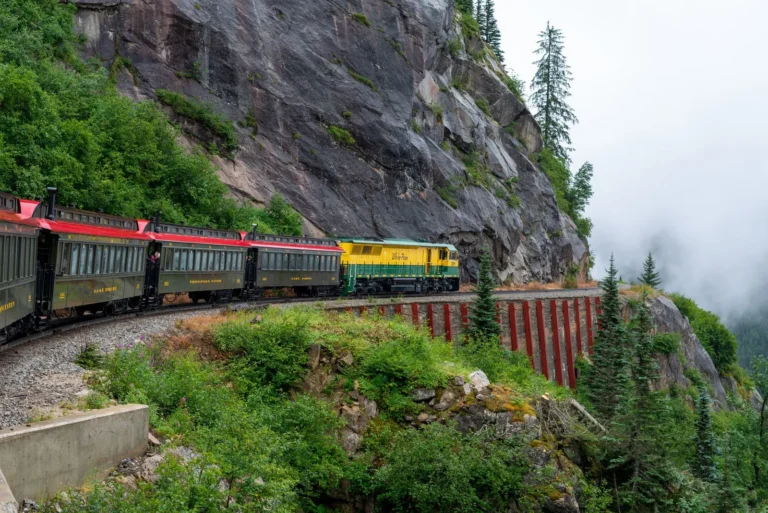
There are diesels too. In 2020 the railroad bought four Alco road diesels from the White Pass & Yukon in Skagway, built between 1969 and 1972, because none of its older diesels was designed for the run to Silverton; the new ones can take a bigger train up the grade. In 2026 one of them pulled the 8:15 a.m. train from June 8 to August 9, at $8 less than steam in coach. If you want the whistle echoing off the canyon walls, book the 9:00.
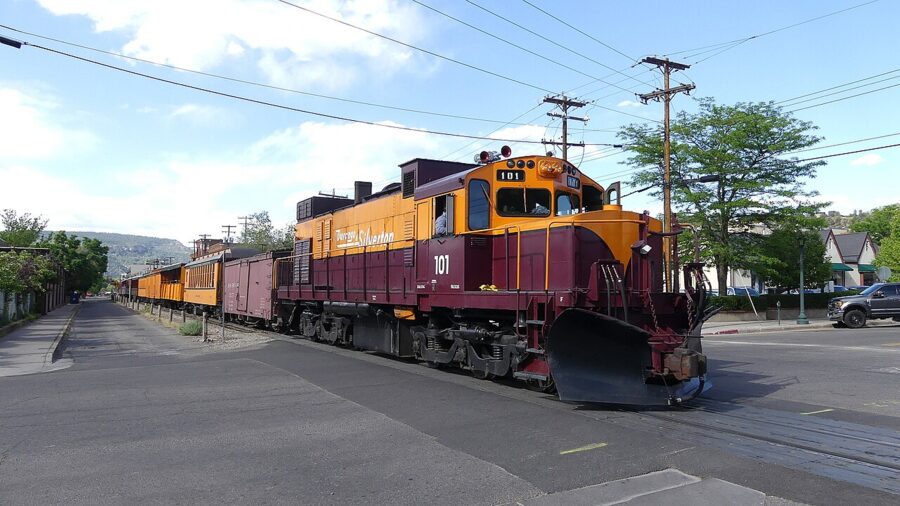
For people who want more than a seat, the railroad sells locomotive cab and motor car rides by phone only. A cab ride to Silverton was $1,100 and a one-way motor car ride $550 as of 2026, or $1,566 for both; riders must be 18 or over.
The museum and the yard
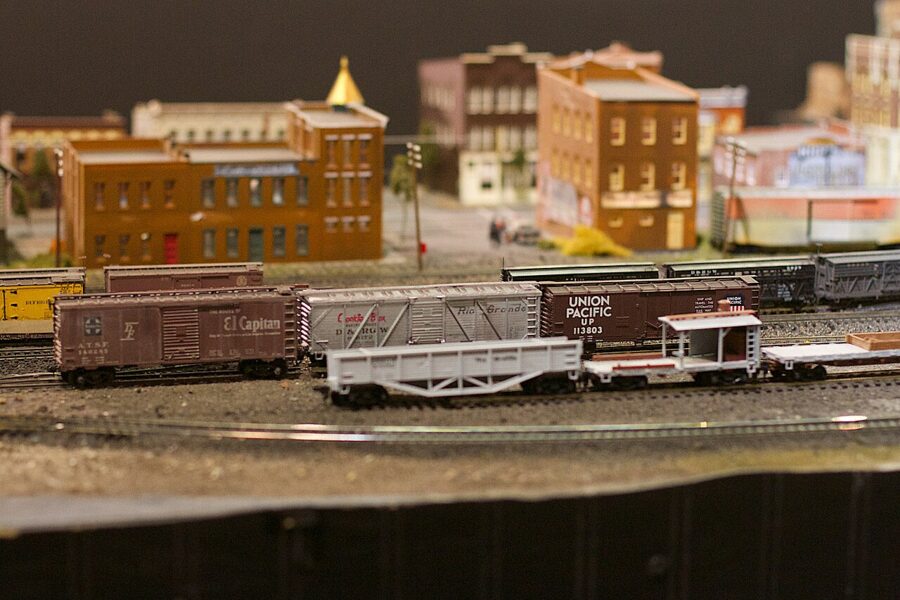
The D&SNG Museum fills eight stalls of the Durango roundhouse, built in 1989, and it is free. It opens 10:00 a.m. to 4:00 p.m. every day the train runs and Wednesday through Sunday otherwise, and it closes on Thanksgiving and Christmas Day. Inside are D&RGW artifacts, an HO model railroad, a car used in filming Butch Cassidy and the Sundance Kid, and No. 42, an 1887 locomotive.
In summer the railroad also runs yard tours through the shops, the roundhouse and the car shop, at 10:00 a.m., noon and 2:00 p.m. from May to October. They cost $20 for ages 12 and up and $12 for ages 6 to 11 as of 2026, take about an hour and a half on foot over rough ground, and require closed-toe shoes.
Fire and flood: what 2018 and 2026 changed
On June 1, 2018, the 416 Fire started north of Durango and burned more than 54,000 acres of the San Juan National Forest. The railroad shut down for weeks. That July, a thunderstorm sent debris off the burned slopes and washed out track between Hermosa and Rockwood, and full service did not resume until September 21.
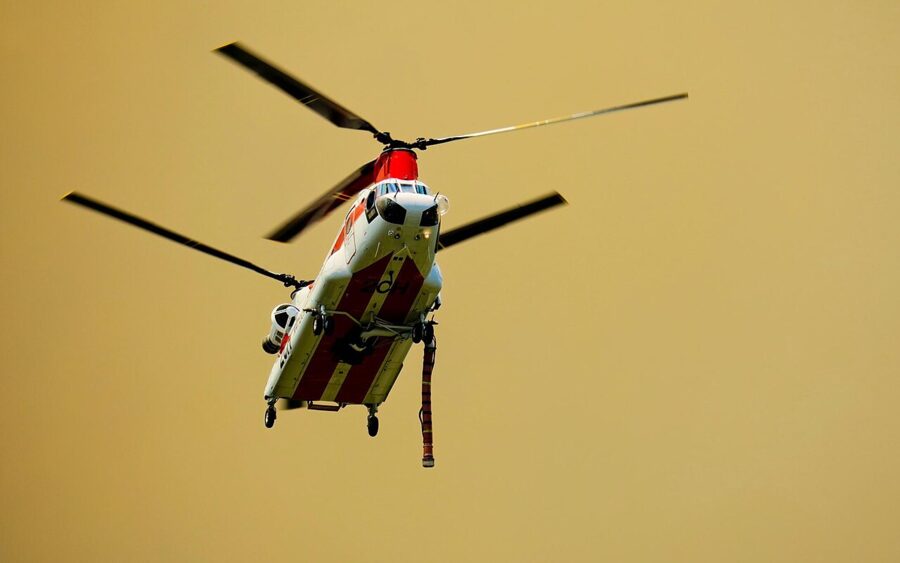
In 2022 the railroad and its parent, American Heritage Railways, agreed to pay the United States $20 million over the fire and to stop running coal-burning locomotives during periods of high fire risk; the railroad denied that it caused the fire. The fire and the settlement explain what you ride now: oil-fired steam, diesel trains in high summer, and a full-time fire management officer.
Water is the newer worry. In October 2025, record rain damaged the track, and trains turned at Cascade Canyon until full trips to Silverton resumed on October 18. A year later it happened again, worse. Two rounds of flooding in late October and early November 2026 hit the lower valley from Hermosa south, and about 300 feet of roadbed north of the Hermosa Creek bridge washed away, leaving the rails twisted and unsupported.
The upper canyon largely escaped, and crews rebuilt the line for the winter season to open on schedule on November 20. Two years running, the last weeks of the Silverton season were the weeks the river came up. Late October can still be lovely, but check the railroad’s travel update page the week before, and remember there is no refund inside five days.
Off the train: Needleton and Elk Park
Few trains in the country will drop you in a wilderness; the Alaska Railroad is the other famous one. From May 19 to October 17, 2026, the 8:15 a.m. train stopped at Needleton, the trailhead for Chicago Basin, and at Elk Park, where the Colorado Trail meets the railroad; the 9:45 a.m. train served them from September 8 to October 11. The 9:00 a.m. train makes no wilderness stops.
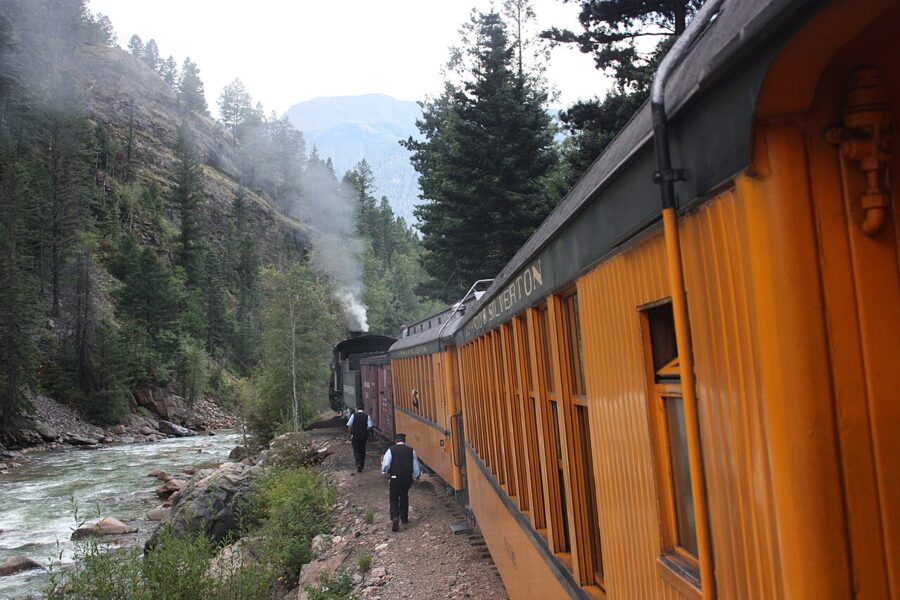
Wilderness tickets are sold by phone only, Needleton is capped at 40 people a day, and southbound pickups are only at Elk Park. Each backpack is $25 as freight, and as of 2026 a flag-stop fare bought from the conductor was $35, exact fare only. The Forest Service’s Weminuche Wilderness page covers permits, camping rules and maps; the railroad’s wilderness access page covers the train.
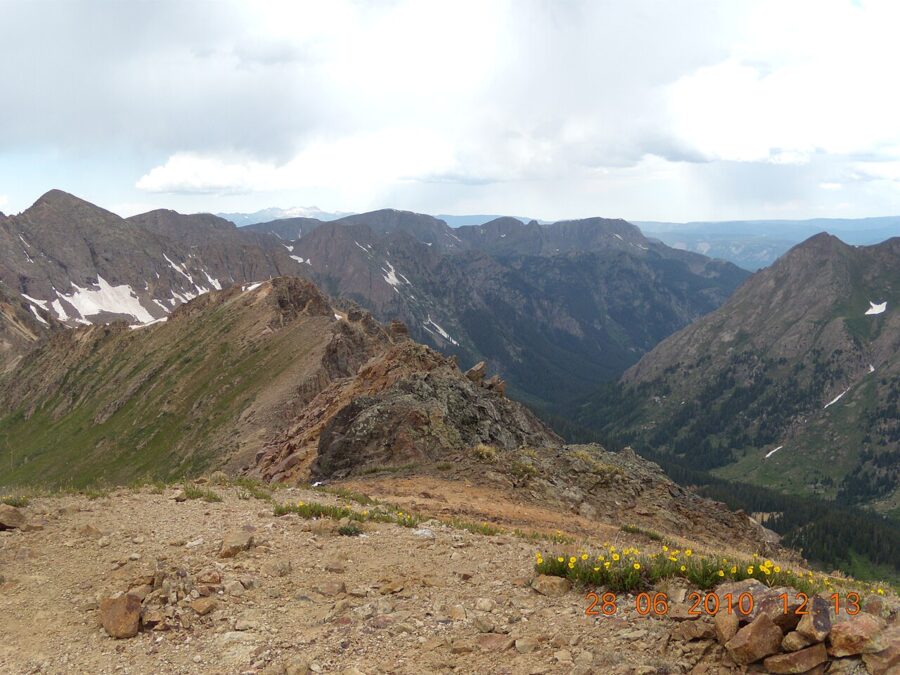
Pairing it with the Cumbres & Toltec
The Durango line has one surviving sibling. The Cumbres & Toltec Scenic Railroad runs 64 miles of the same Rio Grande narrow gauge between Chama, New Mexico, and Antonito, Colorado, and the two states have owned it together since 1970. Chama is about 109 miles from Durango, roughly two and a half hours by car.
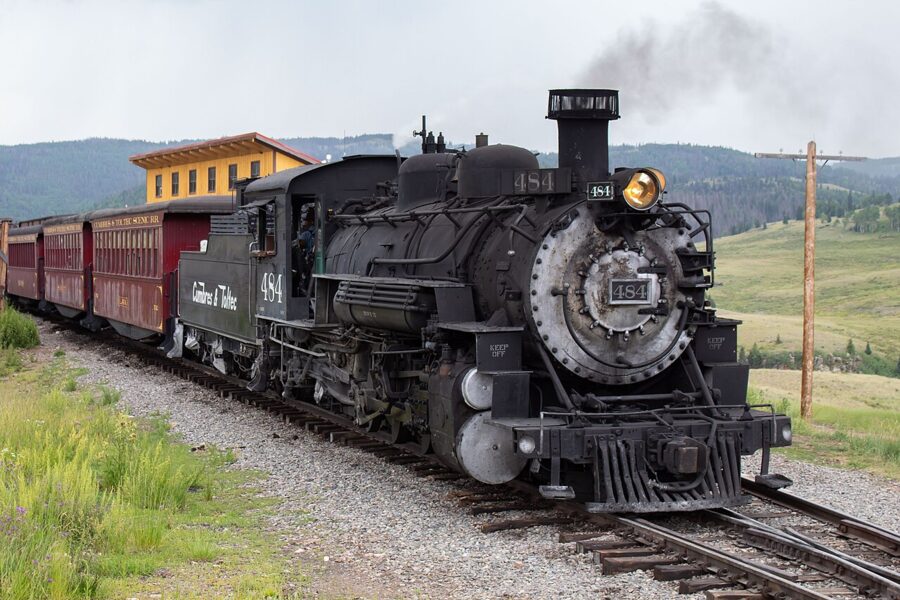
The two rides differ enough to do both. Durango’s is a canyon trip with a town at the end. The Cumbres & Toltec is a mountain-pass trip: it climbs a 4% grade out of Chama to Cumbres Pass at 10,015 feet, crosses the state line 11 times, runs along the 800-foot drop of Toltec Gorge and over the 137-foot Cascade Trestle, and stops for a buffet lunch at Osier that is included in most tickets. The whole line takes about seven hours, with a motorcoach back in under an hour.
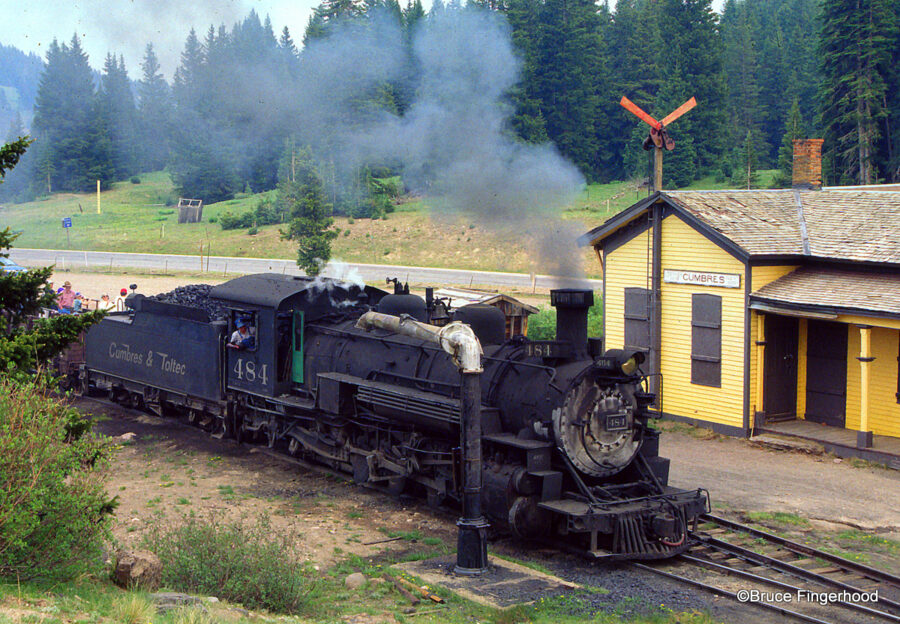
Its 2027 season runs May 29 to October 17, and tickets were already on sale in November 2026. Its 2027 fares were not yet posted, so check the class of service page before you plan around them; there are four classes, from coach to an adults-only parlor observation car. A good plan is two nights in Durango, then a drive to Chama. Both belong on any list of the best tourist train rides in the country.
Durango as a base
Durango has its own airport, Durango-La Plata County (DRO), about 12 miles from downtown; the closest international airport is Albuquerque, about three and a half hours’ drive. Denver is about 340 miles away by road. Amtrak does not come here: the nearest trains are the California Zephyr through Grand Junction and the Southwest Chief across northern New Mexico, each several hours’ drive away.
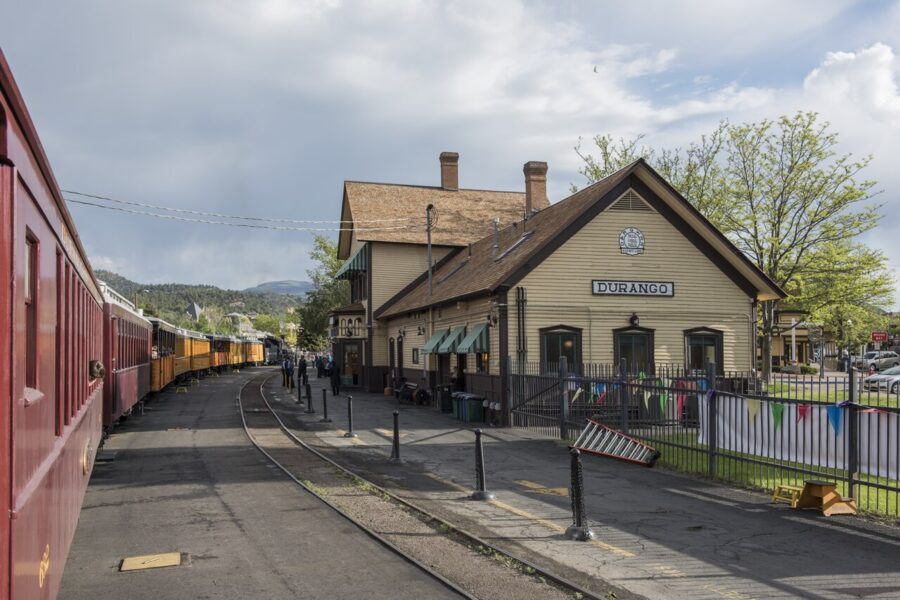
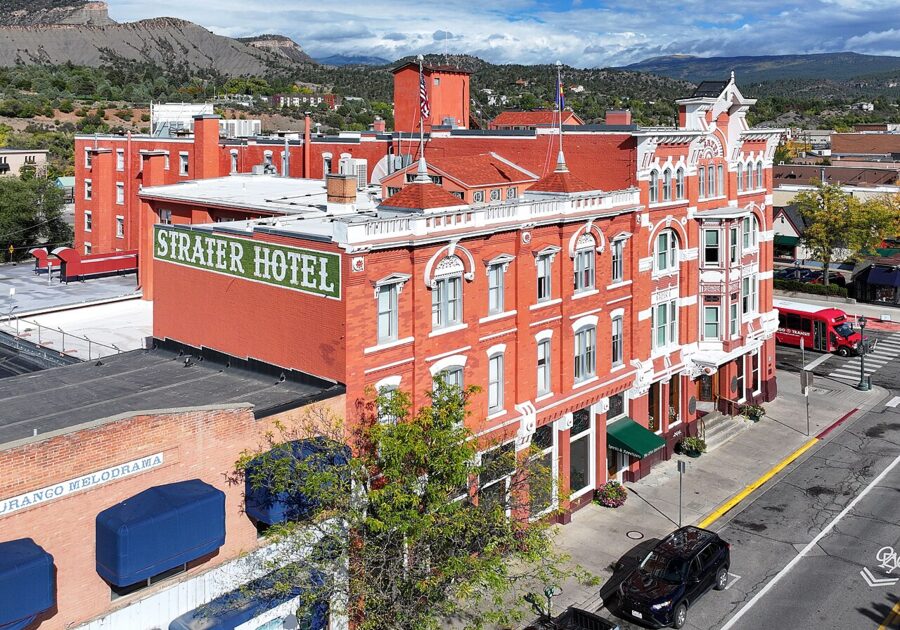
Stay downtown and you can walk to the depot at 479 Main Avenue; the blocks north of it are lined with brick buildings from the mining years.
In winter the railroad also runs the Polar Express under license, from November 20, 2026, to January 2, 2027, a ride of about 65 minutes with fares of $67 to $101 as of 2026. Durango is one of dozens of towns running licensed Polar Express trains, and one of many lines with Christmas trains on the winter schedule.
Booking and what goes wrong
Book on the railroad’s own site, durangotrain.com. All seats are assigned, so the seat map is your chance to pick the right side, and the premium cars hold far fewer seats than coach; the Alamosa takes only 24. When the 2027 Silverton schedule is posted, book early.
The rules that catch people out are on the important information page. You must be seated 30 minutes before departure or your seats can be resold, and no-shows get nothing back. Cancelling costs $14 per adult and $7 per child, there is no refund inside five days, and licensed events like the Polar Express are non-refundable inside 60 days. Changes cannot be made online, only by phone or email.
A round-trip ticket must be in one class both ways. If you want the gondola up and a First Class car back, buy two one-way tickets. There is one wheelchair-accessible car with a lift and an accessible restroom, and it has to be booked by phone in advance.
Pack for two climates. The railroad’s FAQ asks for closed-toe shoes, layers, a hat and sunglasses, and it is right: Silverton can be cold in July, and the canyon has no cell service. Personal alcohol is not allowed on board, only service animals may ride, and the concession car sells breakfast, lunch, five local beers and a souvenir mug with free refills of soft drinks all day.
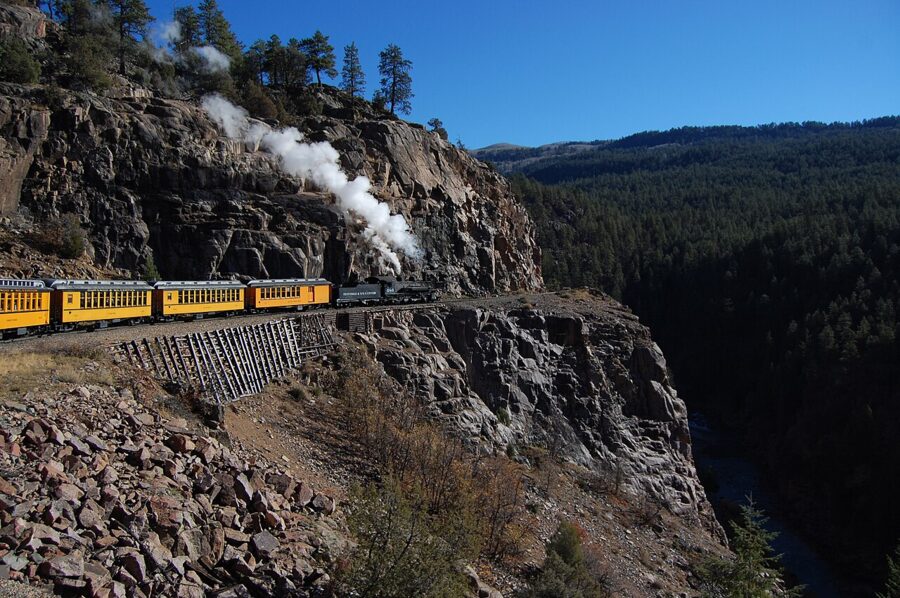
So: book the summer Silverton train, steam if you can, a gondola seat on the right going up, and the 9:00 a.m. departure. Spend your two hours in Silverton eating first and walking second, and save a separate day for Chama and the climb to Cumbres Pass. The High Line comes just after the Rockwood cut, 18 miles up the line, and by then you will be standing.