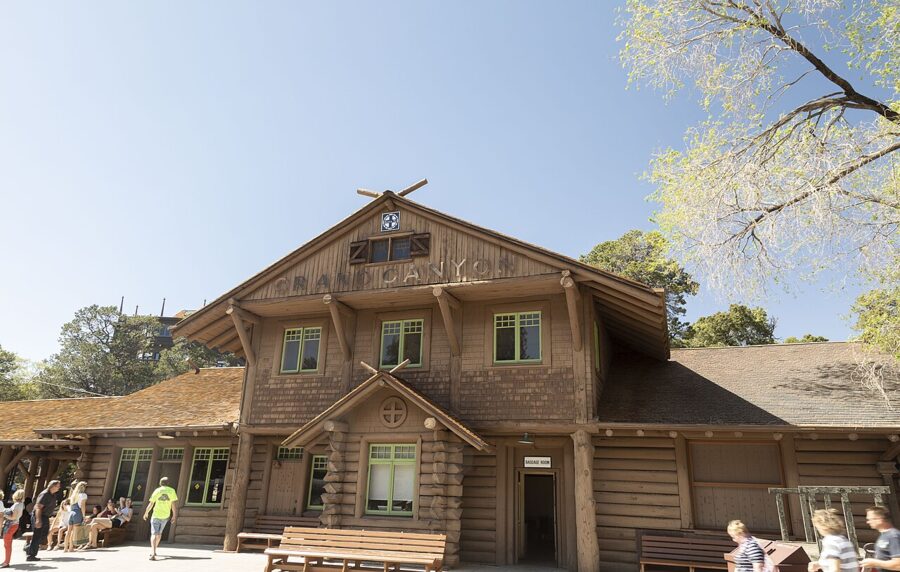
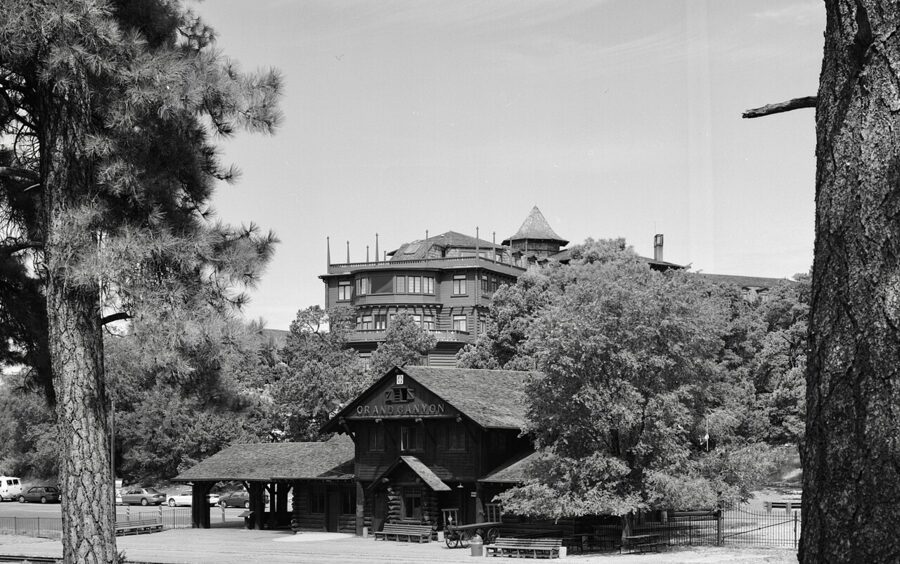
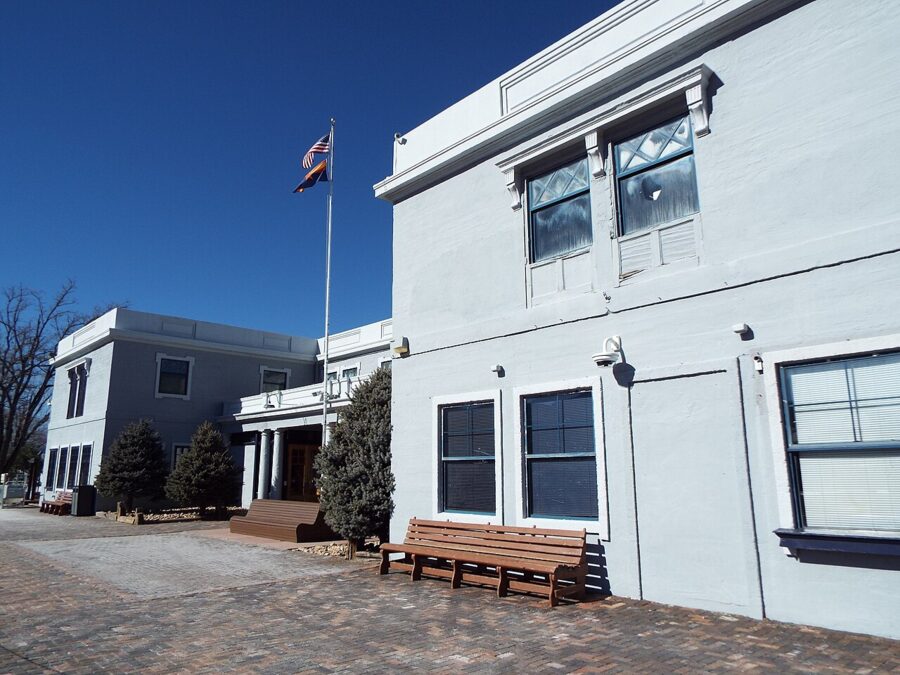
The train stops at 11:45 in the morning beside a two-story building of squared logs, and most people look the wrong way first. The canyon is not visible from the platform. What you see is the Grand Canyon Depot, built in 1909 and 1910, and on the slope above it the long roof of El Tovar, the hotel the Santa Fe Railway opened in 1905.
From that moment you have three hours and 45 minutes before the 3:30 departure back to Williams, Arizona, and that window is the whole decision. The Grand Canyon Railway covers 65 miles in two hours and 15 minutes each way, with a cowboy shootout before you board, a fiddler in the aisle and a staged robbery on the way home. The canyon gets the middle of the day.
The train runs every day except Christmas, with fares from $69.98 for an adult as of 2026. Here is how the day works, which of the six classes is worth paying for, when steam pulls the train, how to spend the hours at the rim, what the park now charges visitors from abroad, and whether the train beats driving.
Stops in this article11
- 01A line that nearly vanished
- 02The schedule and the ride (as of 2026)
- 03Which class is worth it
- 04Steam days and diesel days
- 05Three hours and 45 minutes at the rim
- 06Park fees, including the new fee for visitors from abroad
- 07Packages, the Railway Hotel and Williams on Route 66
- 08Staying overnight at the rim
- 09The Polar Express in winter
- 10Train or drive the 60 miles
- 11How to book
A line that nearly vanished
The Santa Fe finished the track from Williams in 1901, and the first passengers reached the rim on September 17 that year. The $3.95 ride replaced a $15 stagecoach trip of about eight hours from Flagstaff. The railroad went on to build much of Grand Canyon Village and hauled in its water until 1926.
Cars won in the end, and the last regular train ran in July 1968 with three passengers aboard. Max and Thelma Biegert reopened the line on September 17, 1989, after a salvage company had already begun tearing up the rails. Xanterra, which also runs the main South Rim lodges, has owned the railway since 2007.
The schedule and the ride (as of 2026)
There is one round trip a day. You ride north in the morning and board the same train home in the afternoon. Arizona stays on Mountain Standard Time all year, so in winter Williams is an hour ahead of Las Vegas, which matters if you drive in that morning.
| Dates | Leaves Williams | Arrives Grand Canyon | Leaves Grand Canyon | Arrives Williams |
|---|---|---|---|---|
| January 1 to October 31 | 9:30 a.m. | 11:45 a.m. | 3:30 p.m. | 5:45 p.m. |
| November 1 to December 31 (no train December 25) | 8:30 a.m. | 10:45 a.m. | 2:30 p.m. | 4:45 p.m. |
| Second train, busy dates only | 10:30 a.m. | 12:45 p.m. | 4:30 p.m. | 6:45 p.m. |
The second train runs only on dates listed on the railway’s schedule and route page; in 2026 that meant a handful of days in March and April. Either way you get the same time at the rim.
Reach the Williams Depot at least an hour before departure. Tickets wait at will call, and the person named on the booking must show photo ID. Seats are assigned, so book in even numbers if you can, or one of you sits beside a stranger.
What you see on the way north
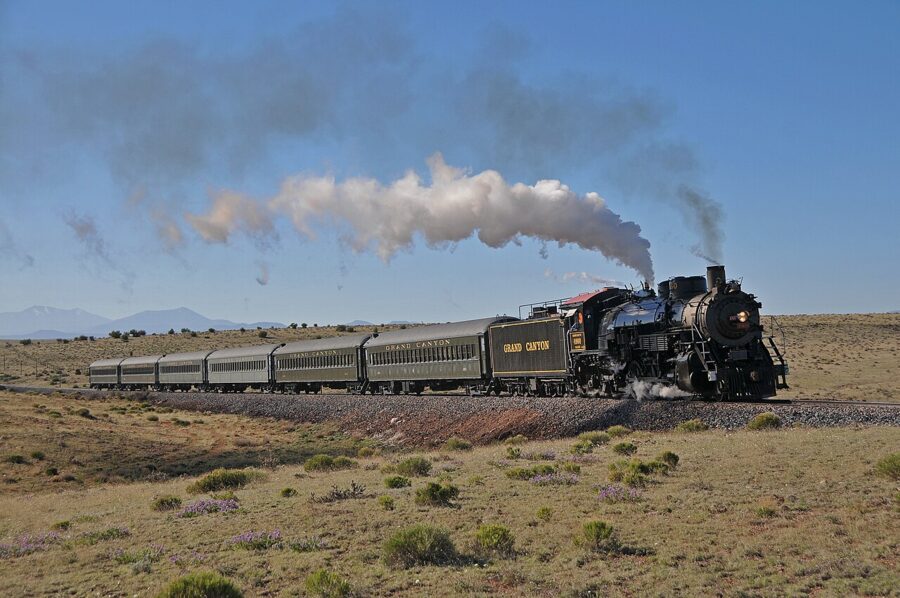
Williams sits at 6,916 feet in ponderosa pine. The line drops out of the forest onto open grassland, where pronghorn are common, then climbs through pinyon and juniper into pine again near the park. The San Francisco Peaks, Arizona’s highest ground at over 12,600 feet, stand to the east, on the right going north.
There is no canyon view from the train. The track ends in the village, back from the rim, so the scenery on board is the plateau, not the gorge.
Cowboys, fiddles and the robbery
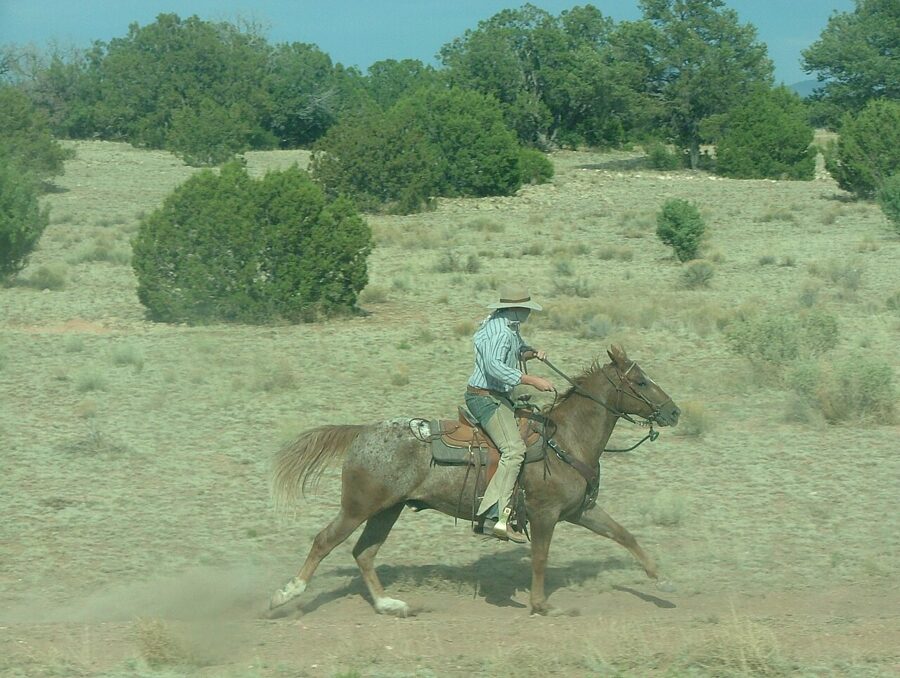
About 15 minutes before boarding, the Cataract Creek Gang and the Marshal shoot it out near the Williams Depot. It is loud, short and aimed at children. On board, each car has an attendant who talks about the route and helps you plan your hours at the rim, and musicians come through with fiddle, guitar, banjo or squeezebox. On the return trip the same cowboys ride alongside, stage a robbery and work through the cars, as the railway’s entertainment page promises.
Which class is worth it
There are six classes, and you can book a different one in each direction. Every car has a restroom and an attendant. A café car open to all sells snacks, sandwiches and drinks, including alcohol; you may bring snacks and soft drinks, but not alcohol. Round-trip fares as of 2026, from the railway’s classes page:
| Class | The car | Adult (16+) | Child (2 to 15) | Under 2 |
|---|---|---|---|---|
| Pullman | 1923 cars, bench seats, windows that open, no air conditioning; March to October only | $69.98 | $37.98 | Free |
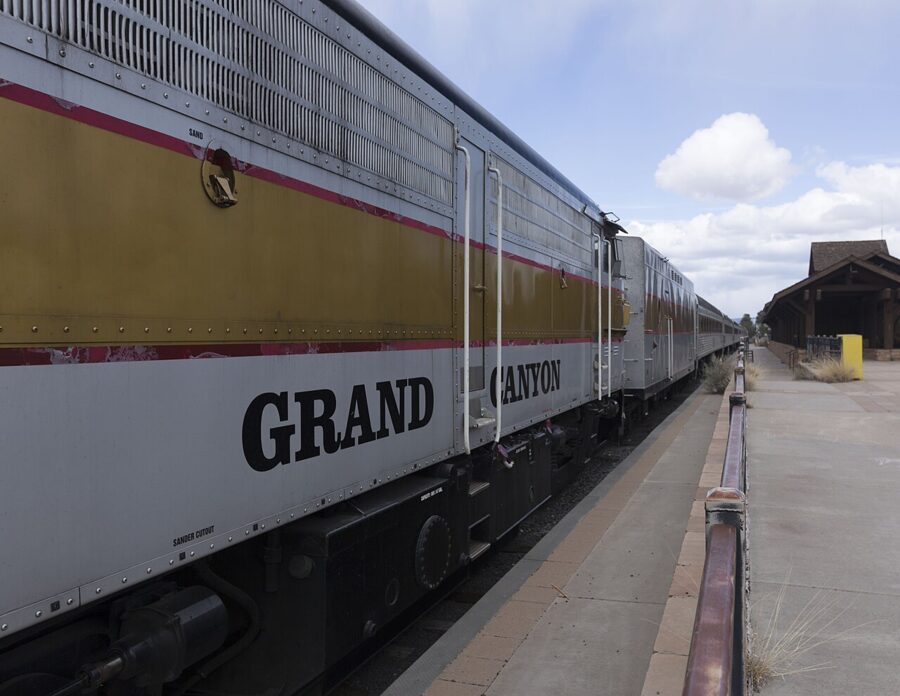
| Coach | 1950s streamlined cars, big windows, air conditioning in warm months; wheelchair accessible | $89.98 | $57.98 | Free |
| First Class | Larger seats, bar service, free snacks and soft drinks; wheelchair accessible | $172.98 | $132.98 | Free |
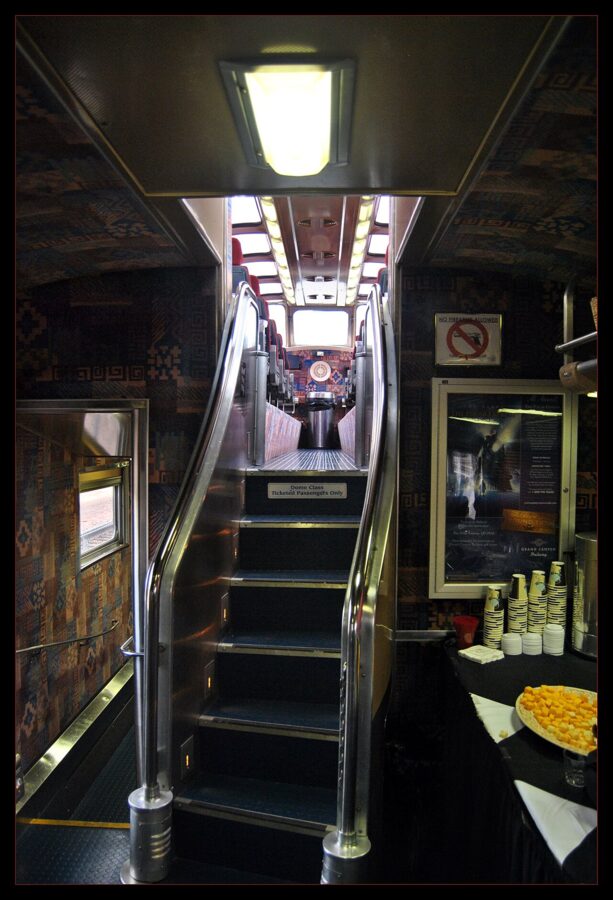
| Observation Dome | Upper level of a dome car, bar service, free snacks and soft drinks | $202.98 | $192.98 | Not permitted |
| Luxury Dome | Full-length dome, lounge below, private bar | $242.98 | Not permitted (16+ only) | |
| Luxury Parlor | Lounge car, private bar; some have an open rear platform | $242.98 | Not permitted (16+ only) | |
Only Coach and First Class are wheelchair accessible, with a lift at each end of the train and room to stay in a chair or scooter up to 26 by 50 inches. Both dome classes involve stairs. Assistance must be arranged with an agent, not online; the railway’s accessibility page has the details.
Pullman and Coach
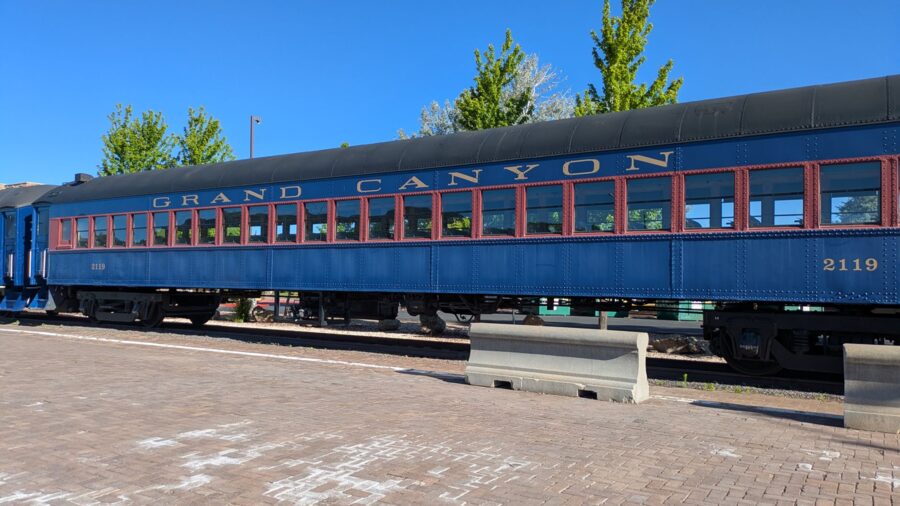
Pullman is the cheapest seat and, in spring or early fall, the most fun, because the windows open and you hear the engine. In July it is a hot car, and from November to February it does not run. Coach is the dependable choice: big windows, air conditioning and the same view.
First Class and the domes
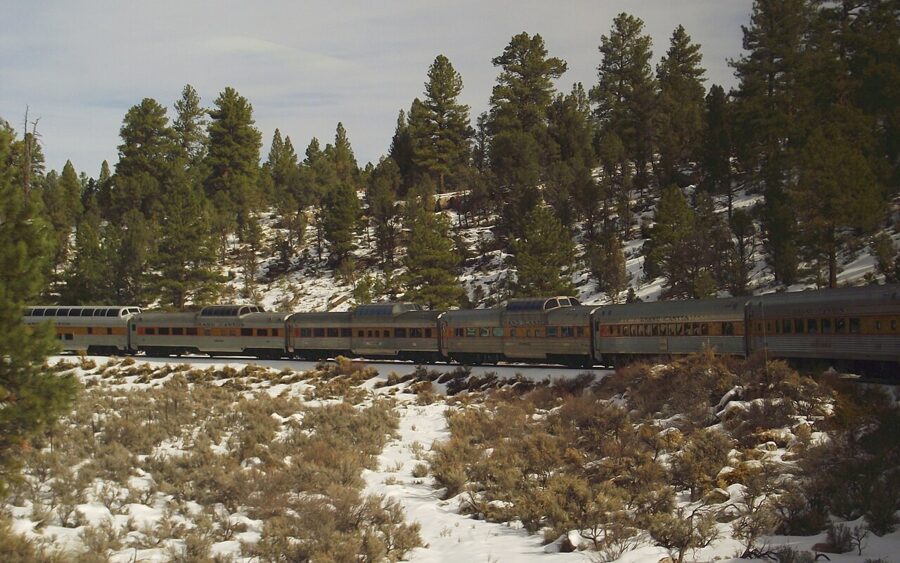
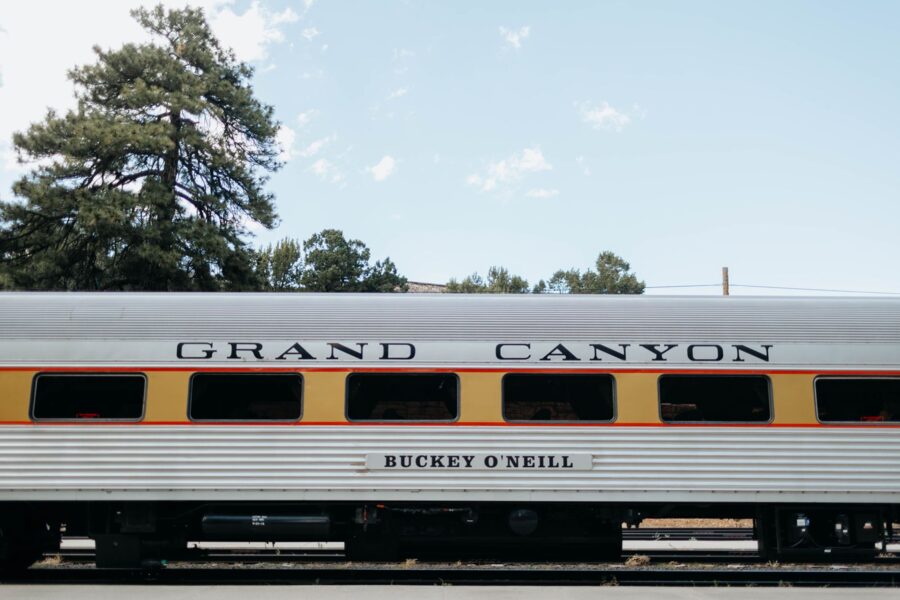
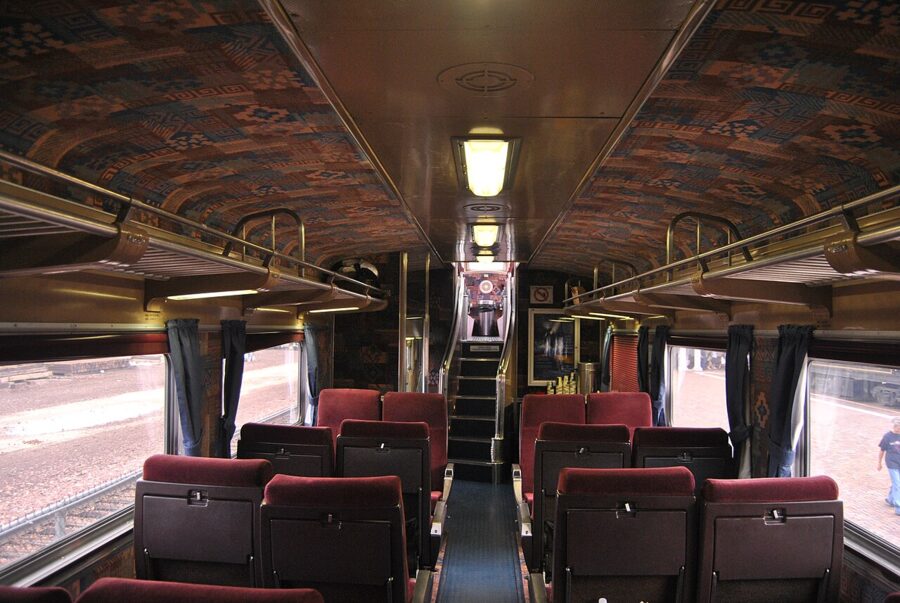
First Class buys space, a bar and snacks both ways. Most First Class seats are on the lower level of the dome cars, under the Observation Dome passengers, so the difference between the two is the glass over your head. Two of the four dome cars ran on the California Zephyr in their first lives.
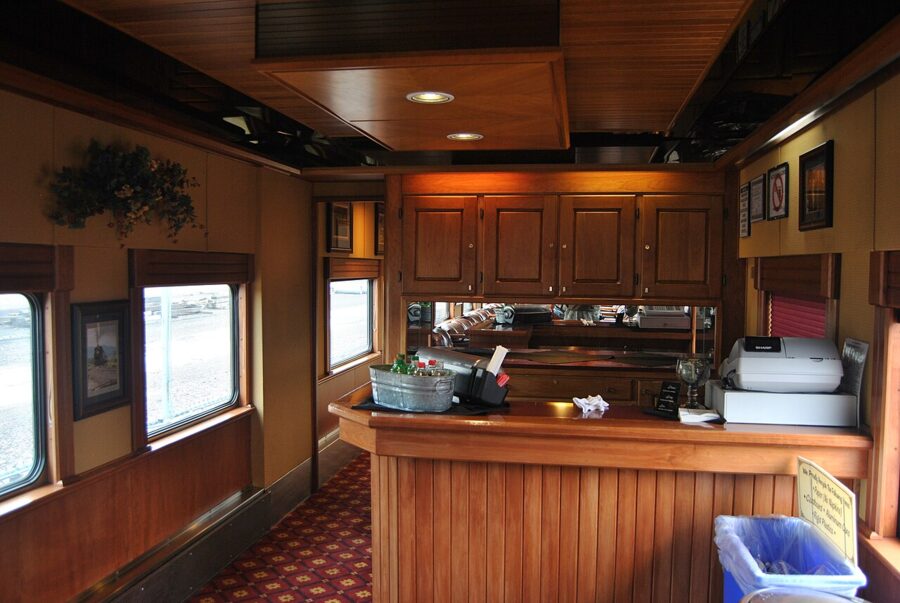
Luxury Dome and Luxury Parlor
The Luxury Dome cars, Fred Harvey and Mary Colter, are 1955 Budd cars from the Empire Builder with glass along the whole roof. The Luxury Parlor cars are lounges with a private bar, and two of them, Chief and Max Biegert, have an open platform at the back of the train. Standing out there as the line curves through the pines is something no other class offers.
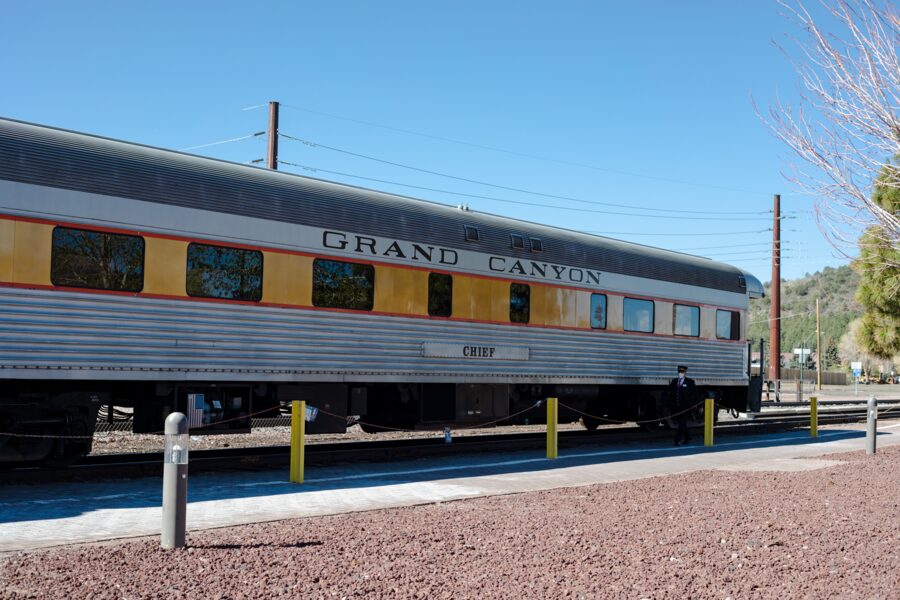
What I would book
For most people, Coach both ways is the right ticket. The scenery is the same from every class, and the money saved pays for lunch at El Tovar. Children under 16 rule out the luxury classes, and a baby rules out the Observation Dome too.
If you want one splurge, split the trip: Luxury Parlor or Luxury Dome north, while you are fresh, and Coach home, when half the train dozes. In April, May, September or October I would put a family in Pullman for the open windows.
Steam days and diesel days
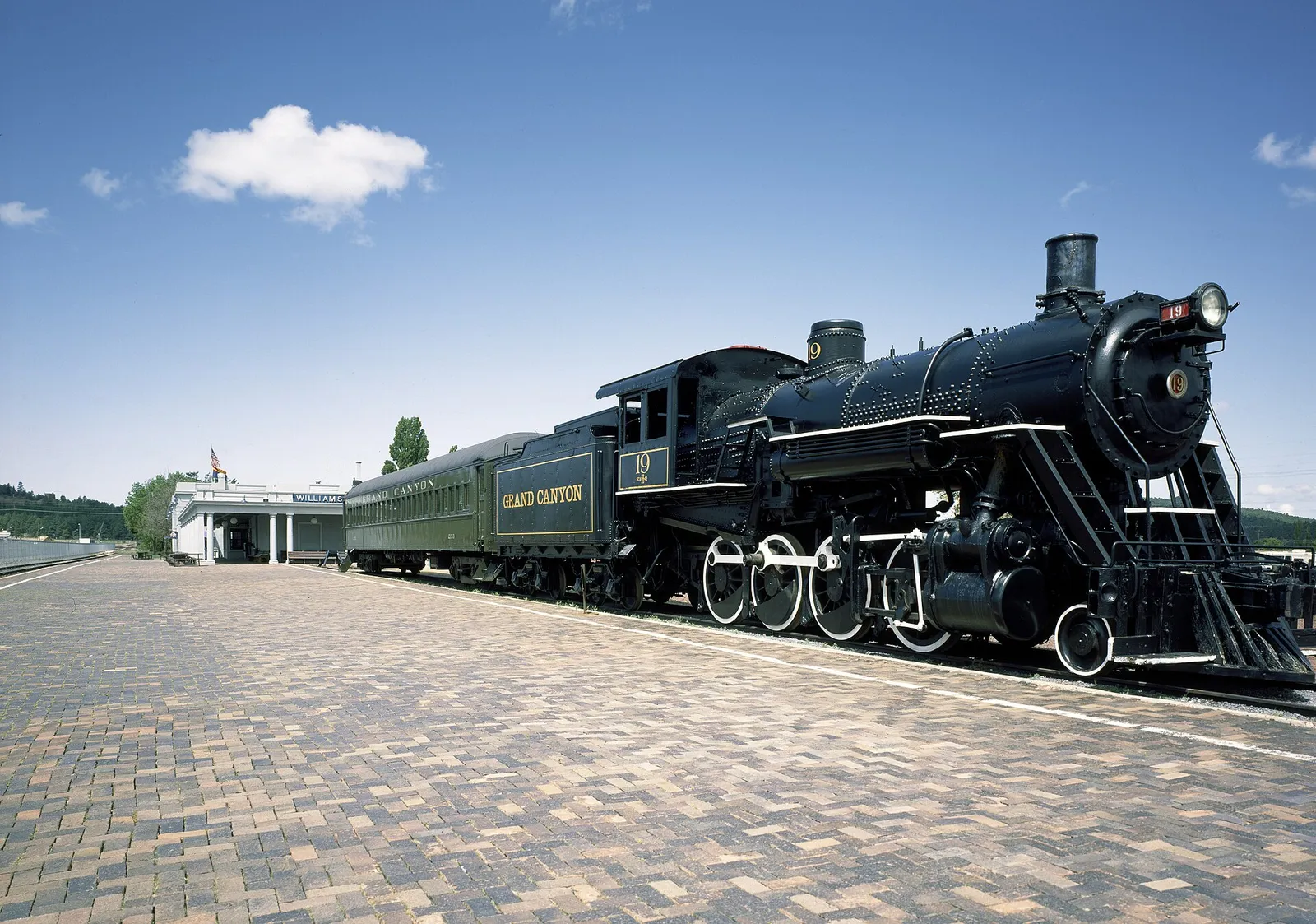
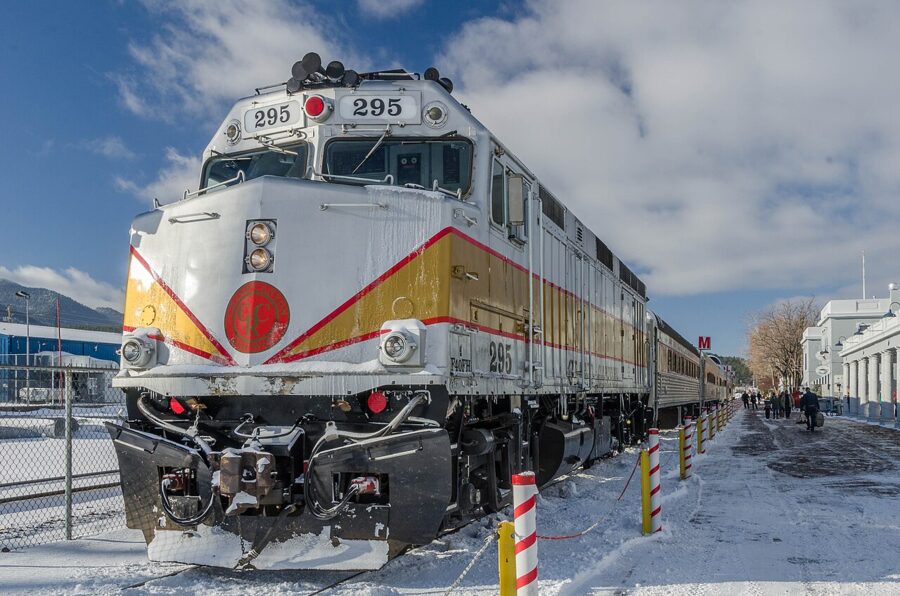
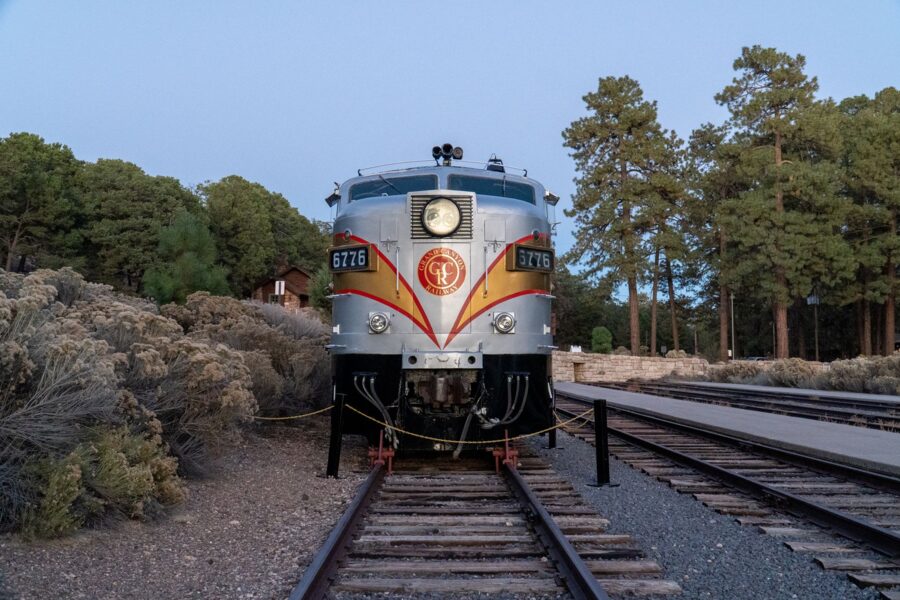
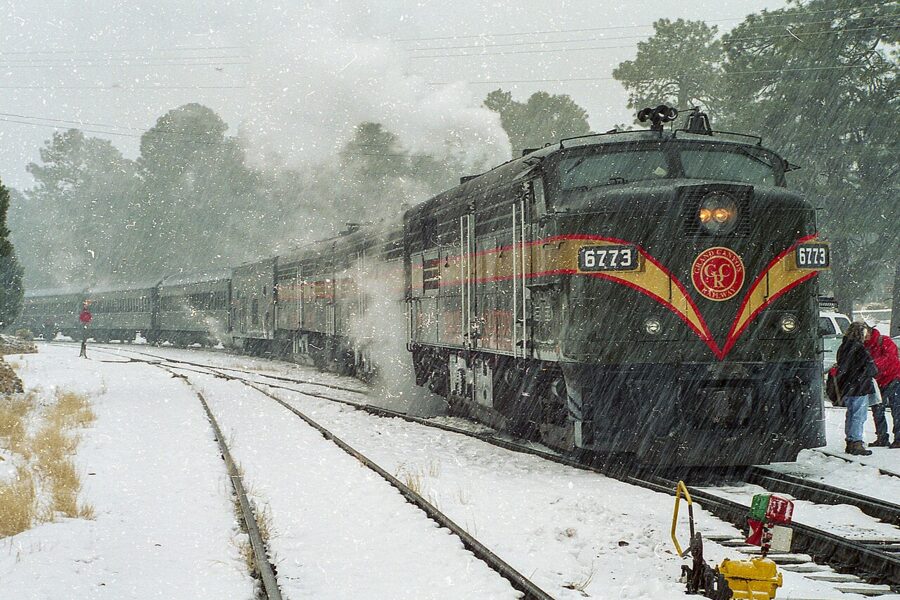
Most days a diesel pulls the train, usually one of three ex-Amtrak EMD F40PH units, Nos. 237, 239 and 295, in service here since 2004. A few 1959 Alco FPA-4 diesels survive too.
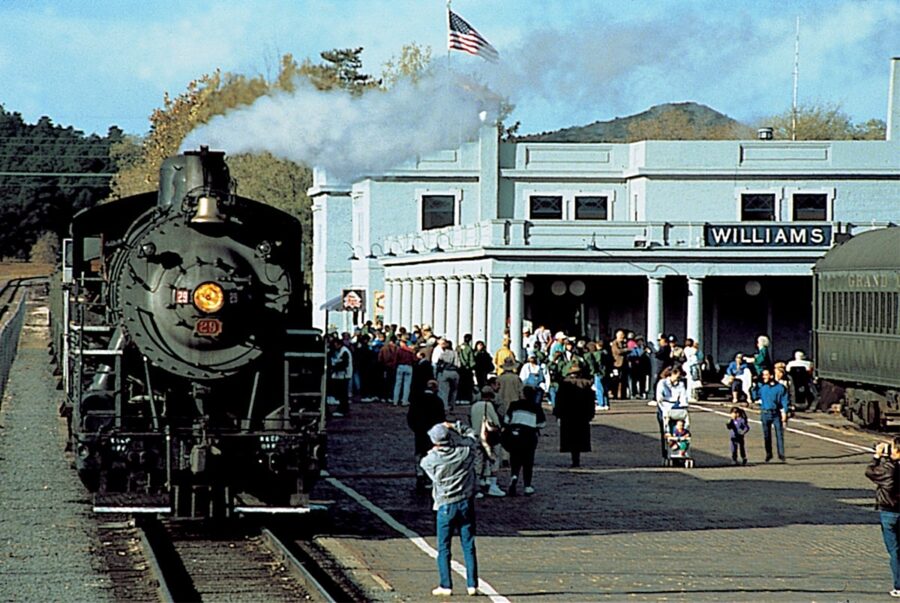
Steam runs on set dates, roughly once or twice a month between March and October, plus holidays. The 2026 list on the railway’s steam schedule ran from March 7 to October 14, including a 125th-anniversary run on September 19, with three summer dates cancelled. As of late November 2026 the 2027 dates were not posted. Only the morning train runs with steam, and a steam departure can be cancelled up to the day itself, so count it as a bonus.
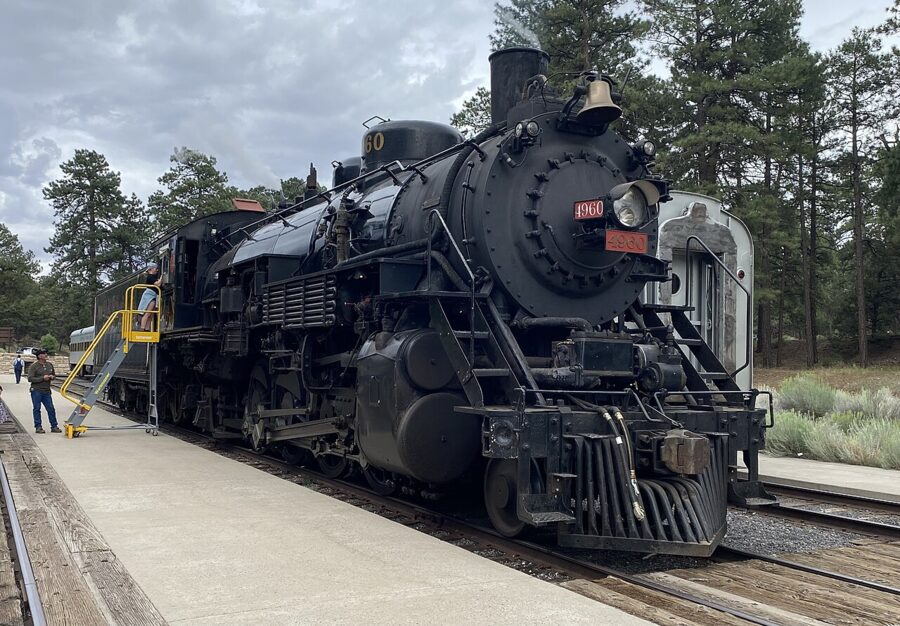
No. 4960 has carried the steam program since 2009. No. 29, an Alco 2-8-0 built in 1906 for an iron-ore railroad in Michigan, last ran in 2019. Railfan & Railroad reported a successful test run after its rebuild on August 26, 2026, though the railway has not said which engine will pull which date.
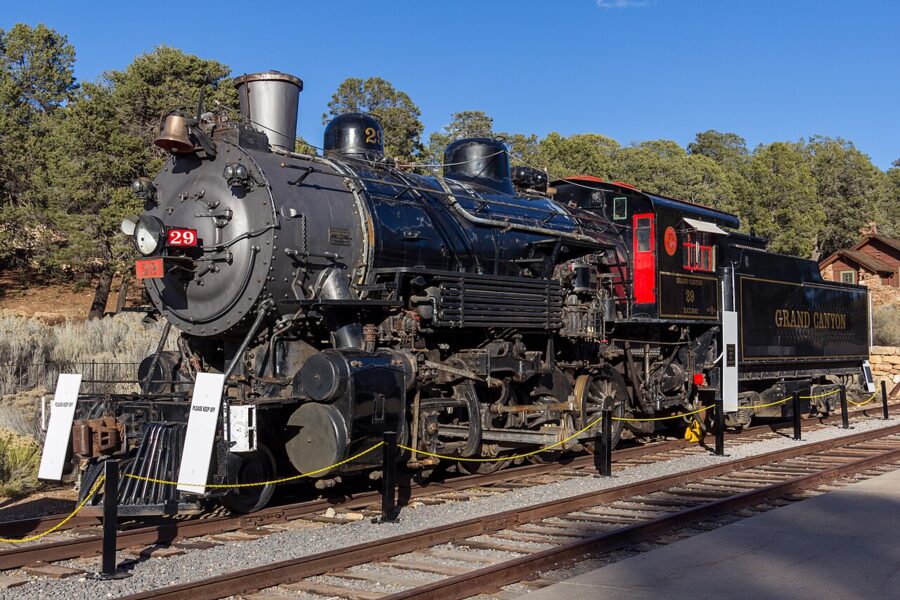
Three hours and 45 minutes at the rim
The time goes fast. Lunch takes an hour if you sit down, and you want to be back on the platform 20 or 30 minutes before departure. That leaves about two and a half hours of looking, so pick one plan.
Up the hill to El Tovar and Hopi House
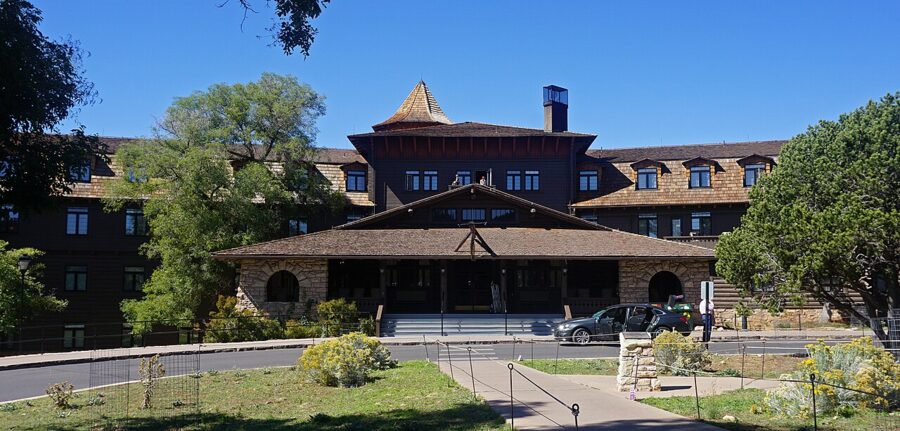
Follow the paved path up the hill behind the depot and you reach the rim in minutes, beside El Tovar. Its dining room serves lunch from 11 to 2:30, and reservations are strongly recommended, so book a noon table when you book the train.
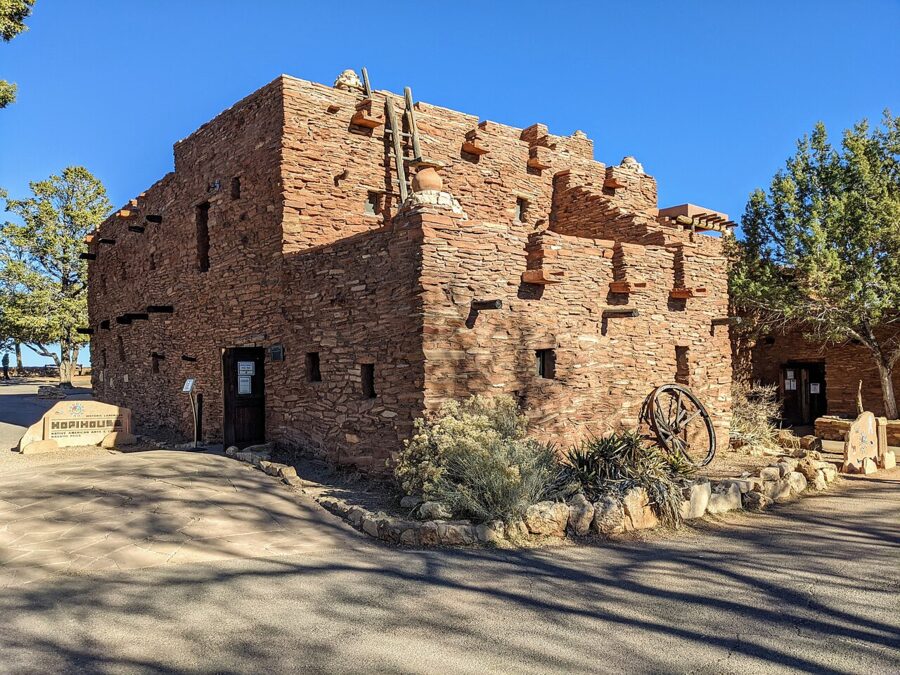
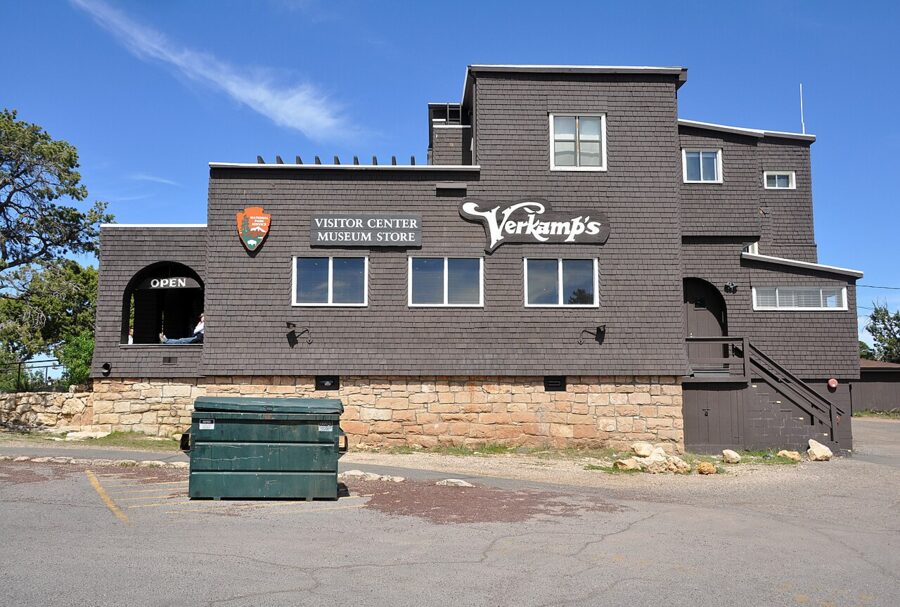
Next door, Hopi House is Mary Colter’s stone building of 1904 and 1905, modeled on a Hopi pueblo and still selling Native American crafts. A few steps east, Verkamp’s Visitor Center has exhibits on the village and a museum store, open 8 a.m. to 6 p.m.
West along the Rim Trail
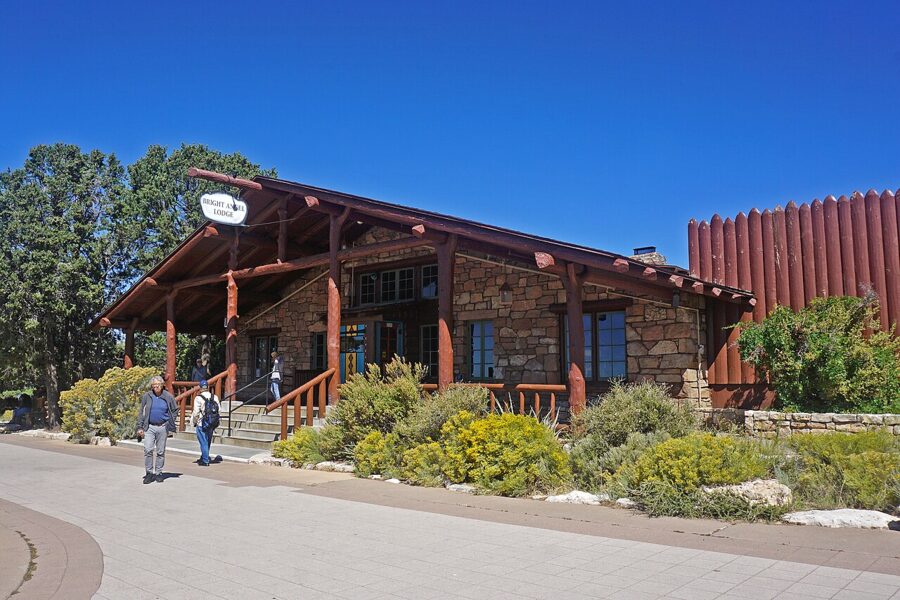
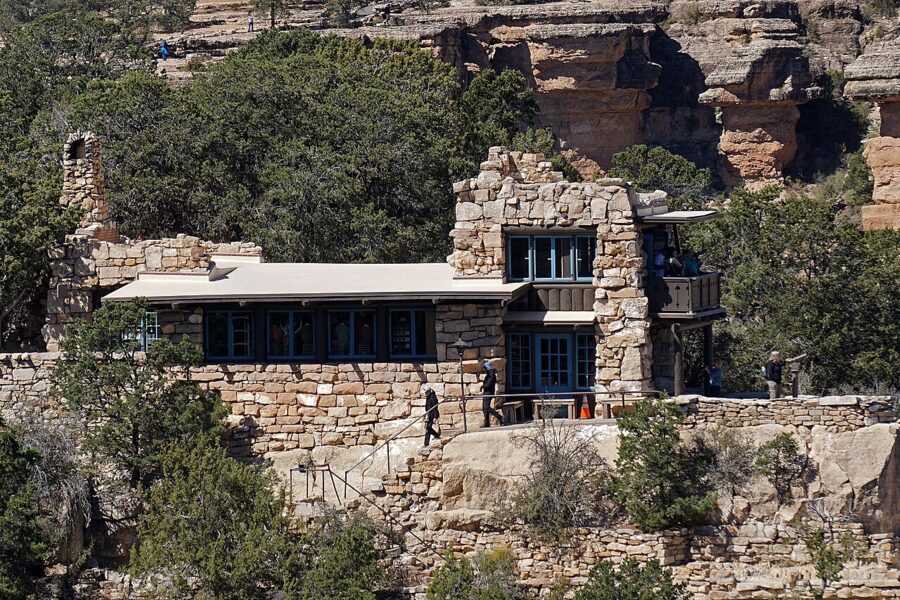
Turn west on the paved Rim Trail and you pass Bright Angel Lodge, Lookout Studio and Kolb Studio on the way to the Bright Angel trailhead, a level walk of minutes. Harvey House Cafe at Bright Angel Lodge serves lunch until 4 p.m., the fallback if El Tovar is full.
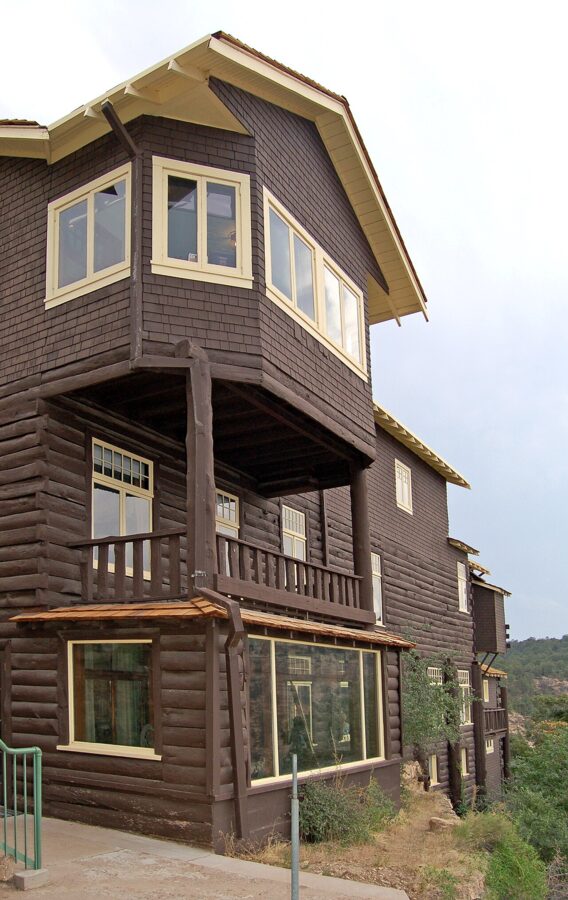
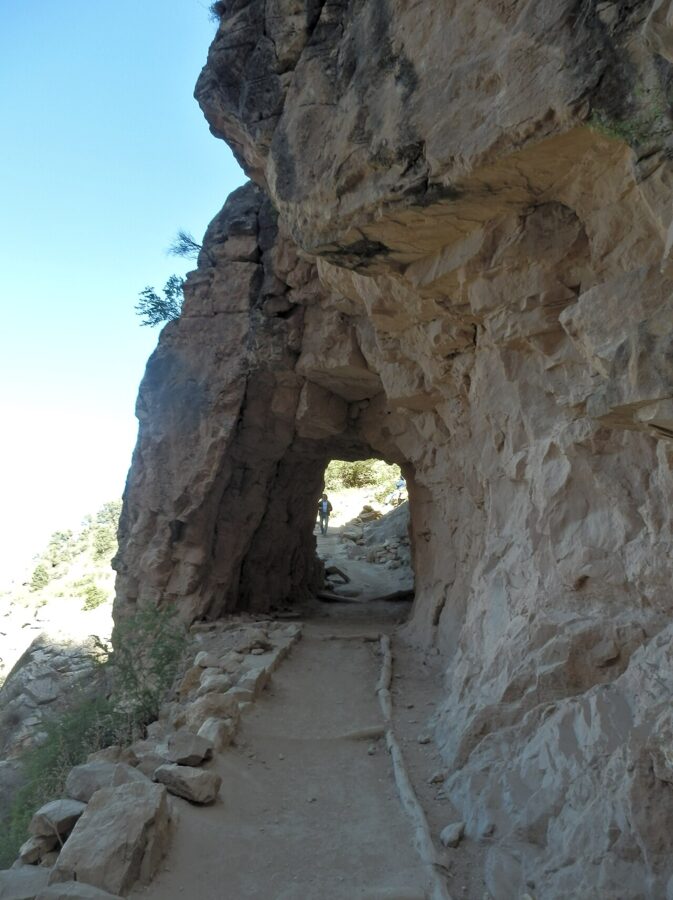
The Bright Angel Trail starts just past Kolb Studio, and it is tempting. The first resthouse is 1.6 miles down and 1,130 feet lower, and the climb back is slow at this altitude. Go as far as the first tunnel and turn around. After the August 29, 2026 flash flood, Phantom Ranch is closed through at least January 31, 2027; the park’s day hiking page has current conditions.
Mather Point
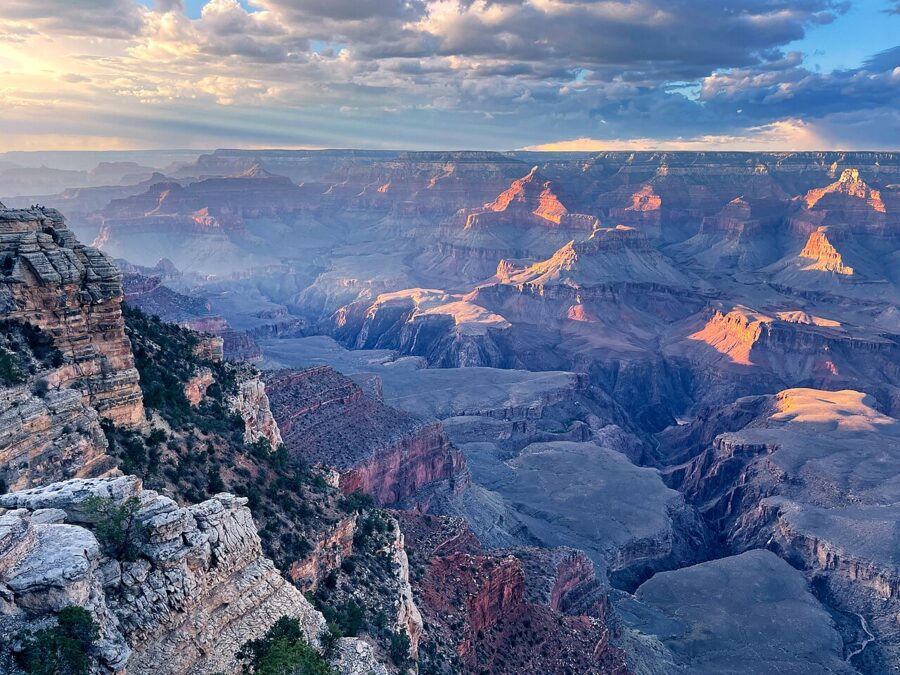
Mather Point is the postcard view, and it is a little over two miles east of El Tovar by the Rim Trail. Take the free Village (Blue) shuttle instead: its Train Depot stop is right below El Tovar, and it runs to the Grand Canyon Visitor Center, a short walk from the point. Buses come every 10 to 20 minutes depending on season and hour, per the park’s Village route page.
My plan: shuttle out, walk to Mather Point, follow the rim west to Yavapai Point and ride back to the Train Depot stop. That gives you the two classic viewpoints and still leaves time for a quick lunch.
Hermit Road and the guided bus tour
Hermit Road follows the rim west for seven miles to Hermits Rest, past nine overlooks. From March 1 to November 30 it is closed to cars and served by the free Red shuttle; the park’s Hermit Road page puts the round trip at 80 minutes without getting off, so plan two or three stops. In December, January and February there is no shuttle at all.
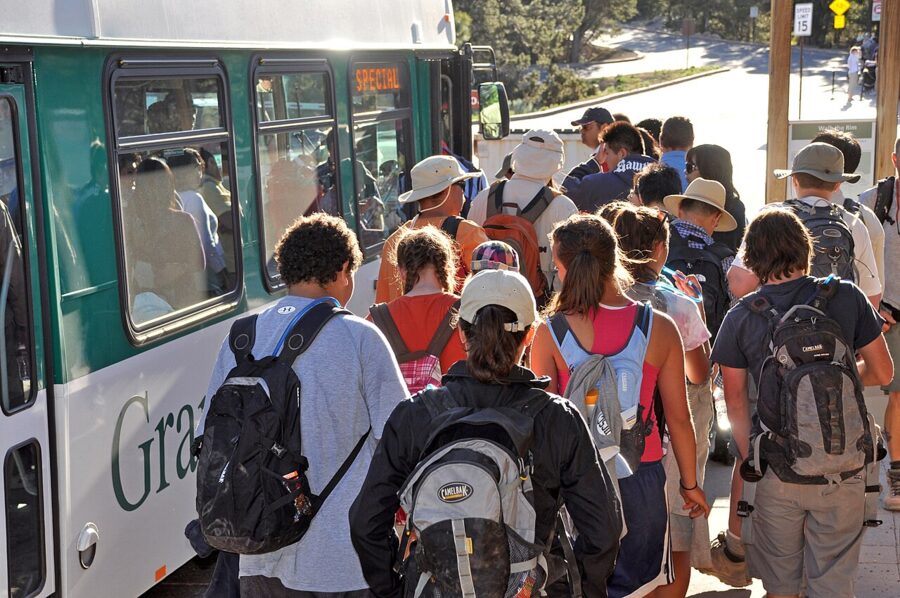
The railway also sells two motorcoach rim tours for train passengers, timed to the schedule. The Freedom Tour is a guided ride of about 90 minutes from the depot to overlooks you would not reach on foot. The Grand Tour adds a buffet lunch at Maswik Lodge, is wheelchair accessible (on the first train, when two run), and is the least stressful option with older parents or small children. The railway’s tours page still showed 2025 rates in late 2026, so confirm the price.
What will not fit
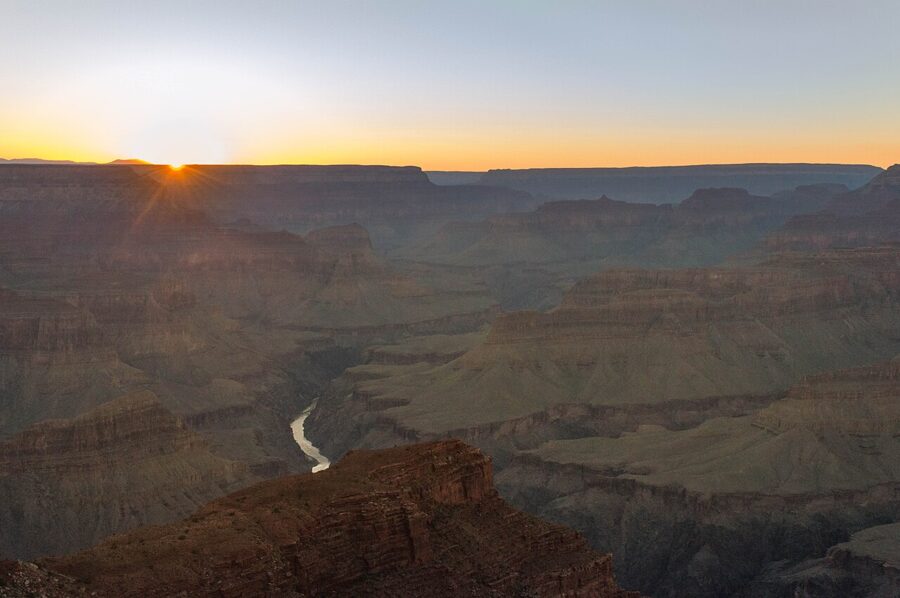
The Canyon Vista mule ride leaves at 8 and 12 through November 30 and at 10 from December 1, according to Xanterra’s current operating hours, so none of its departures fit a day train. The same goes for sunset, sunrise and Desert View at the park’s eastern end. All of them need a night at the rim.
Park fees, including the new fee for visitors from abroad
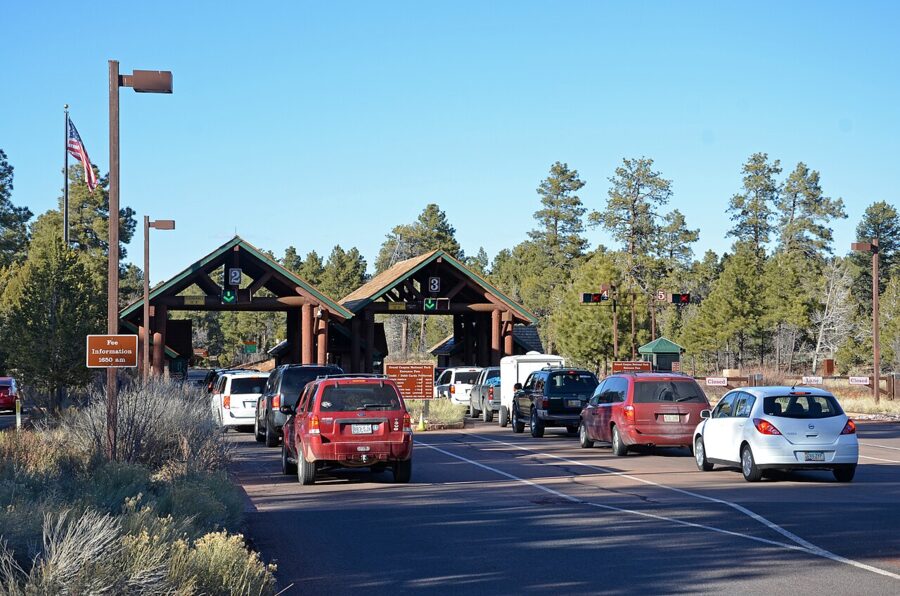
Arriving by train still costs a park entrance fee, which the railway collects with your booking. As of 2026 it depends on the number of adults (16 and over) on the reservation, per the railway’s FAQ:
- One adult: $20
- Two to nine adults: $35 for the whole reservation
- Ten to 18 adults: $70
- 19 adults: $105 (20 or more is a group booking)
Children under 16 pay nothing. Give an America the Beautiful pass number when you book and the fee is waived for the holder and up to three more adults. Drivers pay $35 per vehicle at the gate, by card only, valid for seven days.
The big change is the nonresident fee. Since the start of 2026, every non-U.S. resident aged 16 or over pays an extra $100 on top of the standard fee, unless covered by an annual pass, and train passengers pay it through the railway. Two adults from abroad on one booking therefore pay $235 in park fees. If they will visit several parks, compare that with the $250 nonresident annual pass on the park’s fees page, which also notes that fee-free days now apply only to U.S. citizens and residents.
Packages, the Railway Hotel and Williams on Route 66
Most people sleep in Williams the night before. The Grand Canyon Railway Hotel has 298 rooms beside the depot, an indoor pool, free parking and no resort fee. The Fred Harvey Restaurant across the way serves buffet breakfast and dinner, and Spenser’s Pub serves pub food; neither takes reservations. Pets cannot stay in the rooms or ride the train, but the railway runs a pet resort nearby.
Its main packages, from the railway’s offers page:
- Stay and Save: the Williams hotel plus 20% off train tickets for one night, or 25% for two to four nights.
- Canyon Limited: two or three nights split between Williams and Maswik Lodge in the park, the Freedom Tour, luggage transfers, Fred Harvey breakfasts and dinners, and 10% off the train.
- Canyon Rails Getaway Gold: two to four nights in Williams and at Maswik Lodge North, up to 50% off the train, meals and a $20 gift-shop certificate per adult.
Package prices exclude tax and the park fee. Two offers stand out as of late November 2026. For the Route 66 centennial, Coach costs $66 with the code ROUTE66 for travel during 2026, which leaves only December. And the Stay and Save Platinum package, booked from November 18 to December 2, takes 50% off Pullman, Coach or First Class, or 25% off the domes and luxury cars, for travel from January 1 to March 7, 2027.
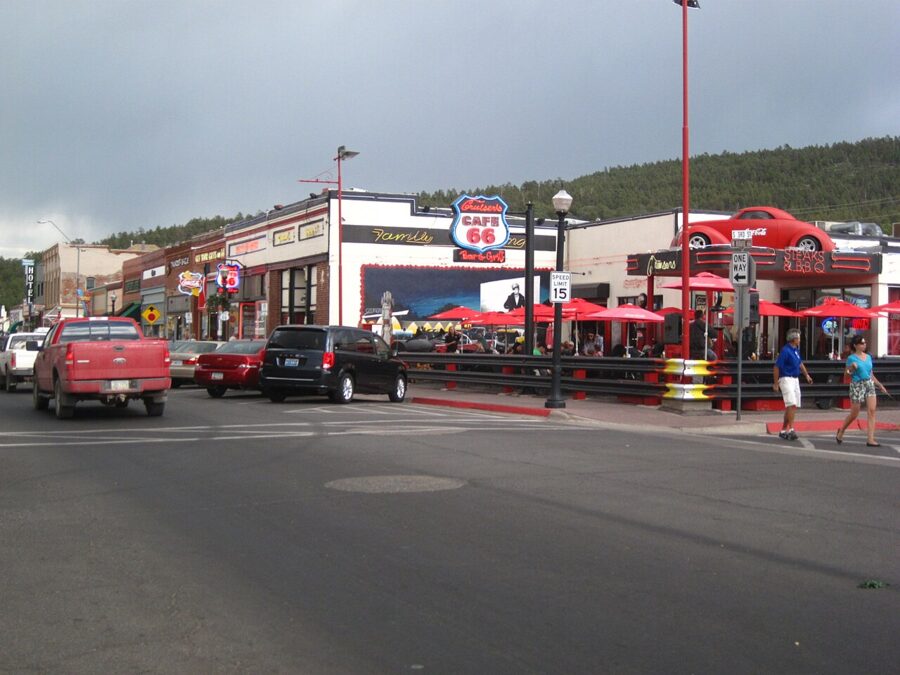
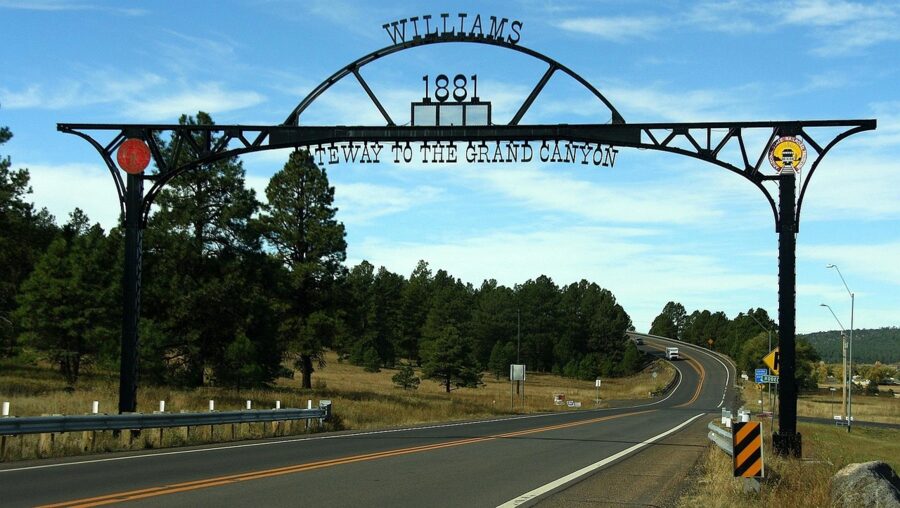
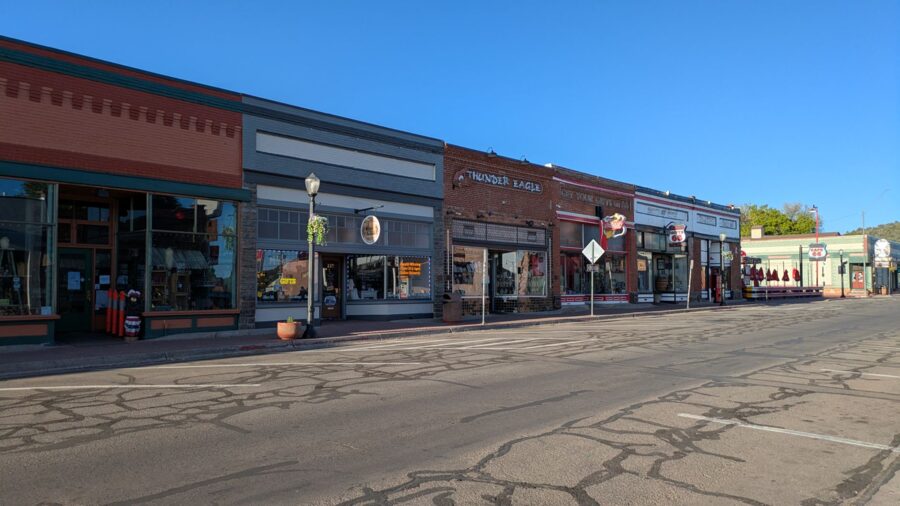
Williams was the last town on Route 66 to be bypassed by Interstate 40, in 1984, and the old road still runs through its center past diners, motels and souvenir shops. From the Railway Hotel you can walk to dinner downtown without moving the car.
Staying overnight at the rim
If you can spare a second day, take it. Packages of two nights or more can put one night inside the park at Maswik Lodge, about a quarter mile from the rim, and bring you back on the next afternoon’s train. That adds sunset at Hopi Point and sunrise at Mather Point.
You can leave your car in the free lots at Williams. The train takes day bags only, so anything bigger than a backpack must be tagged at the depot by 9 a.m. (an hour earlier in November and December), for a fee and up to 40 pounds, and it is delivered to your room. To stay at El Tovar or Bright Angel Lodge instead, call the railway to change the in-park hotel.
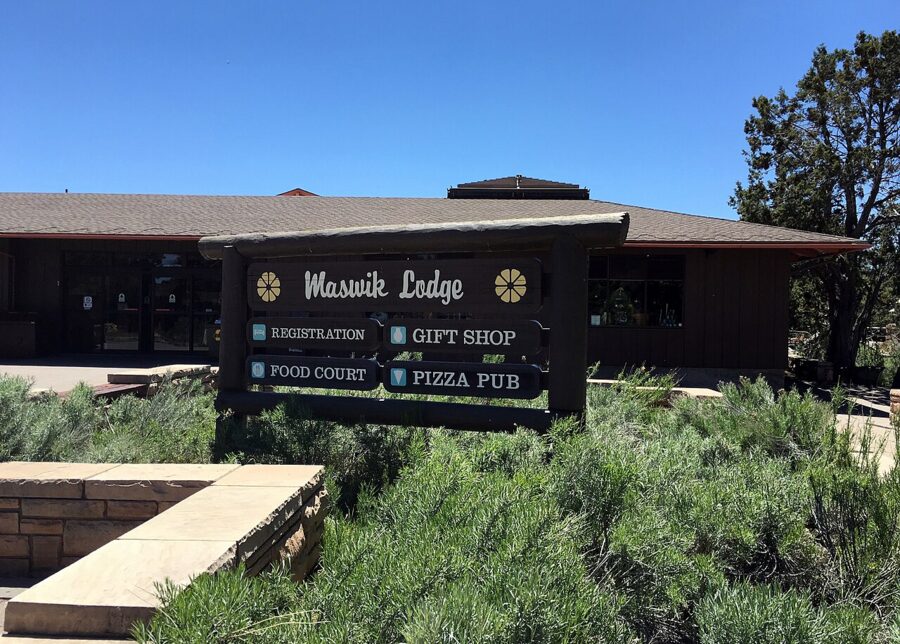
One recent disruption is worth knowing. Flash flooding on August 29, 2026 damaged the pipeline that supplies the South Rim, and the in-park lodges took no overnight guests until November 20, 2026, though the train ran daily throughout. Lodging has reopened under lighter water restrictions; check the lodges’ alerts before you book a rim night this winter.
The Polar Express in winter
From early November to early January, Williams also runs the licensed Polar Express, a night ride of about 90 minutes to a lit-up “North Pole,” leaving at 5:30 and 7:30 p.m. The 2027 season is already on sale. It is a separate ticket and never goes near the park. Williams is one of several towns that run Polar Express train rides, each with its own dates and refund rules.
Train or drive the 60 miles
Williams is about 59 miles from the South Entrance, and the park service puts the drive at about an hour on Arizona 64. Driving is cheaper and more flexible: for two adults and two children, Coach costs $295.92 round trip plus the $35 park fee, against $35 and a tank of gas, and the car can stay for sunset.
The case for the train is the day itself. Nobody drives a summer entrance queue or hunts for rim parking, and the ride is part of the trip. The railway estimates it keeps about 50,000 cars out of the park each year, and in winter it spares you icy plateau roads.
My answer: if you are based in Williams and want one easy canyon day, take the train in Coach and book lunch at El Tovar. If you want sunset or more than a handful of viewpoints, drive, or better, take the train with a night at the rim. Williams is one of many scenic railroads across the country that still run a full day out.
How to book
Book directly with the Grand Canyon Railway on its website or by phone. One reservation covers up to 19 seats; 20 or more is a group booking. Hotel stays and packages open 13 months ahead, on the first of each month. Book as soon as your dates are firm, and earlier for a steam day or a luxury car.
You get your deposit back if you cancel at least three days before travel; inside three days it is forfeited, weather included, per the railway’s reservation policies. Online bookings can be canceled online, but changes, seat requests and wheelchair assistance need an agent.
So book the morning train, Coach both ways unless a parlor platform tempts you, a noon table at El Tovar and the shuttle to Mather Point. Be back at the log depot by three, and let the cowboys rob you on the way home.