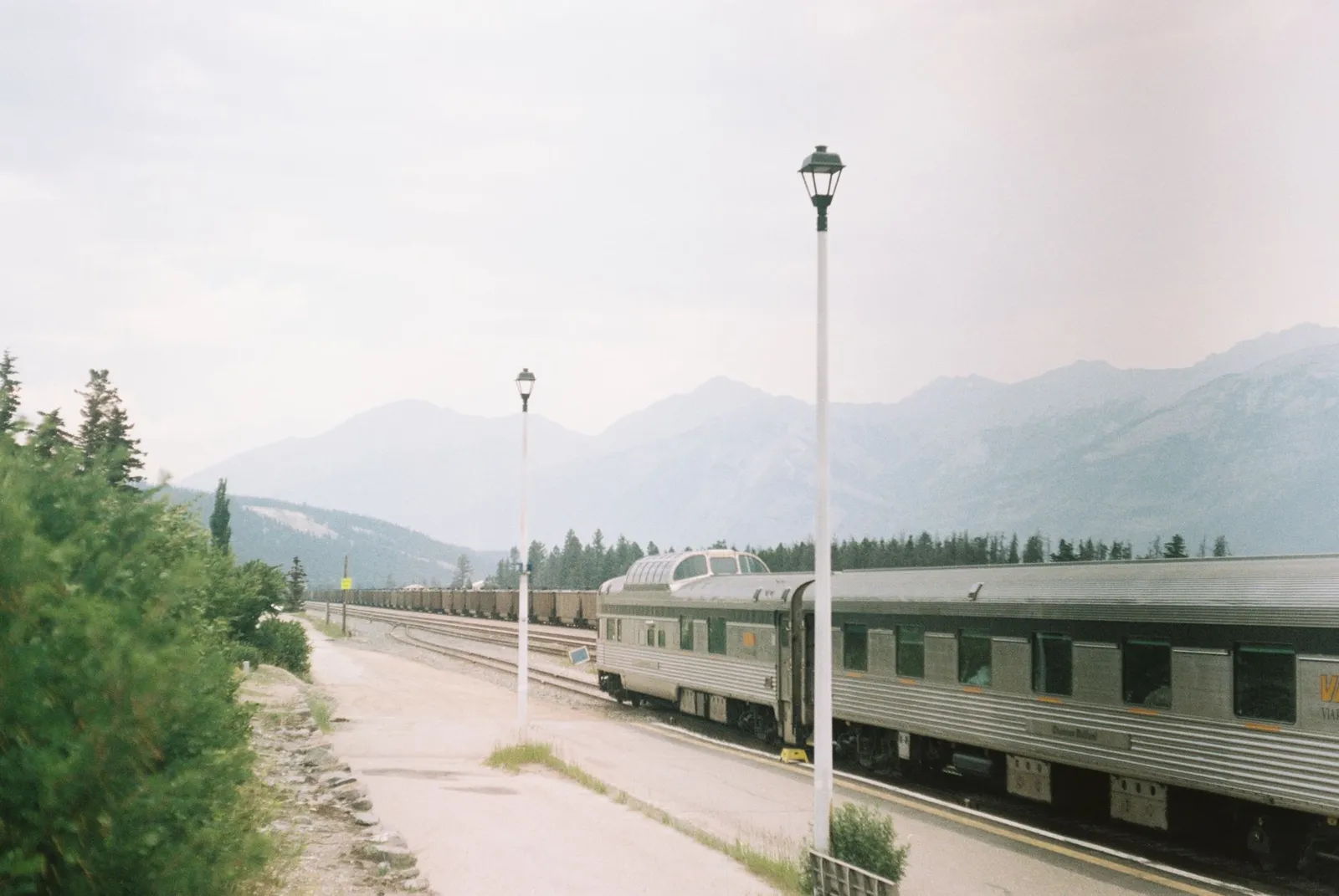
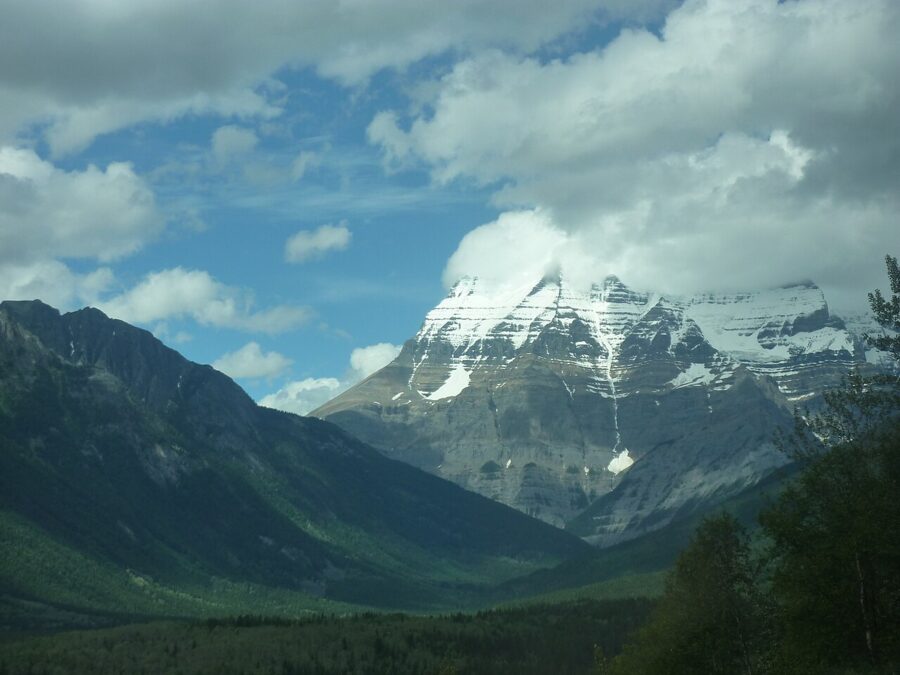
The westbound Canadian leaves Jasper at 9:30 in the morning, and for the next hour the upper level of the Skyline dome car is the most contested seat on the train. The tracks climb out of the Athabasca valley to Yellowhead Pass, where Alberta becomes British Columbia and the clocks go back an hour. Then Mount Robson fills the windows on the right, 12,972 feet (3,954 m) of rock and snow, the highest peak in the Canadian Rockies, and a few minutes later it is behind you.
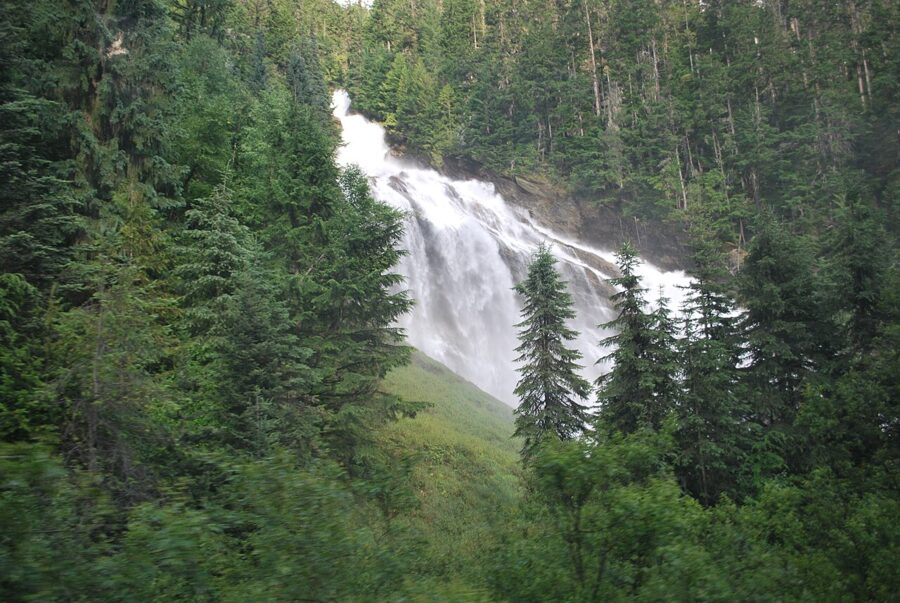
By early afternoon the train is running down the North Thompson River past Blue River, and it slows for Pyramid Falls on the left, a waterfall with almost no other way to see it. That one day between Jasper and Kamloops is why most people ride the Canadian at all. The three nights before it are the Canadian Shield, the prairies and the work of getting there.
There are two ways to cross the Canadian Rockies by rail, and they suit different people. VIA Rail’s Canadian is a scheduled train with sleeping cars that runs all year between Toronto and Vancouver, priced from a reclining seat at C$514 (about US$360) one way up to Prestige cabins aimed at the cruise market. The Rocky Mountaineer runs only in daylight, only from April to October, puts you in a hotel every night and charges accordingly. Pick one of the two first, and the rest of a Canadian rail trip fits around it.
The Canadian: Toronto to Vancouver in four nights
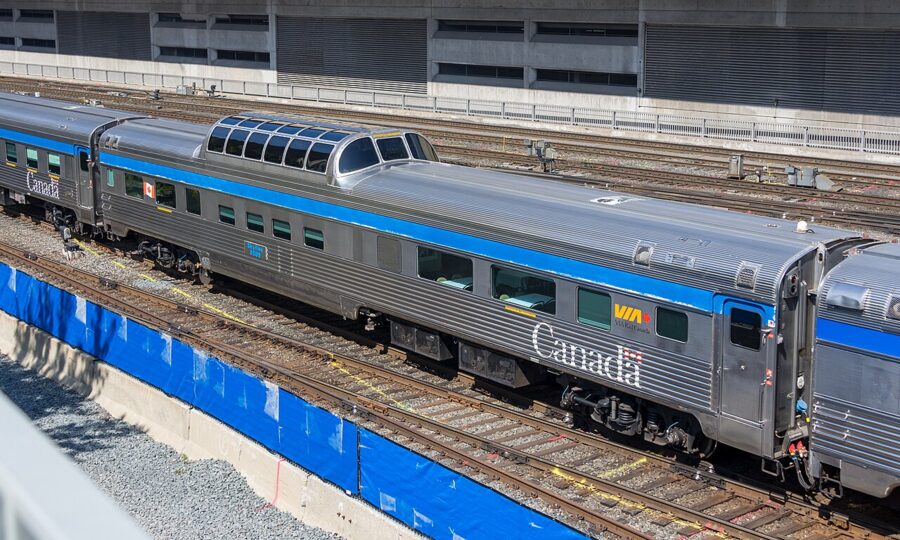
The Canadian is VIA trains 1 and 2, twice a week each way, all year. Canadian Pacific launched it on April 24, 1955, on its own line through Banff. Since VIA’s 1990 cuts it has run over Canadian National’s northern route through Winnipeg, Saskatoon, Edmonton and Jasper, about 2,775 miles (4,466 km) in roughly 94 hours. Canadian National owns almost all of that track, and its freight trains come first.
The route, west from Toronto
The train leaves Union Station in the morning and is in the Canadian Shield within a few hours: lakes, black spruce, bare granite and very few roads. It takes most of two days to cross northern Ontario, past railway towns such as Capreol, Hornepayne and Sioux Lookout. People who fly in to ride only the mountains skip this, and I think they miss a good part of the trip.
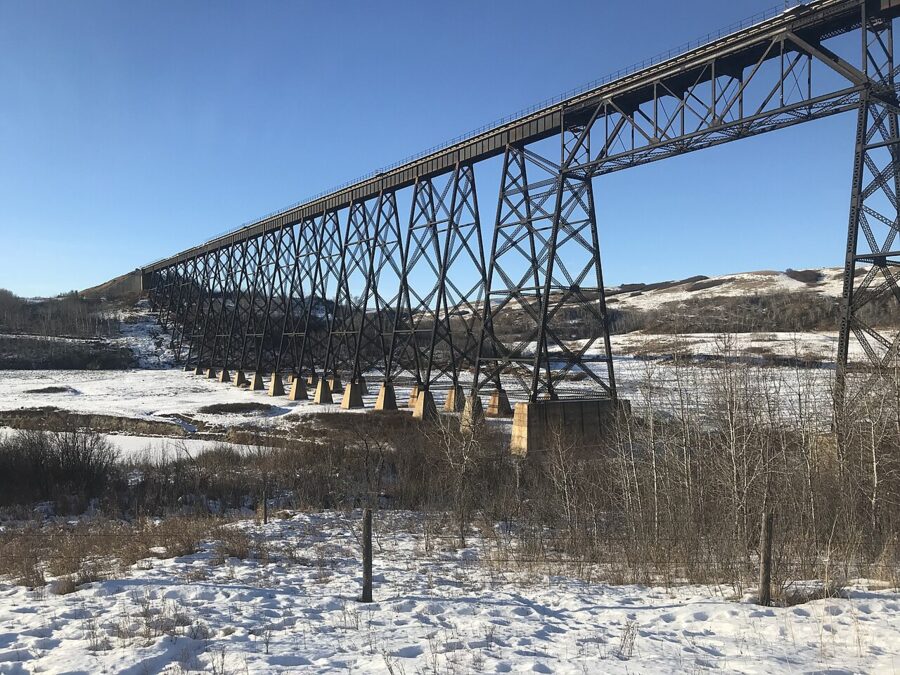
Winnipeg is a long stop for fuel and a fresh crew, then the prairies roll past Saskatoon on day three. West of Wainwright, Alberta, watch the right side for the Battle River valley, which the train crosses on the Fabyan trestle. Edmonton comes late in the evening, and the climb toward the mountains happens overnight.
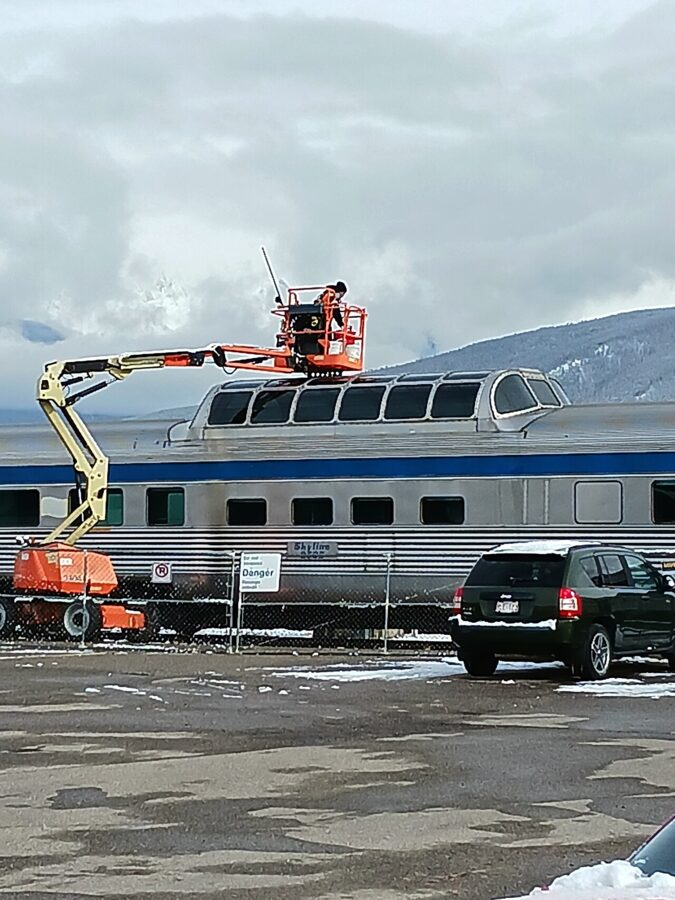
Westbound, you wake up in the Rockies. The train reaches Jasper at 6:30 a.m. and sits for three hours while crews refuel it and wash the dome windows, long enough for a walk through town. After the Jasper to Kamloops day, the Fraser Canyon passes in the dark, before an 8:00 a.m. arrival in Vancouver.
Schedule and which direction to take
VIA’s current timetable runs from November 1, 2026, to March 9, 2027. Main stops only, in local time across four time zones:
| Westbound, train 1 | Time | Eastbound, train 2 | Time |
|---|---|---|---|
| Toronto, leaves Wed and Sun | 9:55 a.m. | Vancouver, leaves Mon and Fri | 3:00 p.m. |
| Sioux Lookout (day 2) | 12:55 p.m. | Kamloops North (day 2) | 12:52 a.m. |
| Winnipeg (day 2) | 8:30 to 10:30 p.m. | Jasper (day 2) | 11:00 a.m. to 12:30 p.m. |
| Saskatoon (day 3) | 10:50 a.m. | Edmonton (day 2) | 6:50 to 7:50 p.m. |
| Edmonton (day 3) | 9:50 to 11:59 p.m. | Saskatoon (day 3) | 6:57 a.m. |
| Jasper (day 4) | 6:30 to 9:30 a.m. | Winnipeg (day 3) | 10:00 to 11:30 p.m. |
| Kamloops North (day 4) | 6:28 p.m. | Sioux Lookout (day 4) | 6:51 a.m. |
| Vancouver, arrives Thu and Sun | 8:00 a.m. | Toronto, arrives Tue and Fri | 2:29 p.m. |
Westbound is the better direction for the mountains, with Jasper to Kamloops in full daylight. Eastbound, you see the Fraser and Thompson canyons on a summer evening, but the train passes Pyramid Falls around 5:00 a.m. and Robson after 7:00 a.m., before sunrise in winter. If you ride only part of the route, buy Jasper to Vancouver westbound.
Economy, Sleeper Plus and Prestige
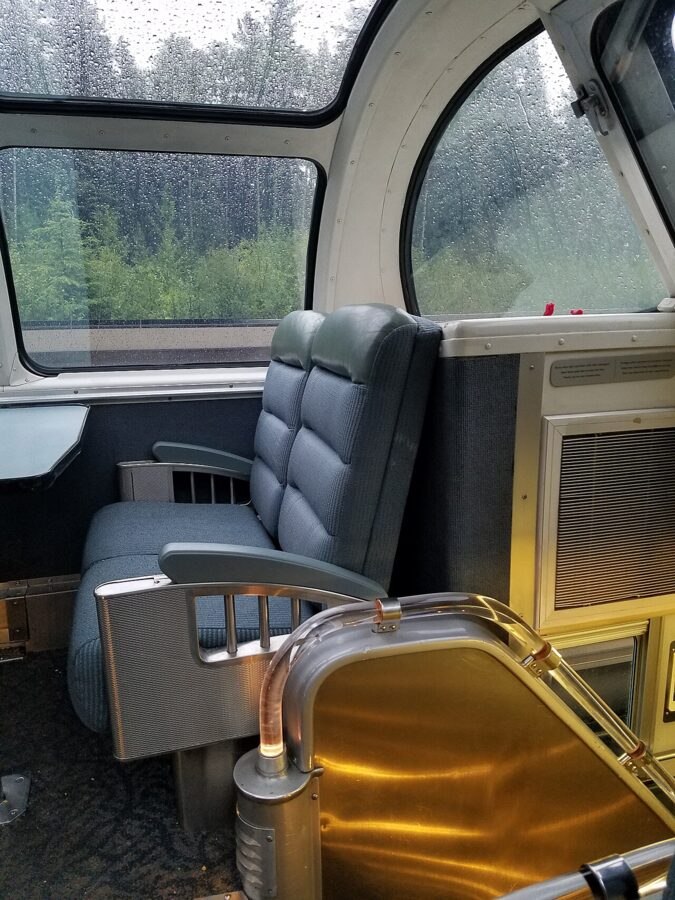
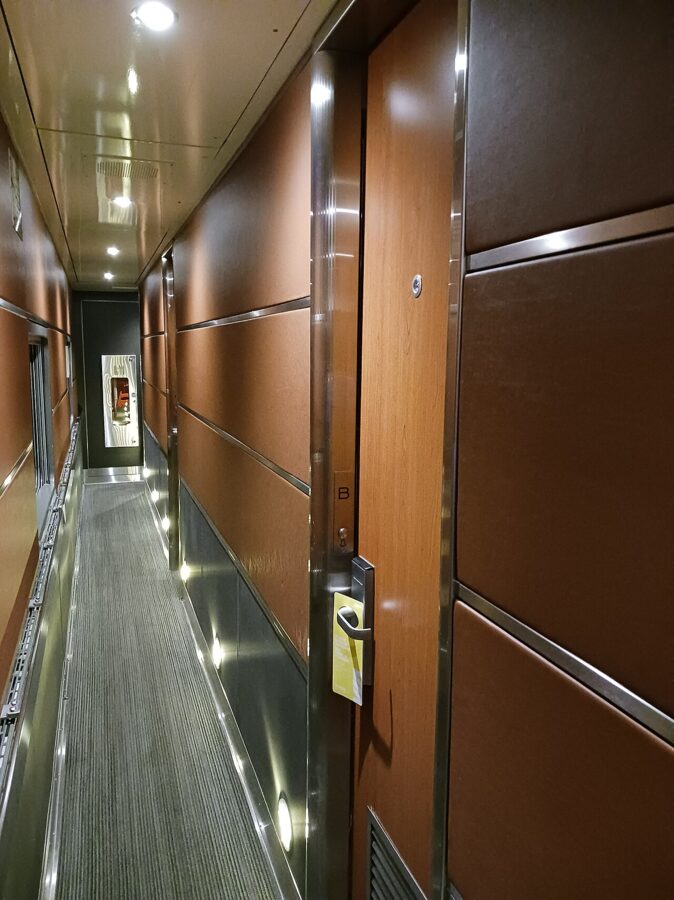
Economy is a reclining seat with a footrest and a power outlet, plus the Skyline car with its dome and a counter selling meals, beer and wine. Four nights in a seat is a lot; I would break the trip at Winnipeg or Jasper, or ride Economy only for the Jasper day.
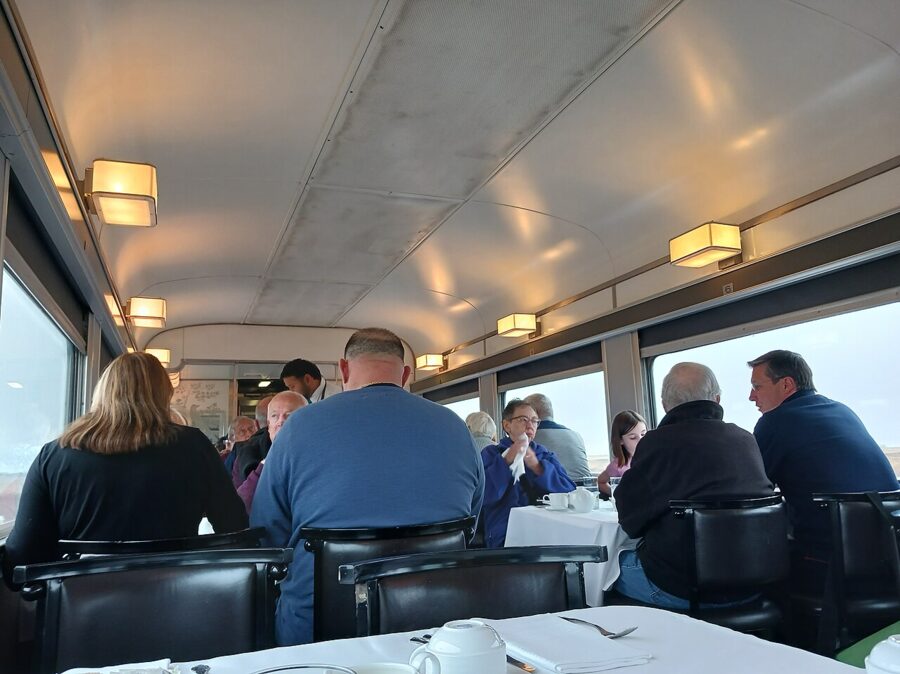
Sleeper Plus is what most people book, with three meals a day in the dining car included. A berth is a pair of facing seats made up into curtained bunks at night, with no electrical outlet. A cabin for one has a seat, a fold-down bed and a toilet under the footrest; a cabin for two has two armchairs, bunks and a small washroom. Showers are shared, one per car.
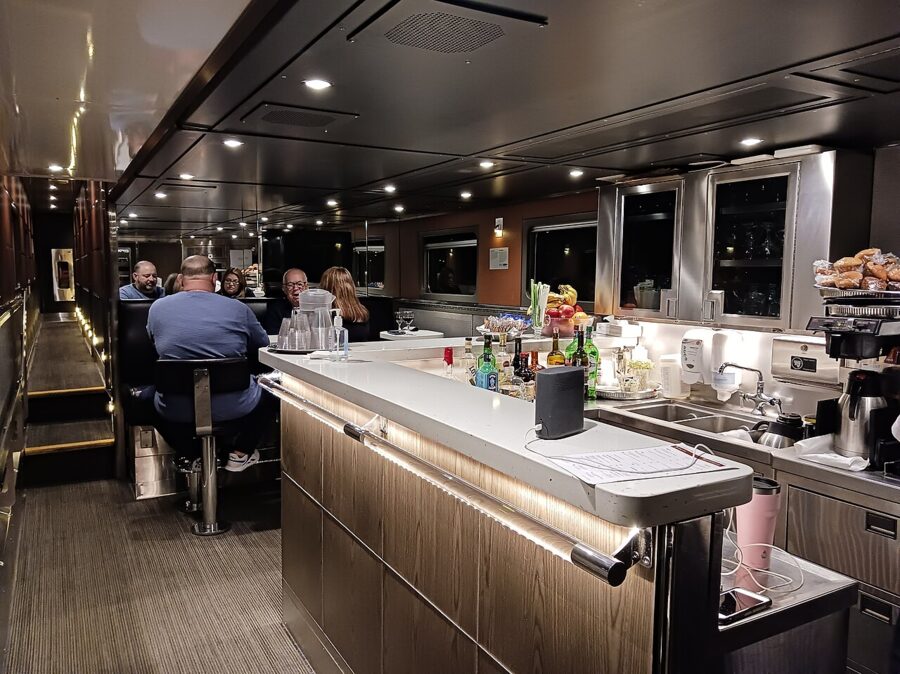
Prestige is sold only between Toronto and Vancouver. The cabin is half as big again as a Sleeper Plus cabin for two, with a leather L-shaped couch that becomes a double bed facing an extra-large window, a private shower, a TV, a concierge and all drinks included. Prestige passengers also get reserved seats in the Park car at the rear, with its bullet lounge, bar and dome.
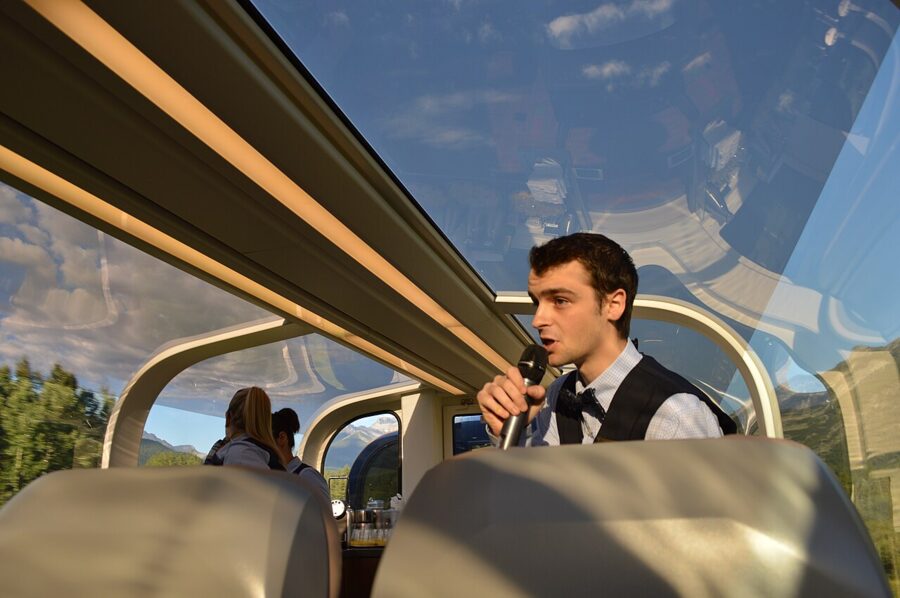
The Park car is the real class divide. In peak season, roughly mid-April to mid-November, Sleeper Plus passengers can use it only from 5:00 p.m. to last call at 11:00 p.m., and not at all leaving Vancouver. Off-peak they can use it any time except the first hour out of Toronto and Vancouver. Its dome is Prestige-only in peak season, with some seats held for Prestige the rest of the year.
What it costs (as of November 2026)
VIA’s “starting at” fares, one way per person, before sales tax:
| Route | Economy (Escape fare) | Sleeper Plus upper berth | Sleeper Plus cabin for two | Prestige cabin for two |
|---|---|---|---|---|
| Toronto to Vancouver | C$514 (about US$360) | C$1,750 (about US$1,230) | C$3,241 (about US$2,280) | C$7,592 (about US$5,350) |
| Toronto to Jasper | C$424 (about US$300) | C$1,310 (about US$920) | C$2,425 (about US$1,710) | C$5,720 (about US$4,030) |
| Winnipeg to Vancouver | C$322 (about US$225) | C$1,187 (about US$835) | C$2,198 (about US$1,550) | C$5,131 (about US$3,610) |
| Edmonton to Vancouver | C$210 (about US$150) | C$904 (about US$635) | C$1,672 (about US$1,180) | Not sold |
Cabin prices are per person for two sharing; one person alone in a cabin for two pays a surcharge. Fares vary by season and departure, and June to October is the expensive time. VIA’s fare comparison shows the current lows, and Escape fares cannot be changed or refunded.
The delays, and why the schedule is so slow
The Canadian is slower today than its predecessors were in the 1950s, and the reason is freight. By 2017 it was on time only 8 percent of the time, and in May 2018 some departures ran nearly two days late. From July 26, 2018, VIA padded the timetable to four nights each way.
The padding usually works, and the train often reaches Toronto or Vancouver early, though you can stay aboard until the scheduled time. It does not work in a bad winter. In January 2025 several westbound trains ran up to 18 hours late from freight congestion and mechanical failures, and in February 2025 one sat for six hours in Saskatchewan because switch heaters had failed. Across VIA’s whole network, on-time performance fell to 30 percent in early 2025, according to the Auditor General’s 2026 special examination of VIA.
VIA no longer gives travel credits for late long-distance trains, so a delay’s cost is yours. Plan as if the Canadian will be half a day late. There is no Wi-Fi on board, only in the Toronto, Winnipeg, Edmonton, Jasper and Vancouver stations.
The Rocky Mountaineer: daylight, hotels and the price of both
The Rocky Mountaineer, running since 1990, sells packages rather than tickets: two days on the train with a night in a Kamloops hotel between them, usually wrapped in more hotel nights and transfers. Nobody sleeps on board, which sets it apart from the Orient Express and the other luxury trains it is priced against. It covers about 280 miles (450 km) a day, and a day on board runs 10 to 14 hours, all of it in daylight.
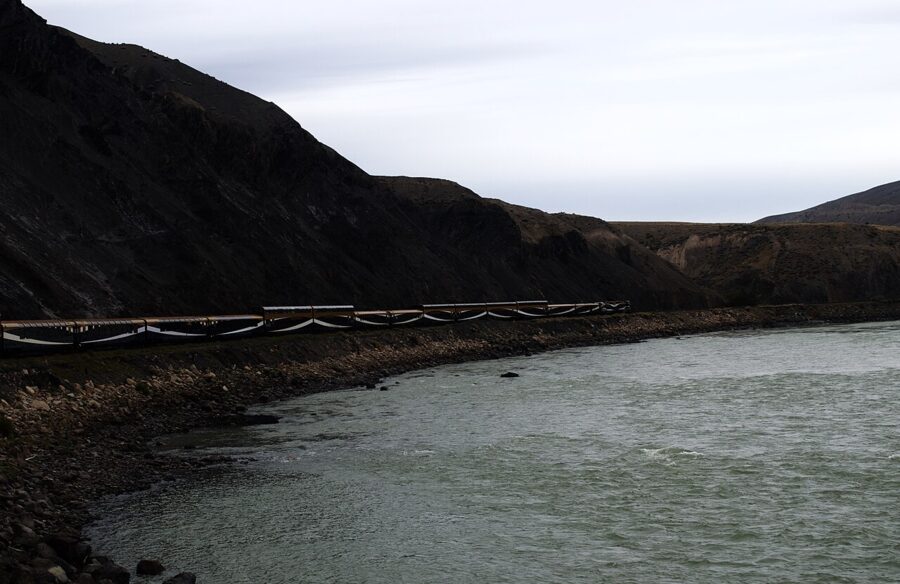
First Passage to the West
This is the Vancouver to Lake Louise and Banff route, on the old Canadian Pacific main line the Canadian left in 1990, and the Rocky Mountaineer is its only passenger train. Day one follows the Fraser River past Hell’s Gate to Kamloops. Day two runs by the Shuswap lakes and over Rogers Pass, then through Kicking Horse Canyon and the Spiral Tunnels to the Continental Divide and Banff.
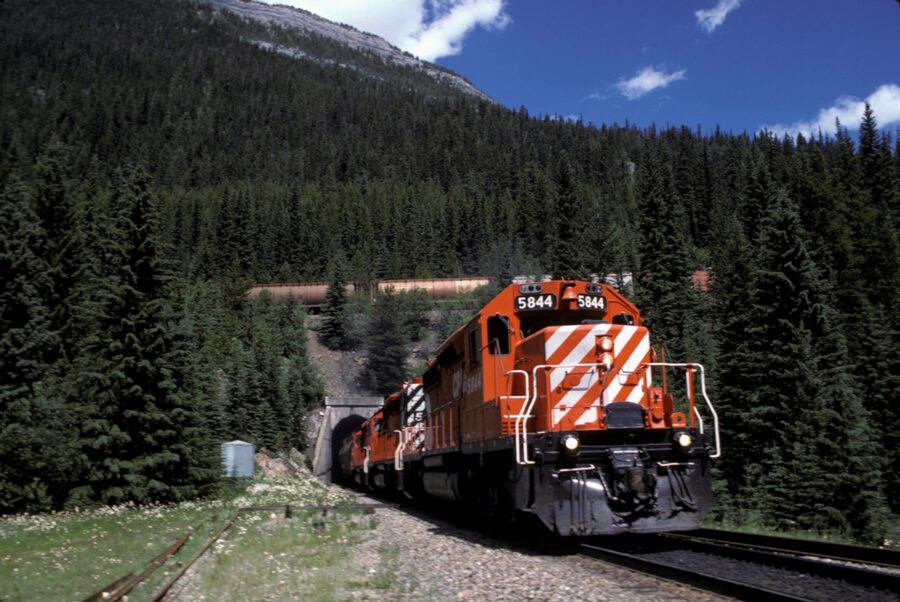
Journey through the Clouds
The Jasper route shares the first day to Kamloops, then follows the North Thompson River past Pyramid Falls, the Albreda Glacier and Mount Robson. West of Jasper it uses the same track as the Canadian, but by day in both directions. If you have ridden the Canadian westbound, this is the route that shows you the Fraser Canyon you slept through.
What happened to the other routes
Rainforest to Gold Rush, the three-day trip from North Vancouver through Whistler and the Cariboo to Jasper, made what is expected to be its last run in 2026. Canadian National is giving up its former BC Rail line north of Squamish, and the company told Railfan & Railroad it would return only if a long-term operator is found for the track. It is not on the 2027 route list, and Passage to the Peaks, Banff to Jasper, ran only in June and July 2026 while World Cup crowds filled Vancouver.
In the United States, the company’s Rockies to the Red Rocks trip runs under a separate brand, Canyon Spirit, between Denver and Salt Lake City with nights in Glenwood Springs and Moab. Service from Denver began in April 2026, from more than $2,000 per person, Trains reported.
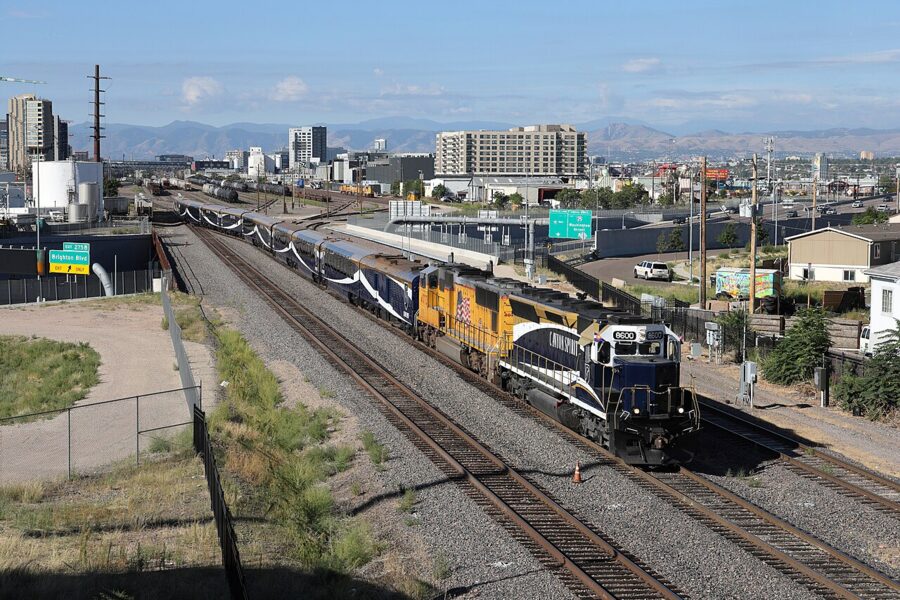
GoldLeaf or SilverLeaf
GoldLeaf is a two-level coach: your seat is upstairs under a full glass dome, meals are served in a dining room below, and the open-air platform is larger. SilverLeaf is single-level, with big curved windows, hot meals at your seat and a smaller outdoor space. Both include breakfast, lunch, drinks and the hosts’ commentary.
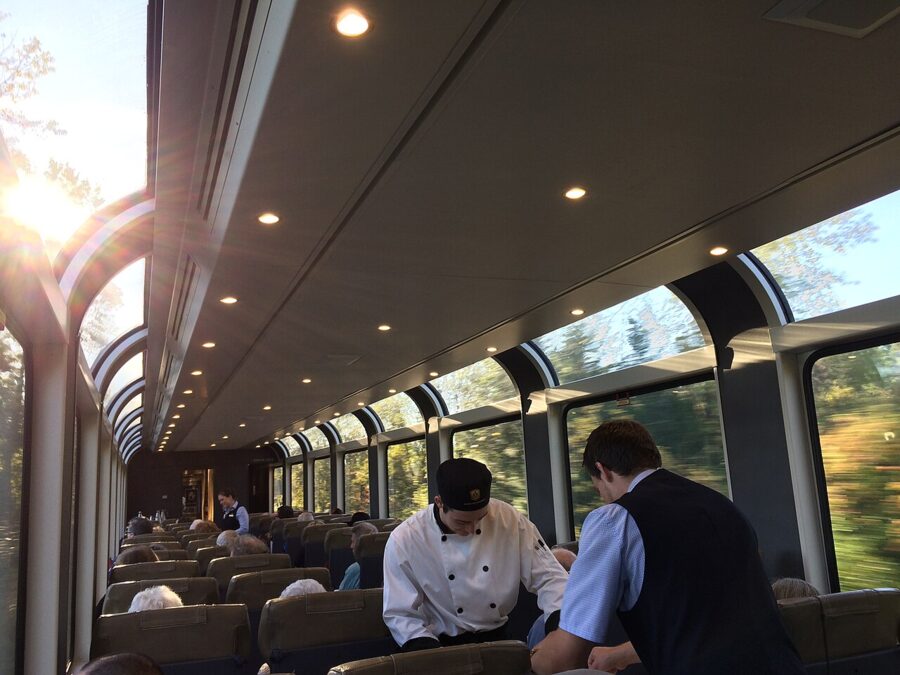
The service level also sets your hotels: GoldLeaf uses places such as the Fairmont Hotel Vancouver and the Fairmont Jasper Park Lodge, SilverLeaf central hotels such as Elk + Avenue in Banff. In Kamloops everyone gets what the company calls a moderate three-star hotel. I would book SilverLeaf for the Jasper route, where the scenery is close to the track, and consider GoldLeaf for the Spiral Tunnels day.
Prices and seasons
Packages between Vancouver and Banff and between Vancouver and Jasper start at about C$2,354 (about US$1,660) per person and pass C$16,000 for long GoldLeaf trips (as of November 2026, for 2027 departures), plus 5 percent GST. Children pay adult fares, and infants cannot ride on a lap.
April and May bring snow on the peaks, July and August the crowds, September the salmon run and fall color. Cancellations are non-refundable unless your itinerary says otherwise, and no changes are allowed in the last 15 days, under the company’s FAQ, so buy travel insurance with the package.
The Canadian or the Rocky Mountaineer
| The Canadian (VIA Rail) | Rocky Mountaineer | |
|---|---|---|
| Route | Toronto, Winnipeg, Edmonton, Jasper, Vancouver; 2,775 miles | Vancouver to Banff or Jasper via Kamloops; about 560 miles |
| When | All year, twice a week each way | April to October |
| Nights | Four on board | One hotel night in Kamloops; no sleeping cars |
| Rockies in daylight | Jasper to Kamloops westbound; Fraser Canyon at night | The whole route |
| Meals | Included in Sleeper Plus and Prestige | Breakfast, lunch and drinks included |
| Lowest fare | C$514 (about US$360) Economy; C$1,750 (about US$1,230) berth | About C$2,354 (about US$1,660) per person |
| Booking | Up to 10 months ahead | 2027 packages on sale now |
| Main risk | Hours of freight delay | Price, and a fixed package |
Take the Canadian to cross the country, to travel outside April to October, or when the budget matters. If the Rockies are all you came for, the cheapest seat for Mount Robson is Economy on the Canadian from Edmonton to Vancouver, from C$210 (about US$150).
Take the Rocky Mountaineer for mountains and canyons entirely in daylight, a hotel bed every night and no planning. It is the better way to see the Fraser Canyon and the only passenger train through the Spiral Tunnels, but it does not cross Canada and it is not cheap. Some people do both: the Canadian to Jasper, a road transfer down the Icefields Parkway, then the Rocky Mountaineer from Banff to Vancouver.
VIA’s other long-distance trains
The Ocean: Montreal to Halifax
The Ocean leaves Montreal at 6:30 p.m. on Wednesdays, Fridays and Sundays and reaches Halifax at 6:36 p.m. the next day. You sleep through Quebec along the St. Lawrence, wake by the Baie des Chaleurs and cross New Brunswick and Nova Scotia by day. Sleeper Plus means a cabin for two, some with a private shower, and meals in the dining car; there is no Prestige class, but unlike the Canadian there is Wi-Fi.
Jasper to Prince Rupert
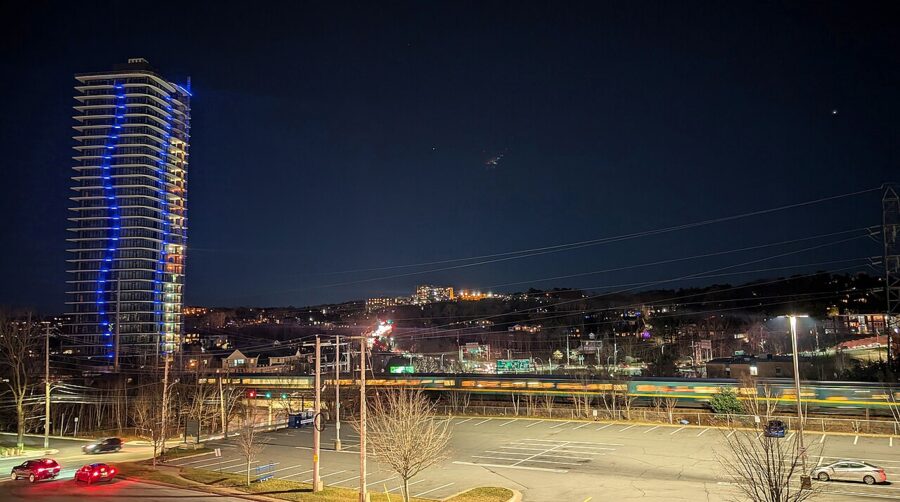
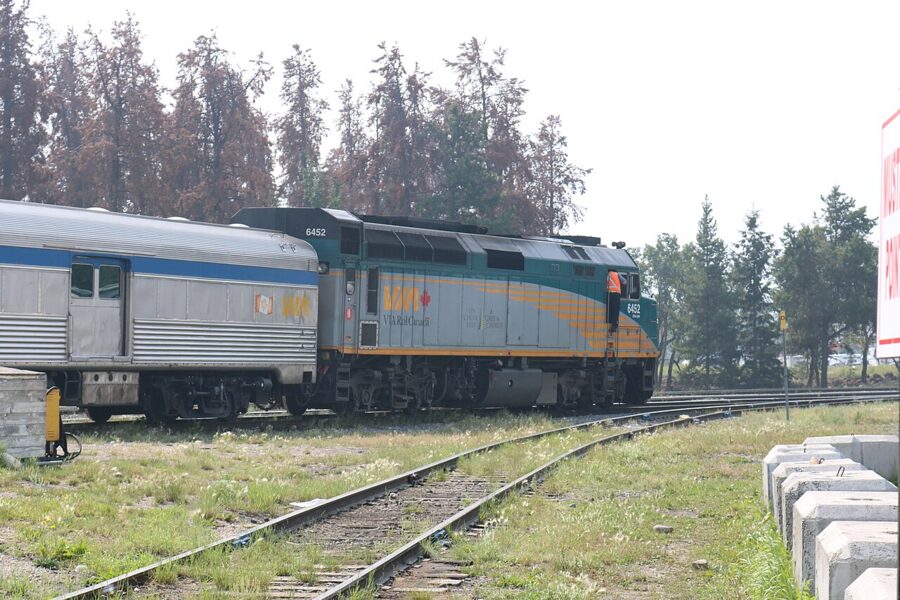
The train once called the Skeena leaves Jasper at 10:45 a.m. on Wednesdays, Fridays and Sundays and follows the Fraser past McBride to Prince George, arriving at 5:08 p.m. You spend the night in a hotel you book yourself, then leave at 8:00 a.m. for Smithers, Terrace and the Skeena River, reaching Prince Rupert at 8:25 p.m. It runs only in daylight, and Economy fares start around C$178 (about US$125) one way for December 2026 dates.
Winnipeg to Churchill
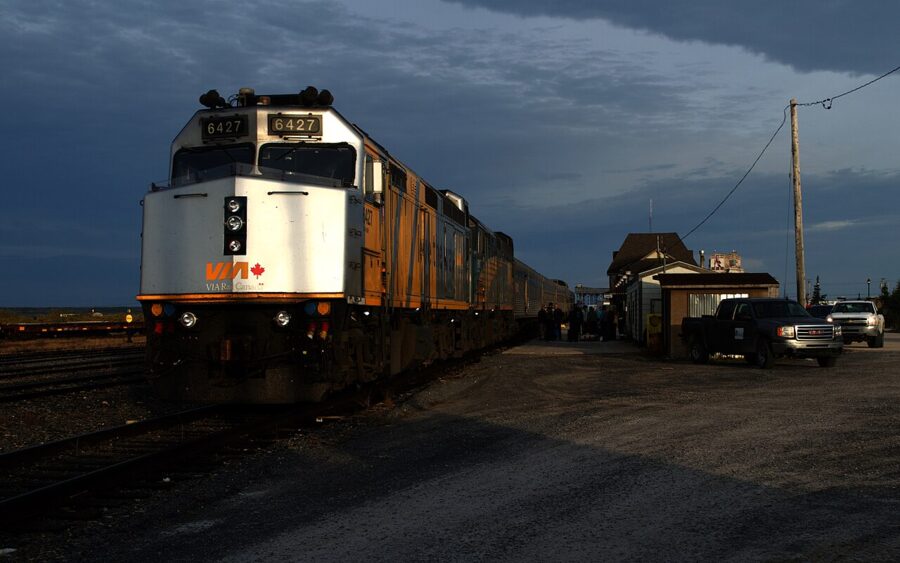
No road reaches Churchill, on Hudson Bay. VIA’s train leaves Winnipeg at 12:05 p.m. on Tuesdays and Sundays and arrives at 9:00 a.m. two days later, about 1,050 miles (1,694 km) and 45 hours, with a five-hour stop in Thompson. The classes are Economy and Sleeper Plus, but meals are not included; light meals and snacks are for sale. Economy starts around C$241 (about US$170) one way for December 2026 dates.
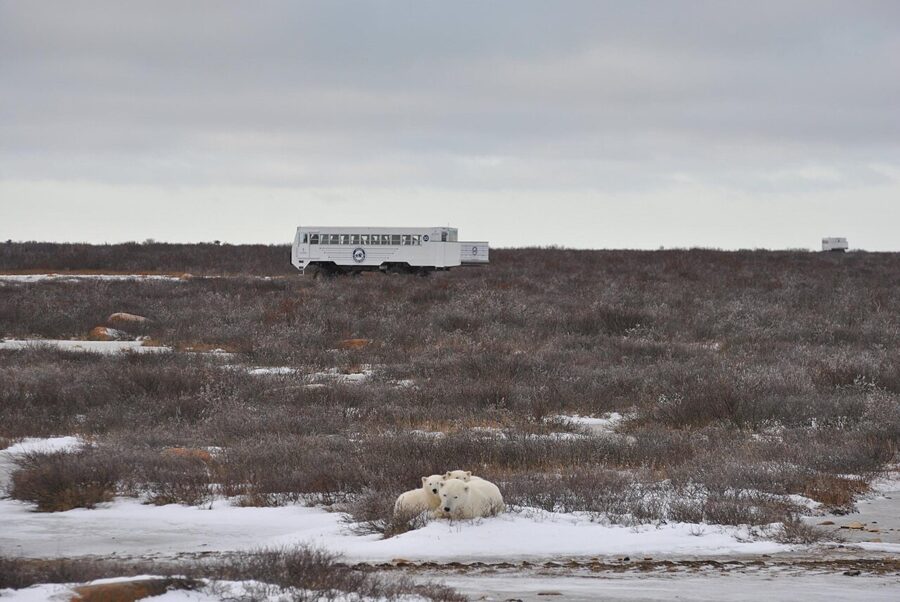
Polar bear season is October and November, when the bears gather on the shore waiting for the bay to freeze. Churchill’s few hotel rooms and tundra vehicle tours sell out then, so book them before the train. Northern lights peak in February and March, with a second peak in late August and September.
The Corridor and getting there from the US
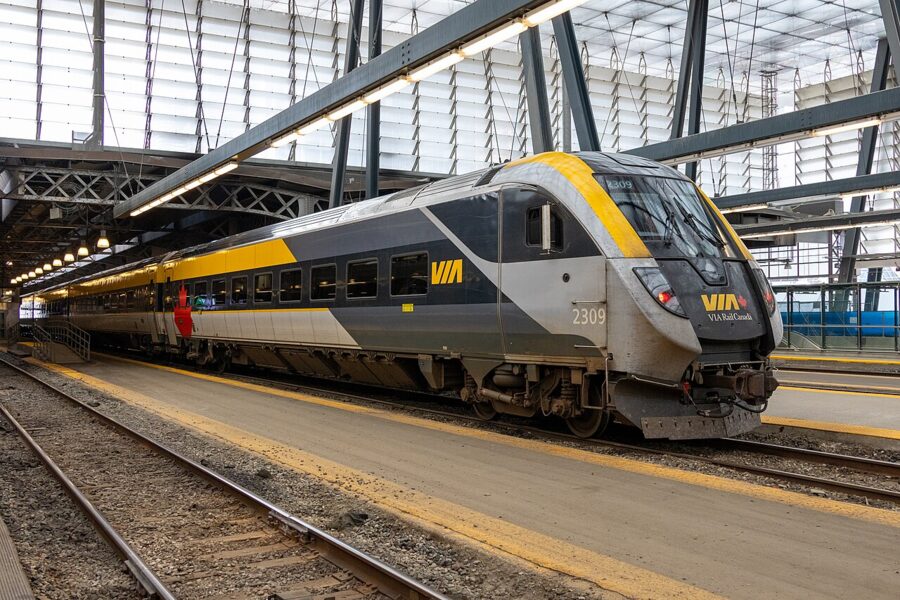
Most VIA trains run the Quebec City to Windsor corridor, and they are how you reach the long-distance trains. Toronto to Montreal takes five to five and a half hours, with about six departures a day, more and more of them in new Siemens Venture trains. From the United States, Amtrak’s Maple Leaf runs from New York to Toronto, the Adirondack from New York to Montreal and Amtrak Cascades from Seattle to Vancouver; Amtrak’s long-distance trains feed all three.
Tourist lines and heritage railways
Canada’s scenic day trains are fewer and farther apart than those in the US, and some famous ones are gone. The American side has many more scenic railroads, and in December the Christmas trains run in both countries.
Agawa Canyon Tour Train
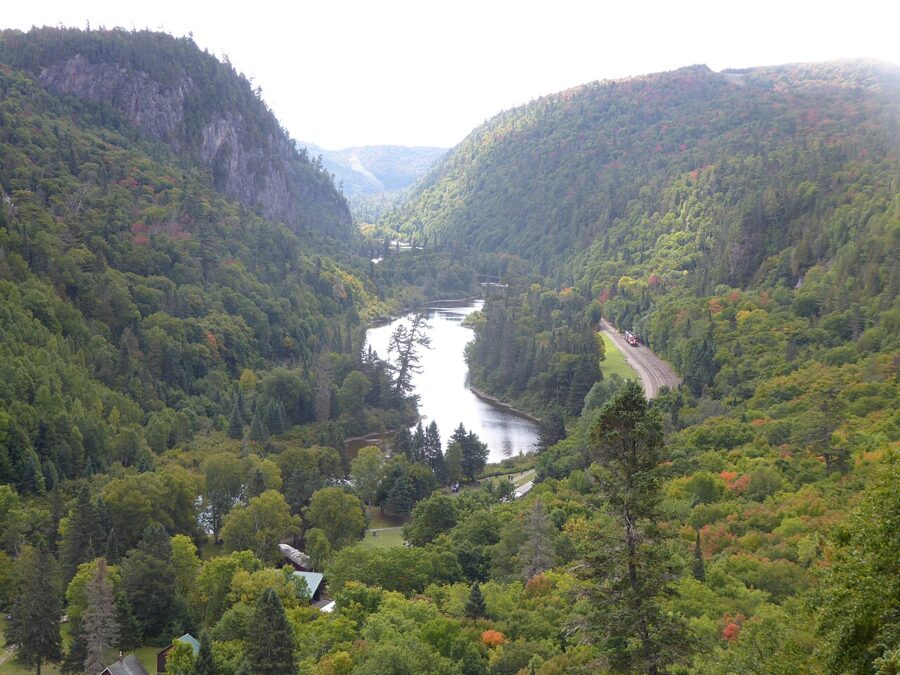
The Agawa Canyon Tour Train leaves Sault Ste. Marie, Ontario, for a ten-hour day: four hours north through the Shield, a 90-minute stop in Agawa Canyon Park, then the ride back. The park is reachable only by rail. At mile 102 the line runs along the canyon rim, then drops about 500 feet over ten miles to the floor at mile 114.
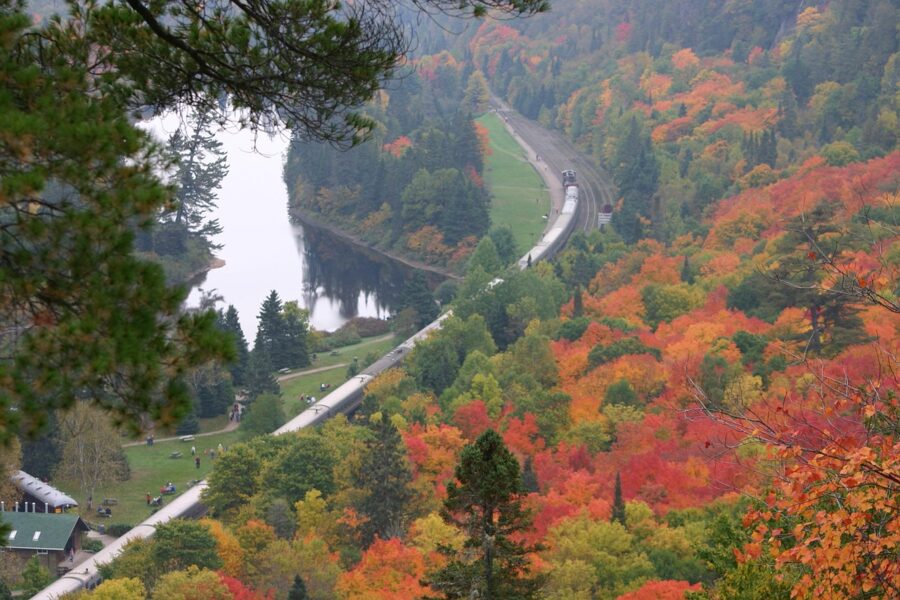
In the canyon you can walk to Black Beaver Falls and Bridal Veil Falls, or climb about 300 steps on the Lookout Trail. In 2026 adults paid C$154 (about US$110), seniors C$125 and youth C$78 from August 1 to September 14, and everyone C$170 (about US$120) for fall color from September 15 to October 18. The 2027 schedule had not been posted as of late November 2026. Without the optional trip protection, tickets are non-refundable, and Americans need a passport or an enhanced license.
White Pass & Yukon Route
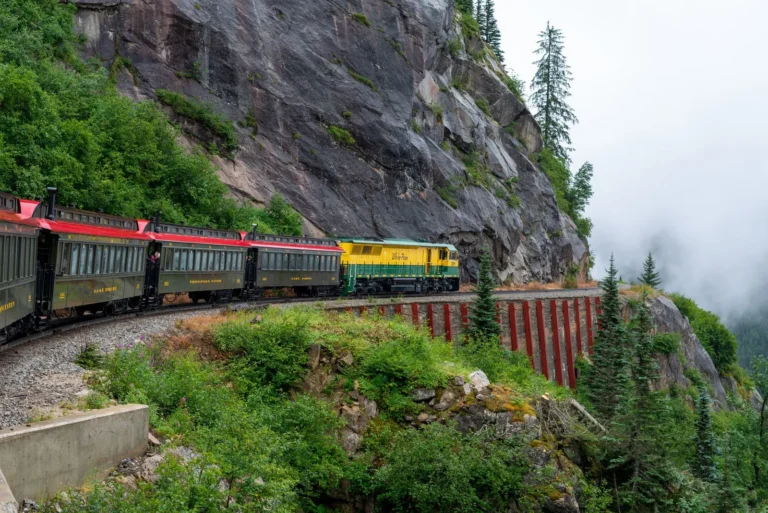
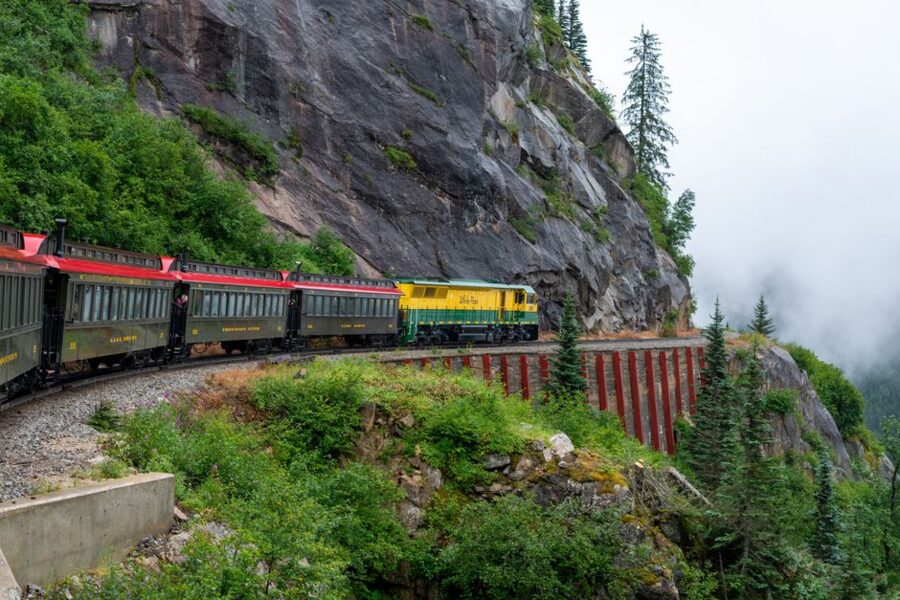
The narrow-gauge White Pass & Yukon Route climbs from Skagway, Alaska, to the Canadian border at White Pass, following the trail of the 1898 Klondike Gold Rush. The White Pass Summit Excursion is 40 miles round trip in two and a half to three hours, for $169 an adult and $84.50 a child, and needs no passport because it turns back at the summit. Longer trips continue into British Columbia and to Carcross in the Yukon, and those do need one.
British Columbia: the Royal Hudson and the Kettle Valley
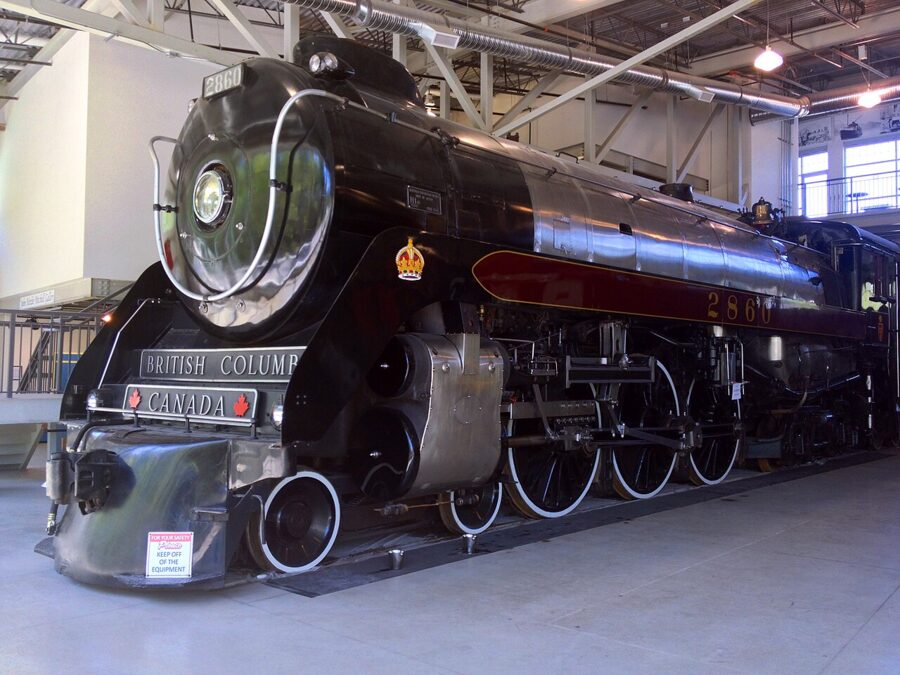
The Royal Hudson steam excursion from North Vancouver to Squamish no longer runs. Locomotive 2860 hauled it on BC Rail until it was retired in 1999, facing a boiler replacement, and it has been at Squamish since 2000. You can see it inside the roundhouse at the Railway Museum of British Columbia, open in summer and for its North Pole Express at Christmas.
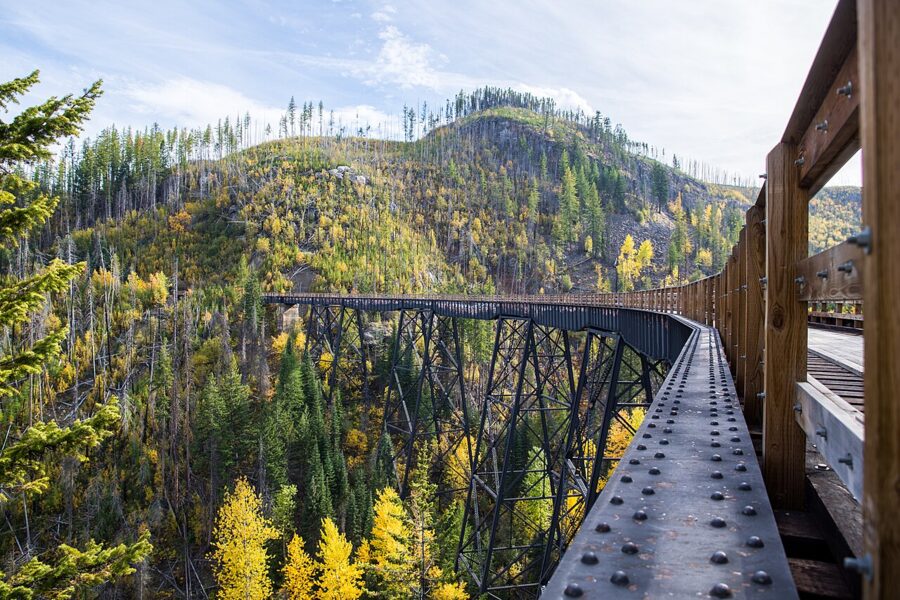
Most of the old Kettle Valley Railway across southern British Columbia is now a rail trail. Its best-known stretch is Myra Canyon above Kelowna, in Myra-Bellevue Provincial Park, where the trail crosses 18 historic trestles. The 7.5 miles (12 km) between the Myra and June Springs access points make an easy day on foot or by bike; walk your bike over the trestles.
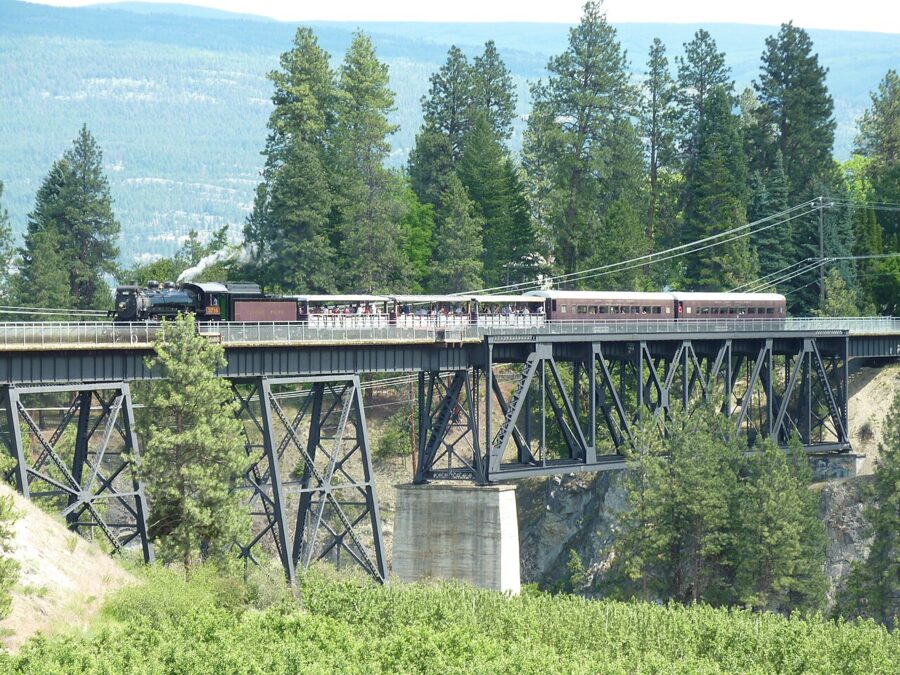
To ride the Kettle Valley under steam, go to Summerland. The Kettle Valley Steam Railway runs the only preserved section, 10 miles (16 km) through orchards and vineyards and over the Trout Creek trestle, 238 feet above the canyon floor. Its 90-minute trips behind 1912 locomotive 3716 run from May through September, with Christmas trains in winter.
Ontario: Moosonee, the Northlander and short lines
Ontario Northland’s Polar Bear Express is a lifeline train that tourists ride too. It leaves Cochrane at 9:00 a.m. for Moosonee near James Bay, arriving at 2:00 p.m., and starts back at 5:00 p.m. From late October to June it runs Mondays, Tuesdays, Thursdays and Fridays, and the dining car is a reason to go.
Reaching Cochrane by train becomes possible again on December 10, 2026, when Ontario Northland restarts the Northlander from Toronto after more than 14 years, with four round trips a week over more than 500 miles (800 km). Tickets went on sale November 26, 2026. VIA also runs a year-round train three days a week from Sudbury to White River, northeast of Lake Superior, leaving at 9:00 a.m. and arriving at 5:05 p.m.
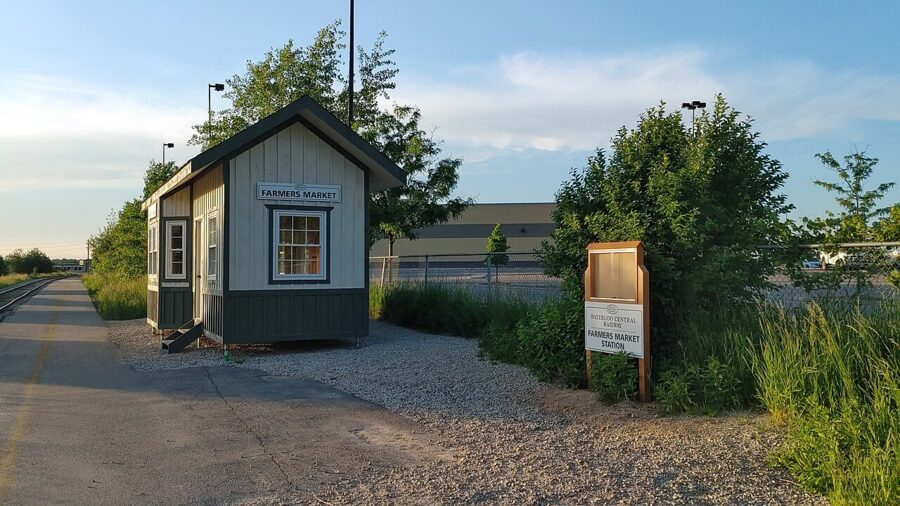
Near Toronto, the South Simcoe Railway runs from Tottenham to Beeton and back in just under an hour and posts its 2027 schedule in January. The Waterloo Central Railway runs between Waterloo, the St. Jacobs Farmers’ Market, St. Jacobs village and Elmira.
Booking, discounts and planning around delays
VIA sells tickets up to 10 months ahead. For a summer cabin on the Canadian, book as close to that date as you can; winter departures are cheaper, and the Jasper day is still lovely in snow. Rocky Mountaineer’s 2027 season is on sale now. Book the hotel nights before and after either train at the same time.
VIA’s Sleeper Plus class deals are the main way to save on the Canadian, the Ocean and the Churchill train. They are online only, on set trains and dates, non-refundable and non-exchangeable, with no extra discount for seniors or children. VIA also posts new deals every Tuesday.
Children travel at half price in Economy and 25 percent off in Sleeper Plus, but pay full fare in Prestige. VIA’s 15 percent senior discount does not apply to Sleeper Plus or Escape fares. Rocky Mountaineer’s Black Friday offer on 2027 packages runs until December 3, 2026, saving up to C$1,500 (US$1,100 on its US site) per couple.
Never book a flight, a cruise or a connecting train on the day the Canadian is due in; Rocky Mountaineer asks the same of its passengers. A spare hotel night costs less than a missed flight. Split the Canadian at Winnipeg or Jasper if you want a night on the ground, since VIA sells the legs separately.
Pack for four days without Wi-Fi: earplugs, a book or offline maps, a water bottle, and in Economy your own pillow and blanket or VIA’s blanket kit. Berths have no power outlet, but the Skyline cars do.
For a first trip, I would take the Canadian westbound in a Sleeper Plus cabin and leave a free day in Vancouver at the end. Be in the dome by 9:30 a.m. at Jasper, look right for Robson, and keep a seat on the left for Pyramid Falls in the afternoon.