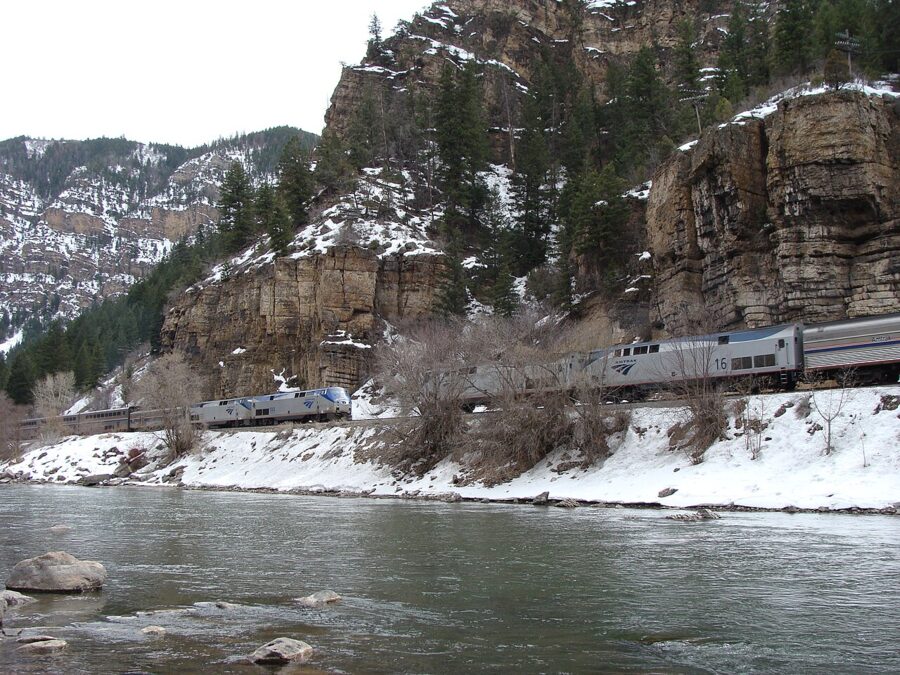
Early in the afternoon of its second day, the westbound California Zephyr follows the Colorado River into Glenwood Canyon, and for the next 12.5 miles the best seat on the train is on the right. The river runs beside the track, Interstate 70 hangs on the far bank, and the walls climb as high as 1,300 feet before the canyon opens at Glenwood Springs, where the train is due at 2:36 p.m.
It is one stretch of many. Amtrak’s California Zephyr runs daily for 2,438 miles between Chicago and Emeryville, across the bay from San Francisco, through Iowa, Nebraska, the Colorado Rockies, the Utah desert, Nevada and the Sierra Nevada. The autumn 2026 timetable gives it 52 hours 57 minutes westbound and 52 hours 14 minutes eastbound, two nights either way.
What you see depends on three choices: the direction, the side of the train and the month. What you pay depends mostly on how early you book, and in 2026 the Zephyr is short of seats.
The route in order, westbound
Times below are from Amtrak’s California Zephyr timetable in force for autumn 2026, local time at each stop. The train runs through three time zones, and “left” and “right” mean the direction of travel, whichever way your seat faces.
Chicago to the Mississippi: the first afternoon
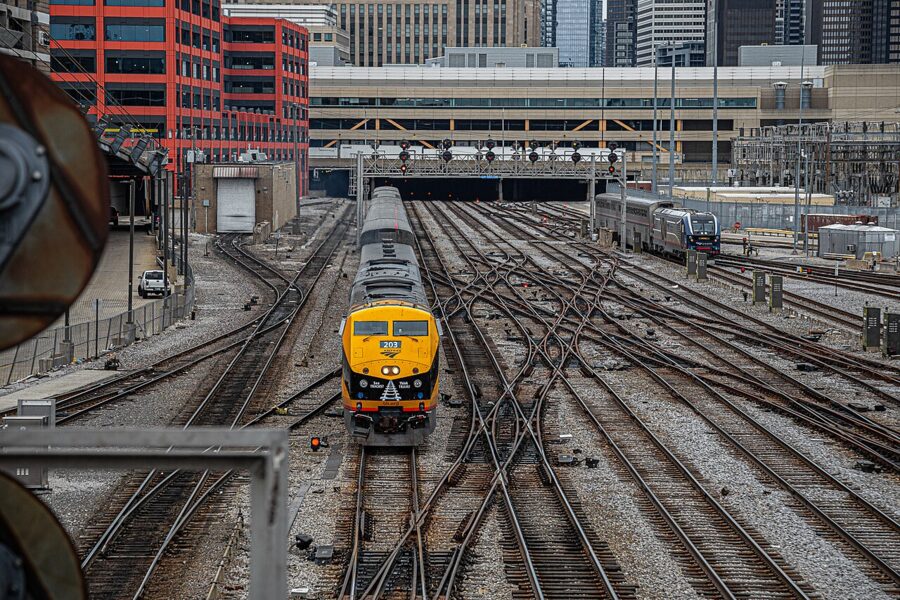
Train 5 leaves Chicago Union Station at 2:00 p.m. and runs west through the suburbs on the BNSF main line, stopping at Naperville at 2:34. Then it is Illinois farm country: Princeton, Galesburg at 4:43, flat fields and grain elevators. Use this stretch to find the lounge car and get your name down for dinner.
At Burlington the line crosses the Mississippi on a long BNSF bridge into Iowa, just before the 5:34 p.m. stop. From spring to mid-autumn the crossing comes in good light; from November to February the river is a dark gap under the train. The rest of Iowa, Ottumwa, Osceola and Creston, passes during dinner.
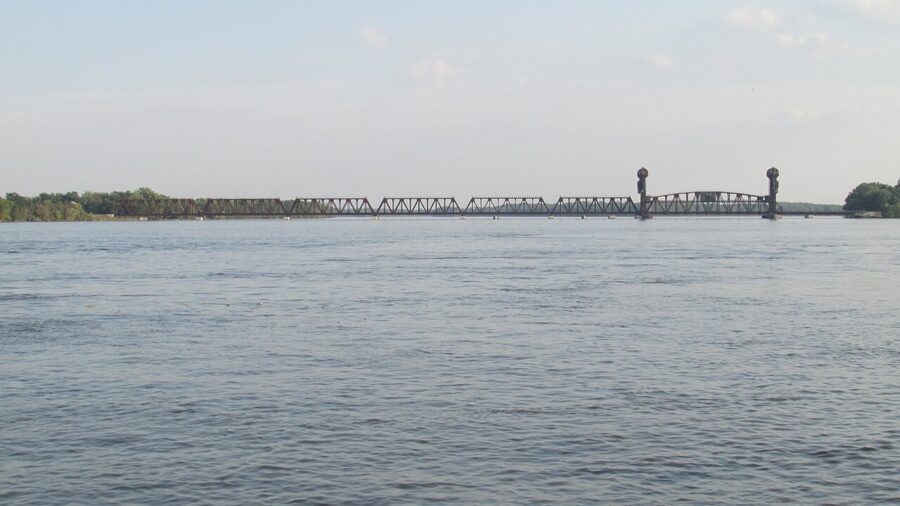
Nebraska at night, Denver in the morning
Omaha comes at 11:09 p.m., with a 16-minute stop, and after that the train crosses Nebraska in the dark: Lincoln, Hastings, Holdrege and McCook between midnight and half past four. Nebraska at night is the plain answer to anyone who asks whether the Zephyr is scenic the whole way. It is not, and nobody is awake to mind.
By Fort Morgan at 5:46 a.m. the train is in Mountain Time on the plains of eastern Colorado, and on a summer morning it is already light. Denver Union Station comes at 7:56 a.m., with a stop of 50 minutes before the 8:46 departure. Get off and walk: it is the longest break of the trip.
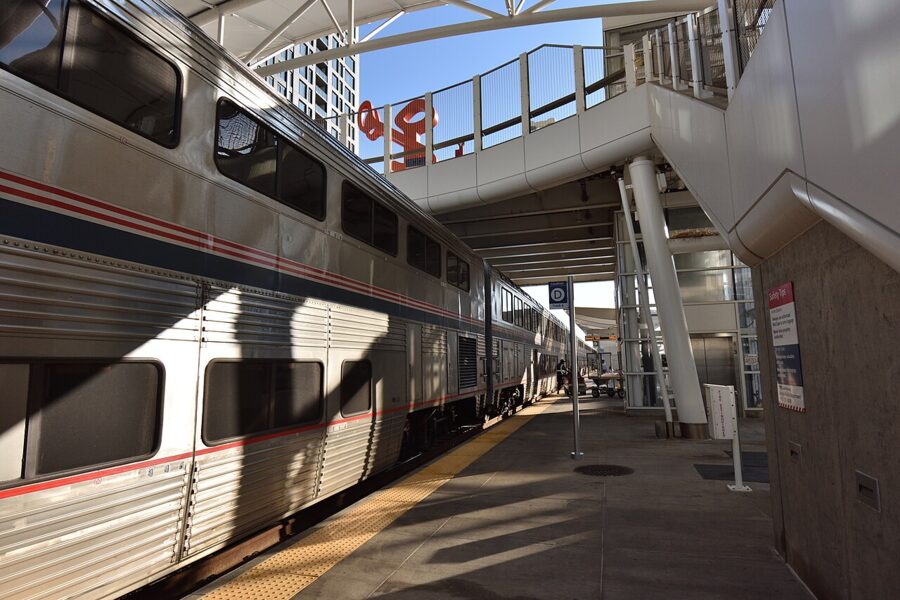
The Front Range and the Moffat Tunnel
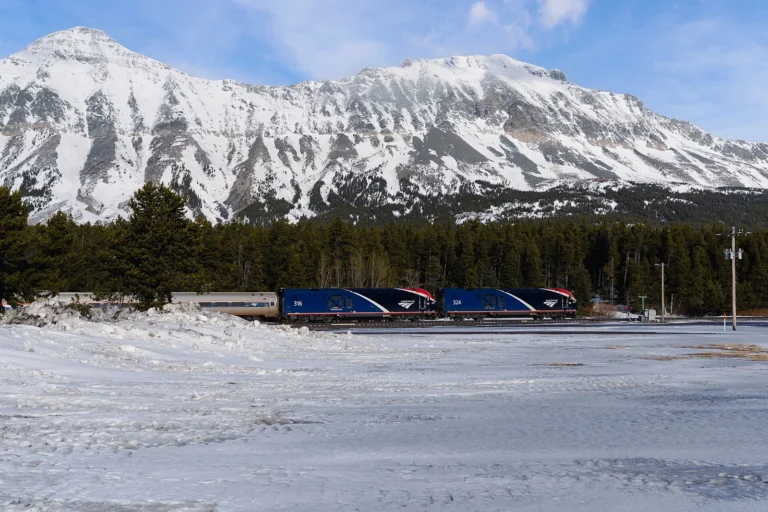
The best hour of the morning starts soon after Denver. The line heads northwest, then climbs south along the face of the foothills, so Denver and the plains spread out on the left. It swings through the S-bends of the Big Ten Curve, turns west into the mountains and enters a string of short tunnels up the canyon of South Boulder Creek.
The Moffat Tunnel ends the climb. It is 6.2 miles long, opened in February 1928, and its apex, 9,239 feet above sea level, is the highest point on the line. You go in under the Continental Divide among pine forest and come out at the base of Winter Park Resort, with Fraser-Winter Park station at 10:48 a.m.
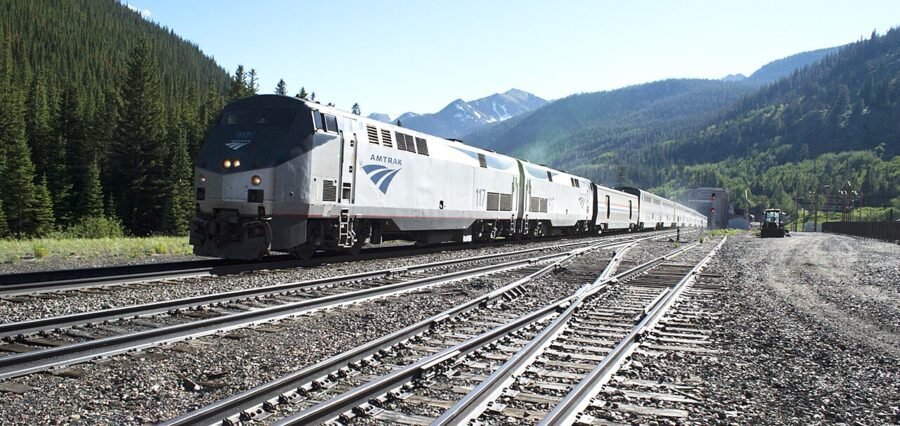
Down the Colorado: Gore Canyon and Glenwood Canyon
From Fraser the train follows the Fraser River down to Granby at 11:22 a.m. and meets the Colorado River, which it follows, on and off, all the way to Utah. Byers Canyon is short and tight. Gore Canyon, past Kremmling, has no road along the river: about three miles of class V whitewater between walls a thousand feet high.
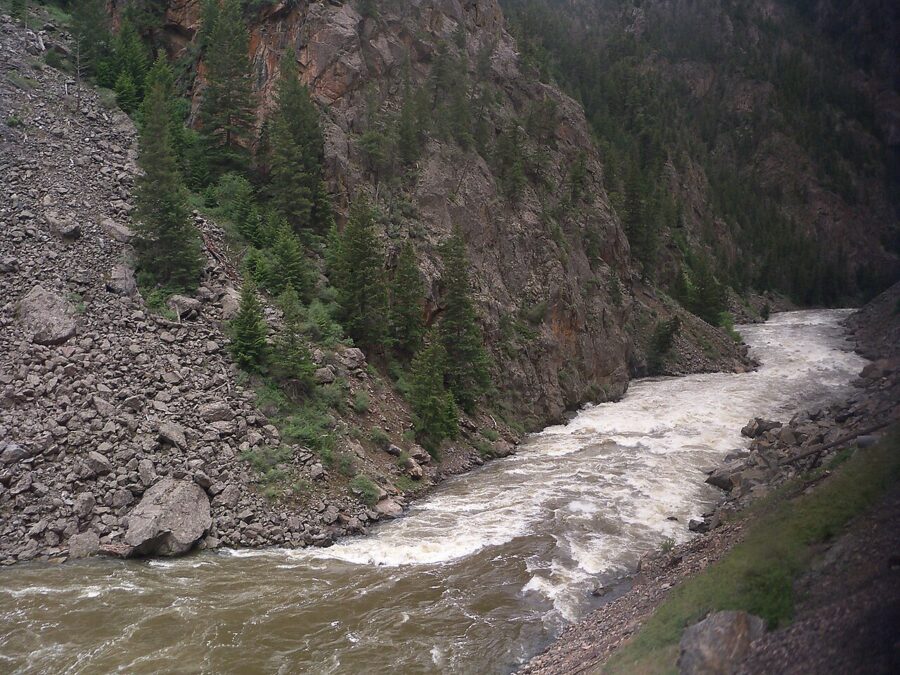
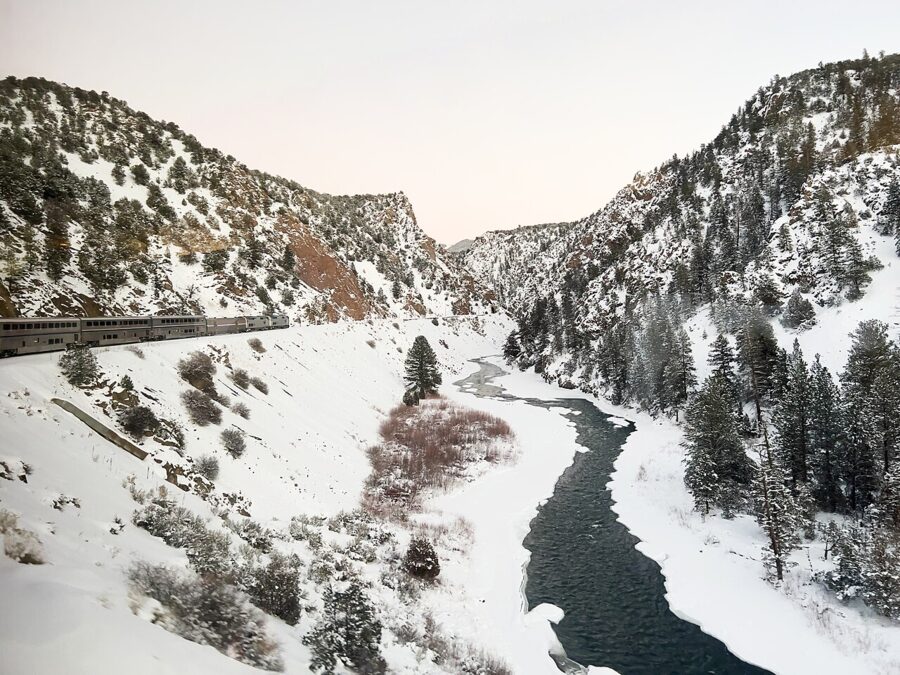
Below Dotsero, where the Eagle River comes in, the river enters Glenwood Canyon. The railroad keeps to the south bank, so the river and the highway are on the right westbound, with the cliff close on the left. Glenwood Springs, at the mouth of the Roaring Fork, has a seven-minute stop at 2:36 p.m.
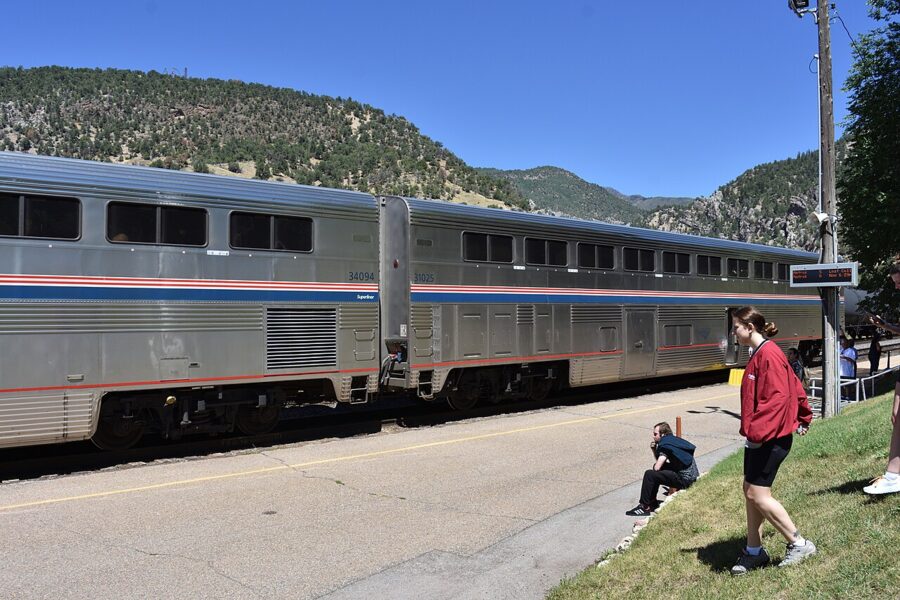
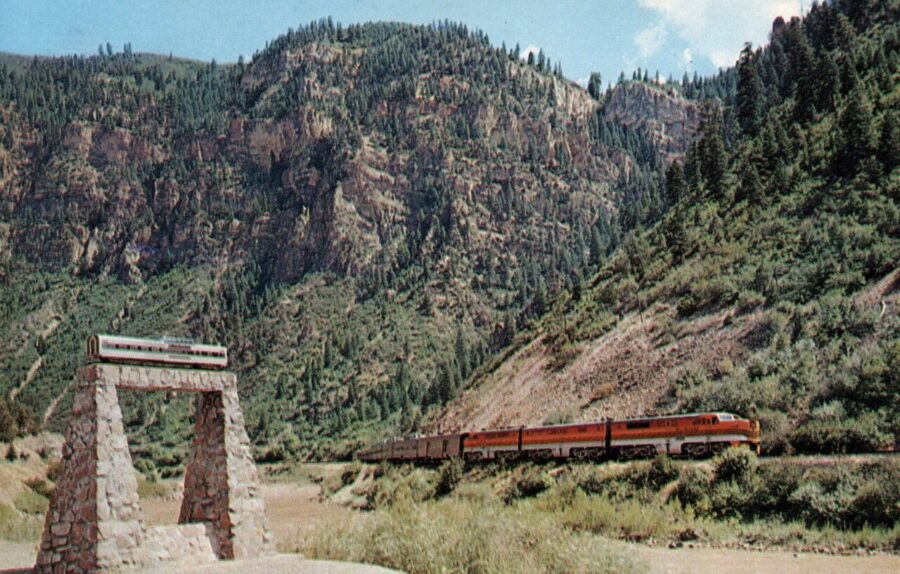
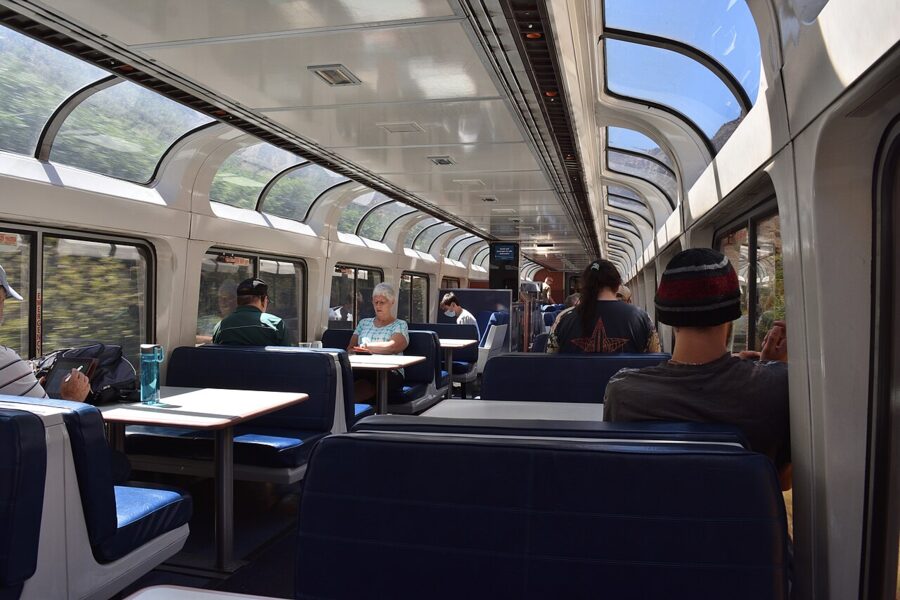
The dome car is said to have been dreamed up in this canyon, and a monument to the idea stood beside the track. Three railroads, the Burlington, the Denver and Rio Grande Western and the Western Pacific, launched the original California Zephyr in 1949 with Vista-Dome cars. Amtrak’s Zephyr has no domes, but its lounge car has windows that curve into the roof, and this is the afternoon it fills up.
Ruby Canyon and the Utah desert
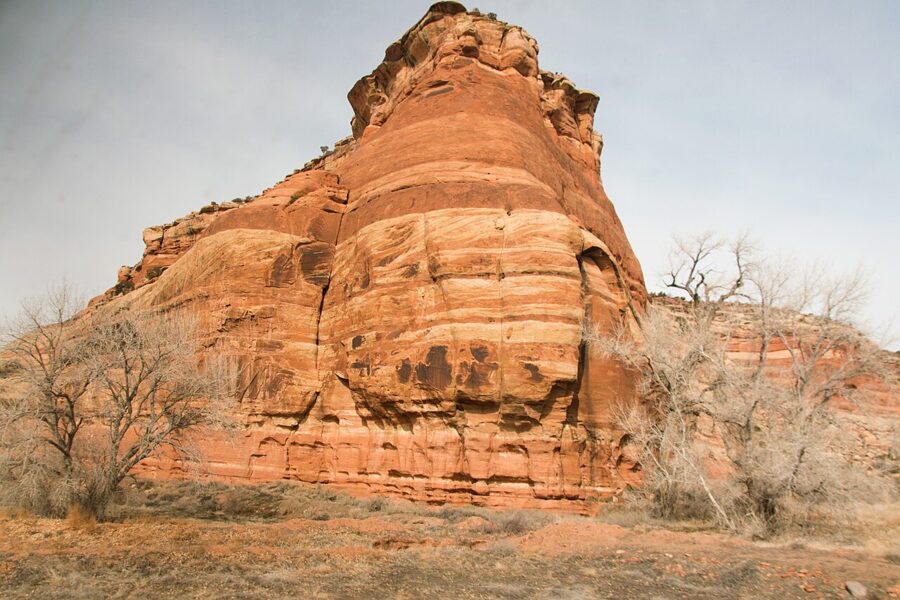
After Glenwood Springs the line runs down De Beque Canyon and out past the orchards and vineyards of Palisade to Grand Junction at 4:30 p.m. Then comes Ruby Canyon, some 25 miles of red sandstone along the Colorado with no road in, where the state line is painted on the rock. Westbound the river is on the left.
Whether you see it depends on the month. In June the sun sets in western Colorado after 8:30 p.m., and Ruby Canyon passes in full evening light; in December the sun is down before five, and the canyon passes in the dark. The Book Cliffs and the Green River stop at 6:32 p.m. follow, and Helper at 7:53 p.m. ends the daylight for most of the year.
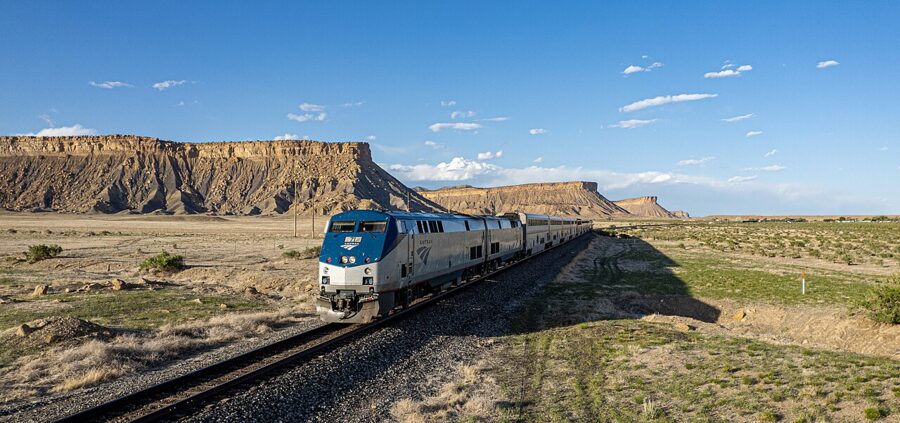
Over Soldier Summit and down to Provo the train usually runs in the dark, reaching Salt Lake City at 11:15 p.m. and leaving at 11:40. The station is a modern stop beside the commuter platforms. Across the salt flats and into Nevada you will, with luck, be asleep.
Nevada at dawn
Elko comes at 3:25 a.m. Pacific Time, and Winnemucca at 6:01 a.m., by which point on a summer morning the Humboldt River valley is in first light. This is high desert, sagebrush and long views of bare ranges, better than its reputation over a first cup of coffee in the lounge car.
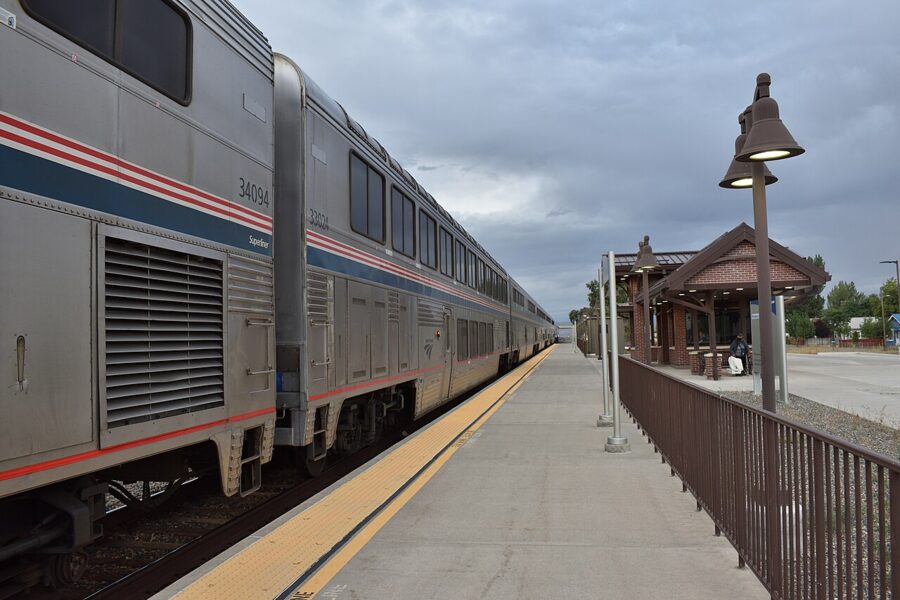
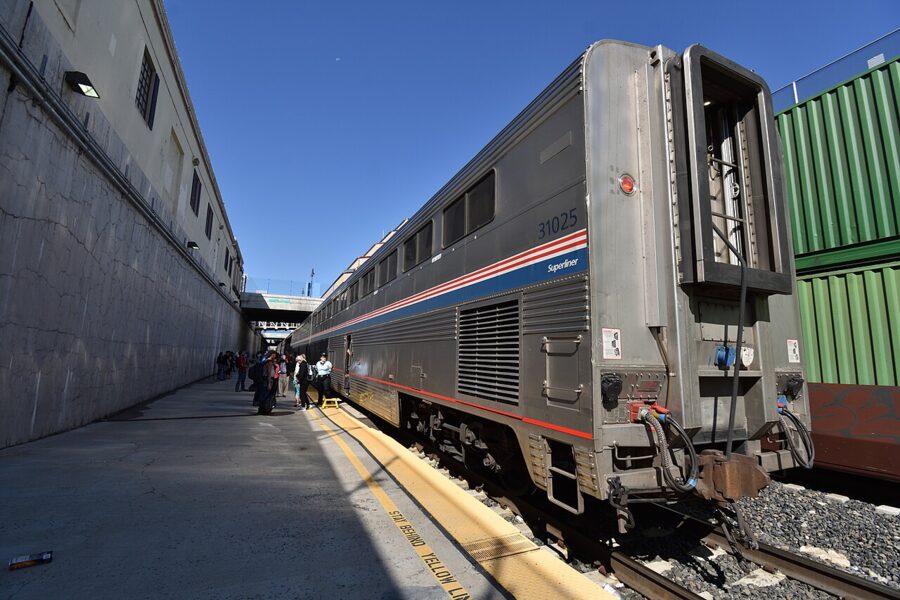
The train follows the Truckee River into Reno at 9:13 a.m., where it runs through a trench below downtown and stops for 11 minutes. Reno is a reasonable place to break the trip for Lake Tahoe.
Over Donner Pass
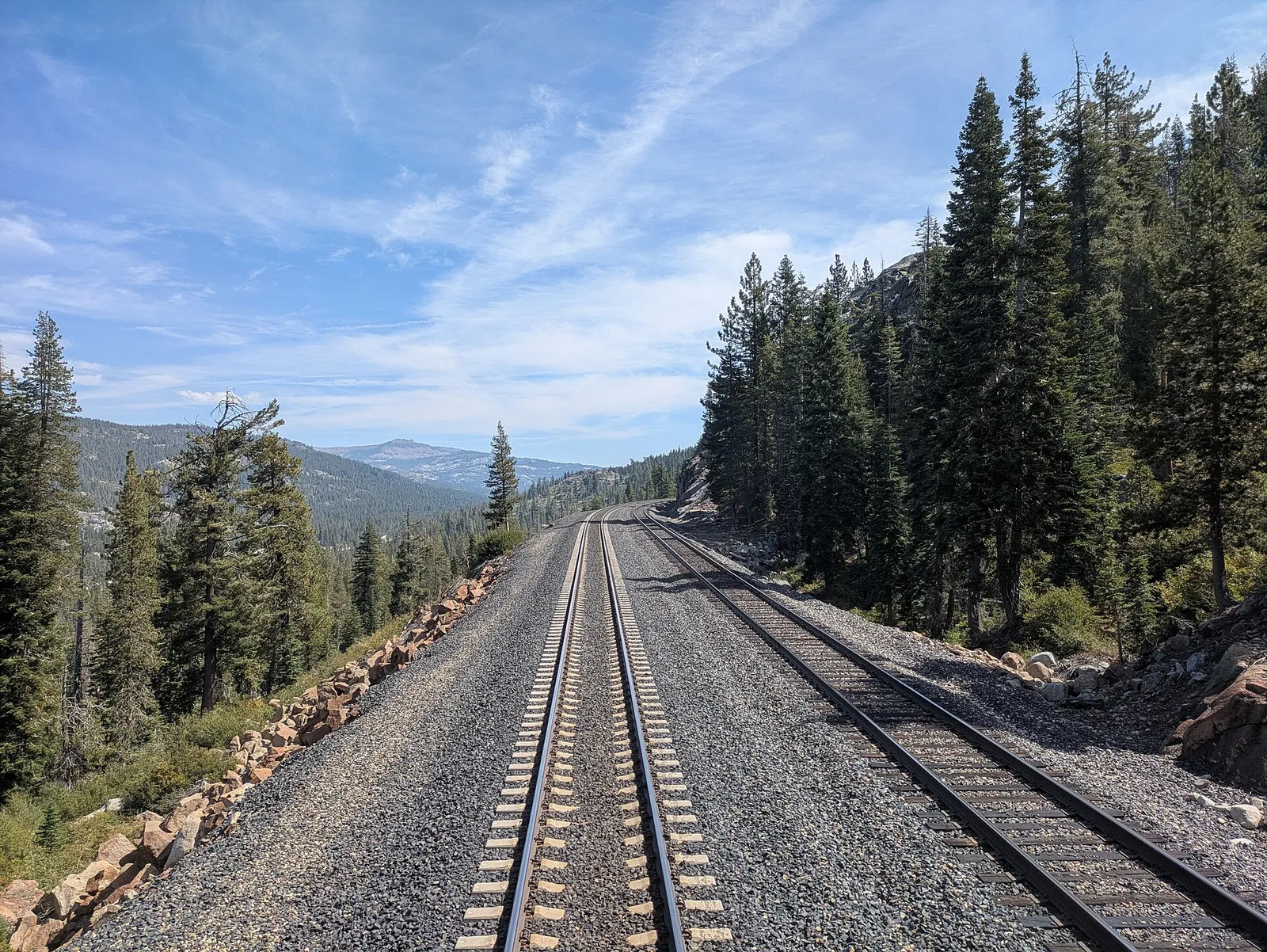
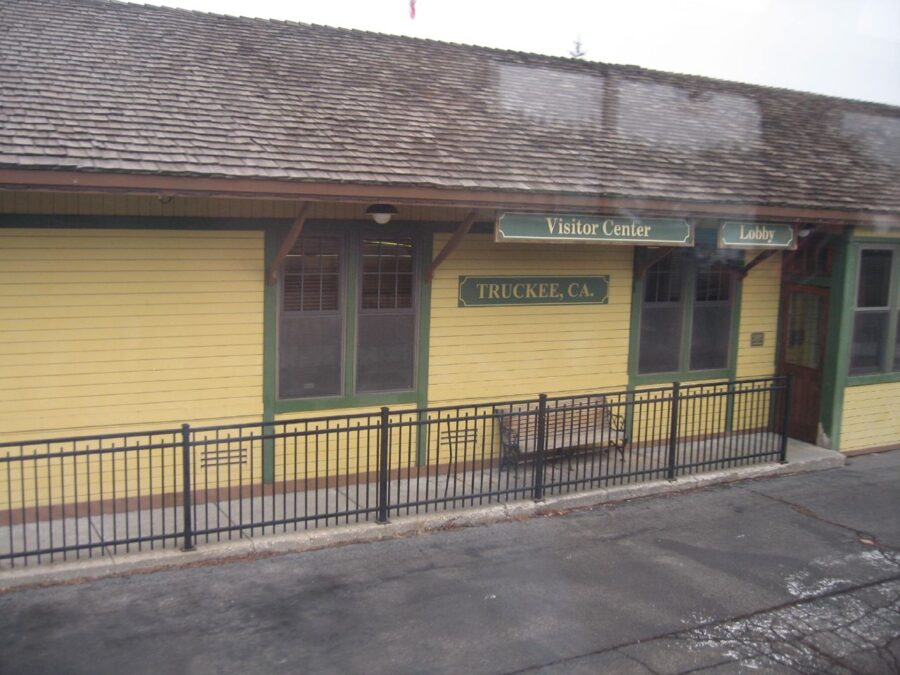
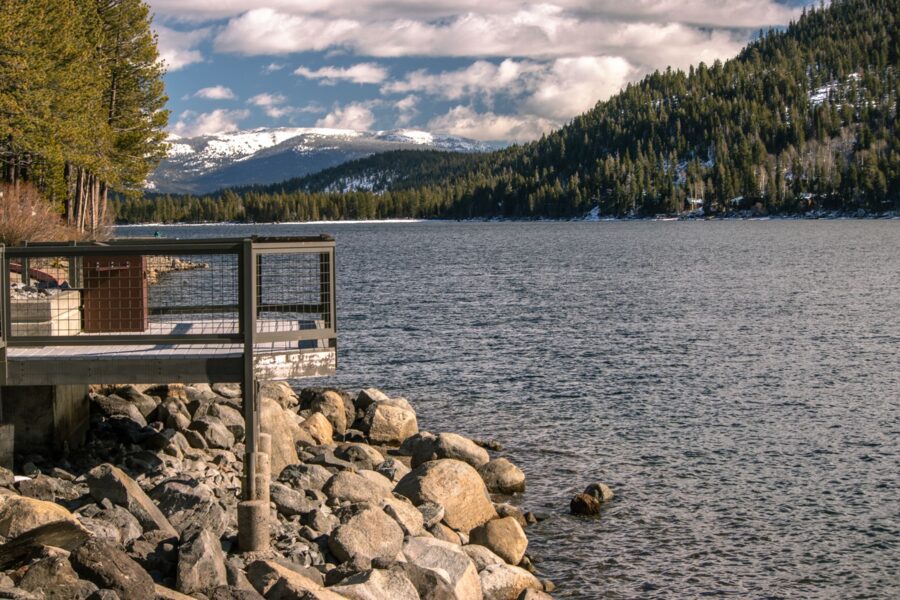
From Reno the line climbs the Truckee River canyon into California, crossing the river more than once, to Truckee at 10:33 a.m. Then it climbs Donner Pass, the route the Central Pacific built across the Sierra in the 1860s. The railroad runs high on the mountainside south of Donner Lake, so westbound the lake is far below on the right.
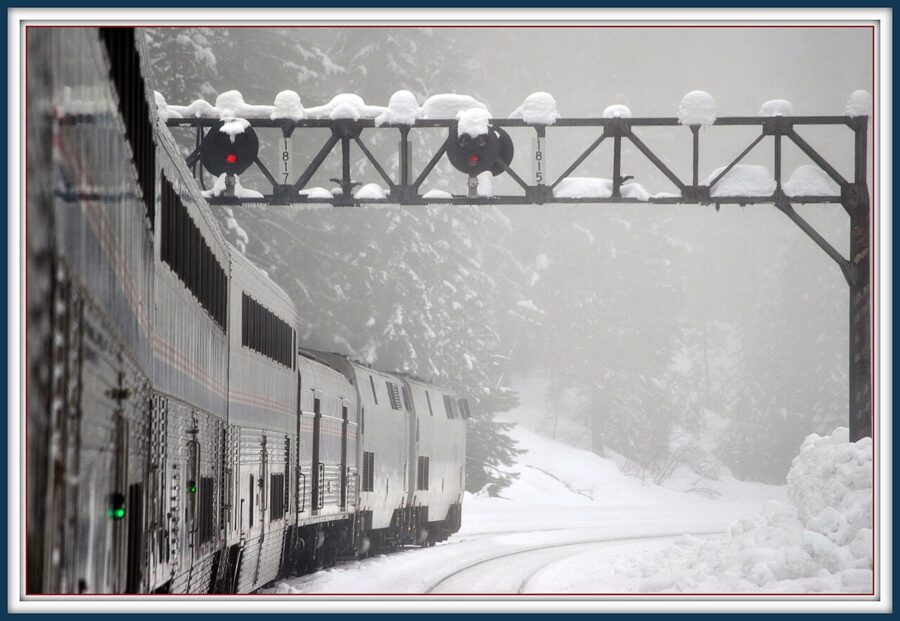
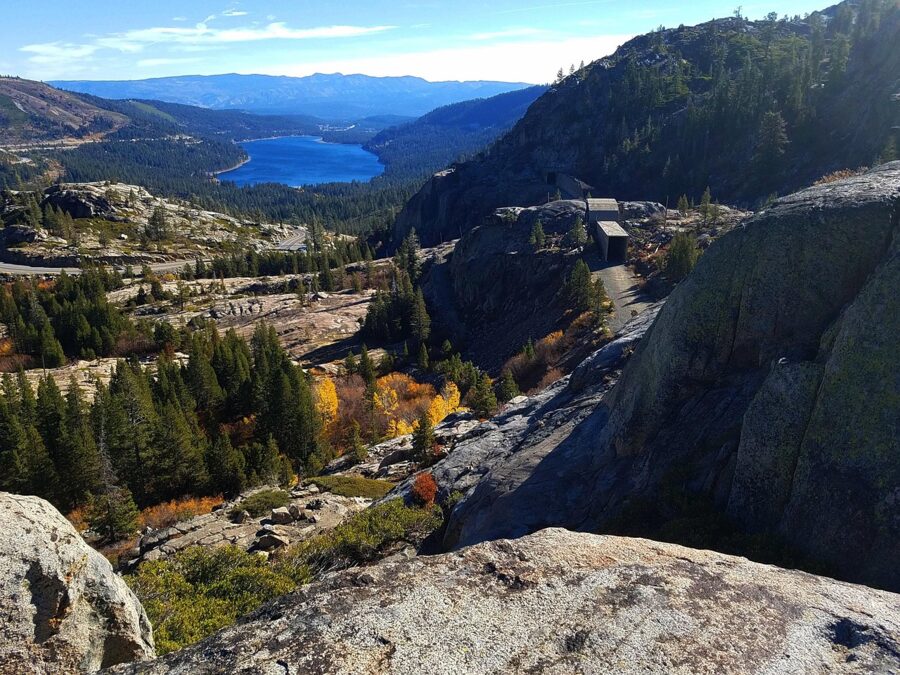
Near the summit the train passes snow sheds and runs through long tunnels. The Central Pacific’s 1868 Summit Tunnel, cut through granite above the lake, carried trains until 1993; the line now passes under the summit in a later tunnel. On the west slope the line drops through Emigrant Gap and, near Colfax, along Cape Horn, where the North Fork of the American River canyon falls away on the left westbound.
Down to the bay
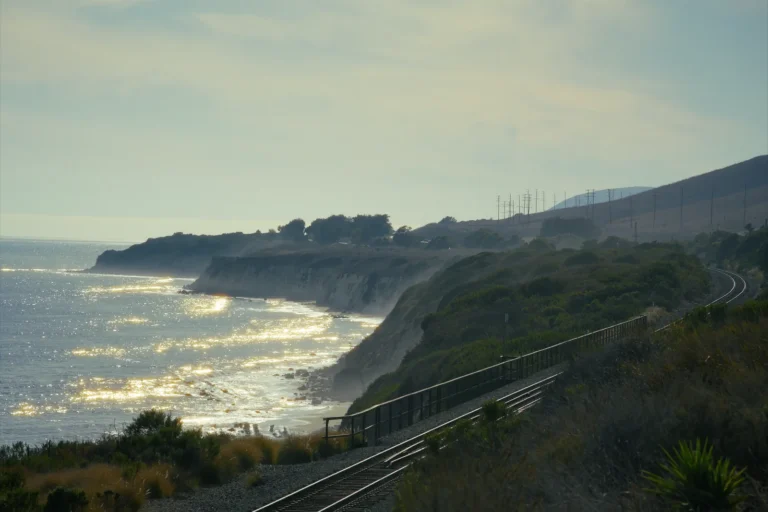
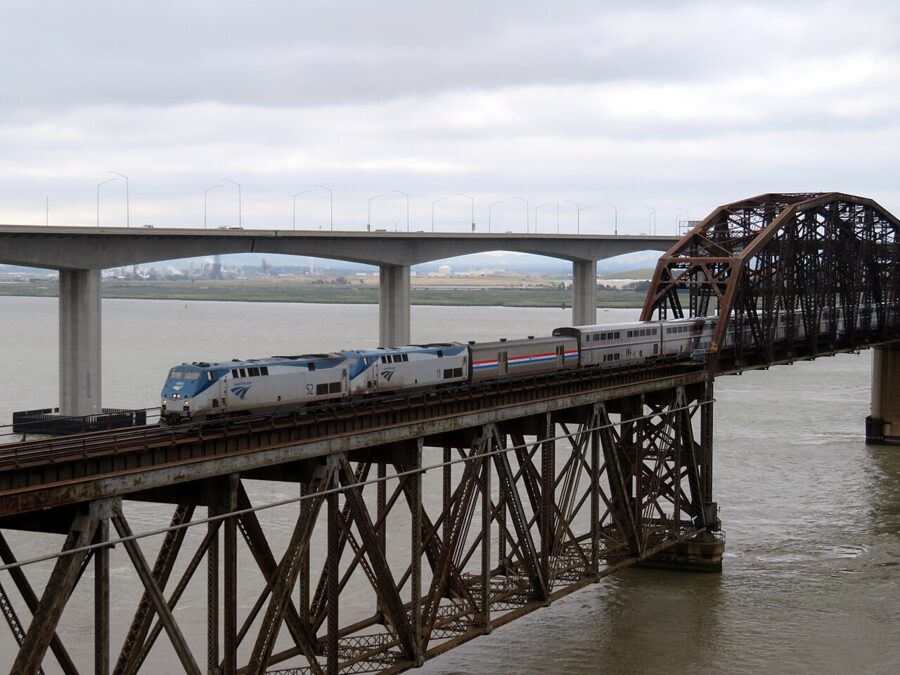
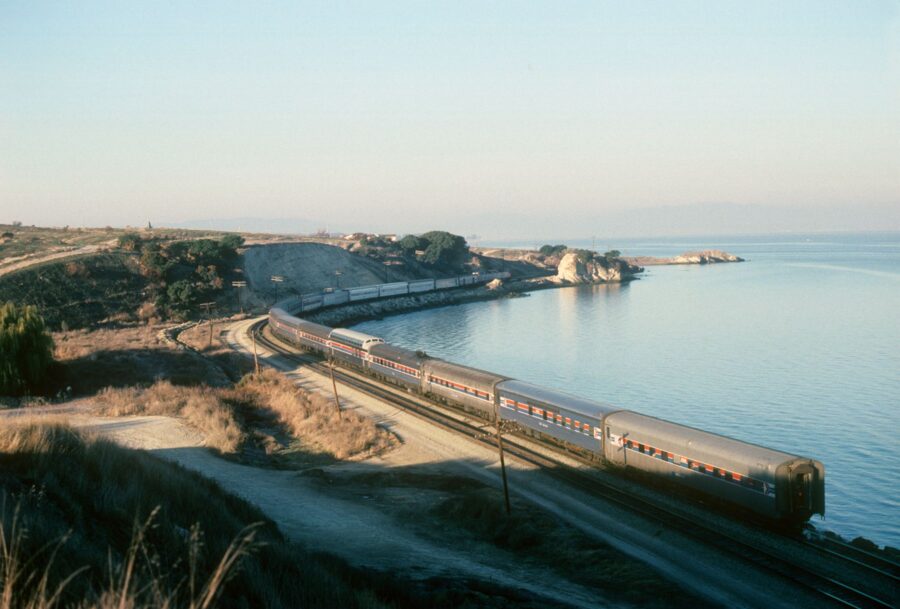
Colfax is at 12:50 p.m., Roseville at 2:14 and Sacramento at 3:05, crossing the Sacramento River on the way out of town and the Yolo Bypass on a long trestle before Davis. Past the Suisun Marsh the train crosses to Martinez on a drawbridge, then runs along the Carquinez Strait and San Pablo Bay with the water on the right. Richmond is at 4:47 p.m. and Emeryville at 4:57 p.m.
Eastbound: same line, different hours
Train 6 leaves Emeryville at 8:25 a.m., so the bay is a morning view and Sacramento comes at 10:23. The Sierra climb runs from Colfax at 11:39 a.m. to the 2:01 p.m. stop at Truckee, in daylight all year, with Donner Lake on the left. Reno is at 3:37 p.m., and Nevada passes through the evening and the night.
The eastbound train’s big advantage is the second morning. It crosses the Utah desert in the early morning, Helper at 6:22 a.m. and Green River at 7:44, and goes through Ruby Canyon before the 9:41 a.m. arrival at Grand Junction, in daylight even in December. Glenwood Springs is at 11:36 a.m., Gore Canyon after lunch, Fraser-Winter Park at 3:28 p.m., and the train reaches Denver at 6:27 p.m.
The cost is the Front Range. The descent from the Moffat Tunnel to Denver comes between about 4:00 and 6:15 p.m., in daylight from spring to early autumn and mostly in the dark in winter. Nebraska is night again, and the train reaches Chicago at 2:39 p.m. on the third day, after the Mississippi at Burlington at 10:28 a.m.
| Stretch | Westbound (train 5) | Eastbound (train 6) |
|---|---|---|
| Mississippi at Burlington | 5:34 p.m., light in summer only | 10:28 a.m., light all year |
| Front Range and Moffat Tunnel | About 9:00 to 10:45 a.m., light all year; plains on the left | About 4:00 to 6:15 p.m., light in summer only |
| Gore and Glenwood canyons | Midday to 2:36 p.m., light all year; river on the right in Glenwood | About 11:45 a.m. to 2:00 p.m., light all year; river on the left in Glenwood |
| Ruby Canyon | After 4:43 p.m., light in summer only; river on the left | Before 9:41 a.m., light all year; river on the right |
| Utah desert and Book Cliffs | Evening, light in summer only | Early morning, Helper at 6:22 a.m. |
| Donner Pass and Donner Lake | About 10:30 a.m. to 12:30 p.m., light all year; lake on the right | About 11:40 a.m. to 2:00 p.m., light all year; lake on the left |
| Carquinez Strait and San Pablo Bay | About 4:15 to 4:50 p.m.; water on the right | About 8:25 to 9:05 a.m.; water on the left |
Westbound in summer sees the most: everything in Colorado and the Sierra in good light, plus Ruby Canyon and the Book Cliffs on a long evening. In winter I would ride eastbound, which trades the Front Range for Ruby Canyon and the desert in the morning. Neither direction shows you Nebraska or most of Nevada.
Coach, roomette or bedroom
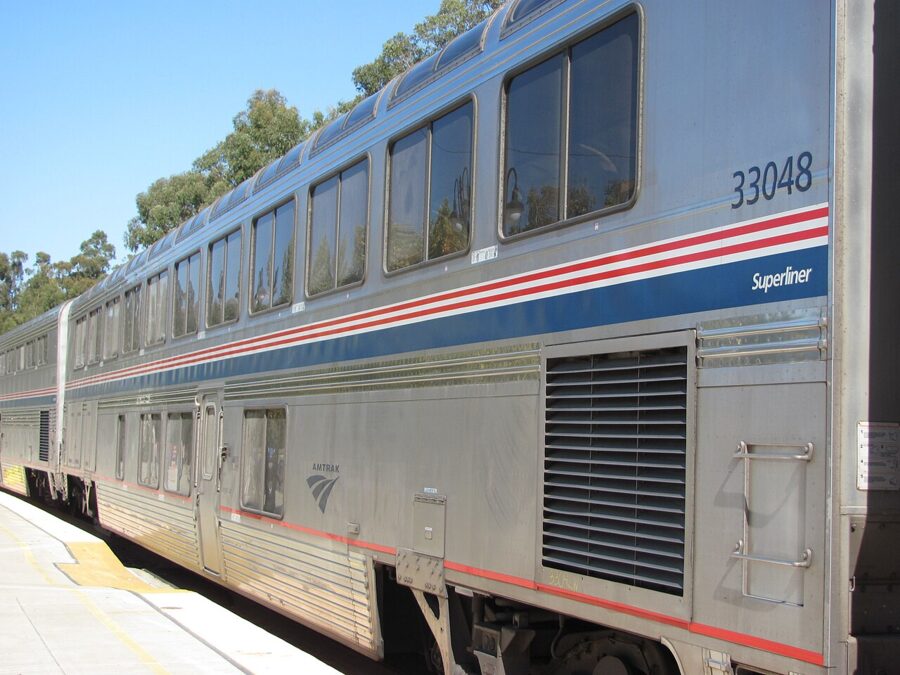
The Zephyr runs Amtrak’s double-deck Superliner cars: coaches, sleeping cars, a dining car and a Sightseer Lounge. Pullman-Standard built the first Superliners between 1975 and 1981 and Bombardier built a second batch in the 1990s, so most of the cars are 30 to 47 years old. Amtrak opened bidding for their replacement in April 2026 and plans to pick a builder by the end of 2027; the new fleet will be single-level, so the double-deck lounge car has some years left, not decades.
Capacity is the problem in 2026. Trains magazine reported that the Zephyr ran with only two coaches through the fiscal year, and riders fell 3 percent to 390,911 while ticket revenue rose 11 percent to $84.5 million. Fewer seats, higher fares: that is the market you are booking into.
| As of 2026 | Coach | Roomette | Bedroom |
|---|---|---|---|
| What you get | A reclining seat with a leg rest, on the upper or lower level | Two facing seats that become a lower bed, with an upper berth that folds down | A sofa and an armchair that become a lower bed, with an upper berth; about twice a roomette’s space |
| People | One per seat | One or two | One or two |
| Toilet and shower | Shared toilets in the coach; no shower | Shared toilets and shower in the car | Private sink, toilet and shower in the room |
| Meals | Bought from the café | Included, in the dining car or your room | Included, in the dining car or your room |
| Extras | None | Attendant, bedding, station lounges, priority boarding | Attendant, bedding, station lounges, priority boarding |
| Best for | A one-night leg, or a tight budget | One traveler, or two who are comfortable close together | Two adults for the full two nights |
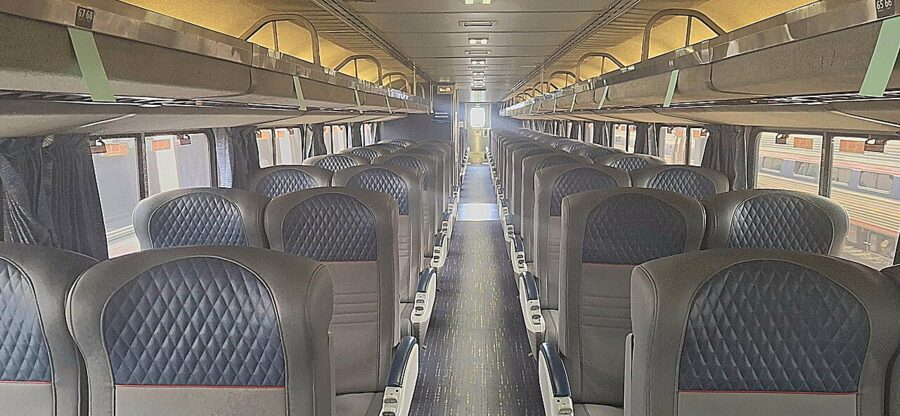
Coach is a good seat and a hard second night. People do ride all 53 hours in coach, and the lounge car makes the days easy, but by the second night most would pay for a bed. If you ride coach the whole way, choose an upper-level seat, away from the stairwell, and bring a pillow, a blanket and an eye mask.
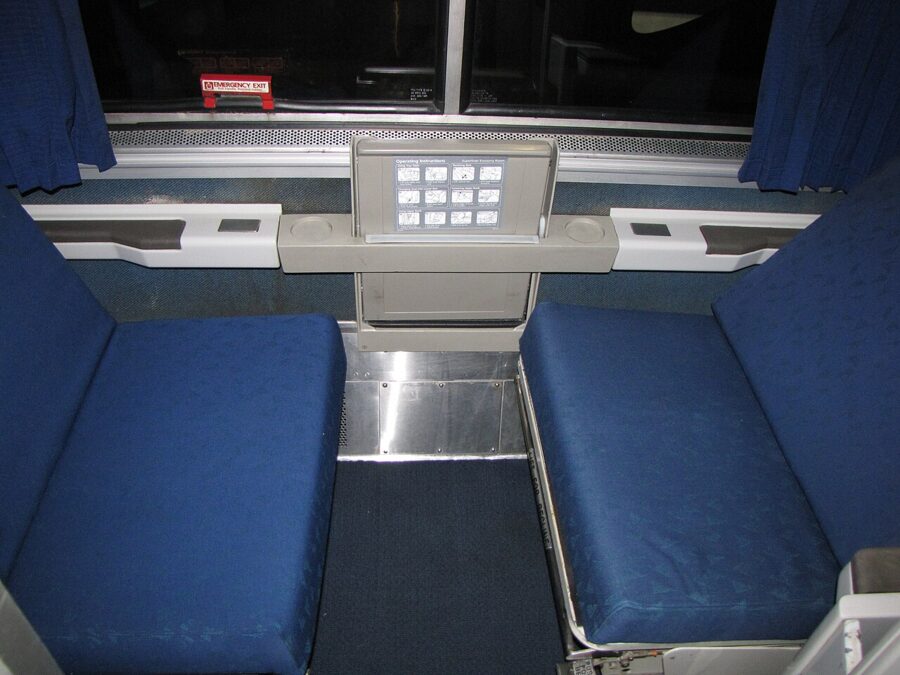
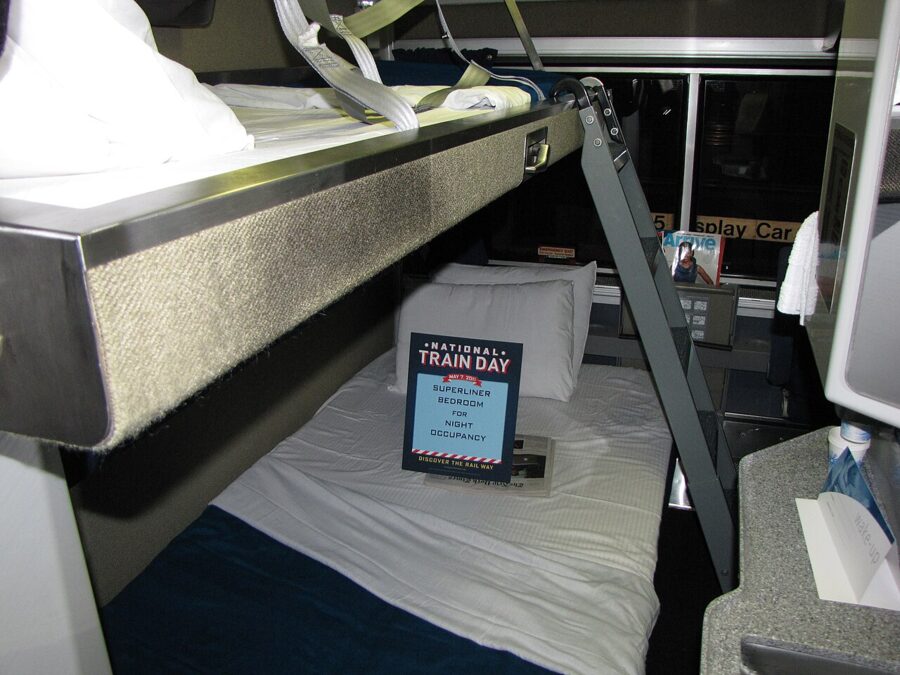
A roomette is two seats facing each other across a fold-out table, a sliding door, a curtain and a big window. At night the attendant turns the seats into a bed and lowers the upper berth from the ceiling. Amtrak now sells its rooms as First Class, and every private room comes with meals, bedding, an attendant, lounge access at major stations and priority boarding.
A bedroom adds the private toilet and shower, which on a two-night trip is what you are paying for. Superliner sleepers also have one Family Room, sold to two adults and two children aged 2 to 12, and an Accessible Bedroom on the lower level; two bedrooms can be booked as a suite for four by phone.
My choice for the full trip: a roomette for one, a bedroom for two adults, and an upstairs room either way. On the short legs, Denver to Glenwood Springs or Reno to Sacramento, take coach and spend the day in the lounge car.
The dining car and the Sightseer Lounge
The Zephyr keeps Amtrak’s Traditional Dining, the full version: a chef cooking on board, table service, white tablecloths and a three-course dinner. Breakfast runs 6:30 to 9:30 a.m., lunch 11:30 a.m. to 2:30 p.m. and dinner 5:00 to 9:00 p.m., with reservations for lunch and dinner taken on board, and room service at no charge. Your first alcoholic drink at dinner is included.
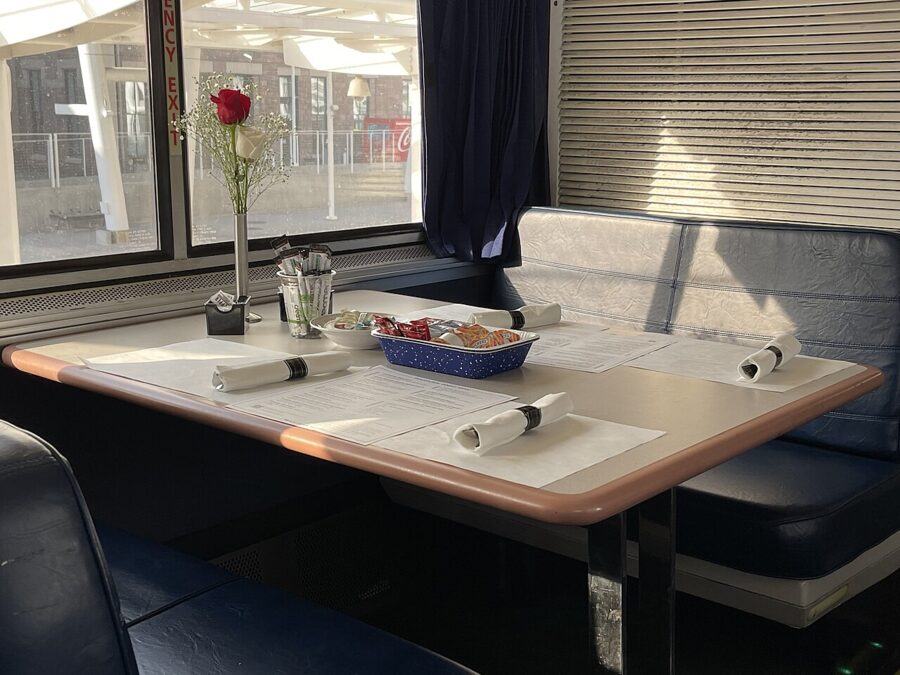
The meals are included for sleeping-car passengers, and Amtrak presents the dining car as part of that First Class fare. Coach passengers buy from the café, which sells hot and cold food, snacks and drinks to everyone. Bring some food you like regardless, because a train running hours late can stretch the gap between meals.
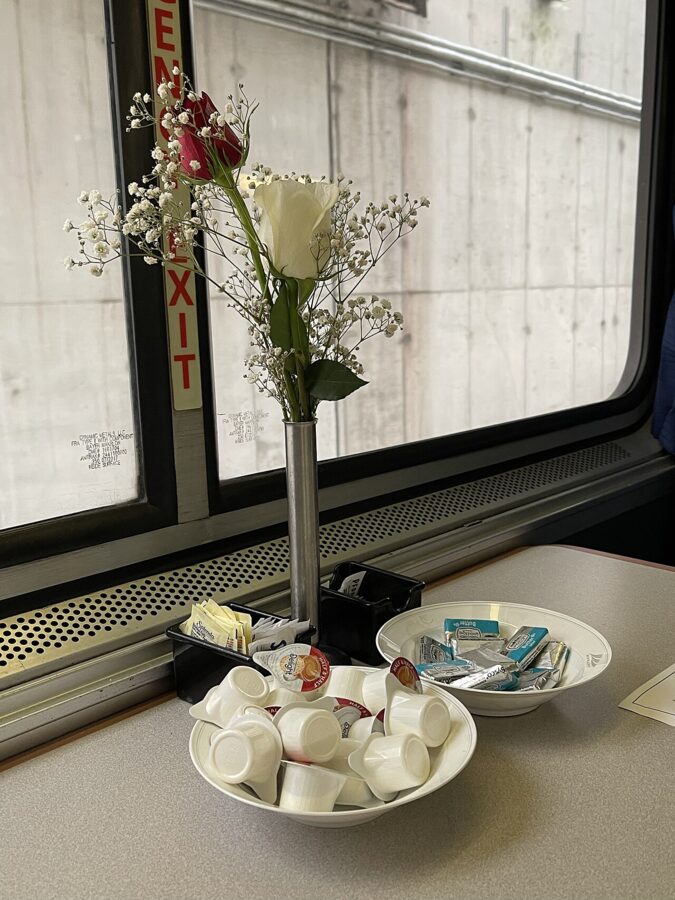
The Sightseer Lounge is open to everyone. Its upper level has seats turned toward windows that curve up into the roof, and through the Colorado canyons every one of them is taken, so go early. The café is downstairs. There is no Wi-Fi on board, and mobile data drops out for long stretches in the canyons and the desert.
Schedule, delays and the right direction
One train runs each way every day. Westbound, it leaves Chicago at 2:00 p.m. and is due in Emeryville at 4:57 p.m. two days later; eastbound, it leaves Emeryville at 8:25 a.m. and is due in Chicago at 2:39 p.m. two days later. Amtrak’s route page still quotes 51 hours 20 minutes, but the times in its own timetable are close to an hour and a half longer, and timetables change with track work, so check your own date.
The Zephyr runs on freight railroads, BNSF from Chicago to Denver and Union Pacific west of it, and it is often late. In the twelve months to July 2026, Amtrak’s host railroad report counted 60 percent of Zephyr passengers arriving on time, and those who were late were late by an average of 108 minutes. In July 2026 alone the figure was 31 percent.
The causes differ by railroad. On Union Pacific the largest share of delay in July 2026 came from slow orders, temporary speed limits on track that needs work; on BNSF it was freight trains given the road ahead of the Zephyr. Amtrak’s on-time page names freight train interference as the biggest cause of delay across its network.
The equipment adds its own trouble. In March 2026 a westbound Zephyr with a mechanical fault left Salt Lake City seven hours 35 minutes late, and in late July BNSF bridge work west of Creston, Iowa, canceled the Chicago to Denver run for three days with no advance notice on Amtrak’s website.
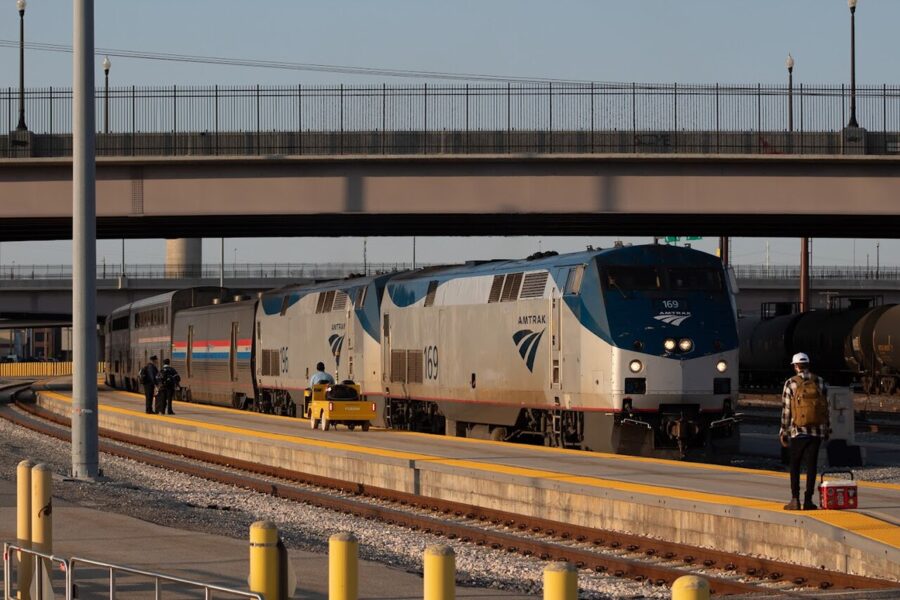
Plan for it. Never book a flight out of San Francisco or Chicago on the arrival day, keep a night in a hotel between the train and anything you cannot miss, and follow the train on the Amtrak app rather than the printed times. A late train has one consolation: westbound, every hour of delay puts more of Nevada in daylight.
Fares and booking
Amtrak prices the Zephyr like an airline: fares rise as seats and rooms sell, and are highest around holidays, in peak season and close to departure. Reservations open 11 months ahead, and the cheapest coach seats and the first rooms go to those who book first. There is no published fare table to quote, and prices for the same room on the same date move from week to week.
Coach comes in three kinds of fare. A Value fare cannot be changed and loses 30 percent if you cancel; a Flex fare can be refunded or changed without fees; a Sale fare, offered only during sales, loses 50 percent on cancellation. A room is priced as the room plus a rail fare for each person in it, and meals are included for everyone.
Room refunds run on a calendar, per Amtrak’s guide to fares as of 2026: cancel 121 days or more before departure and you get everything back, 120 to 15 days out you lose 25 percent, and inside 14 days 75 percent comes back as an eVoucher. Changes are free, though the fare difference applies. Coach passengers can also bid for an upgrade to a room through Amtrak BidUp, but a winning bid makes the ticket non-refundable.
For a sense of scale, the route’s 2026 ticket revenue works out to about $216 per trip, coach and rooms and every distance mixed together. At the top end, one traveler paid $2,200 for a bedroom from Chicago to Emeryville in February 2026, meals included. Try a few dates in different seasons on Amtrak.com before you settle on a month.
Holiday dates sell first, and Christmas week earliest of all, on the Zephyr as on the heritage railroads’ Christmas trains.
Stopovers and the last mile to San Francisco
Breaking the trip is easy because the train runs daily: get off, stay a night, and board the same train 24 hours later. Book each leg as its own trip and you can stop as often as you like, with each leg priced on its own. Four stops are worth it.
Denver
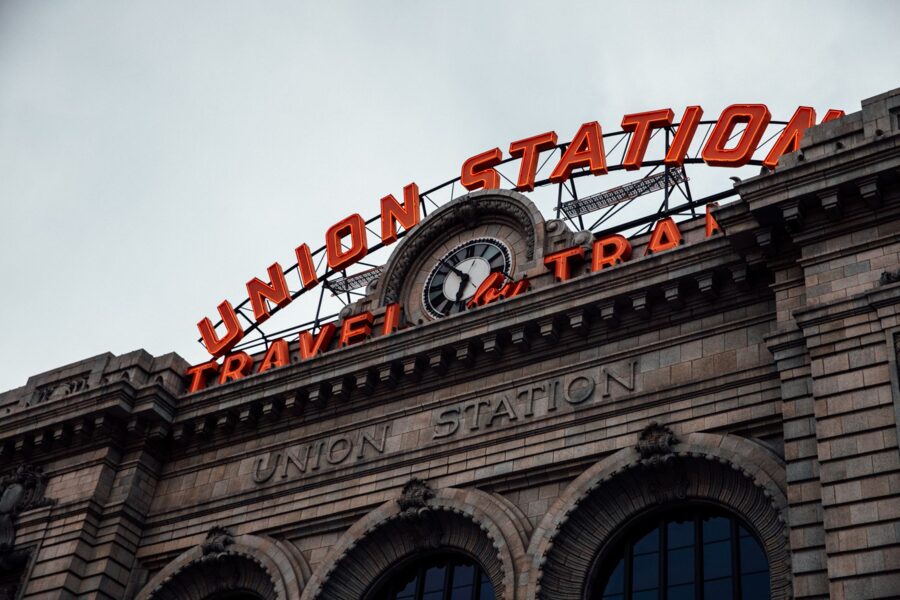
A night in Denver turns the overnight from Chicago into one night and gives you the Front Range fresh the next morning. Denver Union Station has restaurants under its roof and the Crawford Hotel upstairs, so you can step off the train, sleep, and board the 8:46 a.m. departure without leaving the building.
Glenwood Springs
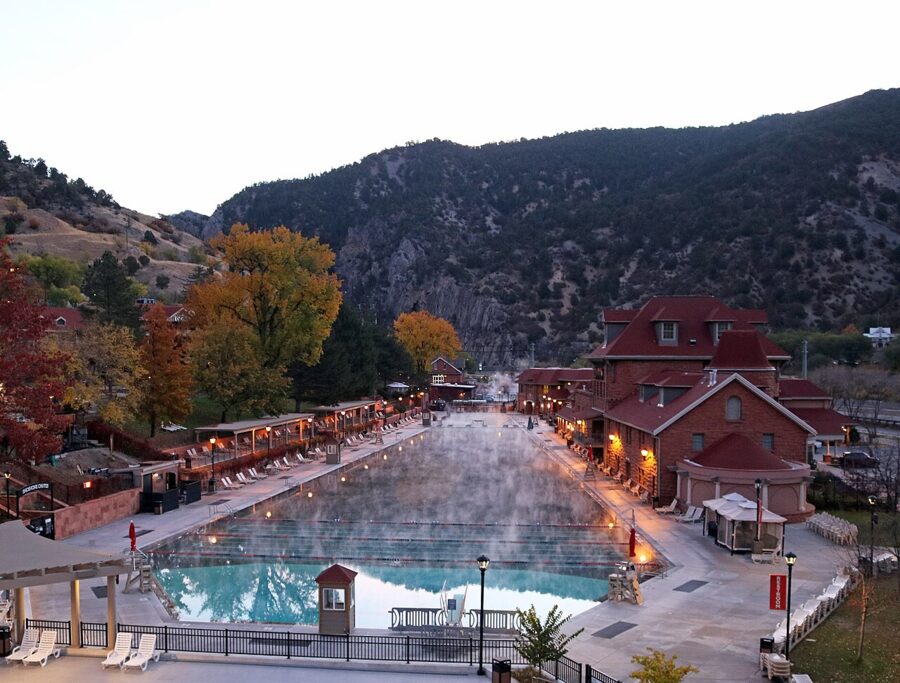
Glenwood Springs is the best short stop on the line, a small town at the bottom of the canyon with the station on 7th Street. The Glenwood Hot Springs Pool is a short walk across the pedestrian bridge, open year-round from 9 a.m. to 9 p.m., with adult day passes from $42 to $60 as of 2026. Arrive westbound at 2:36 p.m., soak, and carry on with the next day’s train at 2:43 p.m.; from Denver, the eastbound train takes you back through the canyon at 11:42 a.m.
Reno and Truckee
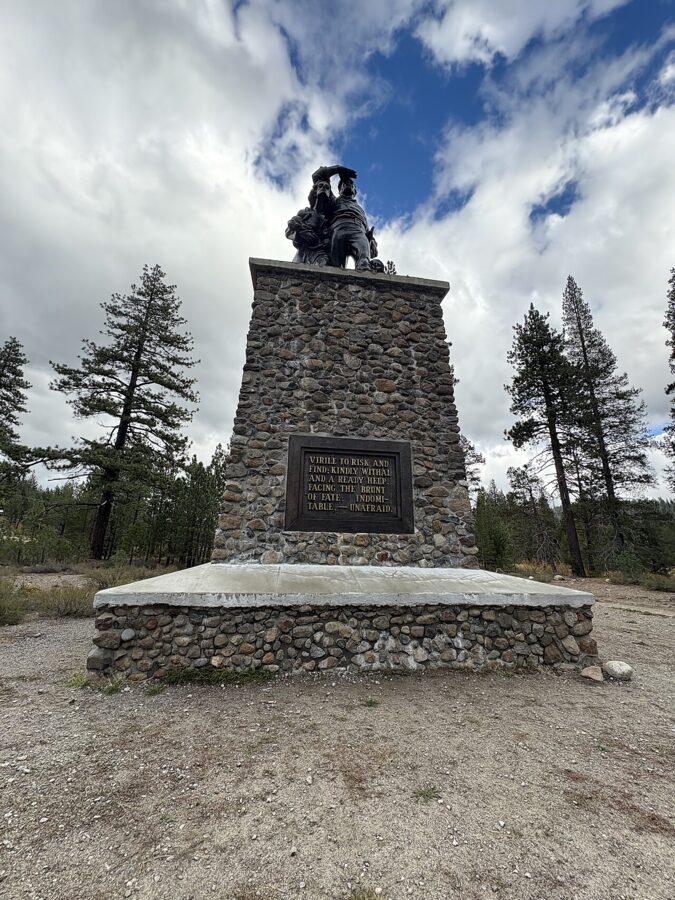
Reno is the city stop, with Lake Tahoe a drive away, and Truckee is the mountain one: an old railroad town whose main street faces the depot. A couple of miles west, Donner Memorial State Park is open sunrise to sunset, with a visitor center open daily from 10 a.m. to 5 p.m. except Thanksgiving, Christmas Day and New Year’s Day. Its Pioneer Monument stands near where the Donner Party wintered in 1846.
Emeryville to San Francisco
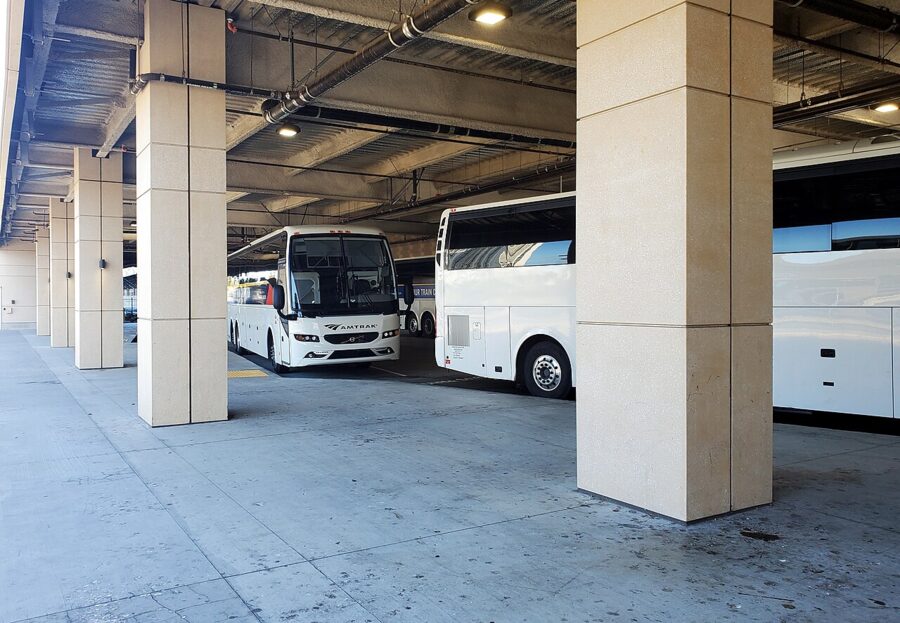
The Zephyr ends in Emeryville, a small city between Oakland and Berkeley, because San Francisco is across the bay. Amtrak’s Thruway bus leaves the station at 5:15 p.m. and is due at 401 Mission Street in downtown San Francisco, a curbside stop with no shelter, at 5:45 p.m. Book your ticket to San Francisco rather than Emeryville and Amtrak sells you the bus with the train.
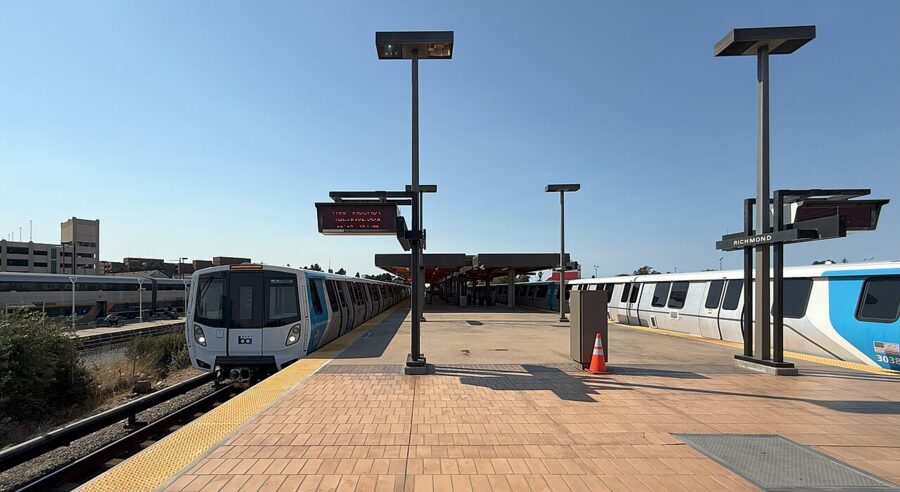
The other way in is BART. Get off at Richmond, ten minutes before Emeryville, walk across to the BART platform and ride the train into the city, which suits anyone staying near a BART station.
One way by train, back by air
For most people the right trip is the train one way and a plane the other. Two nights on the Zephyr is a journey; four is a lot of the same sleeping car, and the flight between the Bay Area and Chicago takes about four and a half hours. Ride the train in the direction that suits your season, and fly the other.
If the train is the point, make it a loop rather than a return. From Emeryville the Coast Starlight runs north to Portland and Seattle for the Empire Builder back to Chicago, or you can head south to Los Angeles for the Southwest Chief; every one of Amtrak’s long-distance trains connects with another at one end or the other. Colorado’s narrow-gauge railroads in the south of the state make a good detour too, and they are among the tourist train rides in the USA worth a day.
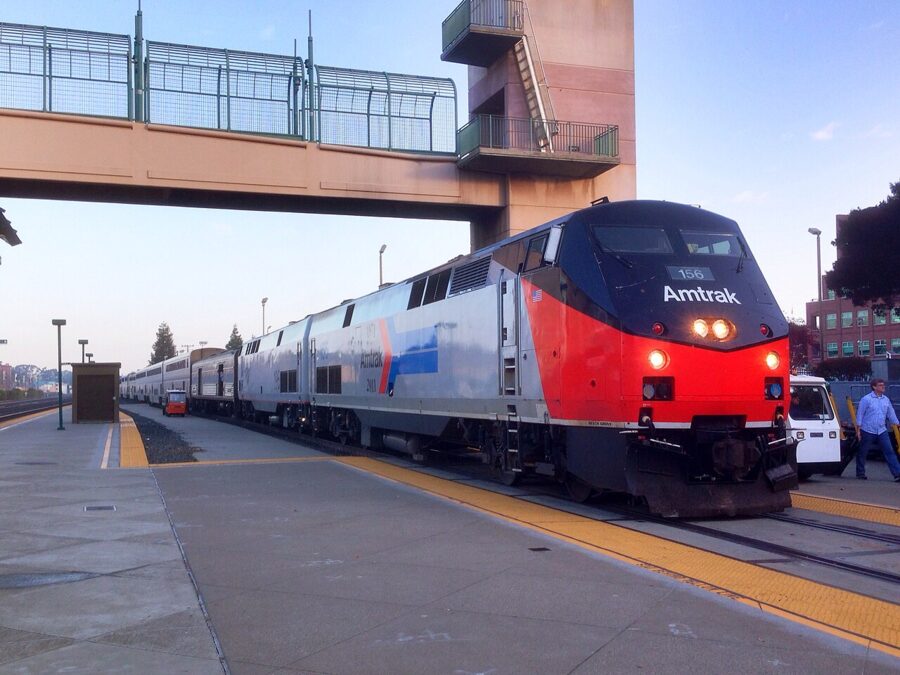
Book on Amtrak.com or the Amtrak app as soon as your dates are firm, up to 11 months ahead, and buy the room before the coach seat if you are still deciding. Then take the right side into Glenwood Canyon, the left through Ruby Canyon if the light holds, and the right again for Donner Lake on the third morning.