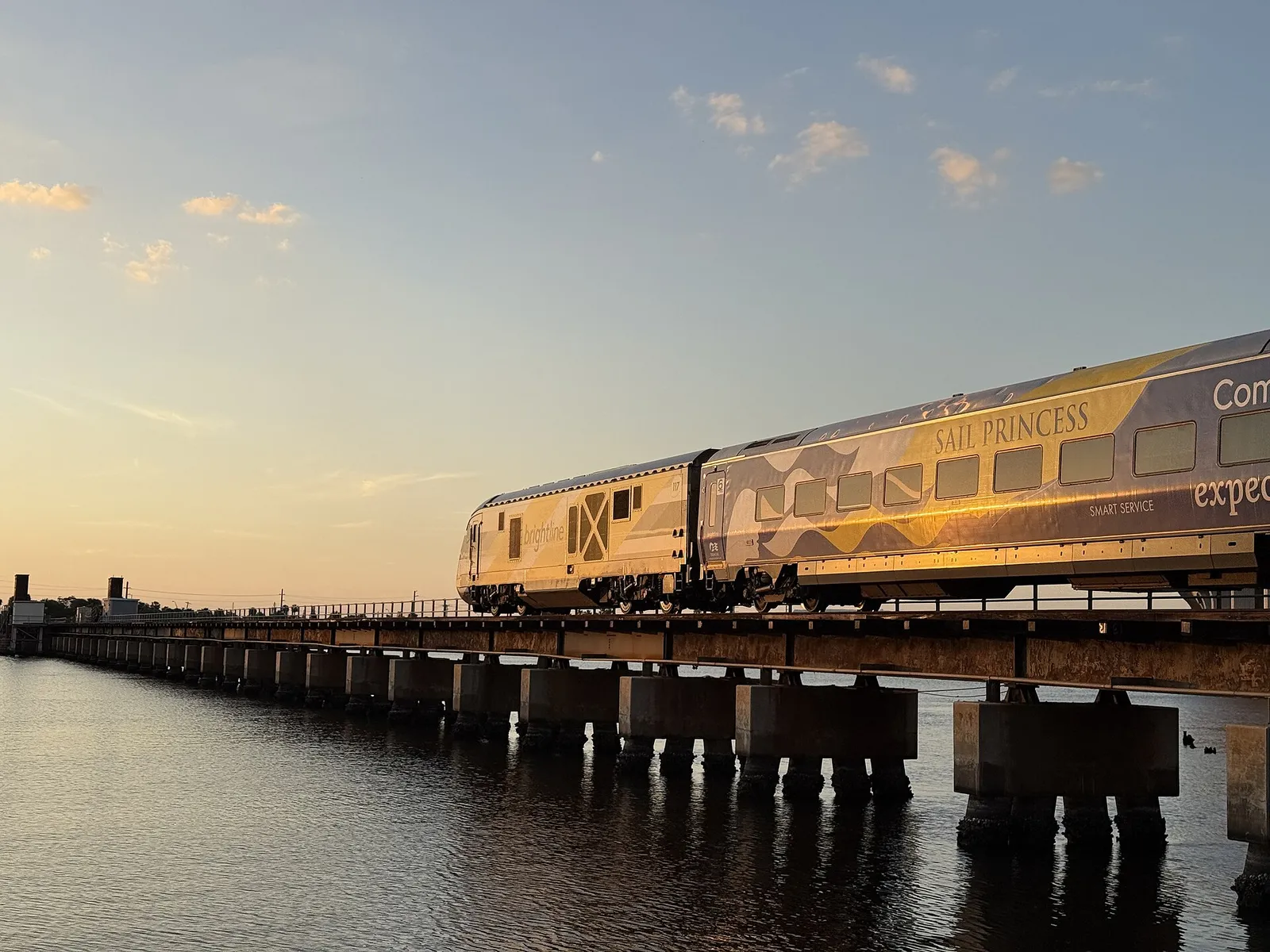
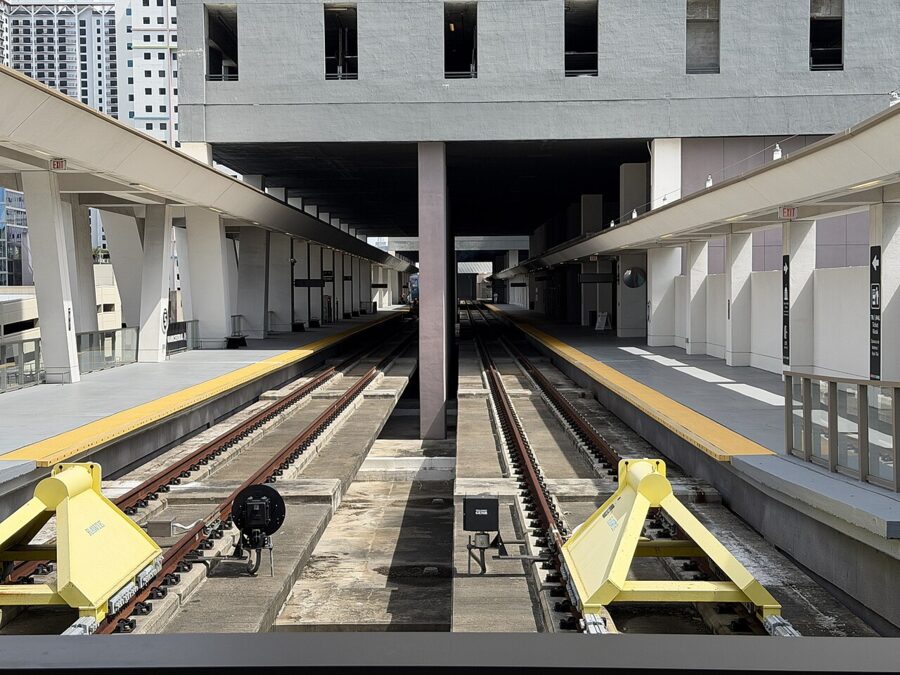
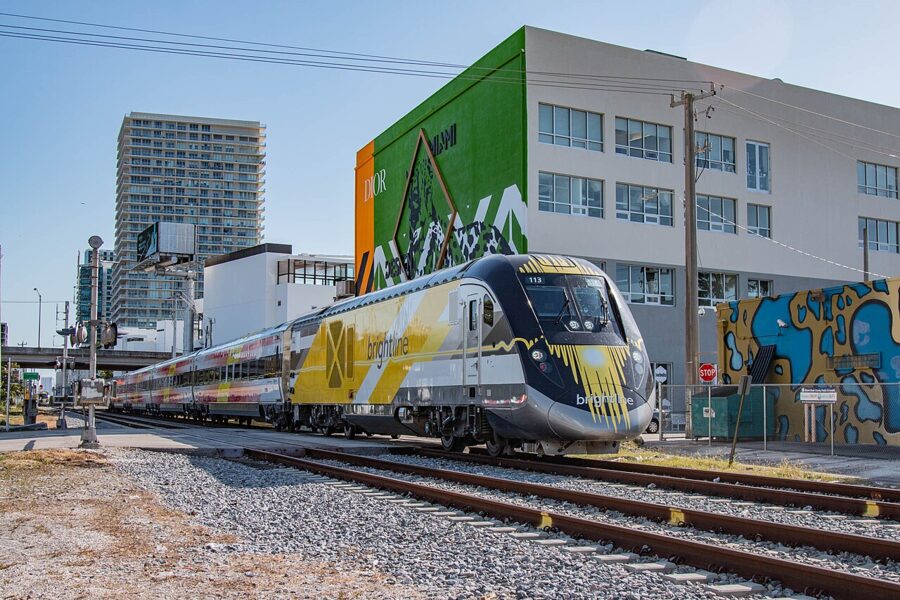
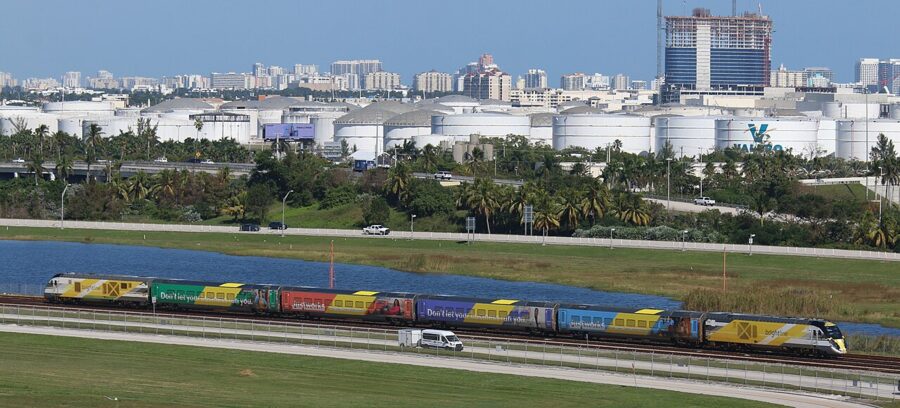
The Brightline platforms at MiamiCentral sit under the building itself, a row of tracks ending at yellow bumpers beside the Government Center transit hub. A train for Orlando pulls north through the street crossings of the Design District, out along the old Florida East Coast line, and about three and a half hours later stops inside Orlando International Airport, a short walk from the airline counters.
Brightline is the only privately owned and operated intercity passenger railroad in the United States. Its yellow-nosed trains have run between West Palm Beach and Fort Lauderdale since January 2018, reached Miami that May, added Aventura and Boca Raton in December 2022 and opened the extension to Orlando on September 22, 2023. Six stations, 235 miles, and about 3.1 million riders in 2025.
It is also a company in financial trouble, with parent companies in Chapter 11 since September 2026, and a line whose death toll has drawn a federal safety investigation. For getting from South Florida to Orlando’s airport or the theme parks, I would still take the train over the drive almost every time. The trains have kept to their timetable through the bankruptcy filing; the bigger threat to a trip is a storm on the Space Coast.
Stops in this article9
- 01The route and the stations
- 02How often the trains run
- 03Smart or Premium: what you get in 2026
- 04Fares, booking and bags
- 05Brightline against driving and flying
- 06Safety on the Florida East Coast tracks
- 07The business, as reported
- 08Brightline West: Las Vegas to Rancho Cucamonga
- 09Brightline and Amtrak's Acela
The route and the stations
From Miami the train runs north on the Florida East Coast Railway, the freight line Henry Flagler built down the coast, sharing it with freight trains as far as Cocoa. There it turns west onto Brightline’s own new track beside the Beachline expressway (SR 528) to the airport. The speeds tell you where the time goes: up to 79 mph through South Florida, up to 110 mph on the Treasure Coast, and 125 mph on the fenced, grade-separated 35 miles between Cocoa and Orlando.
Running times from Miami, taken from a November 2026 timetable, are roughly these:
| Station | Time from Miami | Checked bags | Good to know |
|---|---|---|---|
| MiamiCentral | 0 | Yes | Metrorail and Metromover next door; MIA shuttle |
| Aventura | about 20 minutes | No | Free Aventura Mall shuttle, Hard Rock Stadium shuttles |
| Fort Lauderdale | about 40 minutes | Yes | FLL airport shuttle, cruise bundle |
| Boca Raton | about 1 hour | No | No Mary Mary bar |
| West Palm Beach | about 1 hour 20 minutes | Yes | Last stop before the long run north |
| Orlando (MCO airport) | about 3 hours 35 minutes | Yes | Inside the airport; $1.50 departure fee |
Between West Palm Beach and Orlando there are no stops at all, which is why the last leg takes over two hours. Two stations are planned for that gap. Cocoa won about $57.5 million in federal money in August 2026, but Brightline’s own people put a possible opening at 2030. Stuart, announced in 2024, has been held up by local politics and funding, and I would not plan around either.
MiamiCentral
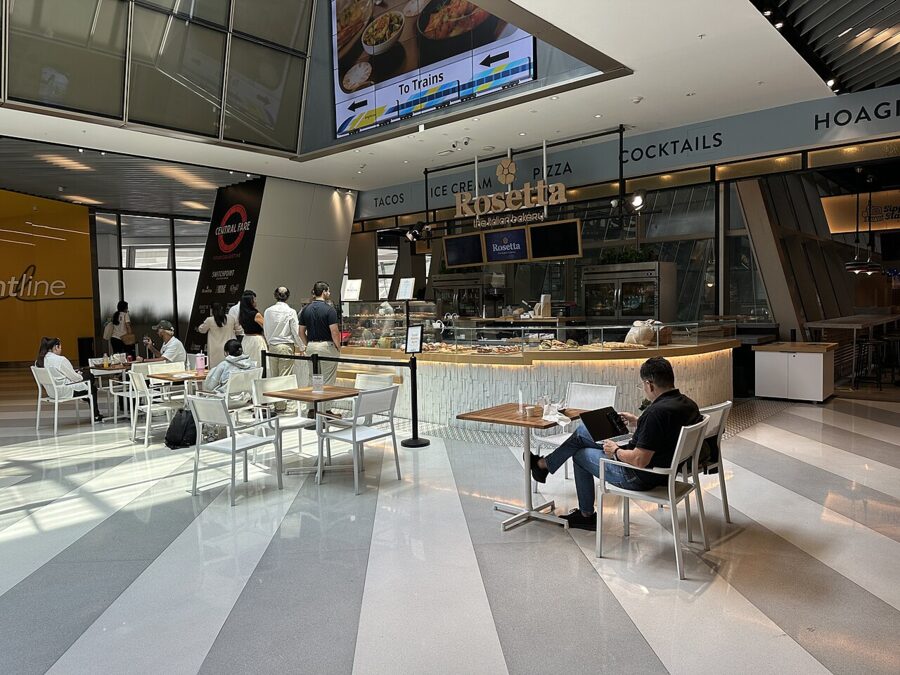
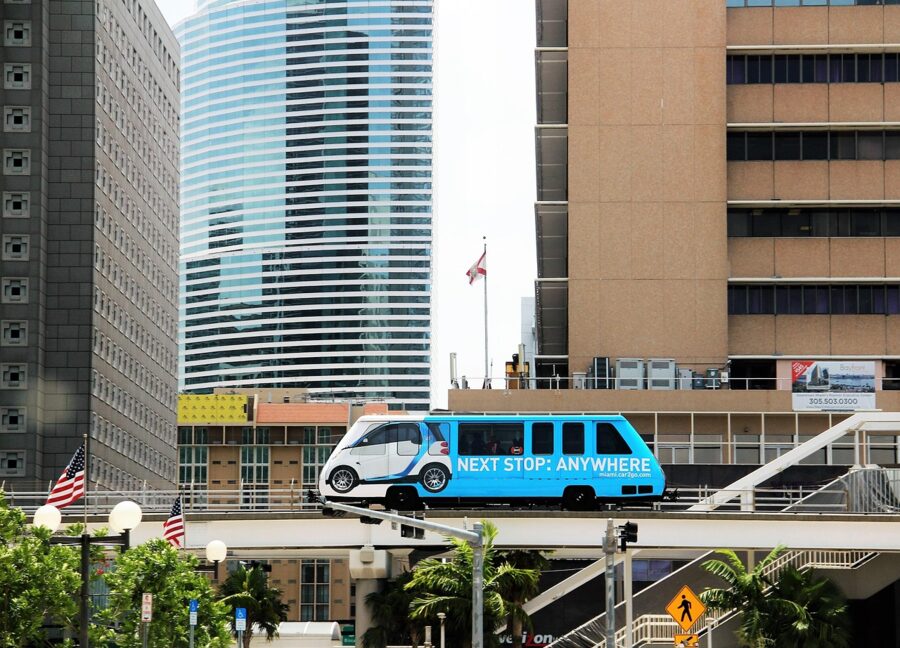
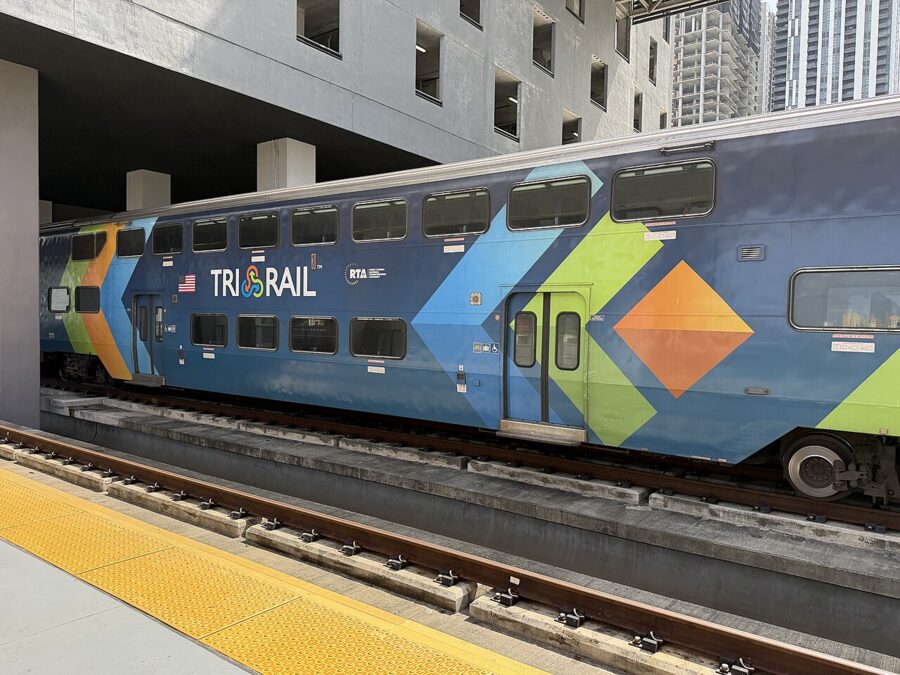
MiamiCentral is at 600 NW 1st Avenue and opens at 5 a.m. daily. It is the best-connected station on the line: a footbridge over NW 3rd Street leads to the Government Center station for Metrorail and Metromover, and Metrorail runs on to Miami International Airport. Tri-Rail commuter trains from Palm Beach and Broward counties also use platforms here.
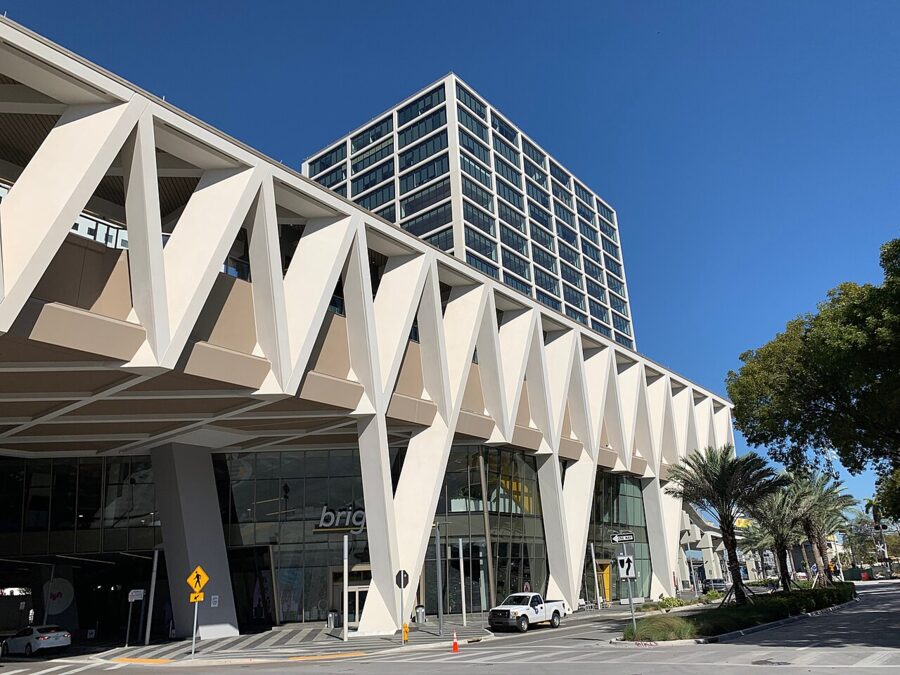
Parking at MiamiCentral is in a covered garage at 161 NW 6th Street, about a five-minute walk: $12 a day booked in the app with your ticket, $20 at the gate, as of 2026. The Brightline Airport Shuttle to Miami International leaves about 10 minutes after southbound trains arrive, from 8 a.m. to 7 p.m., for $12 a person plus a $3 fuel surcharge, as of 2026. With airport construction under way, it stops on the Level 2 departures road.
Aventura, Fort Lauderdale, Boca Raton and West Palm Beach
Aventura (19796 West Dixie Highway) is the stop for the mall and for Miami Dolphins games: Brightline runs free shuttles to Hard Rock Stadium on game days, and a free Aventura Mall shuttle every 30 minutes on Fridays, Saturdays and Sundays through December 31, 2026. Neither Aventura nor Boca Raton (101 NW 4th Street) has bag check, so anything bigger than a carry-on goes on board with you for a fee.
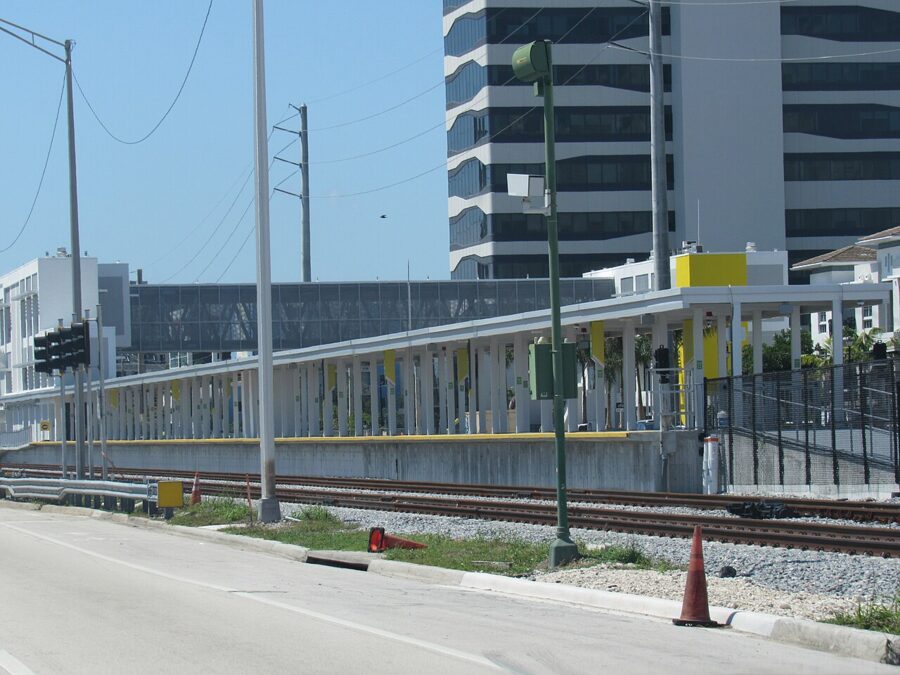
Fort Lauderdale’s station is downtown at 101 NW 2nd Avenue, a few blocks from Las Olas Boulevard. It has its own shuttle to Fort Lauderdale-Hollywood International (same $12 plus $3), and Brightline sells a $30 “Rail to Sail” bundle for cruise passengers, as of 2026. West Palm Beach (260 Quadrille Plaza Drive) opens at 5:20 a.m. and is the last stop before the long run north.
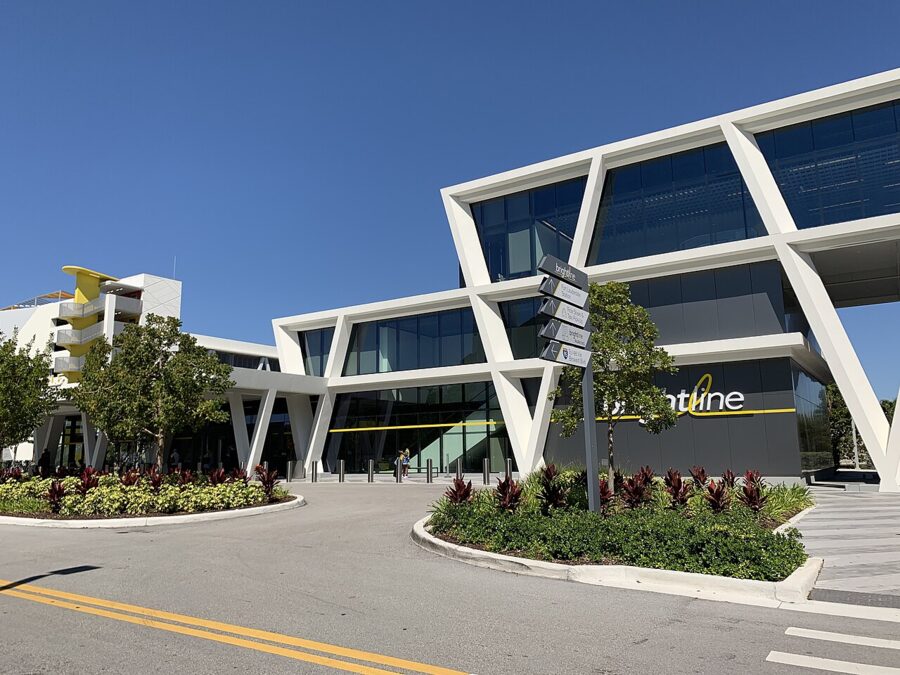
Orlando International Airport
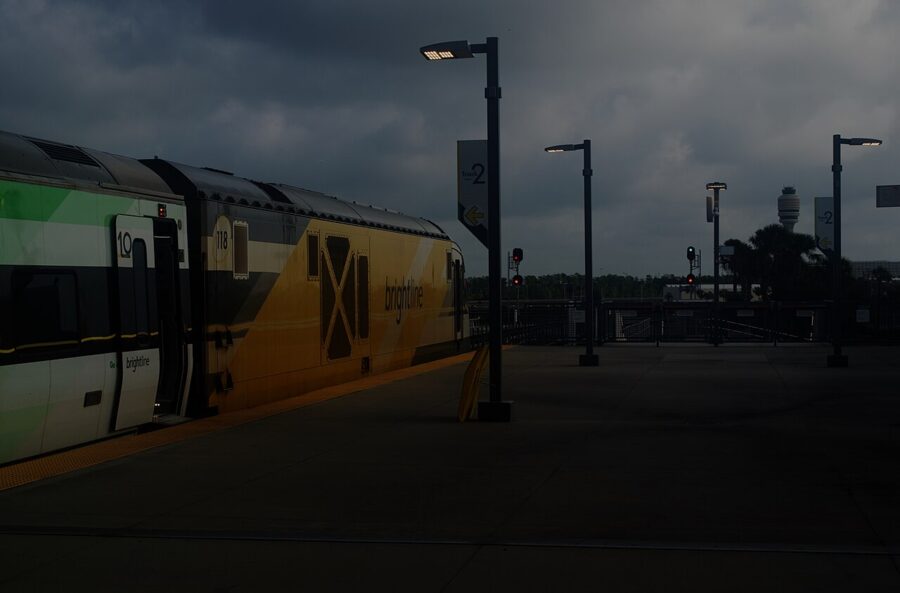
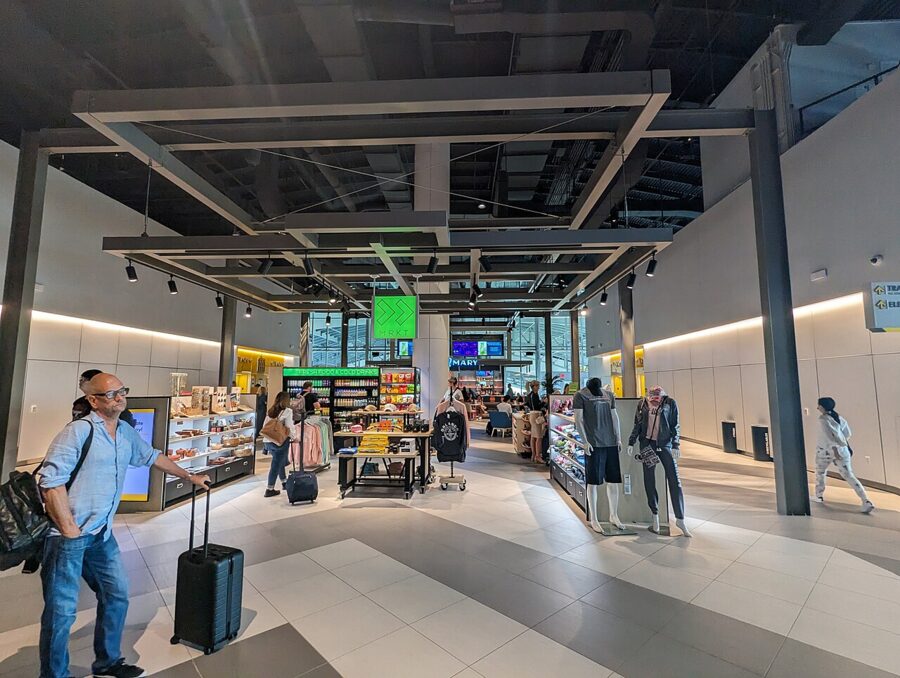
The Orlando station, at 10705 Jeff Fuqua Boulevard, is upstairs in the airport’s intermodal terminal beside Terminal C. From the platform you can walk to Terminal C over the pedestrian bridge, or ride the airport’s people mover to the main terminal for Terminals A and B. Rental car counters, Mears shuttles to the parks and the rideshare pickup are all inside the same airport complex.
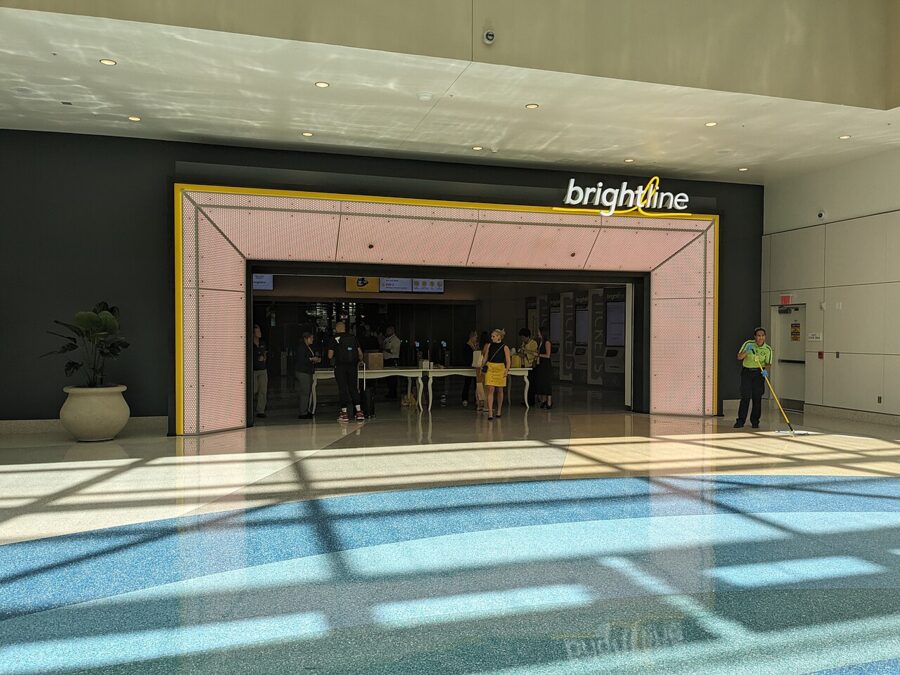
Driving to the Orlando station is the weak point. Brightline has no garage of its own there, and its Orlando station page tells you to arrive an hour and a half before departure to park in the airport’s Garage C and walk across the Level 5 skyway. Three surface lots next to the station cost $20 a day but take only E-Pass Plus or SunPass Plus accounts. Every ticket from Orlando carries a $1.50 airport departure fee.
How often the trains run
Brightline has cut the number of Orlando trains since the extension opened and made each one longer. In 2023 there were 16 a day each way; by January 2026 there were about 10 each way, with at least one every two hours from early morning to the evening, and gaps of 45 minutes to nearly two hours between them. The full run takes about three hours and 35 minutes from end to end.
The schedule changes with the season and with events, so check Brightline’s schedule page or the app rather than trusting an old timetable. The last train from Miami to Orlando leaves in the evening, not late at night, and missing it means a long wait for the morning.
Weather is the other thing to watch. Twice in November 2026 Brightline cancelled every train between West Palm Beach and Orlando, the second time on November 20, because of high water on the line in Brevard and Orange counties; South Florida trains kept running both times. When the forecast is bad on the Space Coast, check the app on the morning you travel.
Smart or Premium: what you get in 2026
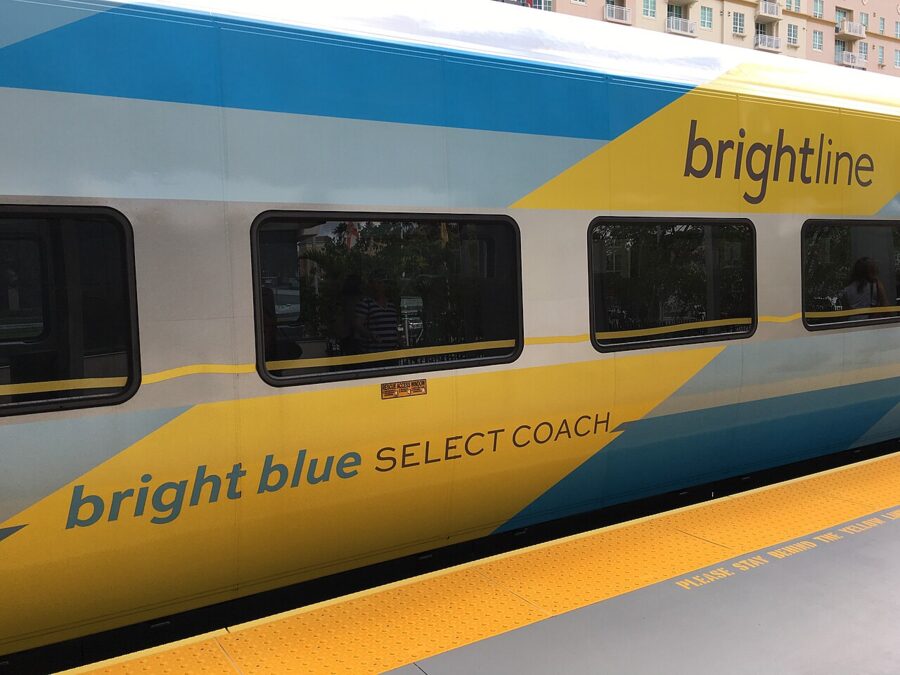
Brightline sells two classes. Smart is the main cabin: 19-inch leather seats, power outlets at every seat, free Wi-Fi and a trolley selling drinks and snacks. Premium is first class: 21-inch seats with more legroom, the Premium lounge in the station, food and drink in the lounge and on board, priority boarding in Miami and Orlando, and one standard checked bag included.
According to Brightline’s Premium page, the lounge serves rotating bites, beer and wine and soft drinks, and on board you get a bottle of water, a towelette, snacks and wine. On some of the longer Orlando trips there is a fuller menu. The other perk worth having is a free UberX ride within five miles of the station, booked in the Brightline app.
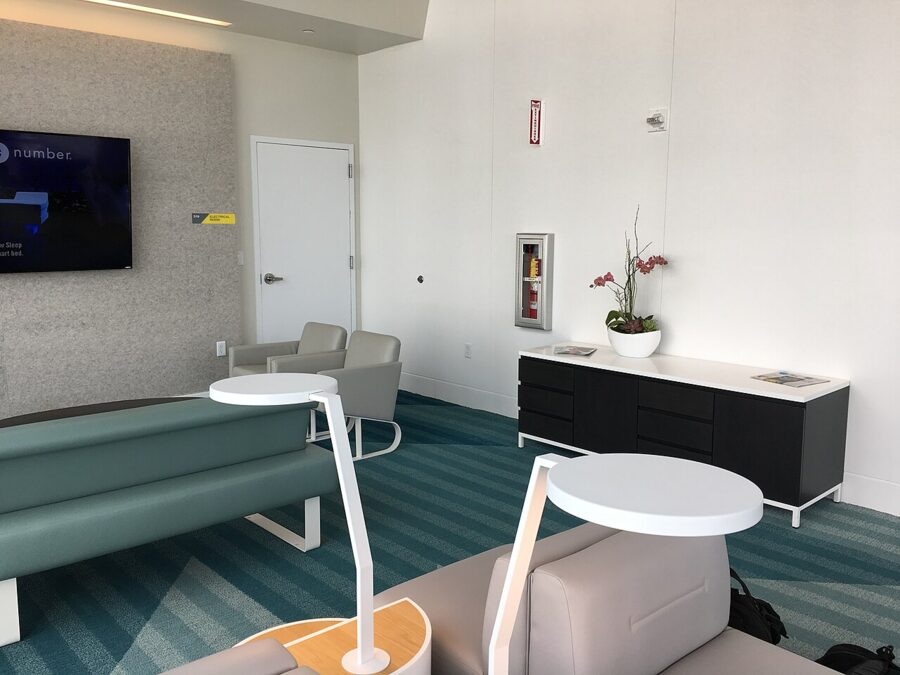
In Smart you buy from the trolley, and a winter 2026 menu had alcoholic drinks at about $10 and bagged snacks at $4. Every station except Aventura and Boca Raton has a Mary Mary bar, and Smart riders get a waiting lounge of their own.
Which to book? On a short hop between Miami and Fort Lauderdale, Smart, every time. On the full run to Orlando, Premium earns its price if you would otherwise pay for a checked bag and a meal, or if you are going on from the station by Uber within five miles. If you are traveling light and have eaten, Smart is a perfectly good seat for three and a half hours.
Brightline+ and the shuttles
Brightline’s door-to-door add-ons have changed shape. The branded Brightline+ Teslas are gone; Brightline+ is now a private Uber ride booked in the Brightline app as part of the trip, anywhere Uber operates, and free for Premium within five miles. Shared shuttles are sold as Brightline Connect: the airport shuttles in Miami and Fort Lauderdale, the Aventura Mall and stadium runs, and in Orlando, Disney and Universal shuttles and Mears rides.
Dogs and cats ride in a carrier for $10 within South Florida or $45 to or from Orlando, as of 2026.
Fares, booking and bags
Your class decides your seat and lounge; your fare option decides what you can change. Trips to or from Orlando come in three fare options, laid out on Brightline’s ticket page; Flex, the newest, arrived on September 9, 2026.
| Fare | Classes | Cancel | Change | Bags included |
|---|---|---|---|---|
| Saver | Smart only | No credit back | Not allowed | 1 carry-on + personal item |
| Select | Smart, Premium | 75% back as Brightline credit | Change fee + fare difference | 2 carry-ons + personal item (Premium adds 1 standard checked bag) |
| Flex | Smart, Premium | Full refund to your card | Free same day; fare difference only before that | 1 large checked bag + 2 carry-ons (Premium adds 1 standard bag); one-way MIA or FLL airport shuttle |
Prices move with demand and with the date you travel, not the date you book, so the cheapest seats go first. As of late 2026, Brightline’s holiday offer sold Smart Saver fares between South Florida and Orlando from $39 one way with 14 days’ notice, for travel through February 28, 2027. Groups of three or more save up to 25% on Smart Saver and Select fares to and from Orlando, children aged 3 to 12 can save up to 50% with 10 days’ notice, and under-twos ride free on a lap.
On top of the fare there is a $0.48 booking fee per person per trip, and the $1.50 departure fee on tickets from Orlando. Book on gobrightline.com, in the app or at the station kiosks; tickets bought from unauthorized resellers are void.
Bags are where people get caught out. Brightline’s baggage rules allow a carry-on of up to 24 by 16 by 10 inches and 50 pounds. Since December 10, 2025, anyone traveling between Miami and Orlando must check anything larger with Guest Services at least 30 minutes before departure. According to the fee schedule, a standard checked bag costs $30 and a large one (up to 33 by 22 by 15 inches and 70 pounds) $60, as of 2026.
Security is quick: bags go through a scanner and you walk through a metal detector, but you keep your shoes on and can carry full-size liquids.
Brightline against driving and flying
The drive from Miami to Orlando is about 235 miles on Florida’s Turnpike or I-95. With no traffic it takes about three and a half hours, roughly what the train takes, but Miami and Fort Lauderdale traffic rarely cooperates, and parking at a theme-park hotel adds to the bill. The train wins outright if you are going to the airport, Disney or Universal without wanting a car on the other end.
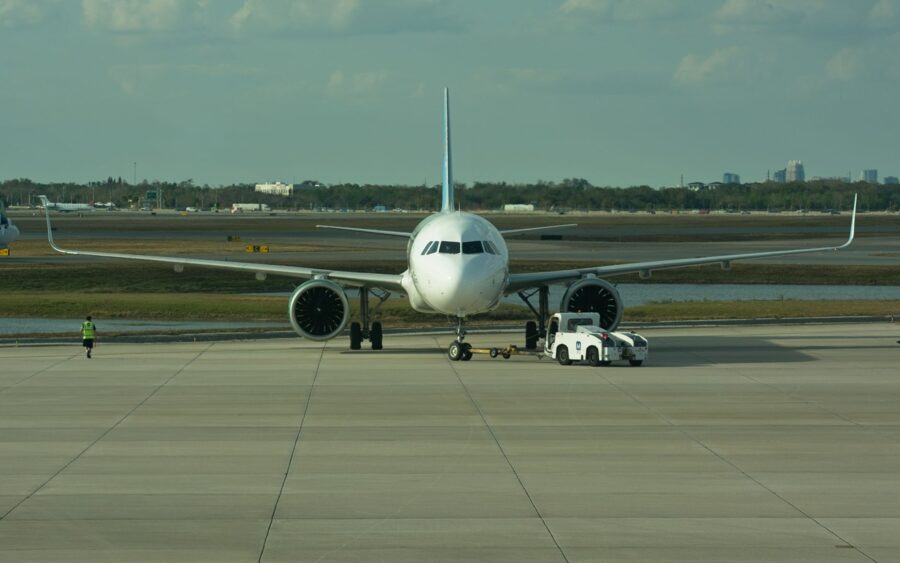
Flying from Miami to Orlando takes about an hour in the air, but add the trip to MIA, security and the wait at the gate and the door-to-door time is close to the train’s. Brightline’s real advantage is that its Orlando station is inside the airport: if your onward flight leaves from MCO, the train delivers you to the terminal without a rental car or a connecting flight. If you are arriving in Orlando by air and heading south, the same works in reverse.
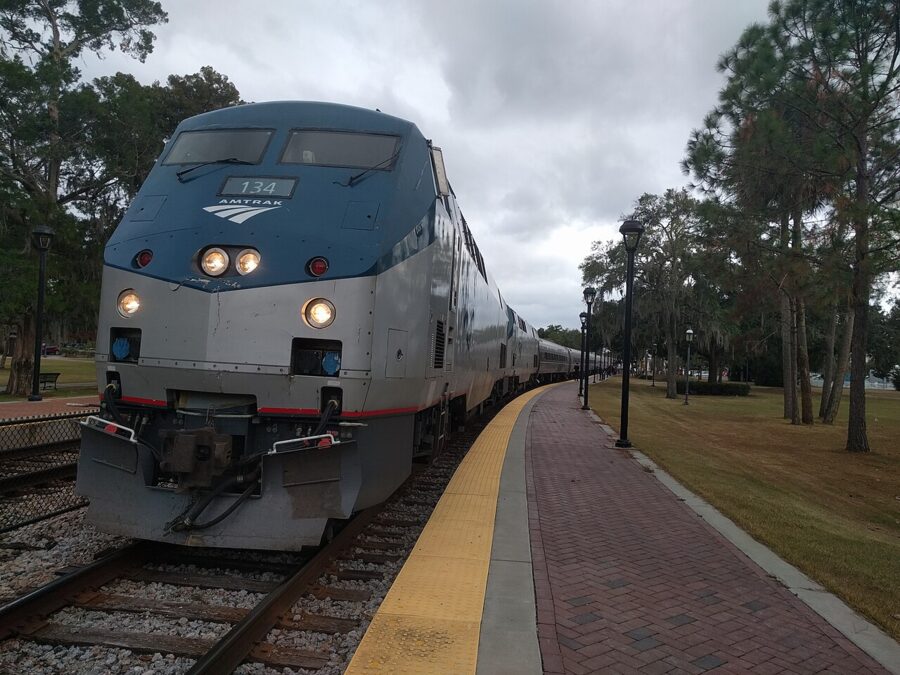
Amtrak also runs between Miami and Orlando on the Silver Meteor and the Floridian, two of the overnight trains in Amtrak’s long-distance network. They use an inland route to stations in Hialeah and downtown Orlando, take longer and are often late, so they make sense only as part of a longer trip north, perhaps in an Amtrak sleeper.
Safety on the Florida East Coast tracks
The hard fact about Brightline is how many people its trains have killed. A Miami Herald investigation, published with WLRN in December 2025, counted 195 deaths on the corridor since 2018, 32 of them in 2025: on average one every 13 days. Medical examiners ruled about 43% of them suicides. The rest include pedestrians walking on the tracks and drivers who stopped on a crossing or went around lowered gates.
The reason is the line itself. Between Miami and Cocoa the trains run at up to 110 mph through 195 miles of towns with hundreds of street-level crossings, on tracks shared with freight trains, so a second train can follow the first. Brightline has not been found at fault for any crash or death, and the National Transportation Safety Board has been studying its fatality rate.
What is being done is mostly engineering. A $45 million federal grant project, to which Brightline is contributing $10 million, is adding fencing, road markings, delineators and signs at 327 crossings between Miami and Cocoa. The Federal Railroad Administration reported 173 crossings done by June 5, 2026, and a 30% drop in trespassing and train-vehicle incidents in the first quarter of 2026. New Florida crossing rules took effect on January 1, 2026, but apply only to new projects, and about 31% of Brightline’s crossings still had only two gates.
For passengers, the risk is low; for anyone crossing the tracks in South Florida or on the Treasure Coast, it is not. Never go around a gate, and never assume the train that just passed was the only one.
The business, as reported
Ridership has grown every year since the pandemic: about 2.05 million in 2023, 2.76 million in 2024 and 3.1 million in 2025. Through August 2026 the trains carried about 2.34 million people, up 14% on the year, with revenue up 17%. In October 2026 Brightline Florida’s chief executive, Patrick Goddard, said the company expected about 3.6 million riders in 2026.
The trouble is that growth fell far short of the forecasts used to raise the money. Bloomberg reported that 2025 ridership came in 53% below projections, and a Debtwire analyst put Brightline at roughly half the passengers and a third of the revenue it had projected in 2024. Fitch cut the bonds deep into junk territory, and in May 2026 the company warned it might not meet a debt payment.
On September 24, 2026, 17 Brightline parent and affiliate companies filed for Chapter 11 in New Jersey as part of a prearranged deal, as WPBF reported. The operating company, Brightline Trains Florida LLC, did not file, and creditors agreed to put in $490 million of new money. The trains have kept running on schedule.
For a traveler that means two things. Book as you normally would, but if your trip is months away and you are nervous, the Flex fare’s full refund to your card is the cheapest insurance on offer. And treat the new stations at Cocoa and Stuart, and the long-promised extension to Tampa, as plans rather than dates.
Brightline West: Las Vegas to Rancho Cucamonga
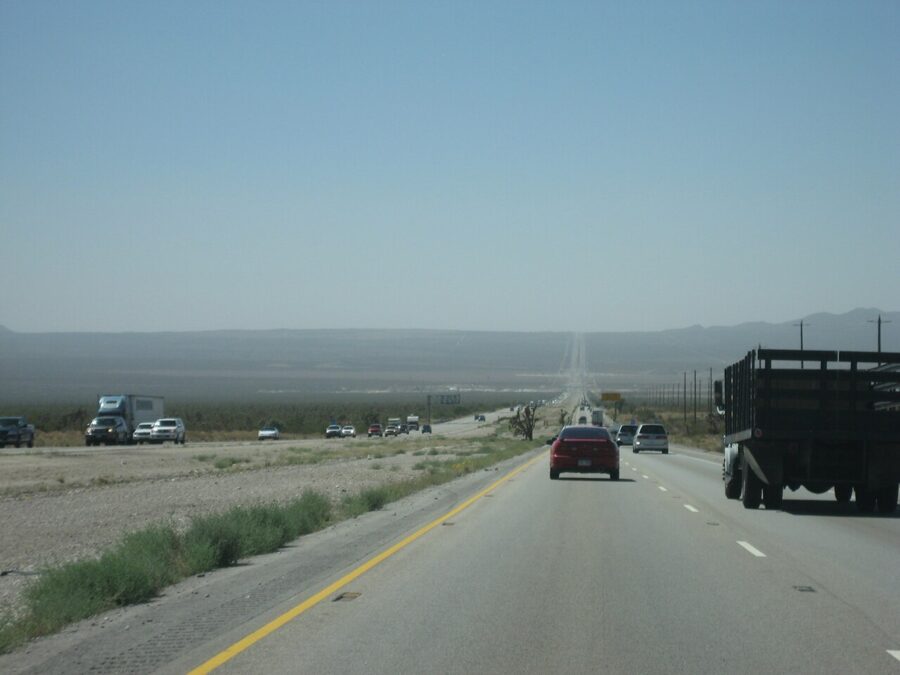
Brightline West is a separate company building a 218-mile electric high-speed line from Las Vegas to Rancho Cucamonga, in the Inland Empire east of Los Angeles, almost all of it in the median of Interstate 15. The company says trains will reach 200 mph and make the trip in about two hours. Stations are planned south of the Strip in Las Vegas, at Apple Valley and Hesperia in the Victor Valley, and at Rancho Cucamonga, where Metrolink’s San Bernardino Line goes on to Union Station in downtown Los Angeles.
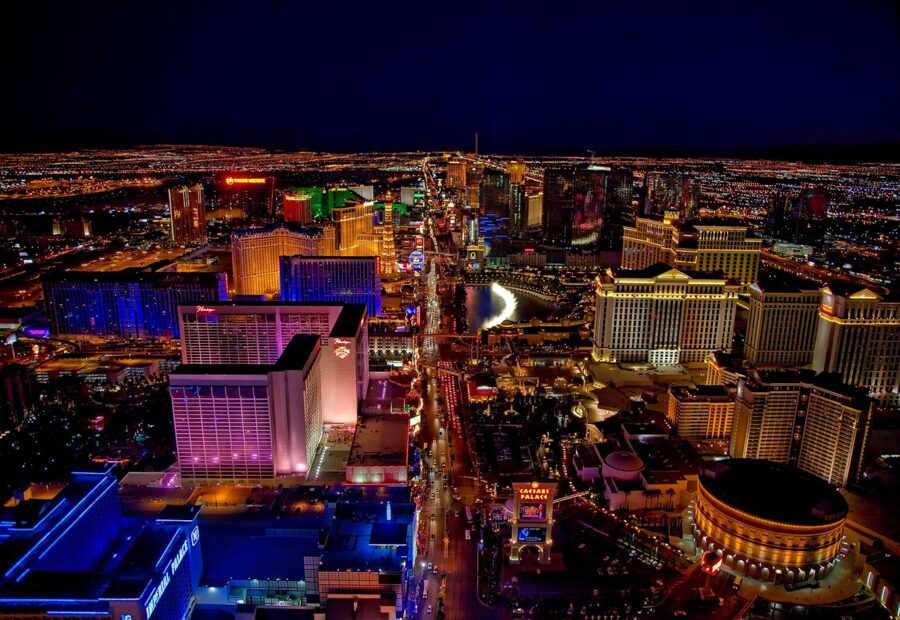
The money is in place only in part. The Federal Railroad Administration awarded a $3 billion grant in December 2023, signed in September 2024, and the project sold $2.5 billion in private activity bonds. A ceremonial groundbreaking at the Las Vegas station site followed on April 22, 2024. Since then the estimated cost has grown to about $20 billion to $21 billion.
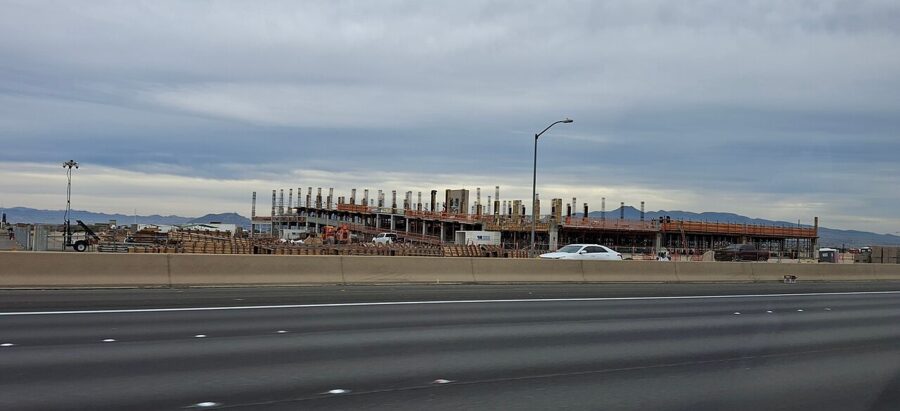
The project now waits on a $6 billion federal Railroad Rehabilitation and Improvement Financing loan it applied for in September 2025. In January 2026 the company gave late 2029 as its completion date. By late 2026 the Las Vegas Review-Journal reported that momentum had all but halted, the station garage stood unfinished, and late 2029 was the earliest possible finish. Brightline West says it can deliver the line in about four years once financing closes.
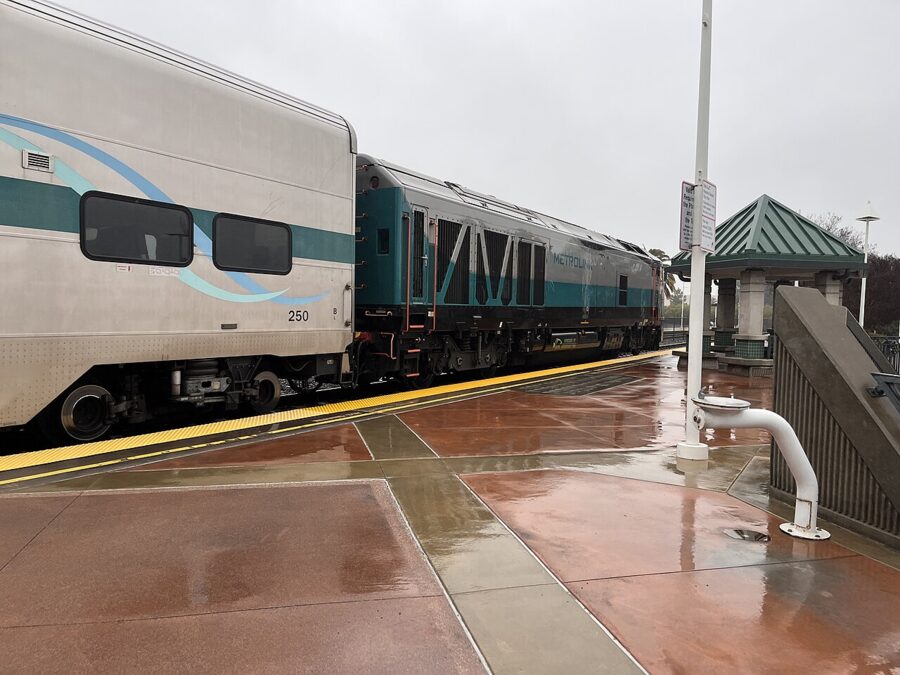
Siemens is building the trains, American Pioneer 220 sets, and the first car bodies are finished. No fares have been announced. Brightline West says the Florida bankruptcy has no bearing on it, since the two are separate companies. The original promise was service for the 2028 Los Angeles Olympics, and that date is gone.
Brightline and Amtrak’s Acela
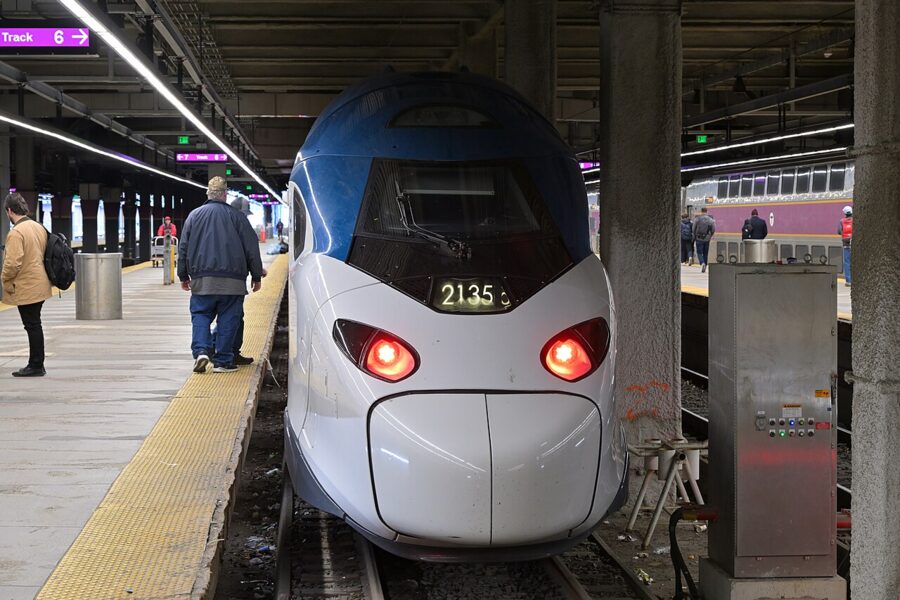
Brightline is often called America’s high-speed train, and the comparison with Amtrak’s Acela on the Northeast Corridor shows why that is only partly true. Acela is electric and runs between Boston, New York and Washington, mostly on tracks Amtrak owns. Since August 28, 2025, Amtrak has been replacing the fleet with NextGen Acela trains that can reach 160 mph, with 28 planned by 2027.
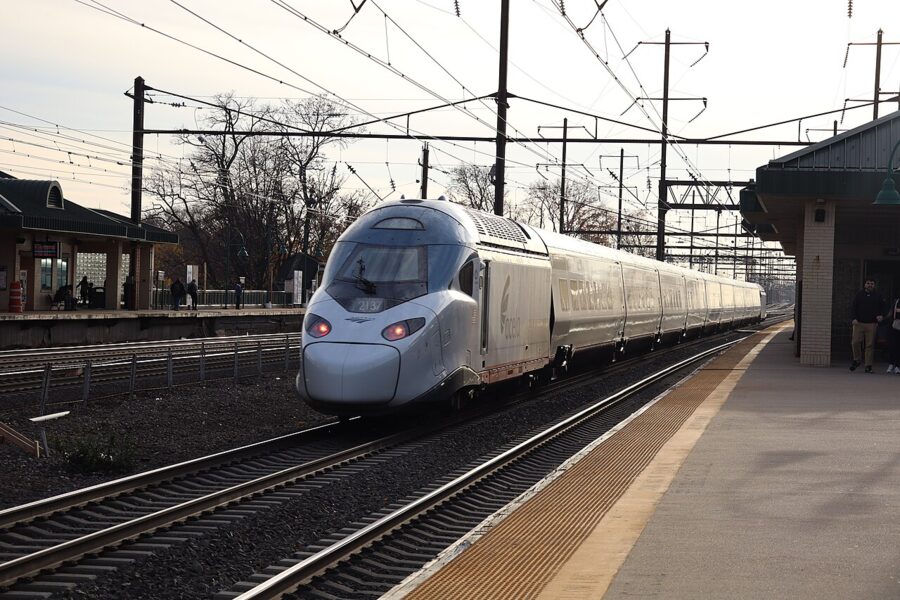
Brightline’s Florida trains are diesel-electric, run on biodiesel by the company’s account, and peak at 125 mph only on the 35 fenced miles near Orlando. What Brightline does better is the experience around the train: airline-style stations, assigned seats on every ticket, staffed lounges and bag check. Acela’s corridor carries far more people: in July 2026 Amtrak was running 32 weekday NextGen Acela trips, and Amtrak as a whole carried a record 37.1 million riders in its 2026 fiscal year.
Both are a different kind of trip from Amtrak’s long-distance trains such as the California Zephyr, which are about the journey itself. If Brightline West is ever built, it would be the first line in the country designed for 200 mph.
Back on the platform at MiamiCentral, the choice comes down to three things. Book Smart Saver early if your plans are fixed and your bag fits the overhead rack. Pay for Flex if they are not, and Premium if you want a meal and a checked bag on the full run. Then check the app on the morning you travel, especially when it has been raining on the Space Coast.