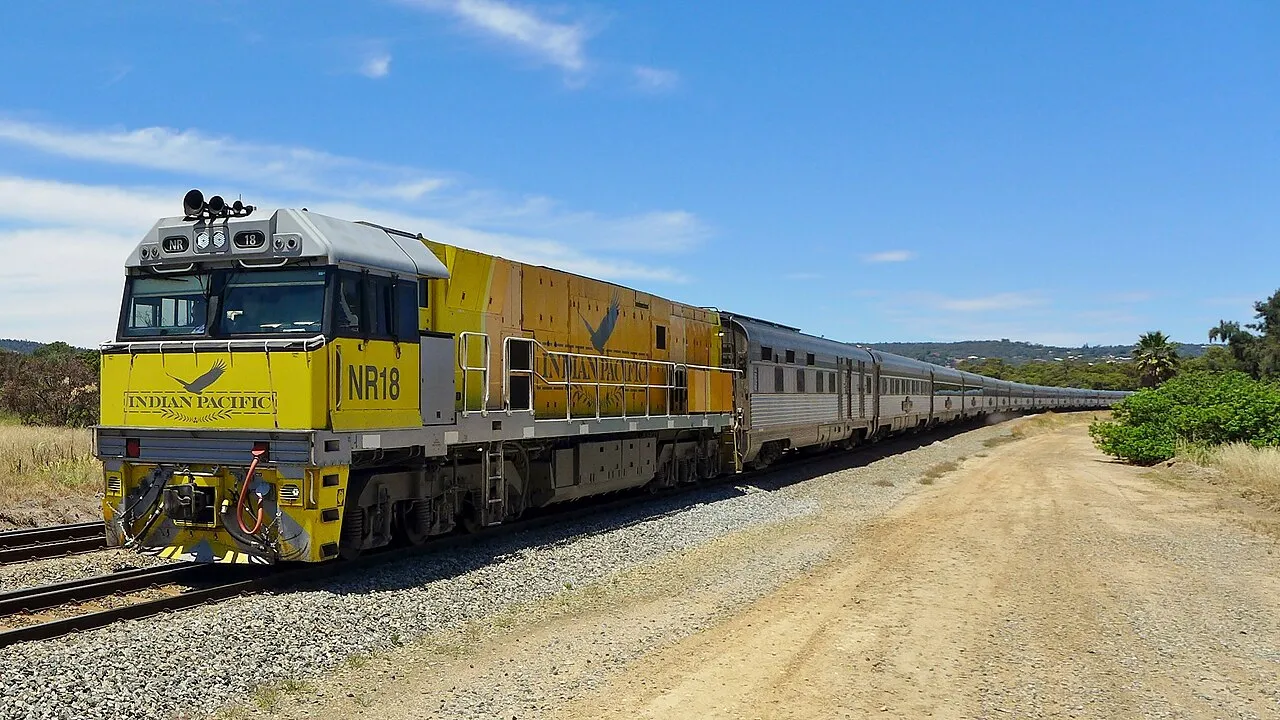
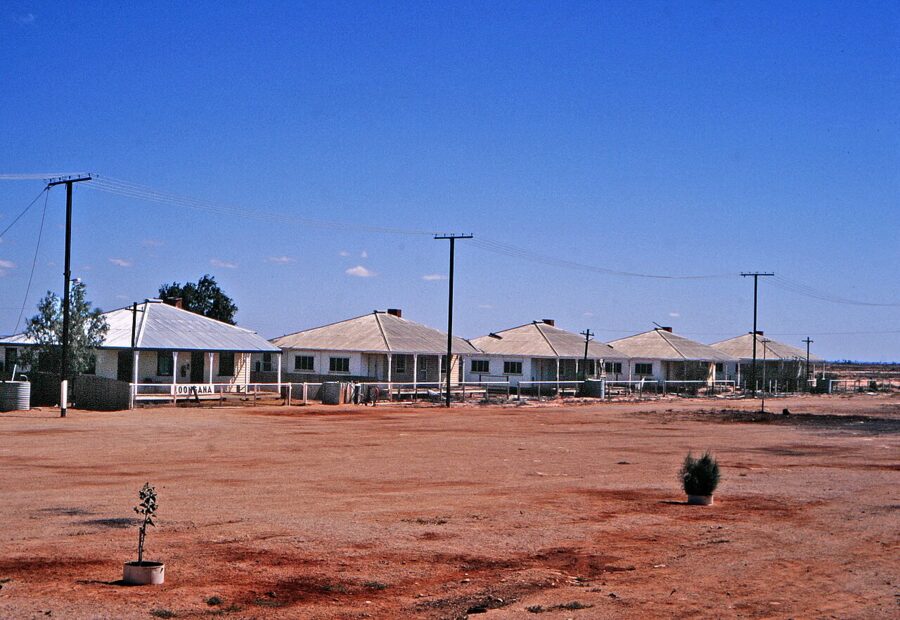
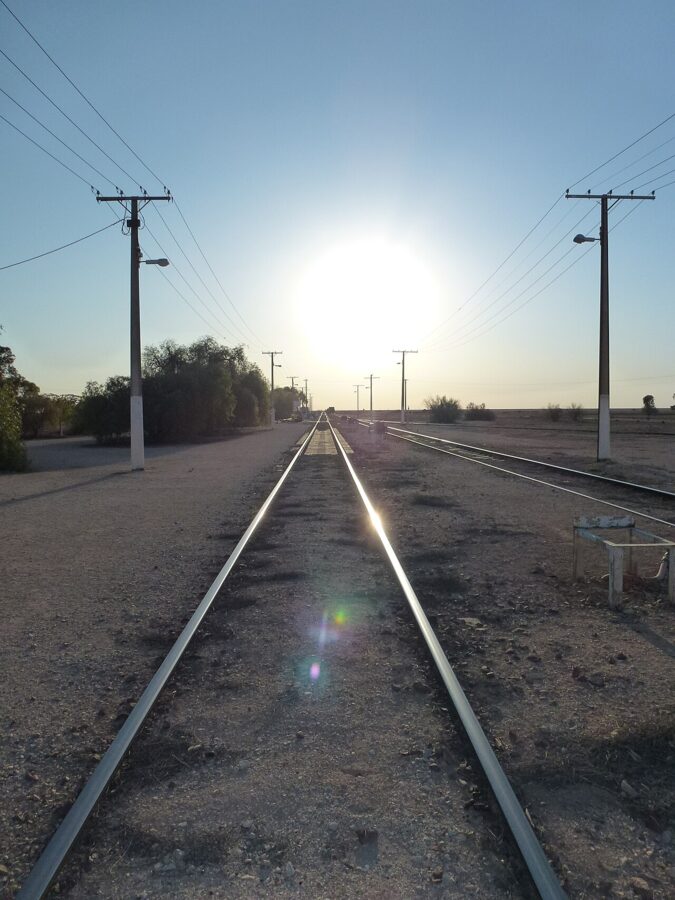
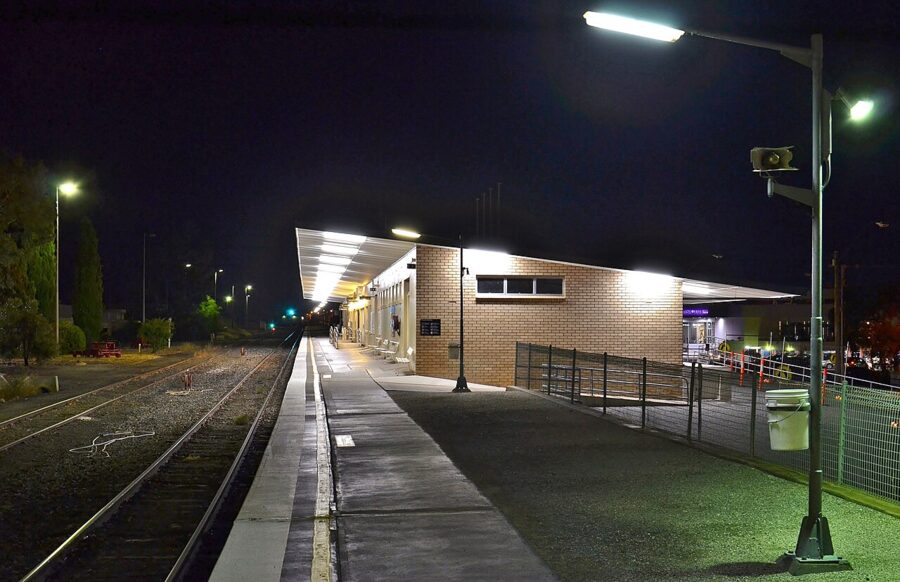
At 12:35 p.m. on a Friday the westbound Indian Pacific stops at Cook, South Australia, and lets everyone off into the middle of nothing. The town has four residents, a few railway houses and two tin gaol cells. In both directions the track runs dead straight to the horizon, and it keeps running straight for 297 miles (478 km), the longest straight stretch of railway in the world.
Getting there takes two days. The train leaves Sydney on Wednesday afternoon, climbs the Blue Mountains, wakes at Broken Hill, spends an evening in Adelaide and then turns west across the Nullarbor toward Perth, 2,704 miles (4,352 km) from where it started. Eastbound takes a night longer.
Nobody rides it to get anywhere: a flight does Sydney to Perth in about five hours. You ride it for the emptiness, the meals and the stops, from about US$2,000 a person for three nights in the smallest cabin. Direction, month and cabin can each move that bill by thousands of dollars.
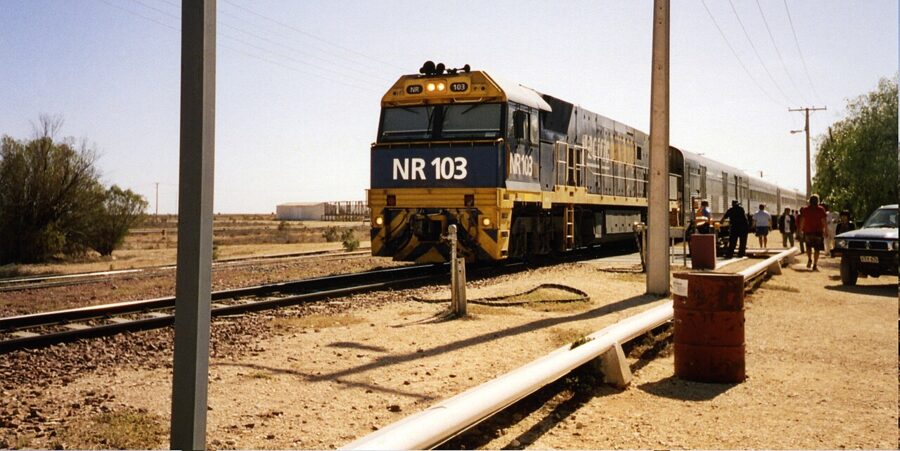
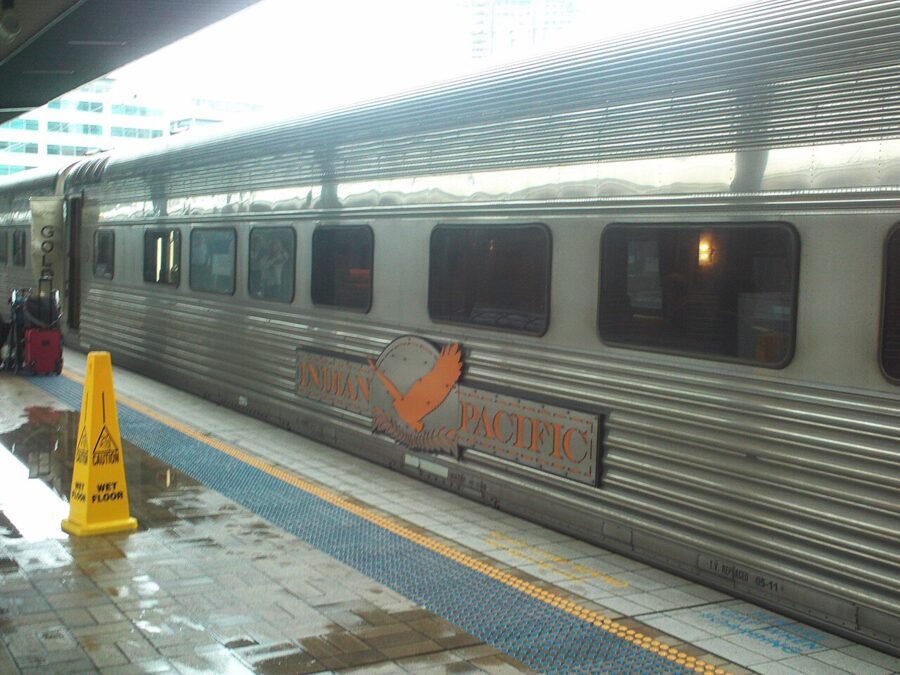
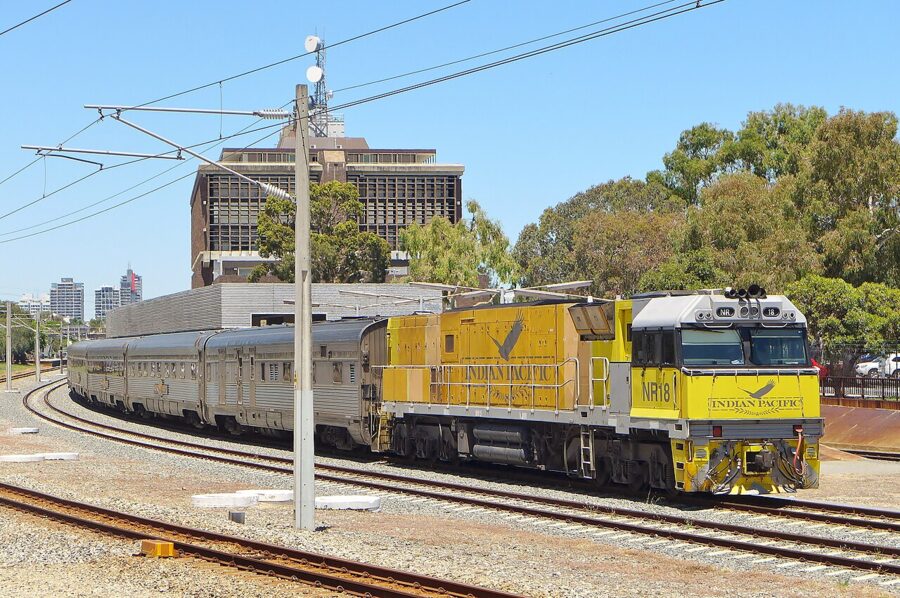
The route and the straight
The Indian Pacific is run by Journey Beyond, the Adelaide company that also runs The Ghan and The Overland and has owned all three since the government trains were privatized in 1997. In 2027 it runs once a week in each direction, all year. The fare covers the cabin, every meal, the drinks (wine, beer and spirits included) and a choice of guided outings at each stop.
Out of Sydney the line climbs through the Blue Mountains, crosses the farm country of western New South Wales overnight and reaches Broken Hill near the South Australian border. It runs south past the Flinders Ranges to Adelaide, doubles back north to Port Augusta and then takes the Trans-Australian Railway across the Nullarbor to Kalgoorlie. The last stretch drops through the Wheatbelt and the Avon Valley into Perth.
West of Adelaide this is freight country: the East-West corridor, managed by the Australian Rail Track Corporation, is the only rail link between Western Australia and the eastern states, and the Indian Pacific shares it with long container trains.
A railway that was a condition of joining
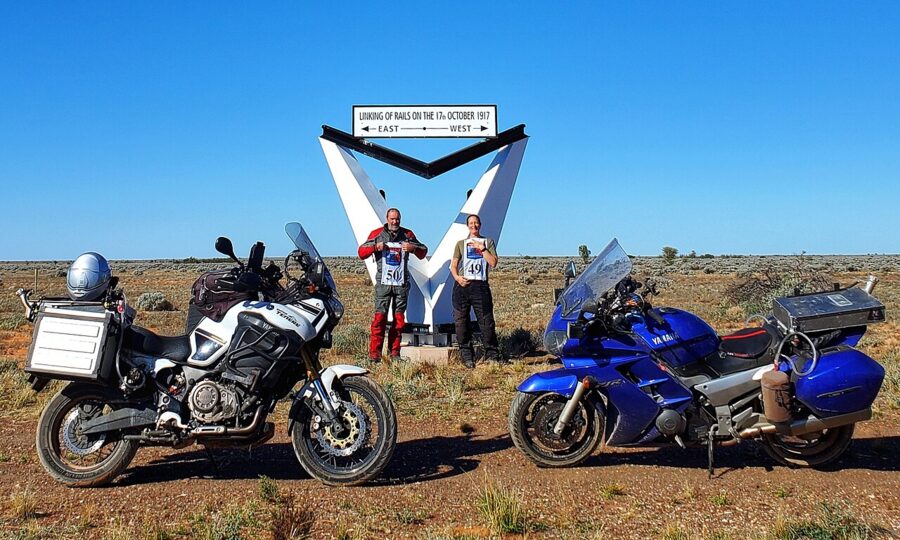
When the colonies federated in 1901, Western Australia was a long sea voyage across the Great Australian Bight from everyone else, and a railway was one of the promises that brought it in. Gangs built toward each other from Port Augusta and Kalgoorlie from 1912, through the First World War. The two halves met at Ooldea, on the eastern edge of the Nullarbor, on October 17, 1917.
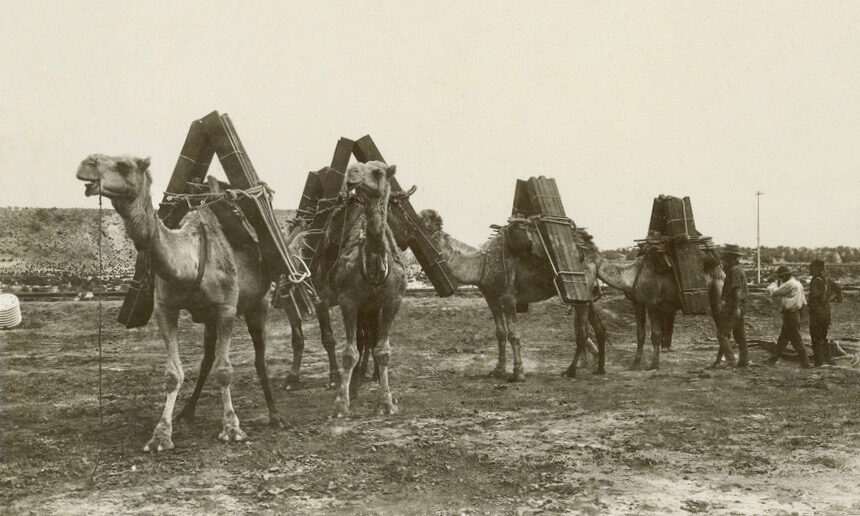
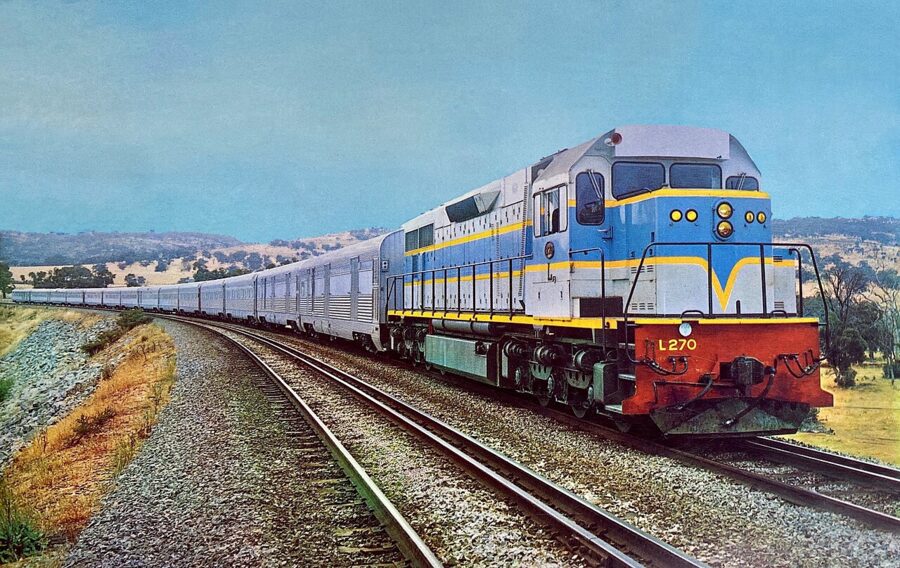
The new line was built to standard gauge, but the state railways at each end were narrow gauge, so passengers had to change trains wherever the gauges met. Once the conversions were finished, the first Indian Pacific left Sydney on February 23, 1970, named for the two oceans at its ends.
The longest straight
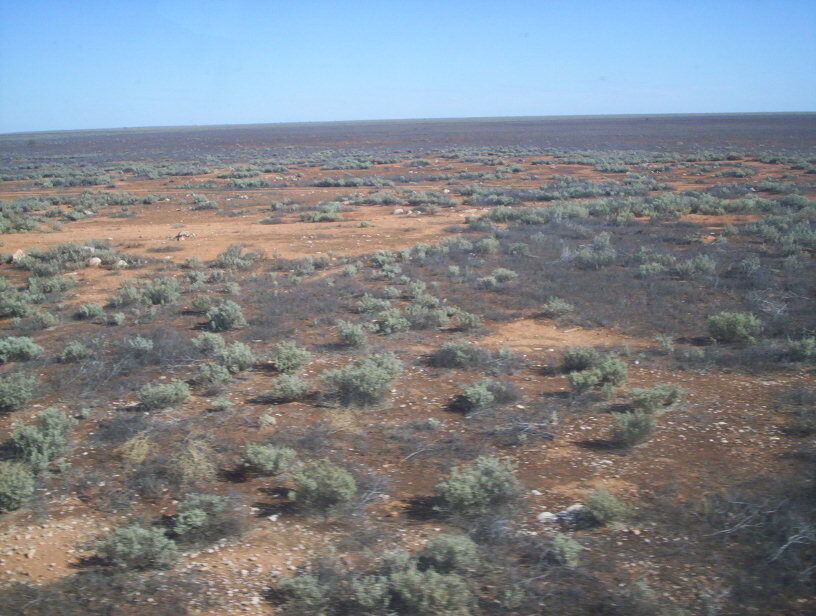
The straight starts between Ooldea and Watson in South Australia and ends between Loongana and Nurina in Western Australia, 297 miles (478 km) later. There are no curves because there was nothing to go around: the Nullarbor is an old seabed of limestone, flat and almost treeless, which is what its Latin-sounding name means.
What you see is saltbush and bluebush in gray-green clumps, red earth between them, the occasional emu or eagle and the line of poles beside the track keeping time. There is no better side of the train on the straight, since both windows show the same country. The light changes more than the ground does.
The journey day by day in 2027
The two directions are sold as different trips. Westbound is Coast to Coast, four days and three nights; eastbound is The Mighty Nullarbor, five days and four nights, with an evening in the Barossa Valley and a last morning in the Blue Mountains.
The times below are from Journey Beyond’s 2027 Indian Pacific timetable, as published in November 2026. They reflect eastern daylight saving time; revised times apply from April 5, 2027, and any of them may still move.
Westbound: Coast to Coast, Sydney to Perth
| Day | Time | What happens |
|---|---|---|
| Wednesday | 2:10 p.m. | Depart Sydney Central; Blue Mountains in the afternoon |
| Thursday | 6:30 a.m. | Broken Hill, morning outing |
| Thursday | 4:05 p.m. | Arrive Adelaide, afternoon and dinner outing |
| Thursday | 9:50 p.m. | Depart Adelaide |
| Friday | 12:35 p.m. | Cook, afternoon stop |
| Friday | 5:55 p.m. | Rawlinna, evening outing |
| Saturday | 2:45 p.m. | Arrive East Perth |
Thursday is the busy day: Broken Hill in the morning, lunch past the southern tip of the Flinders Ranges, an evening off the train around Adelaide. Friday is all Nullarbor, from the Ooldea dunes at breakfast to Cook and dinner at Rawlinna, and Saturday brings the Avon Valley and brunch before Perth. This direction puts the whole straight in daylight and costs less, and it is the one I would book.
Eastbound: The Mighty Nullarbor, Perth to Sydney
| Day | Time | What happens |
|---|---|---|
| Saturday | 5:55 p.m. | Depart East Perth |
| Sunday | 6:00 a.m. | Kalgoorlie, morning outing |
| Sunday | 10:04 p.m. | Cook, evening bonfire and stargazing |
| Monday | 3:25 p.m. | Long Plains, coaches to the Barossa Valley |
| Monday | 10:40 p.m. | Depart Adelaide after the Barossa dinner |
| Tuesday | 8:15 a.m. | Broken Hill, morning outing |
| Wednesday | 8:05 a.m. | Blue Mountains, then Sydney at 12:30 or 3:15 p.m. |
On the last morning you either stay aboard (Sydney Central at 12:30 p.m.) or spend the morning around Katoomba and ride a chartered NSW TrainLink train, hosted by the Indian Pacific crew, into Central at 3:15 p.m.
Eastbound you see less desert by day and reach Cook in the dark, but you get Kalgoorlie, the Barossa and the Blue Mountains on foot, and Sydney is the easier city to fly home from.
Shorter trips and what you cannot do
Journey Beyond also sells the train in halves: Perth to Adelaide or the reverse (three days, two nights), and Adelaide to Sydney or the reverse (two or three days, one or two nights). Perth to Adelaide is the cheapest way across the Nullarbor in a sleeper, from A$2,390 (about US$1,590) in a Gold Single on an Advance Purchase fare in June or July 2027.
You cannot get off at Broken Hill, Kalgoorlie or Cook and stay: the regional stops are for outings, fuel and water, and a journey may end only in Sydney, Adelaide or Perth.
Off the train: Broken Hill, Cook, Rawlinna, Kalgoorlie and the rest
The off-train experiences are included in the fare. Where there is a choice, you send your preferences online when the operator emails to say the list is open; Gold Premium passengers get first pick.
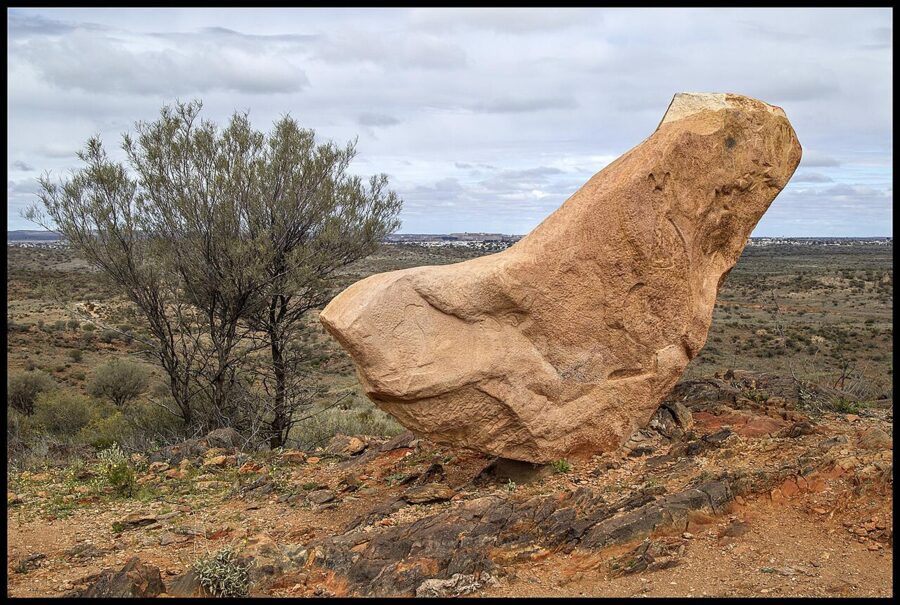
Broken Hill
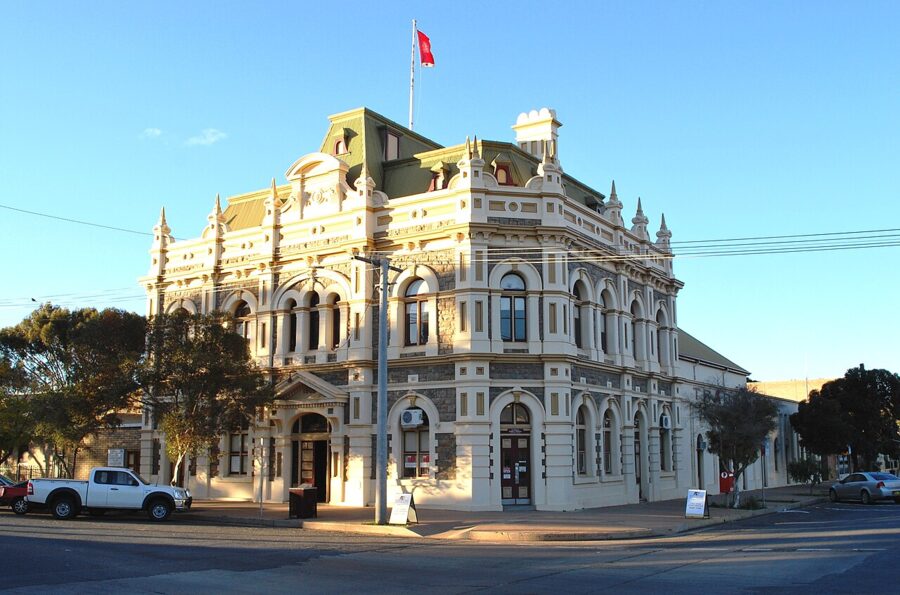
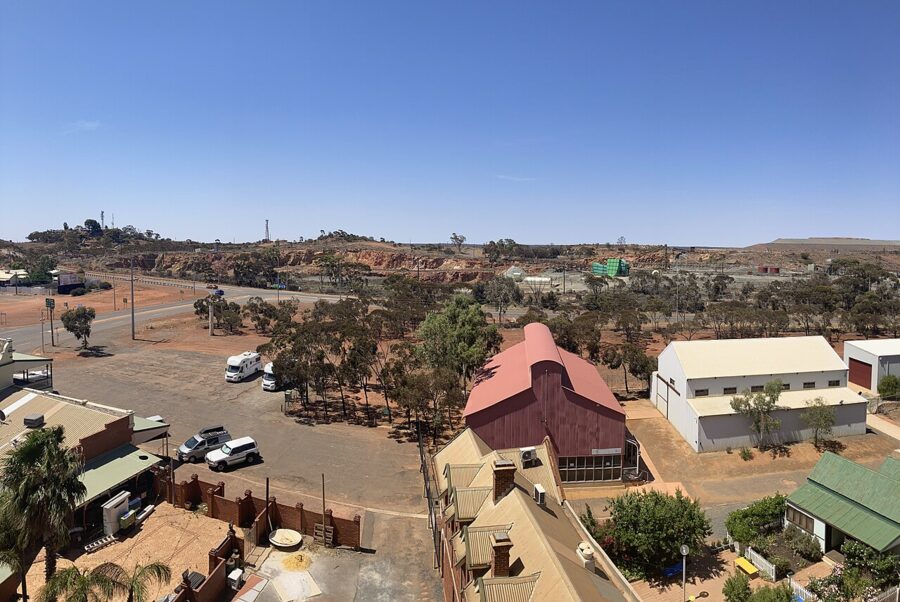
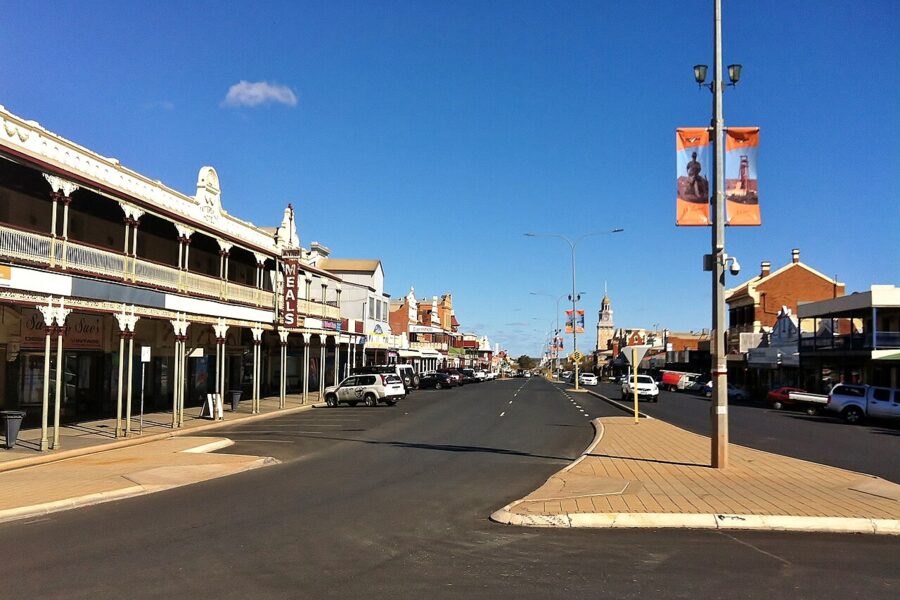
Broken Hill is a silver, lead and zinc town of wide streets and grand pubs, and Journey Beyond calls it Australia’s first heritage-listed city. Westbound you choose between a 1-mile (1.5 km) walking tour that ends with morning tea at the Trades Hall and Broken Hill On Show at the Tipsy Camel, hosted by the drag performer Shelita with a bush-spice cooking session from chef Lee Cecchin.
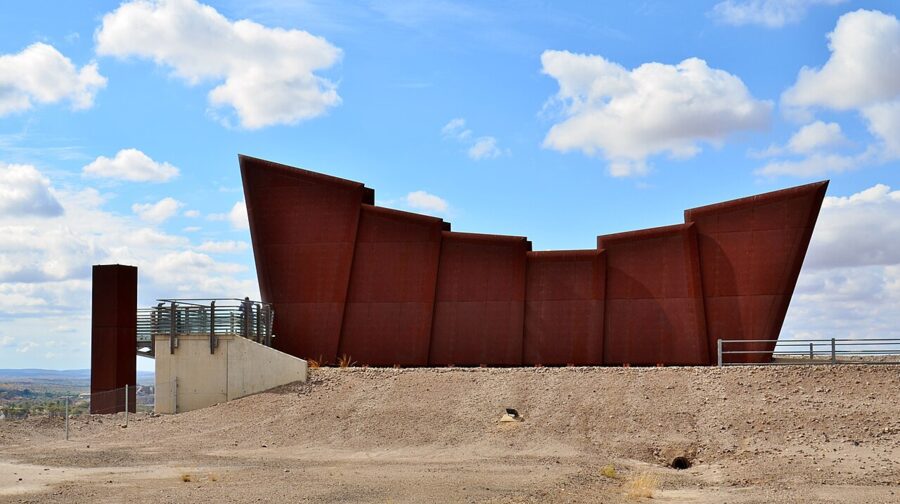
Eastbound, on Tuesday morning, the Broken Hill list is longer. Silver City Highlights takes in the Living Desert sculptures, the Sulphide Street Railway and Historical Museum and the miners’ memorial. Paint Like a Pro is a class in Pro Hart’s old studio, and there is a bush-food session and Shelita’s own tour.
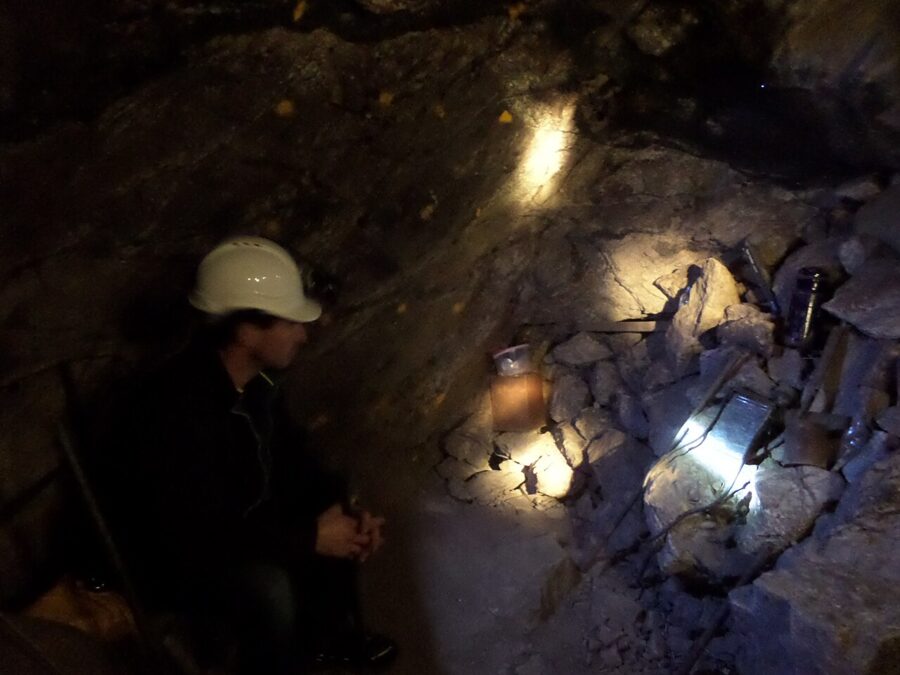
The Day Dream Mine near Silverton means a 50-minute coach ride each way, then steep, low tunnels about 330 feet (100 m) underground where Cornish miners worked in the 1880s. It is rated high fitness, and I would skip it if you dislike confined spaces.
Adelaide, westbound
Between 4:05 and 9:50 p.m. the Adelaide evening is a dinner out. The current choices are The Lane Vineyard in the Adelaide Hills and dinner in Hahndorf; the Central Market after hours, with a cheese and wine class and dinner among the stalls; or Coopers Brewery, teppanyaki and a walk to Adelaide Oval.
From late August to April there is also a McLaren Vale evening at the Star of Greece, on the cliffs above Gulf St Vincent. The 2027 itinerary lists the same four kinds of evening, and if you have never been to Adelaide, the market shows you the most of it.
Cook
Cook was built by the Commonwealth Railways in 1917 as a track-maintenance town on the straight, with more than 50 railway workers, a hospital, a school and a swimming pool. Diesels, concrete sleepers and welded rail made the workers unnecessary, and today a handful of people remain, with track crews overnighting in the houses that are left.
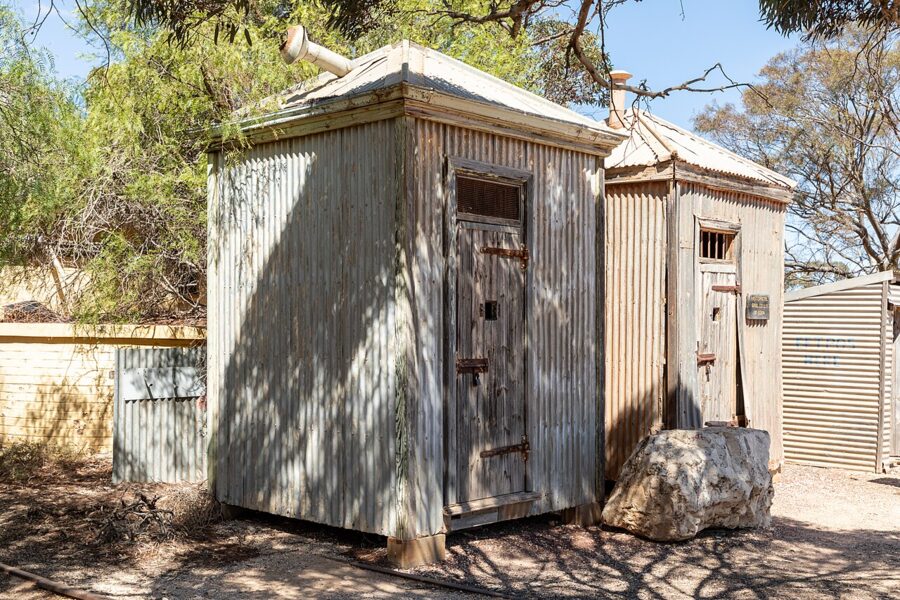
Westbound the stop falls around Friday lunchtime, and you wander the empty buildings in the sun. Eastbound the train arrives at 10:04 p.m. on Sunday for a bonfire, a nightcap and a sky with almost no light pollution, the Southern Cross included.
Rawlinna
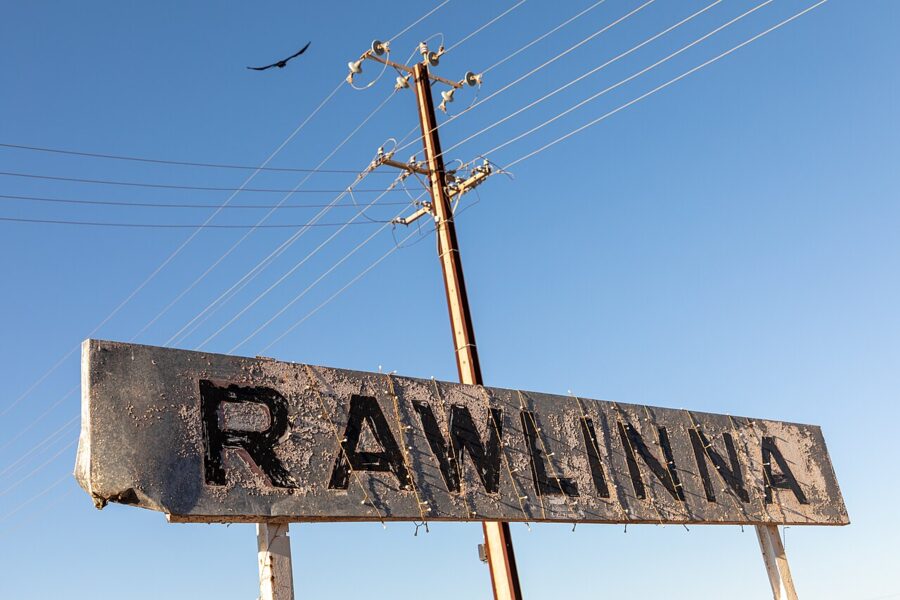
Rawlinna is a siding in Western Australia on the edge of Rawlinna Station, Australia’s largest sheep station, which the operator puts at up to 80,000 sheep on 2.5 million acres. By road, Kalgoorlie is five hours away. The westbound train stops at 5:55 p.m. on Friday: from September to May for a long-table dinner in the open, weather permitting, and in winter for drinks and canapés around a bonfire. Bring a warm layer, since winter nights on the Nullarbor average about 41°F (5°C).
Kalgoorlie, eastbound
The eastbound train is in Kalgoorlie at 6 a.m. on Sunday, and the Kalgoorlie outings are all about gold. Paddy Hannan’s find in 1893 started the rush, and the Golden Mile is still mined today from the Super Pit, an open-cut mine the operator measures at more than 2.2 miles (3.5 km) long, almost a mile (1.5 km) wide and nearly 2,000 feet (600 m) deep.
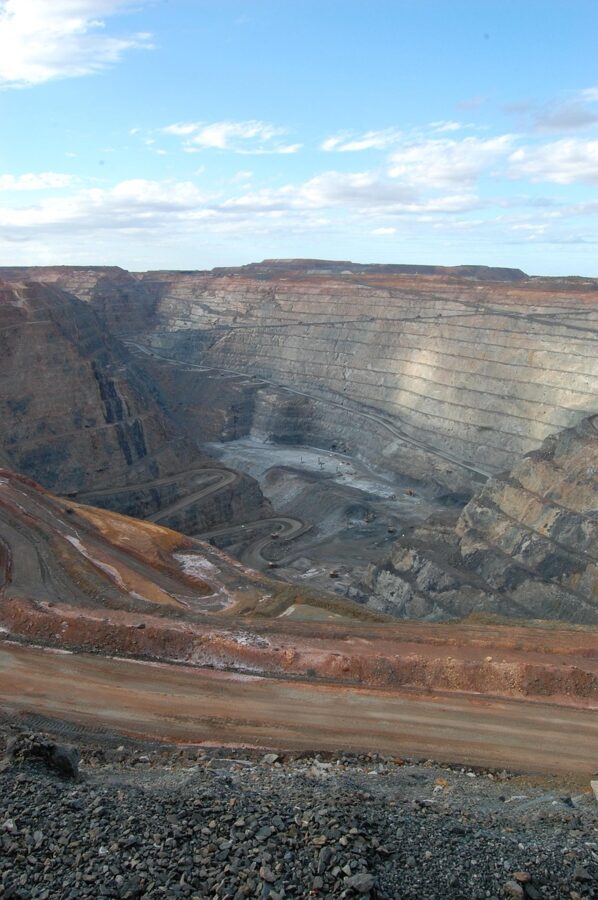
The Super Pit tour takes a mine bus through the workshops and onto internal viewing platforms, and it has rules: fully enclosed shoes, long sleeves and long pants without rips, and a 0.00 breath-alcohol reading, with random drug and alcohol tests possible. Plan Saturday night accordingly. Golden Treasures, at Hannans North Tourist Mine, offers gold panning, a game of two-up and the Super Pit Lookout, and Curious Kalgoorlie visits the Museum of the Goldfields and a local woodworker.
The Barossa and the Blue Mountains, eastbound
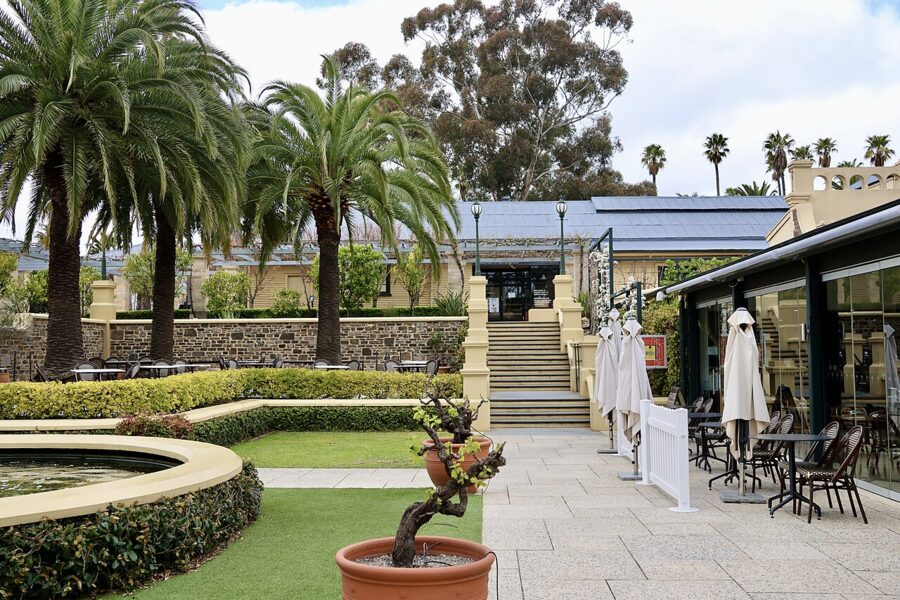
On Monday afternoon the train stops at Long Plains, north of Adelaide, and coaches take everyone about 50 minutes to Seppeltsfield in the Barossa Valley. Dinner is in the vintage cellar, with the Firing of the Barrel and a menu from executive chef Owen Andrews, and Platinum passengers taste a 100-year-old tawny. The coaches then return everyone to the train in Adelaide.
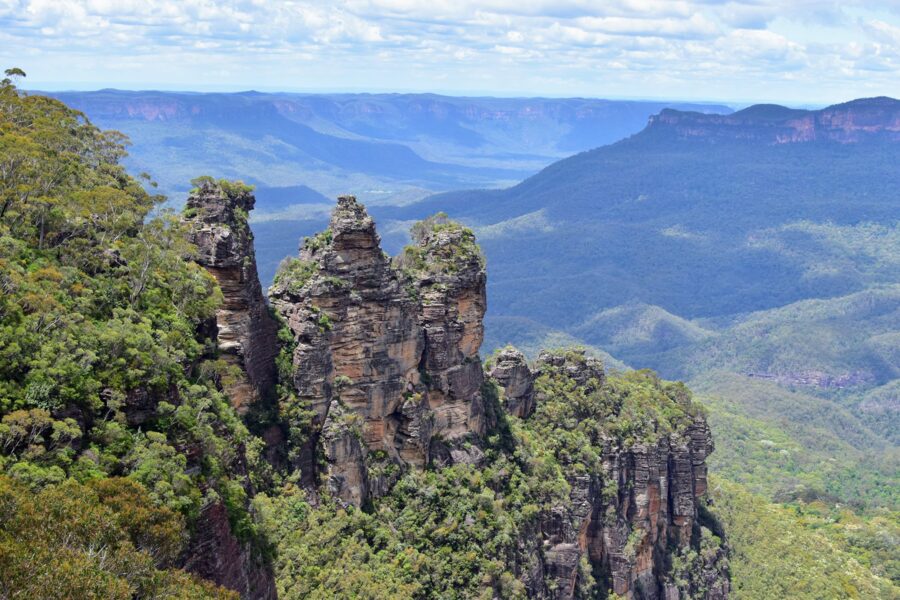
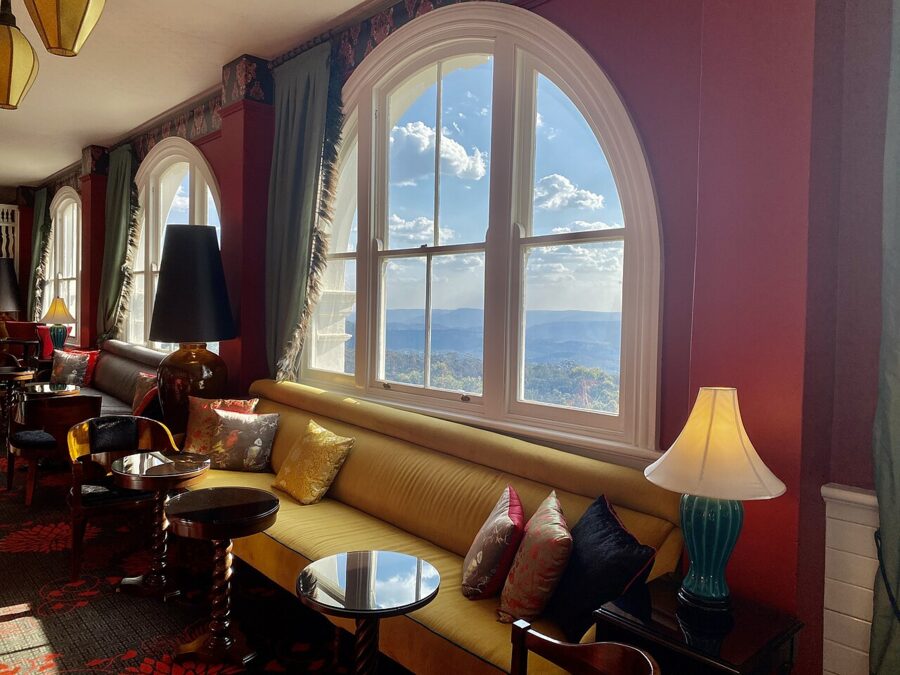
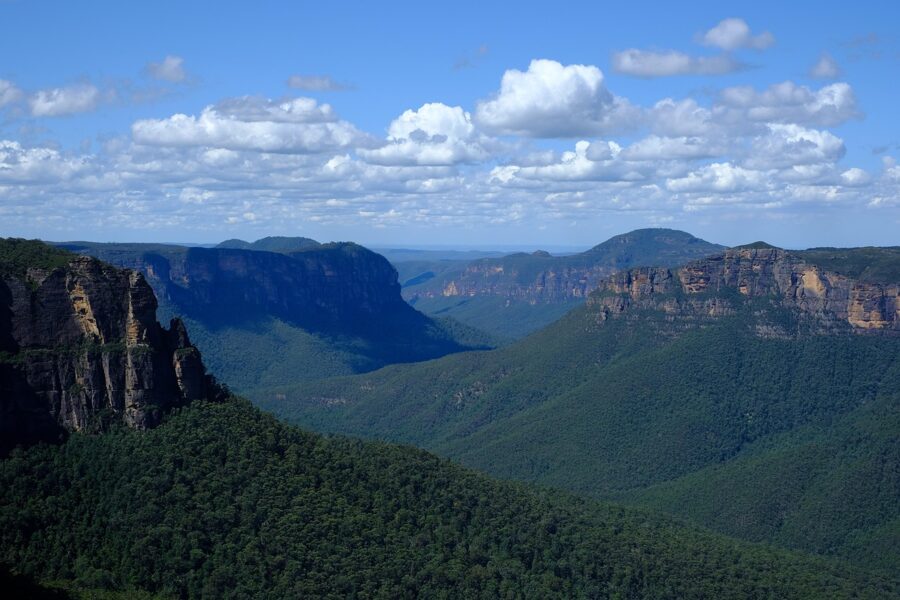
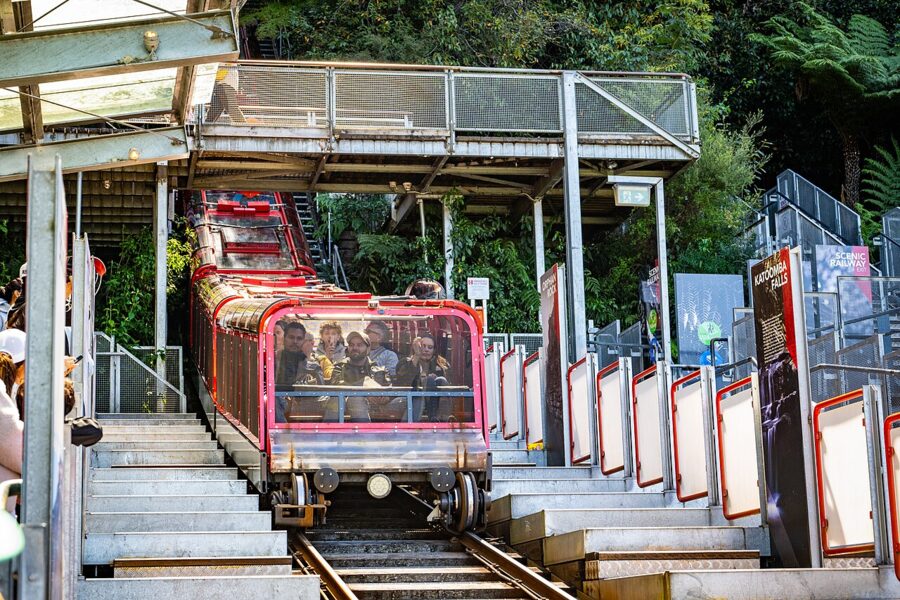
On the last morning there are three Blue Mountains outings. At Scenic World you ride the Skyway with its glass floor 890 feet (270 m) above the ravine, the Cableway down into the valley and the Scenic Railway back up, then lunch at the Hydro Majestic Hotel. The Discovery Trail is a guided 2-mile (3 km) walk along the cliff path to Echo Point and the Three Sisters, and the third choice is high tea at the Hydro Majestic after Govetts Leap Lookout.
Cabins, dining and 2027 fares
There are four levels of service, each with its own dining car and lounge, and you cannot enter another level’s carriages, even to dine with friends. Every cabin is private; seats were dropped years ago.
Gold: Single and Twin
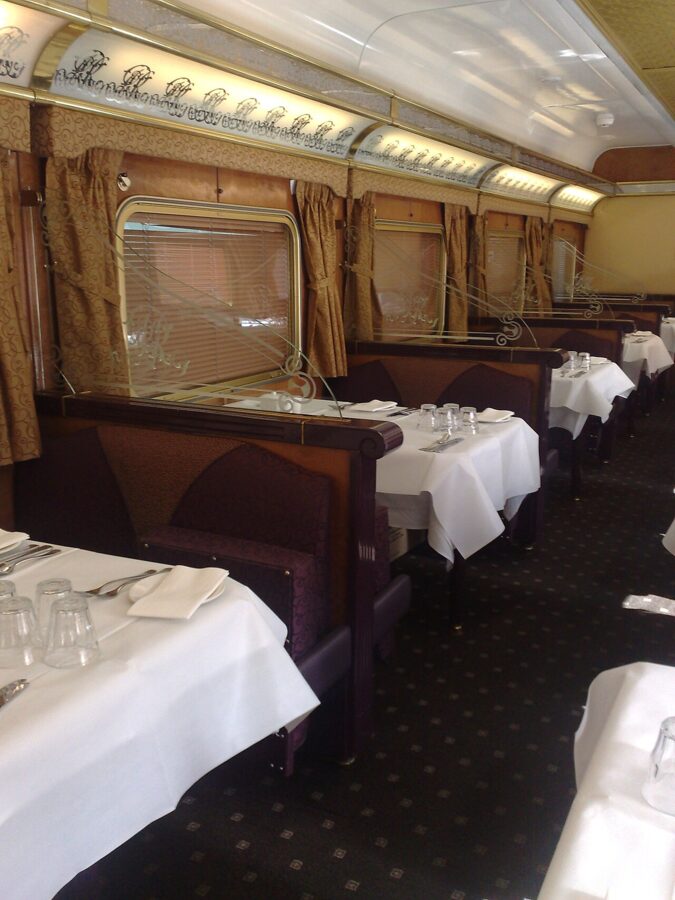
The Gold cabins are where most people travel. Gold Single is a compact cabin with a seat that becomes a bed, and the toilets and showers are at the end of the carriage. Gold Twin has a three-seat sofa by day that becomes upper and lower berths at night, reached by a ladder, and a tiny private bathroom with shower, toilet and basin.
Set beside an Amtrak roomette, the Gold Twin wins on one point that matters over three or four nights: the toilet and shower are yours. Gold passengers eat in the Queen Adelaide Restaurant, with breakfast, a two-course lunch and a three-course dinner, and socialize in the Outback Explorer Lounge. The checked-bag allowance is two 66 lb (30 kg) bags per person.
Gold Premium
Gold Premium is the newer middle level, in redesigned cabins with walnut, brass and fabrics printed in colors from Albert Namatjira’s paintings. The Gold Premium Twin is laid out like a Gold Twin, sofa by day and bunks by night; the Gold Premium Suite has a three-quarter double bed plus a fold-down upper berth and is in short supply. You get your own lounge and dining car, four-course dinners, priority check-in, first pick of outings and three 55 lb (25 kg) bags.
Platinum
Platinum cabins are almost twice the size of a Gold Twin, set up as a lounge with a table and two ottomans by day and a double or two single beds at night. The bathroom has a separate shower, the windows look out on both sides of the train, and meals are in the Platinum Club, with five-course dinners and Bollinger. Transfers within 37 miles (60 km) of the terminal are included, and Platinum passengers boarding in Sydney start with a two-course lunch cruise on Sydney Harbour.
The Aurora and Australis suites
Since April 2026 each train has carried just two Aurora Australis suites, with a separate bedroom, a butler, a private bar and in-suite dining. The Aurora Suite is about twice the size of a Platinum cabin and the Australis three times. Suite guests get their own outings, including a scenic flight over the Super Pit at Kalgoorlie and a private winery visit before the Seppeltsfield dinner.
What it costs in 2027
Fares are per person, sharing a twin unless you book a single. The table shows Journey Beyond’s published 2027 fares as of November 2026, from June and July (cheapest) to March and September through November (dearest). The Coast to Coast 2027 and Mighty Nullarbor 2027 pages carry the full grid, including the Flexible fares.
| Cabin and fare (2027) | Sydney to Perth, 3 nights | Perth to Sydney, 4 nights |
|---|---|---|
| Gold Single, Advance Purchase | A$2,990–3,890 | A$3,590–4,890 |
| Gold Twin, Advance Purchase | A$3,190–4,290 | A$3,890–5,490 |
| Gold Twin, Everyday | A$3,890–4,990 | A$4,590–6,190 |
| Gold Premium Twin, Advance Purchase | A$3,990–5,290 | A$4,890–6,390 |
| Platinum Twin, Everyday | A$6,890–9,090 | A$8,190–11,090 |
| Aurora Suite, Everyday | A$11,490–13,590 | A$13,890–16,390 |
| Australis Suite, Everyday | A$17,290–20,490 | A$20,890–24,590 |
A$1 was worth about US$0.66 in late November 2026, so the cheapest Sydney to Perth fare, Gold Single on Advance Purchase in June or July, is A$2,990 (about US$1,980) a person. Gold Twin on the same terms is A$3,190 (about US$2,120), Platinum starts at A$6,890 (about US$4,570), and an eastbound Australis Suite in spring reaches A$24,590 (about US$16,320).
Journey Beyond has warned of modest fuel-driven increases on new bookings. Is Platinum worth it? Eastbound, if the budget stretches: four nights is long enough for a real bed and windows on both sides to matter, and three in a Gold Twin is fine.
When to go and how to book
Since the train runs every week, the season is about price and weather. June and July are the cheapest and coldest months, with the bonfire at Rawlinna instead of dinner outside; summer brings about 86°F (30°C) in Adelaide and Perth; March and September to November cost most.
Summer storms can flood the line in northern South Australia, and the operator recommends a hotel night before any onward flight, accepting no liability for missed connections. Take that advice.
Fares and their rules
Advance Purchase fares are limited and save up to A$1,400 (about US$930) a couple when you book at least six months ahead. Under the booking conditions in force since September 15, 2026, you pay in full when you book. Cancel within 14 days of confirmation (if you booked more than 60 days out) and you get it back; after that it is non-refundable, though dates can change up to 90 days out for A$250 (about US$170) a person.
Everyday fares need a deposit of A$1,000 (about US$660) a person in Gold and Gold Premium, or A$1,500 (about US$1,000) in Platinum, with the balance due 45 days before departure. Cancel more than 45 days out and you lose the deposit; inside 45 days you lose everything. Flexible fares cost a few hundred dollars more and are fully refundable up to 24 hours before departure.
Booking, step by step
Book at journeybeyondrail.com.au, by phone or through a travel agent; there is no ticket office. Sold-out dates have a wait-list, and you can request a forward-facing cabin, though about half face backward and nothing is guaranteed.
Final documents arrive 30 days out, and check-in opens two hours before departure and closes one hour before. Wi-Fi works only in the lounges and only with a mobile signal, which on the Nullarbor means almost never.
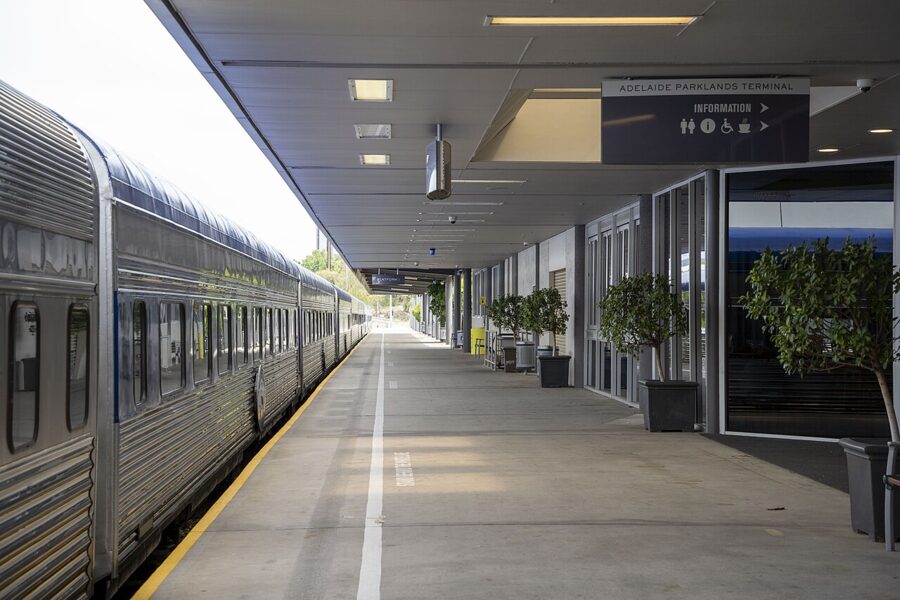
Keep one piece of hand luggage plus a garment bag in the cabin; checked bags are out of reach until the end. Dress is smart casual, and the outings call for a hat, sunscreen, walking shoes and something warm.
The Indian Pacific or the Ghan
Journey Beyond’s other long trip, The Ghan, runs between Adelaide and Darwin through Alice Springs with the same cabins, food and booking rules. The difference is the country and the calendar: in 2027 The Ghan runs only from March to November.
| Indian Pacific | The Ghan | |
|---|---|---|
| Route | Sydney, Adelaide, Perth | Adelaide, Alice Springs, Darwin |
| 2027 trips | Coast to Coast (west, 3 nights); The Mighty Nullarbor (east, 4 nights) | The Legendary Ghan (north, 3 nights); The Ghan Expedition (south, 3 nights) |
| Runs | Weekly, all year | March to November |
| Gold Twin, Advance Purchase | From A$3,190 westbound | From A$3,590 northbound, A$4,190 on the Expedition |
| Cheapest months | June and July | March and November |
| Signature stops | Broken Hill, Cook, Rawlinna, Kalgoorlie, Barossa | Clare Valley, Flinders Ranges, Alice Springs, Katherine, Coober Pedy |
The Legendary Ghan heads north from Adelaide with a Clare Valley dinner, a day in the Flinders Ranges, Alice Springs and Katherine. The Ghan Expedition comes south from Darwin with dinner at the Alice Springs Telegraph Station and a full day at Coober Pedy, the opal town. In Gold, both cost more than Coast to Coast.
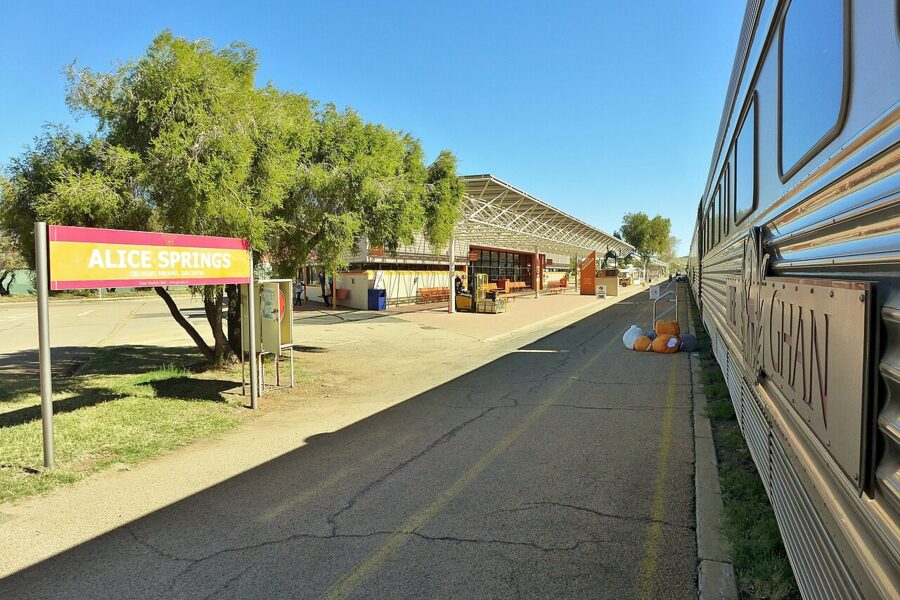
The Ghan has more variety: red ranges, gorges, the tropics at the far end. The Indian Pacific has the bigger idea, ocean to ocean across the emptiest country on the continent, and you can take it in summer, or in winter for less.
To do both, Journey Beyond sells 2027 combinations from Darwin to Sydney or Perth that join the Ghan Expedition to the Indian Pacific in Adelaide. Australia’s other trains belong to Australia and New Zealand by train, and Canada’s scenery-and-meals train is the Rocky Mountaineer.
For a first crossing, book Coast to Coast for a June or July Wednesday on an Advance Purchase fare at least six months out, in a Gold Twin if there are two of you. Take the Broken Hill walk, the market evening in Adelaide and a warm coat for Rawlinna. Then, on Friday at 12:35 p.m., step down at Cook and look both ways along the rails.